


Nine years ago, lost in his struggles with mental illness, Gem Hudman had not yet realized his dream of opening his own restaurant.
Instead, Hudman fell in love with the idea by chance after he began working in Cafe 54, one of the businesses organized by Coyote Taskforce, a nonprofit which aims to help people with mental illnesses develop job and life skills.
These days, inspired by his work at Cafe 54 and a coworker, Hudman has started to think about a concept for his restaurant.
“It’s gonna be a little bit of everything but it’s going to be focused on mental illness. We’ll save some money and fund a fund,” Hudman said.
For the past 30 years, Coyote Taskforce has organized employment-focused programs for adults living with mental illnesses, including ReThreads Thrift, Cafe 54 and Our Place Clubhouse, a peer-support program run by people with mental illnesses as a means of support. With their October 15 celebration rapidly approaching, organizers are not only hoping to raise funds but also make community connections.
“There’s a handful of opportunities around additional employment training opportunities in different service sectors beyond just the cafe that we’d love to explore,” said Jeff Grobe, the executive director of CTF.
Grobe estimated that CTF has helped 5,000 people or roughly 200 per year, in the 30 years since the organization began.
The biggest barriers for the organization besides funding and pandemic-related challenges have been the stigma their members face and the need to increase community support among local businesses.

“If there’s businesses out there that want to support us, support doesn’t have to be financial support. (It) can be connecting with us and hiring our trainees into positions,” Grobe said.
For Cafe 54’s head chef, Kevin Powers, more community connections could mean a new step in the training process for CTF’s program members.
“If people were able to come in and see what we do and say, ‘Hey would you like to be able to funnel some of the trainees that are ready and prepared as they come to the end of their journey here?” we might be able to give them jobs or at least test opportunities,” Powers said
Working toward expansion
But connecting people with jobs and job skills are not the only focus of CTF’s services. Poverty and mental illness often go hand-in-hand, with one in four people over 18 years old living with mental illnesses also live in poverty, according to the Substance Abuse and Mental Health Services Administration.
“Not only does the outside world judge and are critical of those people with severe mental illness, but (people living with mental illnesses) are self-critical and stigmatize themselves as well,” said Psychosocial Rehabilitation Specialist and chef M TwoFeathers. TwoFeathers makes food for and with the members of Our Place Clubhouse.
Being involved with work and tasks has helped members reduce symptoms of their mental illnesses and allowed them to focus on other parts of their lives.
“Once they’re starting to reduce symptoms the real recovery can take place where they build support systems, establish good communication with their recovery coach and everything that can be done to further their goals,” TwoFeathers said.
Grobe and others would like to expand the program to include programs that they have typically had to refer their members, like homelessness, crisis and primary care services.
“That referral process is another chance for someone to slip between the cracks,” Grobe said.
Keeping CTF afloat throughout the pandemic put the expansion process on pause, but Grobe and the rest of CTF have begun to envision a future with those services.

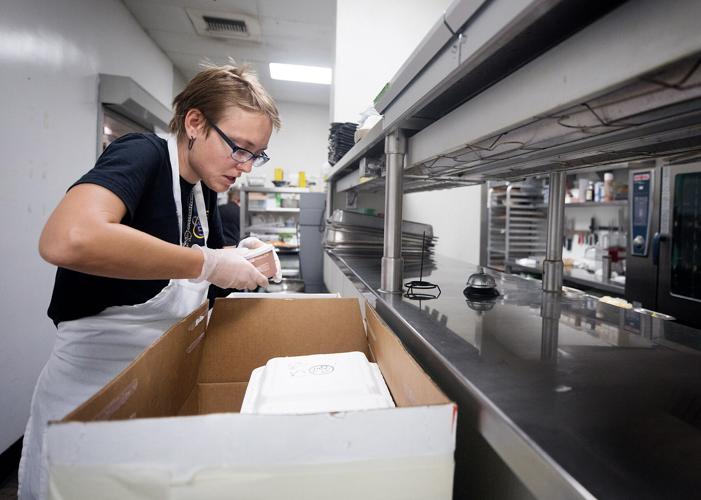
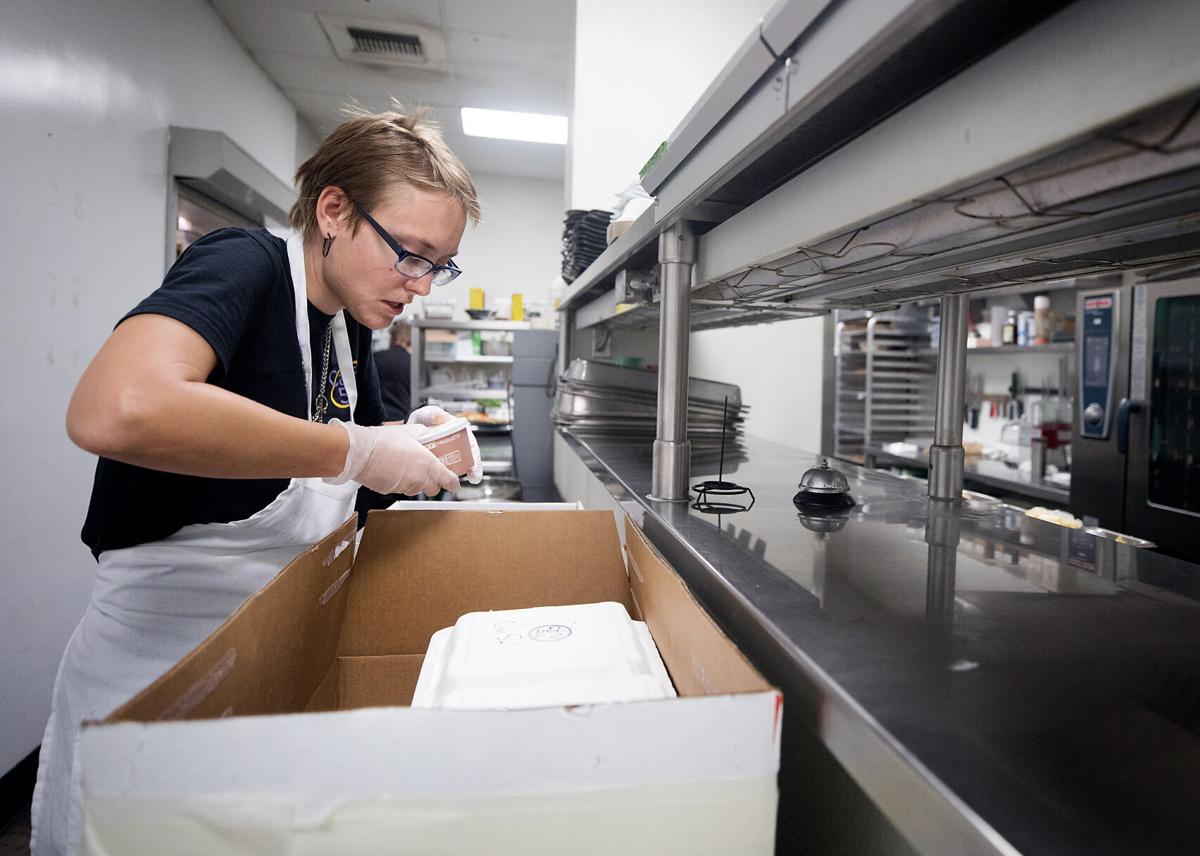
Shane Chabarria pours ice into trays during kitchen prep at Cafe 54, 54 E Pennington Street.
More funding support needed
CTF’s biggest source of income is Medicaid, however they would like to get grants from larger federal organizations . This process has been difficult for organizations such as CTF since most of the organizations that receive federal funding are older or favor evidence-based practices that have existed for a while, Grobe said.
“That makes good fiscal sense but it also limits the possibility of new organizations coming in with different ideas or different programs or innovative ideas from getting that funding,” Grobe said.
Grace Caylor started with CTF in July and has already begun to develop skills that she wants to take with her on her journey to becoming a caregiver for aging adults. She began washing dishes at Cafe 54 and eventually gleaned other skills–like chopping vegetables and cleaning – that she believed would help her become a better caregiver.
After a year of unemployment due to her struggles with mental illness, Caylor has found some peace at her new job.
“Now that I have a job it’s really helpful to just feel ok with everything to do with having a job and working,” Caylor said. “It kind of crowds out the noise in my head.”
Powers, the Cafe 54 head chef, also attested to the effectiveness of CTF’s programs.
“Anything’s possible with anybody that comes through here,” Powers said. “Just with the right coaching, the right teaching and the support that they usually don’t get.”


