



The Tucson City Council voted to renew the central business district for an additional 10 years Tuesday but opted to delay expansion discussions as Tucsonans continue to express their concerns.
The district was created in 2012 as a way to boost economic development through financial incentives. Businesses within the district are eligible to apply for up to eight years of property tax abatement, which is called a Government Property Lease Excise Tax, or GPLET.
After a proposal was made to expand the central business district earlier this year, some community members and neighborhood associations scrutinized the incentive process, saying it contributes to the gentrification of historic neighborhoods, the displacement of residents and doesn’t hold developers accountable.
The business district encompasses downtown Tucson and its surroundings, going as far north as Miracle Mile and as far south as 29th street. These are areas that have been defined by the city as “slum areas,” or properties where “public health, safety or welfare is threatened” due to deteriorated buildings, inadequate provisions for ventilation, light, air, sanitation or open spaces, overcrowding or the existence of conditions that endanger life or property by fire and other causes.
“Many of these projects have brought about gentrification and displacement in the neighborhoods and barrios surrounding downtown,” said Karen Greene, a founding member of the Barrio Neighborhood Coalition, while addressing the council Tuesday. “This topic is of enough concern that you re-created the commission on equitable housing development, with a focus on preventing displacement. Why would it be a good idea to continue doing this kind of thing and how can you still call these areas blighted?”
Under the GPLET program, the city takes ownership of a building and leases it back to the developer, who would pay an excise tax based on size and use of the property instead of property tax based on its value. In exchange, the development must improve the property value by at least 100%.
Since 2013, the city has approved 22 GPLET projects, mostly in Wards 1 and 6. The projects include nine residential properties, nine retail or office properties, three hospitality properties and one industrial property.
While the mayor and council agreed the central business district and GPLET projects have been essential to the city’s economic development and the revitalization of downtown since the 2008 recession, they voted 5-1 to delay the expansion of the district and directed the city manager to evaluate GPLET policies moving forward. A series of public meetings will be held and will include assessments on how these project agreements are affecting the community.
“I don’t believe that all development is good or should have this incentive, nor should developers feel entitled to getting a GPLET. I do want the opportunity to dialogue with our barrios, our small businesses, and potential small, local developers on a vision for what a more just, democratic, sustainable future looks like,” said council member Lane Santa Cruz.
“For me personally, being pro people, I feel like we need to be responsive to the historic disinvestment and direct incentives to the communities that have been traditionally left out.”
CARES funding allocations
The council also voted Tuesday to allocate nearly $6 million more in federal CARES Act funds to further support small businesses, nonprofits, workers and families who are struggling financially through the pandemic.
Tucson has received more than $95 million in federal coronavirus funding and has set up a variety of grant programs to help distribute funds to the community. This now includes a total of $7.5 million for emergency rent and utility assistance, $5 million for the Workers and Families Grant Program, $5 million for small business and nonprofit continuity grants and $350,000 to support arts and entertainment venues.
“I know that right now, more than ever, community members, small businesses, nonprofits, entertainment venues, arts and culture organizations, as well as workers and families, need this additional infusion of funds,” said Mayor Regina Romero. “We are losing unemployment benefits that added additional money into the pockets of people who are not working and unfortunately Congress is not acting on a relief package. So, I think the most appropriate action that mayor and council can take is putting money back into the community.”
The council also approved $500,000 in grants to support children and families who are having difficulty paying for child care amid the pandemic. This grant program will be administered through Catholic Community Services.
City officials said they are still finalizing details on the application process and deadlines for the second round of grants, but that they will prioritize those who have not received similar aid previously.
Continuing free public transit
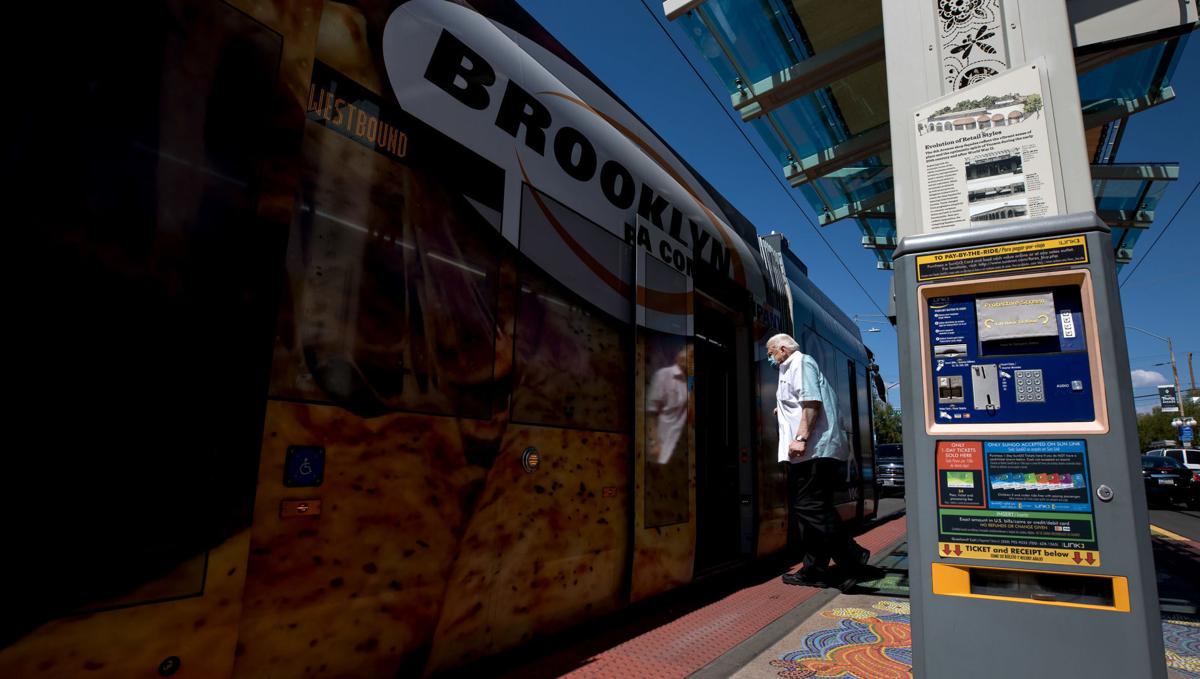
Tucson’s buses and other public transportation will remain free through at least the end of the year, the mayor and council decided Tuesday.
The Tucson Department of Transportation said the $44.3 million in federal COVID-19 relief funding it received is “dwindling to the end.” The city has been using the funding to subsidize rides so it could reduce interaction between drivers and passengers. The remaining $2 million will be depleted by the end of this month.
City officials also said ridership for all public transit has dropped significantly – about 25% for Sun Tran, 60% for Sun Van and 60% for Sun Link.
Even with these obstacles, the council directed the city manager to find an alternative solution for funding public transportation through the end of the year, arguing that reinstating ride fares would negatively impact people who are already struggling.
The city’s Transportation Department estimated it would take $4.8 million from the general fund to keep public transit going through the end of the year.
“We’re about to see eviction restrictions end. These services could become even more essential for the public over the next several weeks,” said Councilman Steve Kozachik. “We ought to be sharpening our pencils and tapping into some of the other potential partners to fund this and find a way to continue these free rides until at least the end of the calendar year.”

