




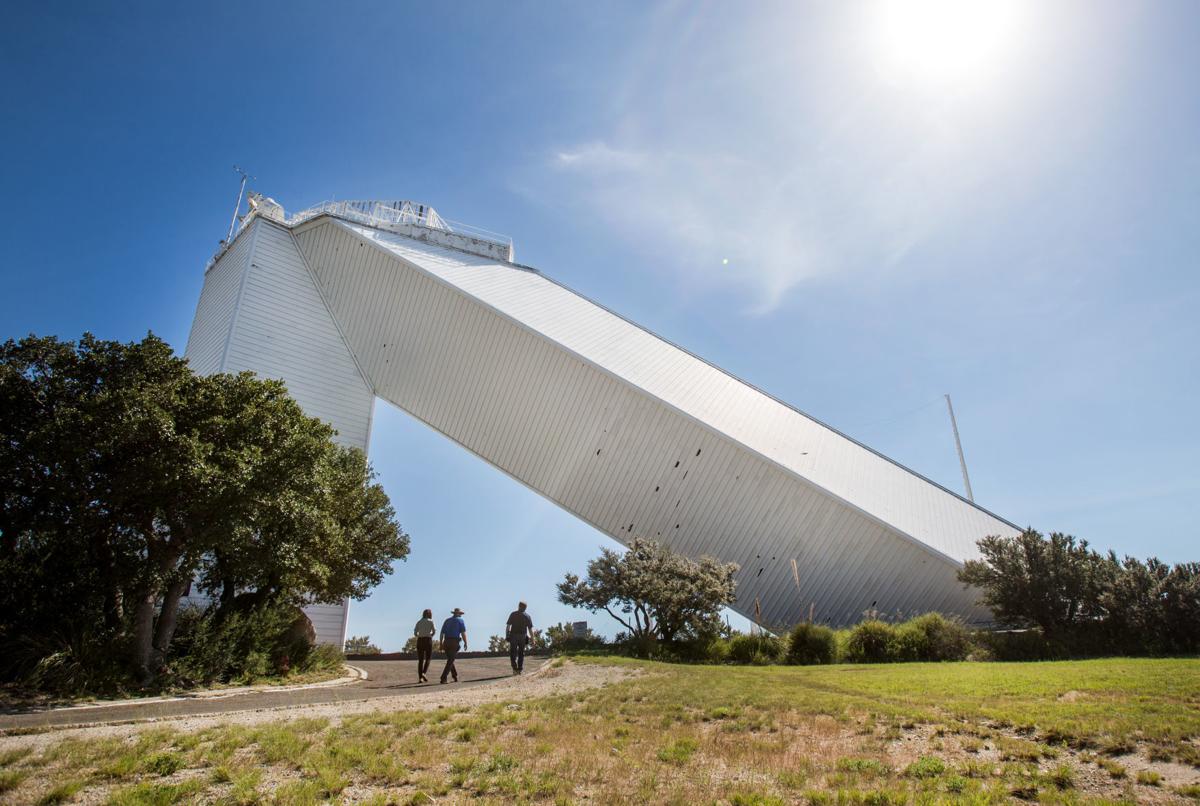
A $4.5 million National Science Foundation grant will be used to develop a state-of-the-art public visitor program for Kitt Peak National Observatory.
The foundation awarded the grant to the Association of Universities for Research in Astronomy to develop the program, called Windows on the Universe Center for Astronomy Outreach, within the McMath-Pierce Solar Telescope facility on the mountain about 50 miles southwest of Tucson.
“This effort will give second life to an architectural and scientific icon. It will be an epicenter for astronomy education and outreach,” for both Kitt Peak as well as NSF telescopes scattered around the globe, said Bill Buckingham, Kitt Peak Visitor Center manager, who envisioned the telescope’s new fate.
Currently, rolls of bubble wrap, half-packed cardboard boxes and the forgotten paraphernalia of generations of astronomers litter the control room of the solar telescope at Kitt Peak on the Tohono O’odham nation. The most recent observers at McMath-Pierce, solar astronomers from NASA’s Goddard Space Flight Center, are moving out, leaving it for now without a science mission.
Within the last decade, the telescope, and a few others on the mountain, lost federal funding as priorities shifted toward building larger, high-tech telescopes. But the 56-year-old solar observatory has avoided being mothballed or demolished in the astronomers’ wake.
The McMath-Pierce is one of 25 telescopes on Kitt Peak.
The grant money will fund renovations, exhibit and program design and development and the first three years of operations.
“We’ve proven we can run off of ticket sales. When the visitor center was cut off from federal funding about a decade ago, we found a way to operate on our own revenue,” Buckingham said.
Buckingham spent 2½ years developing his proposal to the NSF. Months were spent crawling around the telescope interior with a tape measure and camera, documenting the space and imagining the future.

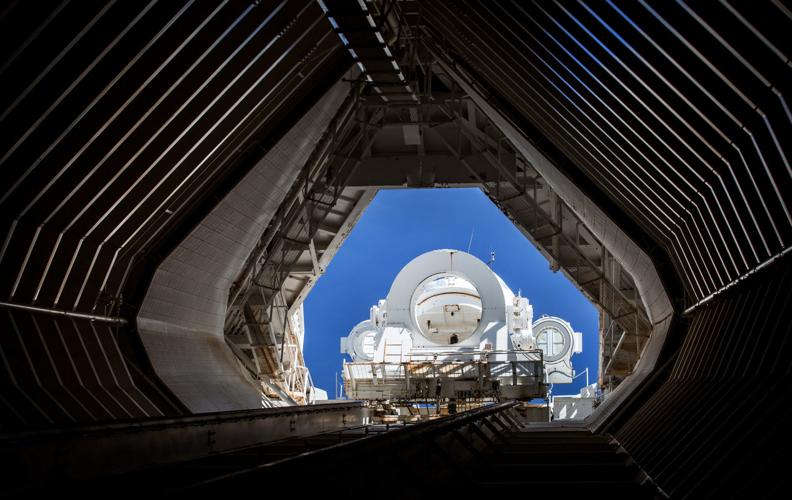
An interior view looking out of the 2-meter McMath-Pierce Solar Telescope at Kitt Peak. The telescope, one of 25 on Kitt Peak, was built in 1962.

Analog control units still direct the movements of the McMath-Pierce solar telescope at Kitt Peak National Observatory in the Quinlan Mountains on Sept. 18, 2018, west of Tucson, Ariz.
The vision
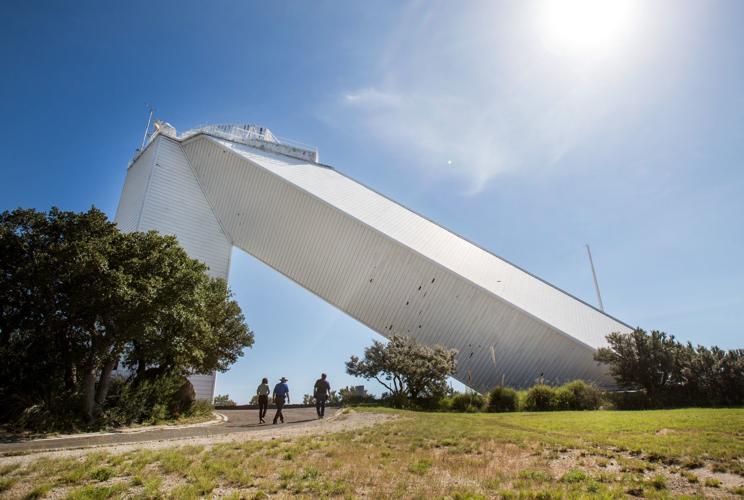
The telescope’s copper paneling peaks out from chipped white paint. Weeds poke through cracked parking lot pavement. The squat, blocky entrance welcomes visitors with faded rainbow-painted panels as if little has changed since the 1960s.
A 110-foot-tall tower anchors the telescope. The diagonal part of the structure, which houses the mirrors directing sunlight into the control room, plunges 200 feet at an angle from the tower top to the ground. An additional 300 feet of the diagonal extends below ground. The exposed structure will be repainted, the surrounding asphalt will be repaved and the entrance will be remodeled.

Back to front, the two-meter McMath-Pierce solar telescope, .5-meter visitor center telescope, and a mural slated to be repainted at Kitt Peak National Observatory in the Quinlan Mountains on Sept. 18, 2018, west of Tucson, Ariz.
At ground level, an exterior door to the diagonal telescope tunnel leads to a viewing gallery of the telescope’s interior. Signs and arrows will be displayed showing how everything works.
But the most dramatic changes will occur within the 5,200-square-foot building.
After renovations, guests will be welcomed by an expanded lobby housing introductory exhibits, videos and wall-sized graphics.
The 130-foot hallway leading from the entrance to the control room will double in width and will host hands-on exhibits focusing on the science of astronomy.
The control room will be preserved and used as an interactive exhibit. As a result, 30-inch images of the sun and moon as well as smaller images of other bright objects can be projected into the control room for visitors to explore.
An exhibit in the southeast wing of the building will be dedicated to showcasing other NSF telescopes around the world including those in Chile and Antarctica. An astronomy classroom, a full-dome planetarium and exhibits highlighting the history of the McMath-Pierce Solar Telescope will also be added.

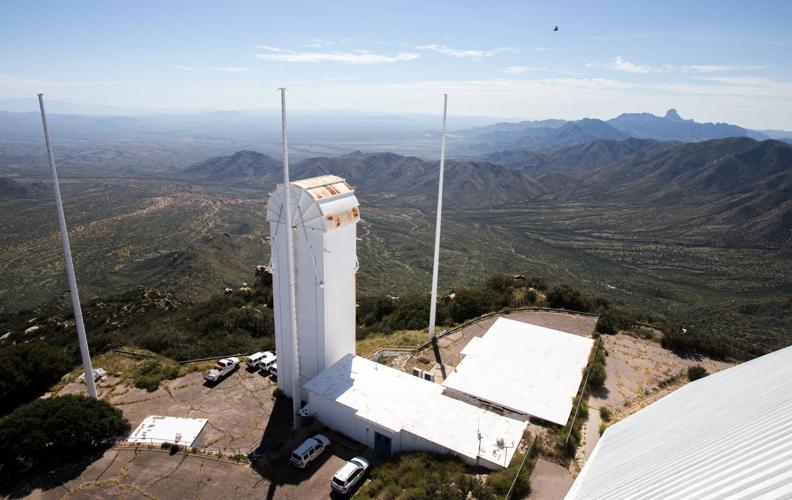
The vertical housing of the Synoptic Optical Long-term Investigations of the Sun will be torn down, along with two of the three lightning rods at Kitt Peak National Observatory.
The main attraction of the repurposing, however, is the ability for the facility to serve as an introduction not only to Kitt Peak, but also other federally funded telescopes around the world, Buckingham said.
To do so, however, takes some tech. A room to the left of the lobby on the northwest end of the building will house the Science on a Sphere theater. Special software can take any image and use four projectors in each corner of the room to lay images across a reflective globe hanging in the middle of the room.
“You can play satellite views of earth, run forward or backward in time, show live images of the earth or show the location of continents in the time of the dinosaurs. We can project images of the sun, moon, Mars, Jupiter … in a darkened room. It really looks like Jupiter is in the room,” he said.
Data from any of the 150 theaters within the Science on a Sphere user group can be shared with Kitt Peak’s theater, and any data compiled at Kitt Peak can be shared with the theaters globally, including the Grand Canyon and the Smithsonian.
“We’re going to serve as a gateway for the public to all other observatories that are challenging and expensive to get to, and we can now reach a global audience,” Buckingham said.
Construction is expected to take about two years. The structure will retain the name McMath-Pierce Solar Telescope, and while the observatory is being converted into a state-of-the-art public outreach center, it will retain the capability to do science if astronomers choose to return.
“I don’t know of people taking a major federal research telescope and converting it into a major outreach center,” Buckingham said. “We’re transforming the whole complex. I really think this will be unique for a long time.”

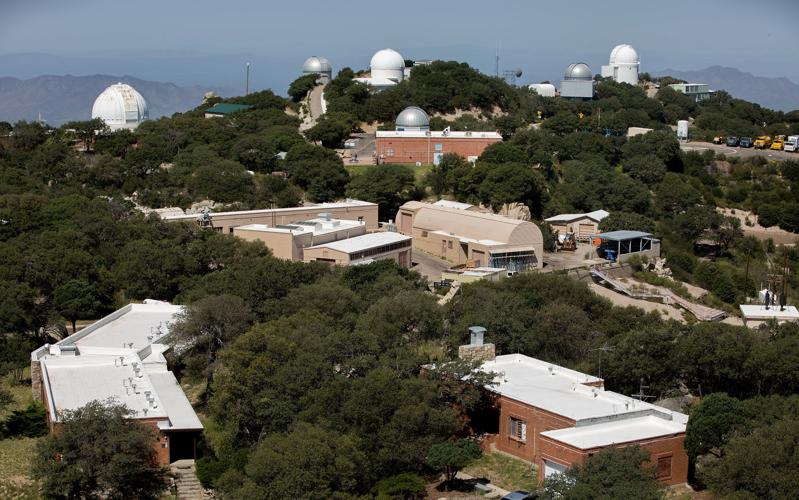
Buildings and observatories at Kitt Peak National Observatory in the Quinlan Mountains on Sept. 18, 2018, west of Tucson, Ariz.
Kitt Peak’s fate
The McMath’s repurposing is just the latest reinvestment on the mountain. On all three corners of the mountaintop, there are new telescope operators with big projects underway.
The 4-meter Mayall, the largest telescope on the mountain, is in the middle of being refitted with a new instrument called DESI, short for Dark Energy Spectroscopic Instrument, will probe the nature of the force thought to drive the expansion of the universe.
The DESI project is led by the Lawrence Berkeley Laboratory, and most of the funding comes from the U.S. Department of Energy Office of Science.
At the 3.5-meter WIYN telescope, preparations are underway for a new instrument that will be used to characterize planets around other stars under a joint NASA-NSF program called NN-EXPLORE. The NASA-funded NEID spectrograph, is under construction at Penn State University.
Both cutting-edge science missions are expected to start in late 2019.

From left, the four-meter Mayall telescope, 2.3-meter Bok Reflector operated by the Steward Observatory and the .9-meter Spacewatch telescope operated by the University of Arizona Lunar and Planetary Laboratory at Kitt Peak National Observatory in the Quinlan Mountains on Sept. 18, 2018, west of Tucson, Ariz.
“We’re at the beginning of an exciting new era on Kitt Peak,” said Lori Allen, Kitt Peak director.
Besides the science, visitors also have more to look forward to.
A large doughnut-shaped concrete replica of the Mayall’s primary mirror will be repainted with its third mural by Michael Chiago, a member of the Tohono O’odham nation. It will be accompanied by informational signage highlighting the tribe’s culture and the concrete replica’s history.
Additionally, a new observatory, two amateur-sized telescopes, cameras and computers — totaling $400,000 — was privately donated to the Kitt Peak Visitor Center by California-based amateur astronomer Gary Shreve.
This will be the fifth observatory that the visitor center operates for public programs on the mountain. Only one in three requests for overnight public programs is accepted by the visitor center because of the high demand. This donation, as well as additional volunteers, will help support the popular overnight programs. Buckingham hopes to increase the volunteer staff from 40 to 100 in the next 2½ years.
Additionally, solar viewing telescopes and additional nighttime imaging telescopes will be relocated to a renovated shed next to the visitor center, granting easier access for visitors who used to have to walk more than a quarter-mile to use the equipment.
“For several years, there was anxiety and worry among staff here and concern within the public about the future of Kitt Peak,” Buckingham said, especially after the NSF announced plans to reduce funding. “I’m happy to say that Kitt Peak has a bright future.”
Photos: Kitt Peak National Observatory - crown jewel of U.S. observatories
Kitt Peak National Observatory
Updated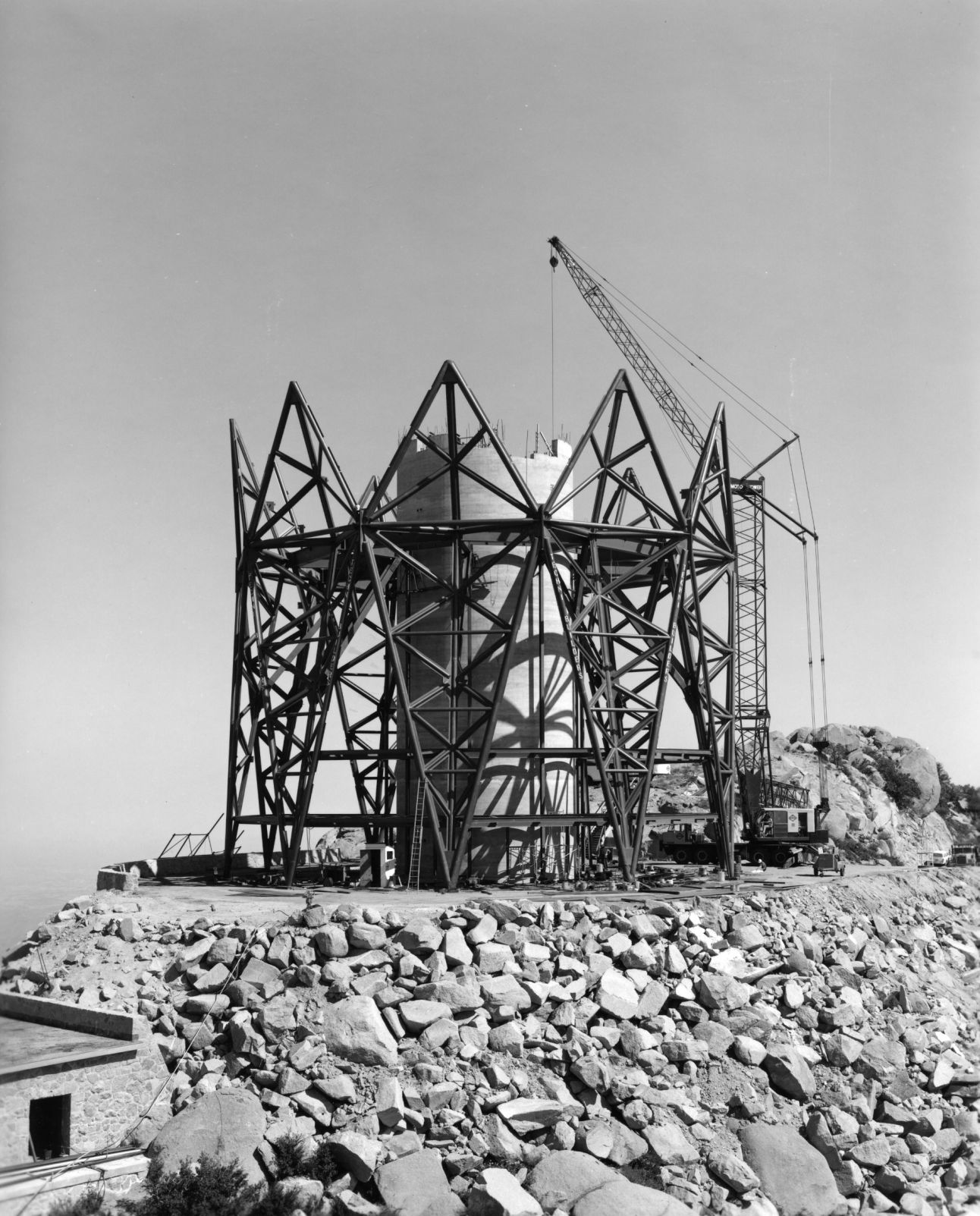
The 4-Meter Mayall optical telescope under construction at Kitt Peak National Observatory in September, 1967.
Nicholas U. Mayall 4-meter Telescope, KPNO, 1969
Updated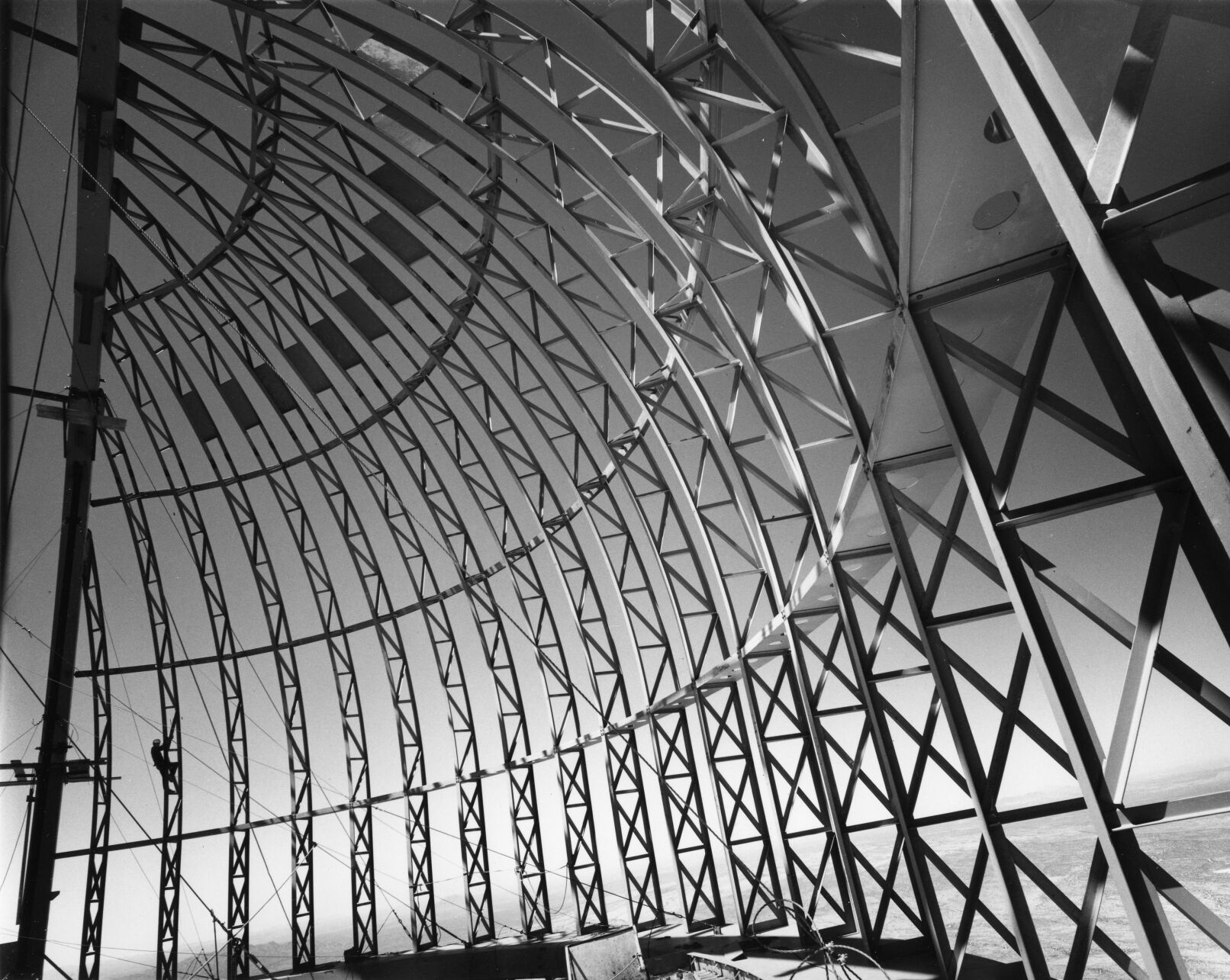
Nicholas U. Mayall 4-meter Telescope under construction at Kitt Peak National Observatory in 1969.
Kitt Peak National Observatory
Updated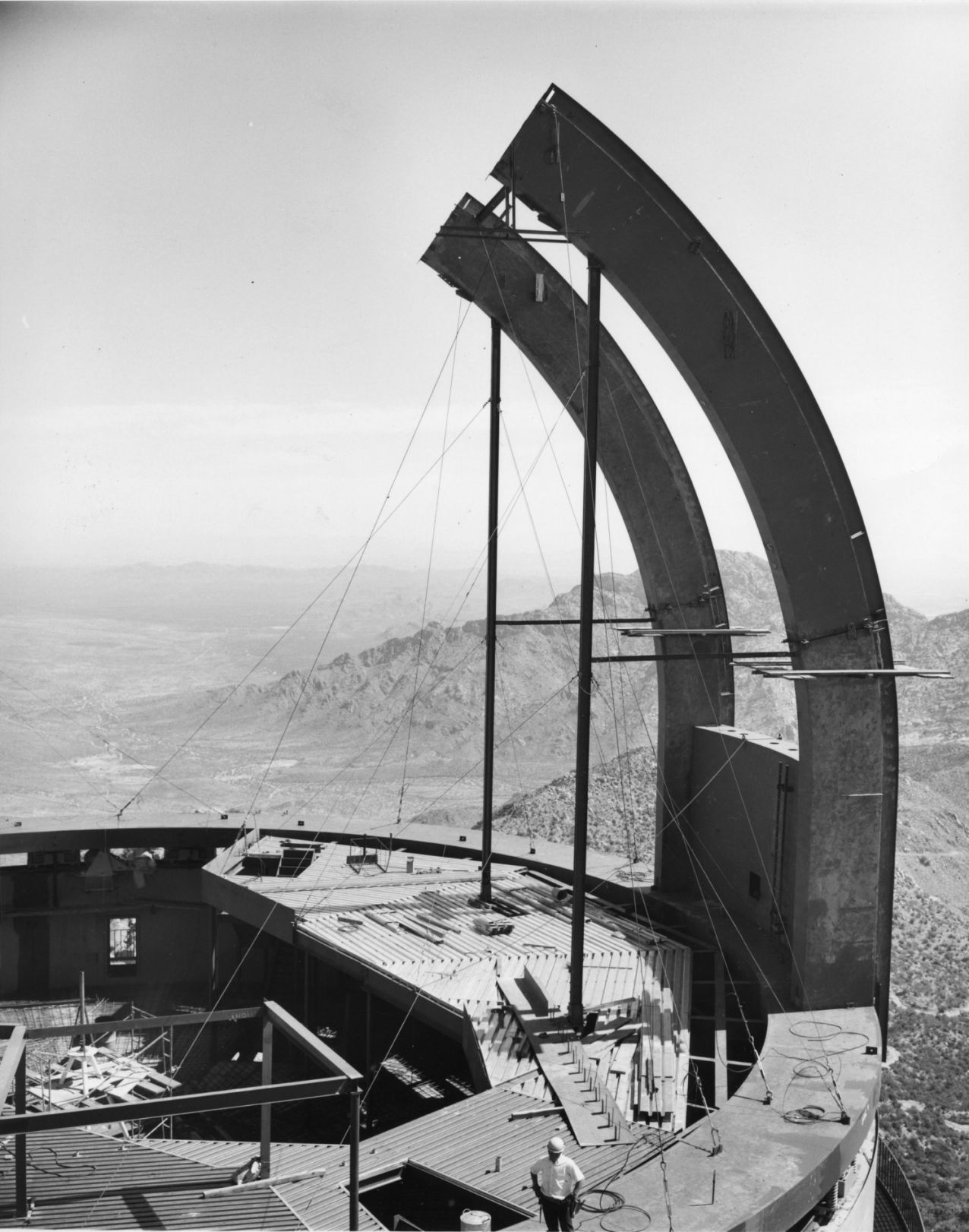
Construction of the 500-ton dome the 4-meter (158 inch) Nicholas U. Mayall Telescope at Kitt Peak National Observatory in 1968.
Nicholas U. Mayall 4-meter Telescope, KPNO, 1969
Updated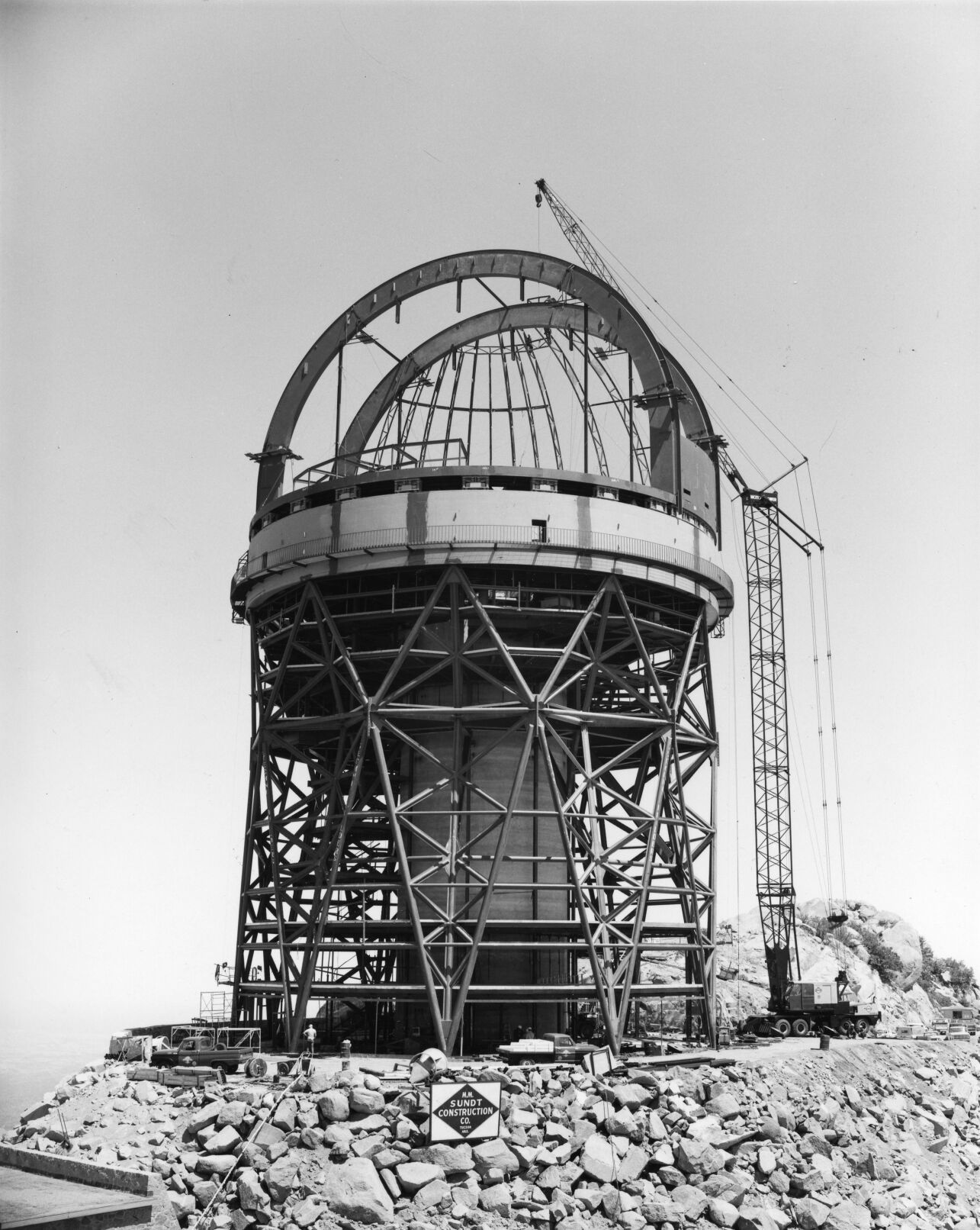
Nicholas U. Mayall 4-meter Telescope under construction at Kitt Peak National Observatory in 1969.
Nicholas U. Mayall 4-meter Telescope, KPNO, 1969
Updated
Nicholas U. Mayall 4-meter Telescope under construction at Kitt Peak National Observatory in 1969.
Mayall Telescope
Updated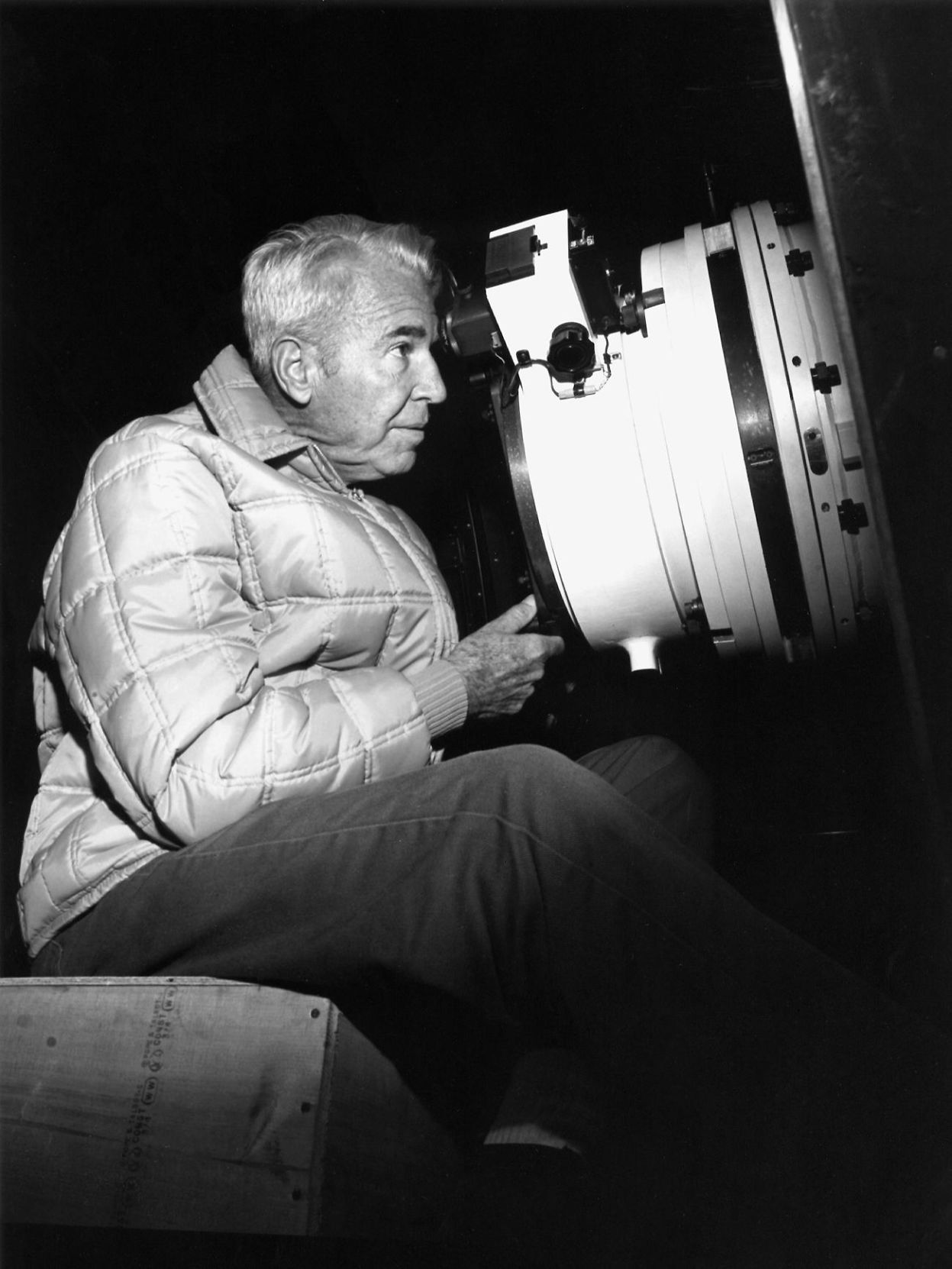
Dr. Nicholas U. Mayall, Director of the Kitt Peak National Observatory from 1960 to 1971, is seen here observing at the prime focus of the 4-meter telescope on 2 March, 1973. After Dr Mayall’s retirement, the telescope was rededicated on 20 June, 1973, as the Nicholas U. Mayall telescope.
Kitt Peak National Observatory
Updated
Technicians at Kitt Peak National Observatory's Cherry Ave. shops on the University of Arizona campus, look over the steel cell upon which the 80-inch mirror will be mounted. The Pyrex mirror "blank" from Corning, N.Y., took more than two years to polish.
Kitt Peak National Observatory
Updated
The massive 4-Meter Mayall telescope during dedication at Kitt Peak National Observatory in June, 1973. At the time, it was the world's second-largest optical telescope.
KPNO, lightning, 1998
Updated
Lightning atop Kitt Peak, looking to the north-west, with the Mayall 4-meter telescope silhouetted against the stormy sky. Taken by Adam Block in July 1998. This picture was a twenty second exposure using Fuji 800 film with a 50mm camera lens.
Mayall Telescope
Updated
Star trails over the Mayall 4-meter Telescope, Kitt Peak National Observatory.
Bok Telescope, KPNO, 1969
Updated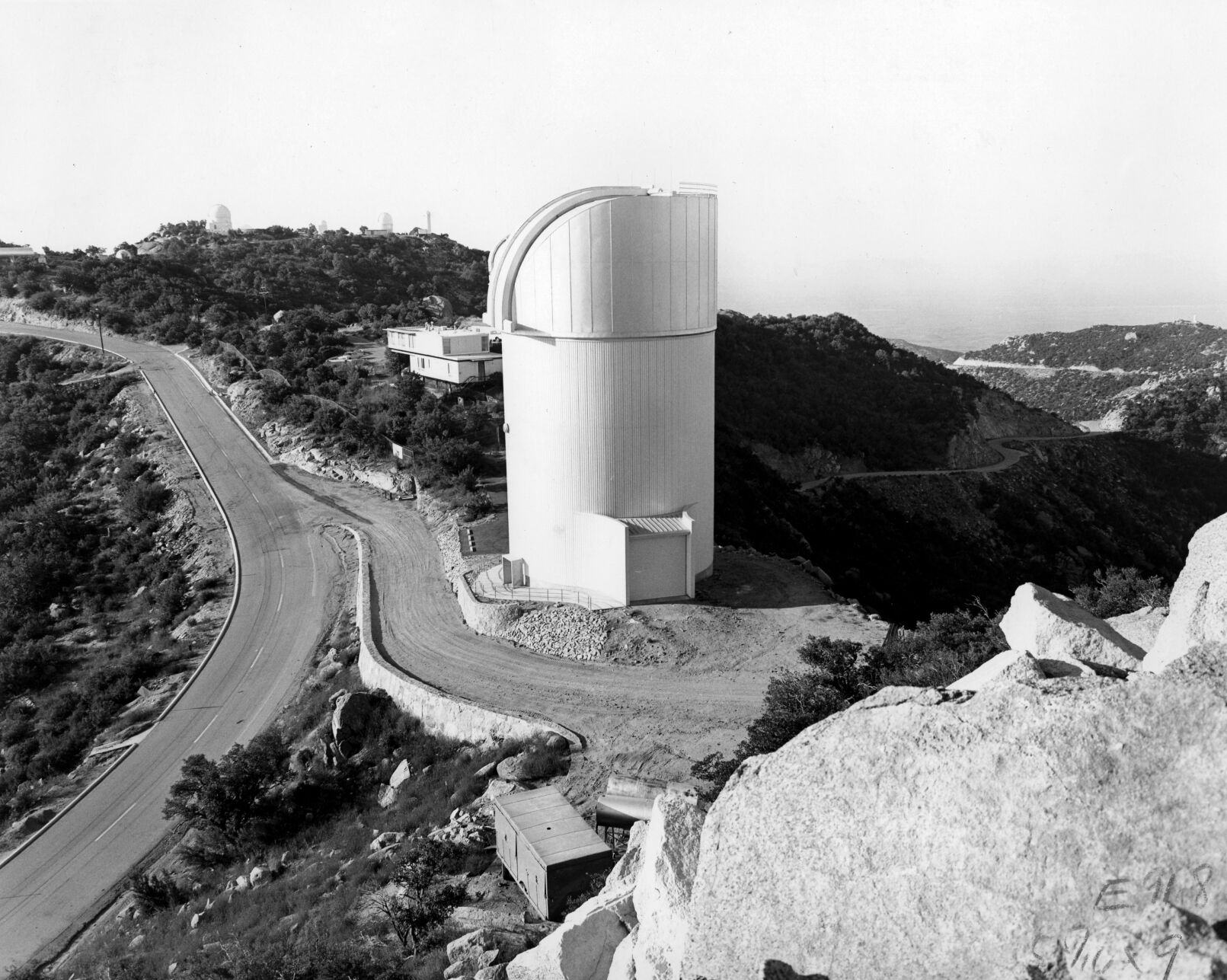
The 2.3 M Bok Telescope operated by the University of Arizona Steward Observatory at Kitt Peak National Observatory, shown after completion in 1969.
Bok Telescope on Kitt Peak National Observatory
Updated
The Bok Telescope (front) on Kitt Peak National Observatory, AZ..
Southwest view of McMath-Pierce Solar Telescope during construction
Updated
Southwest view of the McMath-Pierce Solar Telescope during construction, 27 February 1961.
Kitt Peak National Observatory
Updated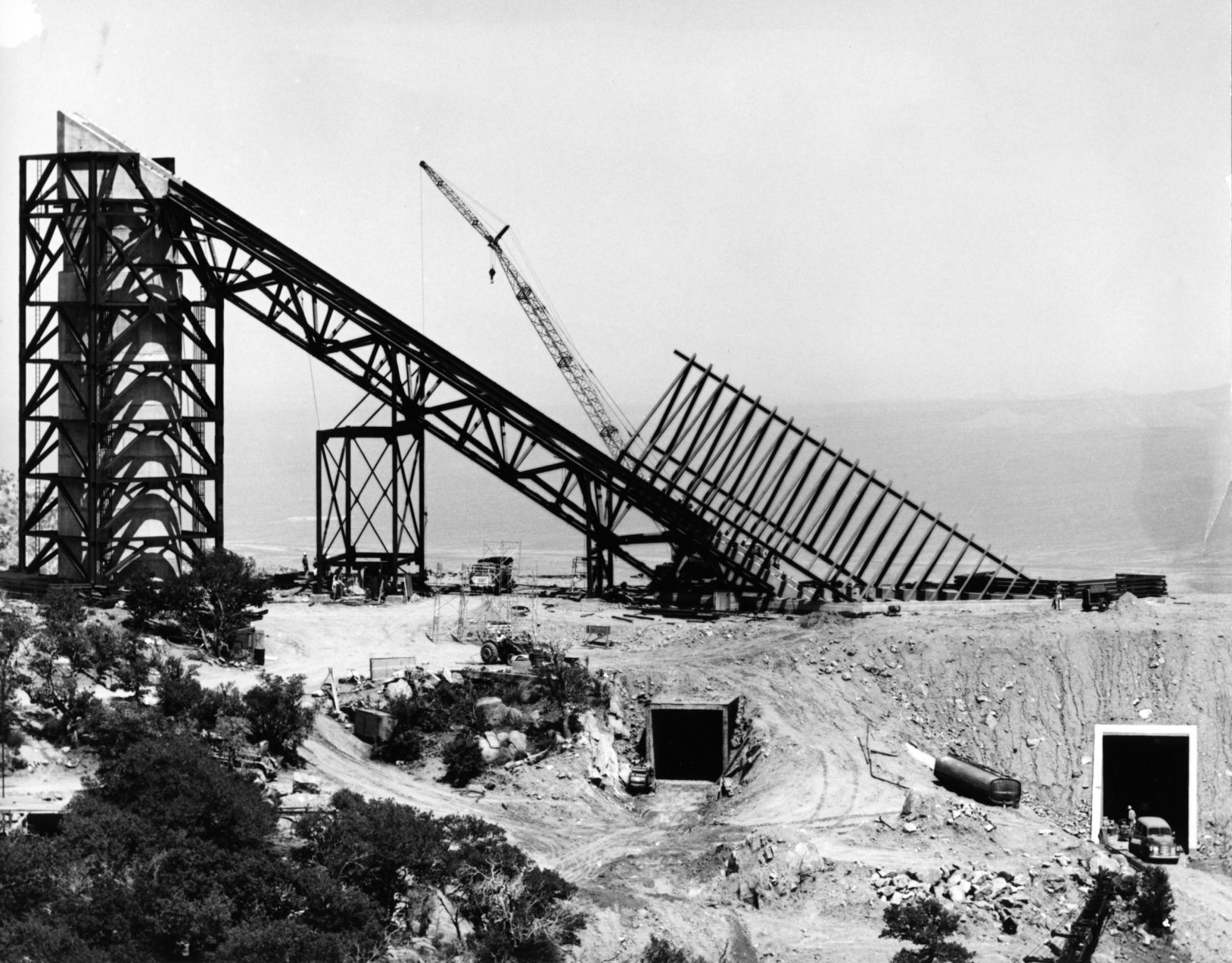
The McMath Solar Telescope under construction at Kitt Peak National Observatory in 1957.
Kitt Peak National Observatory
Updated
The McMath Solar Telescope under construction at Kitt Peak National Observatory in 1957.
Kitt Peak National Observatory
Updated
A 1972 architectural rendering of the vertical housing of the Synoptic Optical Long-term Investigations of the Sun at Kitt Peak National Observatory
Kitt Peak National Observatory
Updated
The McMath-Pierce Solar Telescope at Kitt Peak National Observatory nearing completion in 1962.
Kitt Peak National Observatory
Updated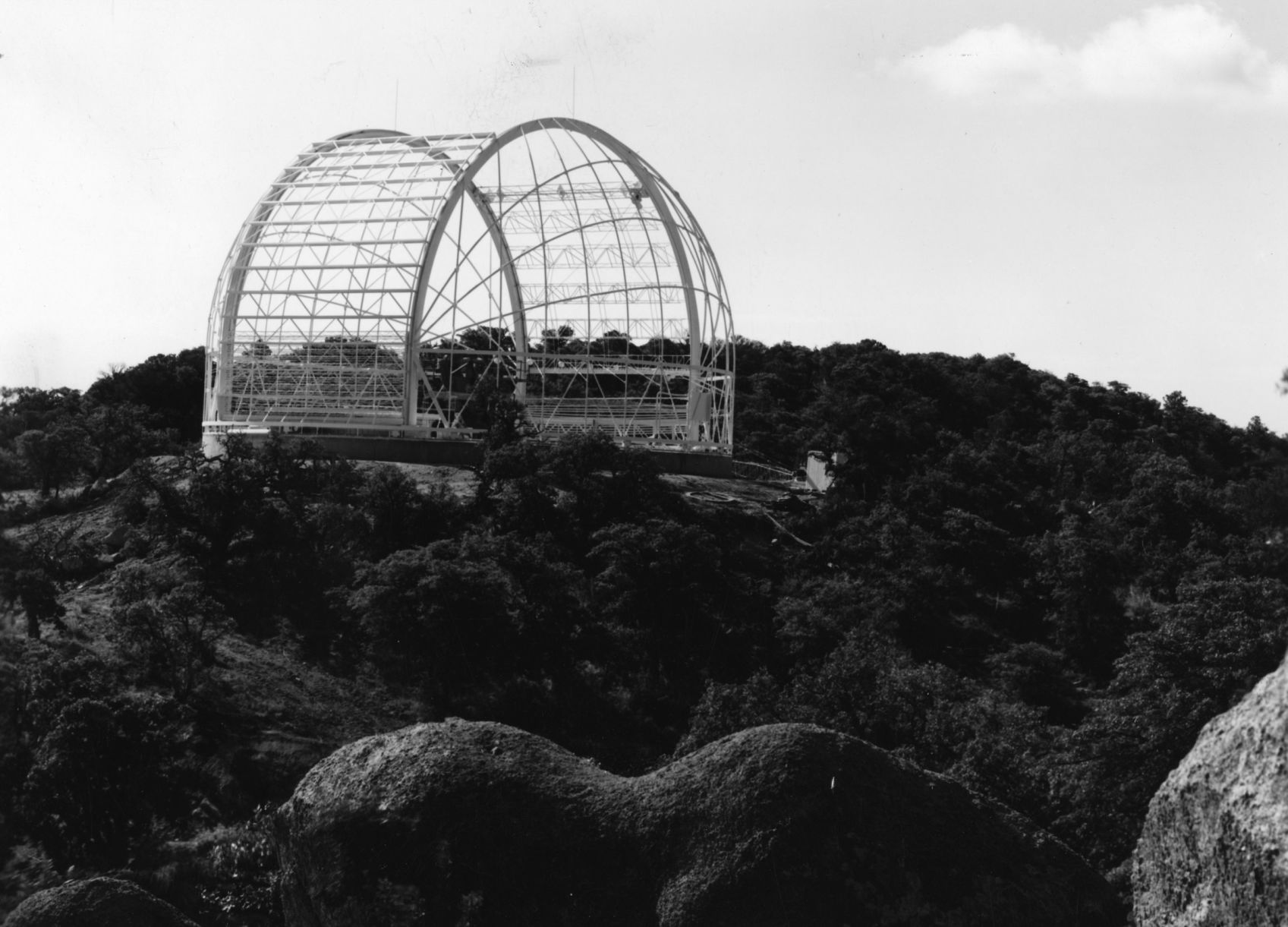
The skeleton for the 55-foot-tall dome of the 36-foot radio telescope under construction at Kitt Peak National Observatory in 1966.
Kitt Peak National Observatory
Updated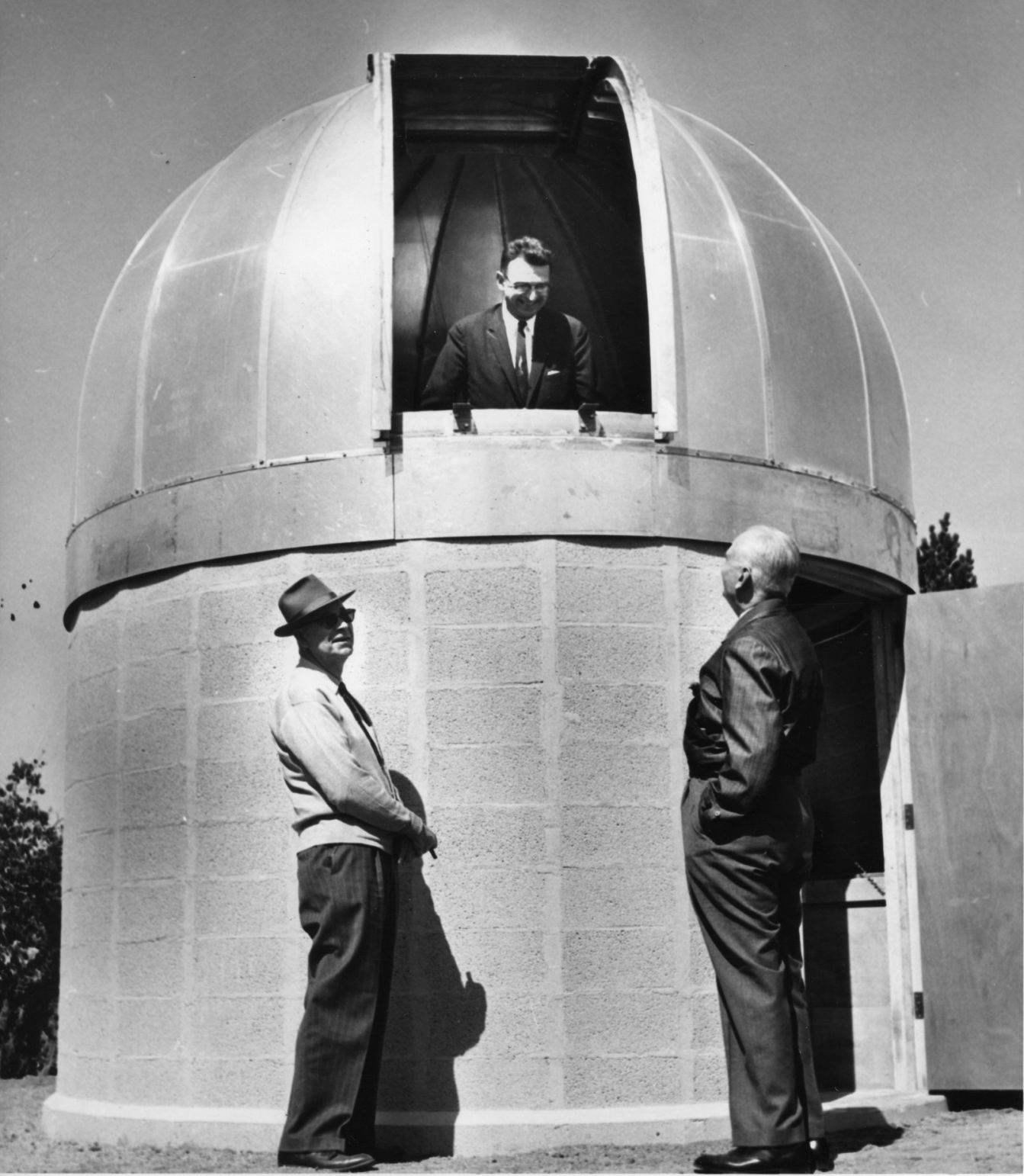
The smallest telescope – a 16-inch – at Kitt Peak National Observatory, ca. 1960.
Kitt Peak National Observatory
Updated
The 36-foot National Radio Astronomy Observatory telescope inside side its vinyl-coated nylon dome at Kitt Peak National Observatory in 1969.
Kitt Peak National Observatory
Updated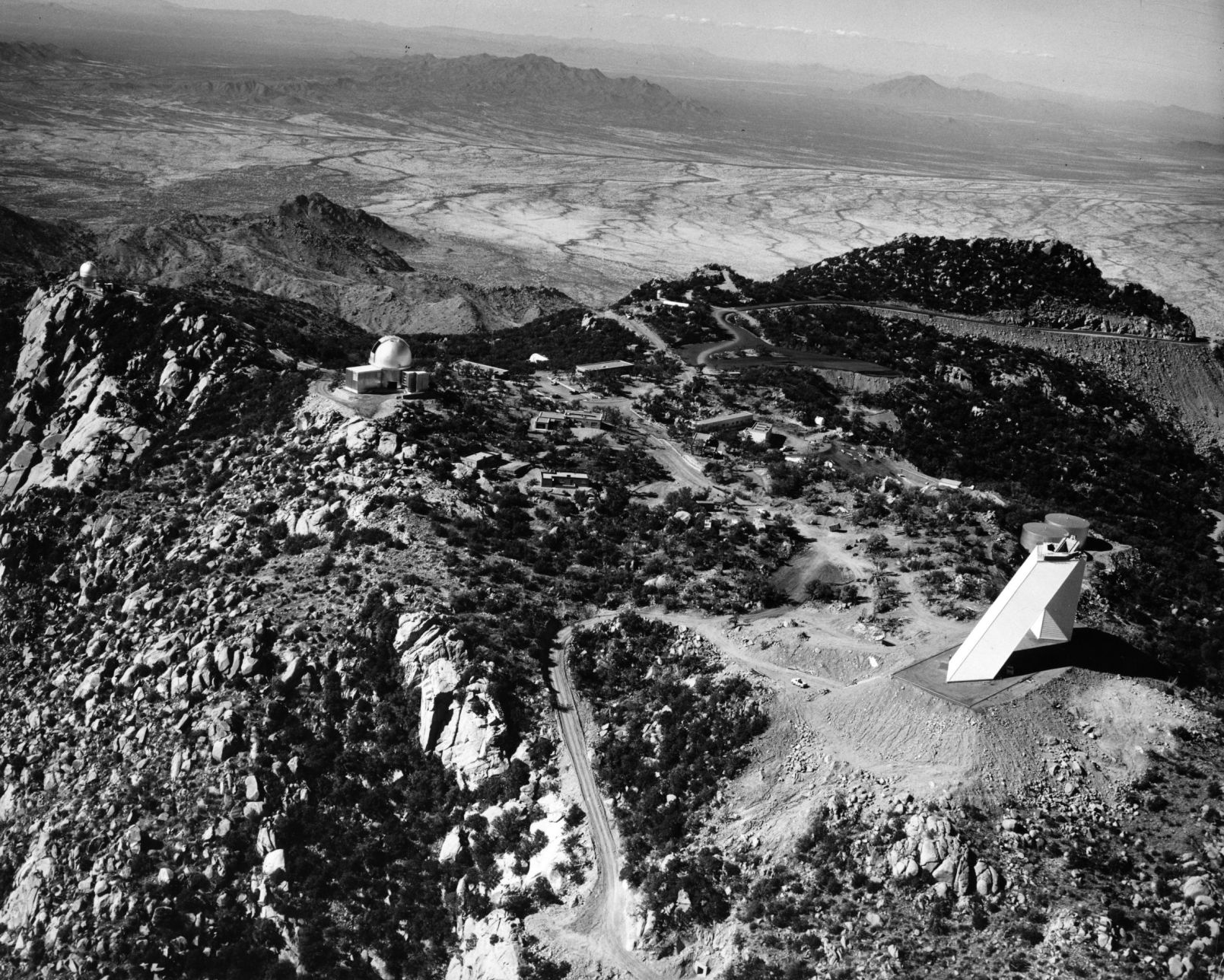
The McMath Solar telescope on its perch at Kitt Peak National Observatory, ca. 1962.
Kitt Peak National Observatory
Updated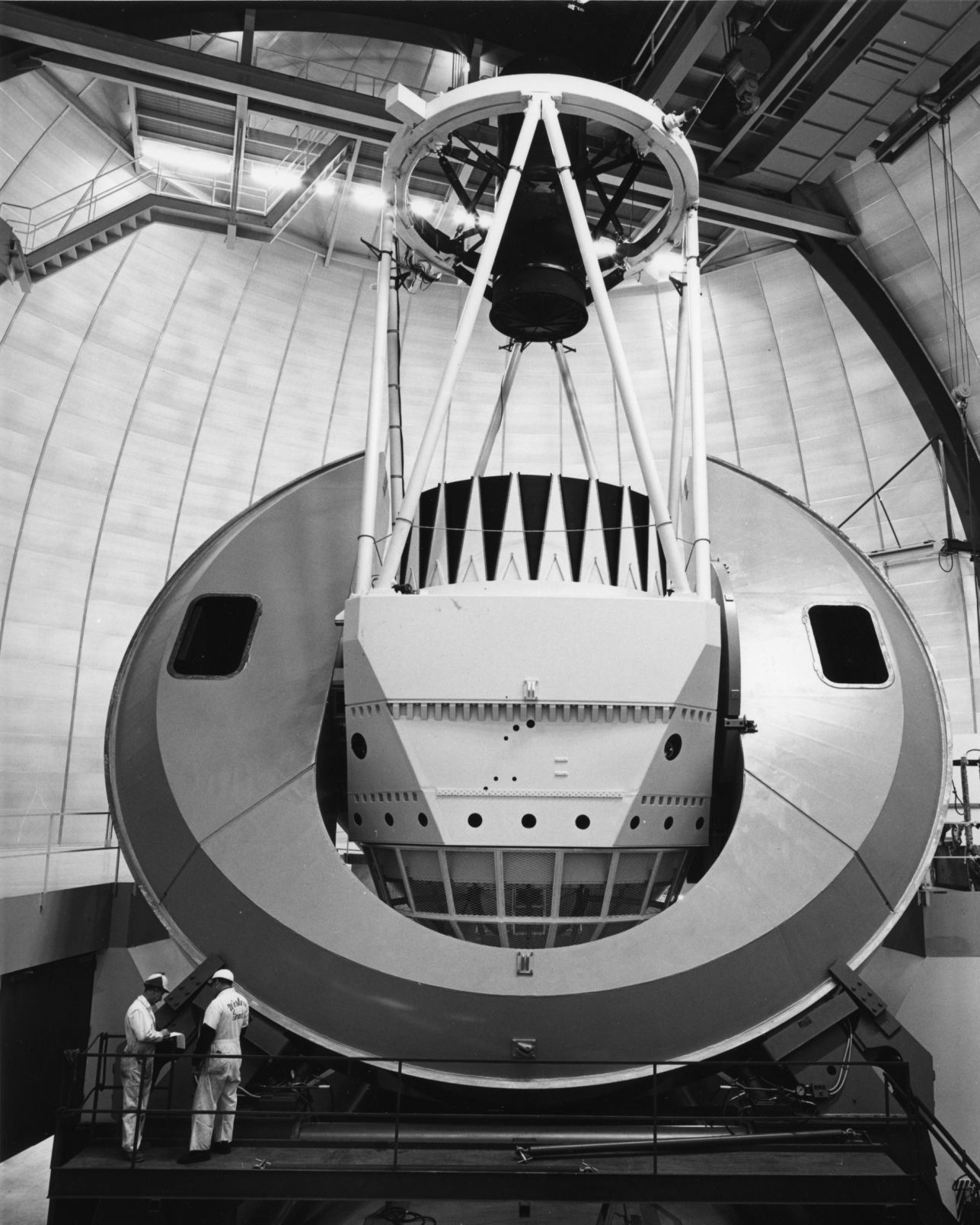
The horseshoe-shaped yolk housing in the 4-Meter Mayall Telescope at Kitt Peak National Observatory in 1973.
Kitt Peak National Observatory
Updated
Dr. Bart Bok stands beneath the 90-inch, 100-ton telescope destined for Kitt Peak National Observatory in 1968. Bok was the head of the department of astronomy at the University of Arizona and director of Steward Observatory.
Kitt Peak National Observatory
Updated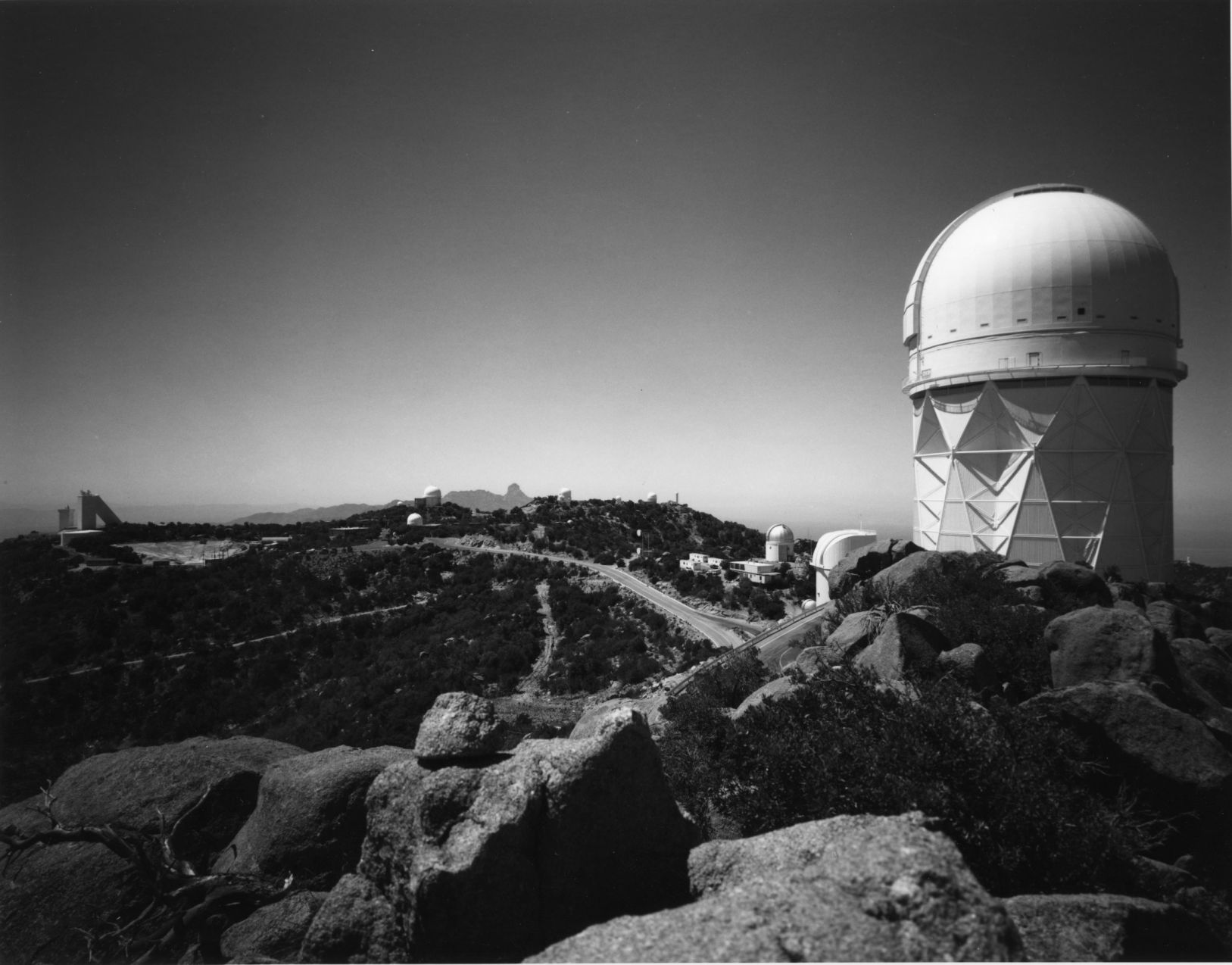
The 4-meter Mayall Telescope, left, at Kitt Peak National Observatory in 1975.
Kitt Peak National Observatory
Updated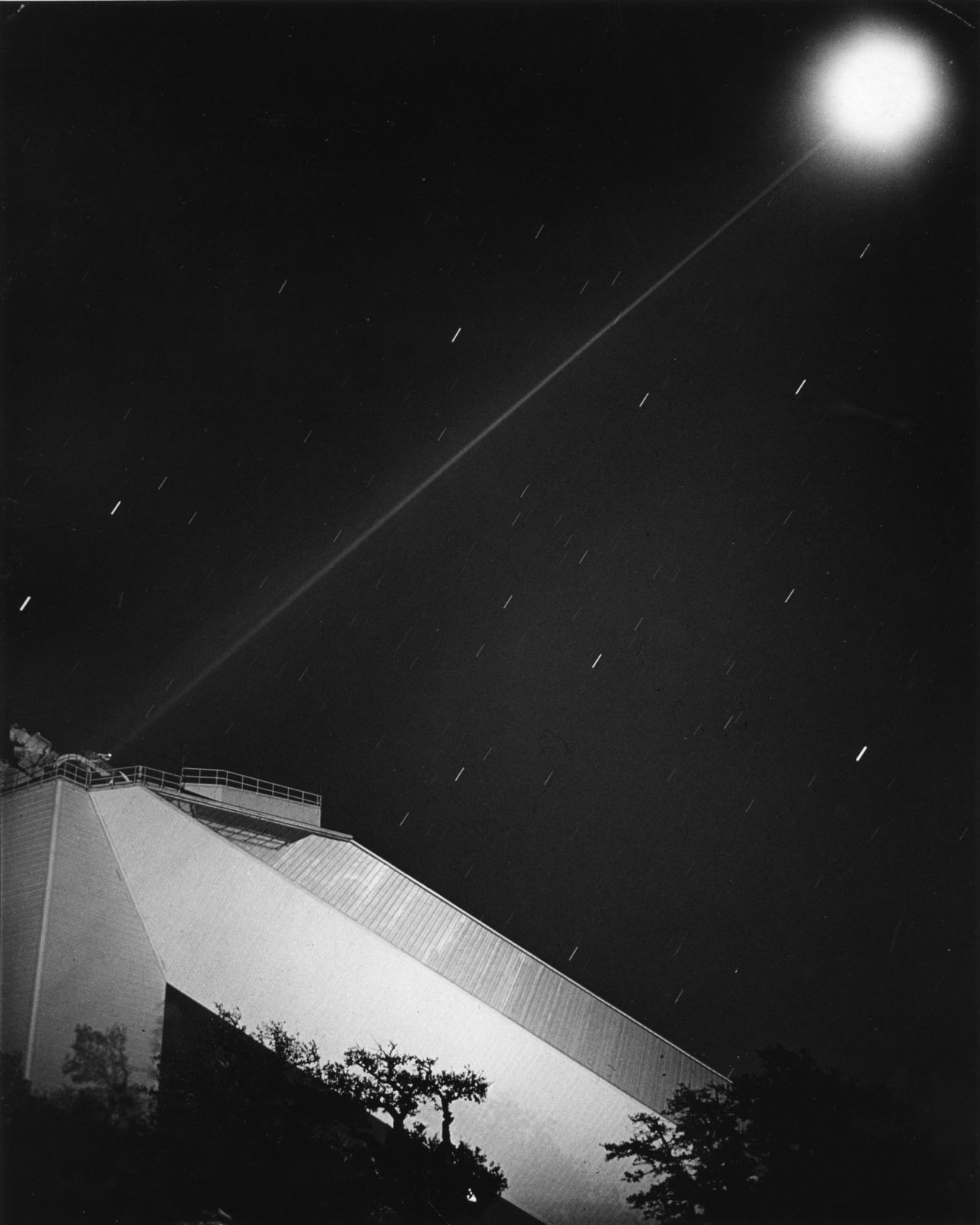
A laser beam from the McMath Solar Telescope at Kitt Peak National Observatory targets the moon in July, 1971.
Kitt Peak National Observatory
Updated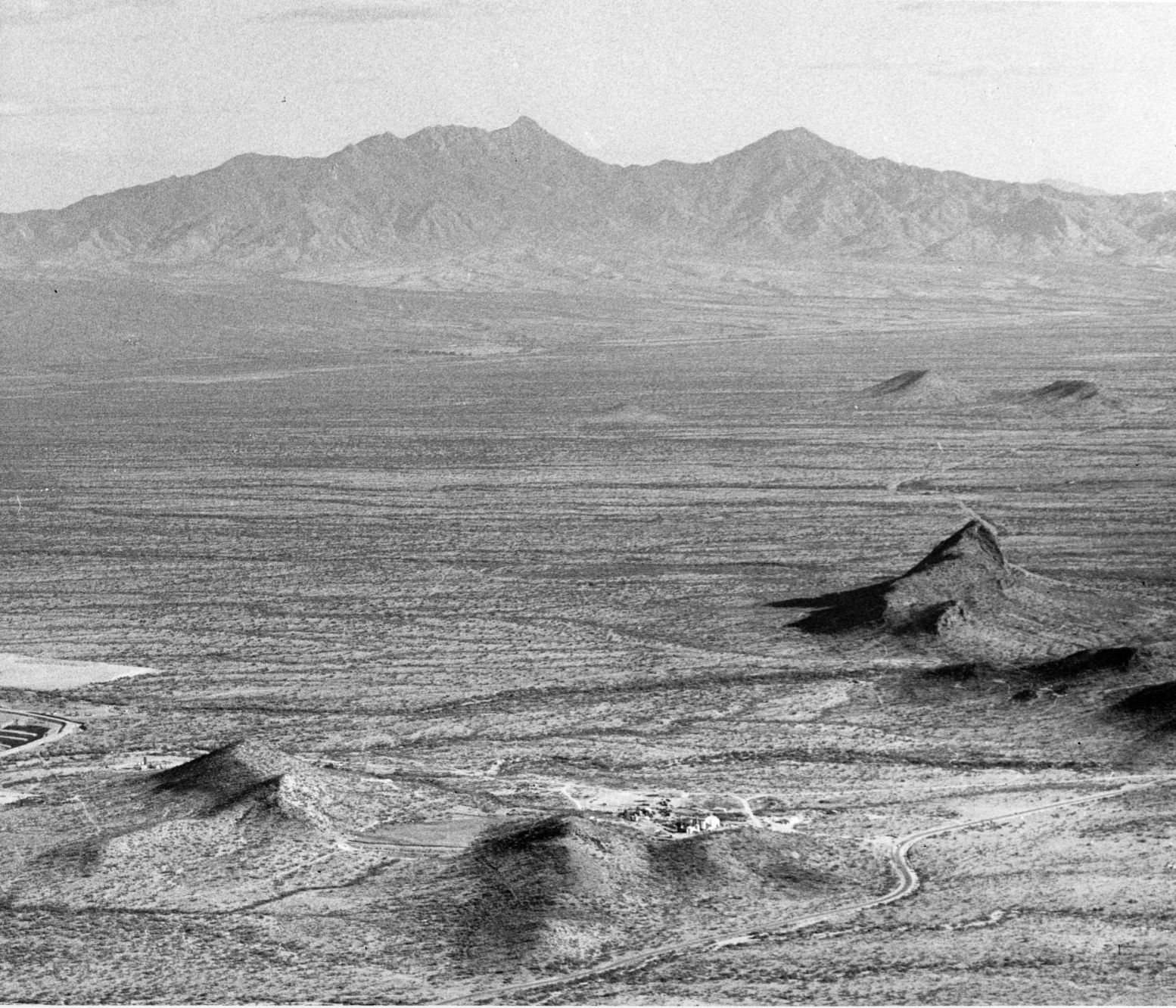
The valley floor below Kitt Peak National Observatory, ca. 1960
Kitt Peak National Observatory
Updated
The McMath Solar Telescope flanked by snow that fell on Kitt Peak National Observatory in February, 1966,
Kitt Peak National Observatory
Updated
A 10.5-ton fork is lifted into place at the 3.5 Meter WIYN telescope at Kitt Peak National Observatory in May, 1992. The fork holds a center section that includes the mirror, which was added later that year.
Kitt Peak National Observatory
Updated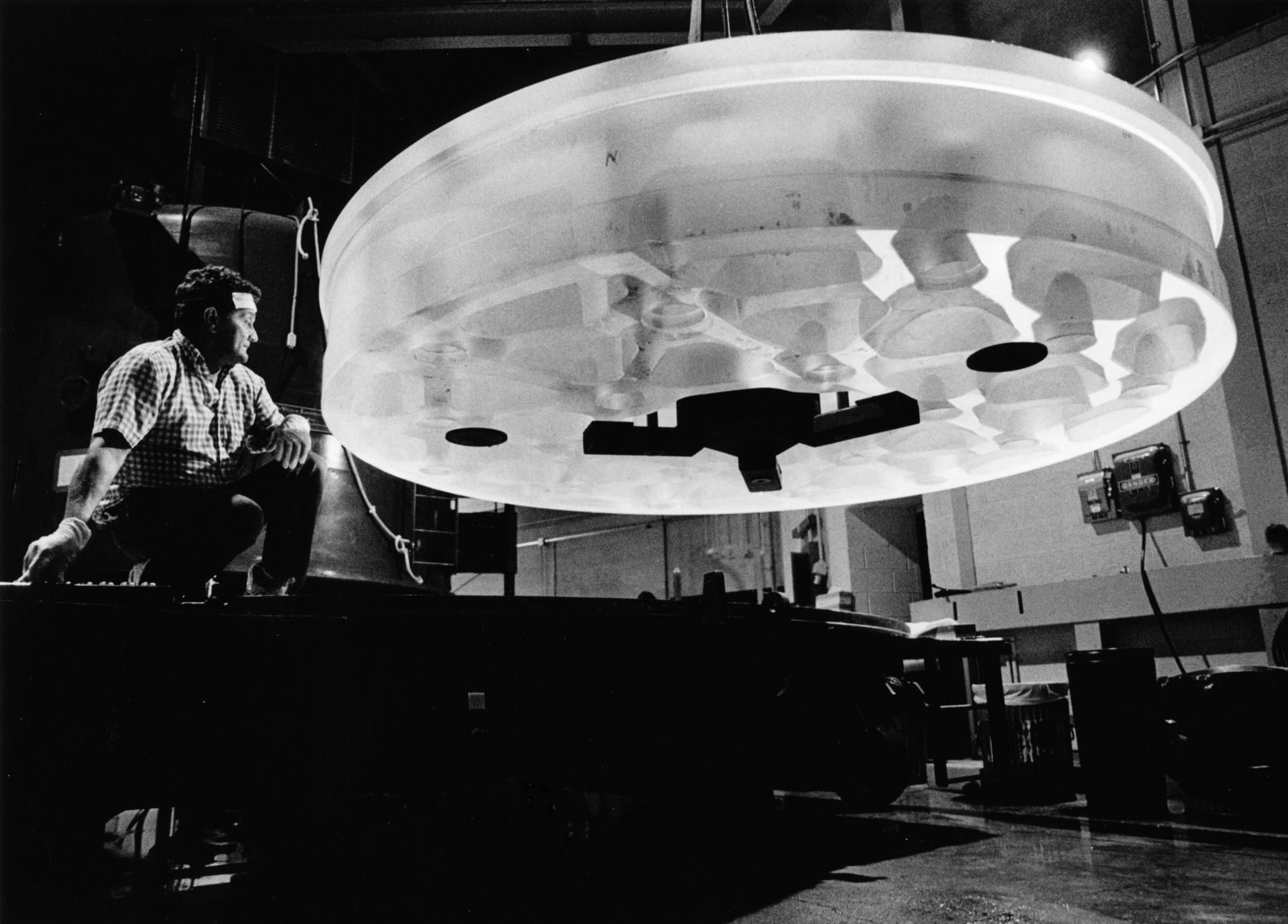
Jon Settlemyre watches the quart mirror from the 2.1 Meter telescope lowered onto a platform on an realuminizing chamber at Kitt Peak National Observatory in 1992. It was transferred to the Mayall Telescope building where the old coatings were stripped off and new ones reapplied.
Kitt Peak National Observatory
Updated
The lights of Tucson as seen from Kitt Peak National Observatory in 1959 (top) and 1980 (bottom).
Kitt Peak National Observatory
Updated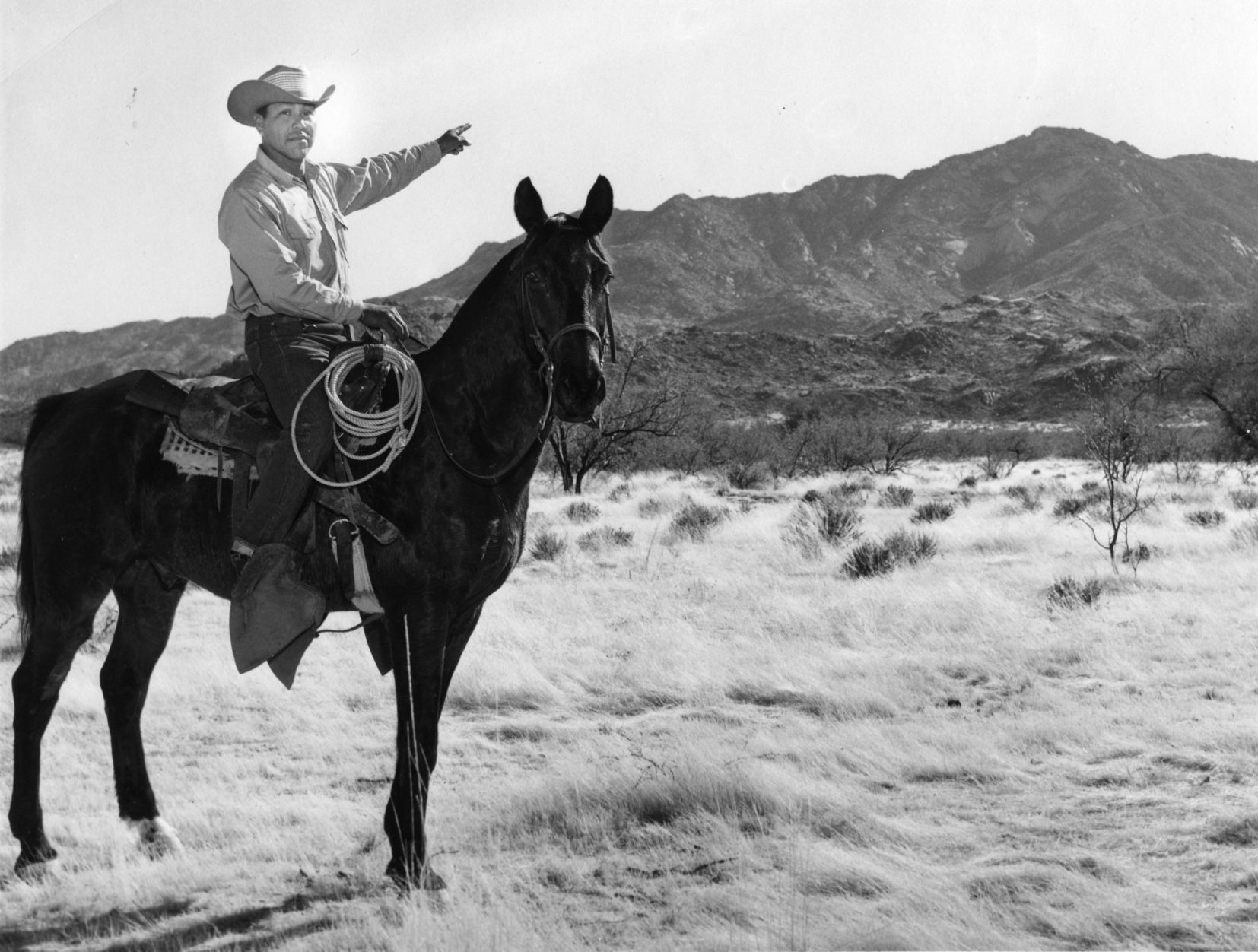
Roman Chavez, vice-chairman of the Papago (now Tohono O'Odham) Tribal Council, points at Kitt Peak in the Quinlan Mountains west of Tucson in 1956, during site and lease discussions for the observatory.
Kitt Peak National Observatory, 1959
Updated
Aerial photo of Kitt Peak on Jan 31, 1959. looking west solar telescope pad at bottom center of the picture.
Building the road to Kitt Peak National Observatory
Updated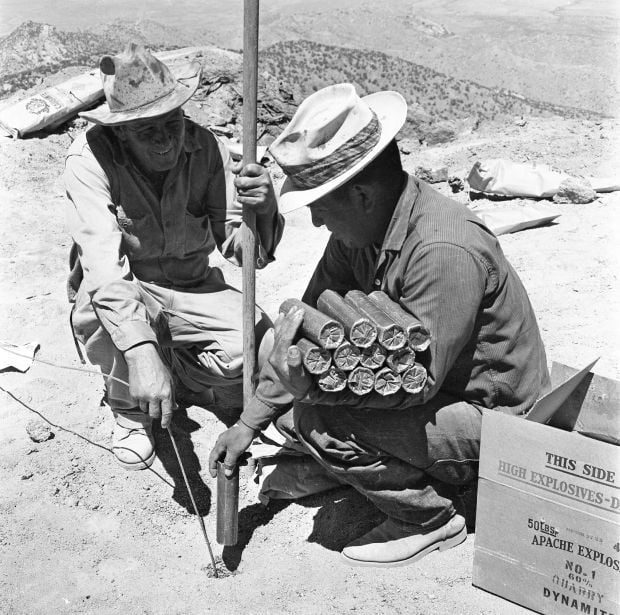
Building the road to Kitt Peak National Observatory in May, 1960: Workers slip explosives into holes to blast away rock.
Building the road to Kitt Peak National Observatory
Updated
Building the road to Kitt Peak National Observatory in May, 1960: A jackhammer operator pounds away at the rock face.
Building the road to Kitt Peak National Observatory
Updated
Building the road to Kitt Peak National Observatory in May, 1960: Bulldozers operate on treacherous, unstable material blasted from the the face of the mountain.
Building the road to Kitt Peak National Observatory
Updated
Building the road to Kitt Peak National Observatory in May, 1960: A truck eases down the early primitive road from near the top. The first telescope on the mountain, the 36-inch, can be seen in the background.
Building the road to Kitt Peak National Observatory
Updated
Building the road to Kitt Peak National Observatory in May, 1960: A dozer operator tackles tree stumps and rock.
Snow in Tucson
Updated
Snow and ice clinging to the telescope structure at Kitt Peak National Observatory west of Tucson on March 3, 1964.
Snow in Tucson
Updated
Snow and ice at Kitt Peak National Observatory on March 3, 1964.
Kitt Peak National Observatory
Updated
Actuators on the back of the telescope can make minute adjustments in the shape of the mirror surface of the WIYN Telescope, a 3.5 m meter telescope operated by a consortium of University of Wisconsin-Madison, Indiana University, Yale University and the National Astronomy Observatory. It is located west of Tucson, AZ.Photo taken Wednesday, October 23, 2013.
Kitt Peak National Observatory
Updated
A view from the Nicholas U. Mayall Telescope of some of the other telescopes at Kitt Peak National Observatory west of Tucson, AZ. The tall telescope at left is The McMath-Pierce Solar Telescope. Top center is The 2.1-meter Telescope and at right is The WIYN Telescope. Photo taken Wednesday, October 23, 2013.
Kitt Peak National Observatory
Updated
Seen from inside the 780 ft. linear optical tunnel of Kitt Peak National Observatory's McMath-Pierce Solar Telescope, sunlight is reflected from the three mirror heliostat, through a series of mirrors in the tunnel to the observation room where is it analyzed with spectrographs. McMath-Pierce Solar Telescope, built in 1962, west of Tucson, AZ., is the largest solar telescope in the world. Photo taken Wednesday, October 23, 2013.
Kitt Peak National Observatory
Updated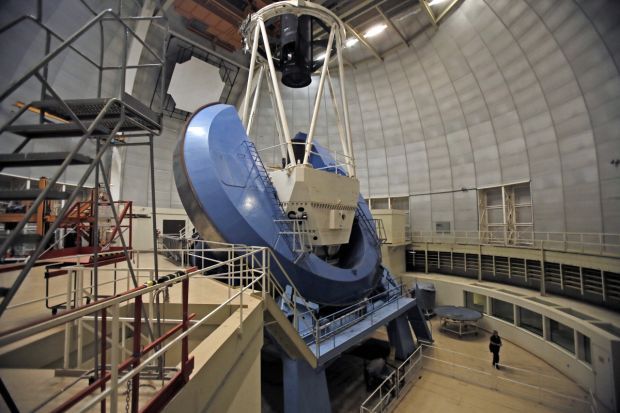
Lori Allen, left, Director of Kitt Peak National Observatory, is dwarfed by the Nicholas U. Mayhall 4-meter Telescope at Kitt Peak National Observatory west of Tucson, AZ. . Photo taken Wednesday, October 23, 2013.
Kitt Peak National Observatory
Updated
Matt Penn, Solar Astronomer with National Solar Observatory, discusses telescopes in the observation room of Kitt Peak National Observatory's McMath-Pierce Solar Telescope, built in 1962, the largest solar telescope in the world west of Tucson, AZ. Photo taken Wednesday, October 23, 2013.
Kitt Peak National Observatory
Updated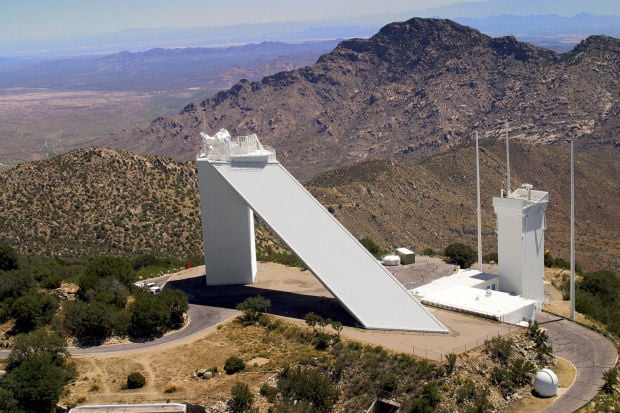
The McMath-Pierce Telescope on Kitt Peak since 1962, LEFT, and the SOLIS (Synoptic Optical Long-term Investigations of the Sun) at right..
Kitt Peak National Observatory
Updated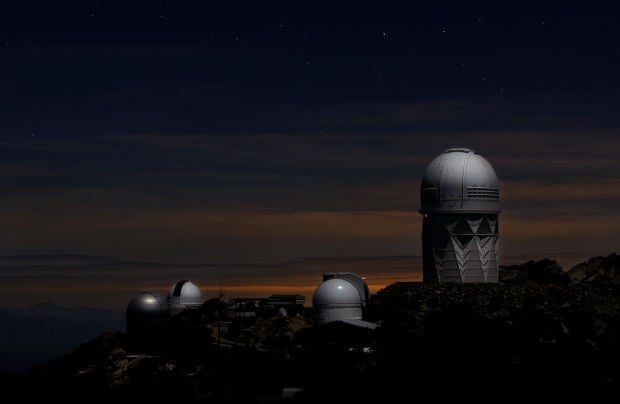
The orange glow of light pollution from Phoenix and Casa Grande lights the skies north of the SARA 0.9 meter, left, the Spacewatch 0.9 meter, the CWRU Burrel Schmidt 0.6 meter, the Steward Observatory's Bok 2.3 meter and the KPNO Mayall 4 meter telescopes at Kitt Peak National Observatory in 2010.
Kitt Peak National Observatory
Updated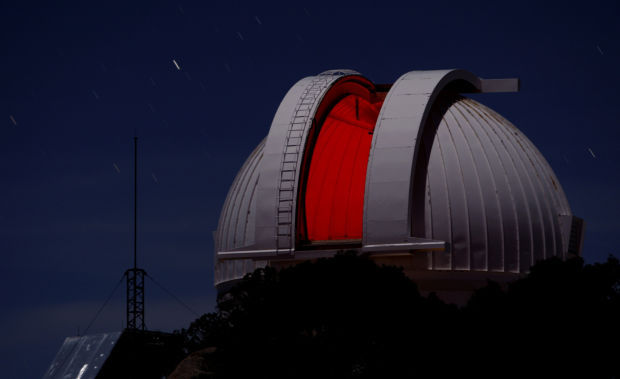
The dim glow of saftey lights shines out of the door of the WIYN 0.9 meter telescope where a tour group is using the instrument at Kitt Peak National Observatory in 2010.
Kitt Peak National Observatory
Updated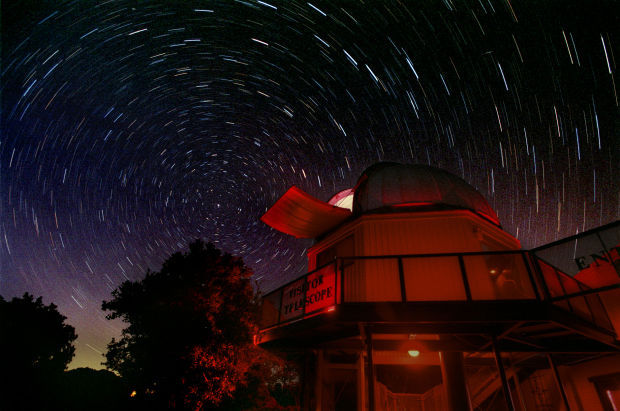
Stars swirl around the North Star, just to the left of the Kitt Peak observatory, in a 40-minute exposure.
Kitt Peak National Observatory
Updated
Bob Martino, standing at left, talks to astronomy enthusiasts about some of the stars that are visible at sunset as they listen to him at the 16 inch telescope with its roll-off roof at the top of Kitt Peak National Observatory in 2009. At upper left is the 4-meter Mayall telescope with the city lights of Three Points, AZ at the upper right.
Kitt Peak National Observatory
Updated
Some of the many observatories at Kitt Peak National Observatory.
Kitt Peak National Observatory
Updated
Aden B. Meinel, First director of Kitt Peak Observatory, photographed in 1993.
Kitt Peak National Observatory
Updated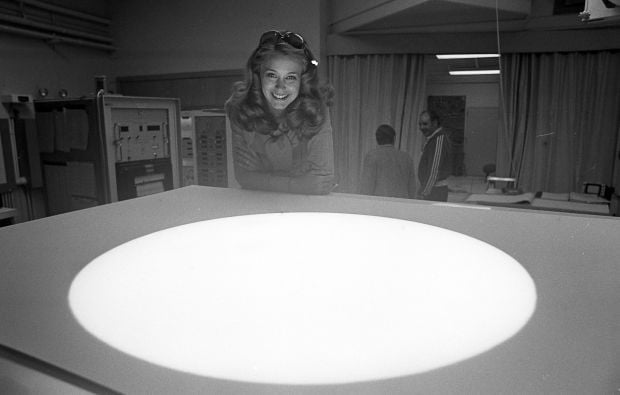
Jane Pauley surveys Kitt Peak's solar telescope in 1978.
Contreras Fire, Kitt Peak National Observatory, 2022
Updated
Kitt Peak National Observatory after the Contreras Fire.
Contreras Fire, Kitt Peak National Observatory, 2022
Updated
Kitt Peak National Observatory after the Contreras Fire. The Nicholas U. Mayall 4-meter Telescope is visible on the ridge on the left hand side of the image.