



The U.S. Army Corps of Engineers’ decision to relinquish its authority over the proposed Rosemont Mine has drawn sharp criticism from the Environmental Protection Agency.
EPA says the Corps’ decision — which opens the door for Rosemont to be built without a Clean Water Act permit — inaccurately assessed the nature and ecological value of several washes and a wetland on the mine site.
The EPA’s criticism, in a document recently obtained by the Star, comes as the two federal agencies prepare to revise and most likely toughen the rule that allowed the Corps to make its Rosemont decision.
That rule, adopted last year, eliminates federal authority under the Clean Water Act over development along streams that are normally dry. It also sharply restricted federal control of development along streams that run more often but not year-round.
But however that turns out, the Corps says it won’t back down from its March 2021 decision removing its authority over all washes and creeks at the mine site on the Santa Rita Mountains’ east slope.
Barring a successful court challenge from opponents, the Corps will stick to that stance for five years, the agency told the Star.
While that decision didn’t revoke a 2019 Clean Water Act permit it had issued for the mine, it gave Rosemont developer Hudbay Minerals Inc. the opportunity to seek permission to build the open-pit mine under the new ground rules providing no federal authority over the washes.
In its response, EPA said the Corps’ analysis “is flawed in several crucial areas leading to erroneous conclusions.”
It said the Corps misidentified the nature of several washes near the site, incorrectly failed to identify a wetland and failed to consider connections that exist through tributaries between some washes and navigable waterways that would allow the washes to be regulated.
Asked about EPA’s response, Corps spokeswoman Dena O’Dell said, “We stand by the technical analysis presented in our approved jurisdictional determination.”
If the Corps decision stands, a lawsuit that environmentalists and Native American tribes had filed to overturn the Corps’ 2019 Rosemont permit would likely be moot.
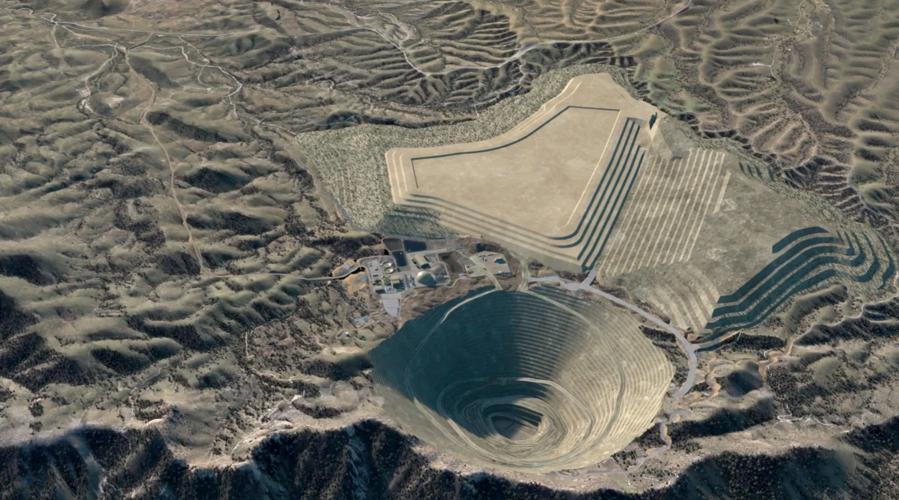
That would remove one of two hurdles blocking the $2 billion mine construction project after 14 years of planning, debate and litigation.
The other hurdle is a U.S. District Court order in 2019, following a lawsuit, overturning the U.S. Forest Service’s separate approval of the mine. The ruling is under appeal by Hudbay and the U.S. government at the 9th Circuit Court of Appeals.
Nationwide controversies
The battle over Rosemont’s status under the Clean Water Act is a miniature version of a dispute over regulation of ephemeral streams that has lasted nationwide for more than 15 years.
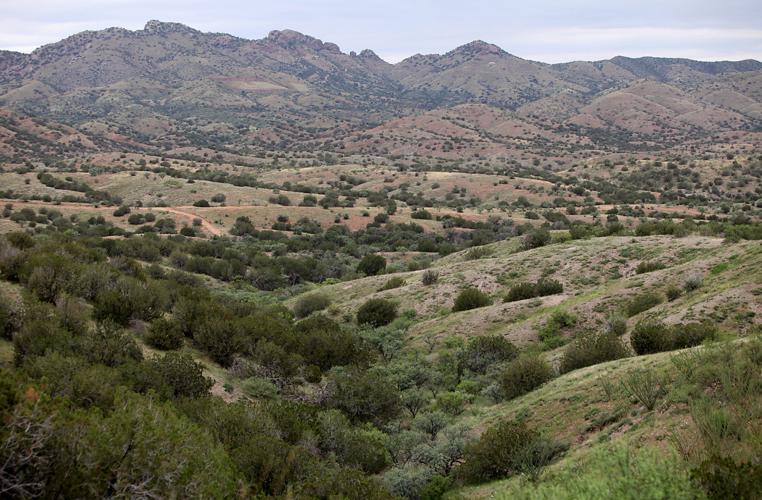
Ephemeral streams typically carry water only after storms and are the dominant form of washes and streams in the Southwest — including the Rosemont site in the Santa Ritas southeast of Tucson.
From the middle 2000s throughout the Obama administration, EPA and the Corps required developers to get Clean Water Act permits to discharge dredge and fill material into these streams — first with informal guidelines, then with formal rules.
The Trump administration repealed the rules in 2017 and issued a less restrictive navigable waters protection rule about a year ago.
That rule halted regulation of development along ephemeral streams. Also, on intermittent streams, which flow far more often, regulation is possible only in limited circumstances.
Water flows in intermittent streams when the groundwater table is elevated or after snowpack melts. But the navigable waters rule kicks in for them only if they contribute flow during a typical weather year to a downstream navigable waterway.
Under the old rules, the Corps had tentatively concluded that about 100 acres of washes out of a “review area” of 8,676 acres in and around the Rosemont site were eligible for Clean Water Act regulation, even though most were ephemeral. Its 2019 permit allows Hudbay to discharge dredge and fill material into 42 acres of the washes. But the Corps’ March decision says none of those washes are covered.
EPA: Streams connect to Santa Cruz River
Some specifics on the Corps’ decision and EPA’s response:
The Corps said most washes on the site do not deserve regulation because they are ephemeral. Three washes there flow intermittently, but none connect to the nearest navigable waterway — the Santa Cruz River, 58 miles downstream, the Corps said.
But EPA said the mine area contains at least five intermittent and perennial — year-round — streams that should fall under federal authority because they connect to the Santa Cruz River via other tributaries. EPA said it confirmed this by analyzing seven streamflow gauges in the area and corroborating its findings with streamflow modeling done by a Hudbay consultant.
While the navigable waters rule covers wetlands adjacent to certain tributaries, the Corps found that one wetted area known as Rosemont Spring did not qualify because it lacked sufficiently wet conditions to support vegetation that thrives under saturation and flooding.
EPA concluded otherwise. During three visits to the area, its officials found indicators of wetland vegetation, soils suitable for wetlands, and the presence of a stream.
The Corps concluded that one stream in the area, in Wasp Canyon, is ephemeral because it has a “very minor, poorly defined connection to groundwater” based on field observations.
EPA, however, said there is some evidence Wasp is “likely intermittent.” EPA noted that surface water was found there during 14 of 20 visits to that area from 2005 through 2019.
‘Environmental degradation’
Three months after the Corps’ Rosemont decision this year, EPA and the Corps made pointed comments that the current rule is inadequate and they intend to revise it.
The two agencies determined the Trump-era rule is “leading to significant environmental degradation,” said EPA Administrator Michael S. Regan in a news release.
Interests including state and local governments, tribes, scientists and non-governmental organizations “are seeing destructive impacts to critical water bodies under the 2020 rule,” Regan added.
In a memo, the agencies said the rule’s impact was particularly strong in the Southwest.
In Arizona, 99.6% of 1,284 streams the Corps analyzed from June 22, 2020, to April 15, 2021, were considered “non-jurisdictional ephemeral resources,” and not regulated. In New Mexico, all 258 streams evaluated during that period were left unregulated.
Nationally in that period, the Corps determined 76% of more than 40,000 streams and other water resources were “non-jurisdictional,” meaning they don’t qualify for federal regulation. A total of 333 projects nationally that would have required Clean Water Act permits under the old rule don’t require them under the new rule, the agencies said.
Tribes are not waiting
Another federal lawsuit is not waiting for the rewrite. It seeks to overturn the navigable waters rule in hopes a favorable outcome would void Corps decisions, made under those rules, that freed Rosemont and hundreds of other projects from federal authority.
Filed by six tribes including two in Southern Arizona, the suit is being heard in U.S. District Court in Tucson.
EPA and the Corps have responded by asking U.S. District Court Judge Rosemary Marquez to send the navigable waters rule back to the agencies for reworking without tossing it out.
That would avoid potentially unnecessary litigation over parts of the current rule as a new rule is drafted, the response said. It would conserve limited resources “and would best serve the interest of judicial economy,” the agencies said.
Since all members of the public can comment on proposed new rules, those rules may resolve claims in this lawsuit, the agencies said. If not, the new rule could also be challenged.
But these efforts to preserve the current rule while pushing for a rewrite represent irreconcilable positions, said tribal attorney Stu Gillespie, whose clients include Southern Arizona’s Tohono O’odham and Pascua Yaqui tribes.
“They show the agencies are trying to avoid dealing with the rule as it is now,” Gillespie said. “That’s why the tribes asked to vacate the rule, wipe the slate clean and insure that these illegal jurisdictional determinations do not see the light of day.”
In particular, the Corps decision to eliminate jurisdiction over Rosemont threatens irreparable harm to the O’odham and Yaquis, “who have relied on the sites’ life-giving waters for thousands of years,” the tribes’ motion said.
“Not only are the environmental harms severe and irreversible, but the legal impacts are long-lasting as well,” due to the decision’s five-year term, he said.
Businesses cite economic harm
Seven Arizona business interest groups who intervened in the case supporting the EPA and Corps’ position say, however, that tossing out existing rules before new rules are approved would cause them substantial economic harm. The groups represent homebuilding, sand and gravel, contracting, cattle ranching and farming interests.
Such an action would plunge businesses “back into the same sort of uncertainty that has plagued them for years under vague, overbroad, and frequently changing jurisdictional rules, thereby suspending critical business projects and costing livelihoods” under the Clean Water Act, the business groups said.
“Clarity regarding which waters or land areas are jurisdictional is critical to the vitality of the regulated entities that operate under these regulations nationwide,” the groups said. “Landowners or operators who make a mistake face severe criminal and civil penalties.”