

Dozens of homeless people cleared out of downtown Tucson’s Veinte de Agosto Park over the weekend, per city orders.
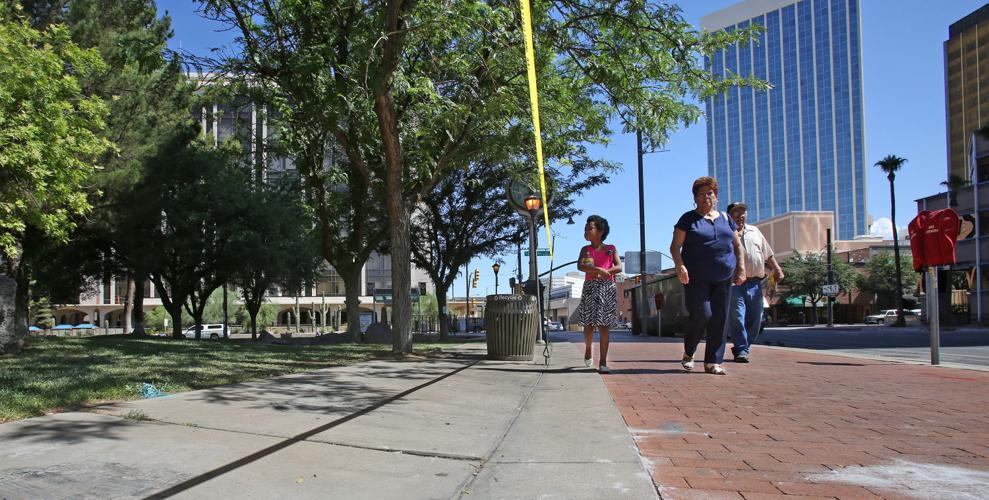
The park, where people were sleeping on bedrolls on the sidewalks and on blankets on the lawn, is now surrounded by yellow caution tape. Notices about the park closure are posted.
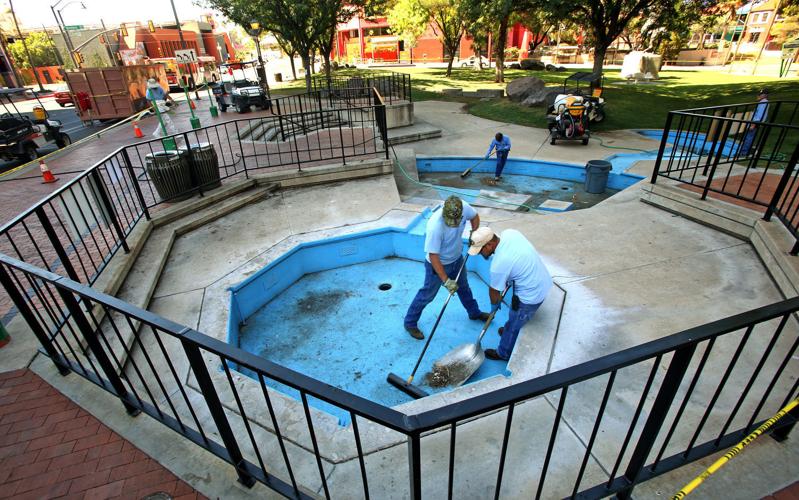
City crews washed the sidewalks, patio and fountain with high-pressure water Monday morning. With no restroom facilities available at the park, the smell of urine in the sun was strong at the former homeless camp.
The city also closed metered parking spaces where a van would bring coffee and breakfast to the homeless people each morning.
A group of downtown businesses had asked for those changes and more, saying they wanted to see solutions to the health and safety problems at the park.
Downtown business people were alarmed by what was happening in the park, including illegal drug use and unsanitary living conditions, said Buzz Isaacson, a commercial real estate broker who organized a meeting between business people and city officials last week.
While other parks in Tucson have large homeless populations, the city hasn’t received complaints about crime at those parks, said Interim City Manager Martha Durkin.
Tucson Mayor Jonathan Rothschild also agreed to take up the issue of a ban on urban camping, following a model used in Denver, at a City Council meeting in July. The issue stalled a few months ago after a previous homeless camp was dismantled, but the camp returned a few weeks ago.
In the long run, the city will consider policy changes at the park, from allowing only special events, to changing the landscaping, to eliminating it as a park altogether, said city attorney Mike Rankin.
Lawsuits related to the park are ongoing. Arguments in the 9th Circuit Court of Appeals are coming in August.
The city also is looking for solutions beyond city parks and trying to address the ongoing need for low-demand shelters, Durkin said. Low-demand shelters accept people who have substance-abuse or mental-health problems.
The city spends $10.7 million a year in local and federal tax dollars to address homelessness with shelters and housing programs, Durkin said.
City staff members are researching other cities’ successful programs that could work in Tucson, she said.

