



Several species of wildflowers are in brilliant bloom in desert canyons north of Tucson — never mind that it’s the middle of winter and the canyons were hit with freezing weather and a light dusting of snow earlier this month.
Surprising as the winter bloom might seem, especially in a month when temperatures in some parts of the country have plunged far below zero, botanists say it can happen when conditions are right.
“If there is good rain and there aren’t very hard freezes, numerous perennials will bloom in midwinter,” said Mark Dimmitt, a wildflower expert and retired director of natural history at the Arizona-Sonora Desert Museum. “Some annuals jump the gun, too, if they get an early start.”
Meg Quinn, a Pima County environmental educator, said, “If conditions are favorable, many desert species will flower at seemingly odd times and are considered opportunistic.”
The daytime temperatures have warmed up, and soil is relatively moist in many areas from the recent rains.
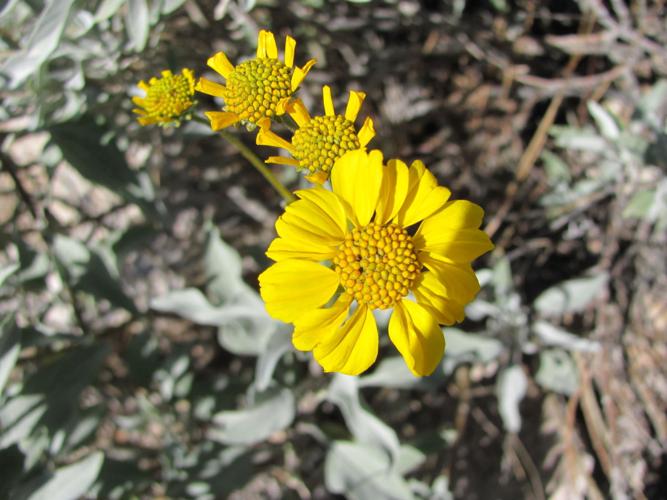
“It’s actually not so unusual to see some brittlebush budding and flowering in December and January and coming into full bloom in February and March,” Quinn said.
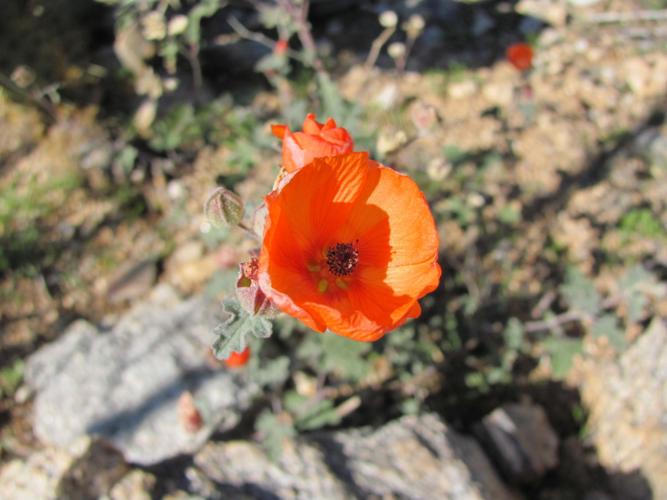
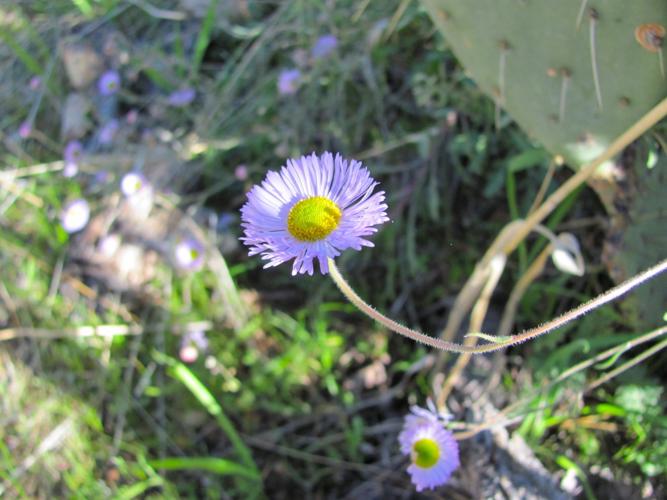
A trek up the Pontatoc Canyon Trail north of the city this week led past scattered bright-blooming clumps of orange globemallow, blue fleabane and yellow brittlebush. Also along the trail were growths of wild grasses and other plants showing vibrant hues of emerald green more reminiscent of spring than winter.
Other desert canyons in the Catalina Mountains north of the city will have some flowers in bloom as well.
Be aware that you won’t see expanses of wildflowers at this time of year — just individual perennial plants blooming here and there. Annual species such as gold poppies and lupines don’t commonly begin blooming until February or March.

