


The Max Delta Mine, also known as the Ace Mine, is found on the north slope of South Mountain within the 16,000-acre South Mountain Park.
The Phoenix park was established in 1924, and is one of the largest to be operated by a municipality in the United States.
Early prospecting in the area occurred during the late 19th century, though evidence of prior placer gold mining existed among numerous gulches in the area.
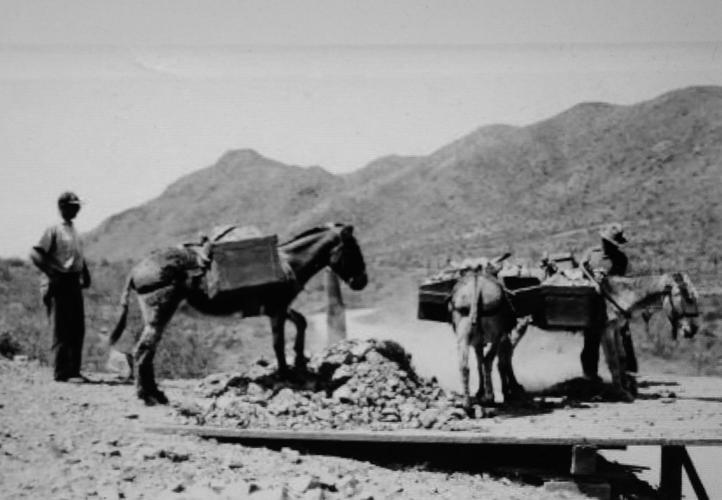
Seven stone houses were also documented in the area in the early 1900s, along with nearby flat stones covered with petroglyphs. The Maximillian lode yielded an initial $30,000 worth of ore. It was transported by pack train, loaded into wagons and transported to an arrastre field yielding $15 to $60 a ton.
Max Delta Gold Mining Co. began the first underground production in 1913. Primary minerals included gold with some silver mixed with gangue hematite, limonite and quartz. Some inclined veins contained ankerite, a brown carbonate of iron with manganese. Country rock at the mine site included gneiss, granite and schist.
Mining Engineer J.P. Steele, provided a positive assessment of the mine to its owners in 1916. The main delta workings, including the first through third levels, included $8 to $16 worth of gold per ton, with the loss of the ore vein at the fourth level and the fifth level submerged in water.
The Max-Delta Co. attempted to operate a 25-ton cyanide mill on site. But the company overcompensated its holdings, causing the mine to shut down in 1920.
Development included 2,500 feet of tunnels along with some stopes and a 500-foot main shaft. Ore shoots measured 100 feet long by 100 feet high. Several medium-sized lenticular veins carrying gold were also followed during the mine’s operations. Water from the 500-foot inclined shaft supplied the 25-ton cyanide mill.
The mine site included nine patented and three unpatented mining claims. Equipment included a Sullivan compressor power drills, a 25 horsepower Fairbanks-Morse Gasoline Hoist, a 40 hp gasoline engine, track, cars and a miner’s cabin.
The Max Delta Mine was the second-largest gold producer in Maricopa County during the Great Depression.
T.C. McReynolds acquired the mine in the early 1930s and sold it later to a group of local investors, comprising the Ace Mining & Development Co.
An average of 140 tons — averaging 0.70 ounces of gold — were shipped by the mine each month between 1933 and 1938 using 161 cars. Production of gold increased through the later 1930s, with reports of $300,000 of the precious metal mined by 1939.
Averaging an ounce of silver per ton, the company’s 24-man operation included ore transportation from the mine by truck about nine miles to the railhead and to smelter. The cost was about $1.75 per ton.
The ore was hand sorted prior to shipment to several smelters in Southern Arizona.
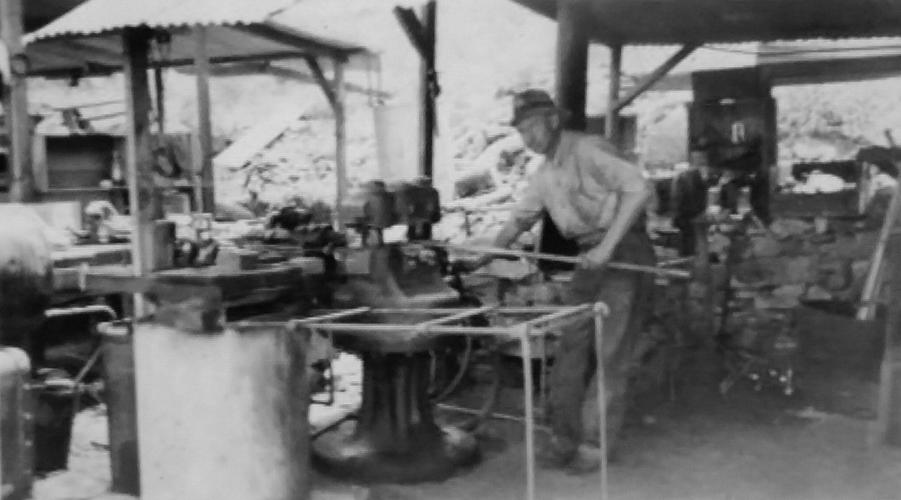
A mill, perhaps acquired from the Swastika Mine in the Bradshaw Mountains, was erected onsite by Sam Harris of Lansing, Michigan. He acquired the property from the Ace Mining & Development Co. in 1939.
Siliceous gold ore shipments were sent to the Asarco smelter in Hayden. Siliceous low-grade ore was shipped by truck to the Magma mine for converter flux.
Limitation Order No. 208 issued by the U.S. War Production Board in 1942 declared gold mining nonessential to the U.S. military industrial complex during World War II. The order led to the mine’s final shutdown.
Harris later relinquished his option on the property. Several former Ace company investors assumed it, including Claude E. McLean, H.B. McIntosh, and mining engineer and mineral collector Arthur Flagg, who authored multiple reports of the mine’s operations in the 1930s.

