



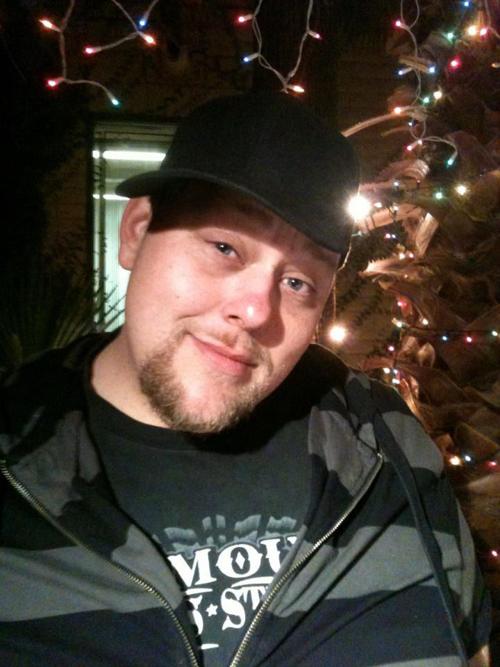
It had been more than a year since Joseph McDonald performed as Big Daddy JoJo, and he wasn’t sure he was ready.
Standing on the stage at the Tohono O’odham Nation’s recent annual “Wellbriety” celebration of sobriety from addiction, he hesitated before speaking. The event program listed his performance as “Sober Flow."
McDonald, 36, explained to the audience that he is the only member of Sober Flow right now. He used to perform, as Big Daddy JoJo, as one of six musicians in the hip-hop group. All of them were former addicts who met in a 90-day residential recovery program in Tucson.
They wrote songs like “Mr. Black” about struggling with addiction to black tar heroin and performed at different local antidrug functions, after-school programs, and for recovery groups.
Counselor and hip-hop music therapist Jiandan “JD” Janet Payza founded the Sober Flow Recovery Project in 2012 when she was working at what was then called Compass Healthcare (now Pasadera).
She saw it as a way to give members an outlet and to do prevention outreach to youths in the community through the expressiveness of hip-hop music they could write themselves.
When the six members graduated from the recovery program, they continued to practice and perform with Sober Flow, which was a signal to Payza that it was making a difference.
“The key to recovery is creativity — something that moves you and is from your heart,” Payza said. “It channels all the negative energy. It was so beautiful for them to experience pleasure without getting high.”
But then one member of Sober Flow — a 20-year-old woman — killed herself. After the suicide, Payza, McDonald and other group members were shattered. Eventually, they stopped meeting.
“Everyone loved her so dearly,” Payza said. “She had just found her voice.”
McDonald, who was also grieving the recent loss of his brother to illness, began using drugs again. He didn’t want to tell his family that he’d relapsed with heroin. Overwhelmed by shame, he decided it would be better if he died.
But rather than dying, he ended up giving himself another chance and went to detox.
He’s been clean for nine months now.
So when Payza contacted him about performing at Wellbriety, he didn’t say yes right away.
Payza, now in private practice in Los Angeles, offered to drive to Tucson for the performance and to bring her sound system. She asked because she strongly believes in the power of music therapy, and also in McDonald’s abilities as a musician. She says music saves lives.
“It was hard to convince him to do it,” Payza said. “The songs they did were group songs. He was reluctant. But then he contacted me and said, ‘Oh, I am writing this sick song,’ and I knew he was going to do it.”
The crowd at Wellbriety responded to McDonald with shouts of support when he said he was sober now following a relapse. They understood. The event, officially titled “Red Road to Wellbriety,” was a party of sorts to recognize people, most of them tribal members, who had maintained sobriety, whether it was for one day or 30 years.
With Payza encouraging him in the wings, McDonald began to sing about losing everything to addiction. He sang about how he once had a healthy life and a healthy soul, but that he gave it all away. When he was done, the audience asked for an encore.
McDonald, who was born and raised in Tucson, first became addicted when he was living in Las Vegas and working at a credit agency there. He was having back problems, and a doctor prescribed him pain medication. He later moved on to heroin.
“Addiction does not discriminate,” said McDonald, who now works for a local collection agency. “It affects people with established lives and careers. It’s sad that a lot of people, because of ignorance, don’t recognize that it’s a disease. It’s not that addicts are bad people; they are sick people.”
McDonald is hoping to continue with Sober Flow, even if he’s doing it on his own. He knows the toll that drugs are taking on young people in the community and nationwide.
Records from the Pima County Forensic Science Center show that 146 people in Pima County have died from overdoses through Sept. 17 of this year — 26 of them were 30 years old and younger. McDonald says he’d like to do his part in preventing future deaths due to addiction.
“Being at Wellbriety was a good starting point for me to get back to Sober Flow,” he said. “I hope to continue and see if we can’t get it going again.”

