

PHOENIX — Trial judges cannot keep voter-proposed initiatives off the ballot just because the description doesn’t mention every provision, the Arizona Supreme Court ruled Monday, a finding that should make it easier to put future initiatives to voters.
In an extensive decision, the justices rejected the idea that the legally required 100-word explanation on petition sheets must inform would-be signers of everything the proposed state law or constitutional amendment would do. As long as the wording does not provide “objectively false or misleading information” or obscure key provisions, it meets legal requirements, wrote Justice Ann Scott Timmer for the unanimous court.
Ever wonder why Americans vote on the first Tuesday after the first Monday in November? Like many traditions, the practice goes back a long time and hasn't changed in modern times. What do you think? Should we hold Election Day on another day or should we keep it on Tuesdays?
And if nothing else, Timmer said including every provision of a complex measure in that 100-word limit is just impractical. She said it’s sufficient for proponents to say in the description that those who want more information should read the actual text of the proposal.
Monday’s ruling specifically explains the court’s previously announced decision to give voters their say on a 3.5% surcharge on taxes of earnings above $250,000 for individuals and $500,000 for couples. Proposition 208 earmarks the proceeds mainly for K-12 education.
A trial judge had provided a litany of reasons he found the proposal legally unworthy to be on the Nov. 3 ballot.
The high court’s ruling is also a setback for initiative foes, particularly the Arizona Chamber of Commerce and Industry, which has routinely opposed efforts by voters to go around the decisions of the Republican-controlled Legislature in deciding what to enact and what issues to ignore.
That, in turn, could ease the path for anticipated future ballot proposals for the 2022 ballot, including increasing Arizona’s unemployment benefits, providing for family leave and creating more affordable housing.
But other hurdles may be coming.
Chamber spokesman Garrick Taylor, who believes initiatives are misused, noted some states require a certain percentage of signatures to come from different areas of the state. Right now, circulators can get all the names they need from one county.
Taylor also noted some states have a requirement for initiatives to be ratified at two successive elections to take effect. He also said a requirement for a 60% approval margin may make sense.
That latter requirement, had it been in effect in Aizona, would have resulted in the defeat of at least two proposals opposed by the chamber: the 2010 initiative allowing the medical use of marijuana, and the 2016 measure imposing a $12 minimum wage.
Garrick said hurdles are merited, and not just because his organization traditionally opposes ballot measures. He said initiatives often are financed by out-of-state interests. And a constitutional amendment — itself proposed and approved by voters — bars lawmakers from tinkering with anything approved at the ballot.
Central to Monday’s ruling is the right of Arizonans to propose their own constitutional amendments and changes to state law by gathering sufficient signatures on petitions.
Maricopa County Superior Court Judge Christopher Coury had invalidated all the Prop. 208 petitions, saying the 100-word description omitted five principal provisions. One was that the description listed which programs would benefit from the money raised by raising taxes on high-wage earners, but not what percentage for each program.
Timmer said that is not a principal provision that has to be detailed for signers. Anyone who wanted that level of detail “could readily discover it by reading the initiative text appended to the petition,” she said.
The justices also rejected Coury’s claim that it was misleading and confusing to call the 3.5% increase on taxes of certain individuals a “surcharge.”
“Neither the definition of ‘surcharge’ nor other language in the description supports this finding,” Timmer wrote. “The term is commonly understood to mean an additional charge, not a temporary one.”
The court also said Coury was wrong in quashing the initiative because it did not specifically point out that the effect on owners of certain kinds of small businesses who do not report corporate income but instead attribute any profits to their personal income taxes.
“What is taxable as income is dictated by state and federal law,” Timmer said.
The judge said the effect on small businesses is a point to be argued to voters, something the chamber is doing with its claim that half of the money raised would come from owners of small businesses who employ 58% of Arizonans.
She specifically said only the most important, consequential and primary features of the initiative have to be in the explanation.
“The 100-word description serves as the ‘elevator pitch’ that alerts prospective signatories to the measure’s key operative provisions, enabling them to decide in short order whether to sign the petition, refuse to do so, or make further inquiry about the measure,” she wrote.
Potentially more important, Timmer said the description can, in fact, be a sales pitch as long as it’s not misleading. “(The law) does not require the description to be impartial,” she said.
Finally, the justices told the trial judges to use common sense in deciding whether a description is misleading.
“Reasonable people can differ about the best way to describe a principal provision, but a court should not enmesh itself in such quarrels,” Timmer said. “Applying the reasonable person standard, the trial judge should ordinarily decide the sufficiency of a description without expert witness evidence.”
That last reference is to the fact that Coury allowed the attorneys for business foes of Prop. 208 to bring in an economist to argue the definition of a “surcharge.”
Photos: 2020 Primary Election in Pima and Maricopa counties
Primary Election in Pima County
Updated
An elections worker looks over a few of the early primary ballots at one of the scanning stations during counting at the Pima County Elections Center, Tucson, Ariz., August 4, 2020.
Primary Election in Pima County
Updated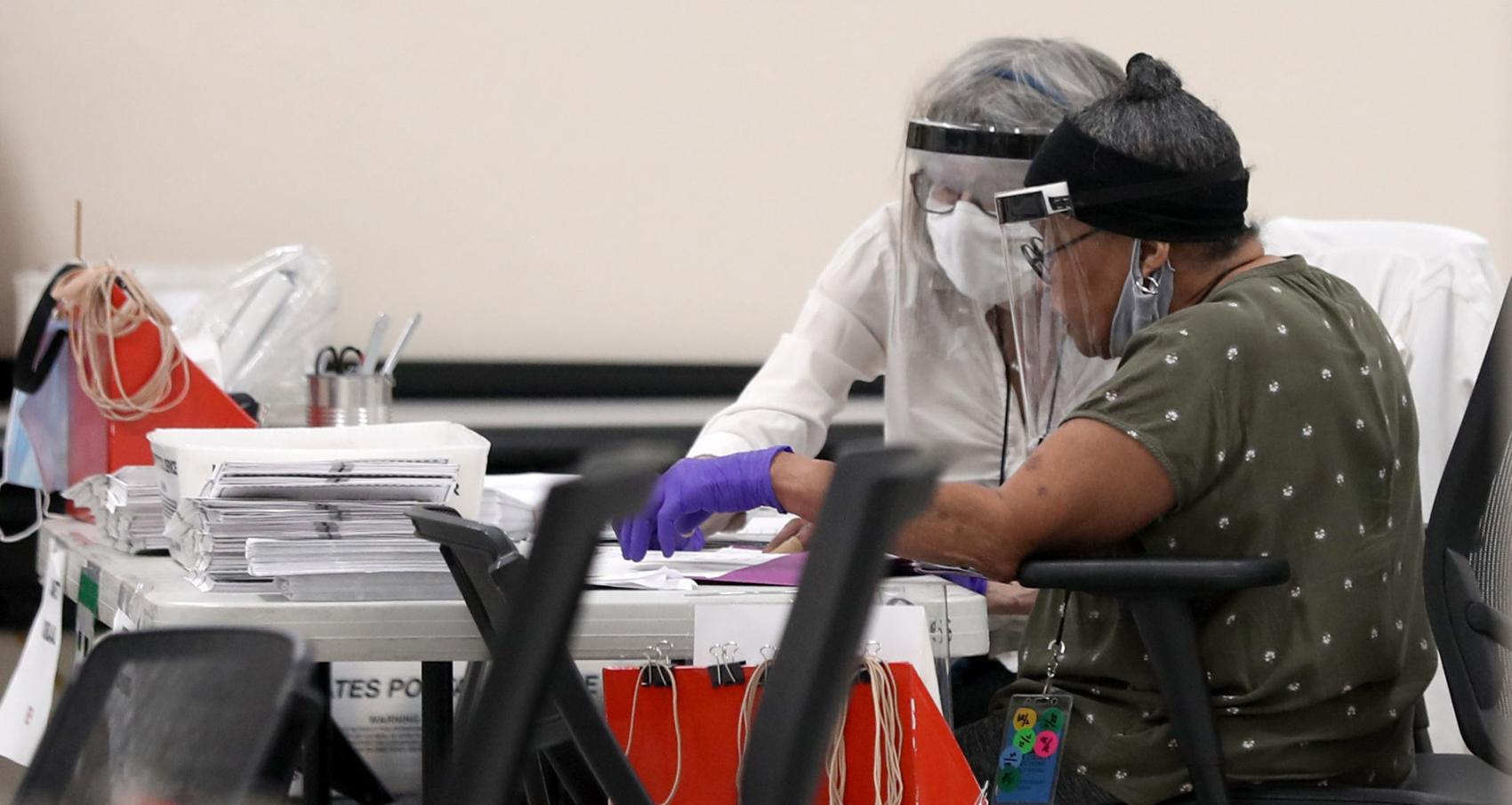
A pair of elections workers look over an early primary ballot as part of the counting process at the Pima County Elections Center, Tucson, Ariz., August 4, 2020.
Primary Election in Pima County
Updated
Elections workers feed primary ballots in to scanners at the Pima County Elections Center, Tucson, Ariz., August 4, 2020.
Primary Election in Pima County
Updated
A poll worker waits inside the Pima County voting site at Morris K. Udall Recreational Center, 7200 E. Tanque Verde Rd., in Tucson, Ariz on August 4, 2020.
Primary Election in Pima County
Updated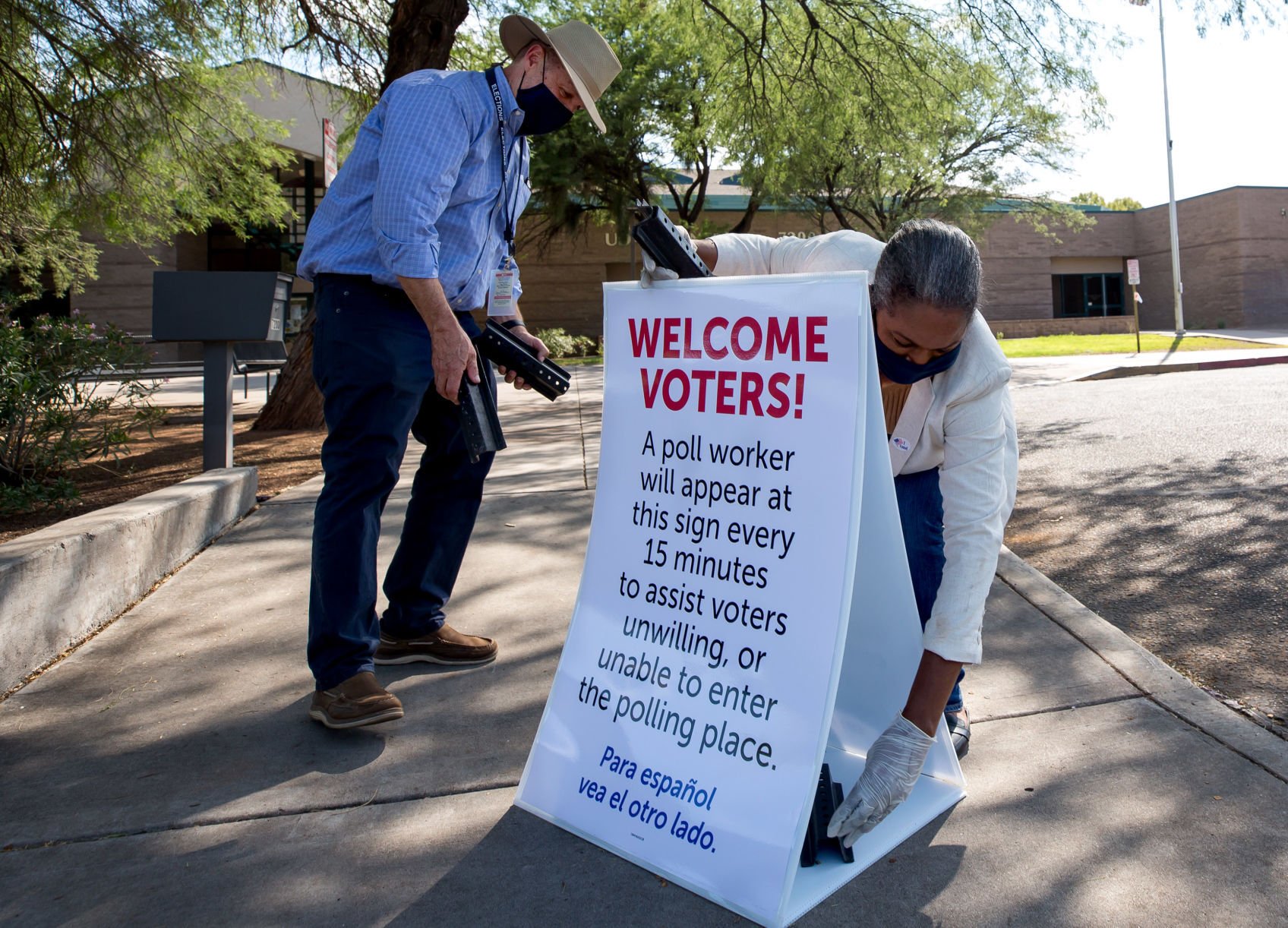
Brad Nelson, left, Pima County elections director, helps Lisa Matthews, Pima County election marshal, put up a “Welcome Voters” sign after it was blown down outside of the Pima County voting site at Morris K. Udall Recreational Center, 7200 E. Tanque Verde Rd., in Tucson, Ariz on August 4, 2020.
Primary Election in Pima County
Updated
After voting, a voter walks back to their car at the Pima County polling site at Ellie Towne Flowing Wells Community Center, 1660 W. Ruthrauff Rd.., in Tucson, Ariz on August 4, 2020.
Primary Election in Pima County
Updated
A voter walks by a polling sign outside the Armory Park Center located at 220 S 5th Avenue during primary election day, on Aug. 4, 2020.
Primary Election in Pima County
Updated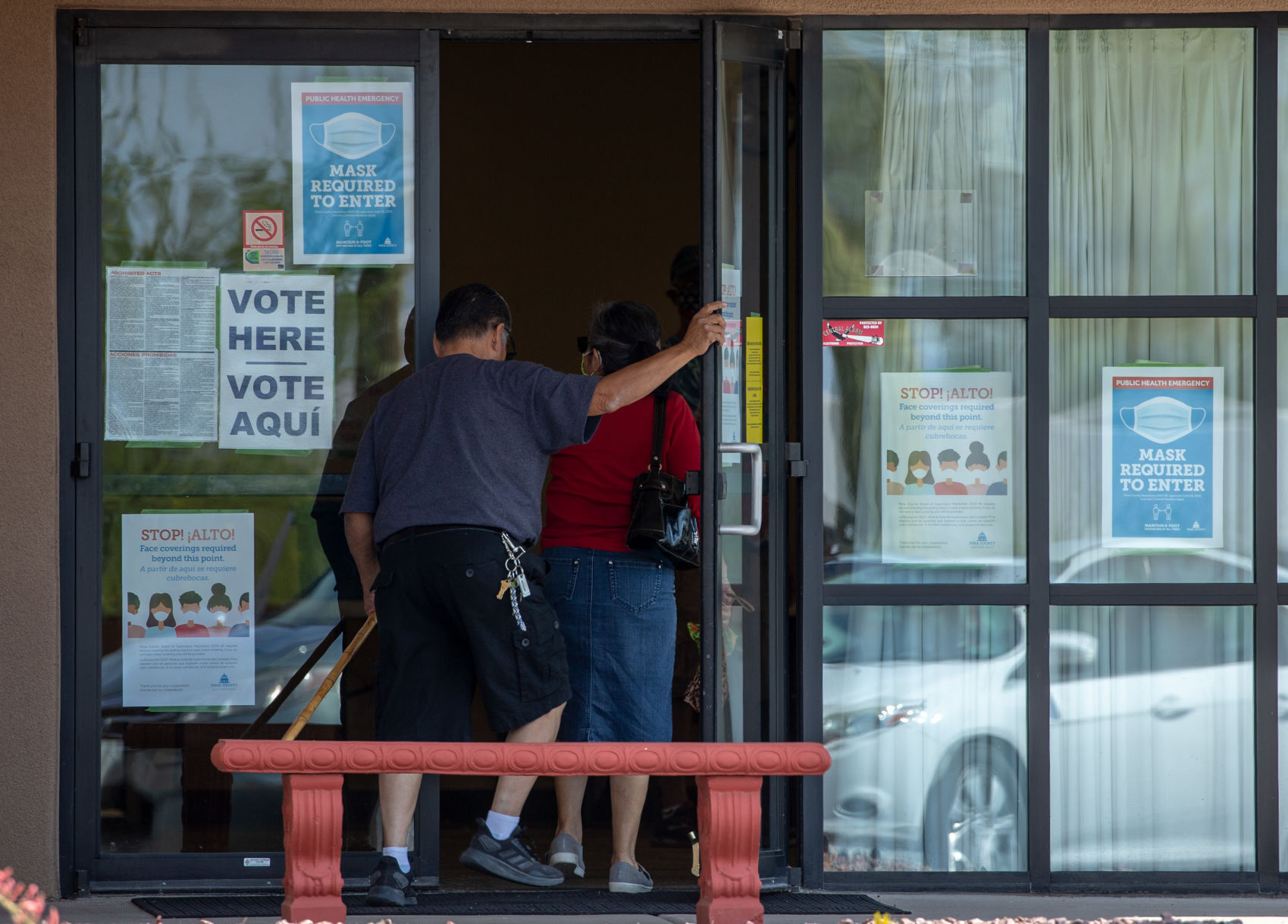
Voters enter the Tucson Estates Multi-Purpose Hall located at 5900 W Western Way Circle, on Aug. 4, 2020.
Primary Election in Pima County
Updated
Gilbert Silva walks through the parking lot of the Valencia Library located at 202 W Valencia Road to cast his vote during primary election day, on Aug. 4, 2020.
Primary Election in Pima County
Updated
A poll worker (right) takes a completed ballot from a voter at the Valencia Library located at 202 W Valencia Road during primary election day, on Aug. 4, 2020.
Primary Election in Pima County
Updated
After placing their vote, a voter starts to place their "I Voted" sticker on their shirt as they leave the Pima County voting site at Temple Emanu-El, 225 N. Country Club Rd., in Tucson, Ariz on August 4, 2020.
Primary Election in Pima County
Updated
A poll worker wearing a face shield, mask and gloves walks outside to check if anyone needs assistance at the Pima County polling site at Ellie Towne Flowing Wells Community Center, 1660 W. Ruthrauff Rd.., in Tucson, Ariz on August 4, 2020.
Primary Election in Pima County
Updated
A voters arrives at the Pima County polling site at Ellie Towne Flowing Wells Community Center, 1660 W. Ruthrauff Rd.., in Tucson, Ariz to drop off their voting ballot on August 4, 2020.
Primary Election in Pima County
Updated
A voter leaves the Pima County polling site at Ellie Towne Flowing Wells Community Center, 1660 W. Ruthrauff Rd.., in Tucson, Ariz on August 4, 2020. Photo by Rebecca Sasnett / Arizona Daily Star
Primary Election in Maricopa County
Updated
A portrait of Ashlee King after she voted, August 4, 2020, at the El Tianguis Mercado polling place, 9201 S. Avenida Del Yaqui, Guadalupe.
Primary Election in Maricopa County
Updated
Anita Cota-Soto washes her hands before voting, August 4, 2020, at the El Tianguis Mercado, 9201 S. Avenida Del Yaqui, Guadalupe. Cota-Soto is a Town of Guadalupe councilmember running for re-election.
Primary Election in Maricopa County
Updated
Voting marshal Gerry Lamanski checks his watch before announcing the polls are open, August 4, 2020, at the Tempe History Museum, 809 E. Southern Ave., Tempe.
Primary Election in Maricopa County
Updated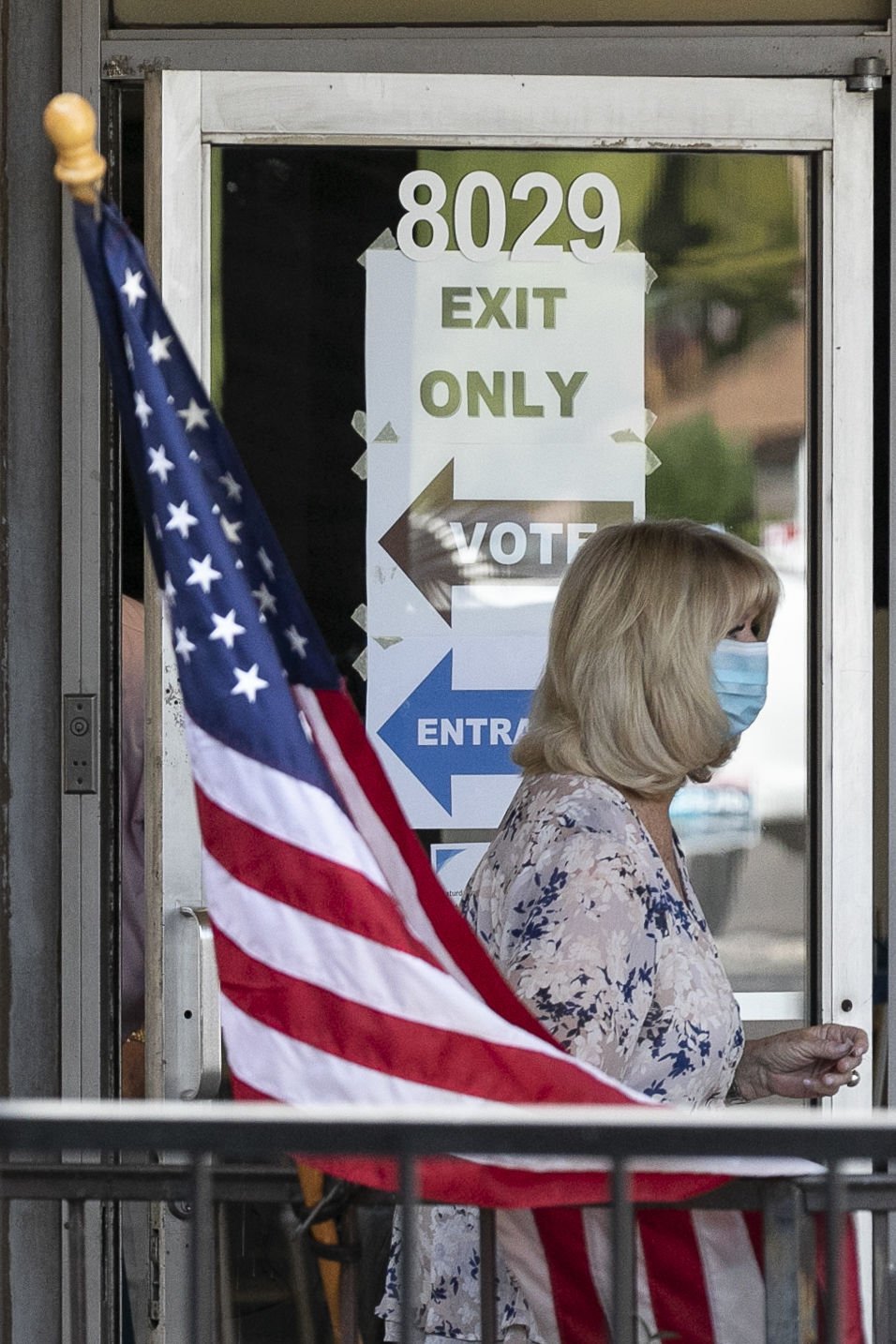
People vote on Election Day at Nueva Vida Church in Scottsdale on Aug. 4, 2020.
Primary Election in Maricopa County
Updated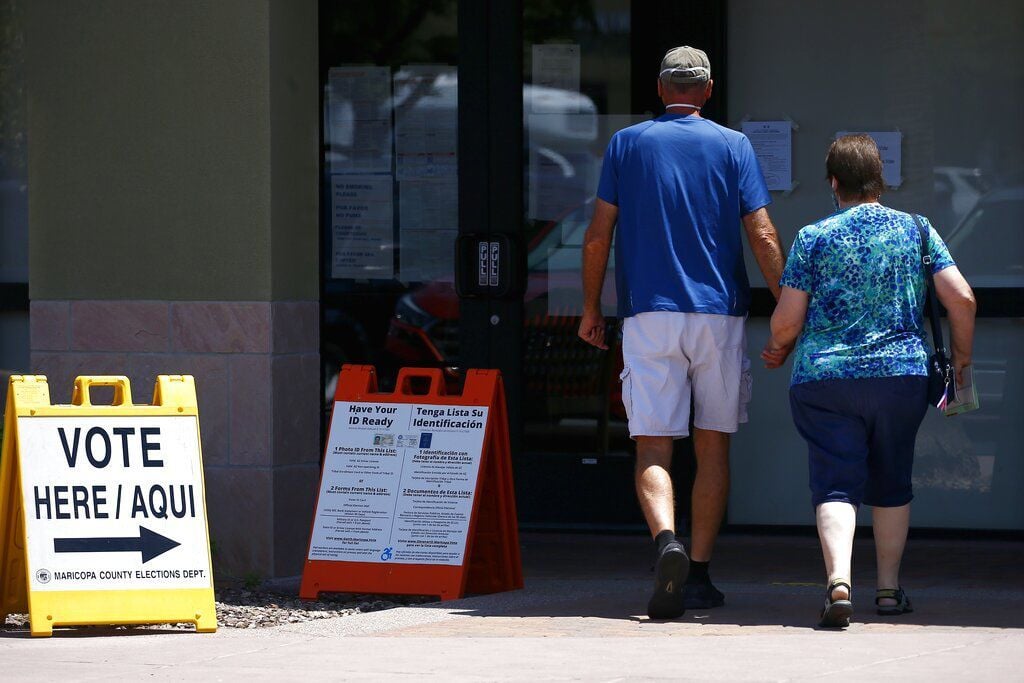
Voters walk to a polling station to cast votes for GOP and Democratic candidates for the primary election Tuesday, Aug. 4, 2020, in Chandler, Ariz. (AP Photo/Ross D. Franklin)
Primary Election in Maricopa County
Updated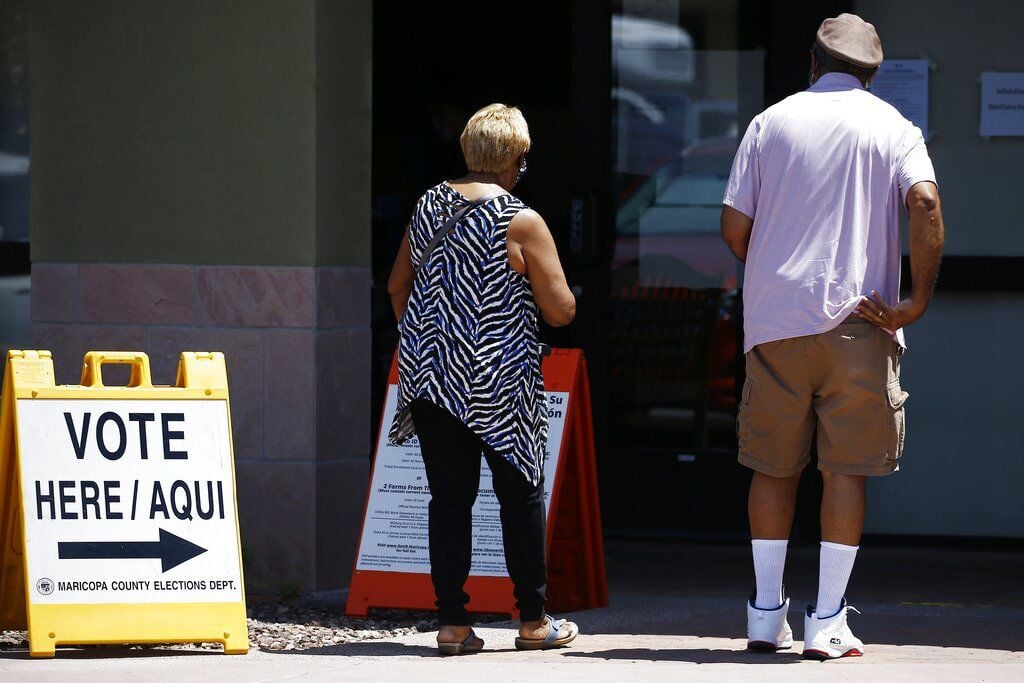
Voters walk to a polling station to cast votes for GOP and Democratic primary candidates Tuesday, Aug. 4, 2020, in Chandler, Ariz. (AP Photo/Ross D. Franklin)
Primary Election in Maricopa County
Updated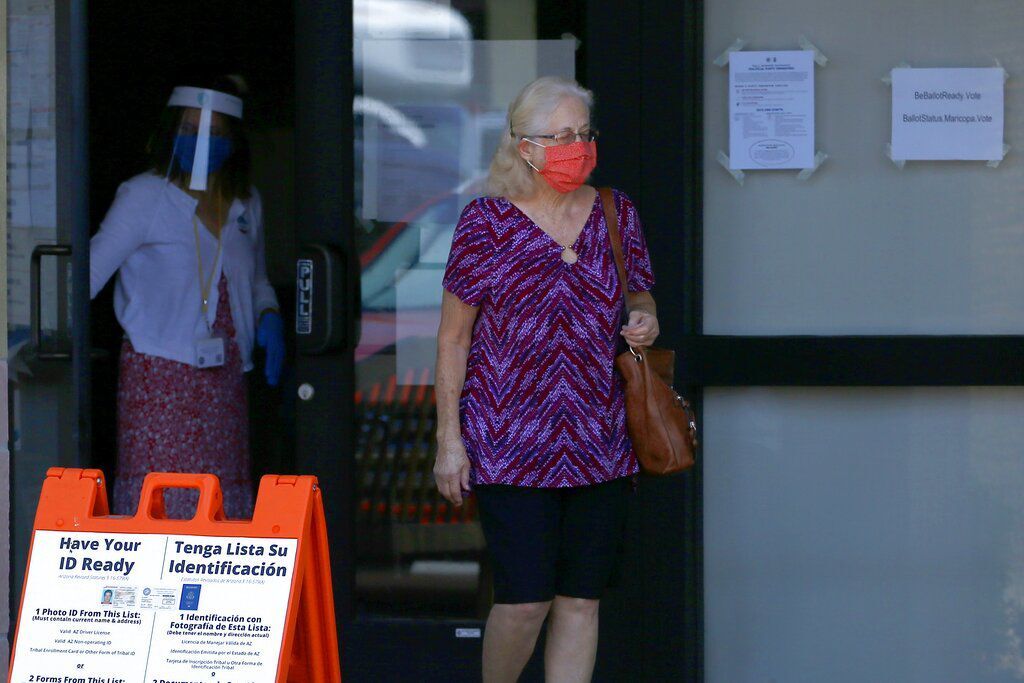
A voter wearing a face covering exits a polling station to cast votes for GOP and Democratic primary candidates, as a polling station workers opens the door for voters Tuesday, Aug. 4, 2020, in Chandler, Ariz. (AP Photo/Ross D. Franklin)

