


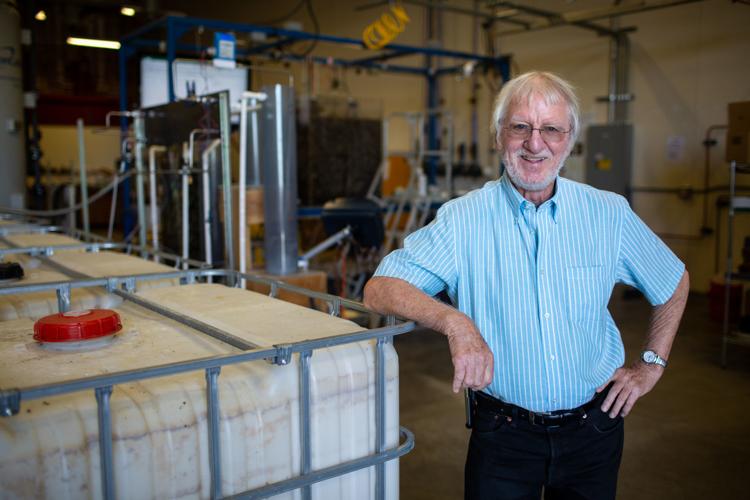

University of Arizona researchers say they’re developing an effective early warning system for the coronavirus — testing wastewater.
They’ve tracked levels of coronavirus genetic material in untreated wastewater from one of Pima County’s sewage plants since March 14. That came not long after local health officials obtained the first positive test result in an individual here.
Professor Ian Pepper, the director of the UA research lab that runs the wastewater testing, said last week he’s confident the testing results are representative of what’s going on with the virus, communitywide.
In the untreated wastewater, “We’ve seen concentrations originally negative, then become positive, then decrease,” said Pepper. He is director of the UA’s Water and Energy Sustainable Technology Center, which lies near the county’s Aqua Nueva sewage plant, where the tested wastewater comes from.
“The last samples we took, I’m guessing within the last two weeks, were negative,” he said.
Pepper said he believes the risk to people here from the virus is now lower than two months ago, but that there’s still a need to be vigilant because it could return.
“There does seem to be a natural progression. It seems to spread, levels off, and decreases. In addition to that, the heat may help to do a number on it,” he said.
There is no community risk from the virus in wastewater, authorities say. There’s no coronavirus material found in the treated wastewater that the sewage plant dumps into the Santa Cruz River.
Researchers don’t know if the virus is inactivated in wastewater, or if it’s partitioned into solids that are pulled from the wastes during treatment, Pepper said. But in effluent they’ve analyzed from other treatment plants, they see some where it was disinfected and the virus wasn’t found, and some that weren’t disinfected where the virus was found.
“That’s what you would expect,” Pepper said. “Chlorination kills the virus.”
Researchers at the UA and others around the United States see wastewater as a big asset during the pandemic, rather than a threat. That’s because the virus often shows up there days before it shows up in individuals.
When the virus does hit people, studies have found that many infected are asymptomatic, but can spread the disease to others.
“In terms of monitoring for things like the possible return of the virus in the fall, this is very useful,” said Pepper, a professor of environmental microbiology.
“Sewage is a leading indicator of the pandemic,” he said. “Death is a lagging indicator.”
Worldwide interest in wastewater testing
The UA’s activity matches a burgeoning national and global interest in this technique as a supplement to testing of individuals for COVID-19.
Individual testing has proven very challenging and slow to advance as the pandemic spreads, due to its cost, to shortages in key testing materials and to numerous other problems.
Wastewater testing for the virus has drawn buzz in the scientific press and gained public attention from the National Academy of Sciences. The academy hosted a virtual panel discussion Wednesday on what’s known as wastewater-based epidemiology.
The UA research center tests wastewater weekly from a plant that serves 183,000 households and businesses and other customers in most of Tucson proper, and in a healthy chunk of the Catalina Foothills.
“We will be able to determine if the virus persists in the community even if there are no reported new cases,” said Charles Gerba, a microbiologist and professor of environmental science in the College of Agriculture and Life Sciences, who is also working on this research. “To me, it’s a key to tracing the spread of a virus.”
The UA facility, commonly known as the WEST Center, has tested wastewater from 25 other communities, from California to New York. The UA is also collaborating with the U.S. Centers for Disease Control and Prevention. CDC is using virus data produced by the WEST Center to test its computer model that’s trying to estimate the number of infections in a community.
“Dr. Pepper’s team has been on the leading edge of this work since the beginning of the COVID-19 response,” said Amy Kirby, a CDC environmental microbiologist. “By measuring viruses in sewage, we may be able to detect infections in people who do not have symptoms or have not been tested. Additionally, sewage virus concentrations may be able to provide an early indication that COVID-19 cases are increasing in a community.”
Arizona State doing similar research
Arizona State University is testing wastewater from 100 sewer systems worldwide, along with those in Tempe, Guadalupe and other Phoenix-area communities. Rolf Halden, an ASU professor who heads up the effort, says ASU’s Human Health Observatory operates the world’s largest wastewater monitoring network.
His group’s research has traced a similar trend to Tucson’s of first increasing, then decreasing levels of the coronavirus genetic material in Tempe’s wastewater. But in neighboring Guadalupe, where personal incomes are much lower than in Tempe, the wastewater has had particularly high counts of coronavirus genetic material, he said.
In that heavily Latino community, “The speculation is that with its lower socioeconomic status, people have to be out and making money to put food on the table,” Halden said. “Not everyone has the luxury of living off savings, or working at home. In that income bracket, if you don’t show up at work, you don’t make money.”
Halden co-authored a peer-reviewed study that concluded the wastewater monitoring could track the virus’s progress at a fraction of the cost of individual testing, worldwide.
He says wastewater monitoring could locate virus hotspots and clusters, followed by testing of individuals in those areas.
“We could, within a matter of weeks, measure 70% of the U.S. population, repeatedly every week,” said Halden, an environmental engineering professor who is director of the Center for Environmental Health Engineering at ASU’s Biodesign Institute.
“We would be diverting 1% of the samples we’re doing now to wastewater, and allow you to move coverage from 3% to 70% of the U.S. population. That seems like a no brainer to me,” he said.
Other researchers say the idea has promise, but that work needs to be done to come up with standardized methods of detecting the virus in wastewater and determining how much of the virus is present. UA’s monitoring can tell whether concentrations of the virus are increasing or decreasing but officials don’t have specific concentrations.
“What’s going on nationally is that there’s a big push to standardize methods of getting concentrations of gene copies,” said Pepper. “Until we get that information of concentrations of gene copies, it’s at best just an estimate.”
Monitoring for COVID-19 in sewage has great potential to complement what public health experts are doing with data on deaths, hospitalizations and infections, said professor David Sedlak, of the University of California’s Berkeley Water Center, who moderated last week’s National Academy of Sciences panel.
“In my opinion, the ability of sewers to sample large numbers of homes simultaneously and anonymously could be a powerful tool but to date, federal and state funding has been limited to a few research projects. If we are to have a chance of using this kind of information to save lives we may need to consider a fast-track approach for scaling it up,” Sedlak said.
During the panel discussion, Sedlak joked as panelists went into a break, “When you go to the toilet, remember you’re not just satisfying a biological need. You are contributing to someone’s scientific study.”
Yale study potentially breaks new ground
The use of wastewater detection got a scientific boost May 19, when Yale University researchers published early results of a study of coronavirus genes in sewage sludge — the solids that fall out of wastewater as it’s treated. The study found coronavirus RNA concentrations in sludge were “highly correlated” with those found in local testing and with hospital admissions.
Concentrations in sludge would show up about seven days ahead of when they appeared in tests of individuals, and three days ahead of hospital admissions in the New Haven area, the researchers wrote in an online publication. The study hasn’t been peer-reviewed, making its findings preliminary.
“That it’s not peer reviewed offers a word of caution but they were very exciting results,” UA’s Pepper said. “Most importantly it was a leading indicator. A week can be an eternity with this thing.”
An old technique
Studying viruses in wastewater is hardly a new technique, observed the UA’s Gerba, a longtime germ and virus specialist. It was used to help detect polio during the 1950s, he said.
Vaccines for the polio virus have dramatically reduced its incidence over recent decades, although it persists in Nigeria, Afghanistan and Pakistan. Just like the coronavirus, polio’s most severe symptoms occur only in a fraction of the total infections. Environmental surveillance programs with wastewater have been used to pinpoint “silent transmission” of that virus, UA said in a news release discussing its recent coronavirus research.
“We have tested for hepatitis A, enteroviruses and noroviruses. We have approximately 15 different viruses that we regularly test for in sewage and recycled waters for reuse applications,” said Walter Betancourt, a microbiologist with expertise in environmental virology and an assistant research professor in the Department of Environmental Science.
Similarly, at ASU, Halden’s research group started using wastewater to detect opioids such as heroin and fentanyl in 2018, and last year started using it as an early warning system for the flu.
Nationally, a water research group says it’s seen efforts able to detect the genetic material of coronaviruses in wastewater at levels amounting to as few as one case per 100,000 people, said Peter Grevatt, CEO of the Denver-based Water Research Foundation.
“A rapid rise in wastewater can be an indication that a community is soon to enter a public health crisis,” Grevatt said.
In an effort to standardize testing methods, Grevatt’s group will launch a study this week. The UA’s WEST Center will participate.
Sewage from UA dorms to be tested this fall
This fall, WEST Center will also be heavily involved in the UA’s reopening to students after the shutdown due to the pandemic, Pepper said.
The UA will employ one team to test every student for the virus, another team to test antibodies, and his team to conduct sewage surveillance from the campus dormitories, he said.
Pepper said this will allow researchers to develop good correlations between what’s in the wastewater and what students are personally experiencing.
“This will offer a unique situation,” he said. “You don’t usually have defined communities where you have a defined history of the virus.”
Photos for May 29: Tucson gets by during Coronavirus Pandemic
Tucson gets by during coronavirus pandemic
Updated
The iconic Casa Molina bull and matador statue both sport masks on the first full week of the loosening of COVID19 restrictions, May 23, 2020, Tucson, Ariz. The bull previously had a mask on the testicles.
Tucson gets by during coronavirus pandemic
Updated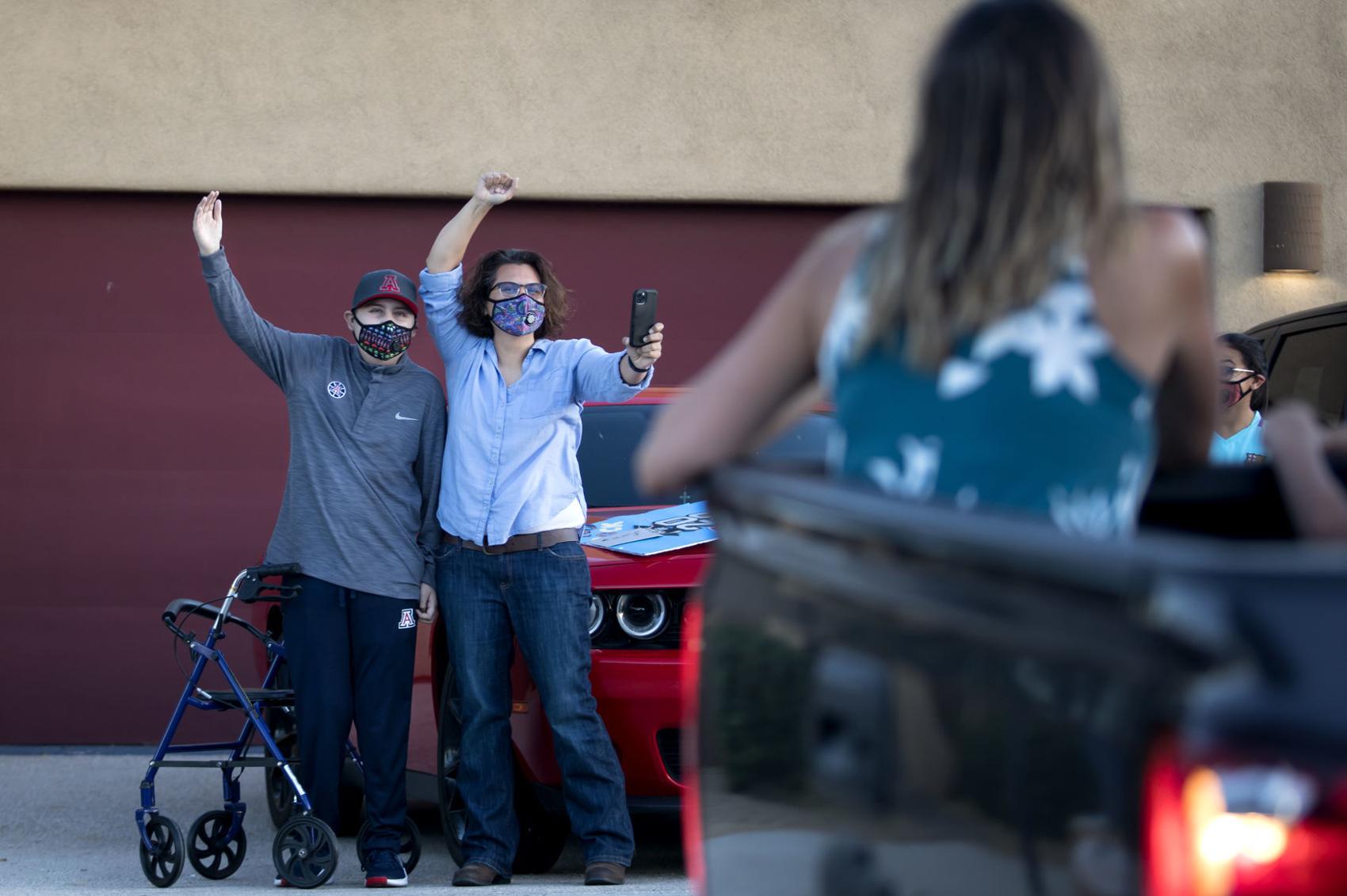
Michelle Leon Cordova, right, mother, and her son Sahuarita High School senior Lino Cordova, whom is fighting cancer, wave at staff members from Diamonds Children Center, friends and the Marana Police Department during a car parade, celebrating Lino's graduation, outside of his home on May 13, 2020 in Sahuarita, Ariz. Cordova stood on the sidewalk while the team from Diamond Children Center, friends and the Marana police department gave Cordova a graduation gar parade. Cordova was given a gift basket with his favorite snacks, gift cards as well as other items he enjoys. The car parade, also, celebrated another graduating senior fighting cancer from Empire High School, Noah Nieto. Nieto, also, received a gift basket with snacks, gift cards and other items Lino enjoys.
Tucson gets by during coronavirus pandemic
Updated
Michelle Leon Cordova, right, mother, brings celebration balloons to a car after staff members from Diamonds Children Center, friends and the Marana Police Department celebrate Sahuarita High School senior Lino Cordova, whom is fighting cancer, graduation with a car parade outside of his home on May 13, 2020 in Sahuarita, Ariz. Cordova stood on the sidewalk while the team from Diamond Children Center, friends and the Marana police department gave Cordova a graduation gar parade. Cordova was given a gift basket with his favorite snacks, gift cards as well as other items he enjoys. The car parade, also, celebrated another graduating senior fighting cancer from Empire High School, Noah Nieto. Nieto, also, received a gift basket with snacks, gift cards and other items Lino enjoys.
Tucson gets by during coronavirus pandemic
Updated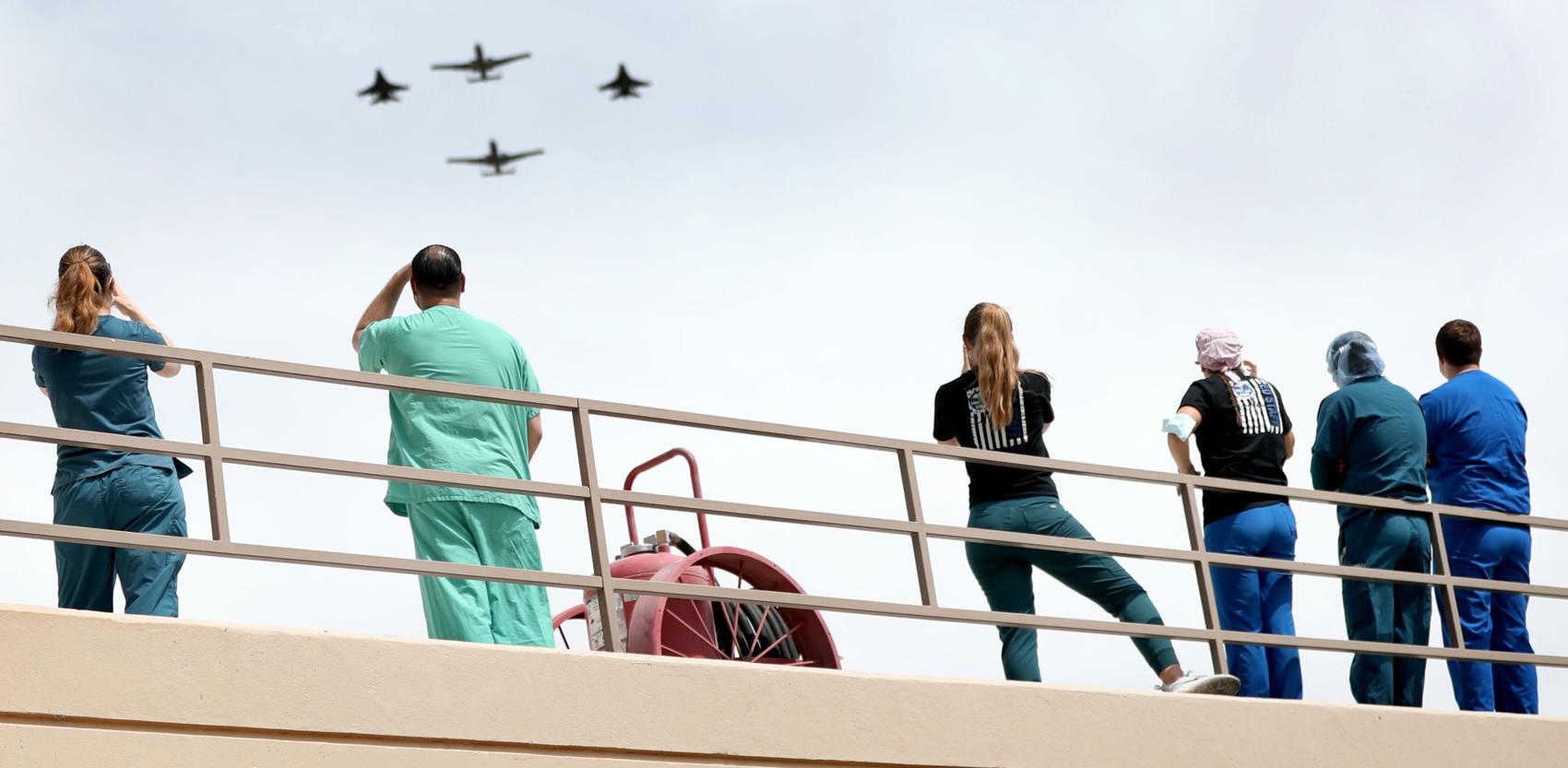
Personnel from Tucson Medical Center line the heliport to watch A-10's from Davis-Monthan Air Force Base's 355th Wing and F-16's from the Arizona Air National Guard's 162nd Wing make a pass over the facility, one leg of an area wide community flyover, May 14, 2020, Tucson, Ariz.
Tucson gets by during coronavirus pandemic
Updated
Nancy Celix-Campos, right, a respitory therapist at Tucson Medical Center, watches the military flyover with her daughters, Giana, 12, and Jazmyn, 8, from Sentinel Peak on May 14, 2020. Two F-16 Fighting Falcons from Arizona Air National GuardÕs 162nd Wing and two A-10 Thunderbolt II's from the 355th Wing, assigned to Davis-Monthan Air Force Base, fly over Tucson area hospitals to honor healthcare personnel and first responders as they are some of the frontline workers dealing with the coronavirus disease (COVID-19) head on. "It's been an exhausting two to three months," says Campos, "it's pretty cool, I like how they're going by each hospital."
Tucson gets by during coronavirus pandemic
Updated
Two F-16 Fighting Falcons from Arizona Air National Guard’s 162nd Wing and two A-10 Thunderbolt II's from the 355th Wing, assigned to Davis-Monthan Air Force Base, fly over Northwest Medical Center north of Tucson on May 14, 2020.
Tucson gets by during coronavirus pandemic
Updated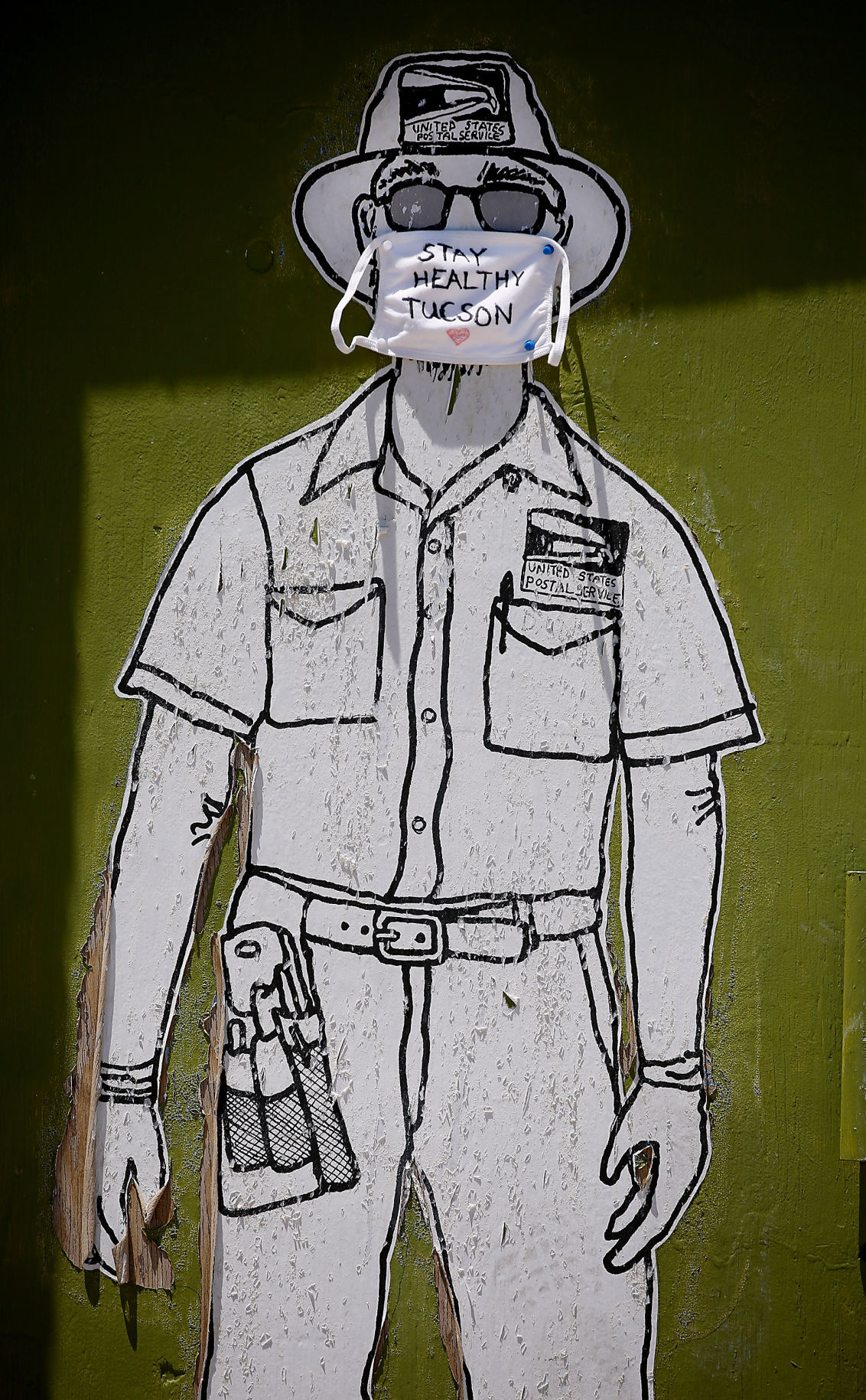
A letter carrier portrait on the Ok Market building, located in the Armory Park neighborhood, is adorned with a face mask on May 18, 2020.
Tucson gets by during coronavirus pandemic
Updated
Rosemary Garcia waits for a family member outside of a store at Park Place Mall, 5870 E. Broadway Blvd., in Tucson, Ariz. on May 19, 2020. Malls reopened today under CDC guidelines and Gov. Ducey's new rules for businesses due to the Coronavirus pandemic. Park Place Mall has signs throughout the mall reminding customers to keep a six feet distance as well as hand sanitizer stations near each entrance. About half of the tables in the food court have been removed to allow for social distances as well as less than half of the stores have opened with new guidelines. Of the stores open, only 10 customers are allowed to shop in each store at a time.
Tucson gets by during coronavirus pandemic
Updated
Pat Schlote steams clothing before it is put on the sales floor at the Golden Goose Thrift Shop in Catalina, Ariz., on May 21, 2020.
Tucson gets by during coronavirus pandemic
Updated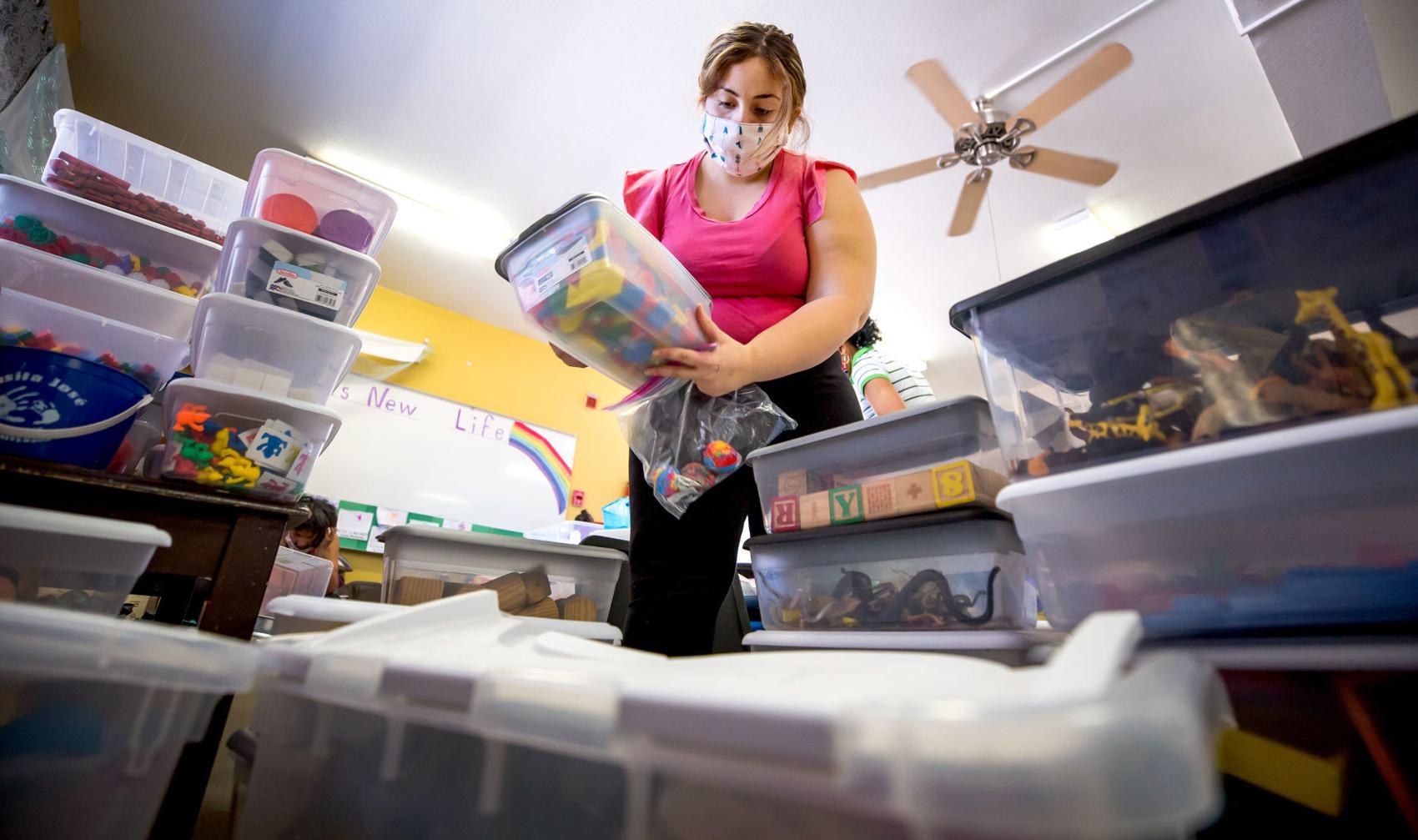
Ada Contreras, teaching assistant, looks through containers while reorganizing toys at Herencia Guadalupana Lab School, 6740 S. in Tucson, Ariz. on May 21, 2020. As Child care centers begin to re-open when they are ready, Herencia Guadalupana Lab School is reorganizing and cleaning everything in the facility before re-opening on June 2. To allow for social distancing and decrease the amount of items children touch, Herencia Guadalupana Lab School has sheds where items will go as well as placing items in containers organized by category.
Tucson gets by during coronavirus pandemic
Updated
Jen Martinez, right, softball coach, teaches Skylar Reilly about hitting during a session at Centerfield Baseball Academy, 5120 S. Julian Dr., in Tucson, Ariz. on May 21, 2020. After re-opening on Monday, Centerfield Baseball Academy has implemented new policies in response to the Coronavirus Pandemic such as wearing masks, cleaning, signage, hand sanitizer and limiting the amount of people inside the facility.
Tucson gets by during coronavirus pandemic
Updated
Karl Bosma, left, and George Cantua, with facilities and maintenance, lay down stickers to mark six-foot separation distance around one of the baggage carousels, part of the efforts at Tucson International Airport to work within the restrictions of COVID19, May 22, 2020, Tucson, Ariz.
Tucson gets by during coronavirus pandemic
Updated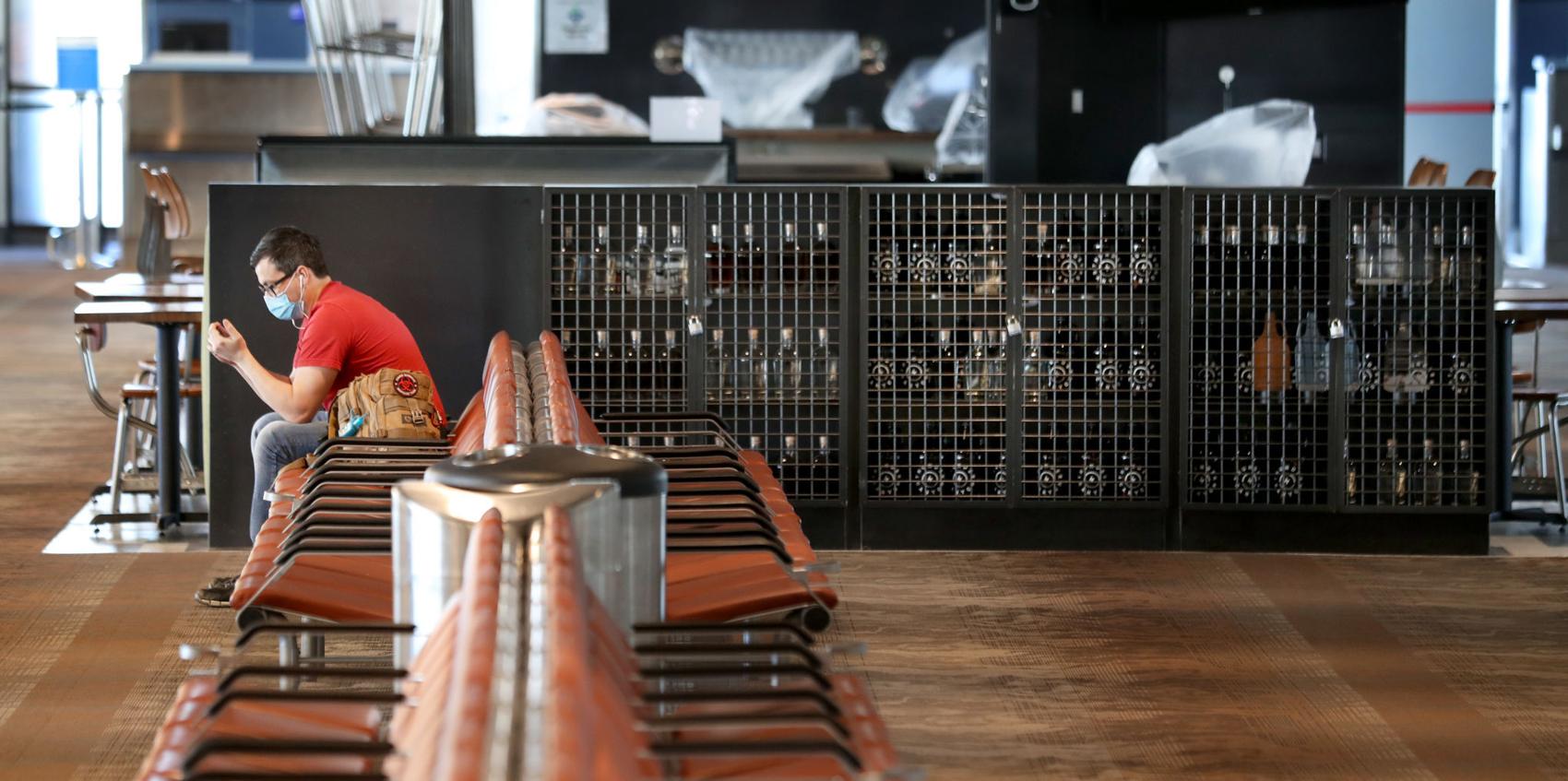
A lone passenger waits for a flight near one of the shuttered restaurants in the B Gates before Memorial Day at Tucson International Airport on May 22, 2020.
Tucson gets by during coronavirus pandemic
Updated
Drew Cooper on the stage in the St. Philip's Plaza courtyard, May 22, 2020, Tucson, Ariz., where live music is back on the schedule.
Tucson gets by during coronavirus pandemic
Updated
Many people visit Tumamoc Hill during the first day of Tumamoc's re-opening in Tucson, Ariz. on May 25, 2020. After being closed due to the Coronavirus pandemic, Tumamoc Hill re-opened with some modifications. There are hand sanitizer stations throughout the hike to the top as well as arrows, spaced 10-ft apart, lined up and down the hill. Some runners, hikers and walkers are also wearing masks during their hike. "The steps we are taking aim to provide our community with needed exercise, connection to our beautiful desert and a sense of comfort in such a trying time, while balancing the fact that gathering as a community endangers each of us and our loved ones. This is an unprecedented challenge that we are taking extremely seriously," said Benjamin T. Wilder, director of Tumamoc Hill. Visitors are also asked to limit their group to three people and to not touch the gate at the top of the hill- a tradition for some who make it to the top. "This is a time when we need to establish new traditions and adapt in a creative manner that embraces empathy, unity, care and patience," Wilder said.
Tucson gets by during coronavirus pandemic
Updated
Pen Macias, artist, works on part 2 of a mural for a client on E. Broadway Rd., between S. Columbus Blvd. and S. Alvernon Way, in Tucson, Ariz. on May 25, 2020. Macias, known as The Desert Pen, has been working on her clients mural for the past three months. "It's the one thing I love, I have a passion for and the only thing I could be happy doing," said Macias. The mural represents her client, a single mother of four who works in the health care field. One half of the mural is dedicated to the connection between mothers and their children. The other half is dedicated to the connection between nurses and patients. The client wanted some positivity in the mural to show how nurses give a piece of themselves to their patients hence the puzzle pieces in the nurse and the patients, said Macias.
Tucson gets by during coronavirus pandemic
Updated
Christina Cortinas, posing at her home, May 28, 2020, Tucson, Ariz., with a photo of her and her mother, Catherine Rodriguez, in San Diego, 1991. Rodriguez is currently in assisted living and fighting COVID19. Cortinas hasn't seen her mother in months, the longest such span in her life.
Tucson gets by during coronavirus pandemic
Updated
Ruben Lopez looks through handouts while attending a Eviction Resource Fair with his family outside the Pima County Justice Court.

