

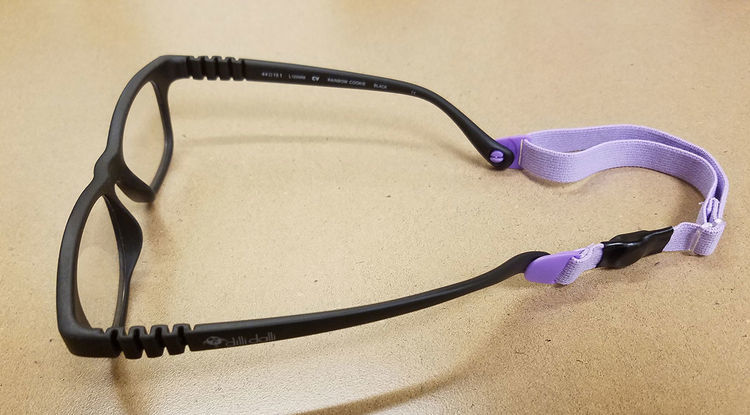

University of Arizona researchers will study the benefits of using eyeglasses to correct astigmatism in toddlers, the most prevalent type of vision problem in children between 1 and 3 years old.
Using wearable sensors, researchers will track how often children age 3 or younger are wearing their glasses and whether they help to improve language, cognitive and motor development over time.
The study, funded by a five-year, $4.1 million grant from the National Eye Institute of the National Institutes of Health, is designed to help parents and pediatricians decide if the benefits outweigh the expense and supervision that eyeglasses for young children require.
“Children who are nearsighted can see fine up close, and children who are farsighted can see fine at a distance, but for children with astigmatism, everything is blurry,” said Erin M. Harvey, associate professor of ophthalmology and public health and co-principal investigator for the project. “The critical questions, then, are if eyeglasses are prescribed for astigmatism in this age range, will children wear them, and will they produce a measurable impact on vision and language, cognitive and motor development?”
According to Harvey, while vision screenings are routinely performed at well-child checks starting at age 1, there is a significant lack of data and research that analyzes the developmental and visual benefits of using eyeglasses to correct astigmatism in toddlers. This is because toddlers are so unpredictable and constantly take their glasses off. This is where the sensors come in.
“Based on years of experience, we know that some children love their glasses and will wear them, and some children don’t and won’t,” said Dr. Joseph Miller, head of the Department of Ophthalmology and Vision Science and the other co-principal investigator on the project. “So, the question is, if they wear their glasses to see better, do they do better?”
The researchers will work with pediatricians at El Rio Health and Banner-University Medical Center clinics to prescribe eyeglasses, with sensors, to children with astigmatism between the ages of 1 and 3 . The team will divide the children into two groups. The first group will be prescribed glasses and offered traditional support through the clinic, while the second group will be prescribed glasses and offered significant additional clinical support to encourage the children to wear their eyeglasses.
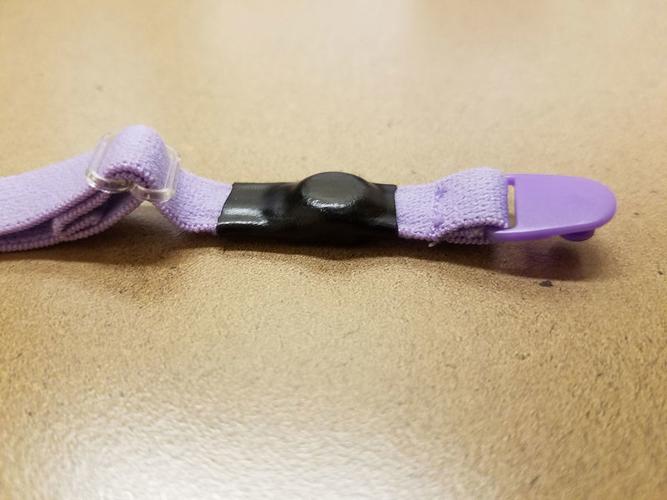
The sensor, which is heat sensitive, will sit within the strap that toddlers wear around their head and will collect the date, time and temperature.
“Comparing body temperature to room temperature fluctuations at 15-minute intervals, the button tracking device allows us to accurately measure when the eyeglasses are being worn,” Harvey said.
In developing the sensor, the team wanted to be especially considerate of any safety concerns that parents might have. The sensor is encased in puncture-resistant, medical-grade, heat-shrink tubing that will prevent any accidental swallowing.
Every two months, the researchers will collect the sensors and replace the straps. After the child turns 3 years old, they will test their vision and measure their overall development.
According to the research team, the study will generate evidence to inform parents, pediatricians and eye-care providers if prescribing glasses for astigmatic toddlers will have a beneficial effect on their global development and provide important insight into whether more clinical support makes a difference in how often children wear their eyeglasses.

