


Rains in October have caused a “massive germination” of annual wildflowers, which bodes well for a good bloom in the spring, according to wildflower experts.
“But it’s been dry since mid-October, so the seedlings are probably not growing vigorously now,” said Mark Dimmitt, a retired director of natural history at the Arizona-Sonora Desert Museum and an authority on blooming patterns.
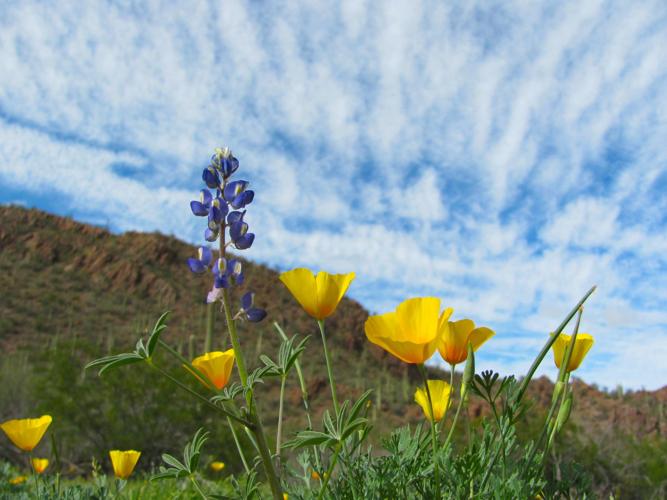
“We need more rain soon” to produce a standout bloom of annual wildflowers such as gold poppies and lupines.
Dimmitt said the October rains have already produced some floral beauty near his home.
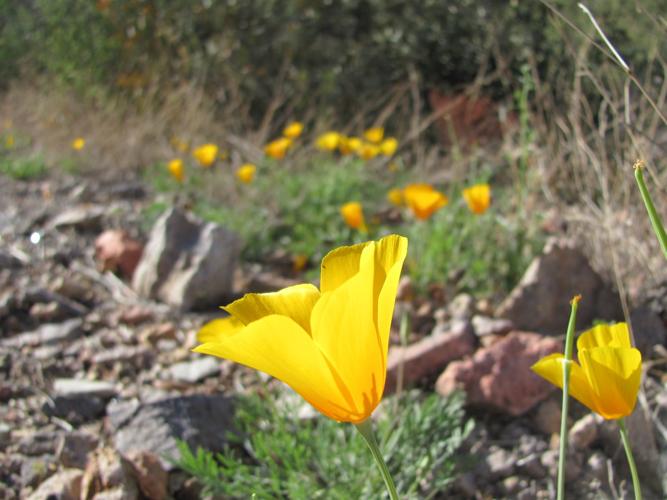
“Mexican gold poppies germinated in my yard with my 3¾ inches (of rain) in October,” he said.
“I have watered them a couple of times since, and there are already a few flowers.”
Areas southwest of Tucson are offering more hope for a good bloom, Dimmitt said.
“I heard from a group who went to the Pinacate (a region in Mexico not far south of the Arizona border) two weeks ago that the area is lush,” he said. “Organ Pipe Cactus National Monument (in Arizona south of Ajo) is probably the same.”
WHAT’S NEEDED NOW
A critical first step — a so-called “triggering rain” of at least one inch — must take place in the autumn. That happened in October.
But more rain is needed for a spectacular bloom, as Dimmitt noted while he was at the Desert Museum in a paper called “Predicting Desert Wildflower Blooms — The Science behind the Spectacle.”
“The triggering rain must be followed by regular rains totaling at least an inch per month through March, a season total of at least five inches, seven or eight are better,” he wrote.
“In short, a really good wildflower bloom requires both an unusually early and an unusually wet winter rainy season.”
Those, Dimmitt noted, are the rain requirements for a very good bloom of annual wildflowers such as gold poppies, lupines and owl clover.
“Perennials are less fussy about the timing of rainfall,” he said.
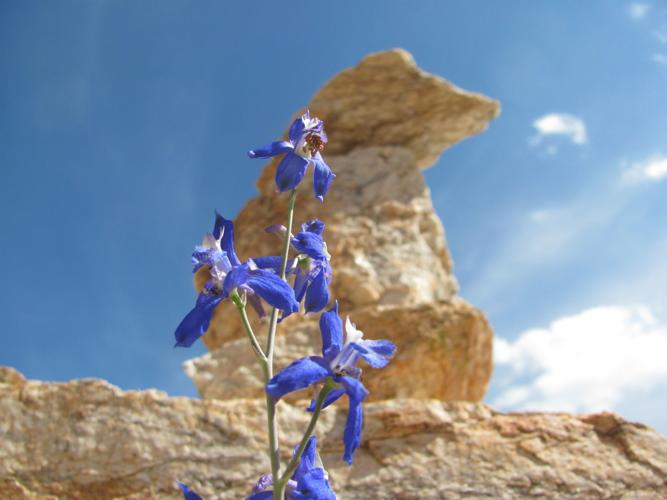
“Thus a late but wet rainy season can still produce good blooms of penstemon, larkspur (also sometimes known as delphinium), brittlebush” and other perennial wildflowers.

