


As the Road Runner closes the last chapter of 2019, here are some of the transportation plans of the most interest to readers:
Interstate project worth the wait
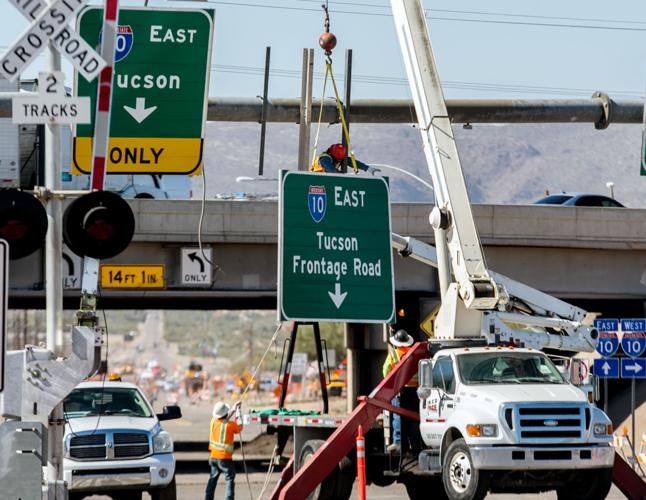
It took more than two years, but the Interstate 10-Ina Road interchange project was completed in April.
It frees motorists from train delays and provides better traffic control along Ina.
Crews added a lane in each direction of I-10 as well as on Ina Road west of the freeway.
The completion also signaled a win for businesses in the area that braved losing customers amid the yearslong project.
Terry Kyte, owner of Bisbee Breakfast Club at 4131 W. Ina Rd., said he believed in keeping his business open throughout the construction and celebrated the reopening on May 4 with neighboring businesses.
Kyte said he believed “if we got through (construction), then we would be in a good position for future growth, and that appears to be what’s going to happen.”
Too many cars around Tumamoc
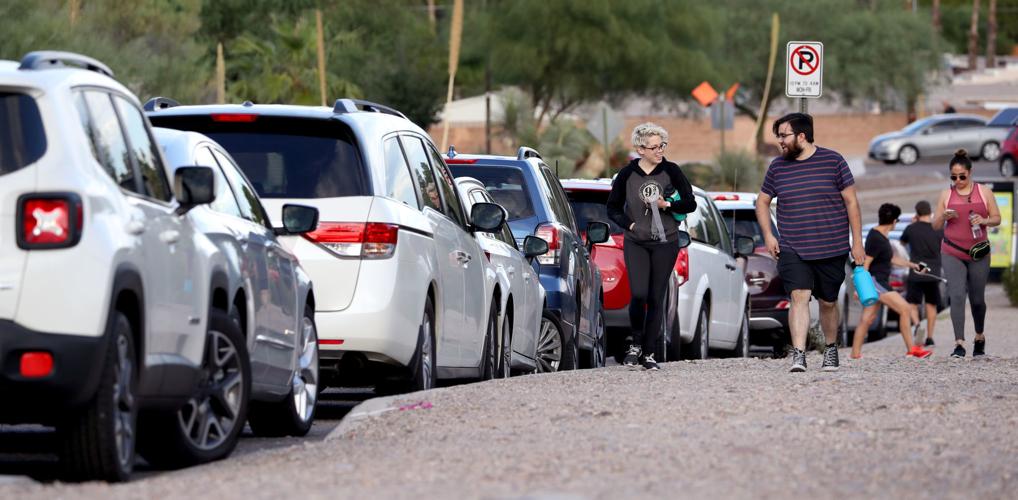
Evenings at the historic Tumamoc Hill seemed like a “party” was going on each evening based on the number of cars parked there, one visitor told the Road Runner.
It turns out visitors were not only parking along the street but also using spaces in St. Mary’s Hospital’s parking lots designated for staff, patients and their families. The threat of towing vehicles did not stop all Tumamoc visitors from using the parking lots, said Elizabeth Santamaria, a visitor to the hiking spot whose daughter had a $200 bill after her vehicle was towed.
In September, the hospital addressed the issue by handing out fliers with notices not to park in their lots. It also included information on the impound lot where towed vehicles could be found.
Tucson officials and the hospital say they are working on a possible remedy for the parking issues.
Streetcars to the airport?
The Tucson Transportation Department is laying the groundwork for a 15-mile, high-capacity transit line connecting riders from Tucson International Airport to the Tucson Mall area.
There could be an extension of streetcars or bus service expansion, called bus rapid transit.
The route would connect all three of the city’s transit centers — Tohono T’adai, Roy Laos and Ronstadt.
In about three years, we’ll know for certain what mode of travel is recommended for Tucsonans.
Either way, Arthur C. Nelson, a University of Arizona researcher, said transit should be built up or the Tucson metropolitan area risks being left behind.
“The way our urban real estate markets are going, metropolitan areas that don’t have well-designed, well-functioning, higher-end transit systems will be left in the dust,” Nelson told the Road Runner.
A better interstate connection
The Arizona Department of Transportation proposed a $1.2 billion project to widen I-10 from the I-19 interchange to Alvernon Way and provide a connection to Barraza-Aviation Parkway.
ADOT said doing nothing allows I-10 to become more congested in the area.
But about 25 businesses need to be acquired before the project could be completed, officials say.
And some businesses, like Triple T Truck Stop, would need to allow access to some of its land for construction.
The full project would be broken up into at least 18 different sections and the final touches would be completed in some 20 years.
Looking ahead
Another long I-10 project
ADOT is looking to start work on the I-10, Ruthrauff Road interchange after the start of the year.
Preliminary work is already being done and once a contractor is on board, construction will bring traffic restrictions and closures. The final look will closely resemble the Ina Road interchange.
Construction crews will widen the interstate to four lanes and also make Ruthrauff wider with two lanes in each direction.
Access to businesses remaining open near the project area will be maintained, ADOT says.
Working on plans for I-11
Arizona state representatives and transportation officials have their eyes set on making the proposed Interstate 11, connecting Nogales to Wickenburg, a reality sooner than later.
Last week, Sen. Martha McSally was one of the proponents of a bill that would accelerate development of the project with federal assistance to complete a second environmental study.
While officials tout the proposed interstate’s benefits for cross-border and interstate commerce and possible job growth, opponents say the project would be devastating to the surrounding environment.
One local photographer, Frank Staub, is attempting to capture the people, animals and surrounding environment that may be impacted if I-11 is built to generate more opposition against it.
“I appreciate the rural character of Picture Rocks and Avra Valley and a lot of people are concerned that it might be destroyed if the interstate is built,” Staub said.
Sun shines on Broadway widening
Drivers awaiting construction on East Broadway between Euclid Avenue and Country Club Road should expect work to start in 2020.
Tucson Electric Power crews are moving utility lines and installing new power poles, but road construction is expected to start later in the year.
Officials say the widening will bring the Sunshine Mile to six lanes. It will include medians, bike lanes, sidewalks and bus pullouts. A total of $71 million has been allocated to the project.
More Downtown connections
It’s taken years, but TDOT has begun preconstruction activities for its Downtown Links project.
The project would take motorists from Barraza-Aviation Parkway to Interstate 10 on a new four-lane road that bypasses the frequently congested downtown area.
TDOT and the Regional Transportation Authority went back to the drawing board last year after contractor bids were many millions over the $39 million estimate, according to Daily Star archives.
The preliminary work should be completed by the end of 2019 and construction not far behind.
Pedestrian, bicyclist safety
TDOT says they’ll be working to make sure pedestrians and bicyclists have safer routes to get around the city.
They’ll be using a portion of the $225 million bond package labeled “Tucson Delivers Parks and Connections” to fund the improvements in 2020.
Bike boulevards, low-stress routes using traffic calming features, such as High Intensity Activated Crosswalks for busy roads and traffic circles, will help the city meet its goal, TDOT says.
For pedestrians, TDOT is mulling a long list of High-Intensity Activated Crosswalks, or hawks, to address locations with the highest risks.
Officials say motorists stop 97% of the time at these crosswalks.
Next year, we could see the installation of a “baby hawk,” which comes with some of the same qualities of the hawk, like a blinking red light for pedestrians, and is less expensive to install.

