


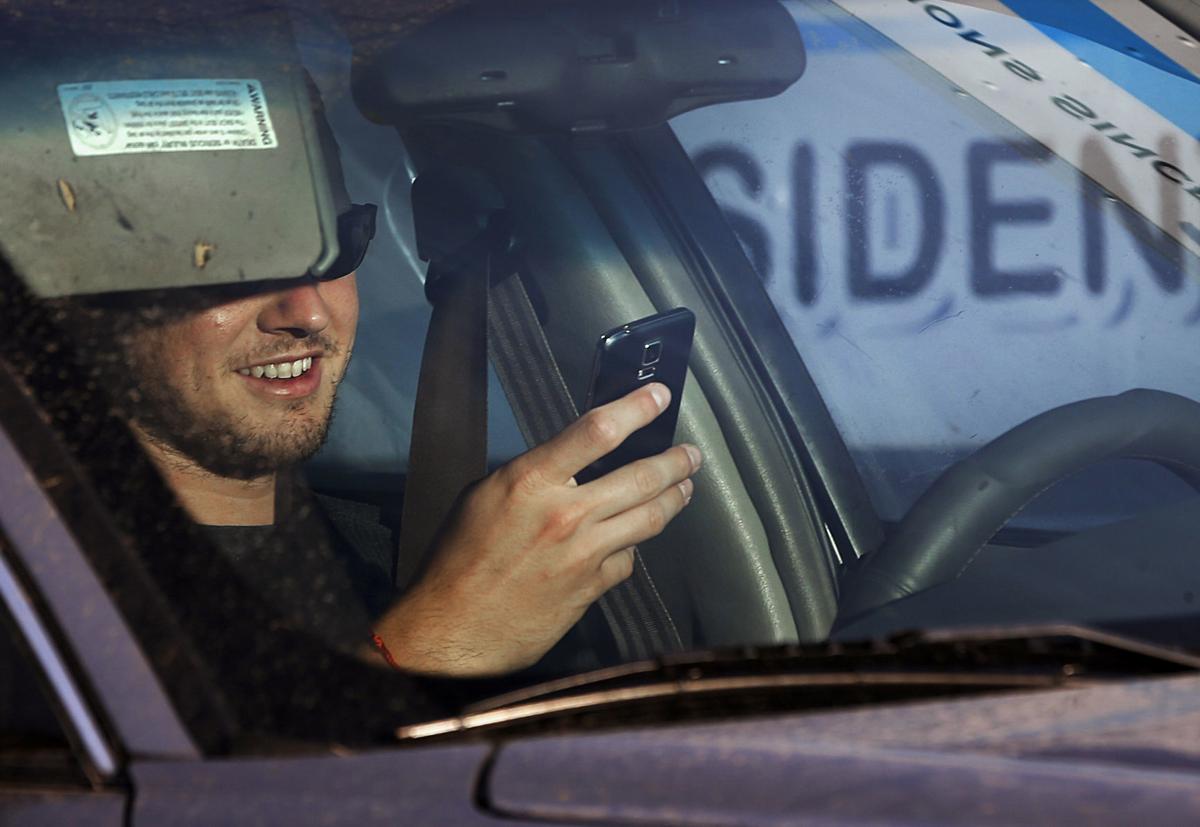
PHOENIX — Arizona is on the verge of no longer being one of three states without a comprehensive ban on texting while driving.
House Speaker Rusty Bowers said Wednesday he will allow a vote Thursday, April 18, on a Senate-passed measure banning texting and any hand-held use of electronic devices like cell phones while driving.
The move comes over the objections of some House Republicans, who are opposed to what they see as unnecessary regulation. Some also question whether the simple fact of using a cell phone should subject someone to a fine if there is no evidence it is affecting their driving.
But Bowers, a Mesa Republican, effectively acknowledged that many, if not most, of the 29 House Democrats favor the measure. And that is likely to provide the necessary margin for final approval even if a majority of the 31 Republicans vote “no.”
The Senate already has approved the identical language in the bill, House Bill 2318. A final vote would send the measure to Gov. Doug Ducey, who already has said he would sign it.
More than two dozen cities and counties already have adopted their own version of a texting ban. If approved, however, a new state law would pre-empt and replace anything more comprehensive.
That is significant as the legislation would allow people to text and make phone calls while a vehicle is stopped at a red light or railroad crossing. Many of the local laws have no such exception.
And the penalties would have to conform with state law: A fine of between $75 and $149 for a first offense, with subsequent violations subjecting the motorist to fines up to $250.
Also, HB 2318 would not take effect until 2022, with police allowed to issue only warnings until then.
In the interim, though, cities and counties could continue to enforce their own local laws, or enact new ones that mirror HB 2318 and start writing tickets right away. Only the statewide law would remain unenforceable until 2022.
The deal struck Wednesday among Republicans requires that two competing measures also get a vote Thursday.
Senate Bill 1165 is similar to HB 2318 but with a twist: It would be amended on the House floor to allow for only secondary enforcement. That means police could not stop someone solely for use of a cellphone and could ticket motorists only if they are pulled over for some other reason.
Then there’s SB 1141, written by Sen. J.D. Mesnard, R-Chandler, which would outlaw “distracted driving.”
It would allow police to stop and ticket a motorist who was doing something unrelated to driving if it creates an “immediate hazard” or the person does not exercise “reasonable control” of the vehicle. That would cover not just the use of cellphones but anything else, like tuning the radio or yelling at kids in the back seat.
But under his bill, the simple act of doing any of those things, including texting while behind the wheel, would not be a violation without some specific effect on a motorist’s driving.
“That bill doesn’t have solid support in our caucus,” said Rep. Noel Campbell, R-Prescott, of Mesnard’s plan, calling it “very vague.” Campbell is the prime sponsor of HB 2318, using language he worked out with Sen. Kate Brophy McGee.
But even if Mesnard’s bill does get approved and is signed by Ducey, both could take effect: Nothing in the measure conflicts with HB 2318.
All three could end up passing.
“I like all three,” Bowers told Capitol Media Services.
The speaker said he supports primary enforcement, allowing police to stop motorists solely because they are using a hand-held cellphone. But Bowers said he’ll take what he can get.
“I want a ban,” he said.
Campbell said he wants HB 2318 with its primary enforcement. He said that mirrors what already is in most local laws.
He also is counting on something else to get the necessary 31 votes today: increased public pressure on Arizona to join the 47 other states and the District of Columbia, which already have comprehensive texting bans.
Arizona’s efforts got a renewed push following a series of fatalities caused by drivers who were texting.
Arizona does have a texting and cellphone ban of sorts on the books. But that measure, which took effect last year, applies to those with a learner’s permit, and extends to the first six months that someone has a Class G license, which is reserved for the newest drivers.

