

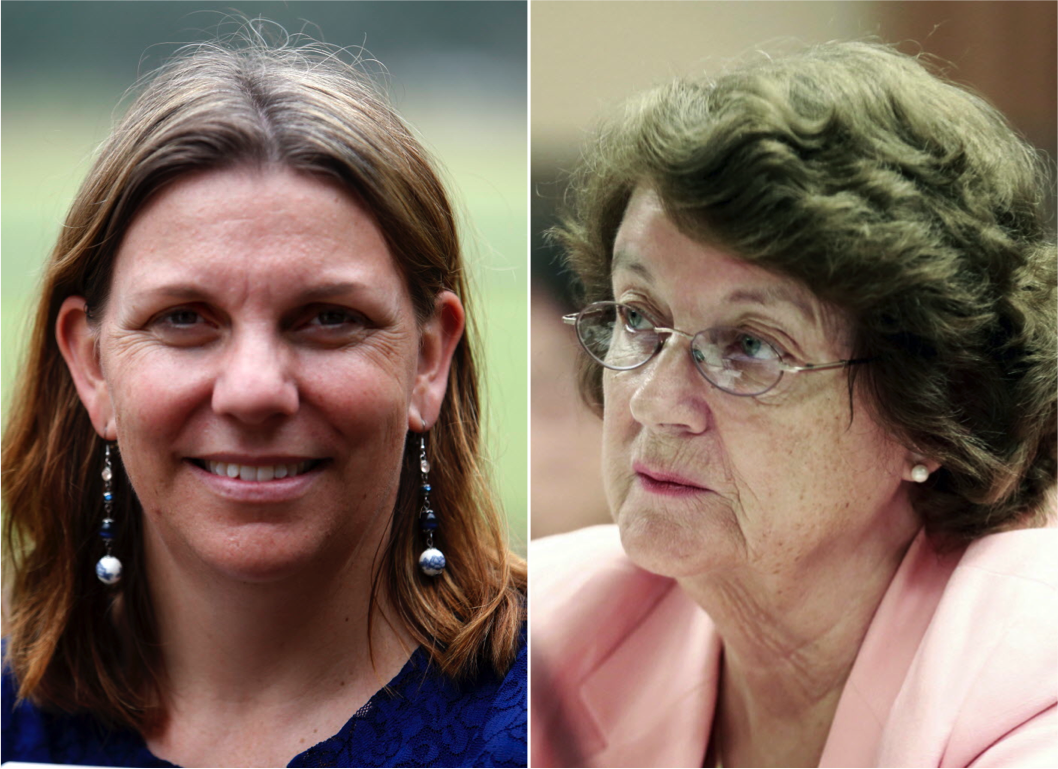

The Tucson City Council Ward 4 race pits two experienced civic leaders against each other: incumbent Democrat Shirley Scott and Republican challenger Margaret Burkholder.
Scott, the longest-serving member of the city council, is seeking a sixth term. She typically wins re-election easily, but in 2011 she ran a close race with Republican Tyler Vogt.
Scott said she is working well with other members of the council.
“We stand strong on our record. We have done an awful lot of work working together, and that’s what makes for a really good team,” she told the Democratic Nucleus Club.
Burkholder, a junior high math teacher at La Paloma Academy, is the only member of the Republican slate of candidates with political experience.
She served for 10 years on the Vail School District Governing Board. Twice she was elected as the third-place finisher for three open seats and once she faced no challenge.
Burkholder, an engaging and personable speaker on the campaign trail, has been the public face of the Republican slate of candidates this summer, often speaking for the group on the radio and at public events. The slate is electable and capable, she said.
The Southern Arizona Business Political Action Committee, made up of Tucson Metro Chamber members, called this “the most competitive race in this year’s election” and endorsed both candidates.
GROWING JOBS
Scott said one signal that Tucson is improving is employment levels, at their highest since 2009.
“More Tucsonans are cashing a paycheck today than there were six years ago. This is your council making an environment friendly to business and to job-creation,” Scott said.
Burkholder said the city’s role in growing jobs is to get out of the way. “The current council is hostile to business growth, and the bureaucrats make navigating the process an unpredictable nightmare,” she said.
Scott pointed to city tax-incentive programs, which are making an atmosphere where business wants to invest. Only recently did the council have a majority vote to create Government Property Lease Excise Tax incentives, or GPLETs, she said, and 10 companies have used the Primary Jobs Incentive program.
Burkholder supports incentives but criticized the city’s offerings as being out of reach for many businesses. Some of the incentives require employers to cover 75 percent of workers’ health benefits, for example.
Scott said millions in private investments have come to downtown Tucson thanks in part to incentives.
“We have an emerging downtown with excellent restaurants, a vibrant nightlife, student housing, parking that we didn’t have before, and this magnificent modern streetcar,” Scott said.
Scott said she felt wrongly criticized in 2011 when Rio Nuevo’s failure was a hot topic. “I kept saying ‘Oh, you mean the redevelopment and revitalization of downtown?’ And I still don’t hear from the people who were so very brutally critical of that. They haven’t come back to me and said, ‘You know, you were right, it’s really good.’ I guess I can hold my breath on that one,” Scott told the Nucleus Club.
Burkholder said she would have made different decisions about downtown. She’s excited about the new businesses, restaurants and student housing, but Tucson needs to turn its focus to diversifying business and developing tourism in the downtown area to help balance the economy, Burkholder said on the “Mike Shaw Show.”
BUDGET WOES
When it comes to the city budget, “This mayor and council did not sit back and say, ‘Woe is us.’ We took action,” Scott said.
The city got through the unanticipated increase in pension costs and shrinking revenues. The council approved job cuts without laying off public safety employees, froze salaries, cut benefits, cut spending and found efficiencies, she said.
The city found money for new police and fire vehicles and funded police and fire academies, Scott said.
Burkholder criticized the council for avoiding tougher cutbacks.
“You just have to have someone who has the courage to say no,” she said on “Wake Up Tucson.”

