

There was a time when a trip to the zoo meant gaping at once-wild animals trapped on barren concrete and caged in sterile chain-link. Often bored, sometimes neurotic, bears and big cats paced back and forth with nothing else to do. Elephants rocked from foot to foot endlessly. Highly intelligent primates threw their feces at the crowds in frustration — a sad spectacle for us and a miserable existence for them.
For the benefit of all, a quiet revolution in the zoo business was launched in the late 20th century — a revolution that would tear down that concrete and chain-link and build instead natural habitat displays for captive animals — displays that gave them some semblance of their former freedom. Several of the pioneers of that movement got their start in Tucson, at the Arizona-Sonora Desert Museum.
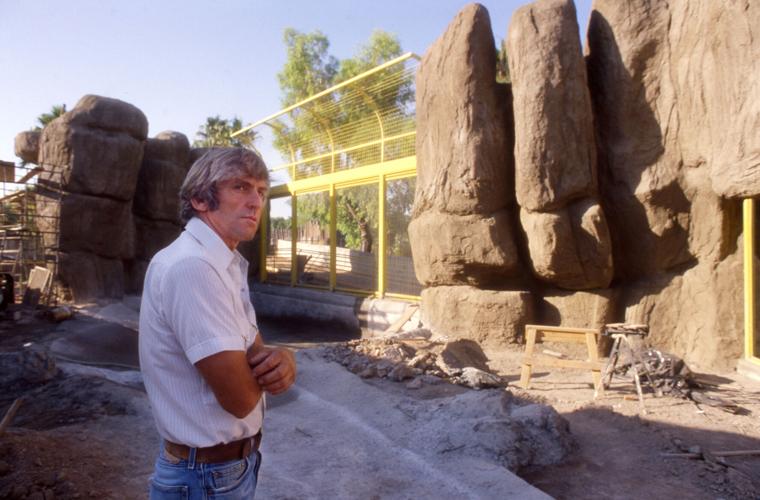
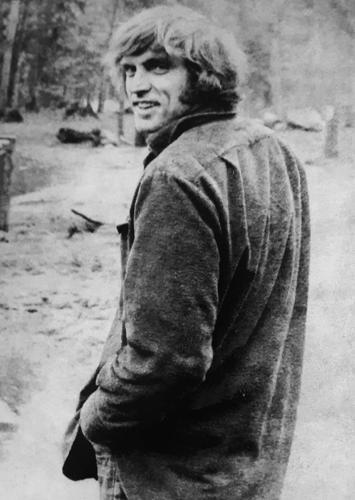
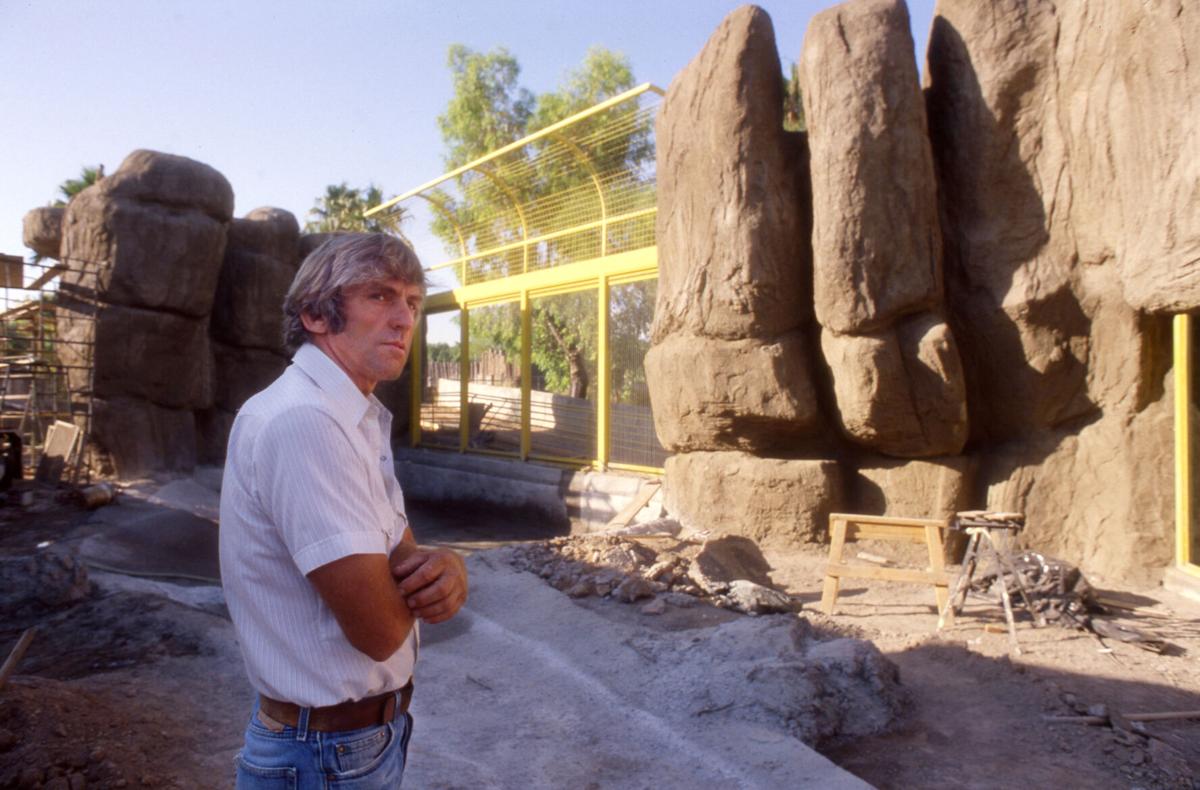
One of those pioneers was Richard “Rick” Dyson, who learned the art and ethos of creating naturalistic enclosures at the Desert Museum, then went on to transform zoos and living museums throughout America. Rick died in Tucson on April 29 at the age of 82, leaving behind a legacy of humane beauty that we — and the magnificent animals — now enjoy on our trips to the zoo.
“Rick changed the world for animals” is how my sister, Joan Bondi, put it. Full disclosure here: I was married to Rick for nearly a decade during the 1980s —some of the best years of my life. I met him when I worked for three years at the Desert Museum during the 1970s, then watched him take his good work nationwide.
The son of a steelworker, Rick was one of four brothers born near Pittsburgh, Pennsylvania. He grew up there when steel mills were still thriving in this country, providing a decent middle-class life for those workers — now long gone with the shuttering of so much of that industry. After attending Montana State on a football scholarship, he later transferred to the University of Arizona, after learning of the UA’s excellent wildlife management program — his chosen field — in the School of Agriculture.
“Since he was a kid, Rick was always interested in animals — especially wild animals,” said his older brother Jack, who also graduated from the UA and lives in Tucson with his wife, Susan. But Rick’s love for animals was not limited to the wild — he was a lifelong rescuer of dogs and cats, always having three or four dogs, and a cat or two, in tow. His friends said whenever they saw a stray dog, they would tell it to “go to Rick’s.”
“He actually considered going to veterinary school,” Jack said. “But there just wasn’t enough money in the family for that.”
Headed west with a dream
In fact, getting Rick and Jack to and through the UA was a major financial challenge. It was around 1960 when their mom and dad dropped them off on the Pennsylvania Turnpike outside of Pittsburgh — with one suitcase and about 60 bucks between them — to hitchhike their way west.
Carrying a sign that read “University of Arizona,” the brothers and their thumbs set off on their excellent cross-country adventure. It took four days and seven rides to get to the UA’s Main Gate. Along the way, kind people not only picked them up, but put them up in motel rooms and bought them meals — the Dyson charm at work.
First thing they did on campus was buy a meal ticket for two meals a day, five days a week. Rick would eat the lunch, Jack would eat the dinner, or vice versa, depending on who was hungriest. “Djooeet?” “No. Djoo?” was their mealtime mantra. Translation: “Did you eat?” “No. Did you?” Apparently, they somehow did get enough to eat, with Rick going on to earn a master’s degree in wild animal nutrition and Jack his master’s in guidance and counseling.

Richard “Rick” Dyson, who died in Tucson last month at 82, worked on exhibits at the Arizona-Sonoran Desert Museum and helped rebuild many of America’s zoos.
In the middle of all that, Rick bought a $10 guitar — on time, paying a dollar a week for it — and taught himself to play it, as did Jack. They soon joined up with three other musicians on bass, banjo and guitar, calling themselves The Bean Alley Boys, named after the little street they lived on near the university. Specializing in folk and bluegrass, they played weekend gigs at bars and dance halls around Tucson for about four years before they had to get serious about life.
“Oh, we had fun. Some of the best times of our lives,” Jack said.
Working his way through school, Rick got a weekend job at the Desert Museum, then joined the museum full time in 1963 as curator of birds and mammals after graduation.
Knew what the animals needed
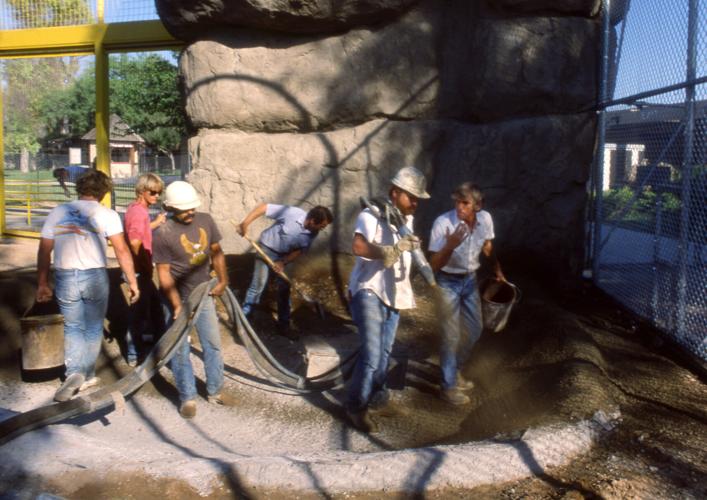
During his years there he became fascinated not only with the museum’s extraordinary commitment to displaying animals as you would see them in the wild, but also with how to construct those displays — how to build the artificial rocks that replaced chain-link fencing, how to provide enrichment and hiding places for the animals, how to research and replicate the natural environment for the various species on display. He was taught and mentored by then-museum director Mervin Larson, one of the geniuses of this revolution.
Working with Merv, Rick helped build the exhibit for the desert bighorn sheep that once roamed our Santa Catalina Mountains. As the artificial rockwork rose from the desert floor, accurately mimicking the cliffs of the Catalinas, Rick worried that the sheep would be able to climb out of their spectacular new space. Sure enough, one of the bighorn rams — within minutes of entering the exhibit — took one look around, bounded up the rocks, then easily over and out into the open desert. It took a few hours to round him up, but back he went. And back went the museum crew to shore up and secure the enclosure, which they eventually did.
“I don’t think I ever built an exhibit the animals couldn’t get out of,” Rick used to say, laughing. It amused him no end, though it was one of the real challenges of natural habitat construction. Creating spaces where captive wild animals could actually thrive was his life’s work and joy.
“The goal was always to build the most naturalistic exhibit possible, without freeing the animals,” said Ken Tucker, who worked with Rick for 25 years and was his project manager. “Everybody’s got to work for a living, but this was different. You woke up every morning wanting to go to work. And when you saw the finished product and saw the animals living a much more decent life, that was incredibly rewarding.
“That was Rick’s whole thing — caring for the animals. What made him so successful for all those years was his expertise in wildlife — he really knew what the animals needed and how to build it. For me, it was ‘wow, this is what I want to do.’”
Among the many exhibits Rick worked on at the Desert Museum — for mountain lions, deer, bears, otters, beavers, Mexican gray wolves, the Earth Sciences limestone cave — was the habitat for the small cats, the beautiful and endangered margays and ocelots of our Sonoran Desert.
Though the cats were always there in the mornings, the staff suspected they might be getting out at night. So they dusted the new rockwork and sure enough, feline footprints were found trotting up the rocks and out into the desert for the night. Apparently appreciative of the museum cat menu, they returned home after their nighttime revels to get fed. Rick and crew quickly put a stop to all that.
Built habitats across the U.S.
So there was a bit of a learning curve to all this. One of Rick’s first out-of-town projects was to build the new gorilla habitat at the Woodland Park Zoo in Seattle. Upon completion in 1979, the gorillas were led out of their concrete Ape House and into their open grassy, tree- and foliage-filled habitat. After a look around, one big guy flipped a log over the moat surrounding the exhibit, crossed the water on it and was up and gone, headed for the streets of Seattle. Zoo staffers fortunately got to him before he hit downtown. Mayhem averted.

Rick Dyson, far right, works with his crew at the Reid Park Zoo.
No matter. The gorilla exhibit was a huge success, honored with an award from the Association of Zoos and Aquariums:
“... the creation of the Woodland Park Zoo’s revolutionary gorilla exhibit, which for the first time utilized mature trees, natural foliage merged seamlessly for both the animals and the visitors. The technique was dubbed a landscape immersion exhibit, and has become the often imitated standard for accredited zoos across the globe ...” is how Wikipedia describes it.
Shortly after that, Rick formed his own company, Tucson-based Cemrock, and was soon in demand to humanely rebuild zoos across the country. For the next quarter century, Cemrock’s itinerary was huge: San Diego, Seattle, Chicago, Tacoma, Topeka, the Reid Park Zoo in Tucson, the Bronx Zoo in New York, Columbus, Ohio, Oklahoma City, Atlanta, and many more.
“He basically rebuilt the entire zoo in Atlanta,” Tucker said. Hammered for years for being a really lousy zoo, the Atlanta Zoo had managed to get itself named one of the Humane Society’s “Ten Worst Zoos in the U.S.” After Rick and Cemrock were done with it — transforming the lives of elephants, tigers, lions and primates there in the mid-’80s — the work sparked the zoo’s return to glory. By 2000, it was named one of the country’s 10 best, now known as Zoo Atlanta.
Got lion out of ‘dark cage’
Also high on the list, Tucker said, was getting the male African lion out of his “dark cage” and into the light of his new savannah-like exhibit at the Reid Park Zoo in Tucson in 1983.
“That was a nice one. That guy had been in that cage a long time — 18 years,” he said. “Just watching him walk on grass for the first time — he seemed to find that very strange.” A new tiger enclosure soon followed.
Along the way, Rick and crew occasionally tackled projects that had nothing to do with animals — unless you include a guy named Tiger. One problem was the 18th green on the famed Pebble Beach golf course in California, where the natural rocks could not keep the salty Pacific ocean from soaking it on windy days. In came Cemrock to build up those rocks with artificial rockwork that looked exactly like the real thing. Problem solved.
Another was Tonto National Monument in the Superstition Mountains in Central Arizona, site of the ancient cliff dwellings that date to the 13th century, once occupied by the native Salado culture. Sometime in the late ‘80s, the cliff dwellings began to move, slowly sliding toward the edge of the rocky ledge they were built on above Roosevelt Lake. Cemrock was tasked to stabilize the site.
“That was awesome. We likely saved an ancient Indian ruin, a piece of history,’’ Tucker said. “We did get around. And we had a great time. We had a great leader.”
Rick retired in 2001, selling Cemrock, which thrives to this day in Tucson. A few months before his death, several of his old crew visited him, knowing he might not have much time left.
“I am so glad I got to see him that last time,” Tucker said. “Before we left, I hugged him and said, ‘OK, bud, this is it. We may not see each other again.’”
And this from his heartbroken brother Jack: “Rick was the best friend I ever had, without exception.”

