



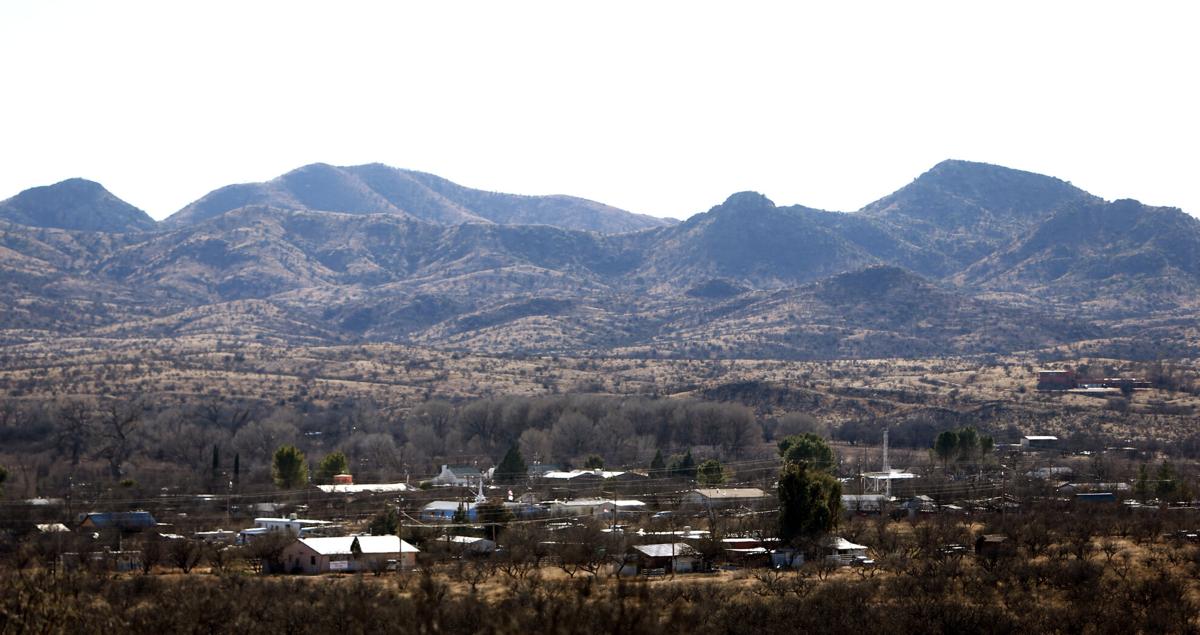
A group of Arivaca residents and protesters has quietly dropped its lawsuit demanding better public access to the Border Patrol checkpoint in the community.
Those who filed suit won a key victory in 2018, said Christine Wee, an attorney for the Arizona chapter of the American Civil Liberties Union. That’s when a federal appeals court ruled the Border Patrol cannot arbitrarily shut off a checkpoint and the area around it without providing legal justification.
But three years later, after the case was sent back to a trial judge in Tucson, the challengers are no closer — legally or physically — to being able to better observe the agents’ activities. The “enforcement zone’’ remains in place, said Marcela Taracena, spokeswoman for the ACLU, which represented the group.
So, in the seven years of litigation, what they won was a ruling that courts can look at those zones — at some point in the future — and decide if the exclusion area for members of the public are appropriate.
“While this particular case is closed, we will continue to work alongside communities to monitor and challenge Border Patrol human rights abuses in southern Arizona,’’ Wee said in a written statement.
The dispute traces its roots to 2013 when members of a group called People Helping People began monitoring the site along Arivaca Road, in the community about 60 miles southwest of Tucson.
In a report, they said that they were able to observe what they believe were patterns of racial profiling.
For example, while the majority of the vehicles in 2,379 stops were occupied by white occupants, vehicles with only Latino occupants were more likely to be asked to show identification, they said in the report.
Volunteers also said they observed 45 instances where motorists were required to show their identification, 34 of which involved vehicles with only Latino occupants.
Some local residents wanted the checkpoint removed, saying it was a source of harassment.
The Border Patrol responded by erecting ropes to keep them back at least 150 feet on either side of the checkpoint.
That led to the lawsuit charging the Border Patrol was violating the First Amendment rights of the would-be observers and protesters.
A magistrate in federal court in Tucson dismissed the case. But in the subsequent 2018 ruling, the 9th Circuit Court of Appeals said the residents had raised a series of legitimate questions about how the area is being used and who is — and is not — allowed in the area.
Judge Milan Smith Jr., writing for the unanimous three-judge panel, said the strip of rural road at issue likely began as a public forum, a place where individuals constitutionally are permitted to gather and protest. And while the judge said it is possible for a public forum to lose that status, such a move is considered “presumptively impermissible.’’
That means the burden is on the government to prove the road has lost its public forum status, Smith said. That would depend on the answers to a series of questions — questions that the magistrate who initially threw out the case did not allow the challengers to raise and explore.
One of these, Smith said, is whether large portions of the 319-foot enforcement zone are actually being used for checkpoint activities. If not, he suggested, that raises the possibility the Border Patrol has not met its legal obligation to narrow the restricted area to the smallest area necessary.
Smith also said the Border Patrol has declared the public is not entitled into the enforcement zone.
“The record shows that other visitors who were not protesting have been allowed inside,’’ the judge noted.
That, in turn, could undermine the government’s argument that its exclusion area is being neutrally enforced as required by law and is not only designed to keep out the protesters.
The judge also said the plaintiffs are entitled to information from the Border Patrol about the traffic stops made at the checkpoint, which they would use to compare with what they are able to observe from a distance.
“This information is relevant to whether (plaintiffs) have ample alternative opportunities for observation, as would be required to justify their exclusion from a public forum,’’ Smith wrote.
Without those answers, the judge said, there is insufficient information to decide if the enforcement zone is a nonpublic forum from which the public can be excluded.
The case was sent back to trial court for those questions to be answered. And, as recently as last month, the attorneys for both sides were squabbling about being able to question witnesses in pre-trial depositions.
Then the case went away with a voluntary dismissal by both sides.
More to the point, it was dismissed “with prejudice,’’ meaning it cannot be reopened.
Wee, in her statement, said she still believes there was a victory here, citing what she said are “harsh and egregious law enforcement tactics by federal agencies like Border Patrol’’ against people who live in border communities.
“People have the right to protest and record law enforcement activity,’’ she said, calling it “a foundational principle of the Constitution that communities across the state rely on to provide a check on abuses.’’
While this case is gone, the 9th Circuit ruling remains binding legal precedent, she said, “that the Border Patrol cannot simply assert that a checkpoint area can be summarily closed off to the public without further scrutiny of the court.’’
The was no immediate response from the Border Patrol or its attorneys at the Department of Justice.

