

Lesser is more.
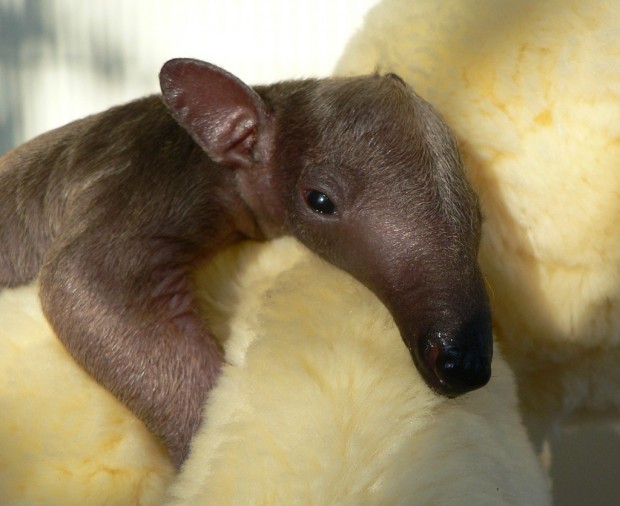
Tamanduas at the Reid Park Zoo, also known as lesser anteaters because of their size, have lived for years in the shadow of the zoo's three giant anteaters. Now, with the birth of one of the unusual creatures, the tamanduas are getting recognition.
Reid Park is one of 20 zoos accredited by the Association of Zoos and Aquariums to house tamanduas (pronounced tuh-MAN-deh-wahs). Though not endangered in the wild, Tucson zookeepers consider the birth significant. The Reid Park's newest addition brings the number of tamanduas at accredited zoos to 29, and it is the only tamandua born this year, according to zoo staffers.
The offspring, whose gender is yet to be determined, was born Aug. 10 to a first-time mother. It weighed less than a pound at birth. In addition to the new arrival, the zoo has two female tamanduas and a male. They are not on regular exhibit like the zoo's three giant anteaters, but the tamanduas are brought out for educational presentations, said Vivian VanPeenen, the zoo's curator of education.
Did you know?
Reid Park Zoo has been so integral in the breeding of anteaters as part of a worldwide species-survival plan that it adopted a silhouette of the creature for its logo.
Reid Park zookeepers maintain the stud book - a record of bloodlines - for anteaters. They were so successful at producing anteaters that Reid Park had to stop breeding for a while because so many anteaters around the world were related, genetically, to the Tucson group, said Vivian VanPeenen, the zoo's curator of education.
Tamandua fun facts
Tamanduas are found in the wild in Mexico, Central America and South America, living in habitat that ranges from tropical rain forest to savanna to thorn scrub. They are most active at night and at home both in trees and on the ground. They have small eyes and poor vision but can hear and smell quite well. Their coarse fur protects tamanduas from being bitten when dining at anthills, and enormous front claws are ideal for climbing trees, digging for food and defense. Another defense mechanism is a rank body odor and the ability to release a scent similar to a skunk's when predators approach.
Tamanduas have 16-inch-long sticky tongues with small barbs on them for procuring ants and termites from their mounds. Each can eat up to 9,000 ants a day. They also eat honey and soft, juicy fruits. Tamanduas don't have teeth; instead, their stomachs grinds the food after it is swallowed.
SOURCE: www.sandiegozoo.org
Contact reporter Kimberly Matas at kmatas@azstarnet.com or at 573-4191.

