

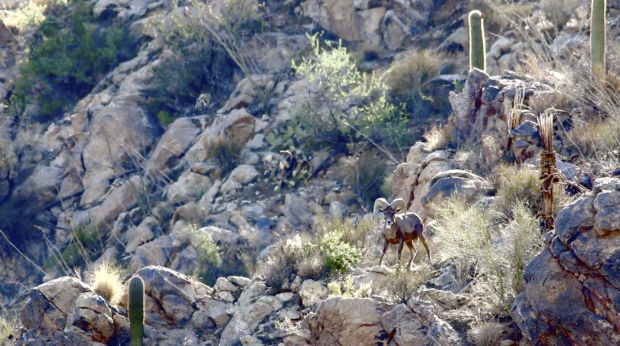
Another bighorn sheep has died in the Catalina Mountains — this one on the eve of a planned transplant of an additional 30 bighorns to the range next week, state wildlife officials reported.
That leaves just 12 surviving sheep from a total of 31 brought to the Catalinas north of Tucson last year in an effort to rebuild a herd that disappeared from the range in the 1990s.
The cause of the most recent bighorn death wasn't immediately known but — unlike most of the other deaths to date — it was not the result of predation by a mountain lion, says a report issued Friday by the Arizona Game and Fish Department.
Department spokesman Mark Hart said the agency plans to go ahead with next week's transplant of additional sheep as planned — with releases of bighorns in the Catalinas expected on Thursday and Friday.
The Game and Fish report says a GPS collar on a bighorn ewe sent a mortality signal on Tuesday, and wildlife officers went to investigate the next morning.
"A necropsy ... was performed and there were no obvious signs of trauma, eliminating that a predator (mountain lion, bear, coyote) was the cause of death," the report says. "Tissue samples were collected and will be submitted for further testing. The cause of death is not known at this time and once discovered will be reported in a future update."
The bighorn reintroduction project has brought strong objections from opponents who maintain that conditions — including urban development — have become worse, not better, since the 1990s around the Pusch Ridge bighorn habitat in the Catalinas.
They say transplanted bighorns, removed from habitat where they thrived, have fared poorly in the Catalinas — and they maintain that it's wrong to risk more sheep deaths with additional transplants. They also decry the killing of three mountain lions for preying on bighorns.

