


Many of the University of Arizona’s 14,298 employees will now have the option to create a flexible work schedule.
Although the COVID-19 pandemic forced employees at the UA — and in most office-style workplaces — to transition to remote work to mitigate viral transmission, the UA’s new flexible work initiative is not driven by public health necessity.
Instead, one of Tucson’s largest employers is joining a nationwide trend of taking the pandemic-era lessons learned about what work can look like beyond commuting to an office five days a week and applying them to a longterm vision for work post-pandemic.
“As you all know, the pandemic has introduced us to a number of flexible work tools and practices,” UA President Robert Robbins said in an email to employees last week.
“Like other employers and higher education institutions, we are embracing evolving workforce trends to help sustain the university’s position as a great place to work and ensure we remain competitive in the labor market.”
What is flexible work?
Some jobs at the university, like teaching and student support positions, require time on campus, but there are still options to find flexibility in those schedules, too. That’s because flexible work doesn’t just mean fully remote, though that is an option for some UA employees. Flexible work can also include:
Hybrid work week, which means an employee works some of the time at an office and some of the time at home.
Flexible schedule, which means an employee is allowed variations on when they start and end work each day, but they work a full work week.
Compressed work week, which means an employee completes their scheduled hours for the week in fewer than five work days.
Core business hours, which refers to established times (example: 10 a.m. to 3 p.m.) when all employees in a unit or department must be working. Time outside of those hours is flexible.
Flexible work arrangements like these allow workers more options for arranging child care or other responsibilities, managing a chronic illness or simply working at a time of day or in an environment most suited to their productivity.
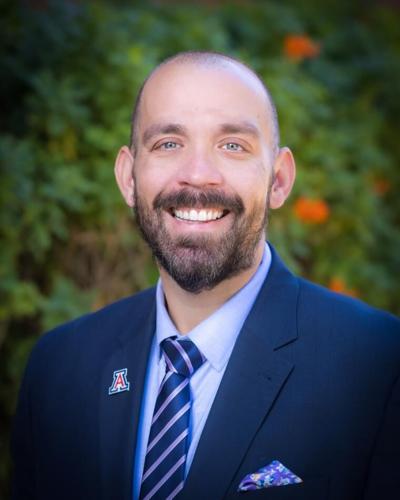
Although some UA employees have had flexible work options since before the pandemic, Celina Ramirez, vice president for university initiatives, said the pandemic exposed more people to its benefits.

Ramirez
“The pandemic made a lot more supervisors open to flexible arrangement than they had in the past,” she said. “We also had a lot more employees asking about it because they saw how it works for their lives as well.”
Ramirez, who has worked at the UA for 15 years, said she’s grateful to have had a flexible work schedule during most of her time on campus, which has coincided with raising two children.
“To some extent I’ve chosen my jobs based on how much flexibility they had so that I could meet the parenting needs I had,” she said. “The goal should really be getting the work done and getting it done effectively. That may look different from person to person.”
More job satisfaction
Last spring, Ramirez and a team of administrators conducted a survey to gain more concrete information about employee perspectives on flexible work.
According to the workers who responded to the survey, 42% of staff already had a flexible schedule; 44% had a hybrid work week; 26% were fully remote. The survey also found that 88% of employees who didn’t already have some kind of flexible work arrangement wanted one.
Rank-and-file workers aren’t the only ones who see benefits to flexible work options.
According to the survey, more than 70% of supervisors saw increased productivity among staff who worked remotely or partly remote. But staff — more than 90% — said the biggest benefit of flexible work is increased job satisfaction and employee wellbeing.
Over the summer, the university ran a pilot program for remote work across 22 departments, and is now in the process of analyzing the results.
Alex Underwood, registrar for the UA, was part of the pilot. Prior to the pandemic changing the look of office work, the 40-plus full-time employees in the Registrar’s Office were expected to work in an office on campus from 8 a.m. to 5 p.m., Monday through Friday, with few exceptions.

Underwood
Since the office is public-facing, it’s made sure to have enough staff on-site to support students in person. Some workers prefer to work in the office five days a week, while others prefer to work remotely or during non-traditional business hours. Underwood has found a compromise by requiring staff to come into the office at least two days a week, which is when they have their all-staff meetings.
Overall, he said it’s benefiting his department.
“Having that flexibility and letting people know that the office cares about them as people has made a big difference in both recruiting talent and retaining talent,” Underwood said. “We’re doing everything we can to both serve our students and the university, but also serve our workers.”
Although it will be up to individual supervisors and department heads to allow flexible work — the survey noted that those under the age of 35 were most likely to support the idea — backers of the initiative are encouraged by Robbins’ recent endorsement.
“One of our key takeaways was that supervisors felt like they needed leadership’s support,” said Alex Robie Harris, senior project director in the Office of University Initiatives.
“Just seeing that email is going to give supervisors the support and permission they’ve been looking for — that this wasn’t just a reaction to COVID. This is a longterm way that will change the way we all work.”
Photos: UA campus and Tucson in 1965
1965 in Tucson
Updated
The Western movie classic "El Dorado," starring John Wayne, was filmed at Old Tucson in 1965. Courtesy of Old Tucson Studios.
1965 in Tucson
Updated
The adobe church at Old Tucson movie studio under construction on September 28, 1965.
1965 in Tucson
Updated
Finalists for the 1965 University of Arizona Homecoming Queen. The theme was "74 Years with the Right Women." Emily Sult, seated at right, was elected Queen.
1965 in Tucson
Updated
The Fox Theatre on Congress Street in downtown Tucson in June, 1965, prior to a massive urban redevelopment project that changed the area forever. Tucson Citizen
1965 in Tucson
Updated
Barry Goldwater, 1964 GOP presidential candidate, addresses a crowd of about 1,400 Tucson Republicans at a Lincoln Day dinner at the Ramada Inn on Feb. 11, 1965. He asked them to work toward party unity. Jon Kamman / Tucson Citizen
1965 in Tucson
Updated
The first four-mile stretch of the Nogales Interstate Highway opened to local traffic in March, 1965. This view of the new expressway is from Irvington Road north toward downtown Tucson. "A" Mountain is on the left. This first phase of the interstate, costing $3 million, was from I-10 to Valencia Road. Bruce Hopkins / Tucson Citizen
1965 in Tucson
Updated
The $1 million in bond funds recommended for street lighting would put lights like these on East Speedway in March, 1965, on about 20 miles more of busy arterial streets in Tucson. Tucson Citizen
1965 in Tucson
Updated
An aerial of University of Arizona Band performing during a football game at Arizona Stadium in 1965. Tucson Citizen
1965 in Tucson
Updated
An Arizona Air National Guard F-100 fighter takes off from Tucson International Airport in June, 1965. Art Grasberger / Tucson Citizen
1965 in Tucson
Updated
Mrs. Albert Lanham of Evanston, Ill, takes a picture of her son Bruce and his wife during University of Arizona commencement on May 26, 1965. Photo by Mark Godfrey / Tucson Citizen
1965 in Tucson
Updated
Mrs. William Conley of Tucson gives her daughter Diana a big hug at University of Arizona commencement on May 26, 1965. Photo by Mark Godfrey / Tucson Citizen
1965 in Tucson
Updated
The University of Arizona band waits to play during commencement at Arizona Stadium on May 26, 1965. Photo by Mark Godfrey / Tucson Citizen
1965 in Tucson
Updated
University of Arizona students file into Arizona Stadium for the 70th commencement on May 26, 1965. The Tucson Citizen said 2,710 students received degrees. Photo by Mark Godfrey / Tucson Citizen
1965 in Tucson
Updated
The University of Arizona Pompon girls at Arizona Stadium in October, 1965. Bruce Hopkins / Tucson Citizen
1965 in Tucson
Updated
University of Arizona 1965 Homecoming Parade float. Homecoming theme: "Seventy-four years with the right women." Tucson Citizen
1965 in Tucson
Updated
University of Arizona 1965 Homecoming Parade float. Homecoming theme: "Seventy-four years with the right women." Tucson Citizen
1965 in Tucson
Updated
University of Arizona 1965 Homecoming Parade float. Homecoming theme: "Seventy-four years with the right women." Tucson Citizen
1965 in Tucson
Updated
University of Arizona 1965 Homecoming Parade float. Homecoming theme: "Seventy-four years with the right women." Tucson Citizen
1965 in Tucson
Updated
University of Arizona 1965 Homecoming Parade float. Homecoming theme: "Seventy-four years with the right women." Tucson Citizen
1965 in Tucson
Updated
The message on this float, "Arizona's Finest Woman," in the 1965 UA Homecoming parade is anyone's guess.
1965 in Tucson
Updated
"74 Years of Sugar, Spice N' Everything Nice," float in the 1965 UA Homecoming Parade.
1965 in Tucson
Updated
Pulitzer Prize winning poet and playwright Archibald MacLeish spent several days at the University of Arizona in November 1965. He was a guest of the Ruth Stephan Poetry Center. Dan Tortorell / Tucson Citizen
1965 in Tucson
Updated
A model of the proposed new Pima County fairgrounds in March, 1965. It was moved from 6th Ave and Irvington to Houghton and I-10.
1965 in Tucson
Updated
Charles H. Schmid Jr., "The Pied Piper of Tucson," during a court appearance in Tucson in 1965. Schmid murdered three girls, one just to know what it felt like to kill someone. Arizona Daily Star
1965 in Tucson
Updated
Snow in El Encanto Estates, Tucson, on Feb. 10. 1965.
1965 in Tucson
Updated
A 1965 view of the proposed urban renewal area that included La Placita Plaza, Tucson Convention Center and Symphony Hall, Pima County Superior Court, and city, county and federal administration buildings. The view is from the then Tucson Federal Savings Tower. Art Grasberger / Tucson Citizen
1965 in Tucson
Updated
Nearly 1,000 University of Arizona students rioted on May 6, 1965, after male students demanded "panties" at women's dorms. Rocks and bottles were thrown. Sixteen students were arrested. Jon Kamman / Tucson Citizen
1965 in Tucson
Updated
Nearly 1,000 University of Arizona students rioted on May 6, 1965, after male students demanded "panties" at women's dorms. Rocks and bottles were thrown. Sixteen students were arrested. Jon Kamman / Tucson Citizen
1965 in Tucson
Updated
Nearly 1,000 University of Arizona students rioted on May 6, 1965, after male students demanded "panties" at women's dorms. Rocks and bottles were thrown. Sixteen students were arrested. Jon Kamman / Tucson Citizen
1965 in Tucson
Updated
Nearly 1,000 University of Arizona students rioted on May 6, 1965, after male students demanded "panties" at women's dorms. Rocks and bottles were thrown. Sixteen students were arrested. Jon Kamman / Tucson Citizen
1965 in Tucson
Updated
Sargent Shriver speaks at the National Conference on Poverty in the Southwest in Tucson on Jan. 25, 1965. Shriver was the founder of the Peace Corps and a force behind Pres. Johnson's "War on Poverty." Dan Tortorell / Tucson Citizen
1965 in Tucson
Updated
The University of Arizona College of Architecture building opened in 1965, Tucson Citizen
1965 in Tucson
Updated
The University of Arizona College of Architecture building opened in 1965, Tucson Citizen
1965 in Tucson
Updated
The University of Arizona College of Architecture building opened in 1965, Tucson Citizen

