


Gov. Doug Ducey is proposing a full restoration of flexible funding for K-12 education after more than a decade of Arizona schools scrambling to maintain roofs, heating and cooling, plumbing, electrical, and other critical facilities needs.
The executive budget, released Friday, restores $371 million in additional assistance, flexible funding for district and charter schools that can be used for capital expenses like building improvements, curriculum and textbooks, although a number of districts have had to use some of that funding to supplement staff salaries as well.
But even with the restoration of additional assistance funds, which has been increasing since the governor released his five-year plan in fiscal year 2019 to restore it, Tucson-area school districts say they have a lot of catching up to do after years of state-level cuts.
If approved by the Legislature, the restoration would give Tucson’s largest school district millions more in additional assistance funding for next school year. Without the reductions, Tucson Unified would have received an additional $6.3 million this year.
While the increase would help, it’s not enough to make up for years of scarcity, TUSD officials say.
Over the last decade, the district saw reductions of more than $150 million. Tucson Unified’s operations department has identified $274.9 million in repairs needed within the next five years, $49.9 million of which are needed immediately.
Superintendent Gabriel Trujillo says TUSD is in a “facilities crisis.”
“There are some very serious facilities challenges in this district that state funding, which has been withheld from us, prevented us from taking action on,” Trujillo said.
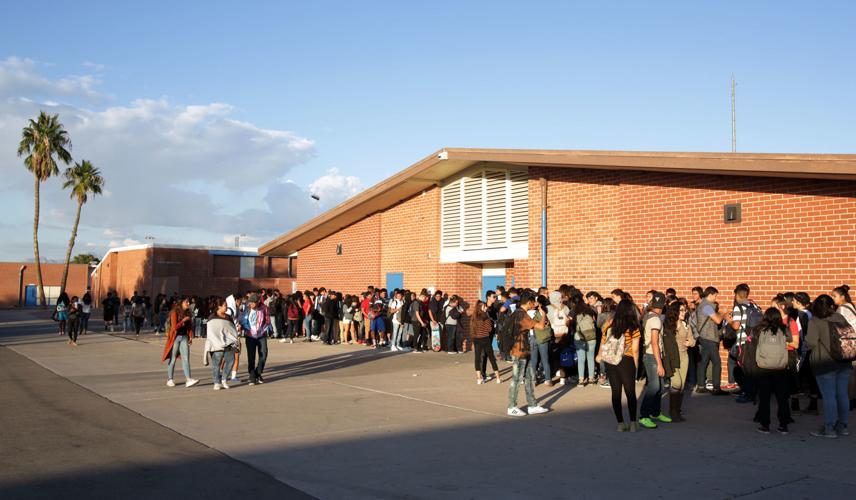
Districts statewide have to make tough decisions about funding maintenance and repairs. But Tucson Unified has the added challenge of maintaining a number of historic buildings and schools, including Safford, Sam Hughes, Tucson High, Mansfeld, Carrillo, Ochoa, Borton and Wakefield.
“The true story is that the lack of funding and the aging infrastructure go hand in hand,” says Damon Ballesteros, a senior coordinator in TUSD’s operations department. “Not only HVAC but you have the roofing throughout the district that’s in horrible condition ... No longer can you just put a coat on it, and it will still function.”
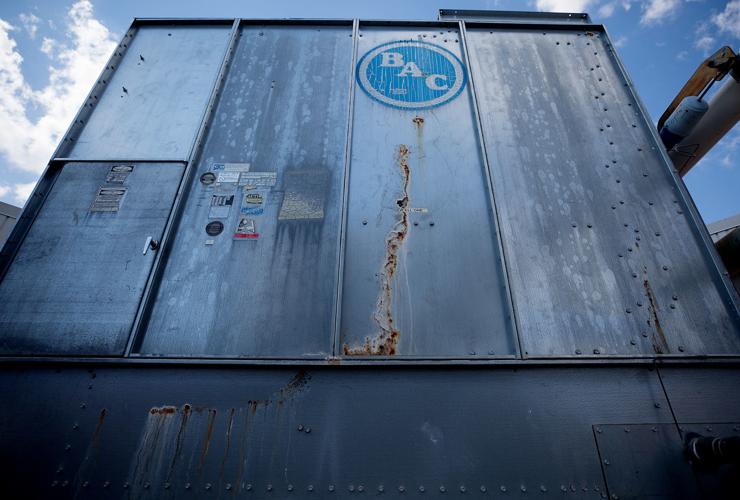
This school year alone, a rotting water line in the varsity locker room at Cholla High School broke, forcing the room’s closure. The air conditioning for Hollinger K-8 cafeteria failed, with the A/C for Ford Elementary on the brink. A critical heating component in a room at Rincon/University High ceased to work, and roofs at more than a dozen schools were failing or had significant leakage, to name just a few challenges.
Not having the funding to properly maintain or replace equipment and infrastructure ultimately may be costing school districts and the state more than if there had been adequate funding all along.
“You have to invest in your infrastructure in order to increase the service life,” Ballesteros said. “Unfortunately, we have not had those capital dollars to reinvest in our facilities. ... The longer we wait, the higher the cost is to make the repair.”

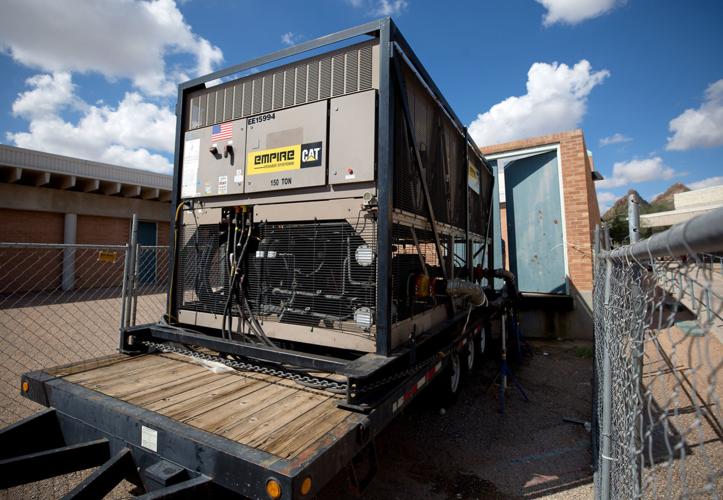
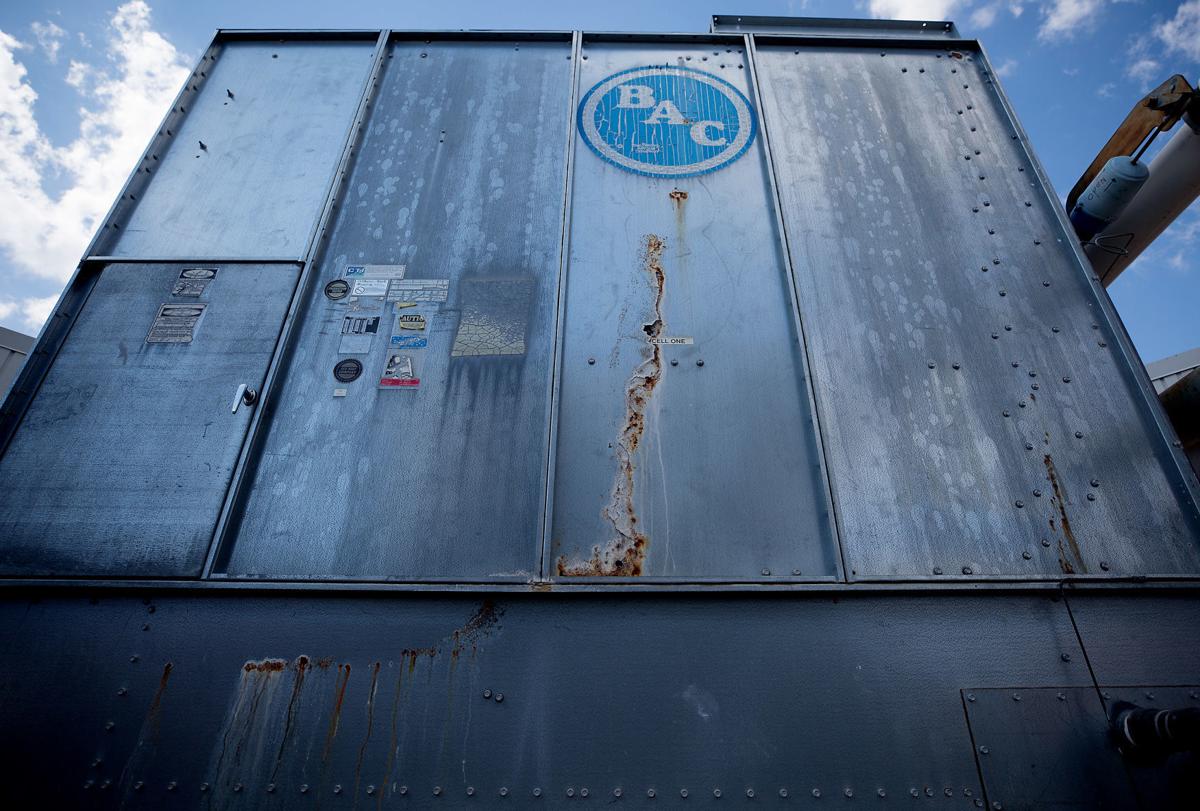
A rented air-cooled chiller had to be used at Pistor Middle School when air conditioning for the whole school began to fail. The district also looked at whether the entire school could temporarily move into the Santa Rita High School campus across town.
COMPLETE OR IMMINENT FAILURE
TUSD and numerous school districts across the state fund the majority of large repairs and replacements for big-ticket items like roofs, heating and cooling systems, security systems, electrical and plumbing with grants from the School Facilities Board, doled out on a first-come, first-served basis.
Along with most education funding sources, financing for the School Facilities Board was drastically cut during the recession. That crept back up to nearly $77 million last year and $80 million this year.
That amount is nothing compared to what’s needed, says TUSD Chief Operations Officer John Muir who says, “We could spend $80 million in half an hour.”
To get a grant, schools have to show there’s a complete or imminent failure. The districts say something has to be irreparable to get a replacement funded, often necessitating the need for costly rentals and interim replacements along with emergency response plans for catastrophic infrastructure failure.
For example, when the air conditioning for all of Pistor Middle began to fail, the district looked at whether the entire school could temporarily move into the Santa Rita High School campus across town. Amphitheater School District is doing multimillion-dollar replacements on high school roofs that have been leaking for years, according to grant requests with the state. At times, these leaks meant having to move students to other classrooms, says Amphitheater Superintendent Todd Jaeger.
The need for capital funds is great statewide, with the SFB already awarding nearly $70 of the $80 million appropriated halfway through the fiscal year. Ducey’s executive budget proposal includes $35 million more for the agency to award the rest of the grants already requested this year. The budget proposal also includes $108 million for next year’s grants.
WORKING FROM WITHIN
The School Facilities Board is TUSD’s primary source for tackling the facilities crisis, Trujillo said.
“It’s ironic that the same institution that set forth this funding crisis, the state, is actually also our greatest salvation,” he said.
To deal with the facilities crisis independently, TUSD is working to increase student enrollment, which adds to the amount of funding received from the state. On the 100th day of school, last week, the district was down about 400 students from the previous year. While no gains were made, the loss is far less when compared to a nearly 1,100-student enrollment decline the year before.
When TUSD plans its budget revision in May, it will be able to increase the budget because of better enrollment numbers.
During the budget revision, Trujillo plans to recommend the board approve roughly $1 million go into facilities, capital and deferred maintenance to fix some of the critical systems on the verge of failure.
“Summer will be fast approaching, so I want our team to hit the ground running,” he said. “The top priority is to get our A/C units in shape for another brutal Arizona summer.”
COMMUNITY FUNDED
Voter-approved bonds are the other main funding source for repairing and replacing infrastructure in Arizona schools. TUSD is the only local district that has not passed one in recent years, despite numerous attempts.
While a bond would be helpful, Tucson Unified has no plans to ask voters for one in the near future because of what the district’s taxpayers are already funding for a levy in its decades-old desegregation case.
Marana Unified has been able to fund a host of improvements in the last few years through voter-approved bonds, including opening three new schools, expanding two others, building a transportation center, and buying new technology, furniture and buses. They’ve also accomplished numerous campus improvements.
“Our community has supported the school district through bonds, and that’s kind of taken the brunt of the pain of the state formula being cut,” says Marana Chief Financial Officer Dan Contorno.
But even with the $125 million bond that passed in 2014, they still struggle to fund all their capital needs, Contorno says.
Like TUSD, Marana is reactive rather than proactive when it comes to expensive repairs, Contorno says.
Amphitheater School District also has voter-approved bonds to help cover infrastructure replacements on roofs and heating and cooling systems, as well as technology upgrades.
“I think we are in better stead than other districts who have not had that opportunity or at least not yet,” Jaeger says.
But even with access to tens of millions from those bonds, the district could not possibly undertake all the fixes they needed without funding from the School Facilities Board, he says.

Sunnyside has managed to keep its head above water with the help of a $88 million bond, said Hector Encinas, the district’s chief financial officer.
Tucson’s second-largest school district, Sunnyside, has managed to keep its head above water with the help of a $88 million bond approved in 2011, says Hector Encinas, the district’s chief financial officer.
Sunnyside has used the money to remodel and renovate infrastructure, buy equipment and technology, fund athletic facilities and replace old buses. But that money is almost gone. The district has about $3 million left “to spend for the rest of our lives,” Encinas says, half-joking.
Sunnyside received nearly $5 million in additional assistance from the state this year, compared to $2.6 million last year. However, the ongoing reductions over years past have cost the district about $40 million, Encinas says.
Although they’ve maintained infrastructure, other needs have fallen to the wayside. Sunnyside has not replaced desks, chairs, library books or textbooks in over a decade.
“The restoration of capital funds is going to help substantially,” Encinas says. “There’s never enough money ... We have some catch-up to do, no doubt about it.”
The state Legislature still needs to approve the governor’s budget before schools can count on this additional funding. Should the funding come through, it doesn’t necessarily mean that Arizona schools will be able to designate it all toward capital needs.
A number of local districts have had to invest some of this funding into salaries to keep up with the rising minimum wage and maintain competitive teacher pay raises. While this is not best practice, schools have been in a challenging situation because of past underfunding, said Pima County Superintendent Dustin Williams.
The Governor’s Office has worked closely with superintendents and education leaders to create this budget, said Ducey spokesman Patrick Ptak.
“This year’s budget makes K-12 education a priority,” he said.

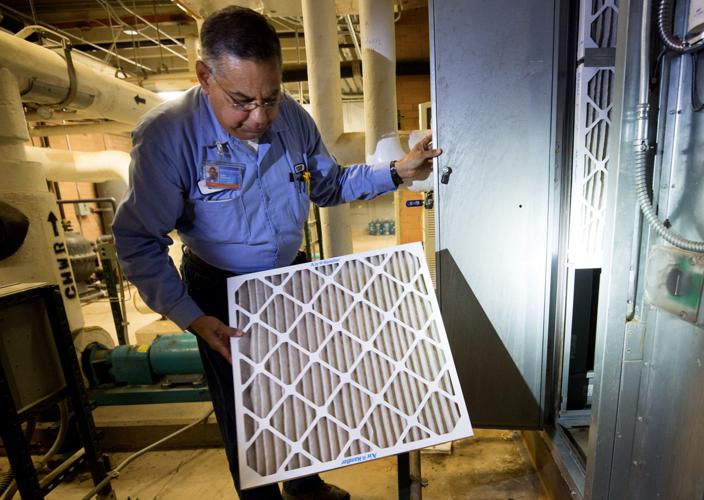
Celeo Echenique is a facilities foreman for Tucson Unified School District. Tucson Unified’s operations department has identified $49.9 million in repairs needed immediately for schools.

