



PHOENIX — With no primary rival and 10 months to go to the general election, Gov. Doug Ducey already has collected more than $3 million for his re-election campaign.
Newly filed campaign finance documents show the governor brought in close to $2.5 million in the past 12 months. That got added to more than $561,000 he had in the bank at the end of 2016.
With expenses of less than $400,000 this past year, that still leaves him with close to $2.7 million in the bank.
The report gives the Republican incumbent a huge running start over either of the most-likely Democrats who hope to unseat him.
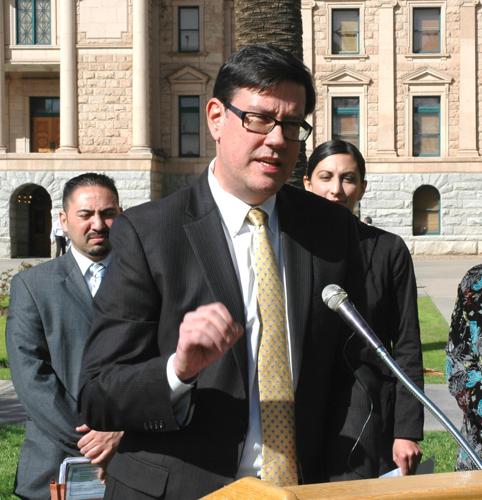
State Sen. Steve Farley, D-Tucson, has collected about $513,000 so far.
But there’s less there than meets the eye: His total includes $59,000 left over from Farley’s Senate campaign committee. And Farley reports expenses to date of almost $277,000.
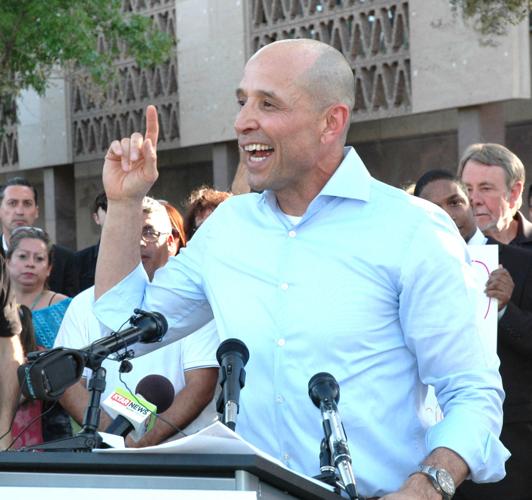
Still, Farley is outraising David Garcia, whose new report listed contributions of $300,000 against expenses of more than $205,000.
Ducey’s edge also doesn’t count what benefit the governor may get through independent expenditures. In 2014, supporters, including some from outside of Arizona, spent $1.8 million on his behalf and another $6.4 million against Democrat Fred DuVal, above and beyond the money raised by Ducey himself.
The question is whether Ducey needs that running financial start in a state where Republicans outnumber Democrats.
“In a year where the national generic ballot favors Democrats by 17 points, anything is possible,” said Democrat campaign consultant Andy Barr. That includes not only the fact that presidential mid-term elections tend to favor the party out of power, but also the controversies swirling around President Trump.
But Barr conceded that edge for Democrats may be more helpful for congressional candidates than state or local officials.
“People tend to think of their governor or mayor than they do like a member of Congress,” he said.
So is Ducey vulnerable?
“There are plenty of well-executed, well-run campaigns that go down in wave years,” Barr said.
GOP consultant Chuck Couglin concedes the point.
“You never take anything for granted,” he said.
But Coughlin said everything Ducey is doing points to his conclusion the governor is not presuming he will coast to an easy re-election.
That starts with Ducey’s State of the State speech and the time the governor spent on the issue of K-12 education. Coughlin said that is the No. 1 concern of voters.
“Whether you agree with him or not, he did a good job of narrating an agenda that he can run on,” he said.
And what of any “Trump effect”?
Coughlin said Democrats believe they can recruit “scores of new voters” who normally do not turn out for off-cycle elections.
“Personally, I don’t see that,” he said. “Until it shows up, it’s mythology.”
But Coughlin said even if Democrats can motivate some new voters, he’s not convinced it ultimately will make any difference at all.
It starts with the fact that Republicans outnumber Democrats in Arizona by about 162,000 out of more than 3.6 million registered voters. Republicans also are “higher-propensity” voters, more likely to turn out than Democrats.
“So let’s say you turn out 50,000 more voters,” Coughlin said. “Guess what? You’re still going to lose.”
Barr, for his part, said it remains to be seen whether Ducey can sufficiently distance himself from what are likely to be the broader national trends that are linked to Trump.
“I think none of us are going to know that until November,” he said.
But Barr said he doesn’t believe money will be the deciding issue.
“The path to winning in Arizona is run a better race and get lucky,” he said. “And I think a lot of our candidates are going to get lucky this time.”
There’s something else that’s different this year than in 2014 when Ducey outpolled Fred DuVal by 178,000 votes: the primary.
In 2014 Ducey found himself in a six-way race for the Republican nomination. While that campaign cost him money, it also provided some name ID and media attention that DuVal, facing no primary opposition, did not start to get until after the primary was over in late August.
Barr believes having a primary between Garcia and Farley will provide whoever emerges from that primary some needed free publicity.
And there’s something else: What Barr calls “pressure testing” the campaign organization ahead of the general election.
“You have these sort of untested campaigns getting to the general,” he said, which are suddenly hit with negative advertising.
“If they don’t have a strong organization, it takes them 10 days to sort of figure out what they’re doing,” Barr said.
“And then the race is over,” with early ballots going out Oct. 10 and a majority of Arizonans casting early ballots up to a month before the Nov. 6 general election.

