

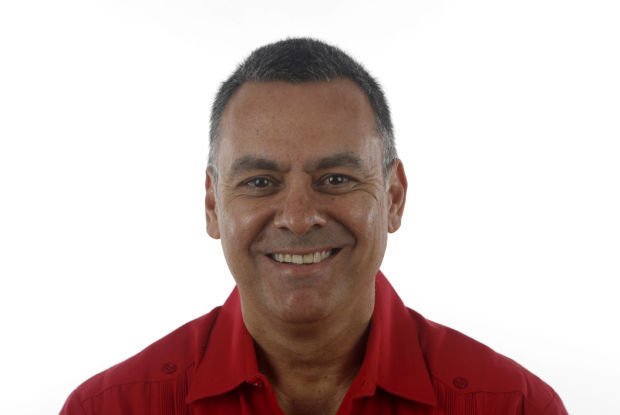

For the past 10 years, Vera Bowlby has counseled people who are HIV-positive or living with AIDS.
Bowlby, who works for the Southern Arizona AIDS Foundation, talks to her clients. They often cry together. Sometimes they pray.
Despite the uncertainty burdening her clients, her message is consistent and clear: They can live a normal life, without fear and shame that often is attached with HIV/AIDS.
Bowlby knows. For 22 years the Brazilian native has been HIV-positive. She’s married, has a daughter and two grandchildren, all of whom are HIV-negative.
“It’s possible to have a life,” said Bowlby, 59.
I heard Bowlby tell her story recently. She was one of the speakers at the annual National Latino AIDS Awareness Day dinner, held Oct. 15 at El Casino Ballroom. While the focus that evening was on Latinos and Latinas who live with HIV and AIDS, the infection is nondiscriminatory.
According to the Centers for Disease Control and Prevention, “more than 1.1 million people in the United States are living with HIV infection, and almost 1 in 6 are unaware of their infection.”
Young black men are most seriously affected by HIV, the CDC reports. Latinos accounted for 21 percent of new HIV infections in 2010. Latino males are infected nearly three times the rate of white males and the rate for Latinas is 4.2 times that for white females.
Among women, 84 percent of HIV infections come from heterosexual contact and 16 percent from drug use.
The statistics are telling, but the better stories are those of people, like Bowlby. I found hers compelling, and last week I visited with her at the SAAF office at 375 S. Euclid Ave.
Bowlby had a flashy career as a wardrobe designer for Brazil’s largest television network. She designed and selected clothes for the actors and actresses in the sitcoms, soap operas and music videos. It was a glamorous life where she met famous and popular actors and singers from Brazil, the United States, Europe and Latin America.
But the glitter dulled when friends and co-workers began to die of AIDS in the 1980s and ’90s. There was uncertainty around her and there was no education and information.
Bowlby did not believe she could get infected. But she did.
She contacted the infection in Brazil from her relationship from a man, who led a secret bisexual life. For several years she unknowingly lived with HIV and discovered it after she immigrated to the United States. She applied for residency and took a required blood test.
The doctor gave her the news and left. But before he walked away, the doctor told Bowlby, who was then living in Atlanta, that she had two years to live.
“There was nobody there to talk to me about it,” she said. “I was left alone.”
She was also left with shame and the fear of telling her husband of three months, her daughter or anyone.
However, when she told her husband, Craig, much of her fear disappeared. He hugged her and told her, “If God put us together, he has a purpose and I will be here with you until the end.” Likewise her church accepted her, she said.
Bowlby knows that the reception she received is rare and, still today, the more common response to individuals who reveal they are HIV-positive is rejection by family and friends.
The stigma of being infected remains powerful. They feel shamed. They fear rejection, said Bowlby.
At SAAF, Bowlby’s clients entrust her with their emotions and stories. They have few options for support. That is what Bowlby discovered after she and her husband moved to Tucson in 2000 because of his job. She searched for a place to go and talk, where people understood her challenges.
She found a safe place, first as a volunteer and now as peer-counselor coordinator.
Bowlby counsels her clients to overcome their fear and work toward achieving a normal life. The drugs to arrest the infection have improved since she learned of being HIV-positive. She tells them there is hope.
She tells them her story.

