

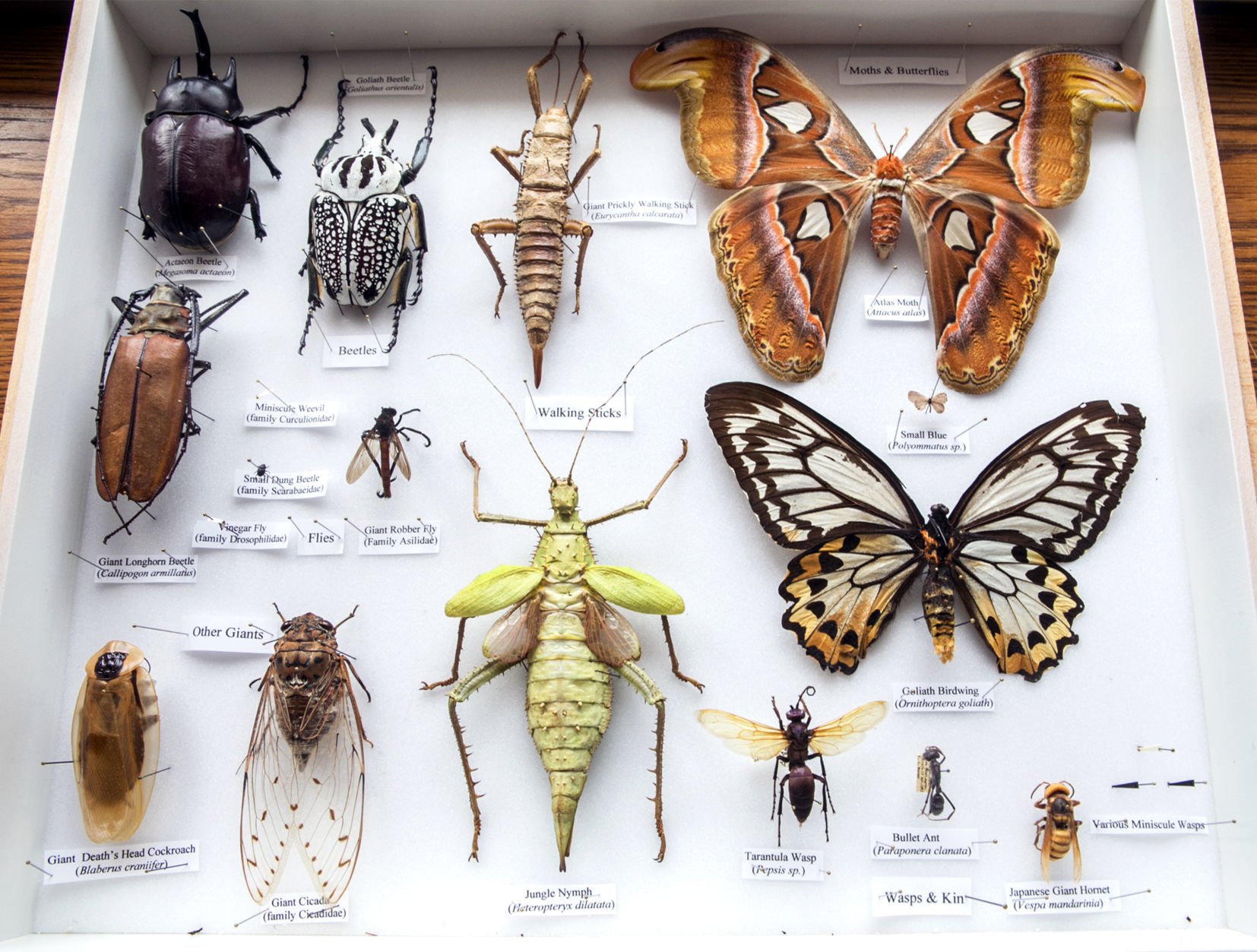

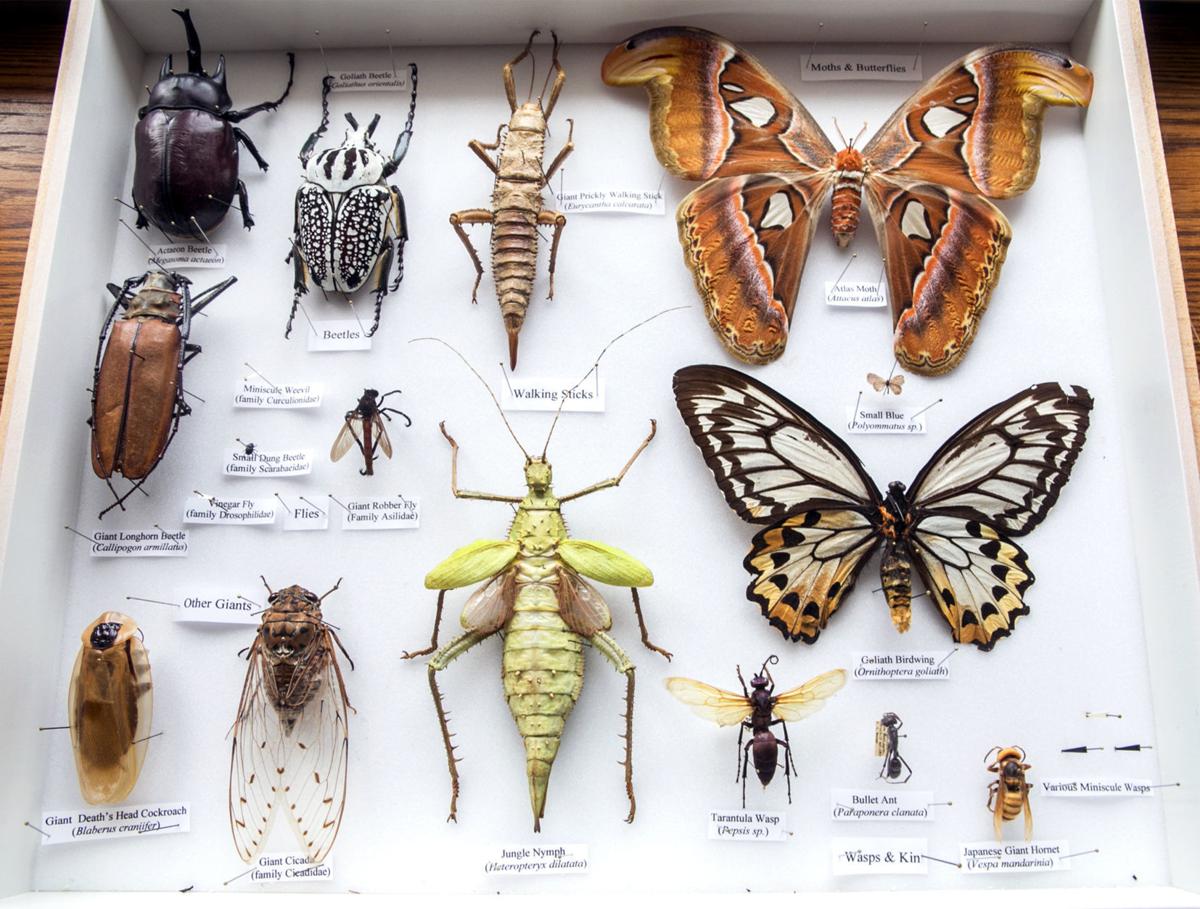
Most people try to avoid insects, but this weekend University of Arizona entomologists are inviting the Tucson community to join them for a day filled with bees, butterflies and bugs.
The Arizona Insect Festival, led by the UA’s Department of Entomology, will return on Sunday, Oct. 20 and aims to help improve science literacy throughout the community and increase awareness about the importance of insects. The event, which is free and open to the public, will be held from 10 a.m. to 3 p.m. in the UA’s Environment and Natural Resources 2 building.
Now in its ninth year, the event provides an opportunity for community members to learn and interact with different species of insects. According to Wendy Moore, director of the Arizona Insect Festival, Tucson is one of the best places to study insects because of its unique biodiversity.
“Tucson is located in the middle of a biodiversity hot spot, which means that it’s one of only 11 places in the world that has the most biodiversity, the most number of species and some that are threatened,” she said. “So, it’s a special place for celebrating diversity and conserving it, and insects are a huge part of that.”
This year’s festival will focus on a new exhibit and project, the Tucson Bee Collaborative, that celebrates the diversity of native bees throughout the Sonoran Desert.
“The Tucson Bee Collaborative is a multiinstitutional effort to promote awareness that the Tucson area has the greatest diversity, or the highest number of species, of native bees in the world,” Moore said.
It’s estimated that up to 1,000 species of native bees call the Sonoran Desert home. The deserts of Israel are the only other place in the world that have close to the same number. Like Israel, the Sonoran Desert is a hot spot for solitary native bees, which, unlike honeybees and bumblebees, live alone and not in colonies. Solitary bees, however, are just as important to pollination.
Through the Tucson Bee Collaborative, UA researchers are working with students at Pima Community College and conservationists at the Arizona-Sonora Desert Museum to increase knowledge of native bees around Tucson and determine how many species live within the region.
“We want to build tools that will help with research, not just at UA, but around the world,” said Moore, who also serves at the project lead. “Anyone who’s interested in studying native bees here, we want to build resources to allow them to identify them correctly.”
The group is working together to help expand the UA’s insect collection, which houses over 2 million insects, so that it includes representative specimens of every single bee species native to the area. To make this happen, conservationists at the Desert Museum set traps every two weeks for 48 hours year-round. Once the bees are collected, the specimens are mounted, labeled and sent to the insect collection where they are cataloged and photographed.
From there, students from Pima Community College help to “barcode” each bee, a method used to identify species using a short section of DNA.
“It’s difficult to identify certain bees by appearance alone and can be very labor intensive, but the technology that students are using, called DNA barcoding, makes it much easier,” said Jennifer Katcher, an instructional faculty in biology at Pima Community College who is leading the student-driven science side of the project.
Embedded within the DNA of every living thing is a pattern of nucleotides, called the barcode region, that is unique to each species.
Once the DNA is extracted, the students make copies of the barcode region and publish it, along with other specimen-specific information, on the Barcode of Life Data Systems database, which researchers around the world can access.
The database helps the students to identify the species by comparing their barcodes to information that has already been uploaded. This process also allows researchers to identify new species. The students have already published barcodes for 78 species, 28 of which were new to the Barcode of Life database.
This is just some of the research that will be highlighted at the Arizona Insect Festival. Along with the Tucson Bee Collaborative exhibit, which will provide more information on the project, attendees will have the opportunity to interact with live insects, participate in interactive activities and learn about other research happening at UA.
According to Moore, attendees will even have a chance to eat insects that have been cooked within cookies and tacos. Through this activity, researchers hope to showcase the nutritional value of insects, which could potentially be used to feed a growing population.
“A lot of people in Tucson look forward to it every year, and it’s something that is important to scientists at the UA to be able to interpret their science to the public and see other people to become passionate and excited about it.”
For Moore, the festival is also an opportunity to reduce people’s fear of insects and to increase the community’s understanding of the benefits of insects on the environment.
“What we’re hoping to do is promote insects as a study system. Entomology is a degree that people can get into,” Moore said. “We want to reduce the fear factor that many people have sort of unnaturally. Children love insects, but as we get older, we kind of get scared of them. We want to bridge that gap and have people fall in love with them all over again.”

