


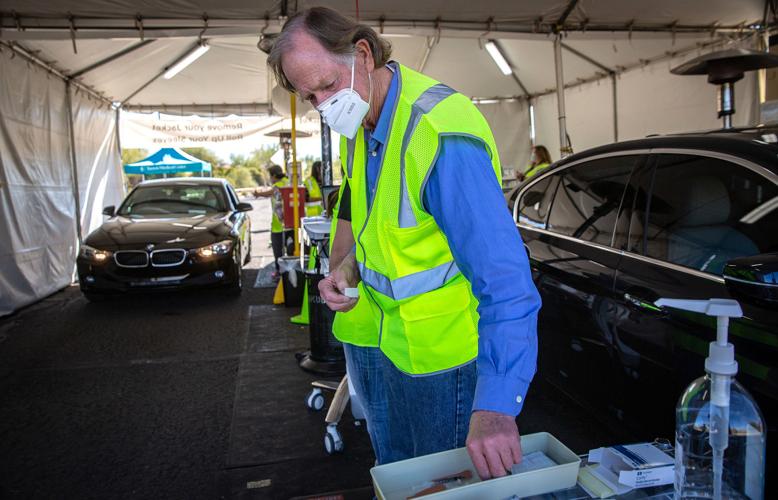

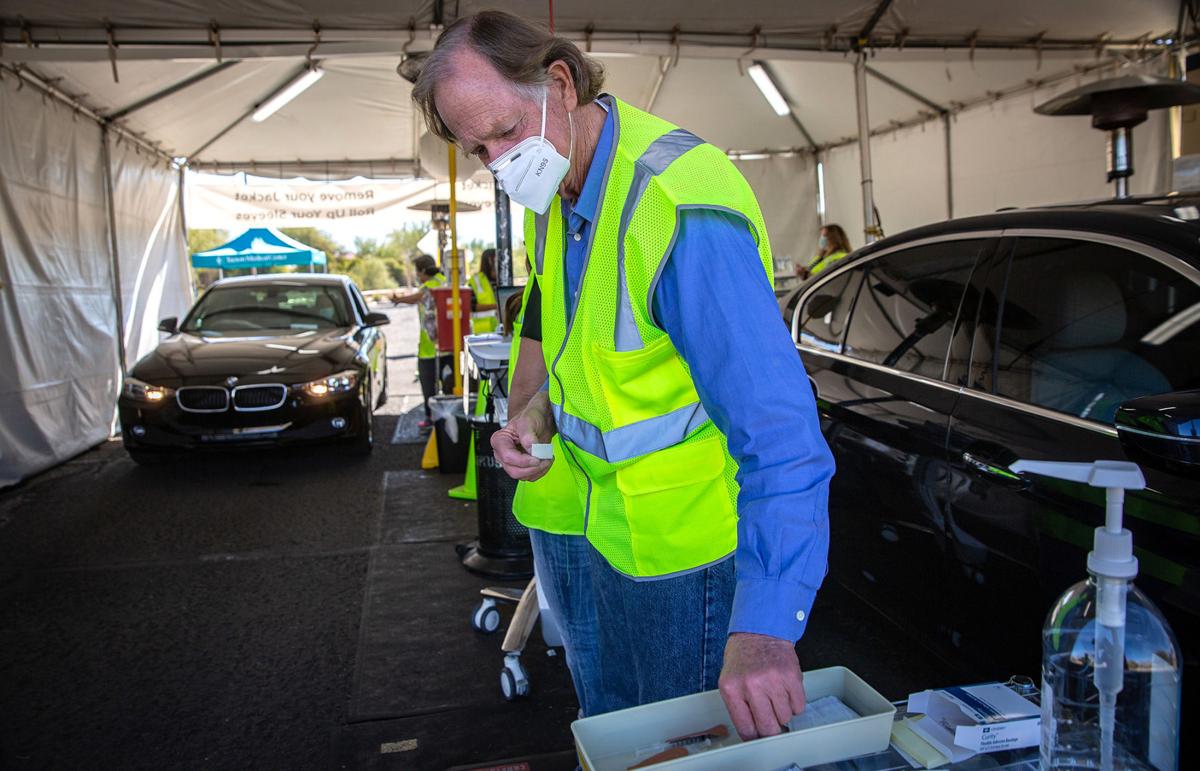
It takes only about a minute, that is once a person’s name and medical information has been confirmed, but it’s a very significant 60 seconds.
Some medical workers getting the first dose of the COVID-19 vaccine at Tucson Medical Center‘s drive-thru are nervous. Others are more self-assured. But the most common reaction the volunteers see: gratitude that 10 months of waiting and worrying is starting to fall away.
Occasionally, there are tears, and that gets to Annie Waits, a retired nurse who helps dispense the vaccine as part of her volunteer work with the Medical Reserve Corps of Southern Arizona.
“Some cry and that, of course, brings me to tears,” Waits said. “It’s one minute that you spend with such a wide variety of people.”
The crying is mostly from happiness, she says, happiness over being part of the solution to a medical horror story that’s killed more than 365,000 people nationwide and sickened over 20 million. About 1 in every 1,000 people in Pima County have died of COVID-19, the health department here reports.
Volunteers dispensing the vaccine work to help people feel relaxed, Waits said. Some make small talk, tell a joke or two, or offer words of encouragement.
“There’s so much you can say and do,” Waits said. “I know there’s a lot of trepidation.”
“Never been done on this kind of scale”
Waits and the 100 or so other medical volunteers at TMC are part of a nationwide effort that includes over 900 Medical Reserve Corps organizations. The volunteer programs got underway after the Sept. 11, 2001 terrorist attacks.
In some areas, medical reserve workers focus on natural disasters like hurricanes or tornadoes, while in the Southwest wildfires are the more common natural phenomenon, said pharmacist Keith Boesen, former director of the Arizona Poison and Drug Information Center and board president with the Medical Reserve Corps here.
Volunteers also run first-aid tents or help out when communities are rocked by mass shootings, he said. A recent mass inoculation effort in Cochise County happened in 2019 after a significant outbreak of hepatitis A, he said, but the COVID-19 medical crisis and resulting volunteer need is massive in comparison.
“I’m pretty sure this has never been done on this kind of scale before,” he said. “Can we vaccinate the entire world in six months?”
To give a vaccine, volunteers need to be licensed to do so, but helpers of all kinds are needed including former medical workers whose licenses have expired.
“That knowledge base that someone has is clearly still there and they can play a different role in what’s going on,” he said. “This operation will only get larger as the months go on. We’re always looking for anyone who is interested in helping.”

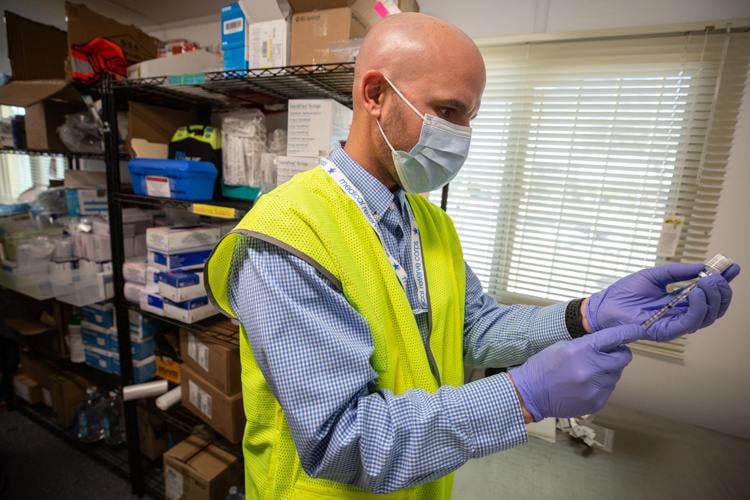
Pharmacist Keith Boesen, former director of the Arizona Poison and Drug Information Center, prepares a syringe for Tucson Medical Center’s drive-thru vaccination program.
“Pure thankfulness” replaces nervousness
Pima County will be expanding its vaccination efforts in the weeks ahead, as it moves late next week into the next phase, 1B, which will first include older adults, ages 75 and up, who live at home, as well as law enforcement and firefighters, and teachers and child-care workers. The second part of that phase will include essential service and critical industry workers as well as vulnerable adults who live in congregate settings.
Staffing plans and new locations for vaccines are still being sorted out, said Cecilia Nguyen, volunteer coordinator with the county’s emergency operations center, but the county is constantly looking for volunteers to help.
Waits had recently retired from her job as a registered nurse when the pandemic started. She hadn’t heard of the medical volunteer corps before, and was referred to the organization after she called the health department here.
She’s joined by people like Michael Collier, a retired doctor from Flagstaff who is staying in Tucson for a month to help get the vaccine out here. Next, he plans to take what he’s learned here and help out in Coconino County.
In addition to dispensing shots, Collier is also watching patients for signs of reaction and is happy to say he hasn’t seen any anaphylaxis, which is a severe and possible life-threatening allergic reaction that typically occurs within a short time after exposure. Peanuts and bee stings are a common cause, and facial swelling is a common first sign.
During this last week, the volunteers have started giving the second dose of vaccine to some patients, he said, and the nervousness has been replaced with what Collier describes as “pure thankfulness.”
The states leading the vaccination race, and more trends in this week's data

The Pandemic's Devastating Impact On Healthcare Workers
Updated You will find more infographics at Statista
Immigrants Account For Over A Third Of U.S. Healthworker Deaths
Updated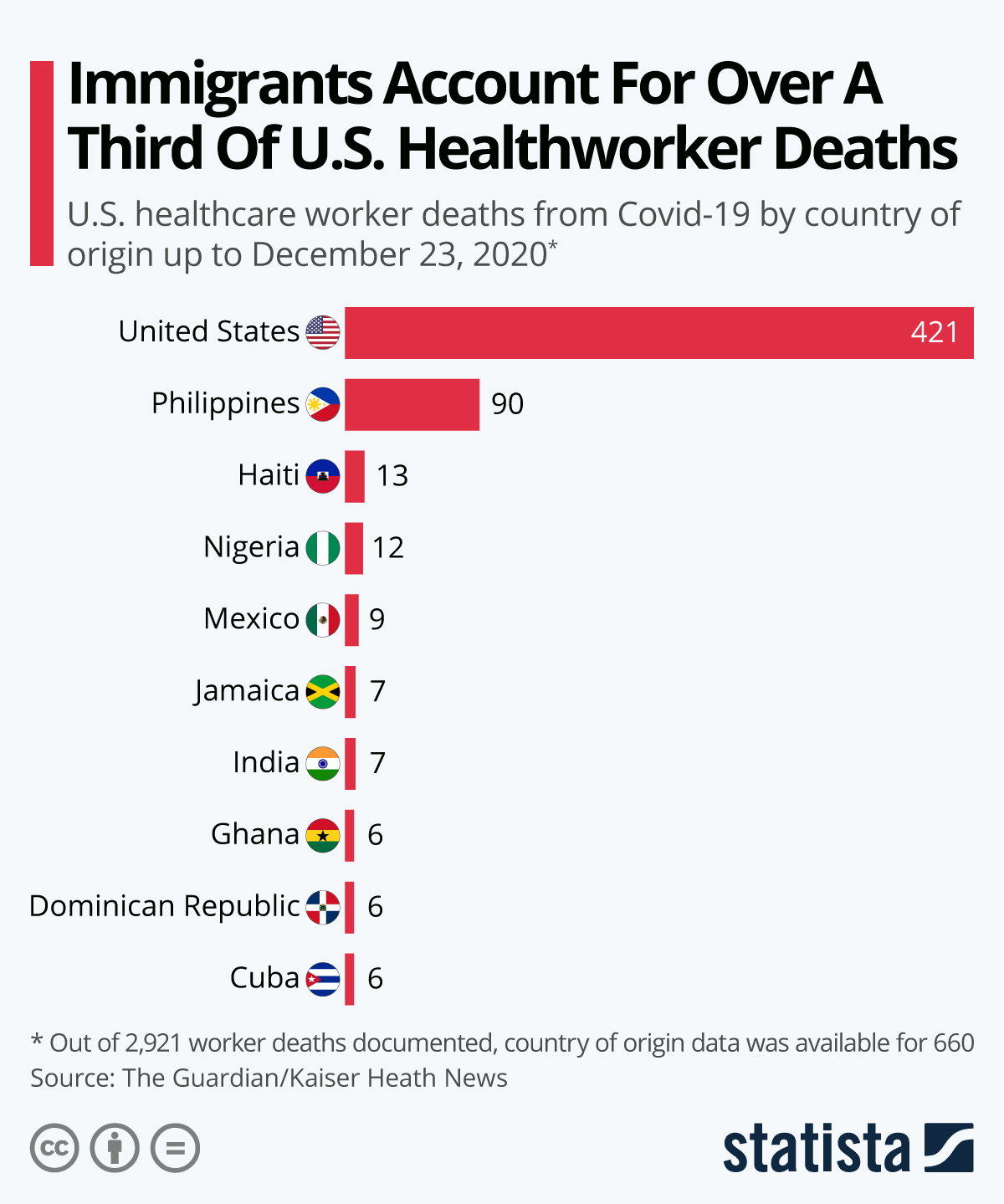 You will find more infographics at Statista

Where The Most Journalists Are Imprisoned Worldwide
Updated You will find more infographics at Statista

World Economy to Trail Pre-Pandemic Trajectory for Years
Updated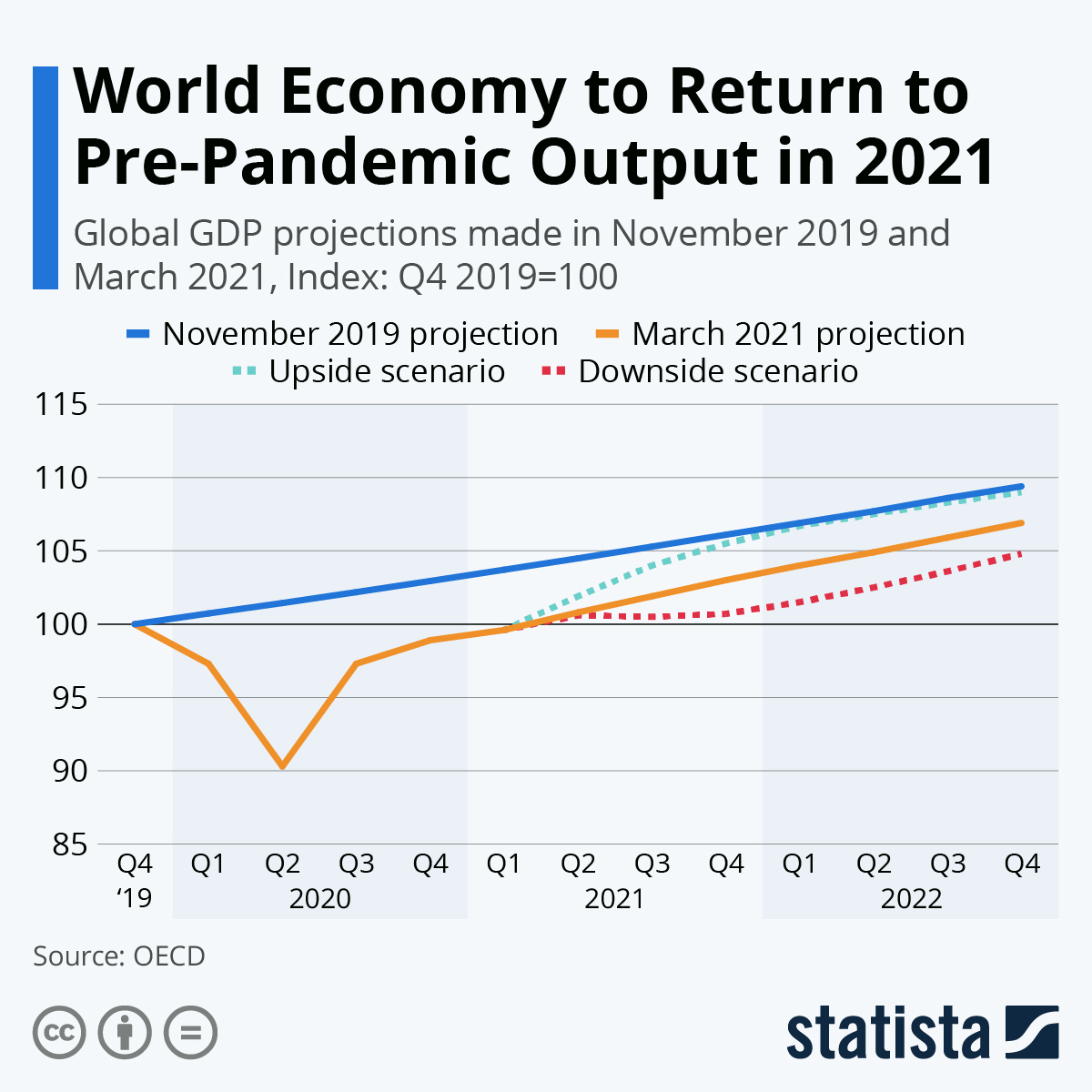 You will find more infographics at Statista

