


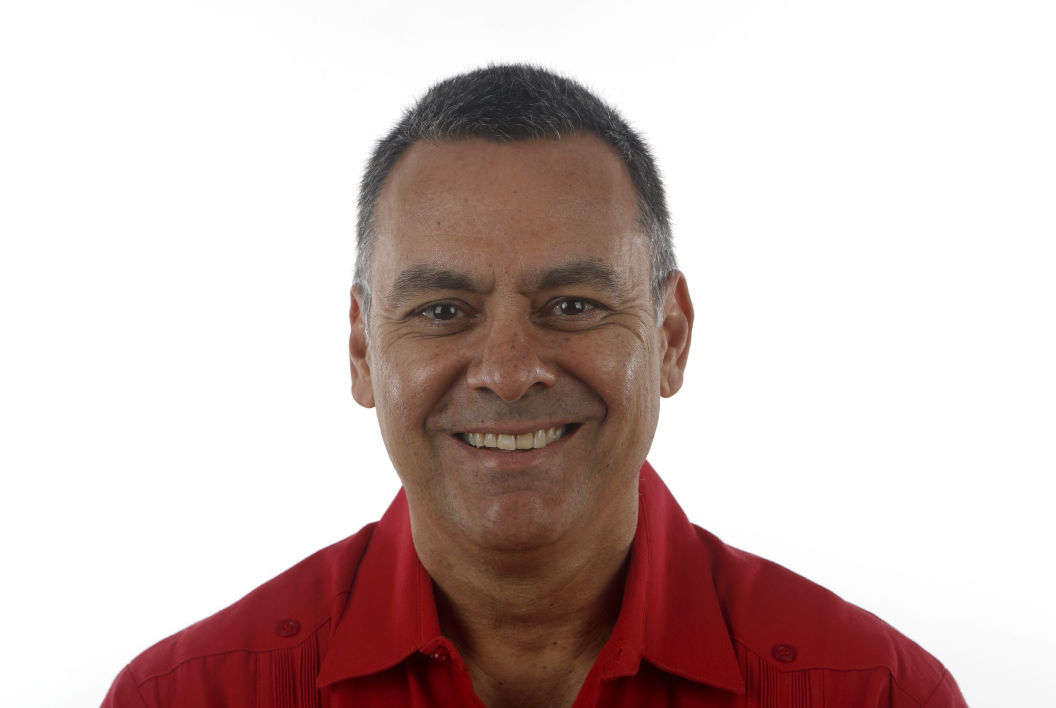

For nearly 20 years, Noel Floresca has lived with AIDS.
In those two decades he became very ill, believing he would die. He struggled with depression. At one point he needed a walker to help him get around. And he continues to deal with the physical side effects of the medications that have prolonged his life.
Despite it all, Floresca, 51, faced his medical conditions with resolve. He was not ready to die.
“You have to find something to smile about,” he said.
In the years he has dealt with his issues, Floresca has helped others confront their own. He has been a longtime volunteer for TIHAN, the Tucson Interfaith HIV/AIDS Network.
He works in the office and he counsels, with a team of caregivers, people who are facing a similar road to the one Floresca has traveled. He also works with TIHAN’s Poz Café, a monthly social gathering for people who are HIV positive, held at St. Francis in the Foothills United Methodist Church, at the corner of Swan and River roads.
“TIHAN is a small sanctuary with a big heart,” Floresca said Friday morning at the TIHAN office on North First Avenue, north of East Grant Road. He credits Tucson’s communities of faith that put their faith to work, rather than simply talking about compassion and giving.
Although stories appear infrequently in the media about people living with the HIV virus or who have been diagnosed with AIDS, the medical conditions continue to affect people, straining their lives and those close to to them.
“We remember the early days when people felt there wasn’t much that could be done. But that was then,” TIHAN executive director Scott Blades wrote to me.
“There’s a new reality today in the U.S. There’s hope now. There’s treatment now. There’s support now. But that involves us getting people tested, getting them into care and getting their viral load suppressed, keeping people feeling supported and helping them to focus on living well instead of dealing with HIV in depression and isolation — that is our best hope for stopping this: testing, caring, supporting” he added.
According to the Centers for Disease Control and Prevention, about 50,000 people a year become newly infected with HIV. The agency estimates that 1.2 million people in the United States are living with HIV, 14 percent of whom are unaware they have it.
However, most people who are diagnosed with the HIV virus take precautions against infecting others and turn to treatment, Blades wrote. Two demographic groups that are more likely to contract HIV are the young and older people.
Floresca, a native of the Philippines, was in his mid-20s and living in Southern California when he discovered he was HIV-positive. A few years later he moved to Tempe, but when he became gravely ill, with no job and little hope, he moved to Sierra Vista, where his sister lived. He moved in with her and her two children in a two-bedroom trailer.
By 1998, Floresca had moved to Tucson and begun his recovery with the medical help at El Rio Community Health Center and St. Mary’s Hospital.
Floresca said he was preparing for death but he didn’t want it to come.
“I wasn’t ready yet,” he said.
Emotional and nonjudgmental support from his family was key to his recovery, he said. His conservative father and a brother that he was not close to showed their love to Floresca.
The other turning point came from the Southern Arizona AIDS Foundation, which found him housing in an apartment complex with others living with HIV.
He realized he was not alone.
Floresca’s overall health has improved, although he has developed problems with his hearing, kidneys and liver. But he embraces his role as a caregiver. He enjoys meeting people and assisting people who need help.
People with HIV/AIDS are living longer thanks to medication and support, but Floresca asks that we don’t become complacent. There still is no cure and there remains a need for continuing education of the public, he said.

