



The Border Patrol is taking “unprecedented measures” to quickly expel migrants from Southern Arizona into Mexico as a precaution against the coronavirus.
Rather than send migrants to detention centers or criminal courts, agents are fast-tracking them to Mexico out of fear of coronavirus infection. As a result, border enforcement in Southern Arizona is operating for the time being much as it did in the 1990s, before large-scale criminal prosecutions or prolonged detention were prevalent.
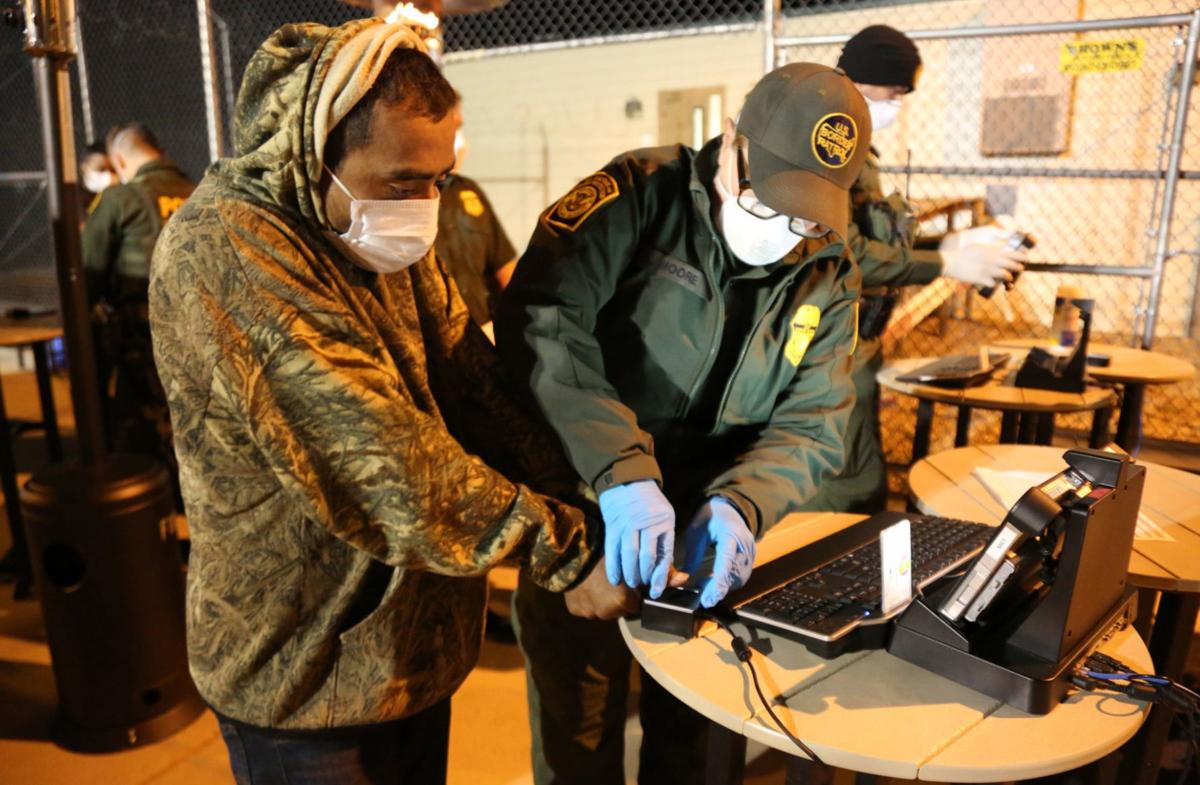
Under the new measures, agents apprehend migrants, give them medical masks, and take them to field processing stations that were set up recently. Agents then take their fingerprints, check for criminal history, and drive them to the nearest port of entry where those apprehended are “expelled” to Mexico, according to the Tucson Sector public affairs office.
“This is an unprecedented time that requires unprecedented measures to safeguard our border, to ensure your safety and that of our country,” Tucson Sector Chief Patrol Agent Roy Villareal said in a March 21 video posted on social media announcing the new measures.
Agents now follow a federal statute that allows officials to stop the entry of people or goods when “by reason of the existence of any communicable disease in a foreign country there is a serious danger of the introduction of such disease to the United States.”
The new measures apply to migrants from Mexico, Guatemala, Honduras and El Salvador, who make up the bulk of apprehensions along the U.S.-Mexico border. On the northern border, the measures apply to Canadians.
The expulsions are taking on average 96 minutes from apprehension to expulsion, CBP officials told the Washington Post.
In one recent instance, a Border Patrol van pulled up to the downtown port of entry in Nogales and dropped off three men around noon on March 24. The men wore medical masks and carried their belongings in clear plastic bags. Within minutes, they had walked across the border into Mexico and the van had turned around and headed off.
This was a common scene two decades ago when the Border Patrol quickly deported migrants they apprehended in the desert. In recent years, a more common sight at the Nogales port has been a white, unmarked bus with darkened windows carrying deportees in the custody of U.S. Immigration and Customs Enforcement.
With the new measures, the Border Patrol appears to be “turning back to the era of voluntary return,” when migrants were routinely sent back to Mexico, said Sarah Pierce, a policy analyst at the Migration Policy Institute, a nonpartisan research organization.
The Border Patrol built up “tools” to deliver consequences for crossing the border illegally, such as criminal prosecutions, but is not using them widely during the coronavirus outbreak, she said.
One main difference between now and the 1990s is migrants back then were predominately single adult Mexican men crossing the border for economic reasons, Pierce said.
That is no longer the case, she said, pointing to the thousands of families and individuals who have fled countries in Central America and elsewhere. They come to the border to claim asylum and generally do not try to evade Border Patrol agents.
The new measures may push asylum seekers to try to evade agents and cross in more remote, dangerous areas, she said.
Agent Daniel Hernandez, a spokesman for the Tucson Sector, said the new measures will not change the asylum process.
It is unclear how the new measures will affect the Migrant Protection Protocols, a U.S. program that sends asylum seekers to Mexican border towns to wait for months for immigration court hearings in the United States.
The program is still operating, said Agent Pete Bidegain, but he did not know how many asylum seekers are going through it.
If a migrant has a severe criminal history, they are referred for criminal prosecution, said Agent Joseph Curran.
Some criminal prosecutions for crossing the border illegally are moving forward, but far fewer than a few weeks ago, federal court records show.
Coronavirus concerns led a federal judge on March 13 to suspend the fast-track prosecution program for border-crossing cases in Tucson’s federal court known as Operation Streamline.
In a normal week, about 375 migrants are prosecuted through Streamline, meaning about 1,000 cases have gone unprosecuted since the program was suspended.
The Tucson Sector did not have statistics on how many migrants had been expelled under the new measures.
Apprehensions in the Tucson Sector slowed down for a few days after the new measures were put in place, but then returned to their normal pace, said Bidegain, a spokesman for the sector.
Since the new measures took effect, “just a smattering of people” have gone to the dining hall in Nogales, Sonora, run by the Kino Border Initiative, a Catholic organization that provides services to migrants, said spokeswoman Katie Sharar.
The reason so few migrants are coming to the dining hall is unclear, Sharar said. It’s possible people are staying away from the dining hall out of fear of the coronavirus, or that fewer people are crossing the border or they are doing so elsewhere.
The Kino Border Initiative denounced the new measures in a March 18 statement on their website.
“The latest announcement uses the pandemic as a pretext to advance its dangerous goals,” the group says. “This is a moment to come together, recognize the ways in which we are connected and care for one another.”
Many migrants and asylum seekers are coming from countries where the reported rates of coronavirus infection are far lower than they are in the United States.
“They are placing themselves in greater danger by attempting to migrate,” the group said. “This speaks to the gravity of the situations they are fleeing.”
Immigration advocates fear the detention centers could lead to widespread coronavirus infections. So far in the outbreak, infections among ICE detainees have been relatively rare.
Photos for April 1: Tucson gets by during Coronavirus Pandemic
Tucson, coronavirus
Updated
A dinosaur statue over the doors of MATS Dojo at 5929 E. 22nd St., sports an athletic cup for a face mask in the second week of COVID-19 restrictions, March 31, 2020, Tucson, Ariz.
Tucson, coronavirus
Updated
A pair of protestors use their car to block west bound traffic on Silverlake to let other protestors make the left turn in into the Pima County Adult Detention Complex during a vehicle based demonstration by #FreeThemAll for the release of prisoners in light of the COVID-19 pandemic, March 31, 2020, Tucson, Ariz.
Tucson, coronavirus
Updated
Raj Paudel hands a bag of food to a customer at Govinda's to-go-tent located at 711 E. Blacklidge Drive, on April 1, 2020.
Tucson, coronavirus
Updated
The biggest hit to employment in Arizona came in the leisure and hospitality industry — hotels, bars, restaurants and places of amusement — which alone shed 5,200 jobs.
Tucson, coronavirus
Updated
John Aldecoa tapes up a banner outside his restaurant, Brother John's, as he and his staff get ready to serve again after being closed since the COVID-19 restrictions were put in place two weeks ago, April 1, 2020, Tucson, Ariz.
Tucson, coronavirus
Updated
Michael Olivas, right, helps Arnold Vizcaino, City of Tucson Parks and Recreation employees, lock up swings at Gene C. Reid Park, 900 S. Randolph Way, in Tucson, Ariz., on April 1, 2020. The City of Tucson Parks and Recreation employees are going around to all Tucson parks to close all ramadas, gazebos, playgrounds, outdoor fitness equipment, all sports courts and fields, horseshoe pits and splash pads due Coronavirus Disease (COVID-19).
Tucson, coronavirus
Updated
Caution tape across an entrance on a playground at Gene C. Reid Park, 900 S. Randolph Way, in Tucson, Ariz., on April 1, 2020. City of Tucson Parks and Recreation employees are closing all ramadas, gazebos, playgrounds, outdoor fitness equipment, sports courts and more due to the coronavirus outbreak.
Tucson, coronavirus
Updated
A "CLOSED' sign and caution tape is placed around a ramada at Gene C. Reid Park, 900 S. Randolph Way, in Tucson, Ariz., on April 1, 2020. The City of Tucson Parks and Recreation employees are going around to all Tucson parks to close all ramadas, gazebos, playgrounds, outdoor fitness equipment, all sports courts and fields, horseshoe pits and splash pads due Coronavirus Disease (COVID-19).
Tucson, coronavirus
Updated
Vanessa Richards, 18, left, and Ella Dotson, 17, adjust their mortar boards and hair in the window of a building along Scott Ave. in downtown Tucson on March 31, 2020. Due to the coronavirus (COVID-19) pandemic the rest of the school year has been canceled. Richards and Dotson are seniors at Marana High School and will not have a formal graduation ceremony. The pair came to downtown to get photos of themselves in their caps and gowns.
Tucson, coronavirus
Updated
Vanessa Richards, 18, left, and Ella Dotson, 17, take a selfie as their friend, Camilla Hamilton, 17, gets her photo taken by Vanessa’s mother, Chrissi, along Scott Ave. in downtown Tucson on March 31, 2020. Due to the coronavirus, the rest of the school year has been canceled. The Marana High School seniors went downtown to get photos of themselves in their caps and gowns.
Tucson, coronavirus
Updated
Georgia Goodwin, volunteer, sews masks for hospital workers and the community at Cathey's Sewing and Vacuum, 5701 E. Speedway Blvd., in Tucson, Ariz., on March 30, 2020. Cathey's Sewing and Vacuum have made roughly 2,000 masks, due to Coronavirus Disease (COVID-19), in one week for local hospitals in Southern Arizona.
Tucson, coronavirus
Updated
Along with other volunteers and employees, Paula Sanford, center, volunteer, sews masks for hospital workers and the community at Cathey's Sewing and Vacuum, 5701 E. Speedway Blvd., in Tucson, Ariz., on March 30, 2020. Cathey's Sewing and Vacuum have made roughly 2,000 masks, due to Coronavirus Disease (COVID-19), in one week for local hospitals in Southern Arizona.
Tucson, coronavirus
Updated
Andy Cathey, Cathey's Sewing and Vacuum employee, sews masks for hospital workers and the community at Cathey's Sewing and Vacuum, 5701 E. Speedway Blvd., in Tucson, Ariz., on March 30, 2020. Cathey's Sewing and Vacuum have made roughly 2,000 masks, due to Coronavirus Disease (COVID-19), in one week for local hospitals in Southern Arizona.
Tucson, coronavirus
Updated
Andy Cathey, Cathey's Sewing and Vacuum employee, sews masks for hospital workers and the community at Cathey's Sewing and Vacuum, 5701 E. Speedway Blvd., in Tucson, Ariz., on March 30, 2020. Cathey's Sewing and Vacuum have made roughly 2,000 masks, due to Coronavirus Disease (COVID-19), in one week for local hospitals in Southern Arizona.
Tucson, coronavirus
Updated
Rudy Arriaga, far left, and his mother, Dale, chat with Damian Velez, far right, general manager and Joseph Ashbacher before leaving with their takeout order at Bianchi's Italian Restaurant, 3640 W. Tangerine Road, in Marana, Ariz. on March 30, 2020. The Marana location will closed due to a drop in business.
Tucson, coronavirus
Updated
A man wearing personal protective equipment works out at FitCore at Morris K Udall Park, 7200 E. Tanque Verde Rd., in Tucson, Ariz., on March 29, 2020.
Tucson, coronavirus
Updated
Ruby Boulet-Stephenson waters the family's new backyard garden, on March 27, 2020.
Tucson, coronavirus
Updated
Roccos Little Chicago Pizzeria sports the phrase "Eat the Rich" on its marquee, on March 31, 2020. The local pizza spot is currently closed due to Coronavirus disease (COVID-19.)
Tucson, coronavirus
Updated
A pedestrian crosses Church Avenue near the Historic Pima County Courthouse in a nearly-empty downtown Tucson during the coronavirus pandemic in spring 2020.
Tucson, coronavirus
Updated
A bank customer wears gloves while at a drive up ATM at Chase Bank, 8701 E. Broadway Blvd., in Tucson, Ariz., on March 29, 2020.
Tucson, coronavirus
Updated
While traveling through Tucson, Canadians Lauri Buchanan and her husband Brian Buchanan, left, eat lunch with their friends Rhonda McDonald and her husband Pat McDonald, right, from Wyoming, outside of Whataburger, 6504 E. 22nd St., in Tucson, Ariz., on March 30, 2020. Mr. and Mrs. Buchanan and Mr. and Mrs. McDonald were eating outside due to Coronavirus Disease (COVID-19).
Tucson, coronavirus
Updated
David Cardinal, a sales associate at The Hub, works with a customer at the gun store located at 1400 S Alvernon Way, on March 28, 2020. The store saw an increase in customers during the last few weeks.
Tucson, coronavirus
Updated
An employee at The Hub, a gun store located at 1400 S Alvernon Way, works with a customer on March 28, 2020. The store saw an increase in customers during the last few weeks.
Tucson, coronavirus
Updated
Cassie Phelps, food service employee for Tucson Unified School District, hands two students lunches and breakfast at Harold Steel Elementary School, 700 S. Sarnoff Dr., in Tucson, Ariz., on March 31, 2020. TUSD is offering lunches and breakfast for students due to schools being canceled because of Coronavirus Disease (COVID-19).
Tucson, coronavirus
Updated
Jolene Luquin, teaching assistant for Tucson Unified School District, organizes educational packets for a parent at Harold Steel Elementary School, 700 S. Sarnoff Dr., in Tucson, Ariz., on March 31, 2020. The educational packets, for grades K-12, include the curriculum for all classes from science to math to history and others. It allows the students, parents and teachers to keep learning despite not being in the classroom, according to Karla Escamilla, TUSD public information officer. TUSD plans to have most of the paperwork online in the next couple of weeks, said Escamilla, as well as issue laptops to students who don't have access to a computer. TUSD is issuing these packets and online school due to Coronavirus Disease (COVID-19).
Tucson, coronavirus
Updated
After more than a week in isolation, Tami and Tedd Handy get the chance to dance as Mama Coal, Carra Stasney and Tim O'Connor give a street concert on Placita de Zacatal in the Casas Adobes neighborhood, Saturday, March 28, 2020, Tucson, Ariz.
Tucson, coronavirus
Updated
Mama Coal, Carra Stasney and Tim O'Connor take to the great outdoors along Moonshroud Dr., in Catalina Shadows, Saturday, March 28, 2020, Tucson, Ariz.

