

PHOENIX — Blowing a whistle to alert others when you see an Immigration and Customs Enforcement van in the area could land you in jail.
Ditto bells, gestures, written messages or even electronic communications.
It's all part of legislation by Sen. John Kavanagh to keep people from preventing the arrest of someone wanted by law enforcement.
But less clear is exactly what acts would become a crime under the proposal by the Fountain Hills Republican.
The aim of the bill is to plug a loophole in the law, Kavanagh tells Capitol Media Services.
"I saw there were people warning people about ICE coming,'' he said. But Kavanagh said none of that is illegal under existing laws which make it illegal to "obstruct'' police, something he said requires someone to physically intercede.
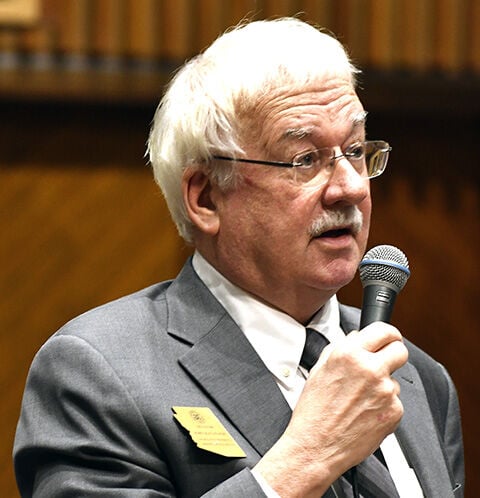
Sen. John Kavanagh
"It didn't deal with warning,'' he said.
His SB 1635 is designed to fill that gap.
Nothing in his measure scheduled for a hearing this week is designed to interfere with anyone's First Amendment rights, Kavanagh said. It's meant to apply only when someone alerts one or more individuals that the person doing the signaling is known to be someone sought by the police, he continued.
By contrast, Kavanagh said, it wouldn't apply to those who blew a whistle or gave any other warning simply because they saw ICE come down the street.
"Free speech protects that behavior,'' Kavanagh said.
But Sen. Analise Ortiz said she's having a hard time believing that what Kavanagh wants the Senate Judiciary Committee to enact is really as limited as he claims.
The Phoenix Democrat said it leaves too much discretion to prosecutors, some of whom are too quick to do things like label people who are simply watching ICE as "domestic terrorists.''
It would absolutely lead to people who simply are sharing information on social media, or blowing a whistle in their neighborhood, to being hit with a Class 1 misdemeanor, Ortiz said. That carries up to six months in county jail and a $2,500 fine.

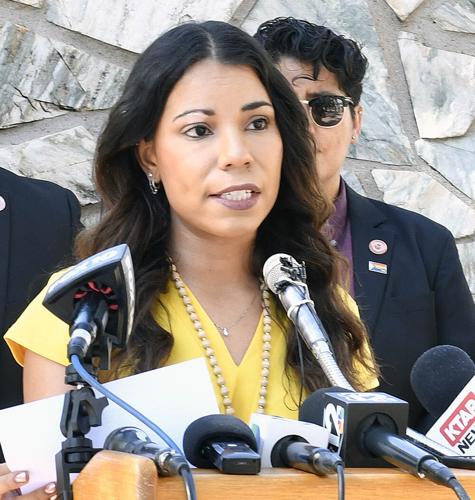
Sen. Analise Ortiz
And there's something else that Ortiz told Capitol Media Services makes her question what is the real intent of the legislation: Kavanagh actually singled her out for special mention in a news release when he introduced the measure.
"As President Trump works to remove criminal illegal aliens from our communities, radical Democrat lawmakers, including Sen. Analise Ortiz, have chosen to interfere and help criminals evade arrest,'' Kavanagh wrote. "Arizona is not a state of anarchy, and we will not tolerate elected officials undermining active law enforcement operations.''
All that stems from an incident last August in which Ortiz shared a social media post from someone else, alerting people that ICE agents were outside an elementary school on the southwest side of Phoenix. Ortiz said this is no different than her resharing other posts about things affecting her community, citing another one about a Maryvale Resource Fair.
But what happened this time, Ortiz said, is that LibsOfTikTok, a site that posts conservative viewpoints, posted that Ortiz "is actively impeding and doxxing ICE by posting their live locations on Instagram.''
"Yes,'' Ortiz responded online. "When ICE is around, I will alert my community to stay out of the area, and I'm not f****** scared of your nor Trump's masked goons.''
Republican Sen. Jake Hoffman of Queen Creek interjected himself into the dispute, filing a complaint accusing Ortiz of violating Senate rules against "disorderly behavior.'' And Sen. Shawnna Bolick, a Republican from Phoenix who chairs the Ethics Committee, asked for a federal investigation to determine if what Ortiz admitted doing — telling constituents about ICE officers near schools — could be considered "interference with federal law enforcement operations.''
Neither inquiry has gone anywhere.
And Bolick, after filing her request with federal prosecutors, never responded to questions about how publishing the location of something occurring in public runs afoul of the law.
That leads back to Kavanagh resurrecting the incident as a reason for wanting a new state law.
"Sen. Kavanagh knows it's unconstitutional,'' Ortiz said of the new legislation. "He's only doing this to make a splash in the headlines and, more importantly, to try to scare people from speaking out when they see masked, armed, violent men in their neighborhood.''
All that goes to the question of whether warning people about the presence of ICE — or any other law enforcement — is constitutionally protected and beyond the reach of state lawmakers.
"People have a right to blow a whistle anywhere they want,'' Ortiz said.
True, Kavanagh conceded — but only up to a point, he said.
For example, he said, consider someone who is an employee at a grocery store who knows that people working in the back are not here legally. If that person then warned those people that ICE were out front with a warrant would be breaking the law under his legislation.
So why would Kavanagh cite what Ortiz did — which he seems to concede is protected by the First Amendment — as a reason he cited for what the law should be changed?
Kavanagh said it was her actions that "motivated me'' to introduce the legislation.
"I think her behavior should be illegal,'' Kavanagh said. "But the Constitution said that's too general and, therefore, free speech.''

