

Tucson’s retail real estate market is splitting in two, with new development in affluent outlying areas commanding nearly double the rents of established shopping centers closer to the city core.
The divide helps explain why two of the industry’s largest national research firms released seemingly contradictory reports this fall.
CBRE found Tucson rents falling 2.7% year-over-year. Cushman & Wakefield found them climbing 4.8%.
The difference comes down to methodology: CBRE surveys shopping centers of 30,000 square feet or larger, while Cushman & Wakefield draws from CoStar data covering retail properties of all sizes. Both are accurate snapshots of different segments of a market that no longer moves as one.
Rob Tomlinson, a principal in the retail division at Cushman & Wakefield PICOR, cautioned against reading too much into marketwide averages.
“It’s a mediocre statistic,” Tomlinson said of the aggregate rent figure. “There’s such a disparity in rental rates based upon size, location, quality, date of construction, traffic counts, demographics, all those sorts of things.”
The geographic split is stark. According to Tomlinson, outlying Tucson areas in the southeast, southwest and northwest, particularly Oro Valley, can command rents approaching $40 per square foot. Midtown and the east and west sides hover closer to $20. That gap means a retailer leasing identical space could pay twice as much, depending on location.

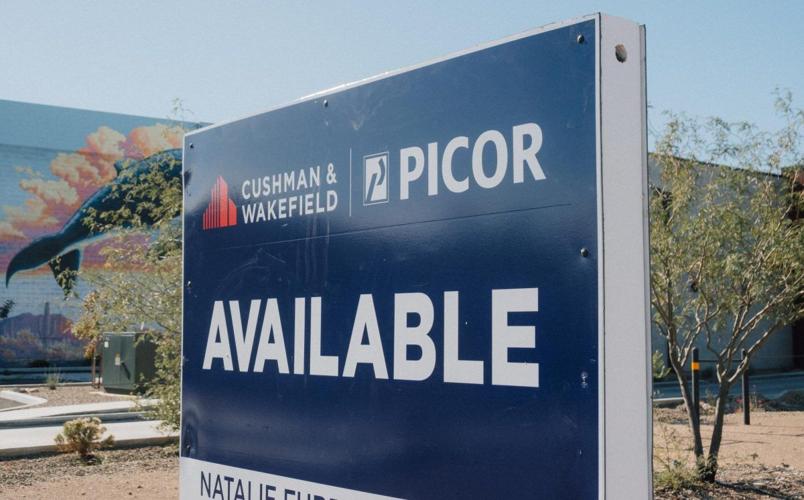
A Cushman & Wakefield | PICOR sign advertises available retail space in Tucson. The local retail market has shown divergent trends depending on property type and location.
“The real bifurcation in retail is the second-generation space in established centers,” Tomlinson said, referring to older buildings that have already had previous tenants. “Those rental rates are very static.”
In contrast, he noted that new development in affluent areas “can support rents that are almost twice as much.”
Cushman & Wakefield data shows the northwest submarket posted a vacancy rate of just 2.5% in the third quarter, meaning almost all available space is leased. Central areas registered 8.3%, with nearly one in 10 storefronts sitting empty.
Small retail spaces are in especially high demand. Vacancy for shop spaces under 4,000 square feet is at 2.1%, according to Cushman & Wakefield, leaving landlords with limited inventory for tenants seeking space in high-traffic locations.
Service-oriented tenants are driving much of that demand. Both reports cite recent deals from auto parts retailer O’Reilly and Western wear chain Boot Barn. But the broader leasing activity comes from tenants migrating out of traditional office buildings.
“It’s definitely service and entertainment,” Tomlinson said. “Medical services, financial services, fitness-oriented uses. We’re seeing a lot of migration of medical out of traditional medical office environments and into retail environments. Places that are single-story, have easy parking, surrounding amenities and high foot traffic.”

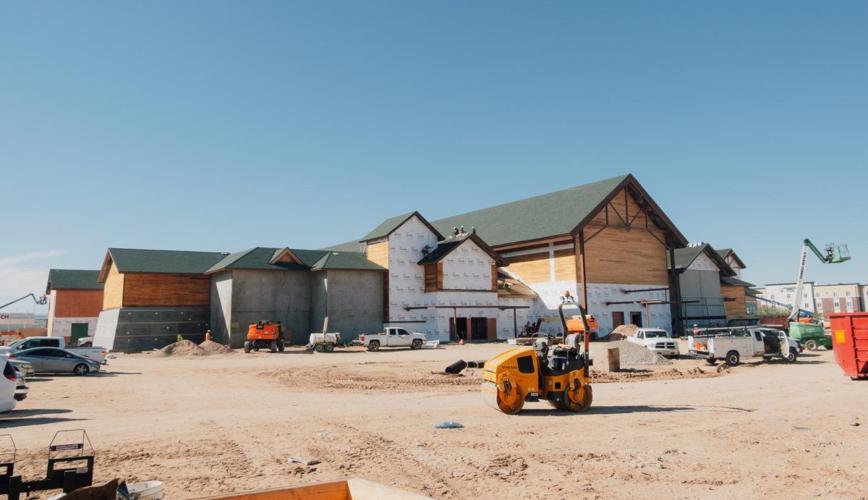
Workers install roofing at the Bass Pro Shops under construction at the Marketplace at the Bridges.
These tenants often pay more than the traditional retailers they’re replacing, which helps explain the rent growth showing up in surveys that capture smaller spaces.
New construction remains limited. Elevated interest rates and building costs have made it difficult for developers to justify breaking ground without a tenant already signed. CBRE reports just one major project in the pipeline: a Bass Pro Shops at Marketplace at the Bridges, due to open in 2026.
That supply constraint could tighten conditions further in segments already showing strength.
“I see sharply lower vacancy rates and increased rents,” Tomlinson said of his 2026 outlook. “I see a lot more investment sales, particularly for unanchored strip centers.” Those are smaller retail strips without a major anchor tenant like a grocery store. “And I see almost no speculative new development.”

