



Taking yoga classes and getting acupuncture have been proven to aid in dealing with chronic pain and improve mental health, but they’re not exactly cost-effective routine activities.
Some Tucson physicians are working to change that.
El Rio Health is leading local efforts and being recognized as a model nationwide for its use of integrated medicine as a way to address chronic disease management, lifestyle changes, mental health issues and substance misuse conditions, says its website.
Integrated medicine involves collaboration between medical and behavioral health care providers, and will often combine “orthodox treatments,” which are standard treatments like surgery or medication use, and “complementary treatments,” which are holistic and integrative forms of treatment.
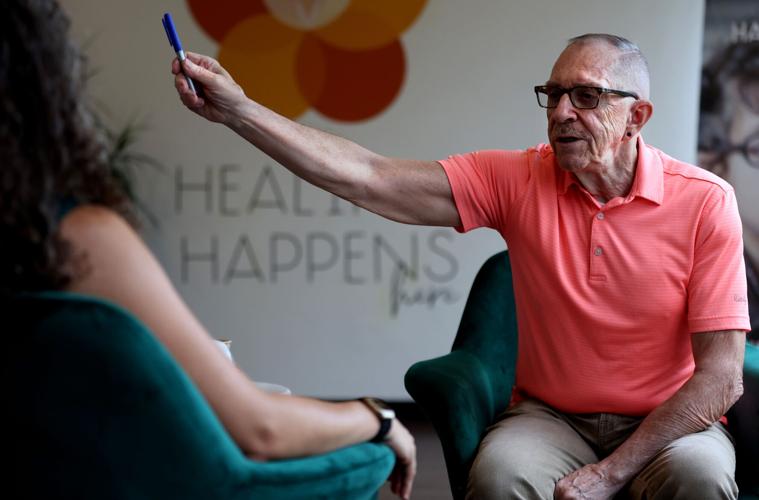
The El Rio Health Buena Vida Integrated Pain Clinic, 434 E. University Blvd., tries to encourage patients to use a more integrative approach, says Director of Integrated Behavioral Health Programs Sue Dolence. She says the clinic tries not to work with a lot of opioids for pain management, and instead tries to avoid usage entirely or help patients get off of them.
The pain clinic has been combining medicinal and behavioral health care for about six years, but it has been implementing more integrative approaches as part of the Academic Consortium for Integrative Medicine and Health’s WHITS initiative for about two years.
“The purpose of that initiative is to try to overcome policy and payment barriers to delivering this type of care,” said Academic Consortium for Integrative Medicine and Health CEO Samantha Simmons. “And it’s especially aimed at trying to bring this type of care to medically underserved patients.”
Simmons says El Rio leaders and executives met with members of Veteran’s Affairs and practitioners and leaders from the University of Vermont, who had already piloted a similar program, when first joining the initiative. She says that since El Rio, a federally qualified health care center, already had experience working with underserved patients and integrative medicine, the pain clinic has managed to become one of the best integrated programs nationwide.
“We’re now moving into expanding and disseminating further so more can copy what they’ve done,” Simmons said.
Dolence says one of the standout features of the pain clinic is that it mixes medical and behavioral health together.
“Most patients who experience chronic pain have some history of trauma in their childhood or adulthood, which affects their pain experience in their lives,” Dolence said. “So our patients see both medical and behavioral health practitioners at the same time, so we’re able to really approach their pain from not only a medical standpoint, but also help them with their with their trauma, with any depression, anxiety, stress or mood issues they might have that make their pain worse.”
Dolence says that while Medicare, AHCCCS and private insurers cover all El Rio services outside of acupuncture, a copay can be prohibitive to some people seeking help. She says the University of Vermont, which El Rio looks at to help inform the clinic, has been able to partner with Blue Cross Blue Shield and with their Medicaid program to do a bundled package of services.
“We’ve met with a couple insurance companies, and we’re in conversation with them to try to get a model like that, but it hasn’t gotten off the ground yet for us,” Dolence said. “But that would really be the best way to do it, because then patients can get services they need, like acupuncture or Reiki or different kinds of body work that insurance doesn’t pay for. If they could get those services, we wouldn’t have to worry about asking them for costs out of pocket.”
An integrative approach to mental health treatment
While the stigma surrounding mental health has significantly decreased over the years, especially since the COVID-19 pandemic, some practitioners have seen that referrals for mind-body practices, like biofeedback or yoga therapy, are more likely to be covered by insurance for physical conditions than for mental conditions.
“It’s pretty unhelpful for mental health needs,” said local Banner psychiatrist Dr. Noshene Ranjbar.
Ranjbar has spent the last 25 years researching integrative medicine. She says art and holistic therapies serve as great routes for those who don’t want to take prescription medicine, and are something she recommends to her patients often.
“We actually talk about ‘skills not pills’ as part of our motto for child psychiatry, where many parents are hoping to minimize the number of medications their children are on,” Ranjbar said.

Dr. Noshene Ranjbar is an assistant professor of psychiatry at the University of Arizona College of Medicine — Tucson and director of the Integrative Psychiatry Clinic at Banner — UMC South.
She says her patients often see significant improvements in mental health problems, socioeconomic struggles and social isolation with activities like yoga classes, dance lessons, meet-up groups and creating art.
One study from the National Center for Biotechnology Information showed that 28 out of 259 patients reported a value of 0 for pain after integrative medicine sessions, while 226 others reported a significant reduction in pain. Another study showed that integrative medicine practices had a positive impact on workers’ health, reducing physical and emotional pain.
While these activities serve as a great alternatives for medication, Ranjbar says that cost is the factor that typically scares patients away.
“That is one of the biggest drawbacks. A lot of what would be helpful and much more doable in the community is not covered by insurance,” Ranjbar said. “And so, they kind of miss out on all the rest of what can be health promoting, and because they’re not covering those things, people end up getting on five, six medications that don’t work or are interacting with each other weird.”
Ranjbar, an immigrant from Iran, grew up surrounded by holistic approaches to medicine. Her mother, who struggled with multiple autoimmune conditions, sought healing through different diets and health practices until she passed when Ranjbar was 12 years old.
“I grew up seeing medicine as holistic and multifaceted and very complex,” Ranjbar said. “And so I was actually quite disappointed when I got to medical school in the US and realized that they don’t teach any of this stuff except for a very small piece of it in medical school.”
For over two decades, Ranjbar has dedicated her career to research on integrative medicine and is now teaching multifaceted material at the University of Arizona. She serves as a local leader to multiple national organizations, including the Academic Consortium for Integrative Medicine and Health, the American Board of Integrative Medicine and the Integrative Psychiatry Program at the University of Arizona. She also works for the Andrew Weil Center for Integrative Medicine, globally recognized for its founding ideas of holistic approaches to mental health treatment.
Filling the gap in health care

Interactive trauma healer Mike Deninger, left, takes Adriane Ackerman through the early stages of a multichannel eye movement integration session at Interactive Healing Center.
The Andrew Weil Center for Integrative Medicine will be partnering with Integrative Touch for a conference in January 2025, says Integrative Touch founder Shay Beider. The Alumni & Associates Conference will run Jan. 17-20, and Integrative Touch will provide the clinical care portion of the event, offering acupuncture or meditation experiences.
Integrative Touch is an organization built to “fill the gap” in health care, Beider says. Celebrating its 20 year anniversary in January, the organization has built an innovative reputation for its educational facilities and therapy rooms to provide workshops, support groups and more than 100 different integrative healing therapies, says its website.
“I think the health care system and the insurance companies in particular are just starting to recognize the value of spending money on some of these things, because there is a growing body of data largely coming through the National Center for Complementary and Integrative Health that shows that these things affect the need for surgical procedures,” Beider said. “For people that have things like significant back pain, sometimes getting things like a body work massage or other treatments like acupuncture actually cost much less than going in for back surgery. The Joint Commission that accredits hospitals actually started to write in that acupuncture should be used for pain management, and some of the insurance companies are now starting to reimburse for acupuncture.”
She says that as insurance companies see the evidence of lesser costs to integrative approaches, they might begin to cover these practices more, but it may take a little more effort for the mental health approach.
“There’s huge stigma in the field of mental health that there’s an awful lot of history behind, but it is treated very differently,” Beider said. She says the first steps to getting better coverage for this is decreasing the stigma around mental health disorders.
She says that people don’t stigmatize those with joint or physical pains, so “why would we stigmatize them if they’re struggling with anxiety or depression?”
“These are just health challenges. That’s the way we should be looking at it,” Beider said.
Beider says those looking to get more involved on a deeper level can join advocacy groups in national organizations like NAMI Southern Arizona or the National Institute for the Clinical Application of Behavioral Medicine. She says that people can also write directly to their insurance carriers to advocate for the coverage of holistic and integrative practices.
When your focus is on engaging and strengthening your muscles, you wouldn’t immediately book yourself into a yoga class. However, boosting fitness and strength within your yoga practice is possible. Buzz60’s Chloe Hurst has the story!

