


10 most popular Tucson stories on social media in 2018
- By Shaq Davis Arizona Daily Star
- Updated
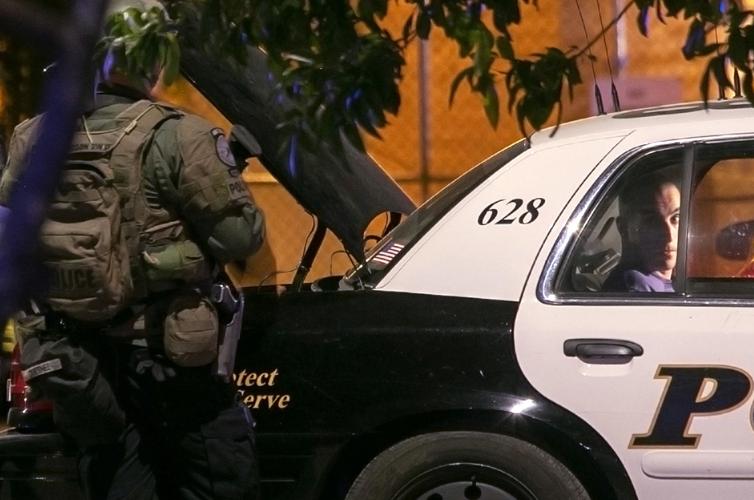
A deputy U.S. marshal was shot and killed Thursday evening outside a Tucson house on the north side, according to Gov. Doug Ducey.
He was the first deputy U.S. marshal to be killed in the line of duty in Tucson in 66 years. Tucson police said a man was taken into custody after a standoff with officers.
The shooting happened around 5:30 p.m., in the 2600 block of North 15th Avenue, near West Jacinto Street. The house where the shooter fired from is just across the street from Jacinto Park, and northwest of North Oracle Road and West Grant Road.
Moments after the shooting, police and federal officers surrounded the single-story house. Several residences around the house and the park were evacuated by officers.
After about an hour standoff, Tucson police reported they had a man from inside the house in custody.
Ducey tweeted shortly after 8 p.m. that he had been informed the deputy U.S. marshal was killed in the line of duty.
“I’ve just learned that tonight we lost a US Deputy Marshal from the District of Arizona. He was killed in the line of duty in Tucson. My deepest condolences and prayers go out to his family and all of Arizona law enforcement,” the governor tweeted.
No additional details were released as of press time.
The last deputy U.S. marshal to die in the line of duty in Tucson was Edmund L. Schweppe, who was fatally shot while escorting two prisoners to a dentist office in the downtown area on Sept. 15, 1952, according to the Marshals Service website.
Those two prisoners were apprehended by police after they escaped. They were both convicted of Schweppe’s murder and sentenced to life in prison, according to the Marshals Service.
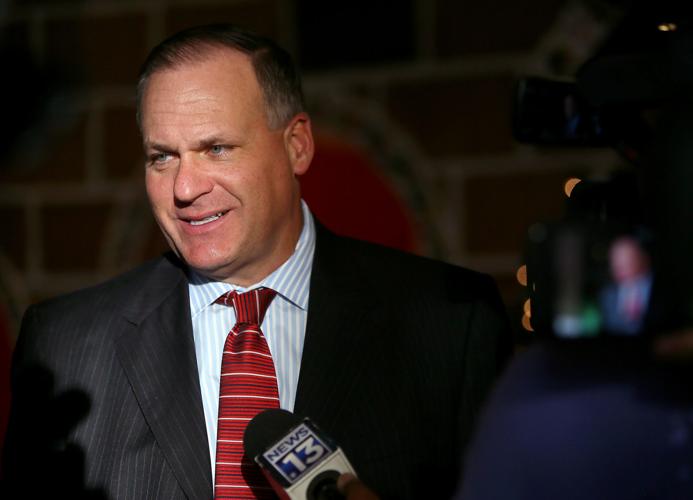
Rich Rodriguez fired in what UA athletic director, president say is a difficult but 'right' decision
- Arizona Daily Star
- Updated
Rich Rodriguez was fired on Tuesday after a $7.5 million notice of claim was filed with the state Attorney General’s Office alleging that Arizona’s head football coach ran a hostile workplace and sexually harassed a former employee.
The UA announced Rodriguez’s firing in a news release around 8:30 p.m. University President Robert C. Robbins and athletic director Dave Heeke said they will “honor the separation terms” of the coach’s contract, after an internal investigation did not find enough evidence to fire him for cause. His buyout is about $6 million.
“While this is a difficult decision, it is the right decision,” they wrote. “And it is a decision that lives up to the core values of the University of Arizona.”
Rodriguez, 54, just finished his sixth season as the Wildcats’ coach following stops at Michigan and West Virginia. This year’s team went 7-6, losing four of its final five games after a surprising start. Purdue beat the UA in the Dec. 27 Foster Farms Bowl.
Rodriguez tweeted a statement late Tuesday in which he said he will “vigorously fight these fabricated and groundless claims” made by his former administrative assistant. The coach said he was fired by email.
“I am not a perfect man, but the claims by my former assistant are simply not true and her demands for a financial settlement are outrageous,” he wrote.
A ‘hideaway book’ —
and an alleged cover-up
The notice of claim was filed Thursday by the former employee and her attorney. A notice of claim is an advance notice of intent to file a lawsuit against a public body. Most notices of claim are first sent to the Arizona Board of Regents or the University of Arizona itself. Her $7.5 million claim went directly to the Attorney General’s Office.
Portions of the claim obtained by the Star on Tuesday paint a culture in which secrecy was valued above all else.
The notice of claim alleges, among other things, that Rodriguez and his closest aides followed a “hideaway book” that detailed such sayings as “Title IX doesn’t exist in our office,” referring to the federal gender-equity law.
Those who had the most interaction with Rodriguez — the former employee and two assistant coaches — referred to themselves as the “Triangle of Secrecy,” according to the claim. The three were tasked with lying to Rodriguez’s wife to cover up an extramarital affair, according to the claim, and were ordered to protect the coach’s reputation above all else.
The former employee said in the claim that she “had to walk on eggshells at work, because of (Rodriguez’s) volatility and sheer power over the department.” Rodriguez would call her at all hours of the night, she said in the claim, to change travel plans or to deal with Rodriguez’s personal emergencies. In the claim, the former employee said she became increasingly troubled by Rodriguez’s actions over the past year. She suffered migraines as a result, the claim states.
The UA’s Office of Institutional Equity began investigating Rodriguez in October, three months after the former employee left for an off-campus job.
The investigation concluded last week, Robbins and Heeke wrote. And while counsel did not find enough to terminate Rodriguez, the university became concerned with the “climate and the direction” of the football program, they wrote.
Rodriguez said Tuesday night that the complaint included “a single truth” — that he engaged in a “consensual extramarital affair” with a woman who is not affiliated with the university.
“I am still working incredibly hard to repair the bonds I’ve broken and regain the trust of my wife and children, whom I love dearly,” he wrote.
Another troubling issue
for the UA over athletics
The notice of claim is the latest legal issue facing the UA. Former assistant track and field coach Craig Carter is facing multiple felony charges, accused of threatening a former athlete with whom he was involved in a sexual relationship. The case has been featured on both ESPN’s “Outside the Lines” and ABC’s “20/20.”
The UA is being sued in federal court by one of three victims of former running back Orlando Bradford. The victim says the university knew Bradford was a danger to women and failed to protect her. Bradford was recently sentenced to five years in prison after pleading guilty to two felony counts of aggravated assault.
And in August, Rodriguez was sued in civil court by Creative Artist Agencies (CAA). The agency represented the coach until the fall of 2015, and claims Rodriguez owes $230,050 in past-due fees.
Rodriguez’s contract was set to run through May 31, 2020. His buyout as of Dec. 1 was $6.45 million, according to USA Today’s annual survey of NCAA football coaches’ salaries. Because he was let go before March 15, Rodriguez will miss out on approximately $3.2 million from a master-limited-partnership provision in his contract. That pay came via publicly traded units on the so-called “Longevity Fund.” Rodriguez was set to receive 25 percent of the value on March 15. If he had been fired any time after that, he would have been entitled to the full value of the fund.
A fast start, ugly finish
Rodriguez’s hiring on Nov. 23, 2011, was seen as a coup for the UA and newly hired athletic director Greg Byrne.
Arizona won a bowl game in Rodriguez’s first year and took the Pac-12 South Division title and finished 10-4 in 2014, then started trending downward.
The Wildcats finished 7-6 the following season, most of which was played without star linebacker Scooby Wright. Sensing that recruiting was lagging and the defense wasn’t performing up to expectations, Rodriguez turned over Arizona’s defensive staff. He hired Boise State’s Marcel Yates as defensive coordinator and promoted Jahmile Addae and Vince Amey from analysts to full-time assistant coaches.
The injury issues worsened in 2016, when Arizona lost its top two quarterbacks and running backs at various points. After starting 2-1, Arizona lost eight in a row. Only a season-ending victory over rival Arizona State put a bandage on an otherwise painful season.
The Wildcats entered 2017 with the lowest of expectations outside the Lowell-Stevens Football Facility, picked to finish last by the media in the Pac-12 South. An uneven 2-2 start only served to validate that prediction.
But in Game 5, sophomore quarterback Khalil Tate came off the bench and set a Football Bowl Subdivision record for quarterbacks with 327 rushing yards in a 45-42 win at Colorado. Tate would lead Arizona to four straight victories, winning an unprecedented four consecutive Pac-12 Offensive Player of the Week awards.
The Wildcats secured bowl eligibility with a 58-37 win over Washington State on Oct. 28. They couldn’t follow up their perfect October, however, losing three of four games in November. Arizona finished the season with a 38-35 loss to Purdue in the Foster Farms Bowl.
The emergence of Tate and several freshmen on defense, including Pac-12 Defensive Freshman of the Year Colin Schooler, gave hope for bigger and better things to come in 2018. It also offered proof that the changes Rodriguez had made to the defensive staff were working, even if the immediate on-field results didn’t show it.
What’s next?
Heeke said Arizona’s next head coach will “build a solid foundation for our program and create an identity of Arizona football that the University, Tucson and Southern Arizona communities can be proud of. We’re excited about the future of our football program, and we look forward to introducing our new head coach at the completion of the search process.”
Several current and recently employed coaches would be logical candidates to succeed Rodriguez. Boise State’s Bryan Harsin, Memphis’ Mike Norvell, Utah State’s Matt Wells and Syracuse’s Dino Babers, who was an assistant at Arizona from 1995-2000, will certainly be mentioned as potential replacements.
Possible candidates who were recently let go but are still highly respected within the industry include Kevin Sumlin, Mark Helfrich, Butch Jones and Todd Graham. Jones was the coach at Central Michigan under Heeke from 2007-09.
Yates, who joined the staff in January 2016, will serve as the interim head coach.
It is unclear what will happen with the signing class of 16 players that Arizona announced last month.
Behind the scenes at one of the busiest stockyards in Arizona, $3 million worth of cattle was stolen from a prominent Marana family by a man they once considered a friend, federal prosecutors said in court documents.
Last August, longtime cattleman and well-known rodeo cowboy Clay Parsons discovered $1.3 million missing from the accounts of the Marana Stockyards and Livestock Market, which his family has run since the early 1990s. The stockyard’s line of credit also was drawn down inexplicably by nearly $2 million, according to records from U.S. District Court in Tucson.
A trail of fraudulent documents led to Seth Nichols, the stockyard’s 29-year-old office manager and son of Donald Hugh Nichols, a cattle broker who had been friends with Parsons for decades, court records show.
Seth Nichols pleaded guilty to federal bank fraud in February and faces up to five years in prison. His father was indicted Aug. 22 as a co-conspirator in $1.6 million of fraudulent cattle sales at the stockyard’s auctions.
The fraud has pushed both families to the brink of financial ruin.
A federal prosecutor said the stockyard is operating “week to week” as it recovers from the fraud and Parsons has already spent $100,000 on audits and rebuilding the stockyard’s accounting system.
Donald Hugh Nichols, who goes by Hugh, and his wife, Jane Nichols, filed for bankruptcy in federal court Aug. 10.
The scheme Parsons discovered last fall began after he hired Seth Nichols in June 2013 to run the stockyard’s day-to-day business. Nichols admitted to using his position to exploit the stockyard’s transaction system at weekly cattle auctions, according to his plea agreement.
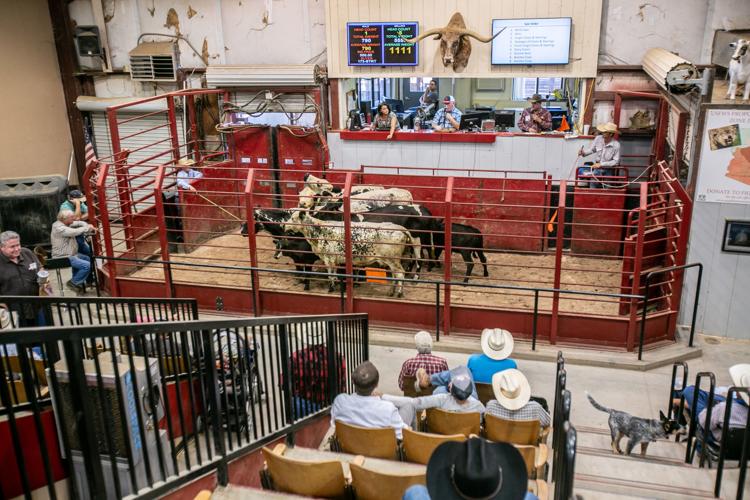
At the auctions, cows are brought to the stockyards each week to be sold to the highest bidder. Last Wednesday, 884 head of cattle entered a fenced area inside the stockyard’s main building one at a time or in pairs. Some recent auctions have seen more than 2,000 head of cattle sold, according to the stockyard’s market reports.
Buyers in auditorium seats overlooking the fenced area bid on the cows as the auctioneer rattled off prices Wednesday morning. After a successful bid, the cow was ushered through a gate and the next cow entered.
The stockyard uses a line of credit to allow sellers to be paid quickly while the buyers’ payments are processed, according to court records. Seth Nichols admitted to manipulating the line of credit to buy cattle at the auctions on behalf of the Nichols Cattle Co., which then sold the cattle elsewhere without reimbursing the stockyard. He also admitted to sending the stockyard’s money directly to the cattle company.
He covered up the fraud by faking wire payments from the cattle company to the stockyard and by doctoring financial records to make Parsons and his bankers believe the stockyard had plenty of cash and a full line of credit, according to his plea agreement.
Seth Nichols agreed to pay restitution to the Parsons, which was capped at $3 million in his plea agreement. But those funds won’t be available until after he is sentenced Sept. 24. A dispute over the exact amount could lead to a restitution hearing at a later date.
Among the items Seth Nichols agreed to forfeit are the proceeds of selling a house in Marana, a pickup truck, his ownership shares in a helicopter, and various limited-liability companies, including several he formed during the years of fraud. His parents signed over to the Parsons the deeds to their home in Coolidge and another property in Coolidge, which combined are worth more than $1 million.
Clay Parsons declined to comment. The attorneys involved in the case did not respond to requests for comment.
While criminal proceedings unfold in federal court, the fraud has led each family to sue the other in Pima County Superior Court.
A week after Seth Nichols’ Feb. 5 plea in federal court, Clay Parsons and his wife, Karen, sued Hugh and Jane Nichols for $3 million and punitive damages, saying their role in the fraud showed “an evil hand guided by an evil mind.”
On June 8, Hugh and Jane Nichols sued the Parsons in Superior Court, claiming the Parsons misled them during a meeting shortly after the fraud was discovered. The Nichols claim the Parsons pressured them into signing over the deeds to their two properties to repay the Parsons for the losses caused by the fraud.
Along with the lawsuit, the Nichols filed a legal claim on the two properties they had signed over to the Parsons, effectively blocking the sale of the properties. They also said the Parsons evicted them from their home in October 2017 despite promising to let them stay until it was sold.
Hugh Nichols said Parsons “actively undermined” his cattle business by helping Nichols’ customers find new purchasing agents. As a result, “Hugh has lost all income from his livestock sales business,” Nichols’ lawyer, German Yusufov, wrote in the lawsuit.
Back in federal court, Seth Nichols asked a judge on Aug. 9 to allow him to back out of his plea agreement. He would not have pleaded guilty if he had known it would be used in a civil lawsuit against his parents, defense attorney Michael Harwin wrote in a court filing.
Harwin also cited a dispute over the restitution amount and questioned how much Parsons knew about problems with the line of credit before last August.
In his response to Seth Nichols’ request to withdraw his plea, federal prosecutor Michael Jette said the legal claim on the two properties and Seth Nichols’ request to withdraw his plea appeared to be an attempt to push the Parsons to drop their lawsuit.
A hearing about Seth Nichols’ request to withdraw his plea is scheduled for Tuesday, court records show. His father’s arraignment is scheduled for Sept. 14.
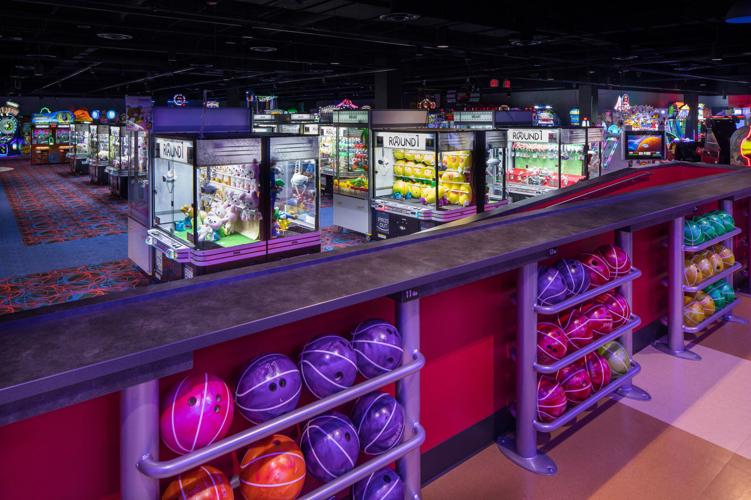
A Japanese entertainment venue is moving into part of the soon-to-be closed Sears store at Park Place.
Round 1 Bowling & Amusement has signed a lease for about 44,000 square feet on the ground floor and basement of the store, 5950 E. Broadway.
Last month, Sears announced it would close that location in a money-saving effort.
Taka Mizuno, with Round 1’s marketing department, said Tucson’s demographics appealed to the company. This will be its first venture in Arizona.
According to Round 1’s real estate requirements, its locations feature 12 to 14 bowling lanes, billiards, ping pong, darts, karaoke rooms and more than 250 arcade machines with the latest games from Japan. There is also a food and bar area with seating for up to 90 people.
It is the latest so called “eatertainment” venue to enter the Tucson market.
In the past two years, companies such as Dave & Busters, 1390 E. Tucson Marketplace Blvd.; Autobahn Indoor Speedway, 300 S. Toole Ave.; and Topgolf, 4050 W. Costco Drive, have opened. Base Hits Tucson, an indoor batting cage, is under development at 4439 N. Oracle Road, and Bourn Cos. is adding entertainment venues at both its City Park project downtown and at Foothills Mall on Ina Road.
Tucson’s appeal
The appeal of Tucson is recent job announcements that will bring millennials to town.
“The millennial generation has been a less-than-eager generation of traditional shoppers,” said Nancy McClure, first vice president with CBRE Tucson. “That group has proven that it wants to connect with others and has a preference to spend money dining out, versus buying more stuff.”
Millennials aren’t the only ones interested in the eatertainment segment, according to QSR Magazine, which covers the quick-serve and fast-casual dining industry.
Nearly 60 percent of all consumers said they were interested in visiting an eatertainment concept, while 30 percent said they had already visited one, QSR says of a survey conducted by food industry market research firm Datassential.
Having a dining venue that also provides photo opportunities to be shared on social media is also drawing people to “eatertainment” sites — something that mall owners want.
“Entertainment venues are being sought out by mall owners and other center owners to not only fill space but also be a draw of customers to the rest of the centers’ retailers,” McClure said. “Mall traffic has slowed, in most cases, and it is of critical importance to center owners and tenants to bring people back to the malls and make the shopping trip more than just buying merchandise — it is to create an experience to compel people to step away from their computer and do something fun, interact with people and be part of the community.”
Round 1 is expected to open its Park Place location in 2019. It was founded in Sakai City, Osaka, in 1980 and entered the U.S. market in 2010. Its 21st U.S. location opened in March.
- By Tony Davis Arizona Daily Star
- Updated
Tucson Water recently shut down a treatment plant after discovering it was sending water contaminated with chemical compounds to thousands of residents of downtown and the city’s west and north sides.
Shortly after making that discovery, utility officials also learned that they had mistakenly thought for some time that uncontaminated water was coming out of the plant, which has long treated south-side water pollution.
The utility had been sampling the water at a point its officials thought was connected to the south-side treatment plant, but which actually was getting water from other sources, administrators said last week.
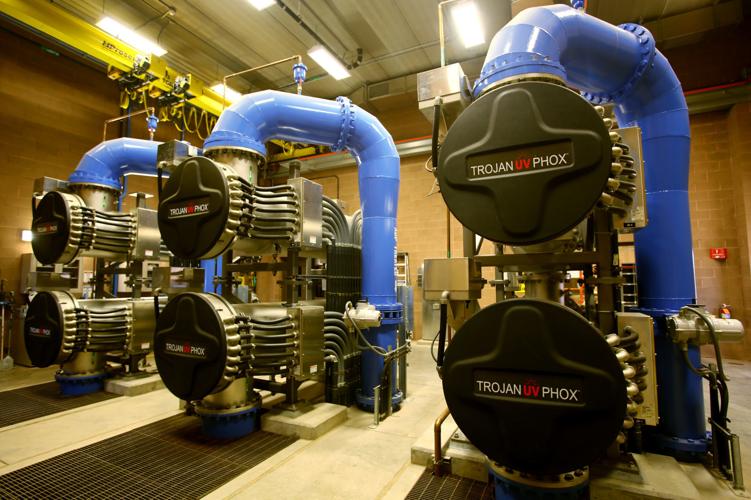
It turned out that water coming out of the treatment plant was now tainted with what’s known as perfluorinated chemicals, also known as PFAS compounds. The treatment plant had been built and later upgraded to treat two other pollutants — the solvent trichloroethylene (TCE) and 1,4-dioxane — but not to treat PFAS.
PFAS is a family of compounds historically used in firefighting foam, in everyday household products such as nonstick frying pans, polishes, carpets, waxes and paints, and in industrial processes. They don’t easily break down in the environment and remain in the body for a long time after being consumed. They have been linked to a long list of illnesses, including possibly cancer in humans.
The levels of the chemicals found in the water coming from the treatment plant were lower than the recommended maximum in official EPA health advisories. But they were higher than a recently released federal study says they should be.
The plant’s water is served to a large V-shaped area, population about 60,000, stretching north from East 29th Street through downtown and flanking Interstate 10. The area spans as far west as the Tucson Mountains and as far east as North Campbell Avenue and beyond. (See map.)
Because the utility hadn’t sampled points in the treatment plant’s water-delivery area until this year, Tucson Water officials say they don’t know how long the contaminated water had been served to customers there.
The utility decided to sample that area this year because it was continuing to find these compounds in other locations, forcing it to shut wells, Tucson Water Director Tim Thomure said.
The south-side treatment plant was put back online Sept. 17, after being closed for more than three weeks while the utility took several short-term measures to reduce contamination levels .
Tucson Water has since taken new samples in the area where the treatment plant’s water is delivered and expects they’ll contain significantly lower levels of the contaminants.
But the utility’s reliance on the wrong sampling point drew sharp criticism from City Council members Steve Kozachik and Regina Romero.
The mistake was “cavalier,” given the city’s longstanding history with water pollution and the community’s sensitivity to it, said Kozachik. Last summer, he was the first city official to tell the public about contamination of other city wells by the same compounds.
“Is it embarrassing? Yeah,” acknowledged Jeff Biggs, Tucson Water’s administrator for strategic initiatives. But, he said, the city had questioned the discrepancy in the pollution levels it was finding and reacted immediately once it learned of the mistake.
“We investigated and we made operational changes to lower the level (of contamination) that we served to the public,” Biggs said.
Kozachik noted that city officials “stand in front of the community all the time, saying that we’re taking seriously our well monitoring, that we’re doing this testing, that we’ve spent tens of millions of dollars” on the treatment plant.
“Then to say that we were monitoring the wrong water main, and we didn’t know where water is coming from is cavalier,” said Kozachik, whose Ward 6 includes much of the downtown area that got PFAS-contaminated water.
Romero, whose Ward 1 also is part of the treatment plant’s service area, said she’s “very, very disappointed” and finds it “very upsetting” that Tucson Water was using the wrong sampling point and that she and other council members hadn’t been told of the PFAS contamination in the area until now.
She noted that the mayor and council and the utility had for years worked to restore Tucson Water’s tarnished reputation, dating to the 1980s, when trichloroethylene was discovered in south-side drinking water.
“We’ve been saying that Tucson Water is transparent, compared to the time of TCE and that we were serving clean water,” Romero said. “Every detail of this bothers me.”
Thomure, Tucson Water’s director, said the error in the original sampling point location “is not something we take lightly, nor is it acceptable.”
Now, the utility will investigate the sampling point’s incorrect placement “and will modify policies and procedures as needed,” Tucson Water spokesman Fernando Molina said.
Highest levels found at three sampling sites
The contaminated water had gone through a water-treatment plant, the Tucson Airport Remediation Project, commonly known as the TARP plant.
The plant was first built in 1994 to remove the once-common industrial solvent trichloroethylene from polluted south-side groundwater — a solvent that various aircraft-related industries had dumped into the ground from the late 1940s to the mid-1970s.
In 2014, the plant was upgraded to also remove 1,4-dioxane, an industrial stabilizing agent, from the same groundwater. The dioxane was discovered in the groundwater in 2002.
The plant’s construction was a result of a consent agreement that the city signed with the U.S. Environmental Protection Agency and other parties to start cleaning up the water, long after the TCE was first discovered there in 1981. The plant uses a technology known as advanced oxidation to remove both chemicals.
That water is pumped from the area’s longstanding contamination plume running northwest from Tucson International Airport to near the Irvington Road-Interstate 19 interchange.
The TARP plant was not designed to remove perfluorinated compounds, which utility officials had known for some time also have tainted the south-side wells that supply the contaminated water to TARP.
But for a long time, Tucson Water thought it was removing the PFAS anyway. In part, that’s because the treatment plant contains granulated carbon materials that are thought to be good at removing these compounds from water.
That’s also because the utility had repeatedly found none of the compounds when it sampled for them at a water main lying less than 2 miles north of the Santa Cruz Lane Reservoir where the TARP water is stored for delivery. The reservoir, near the Interstate 19/I-10 interchange, lies about four miles north of the TARP treatment plant along Irvington Road near I-19.
But in late August, Tucson Water found levels of the perfluorinated compounds of up to 30 parts per trillion in the area where water from the treatment plant is delivered.
Levels at or near 30 parts per trillion were found at three points from Grant Road south. It was the first time the city had tested for PFAS there. The 30 figure represents a total of two PFAS compounds known as PFOA and PFOS.
PFAS levels at the northern edge of this service area were, by contrast, “really, really low,” topping at 8.6 parts per trillion, Tucson Water spokesman Molina said.
Thirty is less than half the 70 parts per trillion that the EPA has had since 2016 as a formal health advisory level for the PFAS compounds. But it’s nearly twice as high as a recent federal study concluded is advisable for drinking.
The study from the Agency for Toxic Substances Disease Registry was released in June. That came about a month after the news website Politico reported that the federal government had decided to suppress its results out of concern for their political ramifications.
The EPA is considering whether to impose formal drinking-water limits on the perfluorinated compounds, PFOA and PFOS. It’s also preparing to propose legally designating them as hazardous substances.
In addition, last November, New Jersey became the first state to adopt formal drinking water limits for PFOA and another PFAS compound — 14 and 13 parts per trillion, respectively.
Tucson Water’s current target for PFAS levels in its water supplies is a maximum of 18 parts per trillion when both PFOA and PFOS are combined.
“Something’s
wrong here”
Since 2009, the utility had been sampling its well system and other points in its water-delivery network for the PFAS compounds. It has already shut down three supply wells just north of Davis-Monthan Air Force Base and a half-dozen wells serving customers on the northwest side, including the Continental Ranch area of Marana.
Of the nine south-side wells supplying the TARP system, the three most-contaminated ones ranged from 91 to 190 parts per trillion of the PFAS compounds. At the treatment plant itself, the water averaged about 30 parts per trillion before treatment.
The sampling point north of the Santa Cruz Lane Reservoir was connected to a water main that officials had thought came from the TARP plant, Biggs said. But after PFAS were found throughout the TARP distribution system, “We said wait a minute, something’s wrong here,” he said last week.
Tucson Water immediately started an investigation of the sampling point it had used, Biggs said. The sampling was done through a small spigot, connected to the water main via a steel pipe leading underground in which the spigot was encased. It was most likely installed around February 2000, utility spokesman Molina said.
Looking at old maps of its water system and visiting the area, utility officials discovered that the sampling spigot was actually connected to another main across the street from the water main where most of the TARP water was going, Biggs said. The second main carried water from other sources besides TARP.
Once they realized that, officials for the first time took a sample from the Santa Cruz Lane Reservoir itself. It came out with 30 parts per trillion PFAS. After the samples taken in the TARP delivery area also showed some with levels close to 30, the treatment plant was shut down.
Then, the utility flushed out the water system downstream of the plant by running through it what it said was uncontaminated water from its Central Arizona Project supplies for four or five days. That was to make sure that no contamination was passing through the plant.
Then, it took samples both at the treatment plant and in the distribution system, and found no PFAS compounds. Finally, it shut down the three-most-contaminated south-side wells supplying the TARP plant and started blending the plant water with CAP water coming in at the rate of 2,000 gallons per minute, Biggs said.
These actions were done in consultation with the EPA and the Arizona Department of Environmental Quality, Tucson Water officials said.
“We’ve gotta remember, through the consent decree, we have the responsibility to operate” TARP, Biggs said. “But also, as a drinking-water utility, our main purpose is to provide drinking water that is safe to drink.”
“A relatively
harmless mistake”
City Councilman Paul Durham, whose Ward 3 also includes much of the TARP delivery area, said last week he’s concerned about the contaminated water being served to that area and about the utility’s sampling mistake.
But he’s not alarmed, since the pollution level was less than half that recommended by the EPA health advisory, he said.
Durham said he personally believes that the 70 parts per trillion health advisory level should be lowered, but that for now, it “is all we have to go on.”
“It’s always unfortunate when any kind of mistake occurs, but I believe that it is a relatively harmless mistake. Tucson Water corrected it as soon as they discovered it,” Durham said. “There’s no question that mistakes can be bad, but it could have been far worse.”
But along with Romero and Kozachik, Councilman Richard Fimbres took the utility to task for not disclosing the TARP plant shutdown to the City Council, even though it had told the council about shutting down the three south-side wells with high PFAS levels in an email on Sept. 19.
Kozachik said that with outside attorneys now handling upcoming city-financed litigation against 3M, the Minnesota company that manufactured PFAS compounds for many years, it’s important for the council to get the most up-to-date information on the contamination.
Fimbres, whose district includes the southern end of the TARP delivery area, said he has told the utility to inform him of similar action it takes in the future.
Thomure, Tucson Water’s director, said he accepts this criticism and would ensure that council members are notified of such actions in the future.
Fimbres, however, also noted positive action the city has taken recently to tackle contamination.
For one, the city plans to spend $3.5 million to drill a 10th well to pump groundwater from a section of the contaminated south-side aquifer where the contamination is at its thickest to eradicate the pollution more quickly.
The City Council has also approved spending more money for testing to see if toxic vapors from the groundwater contamination have spread upward into three south-side elementary schools, Fimbres said. They are the C.E. Rose, Elvira and Challenger schools.
“Tucson Water has never knowingly served any water that was above a health or EPA advisory,” Fimbres said in an email to the Star.
“My office, as well as the rest of the mayor and council, work to make sure one of our most precious resources, water, is safe and in abundant supply.”
City plans to remove PFAS from water
Last week, Tucson Water officials said they were awaiting the results of the latest round of sampling from the TARP plant’s water to see if it showed a need for additional quick fixes.
Once that’s taken care of, they’ll work on short- and long-term adjustments to the plant itself so it can remove the PFAS compounds .
Immediate attention will be paid to one of the cleanup methods that the plant employs —what’s known as granular activated carbon. It removes leftover hydrogen peroxide after it’s used at the plant to oxidize and remove TCE from the water, said utility administrator Biggs.
While some forms of the carbon material — which come in the form of tiny black pellets — are designed to also remove PFAS, the kind at the TARP plant aren’t, said Biggs.
Over the next five to six months, the utility will test various varieties of the activated carbon to see which can best remove peroxide and the PFAS chemicals.
The utility will also be looking at what kind of treatment plant to build at the TARP site to replace the existing one — with a new plant to be designed from the start to treat all three pollutants.
Biggs recalled that the utility went through similar rounds of testing and planning a few years ago, before building the advanced oxidation plant to remove dioxane as well as the TCE.
“It’s déjà vu all over again,” Biggs said. “We are reacting to a moving target of health advisories. We are moving as quickly as we can to meet these targets.”
In a galaxy far, far away, there lies a luxury movie theater.
Except it’s not far away. Actually, it’s pretty close.
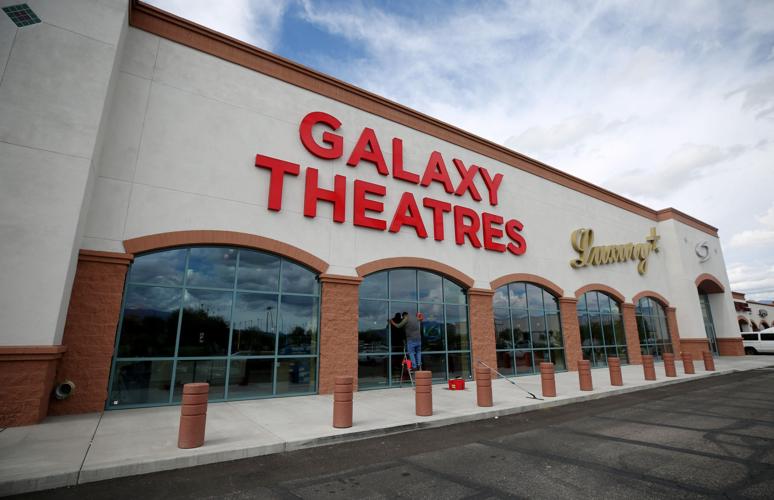
After years of waiting, Galaxy Theatres Luxury+ will open for business at 8 p.m. Thursday, Nov. 1.
“I’ve spent time in Tucson and I like the area,” says CEO Frank Rimkus. “Tucson seems to be a real opportunity to grow. The city has a good attitude.”
And here’s some more good news for you east-siders: Galaxy Theatres will sit in the former Bashas’ grocery store at 100 S. Houghton Road near Broadway, which makes it the farthest east theater in the Old Pueblo.
Previously, that spot was held by Century Gateway 12 on North Kolb Road, and Park Place Mall for newer movies — both quite the trek for some east-siders.
Rimkus says he chose the location because of the convenience to east-side residents and because the area is “under-served.”
“There seems to be a lot of good things going on in the eastern part of the city,” Rimkus says. “We want to help build a community as it continues to grow.”
Galaxy Theatres is a 20-year-old west-coast chain that shows the latest Hollywood films and offers wall-to-wall premium movie screens, leather recliners, and other “luxury” features, Rimkus says.
“We’re a premium experience at the regular price,” he says.
The concession stands include a long list of foods: pizza, chicken wings, and other items you might not find at your average theater. Beer and wine are also available.
Rimkus says Galaxy Theatres is known for their popcorn — so you might want to think about picking up a bucket.
And like most theaters, movie-goers can digitally purchase tickets and reserve seats ahead of time.
The theater will also offer meeting space and the company plans to host educational and charity events to get involved with the Tucson community.
Beyond the theater’s capabilities, Rimkus says the company prides itself in its hospitality.
“We don’t call it customer service; we don’t have customers. We have guests,” Rimkus says. “At the end of the day, our sole business is to focus on how to make people happy.”
Galaxy Theatres expects to bring more than 70 new jobs to Tucson. This is the chain’s first location in Arizona.
- Tony Davis Arizona Daily Star
- Updated
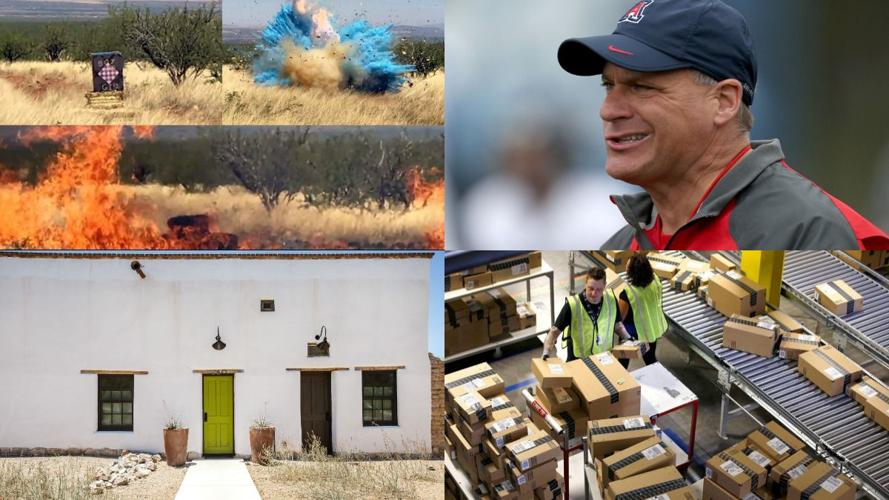
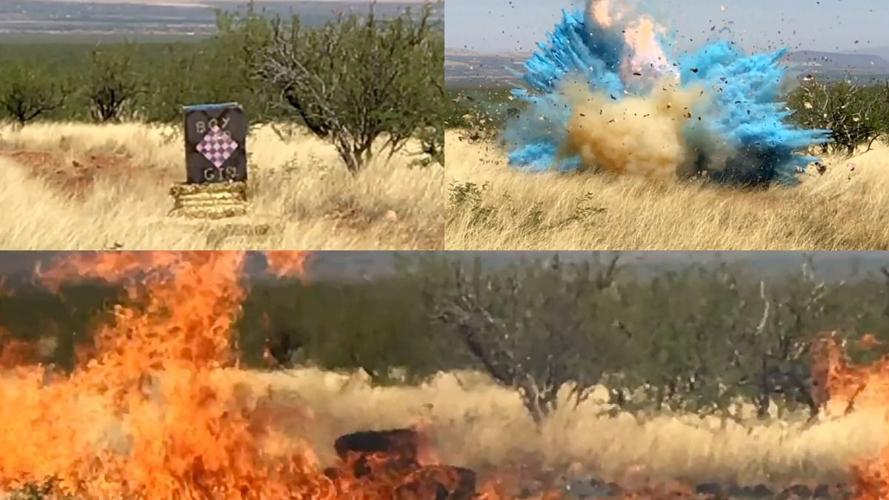
The Sawmill Fire is shown erupting from an exploding target — with blue smoke curling off the fire's fringes — in a video just obtained by the Arizona Daily Star.
The 49-second video clearly shows the fire starting in yellow grassland near a stand of mesquite trees from the exploding target on state land in the Santa Rita Mountain foothills on April 23, 2017. Towards the end of the video, a male voice is heard saying "Start packing up!" twice.
The Star obtained the video from the U.S. Forest Service through the Freedom of Information Act. The service, which led the investigation into the fire's origin, blacked out persons shown in the video. In a letter to Star reporter Tony Davis, Forest Service official Tracy Perry cited two exemptions to FOIA allowing the withholding of information to protect peoples' privacy. Perry is the service's director of Law Enforcement and Investigations.
Border Patrol Agent Dennis Dickey, who has admitted starting the fire with an explosive target, ignited the blaze during a gender reveal party that was held to show the gender of his wife's expected baby, his attorney Sean Chapman told the Star in September. Since gender reveal parties typically use blue smoke to announce a male baby and pink smoke to announce a girl, Dickey's wife presumably was expecting a boy.
Dickey agreed to pay $220,000 in restitution after he pleaded guilty Sept. 27 in federal court to a misdemeanor charge of causing a fire without a permit.
The wildfire began when Dickey shot a target that contained Tannerite, an explosive substance designed to detonate when shot by a high-velocity firearm, U.S. Forest Service Special Agent Brent Robinson wrote in an affidavit filed Sept. 20 in U.S. District Court. The explosion was caught on film by a witness.
Tannerite is a legal compound that has been linked to wildfires in several other Western states.
Before the fire was over, it had burned 47,000 acres and cost $8.2 million to extinguish, with nearly 800 firefighters battling the blaze.

With plans to make Tucson cooler, the Florida owners of Funtasticks Family Fun Park are adding new water features.
Pro Parks Management, based in Orlando, is building a play area with a splash pad and several bucket drops over slides and climbing bars at the park, 221 E. Wetmore Road, said Tim Smith, president of Grail Construction, which is doing the work.
It is being built where the old batting cages were located, that were largely unused.
He said next year Pro Parks plans interior renovations and more features at the park.
Called Cactus Springs, the new water station is expected to open by July 4 and feature cabanas, lounge chairs and food and beverage service, said Ted Watson, a partner with Pro Park.
The recent announcement that Breakers, Tucson’s only water park, has closed was an unexpected boon for the new concept.
“We like the Tucson market,” Watson said. “Now that the water park is being shut down, we figured we could add some water, excitement and splash.”
Funtasticks, a five-acre park that also features bumper boats, miniature golf, Go-Karts, arcades and laser tag, opened in 1994. It is just east of Tucson Mall.
“We like the geography,” Watson said, “and felt there was a lack of family entertainment options … this is just the start of ongoing improvement plans.
“We’re not going to end there.”
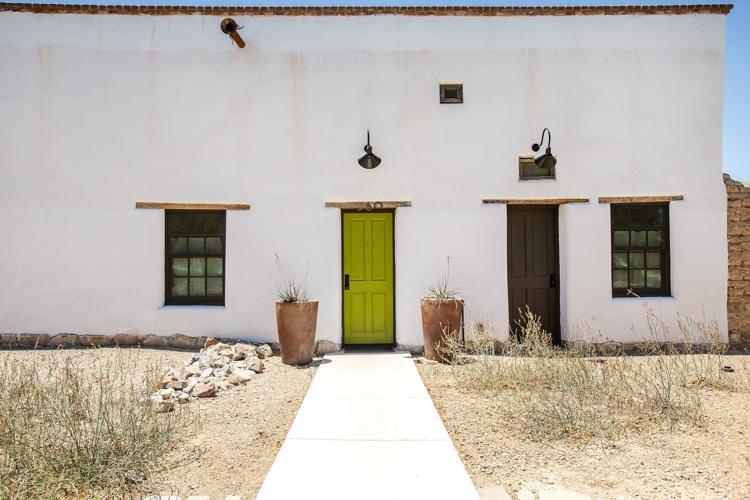
The 1880s-era adobe building in Barrio Viejo was in bad shape when writer Kathe Lison set out to restore it four years ago. Her friends thought she was out of her mind, but Lison saw potential in the solidly built structure, despite its crumbling brown walls, lack of electricity and minimal plumbing.
“Most people looking at it did the numbers and went, ‘No way,’ ” said Lison, 46. “We looked at the numbers and said, ‘We love it, and we’re going to do it anyway.’ ”
She laughed. “How are you going to know in advance that Diane Keaton is going to show up and want to buy your house?”
Turns out that’s what happened: Lison and husband Chris Cokinos first heard Keaton, 72 — a prolific house-flipper in addition to being an Oscar-winning actress — was looking to buy in downtown Tucson about 18 months before they reached out to her last summer. Keaton came to tour the home in the spring, she said.
The sale closed in early April for $1.5 million, an eye-popping number for the historic neighborhood, according to records filed with the Pima County Recorder’s Office. Keaton paid cash, records show.
On Wednesday’s episode of “Jimmy Kimmel Live!” Keaton mentioned her purchase of the four-bedroom home, telling the show’s host, “Tucson is underappreciated.”
On the property’s affidavit of property value, Keaton described the use for the property as a “non-primary or secondary residence.” She told Kimmel she doesn’t plan to live there and hopes to find a buyer.
Lison and Cokinos, who both moved to Tucson from Utah in 2011, bought the 4,572-square-foot building for $330,000 in 2014. The previous owners, the Mesch Clark and Rothschild law firm, had purchased it soon before the housing market crash, Lison said. It had been vacant for nearly a decade when Lison and Cokinos took over.
The couple almost opted not to sell the place, rejecting Keaton’s first offer. Lison said she was torn between her deep love for the structure in which she’d invested so much, and her complete exhaustion following two years of single-mindedly working to restore it.
“The whole process was very fraught for us. One day we’d hope it would sell, the next day we’d hope it would fall through,” Lison said. Ultimately, “we just said (to Keaton’s representative), ‘This is what we’re willing to sell it for and if you don’t want to buy it for that, great, see you later.’ ”
That offer ended up being the sale price of $1.5 million, or about $328 per square foot.
That blows away the average per-square-foot sale price for a Barrio Viejo home more than 2,000 square feet, which is about $244, said Tika Kelley, a realtor with Realty Executives Tucson Elite.
“There’s something very special happening in terms of downtown real estate. There’s a great demand for older houses, and there are so few adobes available,” she said. “Obviously Ms. Keaton was able to see the charm and to recognize the historic value. She found a diamond in the rough.”
Downtown Tucson is undergoing a revitalization, which is also bringing increased attention to the issue of gentrification, especially in the historically Mexican-American Barrio Viejo neighborhood. Nearly 80 acres there were leveled 50 years ago to make way for the Tucson Convention Center complex.
Lison said the home was on the verge of being condemned before she restored it. But she’s aware of the problematic notion of celebrating “Anglos who come in and ‘save’ places in the barrio,” Lison said.
Still, she said, without her investment, the building would likely today be “disintegrating back to the earth from which it came. … I am so happy to have been able to do what we did with that property.”
Lison referenced the work of Tucson scholar and author Lydia Otero, whose 2010 book “La Calle: Spatial Conflicts and Urban Renewal in a Southwest City” discusses an urban renewal project in the 1960s which decimated the low-income Tucson neighborhood, with little input from the residents who lived there.
Historically, “this was the most densely populated area in the city of Tucson,” Otero said in a 2016 C-SPAN interview. “It was also the area that housed the largest population of people of color,” including African-Americans, Chinese-Americans and Mexican-Americans, she said. “There (was) a racialized agenda going on in this project. … It’s almost like the city intentionally deprived this area of services in order to justify its demolition.”
Adobe structures were stigmatized in the 1960s but today, “adobe is cool,” Otero said. “Per square footage, these homes are the most expensive real estate in Tucson, more expensive than places in the Foothills.”
Keaton was “gracious” and striking, wearing her glasses and 4-inch heels, when she came to visit the property, Lison said.
“She’s renowned for her style and her sense of architecture,” Lison said. “The house is my child. I couldn’t have parted with it to just anyone. … It sort of feels like handing off the baton a bit. She’s going to be able to take that house and do even more amazing things with it.”

Amazon has chosen Tucson for a new fulfillment center with plans to hire more than 1,500 full-time employees.
The warehouse will handle customer returns, light assembly, 3-D printing and direct product pickup by customers from automated kiosks on the city’s southeast side.
“Throughout most of the year, the project is projected to have a maximum of approximately 1,500 employees working on-site at one time. During the peak shopping season (i.e., November through December) the project will have a maximum of 1,900 employees working on-site at one time,” project filings with the city of Tucson show.
Luring the company here began eight months ago and land at the Port of Tucson, 6701 S. Kolb Road, was identified as ideal, said Joe Snell, CEO of Sun Corridor Inc.
The 855,000-square-foot facility will sit on several Port of Tucson parcels, a family-owned facility in the city’s Ward 4 and on county property.
Upon receipt of a certificate of occupancy, more than 94 acres will be annexed into the city of Tucson.
“Amazon’s first act was to ask to be annexed into the city,” said Mayor Jonathan Rothschild. “I am glad to see Amazon wanted to become the city’s newest major business.”
The industrial building will be the second-largest in the Tucson area. The largest, Target’s fulfillment center also on the city’s southeast side, is 975,000 square feet.
“We’re excited to open a new state-of-the-art fulfillment center in Tucson and to continue innovating in a state committed to providing great opportunities for jobs and customer experience,” said Mark Stewart, vice president of Amazon’s North America operations.
Amazon has four existing fulfillment centers in Arizona with more than 7,000 employees.
“This announcement of 1,500 new jobs with Amazon, one of the world’s largest brand names, is huge for Southern Arizona,” said David G. Hutchens, chairman of Sun Corridor Inc., and president and CEO of UNS Energy Corp., Tucson Electric Power and UniSource Energy Services. “The ripple effect of a project of this magnitude will benefit the region for many years down the road.”
In filings with the city, Amazon’s warehouse will receive, store and ship products, including automotive, appliances, electronics and software, grocery and alcohol, office supplies, toys and video games.
About 80 acres will be developed with the remaining 15 acres of land reserved for future expansion.
The warehouse will be a one-story structure, about 60 feet high, with 64 loading docks, 398 tractor-trailer parking spaces and about 2,500 vehicle parking spaces.
Pima County spokesman Mark Evans said the county was able to do a design and plan review in one week for Amazon.
“We’re thrilled to see them choose the Port of Tucson, which is connected to the Sonoran Corridor that we’ve diligently been working to develop for the past five years,” Evans said.
The project is being developed by Seefried Industrial Properties.
“Amazon’s selection of Tucson for this impressive new facility demonstrates that Southern Arizona has a lot to offer businesses in terms of talent, location, pro-business environment and quality of life,” said Gov. Doug Ducey. “This project will create thousands of new jobs and generate significant capital investment in the region. We thank Amazon for its continued growth and investment in our state.”
CREATING LOGISTICS HUB
The Amazon announcement solidifies Tucson as a major logistics hub, officials said, noting that the company has not asked for incentives and penned the deal based on the demographics and geography.
“The strength of this deal is that we’re a perfect logistics center,” Rothschild said. “And, it’s a signal to every other distributor that this is the place to be.”
Joining Home Goods and the Target fulfillment center, Amazon’s presence will be noted by other logistics companies.
“We’re already seeing that in the pipeline of companies looking at Tucson,” Snell said. “We have the ability to fill the jobs with the skill set they need and we’re a cost-effective town.”
Barbi Reuter, president of Picor Commercial Real Estate and vice chair of the Tucson Metro Chamber, agreed, saying this announcement will be noted by other companies that brokers work to bring to the Tucson area.
“It’s very significant and validates the assets that we have in our community,” she said. “The whole last-mile delivery is an explosive growth industry and this is the kind of announcement that will get the attention of other logistics companies.”
The top priority when Amazon looks to open a fulfillment center is workforce, said Lauren Lynch, a company spokeswoman.
“We found abundant talent in Tucson,” she said.
Jobs will include technical positions, engineers, industrial truck drivers and order pickers and packers.
Salaries will be determined after a market study to ensure Amazon is competitive, Lynch said, adding that the company usually pays 30 percent more than traditional retail jobs in an area.
Benefits start the first day on the job and include medical, dental, vision, 401(k) and 20 weeks of paid parental leave.
Lynch said a few months before the building opens in 2019, salaries will be announced and hiring will begin.
The Tucson warehouse will fulfill customer orders around Southern Arizona and into neighboring states, she said.
“We look at how much we are fulfilling in the area and build capacity,” Lynch said. “We’re so glad to be coming to Tucson.
“Arizona is a very important state for us.”
A deputy U.S. marshal was shot and killed Thursday evening outside a Tucson house on the north side, according to Gov. Doug Ducey.
He was the first deputy U.S. marshal to be killed in the line of duty in Tucson in 66 years. Tucson police said a man was taken into custody after a standoff with officers.
The shooting happened around 5:30 p.m., in the 2600 block of North 15th Avenue, near West Jacinto Street. The house where the shooter fired from is just across the street from Jacinto Park, and northwest of North Oracle Road and West Grant Road.
Moments after the shooting, police and federal officers surrounded the single-story house. Several residences around the house and the park were evacuated by officers.
After about an hour standoff, Tucson police reported they had a man from inside the house in custody.
Ducey tweeted shortly after 8 p.m. that he had been informed the deputy U.S. marshal was killed in the line of duty.
“I’ve just learned that tonight we lost a US Deputy Marshal from the District of Arizona. He was killed in the line of duty in Tucson. My deepest condolences and prayers go out to his family and all of Arizona law enforcement,” the governor tweeted.
No additional details were released as of press time.
The last deputy U.S. marshal to die in the line of duty in Tucson was Edmund L. Schweppe, who was fatally shot while escorting two prisoners to a dentist office in the downtown area on Sept. 15, 1952, according to the Marshals Service website.
Those two prisoners were apprehended by police after they escaped. They were both convicted of Schweppe’s murder and sentenced to life in prison, according to the Marshals Service.
Rich Rodriguez fired in what UA athletic director, president say is a difficult but 'right' decision
- Arizona Daily Star
Rich Rodriguez was fired on Tuesday after a $7.5 million notice of claim was filed with the state Attorney General’s Office alleging that Arizona’s head football coach ran a hostile workplace and sexually harassed a former employee.
The UA announced Rodriguez’s firing in a news release around 8:30 p.m. University President Robert C. Robbins and athletic director Dave Heeke said they will “honor the separation terms” of the coach’s contract, after an internal investigation did not find enough evidence to fire him for cause. His buyout is about $6 million.
“While this is a difficult decision, it is the right decision,” they wrote. “And it is a decision that lives up to the core values of the University of Arizona.”
Rodriguez, 54, just finished his sixth season as the Wildcats’ coach following stops at Michigan and West Virginia. This year’s team went 7-6, losing four of its final five games after a surprising start. Purdue beat the UA in the Dec. 27 Foster Farms Bowl.
Rodriguez tweeted a statement late Tuesday in which he said he will “vigorously fight these fabricated and groundless claims” made by his former administrative assistant. The coach said he was fired by email.
“I am not a perfect man, but the claims by my former assistant are simply not true and her demands for a financial settlement are outrageous,” he wrote.
A ‘hideaway book’ —
and an alleged cover-up
The notice of claim was filed Thursday by the former employee and her attorney. A notice of claim is an advance notice of intent to file a lawsuit against a public body. Most notices of claim are first sent to the Arizona Board of Regents or the University of Arizona itself. Her $7.5 million claim went directly to the Attorney General’s Office.
Portions of the claim obtained by the Star on Tuesday paint a culture in which secrecy was valued above all else.
The notice of claim alleges, among other things, that Rodriguez and his closest aides followed a “hideaway book” that detailed such sayings as “Title IX doesn’t exist in our office,” referring to the federal gender-equity law.
Those who had the most interaction with Rodriguez — the former employee and two assistant coaches — referred to themselves as the “Triangle of Secrecy,” according to the claim. The three were tasked with lying to Rodriguez’s wife to cover up an extramarital affair, according to the claim, and were ordered to protect the coach’s reputation above all else.
The former employee said in the claim that she “had to walk on eggshells at work, because of (Rodriguez’s) volatility and sheer power over the department.” Rodriguez would call her at all hours of the night, she said in the claim, to change travel plans or to deal with Rodriguez’s personal emergencies. In the claim, the former employee said she became increasingly troubled by Rodriguez’s actions over the past year. She suffered migraines as a result, the claim states.
The UA’s Office of Institutional Equity began investigating Rodriguez in October, three months after the former employee left for an off-campus job.
The investigation concluded last week, Robbins and Heeke wrote. And while counsel did not find enough to terminate Rodriguez, the university became concerned with the “climate and the direction” of the football program, they wrote.
Rodriguez said Tuesday night that the complaint included “a single truth” — that he engaged in a “consensual extramarital affair” with a woman who is not affiliated with the university.
“I am still working incredibly hard to repair the bonds I’ve broken and regain the trust of my wife and children, whom I love dearly,” he wrote.
Another troubling issue
for the UA over athletics
The notice of claim is the latest legal issue facing the UA. Former assistant track and field coach Craig Carter is facing multiple felony charges, accused of threatening a former athlete with whom he was involved in a sexual relationship. The case has been featured on both ESPN’s “Outside the Lines” and ABC’s “20/20.”
The UA is being sued in federal court by one of three victims of former running back Orlando Bradford. The victim says the university knew Bradford was a danger to women and failed to protect her. Bradford was recently sentenced to five years in prison after pleading guilty to two felony counts of aggravated assault.
And in August, Rodriguez was sued in civil court by Creative Artist Agencies (CAA). The agency represented the coach until the fall of 2015, and claims Rodriguez owes $230,050 in past-due fees.
Rodriguez’s contract was set to run through May 31, 2020. His buyout as of Dec. 1 was $6.45 million, according to USA Today’s annual survey of NCAA football coaches’ salaries. Because he was let go before March 15, Rodriguez will miss out on approximately $3.2 million from a master-limited-partnership provision in his contract. That pay came via publicly traded units on the so-called “Longevity Fund.” Rodriguez was set to receive 25 percent of the value on March 15. If he had been fired any time after that, he would have been entitled to the full value of the fund.
A fast start, ugly finish
Rodriguez’s hiring on Nov. 23, 2011, was seen as a coup for the UA and newly hired athletic director Greg Byrne.
Arizona won a bowl game in Rodriguez’s first year and took the Pac-12 South Division title and finished 10-4 in 2014, then started trending downward.
The Wildcats finished 7-6 the following season, most of which was played without star linebacker Scooby Wright. Sensing that recruiting was lagging and the defense wasn’t performing up to expectations, Rodriguez turned over Arizona’s defensive staff. He hired Boise State’s Marcel Yates as defensive coordinator and promoted Jahmile Addae and Vince Amey from analysts to full-time assistant coaches.
The injury issues worsened in 2016, when Arizona lost its top two quarterbacks and running backs at various points. After starting 2-1, Arizona lost eight in a row. Only a season-ending victory over rival Arizona State put a bandage on an otherwise painful season.
The Wildcats entered 2017 with the lowest of expectations outside the Lowell-Stevens Football Facility, picked to finish last by the media in the Pac-12 South. An uneven 2-2 start only served to validate that prediction.
But in Game 5, sophomore quarterback Khalil Tate came off the bench and set a Football Bowl Subdivision record for quarterbacks with 327 rushing yards in a 45-42 win at Colorado. Tate would lead Arizona to four straight victories, winning an unprecedented four consecutive Pac-12 Offensive Player of the Week awards.
The Wildcats secured bowl eligibility with a 58-37 win over Washington State on Oct. 28. They couldn’t follow up their perfect October, however, losing three of four games in November. Arizona finished the season with a 38-35 loss to Purdue in the Foster Farms Bowl.
The emergence of Tate and several freshmen on defense, including Pac-12 Defensive Freshman of the Year Colin Schooler, gave hope for bigger and better things to come in 2018. It also offered proof that the changes Rodriguez had made to the defensive staff were working, even if the immediate on-field results didn’t show it.
What’s next?
Heeke said Arizona’s next head coach will “build a solid foundation for our program and create an identity of Arizona football that the University, Tucson and Southern Arizona communities can be proud of. We’re excited about the future of our football program, and we look forward to introducing our new head coach at the completion of the search process.”
Several current and recently employed coaches would be logical candidates to succeed Rodriguez. Boise State’s Bryan Harsin, Memphis’ Mike Norvell, Utah State’s Matt Wells and Syracuse’s Dino Babers, who was an assistant at Arizona from 1995-2000, will certainly be mentioned as potential replacements.
Possible candidates who were recently let go but are still highly respected within the industry include Kevin Sumlin, Mark Helfrich, Butch Jones and Todd Graham. Jones was the coach at Central Michigan under Heeke from 2007-09.
Yates, who joined the staff in January 2016, will serve as the interim head coach.
It is unclear what will happen with the signing class of 16 players that Arizona announced last month.
Behind the scenes at one of the busiest stockyards in Arizona, $3 million worth of cattle was stolen from a prominent Marana family by a man they once considered a friend, federal prosecutors said in court documents.
Last August, longtime cattleman and well-known rodeo cowboy Clay Parsons discovered $1.3 million missing from the accounts of the Marana Stockyards and Livestock Market, which his family has run since the early 1990s. The stockyard’s line of credit also was drawn down inexplicably by nearly $2 million, according to records from U.S. District Court in Tucson.
A trail of fraudulent documents led to Seth Nichols, the stockyard’s 29-year-old office manager and son of Donald Hugh Nichols, a cattle broker who had been friends with Parsons for decades, court records show.
Seth Nichols pleaded guilty to federal bank fraud in February and faces up to five years in prison. His father was indicted Aug. 22 as a co-conspirator in $1.6 million of fraudulent cattle sales at the stockyard’s auctions.
The fraud has pushed both families to the brink of financial ruin.
A federal prosecutor said the stockyard is operating “week to week” as it recovers from the fraud and Parsons has already spent $100,000 on audits and rebuilding the stockyard’s accounting system.
Donald Hugh Nichols, who goes by Hugh, and his wife, Jane Nichols, filed for bankruptcy in federal court Aug. 10.
The scheme Parsons discovered last fall began after he hired Seth Nichols in June 2013 to run the stockyard’s day-to-day business. Nichols admitted to using his position to exploit the stockyard’s transaction system at weekly cattle auctions, according to his plea agreement.
At the auctions, cows are brought to the stockyards each week to be sold to the highest bidder. Last Wednesday, 884 head of cattle entered a fenced area inside the stockyard’s main building one at a time or in pairs. Some recent auctions have seen more than 2,000 head of cattle sold, according to the stockyard’s market reports.
Buyers in auditorium seats overlooking the fenced area bid on the cows as the auctioneer rattled off prices Wednesday morning. After a successful bid, the cow was ushered through a gate and the next cow entered.
The stockyard uses a line of credit to allow sellers to be paid quickly while the buyers’ payments are processed, according to court records. Seth Nichols admitted to manipulating the line of credit to buy cattle at the auctions on behalf of the Nichols Cattle Co., which then sold the cattle elsewhere without reimbursing the stockyard. He also admitted to sending the stockyard’s money directly to the cattle company.
He covered up the fraud by faking wire payments from the cattle company to the stockyard and by doctoring financial records to make Parsons and his bankers believe the stockyard had plenty of cash and a full line of credit, according to his plea agreement.
Seth Nichols agreed to pay restitution to the Parsons, which was capped at $3 million in his plea agreement. But those funds won’t be available until after he is sentenced Sept. 24. A dispute over the exact amount could lead to a restitution hearing at a later date.
Among the items Seth Nichols agreed to forfeit are the proceeds of selling a house in Marana, a pickup truck, his ownership shares in a helicopter, and various limited-liability companies, including several he formed during the years of fraud. His parents signed over to the Parsons the deeds to their home in Coolidge and another property in Coolidge, which combined are worth more than $1 million.
Clay Parsons declined to comment. The attorneys involved in the case did not respond to requests for comment.
While criminal proceedings unfold in federal court, the fraud has led each family to sue the other in Pima County Superior Court.
A week after Seth Nichols’ Feb. 5 plea in federal court, Clay Parsons and his wife, Karen, sued Hugh and Jane Nichols for $3 million and punitive damages, saying their role in the fraud showed “an evil hand guided by an evil mind.”
On June 8, Hugh and Jane Nichols sued the Parsons in Superior Court, claiming the Parsons misled them during a meeting shortly after the fraud was discovered. The Nichols claim the Parsons pressured them into signing over the deeds to their two properties to repay the Parsons for the losses caused by the fraud.
Along with the lawsuit, the Nichols filed a legal claim on the two properties they had signed over to the Parsons, effectively blocking the sale of the properties. They also said the Parsons evicted them from their home in October 2017 despite promising to let them stay until it was sold.
Hugh Nichols said Parsons “actively undermined” his cattle business by helping Nichols’ customers find new purchasing agents. As a result, “Hugh has lost all income from his livestock sales business,” Nichols’ lawyer, German Yusufov, wrote in the lawsuit.
Back in federal court, Seth Nichols asked a judge on Aug. 9 to allow him to back out of his plea agreement. He would not have pleaded guilty if he had known it would be used in a civil lawsuit against his parents, defense attorney Michael Harwin wrote in a court filing.
Harwin also cited a dispute over the restitution amount and questioned how much Parsons knew about problems with the line of credit before last August.
In his response to Seth Nichols’ request to withdraw his plea, federal prosecutor Michael Jette said the legal claim on the two properties and Seth Nichols’ request to withdraw his plea appeared to be an attempt to push the Parsons to drop their lawsuit.
A hearing about Seth Nichols’ request to withdraw his plea is scheduled for Tuesday, court records show. His father’s arraignment is scheduled for Sept. 14.
A Japanese entertainment venue is moving into part of the soon-to-be closed Sears store at Park Place.
Round 1 Bowling & Amusement has signed a lease for about 44,000 square feet on the ground floor and basement of the store, 5950 E. Broadway.
Last month, Sears announced it would close that location in a money-saving effort.
Taka Mizuno, with Round 1’s marketing department, said Tucson’s demographics appealed to the company. This will be its first venture in Arizona.
According to Round 1’s real estate requirements, its locations feature 12 to 14 bowling lanes, billiards, ping pong, darts, karaoke rooms and more than 250 arcade machines with the latest games from Japan. There is also a food and bar area with seating for up to 90 people.
It is the latest so called “eatertainment” venue to enter the Tucson market.
In the past two years, companies such as Dave & Busters, 1390 E. Tucson Marketplace Blvd.; Autobahn Indoor Speedway, 300 S. Toole Ave.; and Topgolf, 4050 W. Costco Drive, have opened. Base Hits Tucson, an indoor batting cage, is under development at 4439 N. Oracle Road, and Bourn Cos. is adding entertainment venues at both its City Park project downtown and at Foothills Mall on Ina Road.
Tucson’s appeal
The appeal of Tucson is recent job announcements that will bring millennials to town.
“The millennial generation has been a less-than-eager generation of traditional shoppers,” said Nancy McClure, first vice president with CBRE Tucson. “That group has proven that it wants to connect with others and has a preference to spend money dining out, versus buying more stuff.”
Millennials aren’t the only ones interested in the eatertainment segment, according to QSR Magazine, which covers the quick-serve and fast-casual dining industry.
Nearly 60 percent of all consumers said they were interested in visiting an eatertainment concept, while 30 percent said they had already visited one, QSR says of a survey conducted by food industry market research firm Datassential.
Having a dining venue that also provides photo opportunities to be shared on social media is also drawing people to “eatertainment” sites — something that mall owners want.
“Entertainment venues are being sought out by mall owners and other center owners to not only fill space but also be a draw of customers to the rest of the centers’ retailers,” McClure said. “Mall traffic has slowed, in most cases, and it is of critical importance to center owners and tenants to bring people back to the malls and make the shopping trip more than just buying merchandise — it is to create an experience to compel people to step away from their computer and do something fun, interact with people and be part of the community.”
Round 1 is expected to open its Park Place location in 2019. It was founded in Sakai City, Osaka, in 1980 and entered the U.S. market in 2010. Its 21st U.S. location opened in March.
Tucson Water recently shut down a treatment plant after discovering it was sending water contaminated with chemical compounds to thousands of residents of downtown and the city’s west and north sides.
Shortly after making that discovery, utility officials also learned that they had mistakenly thought for some time that uncontaminated water was coming out of the plant, which has long treated south-side water pollution.
The utility had been sampling the water at a point its officials thought was connected to the south-side treatment plant, but which actually was getting water from other sources, administrators said last week.
It turned out that water coming out of the treatment plant was now tainted with what’s known as perfluorinated chemicals, also known as PFAS compounds. The treatment plant had been built and later upgraded to treat two other pollutants — the solvent trichloroethylene (TCE) and 1,4-dioxane — but not to treat PFAS.
PFAS is a family of compounds historically used in firefighting foam, in everyday household products such as nonstick frying pans, polishes, carpets, waxes and paints, and in industrial processes. They don’t easily break down in the environment and remain in the body for a long time after being consumed. They have been linked to a long list of illnesses, including possibly cancer in humans.
The levels of the chemicals found in the water coming from the treatment plant were lower than the recommended maximum in official EPA health advisories. But they were higher than a recently released federal study says they should be.
The plant’s water is served to a large V-shaped area, population about 60,000, stretching north from East 29th Street through downtown and flanking Interstate 10. The area spans as far west as the Tucson Mountains and as far east as North Campbell Avenue and beyond. (See map.)
Because the utility hadn’t sampled points in the treatment plant’s water-delivery area until this year, Tucson Water officials say they don’t know how long the contaminated water had been served to customers there.
The utility decided to sample that area this year because it was continuing to find these compounds in other locations, forcing it to shut wells, Tucson Water Director Tim Thomure said.
The south-side treatment plant was put back online Sept. 17, after being closed for more than three weeks while the utility took several short-term measures to reduce contamination levels .
Tucson Water has since taken new samples in the area where the treatment plant’s water is delivered and expects they’ll contain significantly lower levels of the contaminants.
But the utility’s reliance on the wrong sampling point drew sharp criticism from City Council members Steve Kozachik and Regina Romero.
The mistake was “cavalier,” given the city’s longstanding history with water pollution and the community’s sensitivity to it, said Kozachik. Last summer, he was the first city official to tell the public about contamination of other city wells by the same compounds.
“Is it embarrassing? Yeah,” acknowledged Jeff Biggs, Tucson Water’s administrator for strategic initiatives. But, he said, the city had questioned the discrepancy in the pollution levels it was finding and reacted immediately once it learned of the mistake.
“We investigated and we made operational changes to lower the level (of contamination) that we served to the public,” Biggs said.
Kozachik noted that city officials “stand in front of the community all the time, saying that we’re taking seriously our well monitoring, that we’re doing this testing, that we’ve spent tens of millions of dollars” on the treatment plant.
“Then to say that we were monitoring the wrong water main, and we didn’t know where water is coming from is cavalier,” said Kozachik, whose Ward 6 includes much of the downtown area that got PFAS-contaminated water.
Romero, whose Ward 1 also is part of the treatment plant’s service area, said she’s “very, very disappointed” and finds it “very upsetting” that Tucson Water was using the wrong sampling point and that she and other council members hadn’t been told of the PFAS contamination in the area until now.
She noted that the mayor and council and the utility had for years worked to restore Tucson Water’s tarnished reputation, dating to the 1980s, when trichloroethylene was discovered in south-side drinking water.
“We’ve been saying that Tucson Water is transparent, compared to the time of TCE and that we were serving clean water,” Romero said. “Every detail of this bothers me.”
Thomure, Tucson Water’s director, said the error in the original sampling point location “is not something we take lightly, nor is it acceptable.”
Now, the utility will investigate the sampling point’s incorrect placement “and will modify policies and procedures as needed,” Tucson Water spokesman Fernando Molina said.
Highest levels found at three sampling sites
The contaminated water had gone through a water-treatment plant, the Tucson Airport Remediation Project, commonly known as the TARP plant.
The plant was first built in 1994 to remove the once-common industrial solvent trichloroethylene from polluted south-side groundwater — a solvent that various aircraft-related industries had dumped into the ground from the late 1940s to the mid-1970s.
In 2014, the plant was upgraded to also remove 1,4-dioxane, an industrial stabilizing agent, from the same groundwater. The dioxane was discovered in the groundwater in 2002.
The plant’s construction was a result of a consent agreement that the city signed with the U.S. Environmental Protection Agency and other parties to start cleaning up the water, long after the TCE was first discovered there in 1981. The plant uses a technology known as advanced oxidation to remove both chemicals.
That water is pumped from the area’s longstanding contamination plume running northwest from Tucson International Airport to near the Irvington Road-Interstate 19 interchange.
The TARP plant was not designed to remove perfluorinated compounds, which utility officials had known for some time also have tainted the south-side wells that supply the contaminated water to TARP.
But for a long time, Tucson Water thought it was removing the PFAS anyway. In part, that’s because the treatment plant contains granulated carbon materials that are thought to be good at removing these compounds from water.
That’s also because the utility had repeatedly found none of the compounds when it sampled for them at a water main lying less than 2 miles north of the Santa Cruz Lane Reservoir where the TARP water is stored for delivery. The reservoir, near the Interstate 19/I-10 interchange, lies about four miles north of the TARP treatment plant along Irvington Road near I-19.
But in late August, Tucson Water found levels of the perfluorinated compounds of up to 30 parts per trillion in the area where water from the treatment plant is delivered.
Levels at or near 30 parts per trillion were found at three points from Grant Road south. It was the first time the city had tested for PFAS there. The 30 figure represents a total of two PFAS compounds known as PFOA and PFOS.
PFAS levels at the northern edge of this service area were, by contrast, “really, really low,” topping at 8.6 parts per trillion, Tucson Water spokesman Molina said.
Thirty is less than half the 70 parts per trillion that the EPA has had since 2016 as a formal health advisory level for the PFAS compounds. But it’s nearly twice as high as a recent federal study concluded is advisable for drinking.
The study from the Agency for Toxic Substances Disease Registry was released in June. That came about a month after the news website Politico reported that the federal government had decided to suppress its results out of concern for their political ramifications.
The EPA is considering whether to impose formal drinking-water limits on the perfluorinated compounds, PFOA and PFOS. It’s also preparing to propose legally designating them as hazardous substances.
In addition, last November, New Jersey became the first state to adopt formal drinking water limits for PFOA and another PFAS compound — 14 and 13 parts per trillion, respectively.
Tucson Water’s current target for PFAS levels in its water supplies is a maximum of 18 parts per trillion when both PFOA and PFOS are combined.
“Something’s
wrong here”
Since 2009, the utility had been sampling its well system and other points in its water-delivery network for the PFAS compounds. It has already shut down three supply wells just north of Davis-Monthan Air Force Base and a half-dozen wells serving customers on the northwest side, including the Continental Ranch area of Marana.
Of the nine south-side wells supplying the TARP system, the three most-contaminated ones ranged from 91 to 190 parts per trillion of the PFAS compounds. At the treatment plant itself, the water averaged about 30 parts per trillion before treatment.
The sampling point north of the Santa Cruz Lane Reservoir was connected to a water main that officials had thought came from the TARP plant, Biggs said. But after PFAS were found throughout the TARP distribution system, “We said wait a minute, something’s wrong here,” he said last week.
Tucson Water immediately started an investigation of the sampling point it had used, Biggs said. The sampling was done through a small spigot, connected to the water main via a steel pipe leading underground in which the spigot was encased. It was most likely installed around February 2000, utility spokesman Molina said.
Looking at old maps of its water system and visiting the area, utility officials discovered that the sampling spigot was actually connected to another main across the street from the water main where most of the TARP water was going, Biggs said. The second main carried water from other sources besides TARP.
Once they realized that, officials for the first time took a sample from the Santa Cruz Lane Reservoir itself. It came out with 30 parts per trillion PFAS. After the samples taken in the TARP delivery area also showed some with levels close to 30, the treatment plant was shut down.
Then, the utility flushed out the water system downstream of the plant by running through it what it said was uncontaminated water from its Central Arizona Project supplies for four or five days. That was to make sure that no contamination was passing through the plant.
Then, it took samples both at the treatment plant and in the distribution system, and found no PFAS compounds. Finally, it shut down the three-most-contaminated south-side wells supplying the TARP plant and started blending the plant water with CAP water coming in at the rate of 2,000 gallons per minute, Biggs said.
These actions were done in consultation with the EPA and the Arizona Department of Environmental Quality, Tucson Water officials said.
“We’ve gotta remember, through the consent decree, we have the responsibility to operate” TARP, Biggs said. “But also, as a drinking-water utility, our main purpose is to provide drinking water that is safe to drink.”
“A relatively
harmless mistake”
City Councilman Paul Durham, whose Ward 3 also includes much of the TARP delivery area, said last week he’s concerned about the contaminated water being served to that area and about the utility’s sampling mistake.
But he’s not alarmed, since the pollution level was less than half that recommended by the EPA health advisory, he said.
Durham said he personally believes that the 70 parts per trillion health advisory level should be lowered, but that for now, it “is all we have to go on.”
“It’s always unfortunate when any kind of mistake occurs, but I believe that it is a relatively harmless mistake. Tucson Water corrected it as soon as they discovered it,” Durham said. “There’s no question that mistakes can be bad, but it could have been far worse.”
But along with Romero and Kozachik, Councilman Richard Fimbres took the utility to task for not disclosing the TARP plant shutdown to the City Council, even though it had told the council about shutting down the three south-side wells with high PFAS levels in an email on Sept. 19.
Kozachik said that with outside attorneys now handling upcoming city-financed litigation against 3M, the Minnesota company that manufactured PFAS compounds for many years, it’s important for the council to get the most up-to-date information on the contamination.
Fimbres, whose district includes the southern end of the TARP delivery area, said he has told the utility to inform him of similar action it takes in the future.
Thomure, Tucson Water’s director, said he accepts this criticism and would ensure that council members are notified of such actions in the future.
Fimbres, however, also noted positive action the city has taken recently to tackle contamination.
For one, the city plans to spend $3.5 million to drill a 10th well to pump groundwater from a section of the contaminated south-side aquifer where the contamination is at its thickest to eradicate the pollution more quickly.
The City Council has also approved spending more money for testing to see if toxic vapors from the groundwater contamination have spread upward into three south-side elementary schools, Fimbres said. They are the C.E. Rose, Elvira and Challenger schools.
“Tucson Water has never knowingly served any water that was above a health or EPA advisory,” Fimbres said in an email to the Star.
“My office, as well as the rest of the mayor and council, work to make sure one of our most precious resources, water, is safe and in abundant supply.”
City plans to remove PFAS from water
Last week, Tucson Water officials said they were awaiting the results of the latest round of sampling from the TARP plant’s water to see if it showed a need for additional quick fixes.
Once that’s taken care of, they’ll work on short- and long-term adjustments to the plant itself so it can remove the PFAS compounds .
Immediate attention will be paid to one of the cleanup methods that the plant employs —what’s known as granular activated carbon. It removes leftover hydrogen peroxide after it’s used at the plant to oxidize and remove TCE from the water, said utility administrator Biggs.
While some forms of the carbon material — which come in the form of tiny black pellets — are designed to also remove PFAS, the kind at the TARP plant aren’t, said Biggs.
Over the next five to six months, the utility will test various varieties of the activated carbon to see which can best remove peroxide and the PFAS chemicals.
The utility will also be looking at what kind of treatment plant to build at the TARP site to replace the existing one — with a new plant to be designed from the start to treat all three pollutants.
Biggs recalled that the utility went through similar rounds of testing and planning a few years ago, before building the advanced oxidation plant to remove dioxane as well as the TCE.
“It’s déjà vu all over again,” Biggs said. “We are reacting to a moving target of health advisories. We are moving as quickly as we can to meet these targets.”
In a galaxy far, far away, there lies a luxury movie theater.
Except it’s not far away. Actually, it’s pretty close.
After years of waiting, Galaxy Theatres Luxury+ will open for business at 8 p.m. Thursday, Nov. 1.
“I’ve spent time in Tucson and I like the area,” says CEO Frank Rimkus. “Tucson seems to be a real opportunity to grow. The city has a good attitude.”
And here’s some more good news for you east-siders: Galaxy Theatres will sit in the former Bashas’ grocery store at 100 S. Houghton Road near Broadway, which makes it the farthest east theater in the Old Pueblo.
Previously, that spot was held by Century Gateway 12 on North Kolb Road, and Park Place Mall for newer movies — both quite the trek for some east-siders.
Rimkus says he chose the location because of the convenience to east-side residents and because the area is “under-served.”
“There seems to be a lot of good things going on in the eastern part of the city,” Rimkus says. “We want to help build a community as it continues to grow.”
Galaxy Theatres is a 20-year-old west-coast chain that shows the latest Hollywood films and offers wall-to-wall premium movie screens, leather recliners, and other “luxury” features, Rimkus says.
“We’re a premium experience at the regular price,” he says.
The concession stands include a long list of foods: pizza, chicken wings, and other items you might not find at your average theater. Beer and wine are also available.
Rimkus says Galaxy Theatres is known for their popcorn — so you might want to think about picking up a bucket.
And like most theaters, movie-goers can digitally purchase tickets and reserve seats ahead of time.
The theater will also offer meeting space and the company plans to host educational and charity events to get involved with the Tucson community.
Beyond the theater’s capabilities, Rimkus says the company prides itself in its hospitality.
“We don’t call it customer service; we don’t have customers. We have guests,” Rimkus says. “At the end of the day, our sole business is to focus on how to make people happy.”
Galaxy Theatres expects to bring more than 70 new jobs to Tucson. This is the chain’s first location in Arizona.
- Tony Davis Arizona Daily Star
The Sawmill Fire is shown erupting from an exploding target — with blue smoke curling off the fire's fringes — in a video just obtained by the Arizona Daily Star.
The 49-second video clearly shows the fire starting in yellow grassland near a stand of mesquite trees from the exploding target on state land in the Santa Rita Mountain foothills on April 23, 2017. Towards the end of the video, a male voice is heard saying "Start packing up!" twice.
The Star obtained the video from the U.S. Forest Service through the Freedom of Information Act. The service, which led the investigation into the fire's origin, blacked out persons shown in the video. In a letter to Star reporter Tony Davis, Forest Service official Tracy Perry cited two exemptions to FOIA allowing the withholding of information to protect peoples' privacy. Perry is the service's director of Law Enforcement and Investigations.
Border Patrol Agent Dennis Dickey, who has admitted starting the fire with an explosive target, ignited the blaze during a gender reveal party that was held to show the gender of his wife's expected baby, his attorney Sean Chapman told the Star in September. Since gender reveal parties typically use blue smoke to announce a male baby and pink smoke to announce a girl, Dickey's wife presumably was expecting a boy.
Dickey agreed to pay $220,000 in restitution after he pleaded guilty Sept. 27 in federal court to a misdemeanor charge of causing a fire without a permit.
The wildfire began when Dickey shot a target that contained Tannerite, an explosive substance designed to detonate when shot by a high-velocity firearm, U.S. Forest Service Special Agent Brent Robinson wrote in an affidavit filed Sept. 20 in U.S. District Court. The explosion was caught on film by a witness.
Tannerite is a legal compound that has been linked to wildfires in several other Western states.
Before the fire was over, it had burned 47,000 acres and cost $8.2 million to extinguish, with nearly 800 firefighters battling the blaze.
With plans to make Tucson cooler, the Florida owners of Funtasticks Family Fun Park are adding new water features.
Pro Parks Management, based in Orlando, is building a play area with a splash pad and several bucket drops over slides and climbing bars at the park, 221 E. Wetmore Road, said Tim Smith, president of Grail Construction, which is doing the work.
It is being built where the old batting cages were located, that were largely unused.
He said next year Pro Parks plans interior renovations and more features at the park.
Called Cactus Springs, the new water station is expected to open by July 4 and feature cabanas, lounge chairs and food and beverage service, said Ted Watson, a partner with Pro Park.
The recent announcement that Breakers, Tucson’s only water park, has closed was an unexpected boon for the new concept.
“We like the Tucson market,” Watson said. “Now that the water park is being shut down, we figured we could add some water, excitement and splash.”
Funtasticks, a five-acre park that also features bumper boats, miniature golf, Go-Karts, arcades and laser tag, opened in 1994. It is just east of Tucson Mall.
“We like the geography,” Watson said, “and felt there was a lack of family entertainment options … this is just the start of ongoing improvement plans.
“We’re not going to end there.”
The 1880s-era adobe building in Barrio Viejo was in bad shape when writer Kathe Lison set out to restore it four years ago. Her friends thought she was out of her mind, but Lison saw potential in the solidly built structure, despite its crumbling brown walls, lack of electricity and minimal plumbing.
“Most people looking at it did the numbers and went, ‘No way,’ ” said Lison, 46. “We looked at the numbers and said, ‘We love it, and we’re going to do it anyway.’ ”
She laughed. “How are you going to know in advance that Diane Keaton is going to show up and want to buy your house?”
Turns out that’s what happened: Lison and husband Chris Cokinos first heard Keaton, 72 — a prolific house-flipper in addition to being an Oscar-winning actress — was looking to buy in downtown Tucson about 18 months before they reached out to her last summer. Keaton came to tour the home in the spring, she said.
The sale closed in early April for $1.5 million, an eye-popping number for the historic neighborhood, according to records filed with the Pima County Recorder’s Office. Keaton paid cash, records show.
On Wednesday’s episode of “Jimmy Kimmel Live!” Keaton mentioned her purchase of the four-bedroom home, telling the show’s host, “Tucson is underappreciated.”
On the property’s affidavit of property value, Keaton described the use for the property as a “non-primary or secondary residence.” She told Kimmel she doesn’t plan to live there and hopes to find a buyer.
Lison and Cokinos, who both moved to Tucson from Utah in 2011, bought the 4,572-square-foot building for $330,000 in 2014. The previous owners, the Mesch Clark and Rothschild law firm, had purchased it soon before the housing market crash, Lison said. It had been vacant for nearly a decade when Lison and Cokinos took over.
The couple almost opted not to sell the place, rejecting Keaton’s first offer. Lison said she was torn between her deep love for the structure in which she’d invested so much, and her complete exhaustion following two years of single-mindedly working to restore it.
“The whole process was very fraught for us. One day we’d hope it would sell, the next day we’d hope it would fall through,” Lison said. Ultimately, “we just said (to Keaton’s representative), ‘This is what we’re willing to sell it for and if you don’t want to buy it for that, great, see you later.’ ”
That offer ended up being the sale price of $1.5 million, or about $328 per square foot.
That blows away the average per-square-foot sale price for a Barrio Viejo home more than 2,000 square feet, which is about $244, said Tika Kelley, a realtor with Realty Executives Tucson Elite.
“There’s something very special happening in terms of downtown real estate. There’s a great demand for older houses, and there are so few adobes available,” she said. “Obviously Ms. Keaton was able to see the charm and to recognize the historic value. She found a diamond in the rough.”
Downtown Tucson is undergoing a revitalization, which is also bringing increased attention to the issue of gentrification, especially in the historically Mexican-American Barrio Viejo neighborhood. Nearly 80 acres there were leveled 50 years ago to make way for the Tucson Convention Center complex.
Lison said the home was on the verge of being condemned before she restored it. But she’s aware of the problematic notion of celebrating “Anglos who come in and ‘save’ places in the barrio,” Lison said.
Still, she said, without her investment, the building would likely today be “disintegrating back to the earth from which it came. … I am so happy to have been able to do what we did with that property.”
Lison referenced the work of Tucson scholar and author Lydia Otero, whose 2010 book “La Calle: Spatial Conflicts and Urban Renewal in a Southwest City” discusses an urban renewal project in the 1960s which decimated the low-income Tucson neighborhood, with little input from the residents who lived there.
Historically, “this was the most densely populated area in the city of Tucson,” Otero said in a 2016 C-SPAN interview. “It was also the area that housed the largest population of people of color,” including African-Americans, Chinese-Americans and Mexican-Americans, she said. “There (was) a racialized agenda going on in this project. … It’s almost like the city intentionally deprived this area of services in order to justify its demolition.”
Adobe structures were stigmatized in the 1960s but today, “adobe is cool,” Otero said. “Per square footage, these homes are the most expensive real estate in Tucson, more expensive than places in the Foothills.”
Keaton was “gracious” and striking, wearing her glasses and 4-inch heels, when she came to visit the property, Lison said.
“She’s renowned for her style and her sense of architecture,” Lison said. “The house is my child. I couldn’t have parted with it to just anyone. … It sort of feels like handing off the baton a bit. She’s going to be able to take that house and do even more amazing things with it.”
Amazon has chosen Tucson for a new fulfillment center with plans to hire more than 1,500 full-time employees.
The warehouse will handle customer returns, light assembly, 3-D printing and direct product pickup by customers from automated kiosks on the city’s southeast side.
“Throughout most of the year, the project is projected to have a maximum of approximately 1,500 employees working on-site at one time. During the peak shopping season (i.e., November through December) the project will have a maximum of 1,900 employees working on-site at one time,” project filings with the city of Tucson show.
Luring the company here began eight months ago and land at the Port of Tucson, 6701 S. Kolb Road, was identified as ideal, said Joe Snell, CEO of Sun Corridor Inc.
The 855,000-square-foot facility will sit on several Port of Tucson parcels, a family-owned facility in the city’s Ward 4 and on county property.
Upon receipt of a certificate of occupancy, more than 94 acres will be annexed into the city of Tucson.
“Amazon’s first act was to ask to be annexed into the city,” said Mayor Jonathan Rothschild. “I am glad to see Amazon wanted to become the city’s newest major business.”
The industrial building will be the second-largest in the Tucson area. The largest, Target’s fulfillment center also on the city’s southeast side, is 975,000 square feet.
“We’re excited to open a new state-of-the-art fulfillment center in Tucson and to continue innovating in a state committed to providing great opportunities for jobs and customer experience,” said Mark Stewart, vice president of Amazon’s North America operations.
Amazon has four existing fulfillment centers in Arizona with more than 7,000 employees.
“This announcement of 1,500 new jobs with Amazon, one of the world’s largest brand names, is huge for Southern Arizona,” said David G. Hutchens, chairman of Sun Corridor Inc., and president and CEO of UNS Energy Corp., Tucson Electric Power and UniSource Energy Services. “The ripple effect of a project of this magnitude will benefit the region for many years down the road.”
In filings with the city, Amazon’s warehouse will receive, store and ship products, including automotive, appliances, electronics and software, grocery and alcohol, office supplies, toys and video games.
About 80 acres will be developed with the remaining 15 acres of land reserved for future expansion.
The warehouse will be a one-story structure, about 60 feet high, with 64 loading docks, 398 tractor-trailer parking spaces and about 2,500 vehicle parking spaces.
Pima County spokesman Mark Evans said the county was able to do a design and plan review in one week for Amazon.
“We’re thrilled to see them choose the Port of Tucson, which is connected to the Sonoran Corridor that we’ve diligently been working to develop for the past five years,” Evans said.
The project is being developed by Seefried Industrial Properties.
“Amazon’s selection of Tucson for this impressive new facility demonstrates that Southern Arizona has a lot to offer businesses in terms of talent, location, pro-business environment and quality of life,” said Gov. Doug Ducey. “This project will create thousands of new jobs and generate significant capital investment in the region. We thank Amazon for its continued growth and investment in our state.”
CREATING LOGISTICS HUB
The Amazon announcement solidifies Tucson as a major logistics hub, officials said, noting that the company has not asked for incentives and penned the deal based on the demographics and geography.
“The strength of this deal is that we’re a perfect logistics center,” Rothschild said. “And, it’s a signal to every other distributor that this is the place to be.”
Joining Home Goods and the Target fulfillment center, Amazon’s presence will be noted by other logistics companies.
“We’re already seeing that in the pipeline of companies looking at Tucson,” Snell said. “We have the ability to fill the jobs with the skill set they need and we’re a cost-effective town.”
Barbi Reuter, president of Picor Commercial Real Estate and vice chair of the Tucson Metro Chamber, agreed, saying this announcement will be noted by other companies that brokers work to bring to the Tucson area.
“It’s very significant and validates the assets that we have in our community,” she said. “The whole last-mile delivery is an explosive growth industry and this is the kind of announcement that will get the attention of other logistics companies.”
The top priority when Amazon looks to open a fulfillment center is workforce, said Lauren Lynch, a company spokeswoman.
“We found abundant talent in Tucson,” she said.
Jobs will include technical positions, engineers, industrial truck drivers and order pickers and packers.
Salaries will be determined after a market study to ensure Amazon is competitive, Lynch said, adding that the company usually pays 30 percent more than traditional retail jobs in an area.
Benefits start the first day on the job and include medical, dental, vision, 401(k) and 20 weeks of paid parental leave.
Lynch said a few months before the building opens in 2019, salaries will be announced and hiring will begin.
The Tucson warehouse will fulfill customer orders around Southern Arizona and into neighboring states, she said.
“We look at how much we are fulfilling in the area and build capacity,” Lynch said. “We’re so glad to be coming to Tucson.
“Arizona is a very important state for us.”


View this profile on Instagram#ThisIsTucson 🌵 (@this_is_tucson) • Instagram photos and videos
Most viewed stories
-
Over 30 fun events happening in Tucson March 27-29!
-
New Eats! 20 new restaurants that opened up in Tucson this winter 🍽️
-
A Jets fan and a Bills fan walk into a bar: My tasty journey at Anchor Bar
-
Bloomfest celebrates palo verde blooms and Tucson culture
-
The #ThisIsTucson Snail Mail Club is here! Here's how you can get a little piece of Tucson in your mailbox 💗
-
OaxaRico opened their first brick-and-mortar, serving up delicious mole and gorditas
-
Over 40 exciting events to check out this weekend! 🌱
-
Nearly 90 fun events happening in March! 🌺
-
$25 challenge kicks off at Tucson’s Pop Cycle