

Reporter Jasmine Demers' Fave Five
From the Reporters' and photographers' favorite works of 2019 series
-
Jasmine Demers
Reporter
- Updated

We are sharing Arizona Daily Star reporters' and photographers' favorite work from 2019.
Reporter Jasmine Demers covers science news for the Star. Here are her favorite pieces of 2019:
Prison Education Project brings new hope to incarcerated students
UpdatedThis was one of those stories that makes you remember why you chose to become a journalist in the first place. I had the opportunity to go to the Arizona State Prison Complex in Tucson and meet some inmates who were attending educational classes and lectures in order to better themselves. I loved watching them interact with the professor and hear them speak about why this program was important to them.
─ Jasmine Demers

Rushaun Dawkins listens as Terry Hunt, an anthropology professor at the University of Arizona, gives a lecture on Easter Island at the Rincon Unit’s visitation building inside the Arizona State Prison Complex in Tucson.
Inmates at the Arizona State Prison Complex in Tucson are turning their mistakes, arrests and jail sentences into motivation to strive for a better future. A future they say is fueled by education and knowledge.
The Prison Education Project, an initiative led by the University of Arizona’s English department, aims to advance educational opportunities in the local prison system and introduce incarcerated students to new ideas and perspectives through classes and lectures.
“You’ve heard of the school-to-prison pipeline where certain schools in some areas tend to be focused in such a way that people are almost expected to go from there to prison,” said Marcia Klotz, director of the Prison Education Project. “We’re trying to kind of establish a prison-to-college pipeline. It helps people to kind of imagine the possibility of attending college classes when they get out.”
Through the project, those with high school diplomas or GEDs are offered a variety of 10-week-long courses such as communications, English as a second language, social anthropology, reading and writing. At the end of the course, they receive a certificate of completion.
The project also expanded in spring 2018 to include monthly lectures on different topics that are open to everyone within the unit, regardless of diploma status. In the past, visiting faculty members have covered topics such as psychology, astronomy, film, Japanese culture and art.
“I believe that education is valuable, even for someone who has a life sentence,” Klotz said. “It gives them an opportunity to expand their horizons, to put their mind in a different place, to kind of reach out to a world outside the prison walls.”

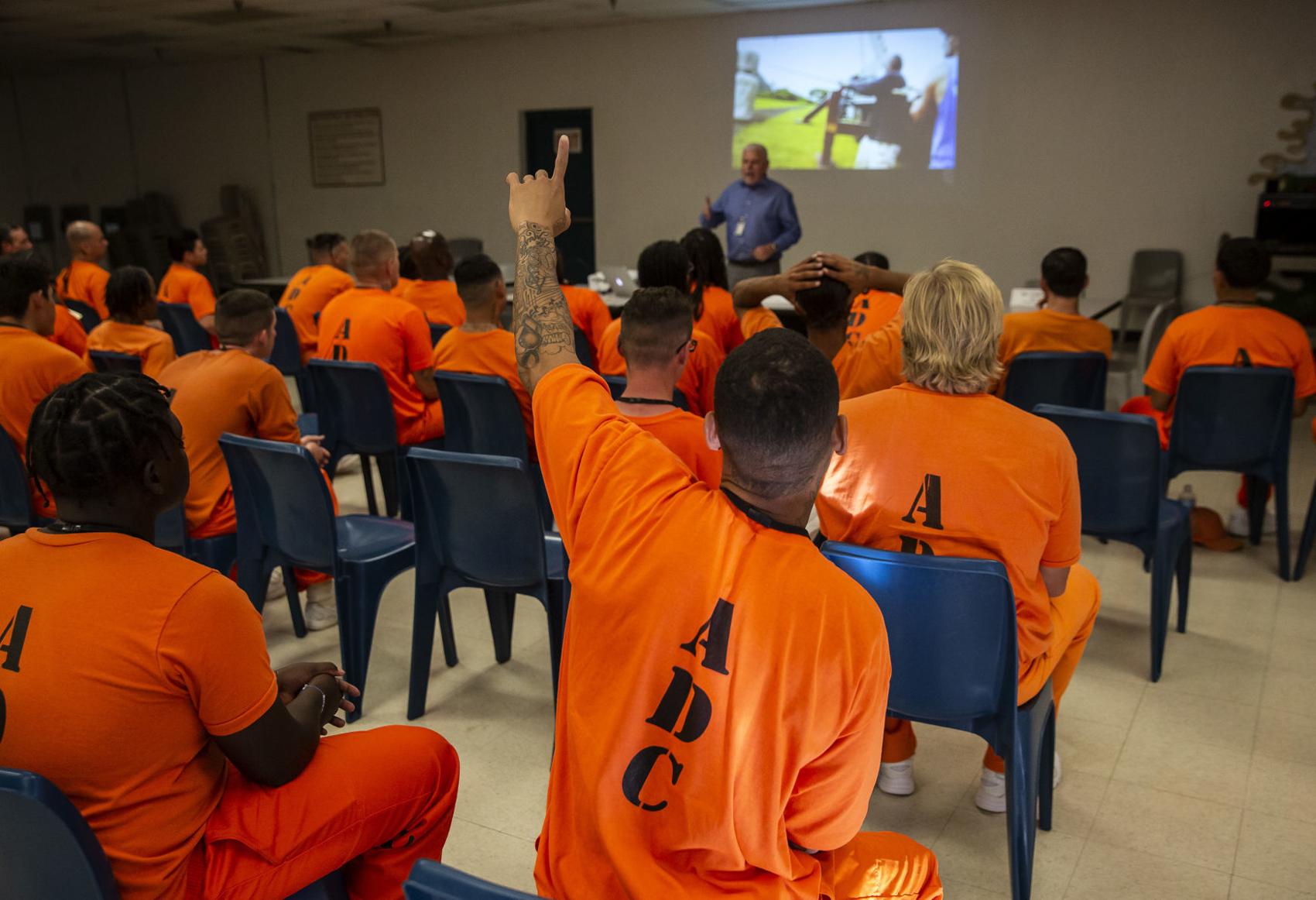
Professor Terry Hunt presents his research on the monolithic statues of Easter Island. Asked by prison officials if Hunt should be invited back, the inmates cheered and applauded.
se, a professor from the University of Arizona, gives a lecture about Easter Island to over 50 inmates at the Rincon Unit’s visitation building inside the Arizona State Prison Complex on Oct. 18, 2019.
The prison complex is divided into seven separate yards, which range from minimum security at level one to maximum security at level five. The project began in a minimum-security unit called Whetstone and has continued offering courses there over the last four years.
Recently, the team worked with prison officials to expand into the high-security Rincon Unit, which is a level four facility. On Friday, 59 students from that unit attended a lecture called “Solving the Mystery of Easter Island” with Terry Hunt, professor of anthropology and dean of the UA Honors College. This was the third lecture that has been offered at the Rincon Unit so far.
something new
During the lecture, Hunt presented his research on the mysterious, multi-ton statues, called moai, that are placed throughout Easter Island, a Chilean island in the southeastern Pacific Ocean. Hunt and his team investigated how the island’s natives, the Rapa Nui people, would have built and transported these statues to different parts of the island with limited resources.
“If you asked the islanders how their ancestors moved the statues, they have a very simple answer. They will say to you, ‘they walked,’” Hunt said.
At this point in the lecture, hands were popping up all over the room. The students asked questions about the symbolic meaning of the moai statues, how they would have gotten the statue uphill or downhill, the population of natives on the island before colonizers arrived, the religion and culture of the Rapa Nui people and many more.
After building a life-size replica of a moai statue with the help of National Geographic, Hunt explained that he and his team began experimenting with how the statues could have been transported from a vertical position.
Ultimately, Hunt and his team found that if they used ropes, they could wrap them around the head of the statue and have groups of people pulling the ropes on both sides. As he showed in a video, when they pulled back and forth, the statue began to rock and move forward.
“Remember I told you that if you asked the islanders how the statues were moved. What did they say?” Hunt asked the students.
The group yelled out, “They walked!”
“Now what happens is the statue is designed with the pendulum effect in mind,” Hunt said. “So, once it starts to rock, you can almost just let go of the ropes on either side. It’s eerie.”
The room was filled with more hands and questions. At the end of the lecture, when asked by prison officials if Hunt should be invited back, the group erupted with cheers and applause.
“My favorite part about this lecture was probably the solving of the mystery because they went so many years and decades and centuries without knowing exactly how the statues were moved,” said Robert McFall, one of the students. “For me, that bugs me when I really want to know something, and I know there’s an answer, but I just can’t solve it. So, to see it finally get solved, it was just amazing to see the process and where it came from. It was really cool.”
Marcia Klotz, director of the UA English department’s Prison Education Project, says education programs in prisons are strongly correlated with lower rates of recidivism.
. Prison officials are aiming to reduce recidivism by 25 percent over the next eight years. is the one factor that correlates most strongly with lowering rates of recidivism.”
have a goal of reducing recidivism — the tendency for people to reoffend — by 25 percent over the next eight years. An inmate raises his hand to ask a question of Dr. Terry Hunt at the Rincon Unit’s visitation building inside the Arizona State Prison Complex on Oct. 18, 2019.
Changing perspectives
McFall has been to every lecture that has been offered at the Rincon Unit so far. He is also enrolled in a 10-week creative writing course where he said he’s focused on writing his own book about the struggles of a young boy growing up in Chicago.
“The world paints an image of the incarcerated,” said McFall, who is serving time for theft. “It says we’re bad people, don’t want to learn nothing, don’t want to change, and not just through what people read, but also through the images they put out on TV. In some cases, I’m sure you can’t argue that. But in a lot of cases, you have a lot of people that would really like to learn more and enjoy these things. I feel like we should be able to get the same opportunity as others. Yeah, we made mistakes. Everybody does. We’re not perfect. I’ll be the first to admit I’m not perfect, but I enjoy these opportunities to learn things that I missed out on.”
For other incarcerated students, the Prison Education Project shines a light on the possibilities of life after prison.
“It gives you something to look forward to, you know?” said Jonathan Jackson, whose convictions include armed robbery. “For me personally, I’m working on bettering myself so when I get out to society, I can give back and teach young people not to make mistakes and I can do better.”
Another student, Israel Ortiz, said he plans to attend every lecture he can until he goes home.
Ortiz said growing up in the streets, he didn’t value education as much as he does now and wants to take any opportunity he can to challenge himself.
“I know I have face tattoos and stuff, you know, but it doesn’t define me as a person,” said Ortiz, who was convicted of charges that included weapons misconduct. “To me, it’s my past and the struggles that I’ve been through that have made me who I am now, you know? And just because we’re isolated, doesn’t mean we don’t want to learn. I’d like to learn things and become a better person for my future and for my family’s future.”
Reducing Recidivism
For Rushaun Dawkins, the lectures are an opportunity to expand his perception of the world and learn about other cultures from a place that can feel very secluded at times.
“Not only are our bodies caged but our perception can be caged,” said Dawkins, who is serving time for manslaughter. “Our perceptions become limited, you know what I’m saying? And you’re not able to grow. Your horizon is limited. And then, when someone introduces you to something new, it takes you from one place to another. … Without that opportunity, you would never know.”

Dr. Terry Hunt, a professor from the University of Arizona, gives a lecture sbout Easter Island to over 50 inmates at the Rincon Unit’s visitation building inside the Arizona State Prison Complex on Oct. 18, 2019.
According to Klotz, prison officials have a goal of reducing recidivism — the tendency for people to reoffend — by 25 percent over the next eight years. Arizona’s three-year recidivism rate is 39 percent, which is lower than the national average of 50 percent.
“The only way they know how to do that is really by bringing education into the prison system,” Klotz said. “That is the one factor that correlates most strongly with lowering rates of recidivism.”
The impact that education has on the incarcerated students also affects the rest of society in many ways, Klotz said. Incarceration doesn’t only affect one person, but entire families as well.
“Mass incarceration affects 1 in every 3 people in our country, whether it’s a family member or a friend who has gone through the system,” she said. “So, I just think it’s really important that we not leave that part of our society in a box, but that we engage with it in whatever way we can.”
“The education is important to us because it shows us that there’s still a life out there,” said student Robert Dudley, whose charges include theft of means of transportation. “Being able to come to something like this, even just to get out of the prison mindset for an hour or two, it’s really big.”
First Space Camp at Biosphere 2 helps prepare students for life on Mars
UpdatedThis was a great example of awesome science happening within our community and I had the opportunity to not only write a story, but produce a video as well.
─ Jasmine Demers

Daniel McConville, 19, left, and Hiroaki Sato, 22, take notes while inside the tropical rain forest at Biosphere 2. Five undergraduate students from Kyoto University in Japan and five from colleges across Arizona are visiting Biosphere 2 for Space Camp.
Human space exploration helps to address important questions about unknown aspects of the universe and the ability to sustain life on other planets.
At the University of Arizona’s Biosphere 2, the next generation of explorers are being trained to help answer these questions and they’ve been tasked with an important mission — to design Biosphere 3, a facility that could theoretically be built on Mars.
Space Camp at Biosphere 2, which is north of Tucson, is a new collaboration between the UA and Kyoto University in Japan to help students comprehend the importance of human expansion into space by conducting experiments and astronomy work in an enclosed ecological systems facility.
The camp, which ended Saturday, Aug. 10, brought five undergraduate students from Kyoto University and five from colleges across Arizona for a six-day course on space exploration. The students worked in Biosphere 2’s rainforest, ocean and desert biomes where they learned how each of these natural ecosystems could be translated for use by humans in space.
“It’s a really unique opportunity because we bring Japanese students as well as students from Arizona together at this remarkable facility that we have here in Southern Arizona, which is Biosphere 2,” said deputy director John Adams. “Its early history was founded in the idea of a structure like this and systems like this potentially being built and developed on the moon or Mars.”
During the camp, students were tasked with simulating a mission to Mars and designing a new biosphere for the surface of the planet. The students also attended several lectures and had the opportunity to interact with three astronauts who have first-hand experience in space.
“This program was designed based on experiences from astronauts,” said Yosuke Yamashiki, a professor and vice chairman of the Unit of Synergetic Studies for Space at Kyoto University. “Like astronauts, all of these students have to believe that they are in space and accomplish each mission in a very short time.”
For the past three years, Kyoto University ran this camp from Japan, but brought the idea to the UA in hopes of expanding the program. After securing funding from the Japan Aerospace Exploration Agency, they were able to partner with Biosphere 2 for this all-expenses-paid opportunity for the students. The funding for the camp will extend through 2021.
“I’m so happy to be here,” said Ami Hashimoto, a junior studying agriculture at Kyoto University. “I’ve had opportunities to meet and communicate with such smart people and meet astronauts from JAXA and NASA. It’s such a great experience.”
With a background in agriculture, Hashimoto hopes this camp will help prepare her for a future in food supply and answer questions about how to grow food on other planets.
Students involved in this year’s space camp also come from a variety of fields, and this diversity was a crucial part of the program. Historically, people involved in space missions had to have a background in astronomy or aerospace, but according to Adams and Yamashiki, this is changing.
“This mixing of engineering, agriculture and health sciences is very unique,” Yamashiki said. “In future missions, we have to be able to connect people from different fields and attract them to space exploration. It’s important to understand how all science-related fields can contribute to this mission.”
With a variety of fields being represented, each student was able to contribute to the mission based on their individual expertise. For example, students with a background in medicine and biology were well-equipped to study how the atmosphere on Mars or space radiation might impact the human body.
“We wanted the students to have different areas of expertise and the hope is that you bring them together and it creates a very diverse team that can solve a number of different challenges and problems that they’re faced with,” Adams said.
For Daniel McConville, a UA sophomore and material science and engineering major, Space Camp is an opportunity to train for his future.
“The ultimate goal for me is to become an astronaut,” he said. “It’s my dream to be a part of building a base on the moon or Mars and this training is similar, in a sense, to astronaut training wherein astronauts would have to manage some of the tasks that we’re doing here on another planet, create a new biosphere and help create life elsewhere.”
JAXA astronaut Kimiya Yui served as flight engineer on two expeditions to the International Space Station in 2015 and lived there for a total of six months. As one of the astronauts who was invited to speak during Space Camp, Yui wanted to help students understand the importance of collaboration and what the world can gain from embracing differences. Overall, the camp served as an opportunity for students to not only practice their own skills, but to learn from each other as they worked on a mission that was beyond this world.
“If we can cooperate with each other and benefit from each person’s individual strengths, we can make our future brighter,” Yui said. “For each individual person, it’s a small step, but it will lead to a giant leap for humankind.”
Chairman of UA's anesthesiology department steps down over leadership concerns
UpdatedThis story had a large impact on the University of Arizona community, and while it was unfortunate to have to investigate and report this bad news, it taught me a lot about what I’m capable of as a journalist.
─ Jasmine Demers
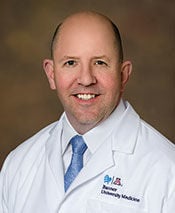
Dr. Randal Dull was chairman of the Department of Anesthesiology at the University of Arizona College of Medicine in Tucson.
The chairman of the UA’s Department of Anesthesiology stepped down from his position last week following concerns about his leadership style and claims that he acted aggressively toward subordinates.
Several employees also said they were concerned about Dr. Randal Dull’s negative opinion toward the LGBTQ community, which included a letter he wrote to a newspaper complaining about coverage of an LGBTQ center.
“Over the last few weeks, we have been made aware of growing concerns within the Department of Anesthesiology about its ability to remain unified and focused on supporting the mission,” said Dr. Michael Dake, senior vice president of UA Health Sciences, and Dr. Irving Kron, interim dean of the UA College of Medicine, in a statement. “To preserve the unity of the department and its success, and to help the department move past potential distractions from the mission, Dr. Randal Dull decided this week it was best that he step down from his duties as chair.”
UA officials declined to discuss the situation outside the released statement. Dull did not respond to an email or phone call from the Star requesting comment.
Prior to stepping down, Dull was making $589,000 a year. He will continue to serve as a tenured professor and doctor at the University of Arizona.
Dull was appointed chair of the UA department in July 2018 after seven years as a tenured professor and vice head of research at the University of Illinois–Chicago’s Department of Anesthesiology. Prior to that, Dull spent eight years at the University of Utah’s School of Medicine.
In July, the Star received a copy of a letter to the editor that Dull wrote in 2004 while working as a professor and physician at the University of Utah. The letter, which was also posted recently on social media, was sent to the Star by a former colleague of Dull’s.
Dull wrote the letter to the editor to the Park City Record in January 2004 titled “Keep the queers off the front page.” His letter was in response to a previous edition of the newspaper that featured a story about The Queer Lounge, which served as a gathering spot for the LGBTQ community during the city’s annual Sundance Film Festival.
In response to that story, Dull wrote “I am, of course, referring to the front-page article on the new homosexual hangout here in Park City to give perverts and other degenerates a place to ‘network’ during the local filth festival.” He went on to write that the “promotion of homosexuality, bisexual confusion and other degeneracy cannot be tolerated.”
Dr. Gabriel Kleinman, who worked under Dull as an anesthesiologist at the UA, said he left his job because of the way Dull treated him at work. Kleinman, who is gay, said Dull treated him with hostility. Kleinman said his sexual orientation was common knowledge to everyone in the department.
“It made me really sad, but it made me understand his behavior,” he said about the 2004 letter to the editor. “It didn’t ever make sense to me why he was so mean to me and unpleasant and distrusting, and I didn’t really understand what I had done, but this helped me to understand.”
According to Kleinman, Dull would yell at him and other colleagues “like toddlers” and was not a collaborative leader, often dismissing their concerns and talking to subordinates in a degrading fashion.
Kleinman left the UA in January following an incident where he said he was reprimanded by Dull for bringing his concerns about Dull’s leadership to another department head. Following the meeting, Kleinman said he was demoted from his positions as chief of the Critical Care Medical Division and medical director of the Neurosciences ICU at Banner-University Medical Center Tucson, the teaching hospital for the UA College of Medicine.
“He made it very clear that ‘if I looked at him wrong,’ he would fire me,” Kleinman said. “I made a concerted effort to avoid him at all costs after that.”
The Star spoke with two other UA employees who said Dull acted aggressively toward colleagues. Both employees, who did not want their names used, said they also decided to leave Banner-UMC because of Dull’s leadership.
Kleinman said he went to human resources with his concerns also, but stopped pursuing the issue following his decision to quit. The Star submitted records requests to the UA and the University of Illinois for any official complaints against Dull. The University of Illinois said it could not locate any records, and the UA has yet to respond to the request.
“At Banner Health, we value equity, diversity and inclusion, and provide the very best care to every patient, regardless of their country of origin, race, religious beliefs, sex, sexual orientation or gender identity,” said a statement released by Banner-UMC on Friday. “Everyone who walks through our doors is treated with compassion, dignity and respect. This commitment is fundamental to our organization, and we have a non-discrimination policy in place which is strictly enforced to ensure that every member of our staff upholds this commitment.”
According to UA officials, Kron will serve as the acting chairman of the anesthesiology department until an interim chair can be appointed. A national search for a new chairperson will be conducted.
Capturing history: Tucson resident recounts story of his Apollo 11 liftoff photo
UpdatedWith this story, I had the opportunity to get to know photographer Hugo Wessels. I loved writing this feature because he shared so much of his life with me and trusted me to put that into writing, which I feel so grateful for.
─ Jasmine Demers

This photo of a large Saturn V rocket lifting off with the crew of Apollo 11 became one the most printed news photographs of its time.
On the morning of July 16, 1969, United Press International photographer Hugo Wessels woke up, grabbed his Nikon F camera and headed to Cape Kennedy, Florida.
His assignment? To capture the liftoff of Apollo 11, the mission that would land two men on the moon for the first time in history.
The assignment quickly turned into what Wessels, who now lives in Tucson, would describe as the highlight of his 25-year career with the news service. On that day, what he captured through his 300 mm lens — the spacecraft attached to a massive Saturn V rocket rising from the ground, white smoke billowing from underneath and a crowd of people watching from afar — became one of the most printed news photographs of its time.
Four days later, Wessels watched from his home in Miami as commander Neil Armstrong and lunar module pilot Buzz Aldrin took their first steps onto the moon’s surface.
“I was in bed watching it and I just started crying. I literally broke down,” Wessels said. “I think it was the moment he said, ‘The Eagle has landed,’ and tears just welled up in my eyes.”
This was the culmination of a decade of photojournalism for Wessels. He had been covering every major space event since President John F. Kennedy gave a historic speech to Congress in 1961 that set the United States on a course to the moon, from the first American to orbit the Earth to NASA’s Gemini mission, and finally, Apollo.
Now, 50 years later, the 81-year-old Tucson resident is reflecting on his connection to what he said was an unforgettable time in American history.
“It still feels wonderful to have been a part of it. I can’t believe it’s been 50 years,” he said. “I will always be proud of that moment.”
With four other UPI photographers, Wessels said that day at Cape Kennedy was unlike any other space mission he had covered before. People flocked to the scene and there were at least 500 other photographers from around the world there to try and get the same shot.
There were so many people, Wessels said, that in order to watch the astronauts walk from the operation building to the transport van, he and his boss actually had to crawl through people’s legs to get to the front of the crowd.
“My job was to get the first picture on the wire,” he said.
About seven hours after arriving at Cape Kennedy, it was time for liftoff. Up until this point, Wessels said, any photographer covering a rocket launch was using a 600 mm lens for a vertical shot of the spacecraft. This time, however, Wessels wanted to try something different. After developing photos from a backup camera, Wessels was inspired to do a horizontal shot with a wider view.
“I thought, ‘you know, I’d like to make that picture, but it needs space. That’s a six-column picture,’” he said. “Only Apollo 11 is going to demand that kind of space.”
So, as other photographers stood with tripods and cameras positioned vertically, Wessels dropped low to the ground with a 300 mm lens and took the shot, crowd and all.
Immediately after, Wessels took his camera to a nearby trailer, developed the film, made a print with a caption and sent it through the transmitter. The photo was in the hands of thousands of editors from around the world within 15 minutes.
“I was on cloud nine. When the initial reports came in from New York that this was being printed everywhere, I was so excited. Ironically, my accomplishment was quickly overshadowed by Neil Armstrong stepping onto the moon,” Wessels joked.
Wessels left UPI in 1984 and pursued his own wire service business. After 10 years, he and his wife decided to hit the road.
They traveled across North America in an RV for seven years before finding their “perfect desert oasis” in Tucson in 2002. Wessels still does photography today and particularly loves to capture images of nature.
Wessels, an immigrant from the South American nation of Suriname, never thought photography would become his passion.
After moving to New York City at 16, going to a public school in the Bronx and scraping by on “movie English, mostly Tarzan and cowboys,” Wessels’ father, who was still living in Suriname at the time, gave him a camera and told him to photograph everything.
Wessels had no idea that 15 years later he would document one of the most important days in history.
“We did it,” he said. “We got to the moon.”
UA astronomer's discovery of ancient galaxy like finding 'cosmic Yeti'
UpdatedWriting about astronomy is one of my favorite parts about being a science reporter because I get to learn about all of these cool discoveries and then get to share that important information with readers. People in Tucson are also very interested in astronomy, so being able to bring this news to them was exciting.
─ Jasmine Demers

In an artist’s impression of what a massive galaxy in the early universe might look like, thick clouds of dust obscure most of the light, causing the galaxy to look dim.
A massive galaxy far, far away could be the key to unlocking some of the universe’s biggest secrets.
Earlier this year, University of Arizona astronomer Christina Williams stumbled upon an ancient monster galaxy that is forming stars at an unprecedented rate.
While gathering data for another project using the Atacama Large Millimeter Array, a collection of 66 radio telescopes in the Chilean mountains, Williams noticed a shimmering light in an area of the universe where nothing had been seen before.
“It was very mysterious because the light seemed not to be linked to any known galaxy at all,” said Williams, a National Science Foundation postdoctoral fellow at the Steward Observatory and lead author on the study published in the Astrophysical Journal. “When I saw this galaxy was invisible at any other wavelength, I got really excited because it meant that it was probably really far away and hidden by clouds of dust.”
Astronomers estimate that it took 12.5 billion years for the light from this galaxy to reach earth, making it a rare sighting of an ancient galaxy that formed less than 2 billion years after the Big Bang.
Williams and other researchers say this discovery is a lot like finding footprints to a “cosmic Yeti” because the scientific community generally regarded these types of galaxies as folklore.
“We figured out that the galaxy is actually a massive monster galaxy with as many stars as our Milky Way, but brimming with activity, forming new stars at 100 times the rate of our own galaxy,” said Ivo Labbé, study co-author at the Swinburne University of Technology in Melbourne, Australia.
The light Williams found was likely caused by the glow of dust particles that were heated by stars as they formed inside the galaxy. The giant clouds of dust build up and conceal the starlight, essentially making the galaxy invisible to astronomers. With the help of the telescope array, however, astronomers were able to detect a faint glow of light coming from the previously unknown galaxy.
“Stars form out of gas and we sort of already know that the early universe has a lot of gas in it,” Williams said. “So, we understand that galaxies at earlier times formed stars more rapidly than they do now, but this galaxy is really early in the universe. At this point, we don’t really understand how galaxies can form stars that quickly so early in the universe.”
According to Williams, astronomers believe this galaxy is actually at the end of its life cycle, because galaxies can only grow so big before they stop forming new stars.
Before this point, astronomers had no evidence of massive galaxies from the early universe as they formed. Recent studies found that some of the largest known galaxies had reached maturity very quickly — when the universe was only about 10% of its current age.
“We don’t really understand either of those things: why galaxies grow fast and why they stop,” Williams said. So, finding examples of that happening somewhere in the universe lets us figure that question out. It’s been known for a few years now that there’s a lot of those dead galaxies around in the early universe, and no one really had an explanation for where they came from because we’ve never been able to catch them as they’re forming.”
Now astronomers are hoping to determine how many of these massive galaxies actually exist in the universe. The observations for the current study were made in a tiny part of the sky.
“These otherwise hidden galaxies are truly intriguing; it makes you wonder if this is just the tip of the iceberg, with a whole new type of galaxy population just waiting to be discovered,” said Kate Whitaker, study co-author and assistant professor at the University of Massachusetts Amherst.
Williams said she and the team are not so patiently waiting for NASA’s James Webb Space Telescope to launch in 2021 because it will allow them to see past the dust and study the galaxy more effectively.
“That telescope is going to see in the infrared, which is an important part of the spectrum because it will be able to tell us things about the stars in that galaxy, which we can’t see right now,” Williams said. “When it launches, we’ll get a more complete picture of what this galaxy is and its formation history and I’m really excited about that.”
In the meantime, the team will continue using the Atacama array to search for more galaxies like this one, with hopes of finding more examples that can shed some light on these mysterious cosmic beasts.
Jasmine Demers
Reporter
In this Series
Reporters' and photographers' favorite works of 2019
1
Updated article
Photographer Josh Galemore's Fave Five
2
Updated collection
Cartoonist David Fitzsimmons' Fave Five
3


