

Collection: 50 personal stories of Tucson veterans
- Arizona Daily Star
- Updated
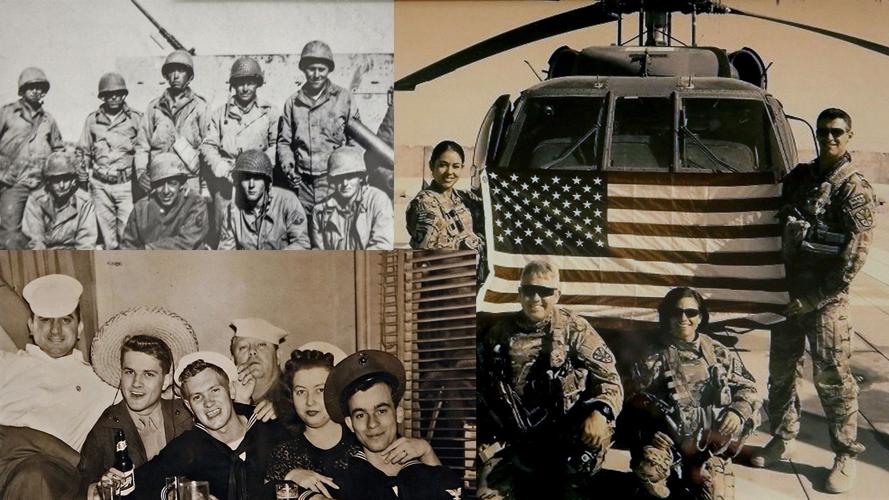
The Arizona Daily Star highlighted the stories of 50 local veterans in the weeks leading up to Veterans Day 2015. We offer them once again.
- By Kristen Cook Arizona Daily Star
- Updated
Editor’s Note: The Star received 265 nominations for local veterans through an online nomination form. Stories featured in the series include those veterans. Here are the names of the veterans featured in “They Served With Honor” as well as those nominated:
Stan Elbie
Sam Cohen
Thomas Coleman
John “Jack” Dyke
Mary Congdon (Mary Stirling)
Craig Sawyer
Edward Chan
Teddy DeSouza
Wayne L. Petter
Helen Anderson Glass
John Rodriguez
Juan Herraras Jaurigue
Mary Hill
Chris Guerrero
Fred Taylor
James Britt
Gerald Thomas Garrison
Roy Ludlow
Dale Hughes
Brett Rustand
Valentino Cruz
William “Bill” Peel
David Alegria
Bill Deyoe
Mel Giller
Justin Merriman
Art Schaefer
David Arellano
James Glaze
Bill LaBar
Harry Connors
Luke Burgan
Robert S. Putnam
Thomas Rankin
Daisy Gates
Lupecelia Leon
Harper Coleman
John Moore
Sam Brokenshire
John Lochert
Leo Lochert
John Lloyd Rhodes
Benjamin Arellano
Charles Wohlleb
Charles Deibel
Tom Parker
Loren Baber
Michael Matthews
Randolfo “Randy” V. Lopez
Rick Villegas
Frank Mendez
James Files
Ross Donaghay II
Jesus Zapata
Patricia Smith
Jeanne Rogers
Al “Harpo” Celaya
Cliff Wade
Rafael Samay
Melvin Giller
Mary Jane Hill
Nelda Barnes
Gopal Khalsa
Alan Lurie
Robert Barnett
Robert Spencer
Edward Kulik
Curtis Layton
Lyman Threet
Marion “Smitty” Smith
Melvin Morgan
Carl M. Shumway
Charles McClain
George McGee
Earl Liston
Samuel Duncan
Richard Love
Bruce Seymour
John W. Auvenshine
Elmer Nicholson
Max Warner
Myers B. Rosenbloom
Ebb Daughtery
Richard H Brown
John B. Janicek
Byron Burns
William Mesa
Robert B. Johnson
Gregory Gomez
Jeffrey Eighmy
Brendan Phibbs
Harold Koobs
John Fedor
David Morrison Hardy Jr.
Edward V. Lovio
Milton Dietz
Henry Burke
Eugene Metcalfe
Eugene Scott
Harry Laughman
Roy Meyer
Gerry Meyer
Aaron P. Raita
Mac Edward McQuillen
Glen Meunier
Michael Johnston
Steve Pockuba
Glen Hughes
Arthur R. Voss
Mary Smith
Leonard Kraft
George J. Popovich
John Chastain
Charlie Ruggles
Steve Martinez
Ken Laue
Raymond Stroehlein
Gwendolyn Clymer Niemi
Joe Ford
Herbert Mendoza
Onofre Tafoya
David Stone
George Romontio
Gilbert Romero
Donald Beery
Tom Ketchum
John D. Kaperka
Richard Bushong
David Bertagnoli
John W. “Johnny” Gibson
Joe Ladensack
Edward H. Nelson
Colonel Robert B. Beaumont
Samuel C. Pacheco
Paul Cartter
Debbie Seager
Robert Miller
Lawrence Casper
Thomas Duddleston Sr.
William Reede
John Wickham
Jesse DeVaney
Thomas Drew
Andy Anzanos
Jose E. Vega
Kenneth Eckle
Norman G. Benson
Gordon Thorstad
David G. Lucas
Larry Brimm
James Redmond
Joseph Nichols
Antonio “Tony” Valdez
Frank Soto
Robert Sexton, M.D.
Gene Forsyther
Robert De More
Glenn Perry
Al Stockellburg
Joseph Dogoli
Chris Christenson
Wynn Freedman
Thomas Storey
Ray Alfred Fischella
William J. Orscher
Edgar Harrell
Homer “Ed” Adams
Dan Gipple
Anthony K. Van Reusen
Charles Lagneaux
Michael Lazares
Dick Palmer
Donald Gibbons
Richard Pfaff
Clarence Burgan
Don Dingee
Carl Beck
Walter Ram
James R. Huerta
Sam Duncan
Charles Wohlleb
Henry A. Stewart
Don Childs
Clarke Duncan
Ralph A. Grant
Richard Edwards
David Crocker
Harry R. Erickson
Tracy Sparby
Sheldon Coudray
Diana Thacker
Fred W. Astroth
Ken Collins
Hjordis Sherry
Gary Blomstrom
Paul R. Gale
Lance Gillingham
Alexander R. Martinez
Doris E. Manning
Charles Gutekunst
Edward Chan
Harold Dees
Benjamin Ricardo
Solorzano Vivar
Nathan Shapiro
James McDowell
Jack P. Marshall
Ron Sable
Mike Rosenbloom
William Greenberg
Donald Fitzgerald
W.B. Punt
Earnest Parks
Augusto Cesar Gomez Sandino
Don Goldner
Jim Wagner
William Ersthaler
Patrick Franco
Louis Iannacone
Jayme Berg
William “Bill” Alviar
Frank Zunno
Virginia Baber
Roger Johnson
Bernard Reinhart
Donald W. Manke
Robert Ashby
Cloud Funaro
Estella Curry
Calvin D. Pigman
Henry G. Johnson
Jack U. Goodhart
Maurice Storch
Joe Bailey
Thomas Hunt
Leo Silverstein
Donald N. Olson
James Purdue
Ken Weihl
David Morales
Earnest Cotton
Donald Collins
Dennis G. Dierking
Donald Shepperd
Chuck Heathman
James W. Waln
Raymond Romero
Tim Clark
Rodolfo Bejarano
Javier Ledesma
Earl Scott
- By Kristen Cook Arizona Daily Star
- Updated
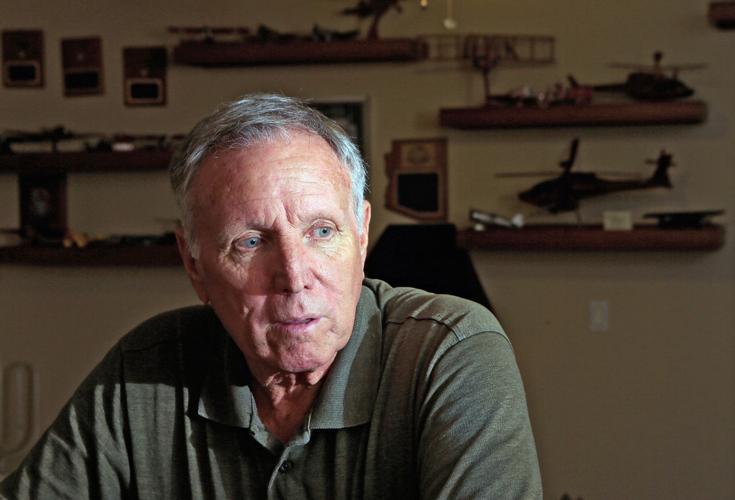
Johnny Thompson considers himself lucky.
The 68-year-old suffers blackouts and his short-term memory is shot.
Double vision plagues him. Sometimes he struggles to speak. “I lose words real bad,” he says.
On a good day, he can walk with a slight limp. On a bad one, he can’t take a step without the safety and security of a walker.
He served three tours of duty in Vietnam and each earned him a Purple Heart. He still carries a steel bullet — an armor-piercing round — in a spot so precariously close to the left vertebral artery and his spine that a doctor warned him to never be more than 40 minutes from a hospital.
This guy? Lucky?
“I still feel like the most blessed person in the world,” says Thompson.
Because, of course, he came home.
The veteran counts, among his blessings, a strong faith in God, three children — who all live within 15 minutes of his Marana home — nine grandchildren and his wife of 47 years, Gay. He might pick up his cellphone and not remember whom he wanted to call, but he can describe the day he first laid eyes on her, wearing a polka-dot dress, at a Texas church gathering when they were teenagers.
 |
You’d never know about Thompson’s problems just by looking at him. He’s friendly, gracious and has a mischievous sense of humor.
“He’s dedicated, he’s compassionate — he’s just a good man,” says Andrew Bowers, an Army veteran who met Thompson through their church. “His heart shines through. He’s got a smile on his face all the time. He’s positive, he’s optimistic. Those ailments don’t hold him back. He has his bad days guaranteed — he doesn’t let it stop him.”
He did. Once.
At the darkest time of his life, Thompson admits he was suicidal, so depressed he could only sit on the couch. His body was wracked with seizures, and his memory and speech kept failing him.
A mistaken Alzheimer’s diagnosis at age 41 had him living his life in one-to-two-year increments. Now doctors know traumatic brain injury, coupled with the side effects of medications, caused his problems.
Despite his injuries, Thompson spent nearly three decades in the Army, assigned to several different units including Special Forces, and rose to the rank of chief warrant officer 4. Even in retirement, he’s dedicated to the military — and more specifically, those who served in it.
People come to Thompson, asking him to find out about their dads or their uncles or their grandfathers who have died. They want him to fill in the blanks because veterans, back in the day, just didn’t talk about what happened during war.
That uncommunicativeness coupled with a 1973 fire at the U.S. National Personnel Records Center in a Missouri suburb that wiped out millions of official military personnel records, make it even harder for relatives to research backgrounds.
The Thompsons scour the Internet, uncovering what they can. When they discover a veteran earned a medal, Johnny will track down a replacement for the family. He types up histories while Gay has even re-created embroidered naval ship patches.
 |
The two also curate traveling military history displays that have been displayed across the state at conventions and churches.
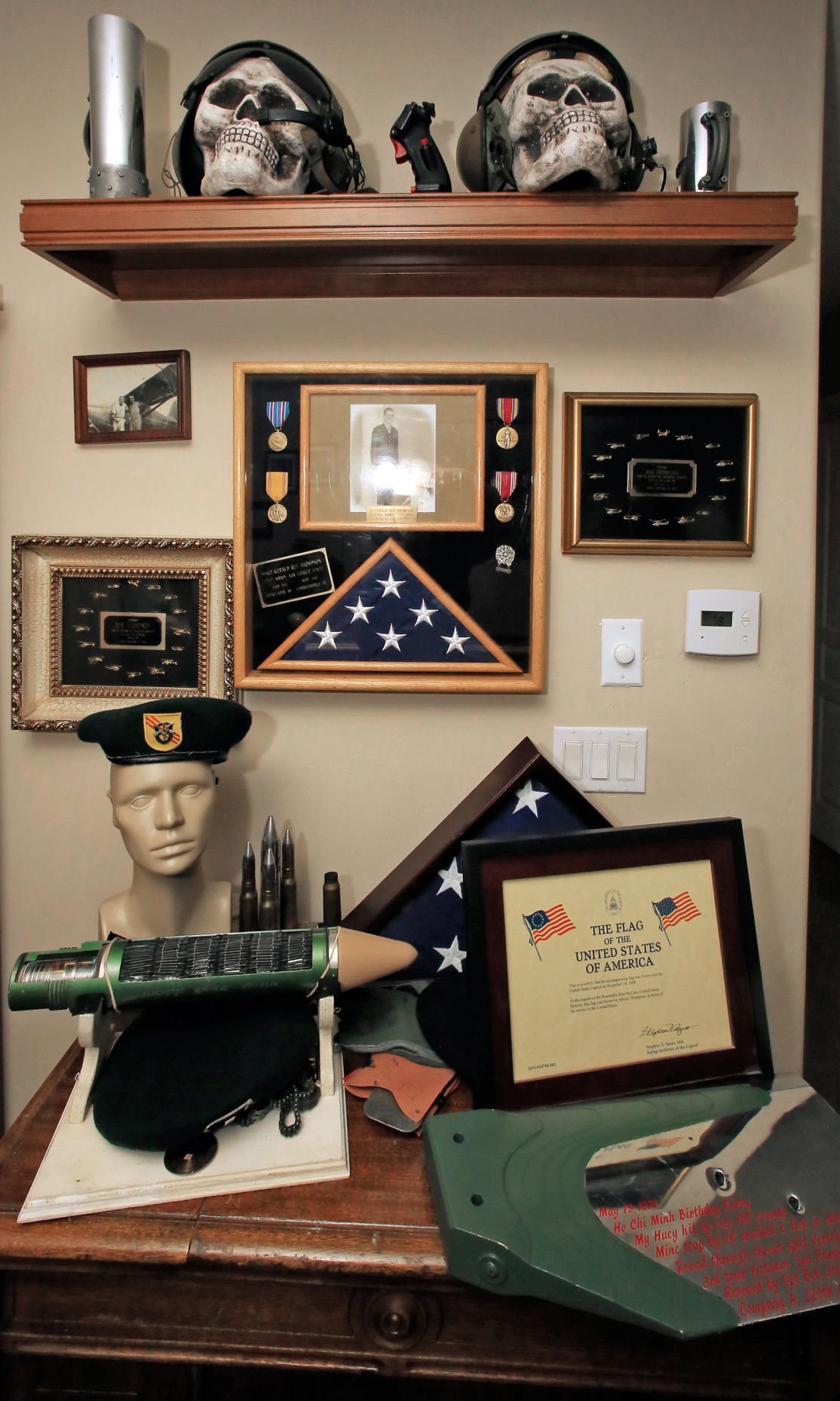
Some of Thompson’s Vietnam War mementos are on display now in Tempe (see box at upper right). Thompson got the idea when he took some keepsakes to the local veterans hospital about four years ago. He watched fellow patients’ eyes light up as he passed around a disarmed flechette warhead.
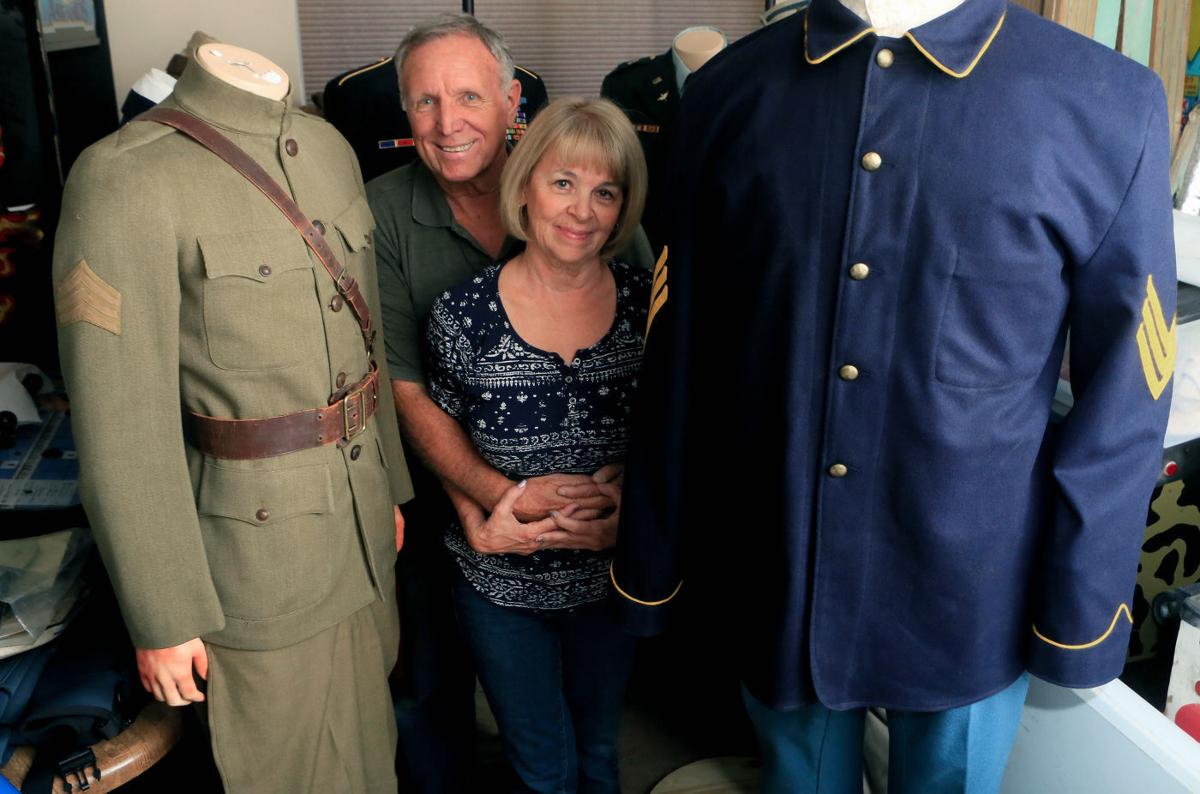
He’s managed to acquire so much stuff that three of the six bedrooms in Thompson’s house are devoted to military memorabilia. Even the one dedicated to the grandkids’ sleepovers is overrun with documents and uniforms.
Down the hall from the upstairs bedrooms, framed rubbings from the Vietnam Veterans Memorial Wall decorate a sitting room.
Thompson chokes up when he points out the names belonging to two soldiers in his unit.
“The one thing you can’t stand about war is the people you can’t save,” he says, softly. “It’s the ones you lose — they’re the strongest memories you have.”
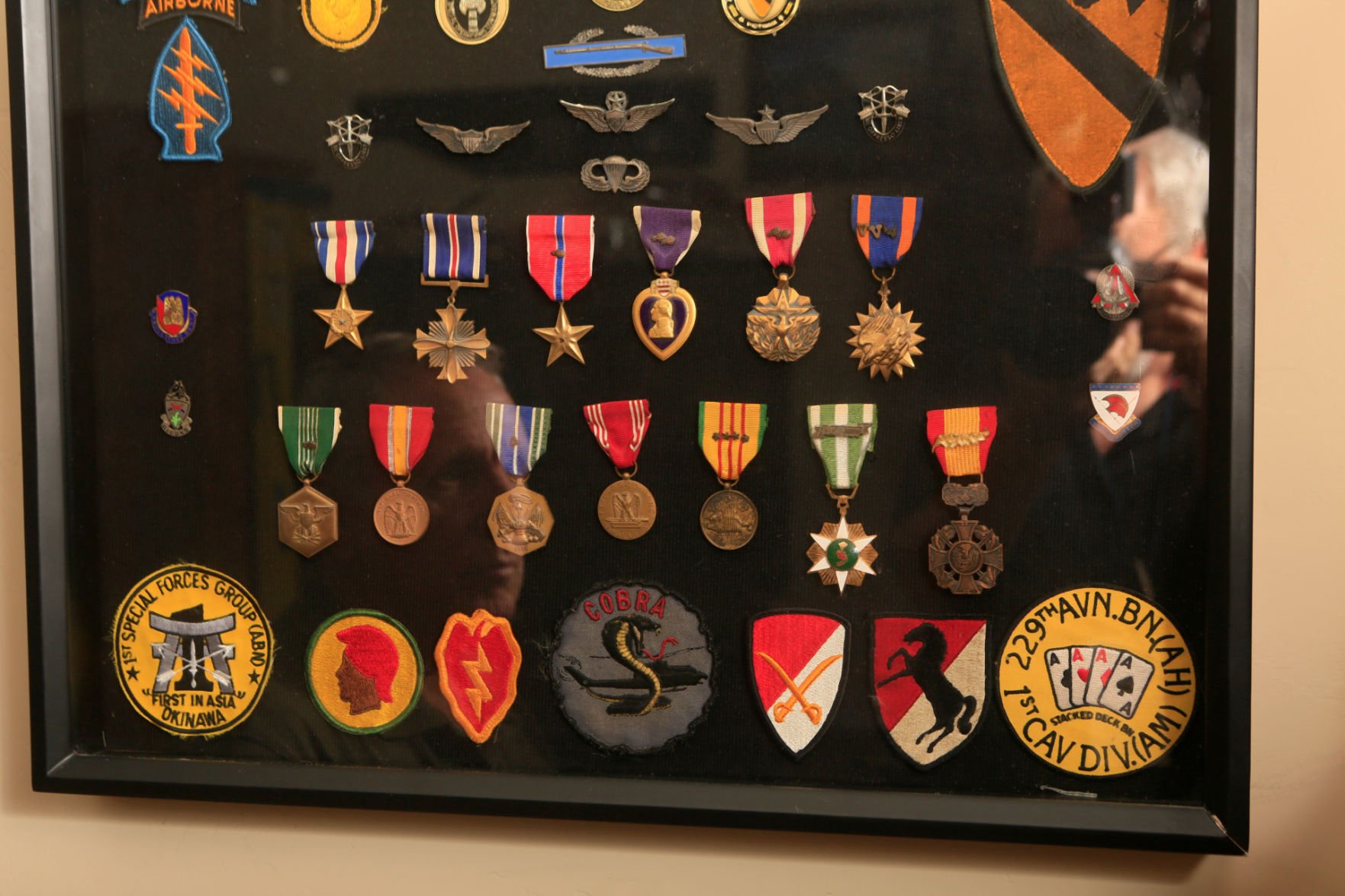
Thompson’s own medals and ribbons fill a shadow box hanging on the wall, but he won’t talk about those.
“A lot of people don’t get anything when they should have,” he says.
The son of an Army Air Corps experimental test pilot who helped design helicopters, Thompson was just 16 when he enlisted. A doctor realized he was underage and blew the whistle on him. Undaunted, Thompson enlisted again the next year.
After he graduated from flight school, and even though he had a wife and young kids, Thompson volunteered to go to Vietnam.
“I could rescue people,” he says. “I knew I could help people.”
The master helicopter pilot ended up serving three tours of duty in Vietnam and though the United States’ role was controversial, Thompson had and still has no qualms.
 |
“Free the oppressed. I believe that with all my heart.”
His third and final tour in Vietnam was the worst.
“We went over with 83, 84 guys,” he says. “Only 22 returned home.”
Thompson himself barely made it.
He remembers the mission he flew on May 19, 1971, Ho Chi Minh’s birthday and two days after his own. It was one he’d flown solo many times before, but on this occasion, it was in a new Huey helicopter — and with a co-pilot. Having Capt. Bob Jorgensen along with him that day saved his life.
“I was down low, looking for footprints,” Thompson recalls. He was hanging out the door of the chopper, scouting for signs of the enemy when more than 150 bullets peppered the helicopter while mines exploded from below.
“I was just shooting blood out of my neck,” Thompson says. “When I got hit, I lost control of the Huey. It was straight up in the air.”
Two bullets sliced through Thompson’s throat, hitting vocal cords and his larynx and almost completely splitting a vertebrae. Discs in his back were crushed from the explosions beneath the chopper.
Thompson passed through six or seven hospitals as he made his way back home. “Everywhere I went, everyone said, ‘How are you still alive?’”
Thompson does what he can to make every minute count, which is why he spends so much time and effort on researching fellow veterans’ military histories.
Even with Gay’s help, it’s painstaking work. “It takes us a month what other people could do in two days.”
Thompson might spend four or five hours researching and writing what he learns. But the next day, that knowledge is lost. Completely wiped from his memory. He has to read over everything and reacquaint himself with the previous day’s work.
It’s frustrating, yes, Thompson admits. But it doesn’t deter him one bit.
“I’m going to keep going until I don’t know I’m doing it any more.”
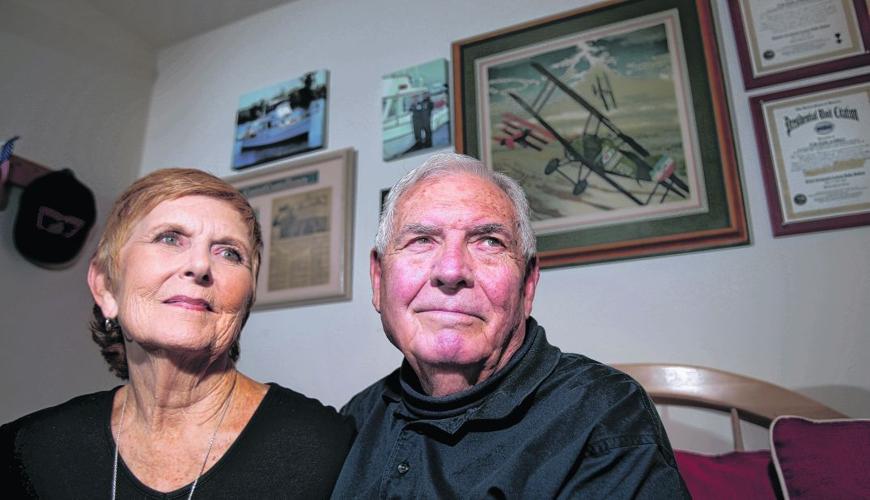
He was on the path to becoming a teacher, but the military draft in 1948 changed Loren Baber’s life.
But instead of returning to teaching 40 years after he got back from the Korean War, Baber, 85, took on a new endeavor when he and his wife joined the Coast Guard Auxiliary.
After graduating from high school in Nebraska in 1948, he enrolled in Wayne State Teachers’ College, hoping to be a coach.
As he was preparing to leave for school, his plans changed on July 20, when President Truman enacted a peacetime draft.
“I was a college boy, which made me Class 1-A. I was to be called up in 30 days,” he said. Baber explained that in those days, “farm boys” were classified as 4-F and were often the last to go, as they needed to stay home and tend to the family business.
As soon as he knew he was getting called up, he went to the recruiting office so he could chose his branch, as opposed to be assigned to one.
 |
The Air Force quota was full, so he joined the Army at 18 years old.
He qualified for Officer Candidate School and headed to Kansas for his training.
“Because of the draft, they had more people than beds so I had to wait a little while to get in,” he said. He left candidate school after having completed the Infantry Advanced Leader Course.
In June 1950, the Korean War began and he received orders to go to California, which meant he was headed to Korea.
He arrived in November and spent Christmas Eve on a ship off the coast of Incheon, near Seoul getting ready to go ashore.
“The captain came over the loudspeaker and called our craft back,” Baber said. “Seoul had fallen.”
He was discharged in 1952 and set up shop in Iowa as a photographer.
In 1968, he married Virginia and purchased an insurance business before they started a family.
Fifteen years later, after everyone was grown they signed onto the Coast Guard Auxiliary using their own boat for over a decade for search-and-rescue work and to patrol.
“It became a career we really loved,” he said.
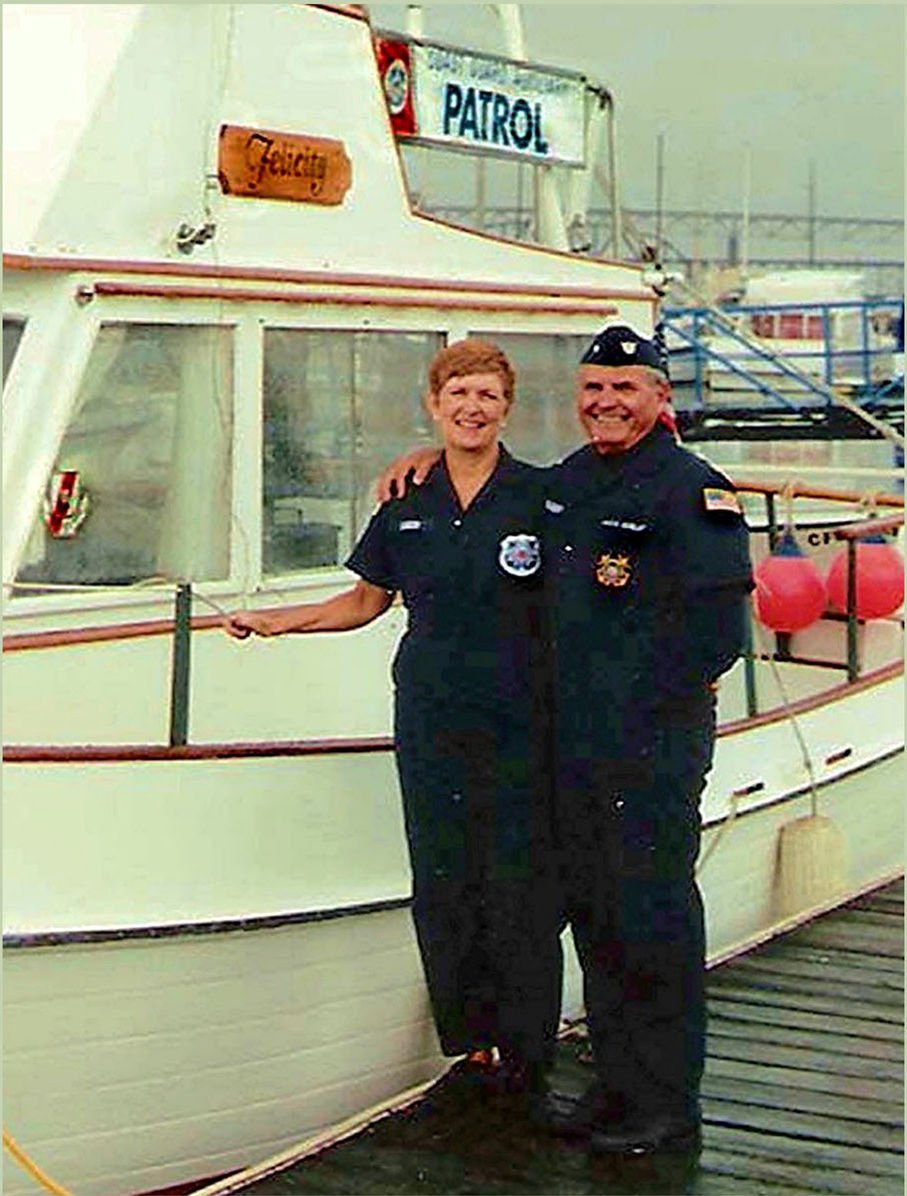 |
They spent about a year qualifying to use their own boat, and soon they were cruising the California Delta as an official government vessel.
“Once we signed on for our weekend patrols, the boat became the property of the Coast Guard and we were at their beck and call,” said Virginia.
They spent their weekends on their 32-foot boat with two crew members helping stranded boaters and assisting with search-and-rescue operations.
“I was brought up doing service for others,” Virginia, 73, said. “My mother always told me, ‘you have two hands; one is to help yourself, one is to help someone else.’”
They retired from the Coast Guard Auxiliary in 1995 and moved to Tucson, selling the boat before they left.
Although Loren speaks excitedly of his time in the Army and they both miss their days of patrolling the water, they’ve both taken on different types of volunteer work, continuing to help others as they’ve done their whole lives.
- By Patrick McNamara Arizona Daily Star
- Updated
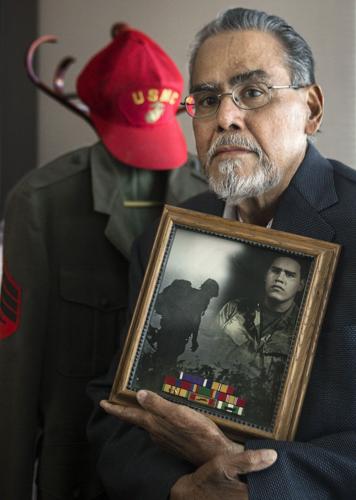
Vietnam is frequently on Tucson attorney Randolfo “Randy” Lopez’s mind.
How couldn’t it be? Having dropped out of high school, he spent some of his most formative years there as a Marine fighting for his country.
“I was just two weeks into my 18th birthday and I’m in Vietnam,” Lopez said.
Even now, certain sights, sounds, smells and weather conditions can spark those memories.
The humidity, in particular, makes Lopez think of Vietnam.
When he starts to talk about his experiences, you understand why.
“When you’re in battle, your adrenaline flows and you sweat,” Lopez said. “And the first thing you remember is how thirsty you are.”
That’s what happened to Lopez and his Marine compatriots in early 1969 a part of a major offensive called Operation Dewey Canyon.
U.S. forces were positioned near the DMV in an effort to keep the flow of troops and materiel from flooding into the south.
After more than 50 days of fighting, the operation was considered a tactical victory for the United States. But the costs were immense. More than 130 U.S. Marines were killed, and nearly 1,000 were injured.
“I still have memories of this,” Lopez said. “That was a battle scene of battle scenes.”
 |
He remembers rushing down steep canyon walls with other Marines to aid another company that had been ambushed. Dead and wounded Marines and North Vietnamese forces lay across the canyon floor.
“What we had to do was get the the dead and injured out,” he said.
Lopez said he helped drag a dead Marine back up the steep slope, inch by inch, pulling the fallen man by the belt, grabbing onto tree branches and roots and anything he could find for leverage.
It took nearly 12 hours to reach to top of the mountain, fallen colleague in tow.
After two tours in the war, Lopez returned to Tucson and started working and going to school.
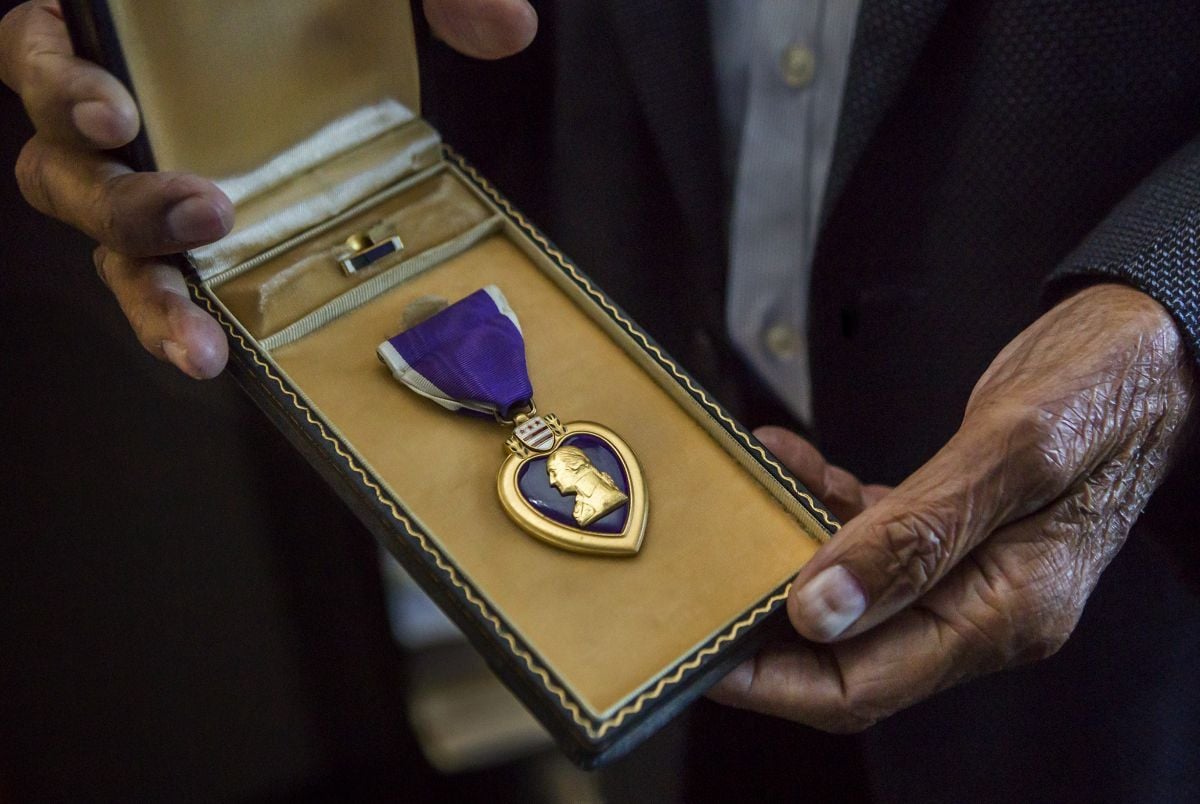
He earned a GED while still in the Marines and used his GI Bill benefits to help pay the costs of tuition at the University of Arizona. Even after graduating, Lopez said he wasn’t sure what he would do.
One day, while working as an auto mechanic, he met someone who would change his life.
 |
“I met an attorney who came in the shop,” Lopez said. They talked, and the man suggested Lopez consider law school.
That man was Armand Salese, a Tucson lawyer who fought for civil rights and was known for taking on cases representing the underdog. He died in 2013.
Now 65, Lopez has been practicing law since 1985.
For his final law school project, Lopez chose a topic he knew well.
He wrote about post-traumatic stress disorder in Vietnam vets as a claim for insanity defenses.
“It was a labor of love for me, being a Vietnam veteran and seeing how PTSD had affected people,” Lopez said.
- By Ethan McSweeney For the Arizona Daily Star
- Updated
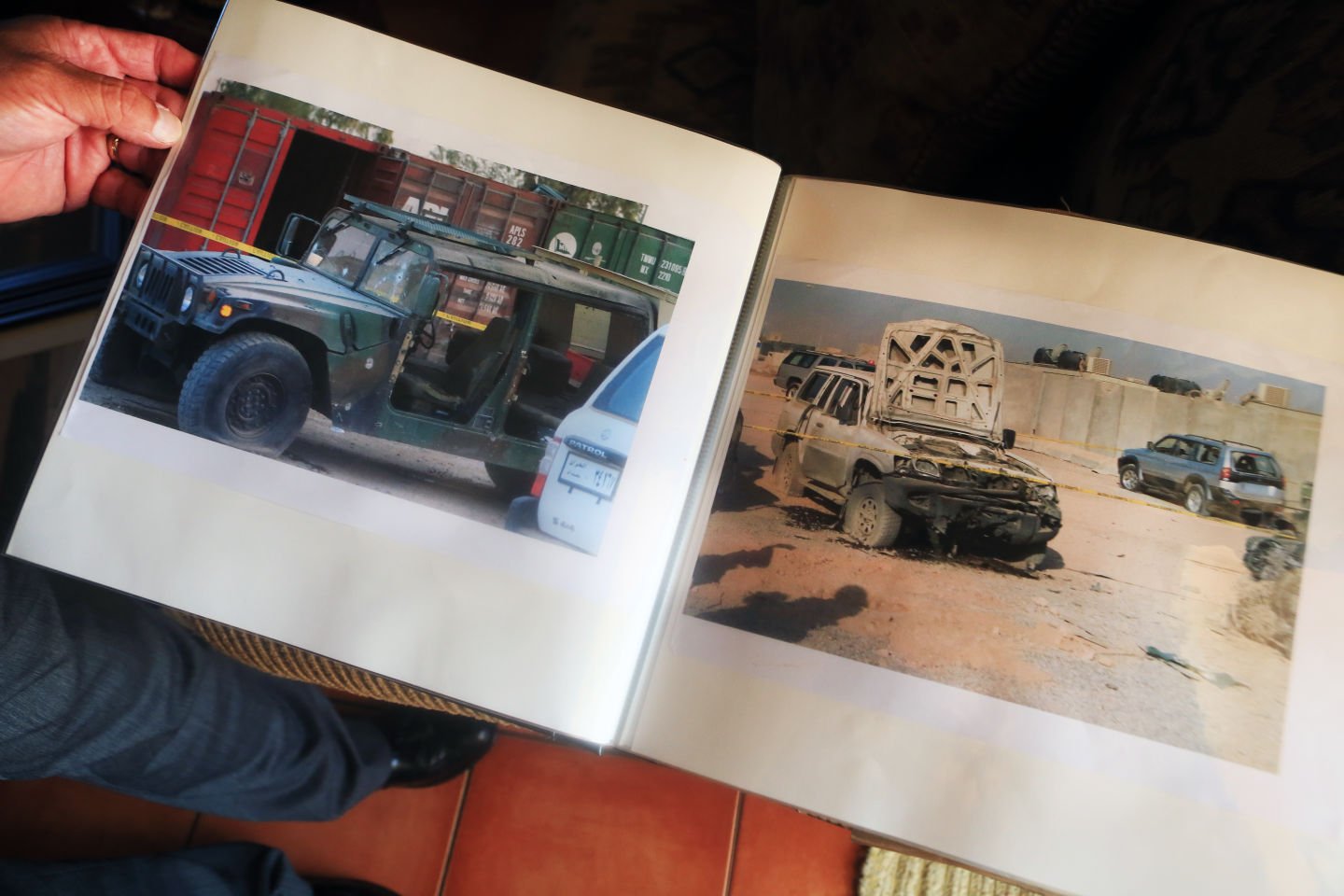
Rick Villegas stood outside in the August heat on a base north of Baghdad when things began exploding around him.
Four mortar rounds fell near Villegas, destroying vehicles and blowing out windows. His heart racing, the Army National Guardsman ran for cover.
“You don’t think of it until after it happens, how scary it was,” Villegas, 65, said. “It just wasn’t my time to die.”
Attacks from insurgents weren’t uncommon on Villegas’ base in 2004 Iraq, he said, but it was a close call for him.
“We were getting hit with rockets and mortars constantly and people got killed,” he said. “Unfortunately, that’s what happens in combat.”
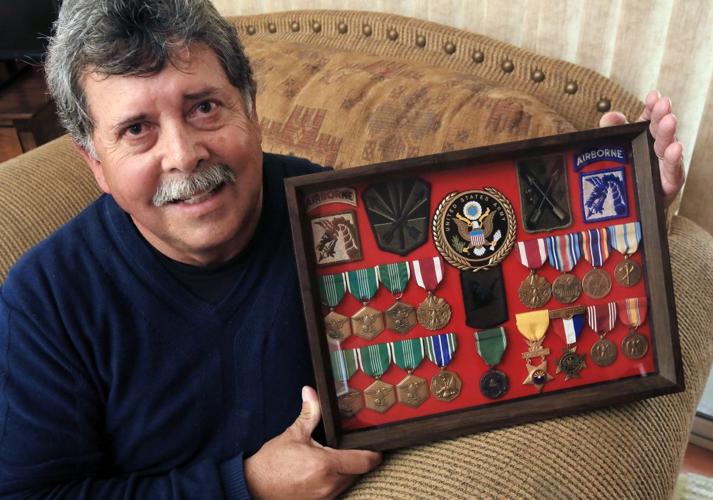
The Tucson native joined the Army National Guard in 1971 at the age of 20, following in the footsteps of his father, who served in the Guard and fought during World War II.
 |
After serving in the National Guard for more than three decades without being deployed to a combat zone, Villegas learned over the phone in late 2003 that he was going to be sent to Iraq. An officer told him that he was needed for his background in the military police.
Fifty-three years old when he went to Iraq, Villegas was much older than most of the soldiers he served alongside. While he served in a logistical role in the war, the position wasn’t easy for him.
“Iraq was very hard at my age, but I felt good that I was a soldier on the ground like everybody else,” he said.
 |
He was stationed at a base in the city of Balad, about 50 miles north of Baghdad, where he was in charge of tents and housing for Marines and soldiers stationed on the base, ensuring they all had a place to sleep.
Driving through Baghdad and being on a base that was frequently attacked, his commander told him to stay alert, “keeping his stinger out” like a scorpion, Villegas said.
Back home in Tucson, his wife, Gloria Villegas, worried about him. “It was stressful, because on the news they had all the reports of bombings over there,” she said.
Gloria Villegas said she would have to turn off the news when reports from Iraq came in. Villegas would send her emails and calls after attacks and other major events to assure her he was OK.
 |
He came home from Iraq in late 2004 and retired from the National Guard in October 2006.
“Adjusting back to our world was hard for him and it was hard for me because I didn’t know what to do,” Gloria Villegas said.
Villegas battled health issues since returning, including surgery complications and cancer. He’s been going to back and forth from the VA hospital for appointments and treatments.
Villegas said, though, that he’s happy he got the chance to serve his country in Iraq and serve in the National Guard for more than 35 years.
“Looking at all these years of service I put in,” he said, “I was just proud to be an American soldier.”
- By David J. Del Grande For the Arizona Daily Star
- Updated
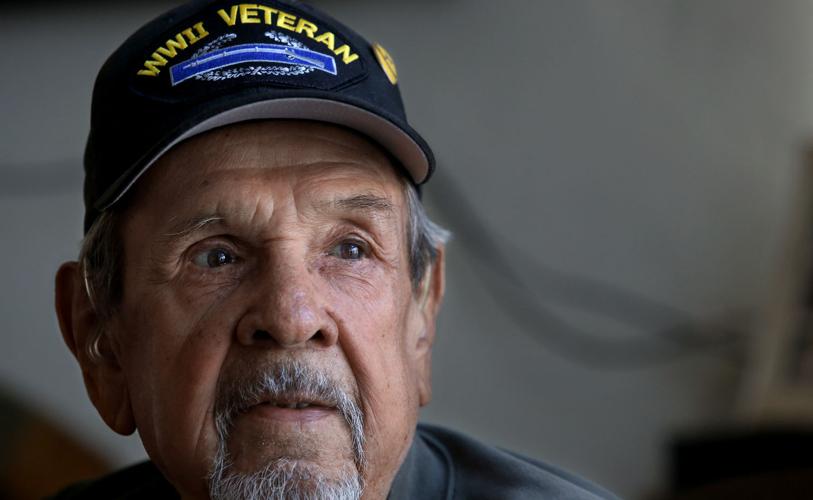
Attending annual reunions has helped Army veteran Frank Mendez learn more about the POWs he helped rescue from a Japanese internment camp as well as cope with his memories.
During the daring rescue at the University of Santo Tomas, Mendez’s small detachment went behind enemy lines in order to save American prisoners facing execution, he said. And considering the odds, Mendez and many others believed they would not get out alive.
“I considered it to be a suicide mission because we were a small force,” Mendez said. “And I wasn’t the only one; several of the boys thought that, too.”
Like many soldiers, Mendez, 92, has no regrets and remains humble about his time in the service.
Although Mendez was frightened, that assignment was business as usual, he says now with a warm laugh. “It was just another mission.”
Mendez was born and raised in Tucson, and with the nation slowly recovering from the Great Depression, he enlisted in the Army on Aug. 5, 1940, for financial reasons.
“Times were pretty hard and I came from a big family,” he said.
So before the U.S. entered WWII, Mendez became a soldier and persuaded a neighborhood friend to enlist with him. The two men fought side by side throughout the war and were both wounded during a battle on the streets of Manila.
He served in the 1st Cavalry Division and went through basic training at Fort Bliss, in El Paso.
Upon deployment, Mendez’s trip took about 30 days because the single-gun ship had to zigzag its way through warring seas without an escort.
The first stop was Australia, then New Guinea and eventually many hard fought battles throughout multiple Philippine cities, Mendez said.
When he heard a rescue mission in Manila was next, Mendez knew his small troop was attacking about 20,000 Japanese troops head-on.
And if they were met with any type of a counterattack, both the cavalry and prisoners would have died, he said.
Even though the troops shared their rations with the POWs, Mendez didn’t consider himself worthy of praise. And Mendez explained to the young prisoners the longstanding sacrifice of their family members was the singular heroic act.
“We’re not the heroes, your parents were,” Mendez said, “They were doing without to keep you healthy.”
One of the POWs was Liz Irvine, who wrote about her experience in “Surviving the Rising Sun.” Mendez has remained in contact with Irvine since that evening, he said.
Laura Mendez, Frank’s wife of 68 years, learns a lot about his time in the service while attending the annual reunions, she said.
“He doesn’t talk much about when he was in action,” she said.
But the memory of seeing emaciated civilians scarred him, she said. Although Frank Mendez is always impressed by the praise he receives, recalling that time still hurts, she added.
The annual gatherings are pleasant, inviting experiences, Laura Mendez added, but time and again her husband insists the survivors themselves deserve all the credit.
“It’s very warm, very nice and the people are very grateful to him,” she said. “They call him a hero, but he’s not happy with that. He calls them the heroes.”
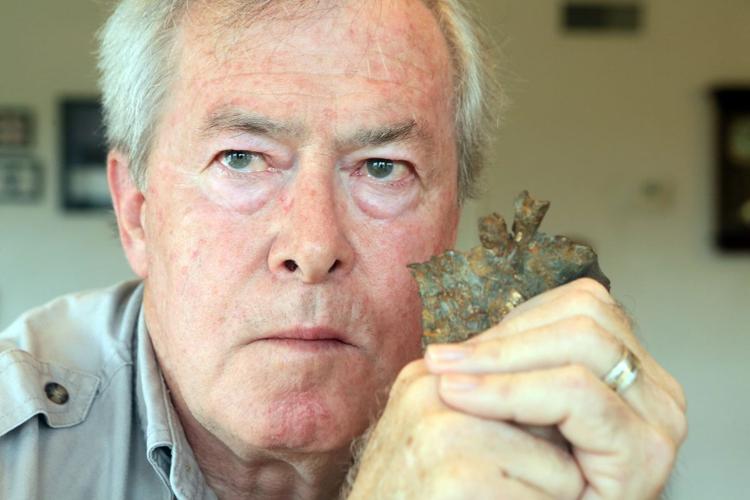
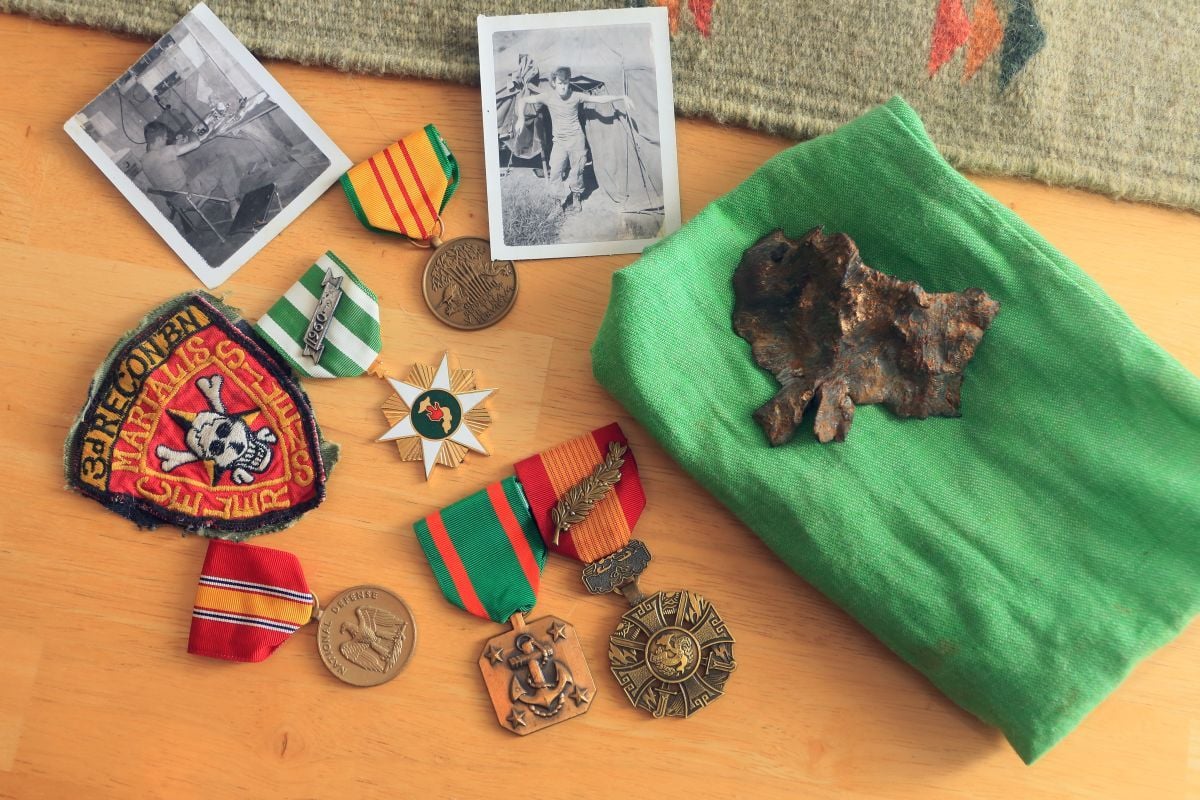
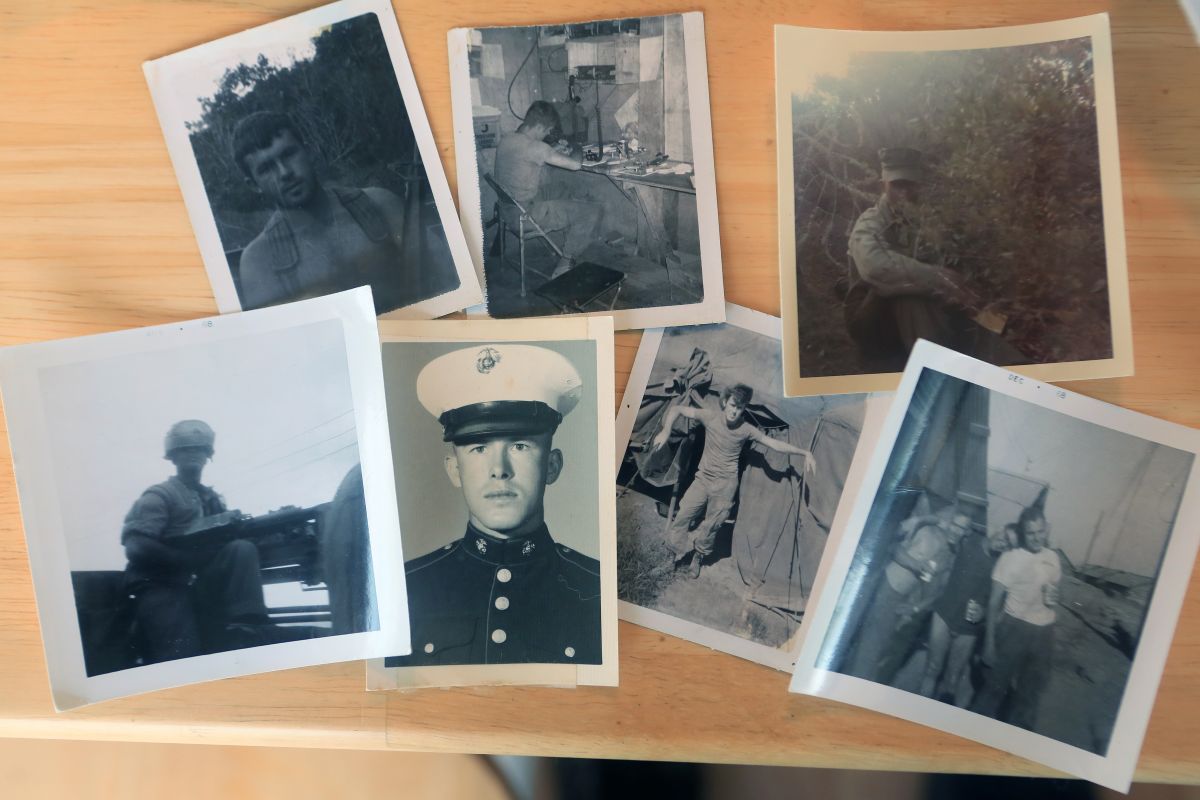
It was July 1968 and Jim Files — an airborne and scuba-qualified reconnaissance Marine — was assigned with fellow Marines to guard a bridge at Cam Lo, Vietnam.
“We would scuba under the bridge,” recalled Files, 69, of Tucson. “We called ourselves the Parafrog Devil Dogs.”
That name, and the pride behind it, reflects the strong, enduring esprit de corps of Files and his comrades in arms.
His path to the Marine Corps and Vietnam might be traced to his days at the University of Illinois, where he studied after his youth and high school years in Barnhill, Illinois.
“The Vietnam War was escalating, and there was a lot of debate about it” among students at the university, Files said. “I was usually the one saying that yes, we belong in Vietnam. We must stop the aggression of communism.”
 |
Those beliefs eventually led to action.
“At the end of my second year at the university, I enlisted in the Marine Corps” in 1966, Files said.
He completed boot camp, infantry training and radio operators school.
“I went to jump school (for parachute training) at Fort Benning, and I also did amphibious recon training,” Files said.
He went to Vietnam at the end of March 1968.
“Our company was doing four-man patrols,” said Files, who served with the Third Force Recon Company. “We went into the bush for a week at a time — scouting for enemy troops and supply dumps.”
Later, after guarding the bridge at Cam Lo with his fellow Parafrog Devil Dogs, it became his role to “keep in communication with recon teams in the bush.”
It sometimes involved going into combat in support of a recon team and engaging in firefights with the enemy.
He survived those firefights, but other experiences left a mark. One of those involved a close friend.
 |
“We had a plan to someday open a combination bookstore, bar and restaurant,” Files said. “Then he got killed.”
Files received an honorable discharge in 1969, returned to the United States, continued his education, and eventually settled into a long career in journalism that took him from Illinois to Colorado, Guam and Arizona.
He met his wife, Meg, in a writing class in 1970, and they were married in 1971.
Meg Files, who is the English and journalism department chair at Pima Community College, nominated her husband for recognition in this series, saying “his experience in Vietnam was influential in shaping his professional and personal life.”
“He had some unique experiences in Vietnam,” she noted. “He said, ‘If you’ve grown up reading certain books, watching certain movies, hearing certain stories, you need the opportunity to know you are brave.’ He is one of the bravest people I know.”
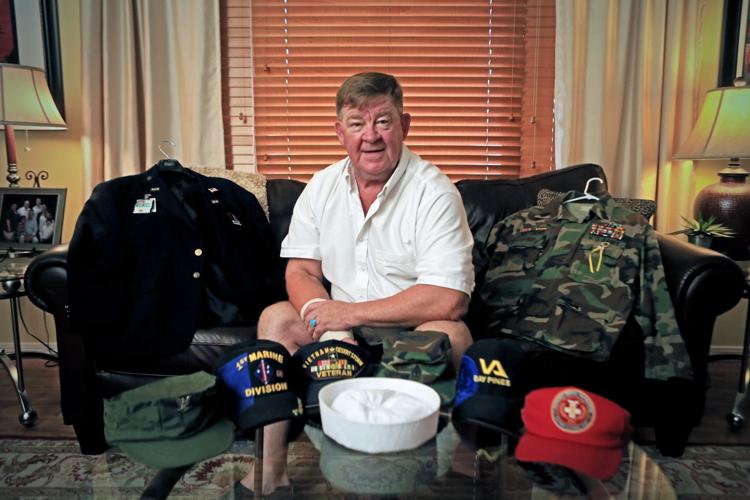
While serving in Vietnam in 1969, Michael Matthews never took his Navy-issued .45-calilber pistol out of its original packaging.
Instead, he checked the pistol into his civilian luggage and used the holster to carry a knife, fork, spoon, and a pair of sunglasses.
“I wanted to serve my country, but I didn’t want to kill anybody,” said Matthews, 67, a devout Catholic since his boyhood in Syracuse, New York.
His faith prohibited him from violence, so he volunteered to work as a medic.
He spent seven months in the jungle alongside Marines, all of whom were younger than 21-year-old Matthews, as they tried to cut supply lines to North Vietnamese forces.
The last six months of his tour were spent in an environment much more in line with his faith.
He worked as a scrub nurse in a hospital “like a MASH unit you’d see on TV,” he said. The hospital treated the wounded, regardless of whether they were “friend or foe.”
“Even if they were wounded prisoners, we took care of them. We didn’t ask ‘name, number, and insurance card, please,’” he said.
He and the other medical personnel came to refer to the unit as a “car wash.” Patients were stripped of their clothing, washed, covered in antibiotics, and readied for the operating room.
Working in the hospital wasn’t without its own risks. In one case, a Vietnamese farmer showed up with a small wound in his chest and the medics cleaned him up for surgery.
“We were just getting ready to cut him to fix the wound in his chest when the X-rays came in. There was a 40-millimeter unexploded mortar round in his chest,” he said.
He helped the doctor carefully remove the mortar with obstetrical forceps covered with rubber tubing. Always one for humor, Matthews joked that he needed a clean pair of underwear after the bomb disposal unit carried away the mortar round.
His aversion to carrying a gun incited some “snide remarks” at the gun range one day. Unbeknownst to his fellow soldiers, Matthews had earned an expert badge with the M-16 rifle. He accepted a $110 bet that he couldn’t hit the target once. He hit it five times.
“I knocked the head off the target, dropped the clip, gave the gun, gave the clip, said ‘thank you,’ and walked away $110 richer,” he said with a laugh.
He left active duty shortly after he returned from Vietnam but served as a scrub nurse in the New York Army National Guard and then the Army Reserve.
In 1990, he served in the Persian Gulf War at a 1,000-bed hospital in Oman designed to treat victims of biological or chemical weapons. The hospital remained empty throughout the war, making his time there rather uneventful.
“All I did was work on my volleyball serve and eat peanut butter and jelly sandwiches,” he said.
He moved to Florida after the war ended and worked as a scrub nurse at a Veterans Affairs hospital.
“I got good at my job and I actually liked going to work,” he said. “The pay wasn’t the best, but I thought I was doing some good.”
“Somebody would come in with a break or a problem and I was part of the solution to fix it and they went out the door cured or fixed or whole. That made me feel good,” he said.
He retired as a scrub nurse in 2008 and moved to Marana.
For the past six years, he has volunteered at the VA hospital in Tucson as a concierge, helping veterans make their way around the hospital. He also is a Eucharistic minister at Our Lady of the Desert Church.
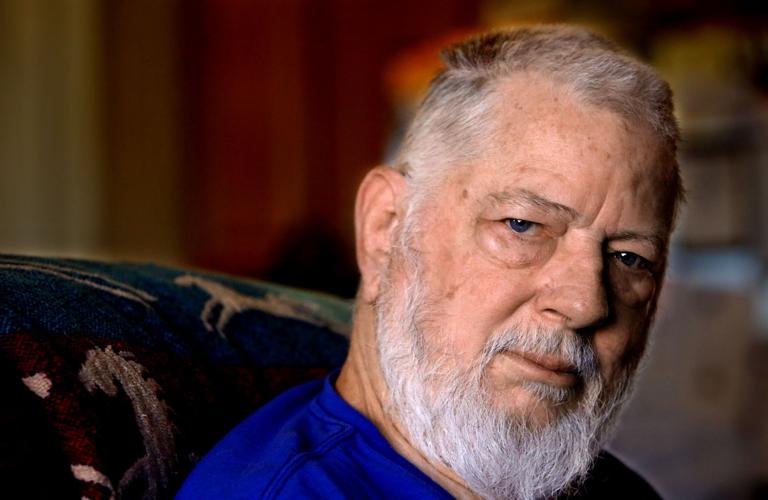
More than four decades have passed since Tom Parker served in Vietnam, but he still feels the impact of his wartime experience.
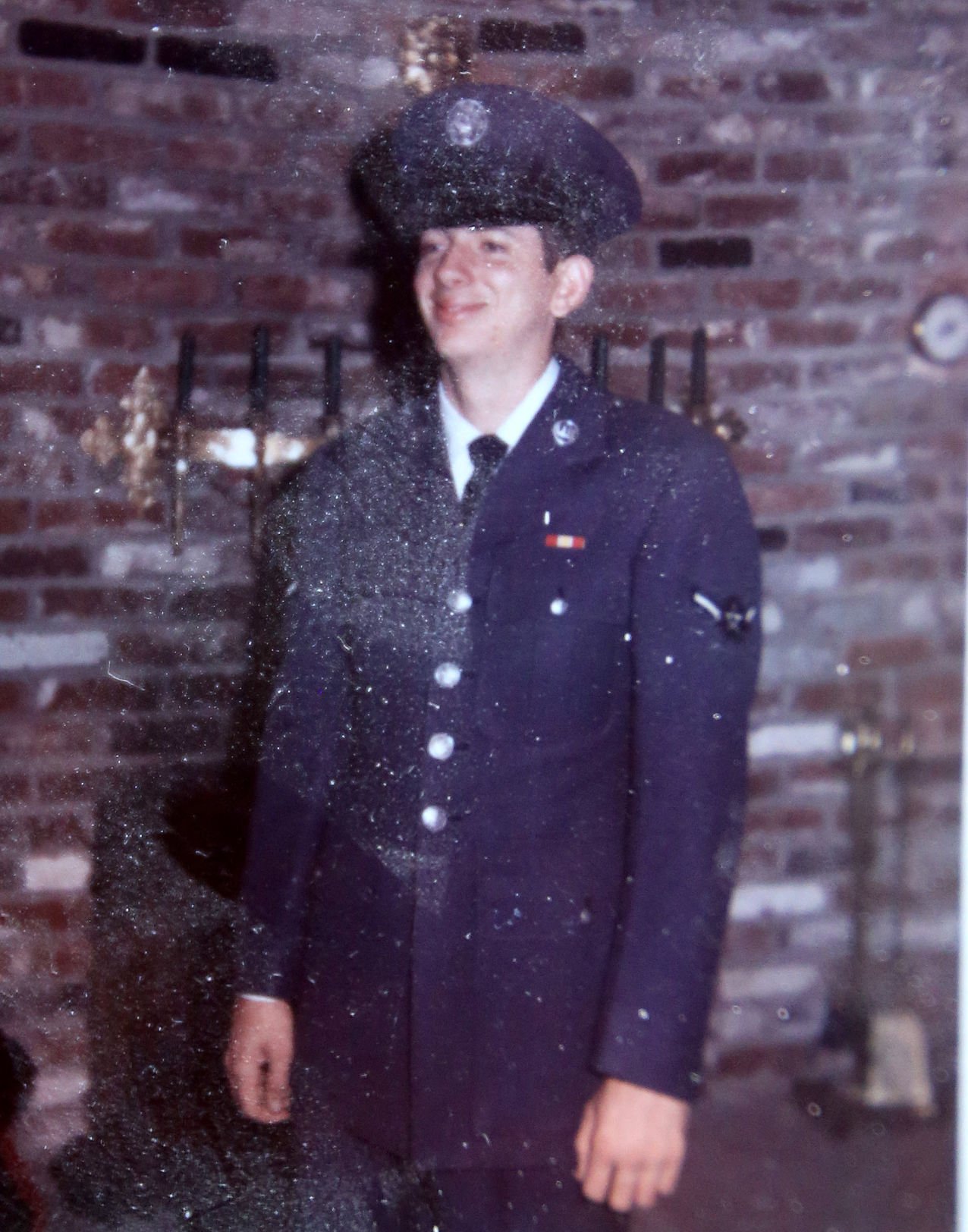
The Air Force Buck Sergeant was sent to Vietnam in 1970, shortly after enlisting as a way to avoid the Army draft and, ironically enough, combat.
Serving in an intelligence role, Parker worked in forward air control, marking targets for fighters with smoke in the air, telling them where to drop bombs. On occasion, he went up in planes as an observer.
He also briefed pilots on what was happening in the area, advising them of where the enemy was and where they could safely land if needed.
“It was a rather pretty place and I always thought if it weren’t for the war it would be an interesting place to go as a tourist,” Parker, now 66, said of Vietnam.
But there was a war and with that came gruesome scenes that did a number on Parker, who to this day suffers from post-traumatic stress disorder.
“When I would go up in the planes, you see dead bodies and things like that, some of the destruction,” Parker recalled. “And because of my job I knew the impact we had — particularly the collateral damage.”
 |
It took Parker 35 years to seek treatment for his symptoms, which included disturbing dreams, anger, anxiety and suicidal thoughts. He felt fortunate to have been pulled aside by two pilots in Vietnam who connected him with a Christian group called the Navigators.
“That’s what kept me out of a lot of the stuff that would have otherwise run my life into the ground,” he said.
Today, thanks to his faith and help from Veterans Affairs, Parker says his PTSD is manageable and he believes the events that occurred happened so he could serve others.
As part of the organization Operation Eternal Freedom, Parker works with current and former service members as well as civilians who suffer from PTSD, sharing coping mechanisms, resources and encouragement through the faith-based program.
“The thing I found is, this whole PTSD thing is more than mental, it wounds the soul. It cuts against the very core of who we are,” Parker said. “To me, we need to go to the one that made us in order to have that heal, and that’s Jesus Christ.”
The challenge, Parker says, is getting those affected to recognize it and seek help. But when they do, Parker is there.
“These guys fought to keep us safe and we need to fight to keep them alive with what they’ve done for us and the price they’ve paid both physically and mentally,” Parker said.
Parker still encourages others to serve their country.
“It gave me a chance to grow up,” he said. “If you don’t know what you want to do, it’s a viable option. It’s a secure environment, you’re fed, you’re clothed, you’re paid, you learn discipline, good work ethic,” he said, “which is something a lot of younger folks may be lacking, and they can learn a skill, too.”
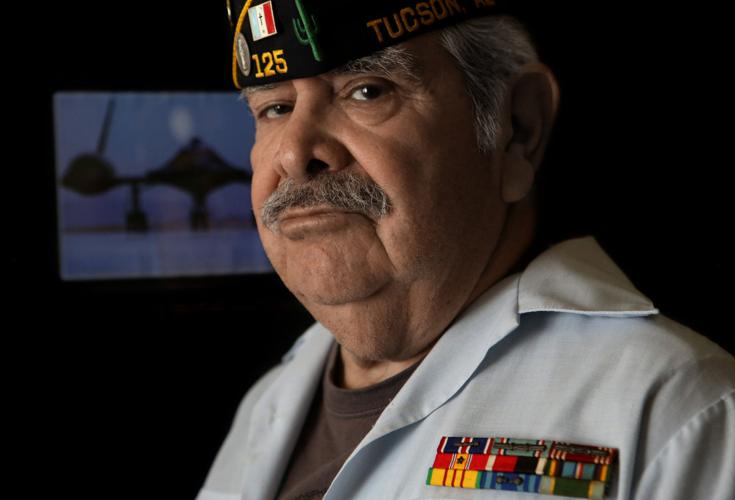
Benjamin Arellano learned the importance of patience and precision in the Air Force as a parachute rigger.
The Tucson High School student left the Old Pascua Yaqui Village at age 17 and joined the Air Force in 1955, and at a young age became responsible for the lives of others piloting and jumping from aircraft.
 |
It was his job to make sure the pilots’ parachutes were folded and packed correctly while flying their training missions from bases in the United States, and then taking care of his comrades abroad, including in the Vietnam War, and then later as a ground crew member of the SR-71 Blackbird spy plane.
In addition to pilots, Arellano’s hands also touched the lives of paratroopers.
While his family remained in the Phillipines, Arellano left Clark Air Base with the 450th Fighter Day Wing to join service men in Vietnam. He served at the Da Nang Air Base 90 days at a time in 1963 and 1964.
“I packed chutes for different outfits in battle,” recalled Arellano, 78, from the living room of his home in the New Pascua Yaqui Reservation, southwest of Tucson. His son, Benjamin Arellano Jr., and his son’s wife, Dolores, proudly sat nearby listening to Arellano share his stories.
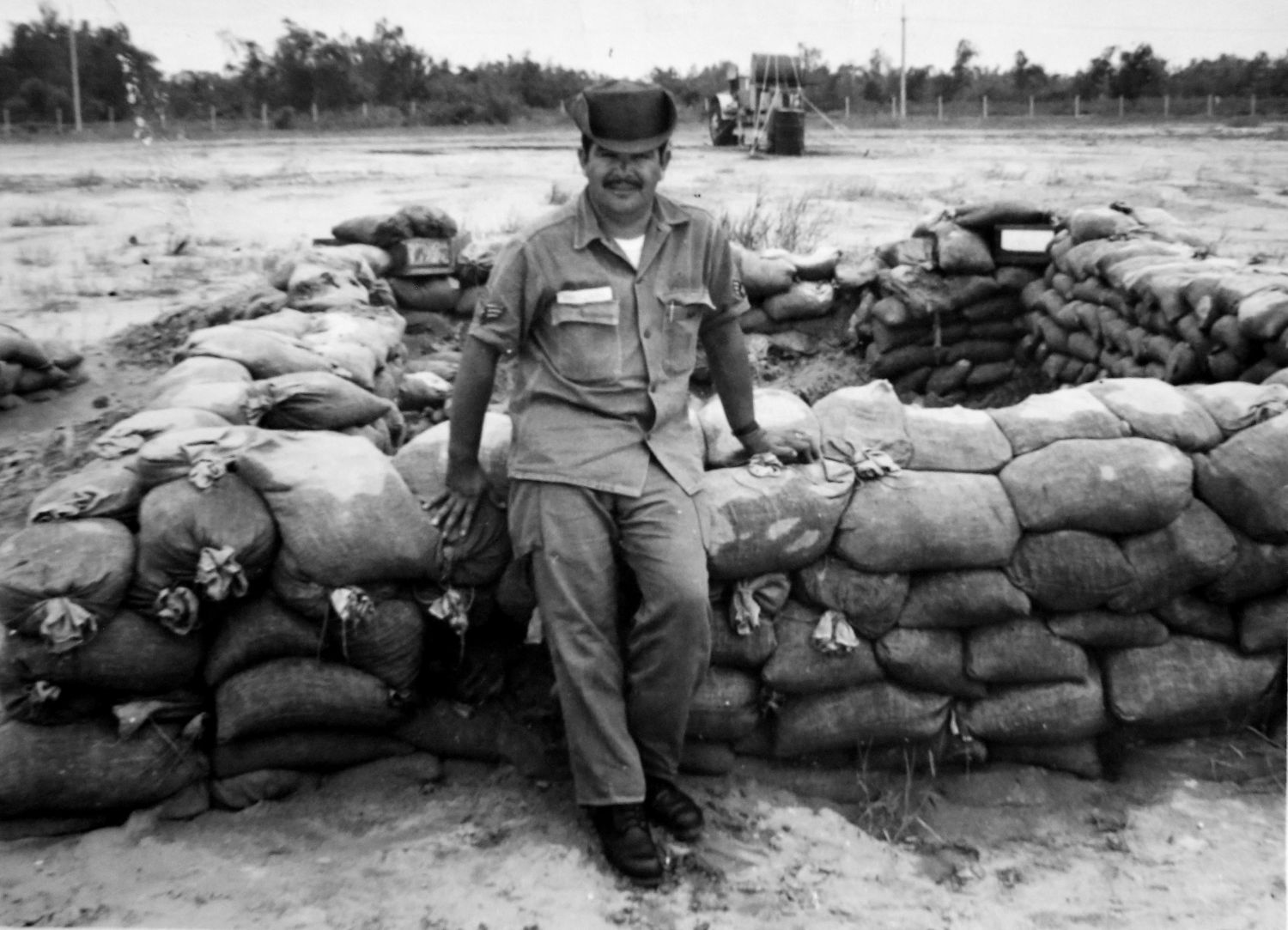 |
“The chutes were for different outfits in battle. There were Army paratroopers and special forces. I packed chutes for up to 60 soldiers. They flew in C-119s — the Flying Boxcar,” said Arellano, recalling the military transport plane.
As a parachute rigger, Arellano learned his training and skill at several bases including Chanute in Rantoul, Illinois; Foster near Victoria, Texas; and Luke in Glendale, Arizona, where he was with the 4510th Combat Crew Training Wing.
In 1966, Arellano and his wife, Juanita, and his two sons left Clark Air Base and returned to the states. Arellano was stationed in Carswell Air Force Base in Fort Worth, Texas. Two years later, Arellano described his assignment to the ground crew for the SR-71 Blackbird as his “pride and joy.” He was sent to Beale Air Force Base near Marysville, California.
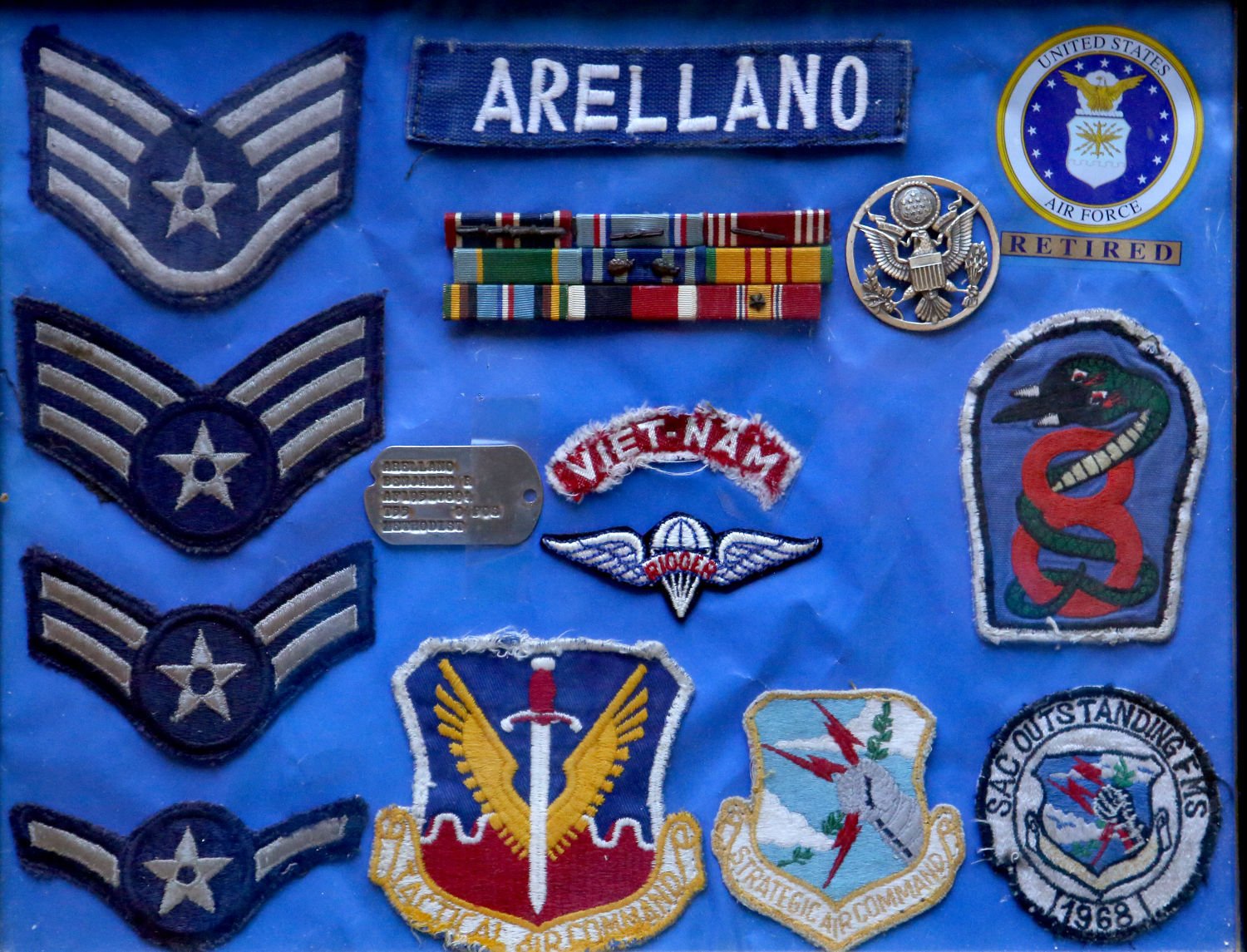 |
For the last 10 years of his military career, Arellano, who retired as a staff sergeant in 1975, packed chutes for the crew and the SR-71 Blackbird, a long-range Mach 3 plus supersonic speed reconnaissance aircraft. He was assigned to the 9th Strategic Reconnaissance Wing.
“I packed three chutes. One was a drag chute, the other was for the pilot’s seat and the navigator’s seat. The pilot’s chute alone took six hours to pack,” recalled Arellano, who received numerous honors for his service, including three Outstanding Unit Citations, Good Conduct medal, two Vietnam Service medals and a National Defense Service with a Bronze Star ribbon.
After his retirement in 1975, Arellano went to work for the Tucson Airport Authority and later for the Pascua Yaqui tribe at the casino.

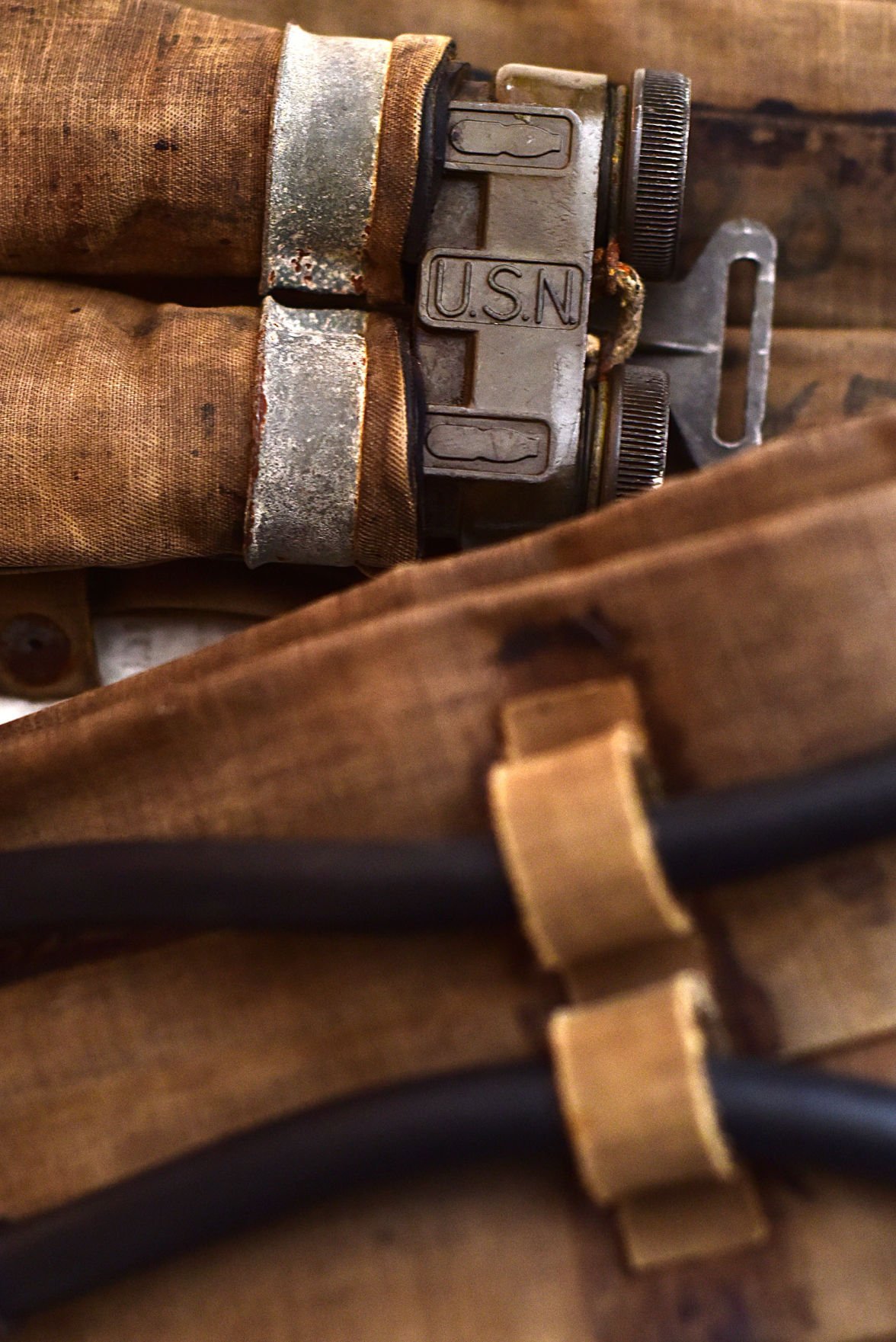
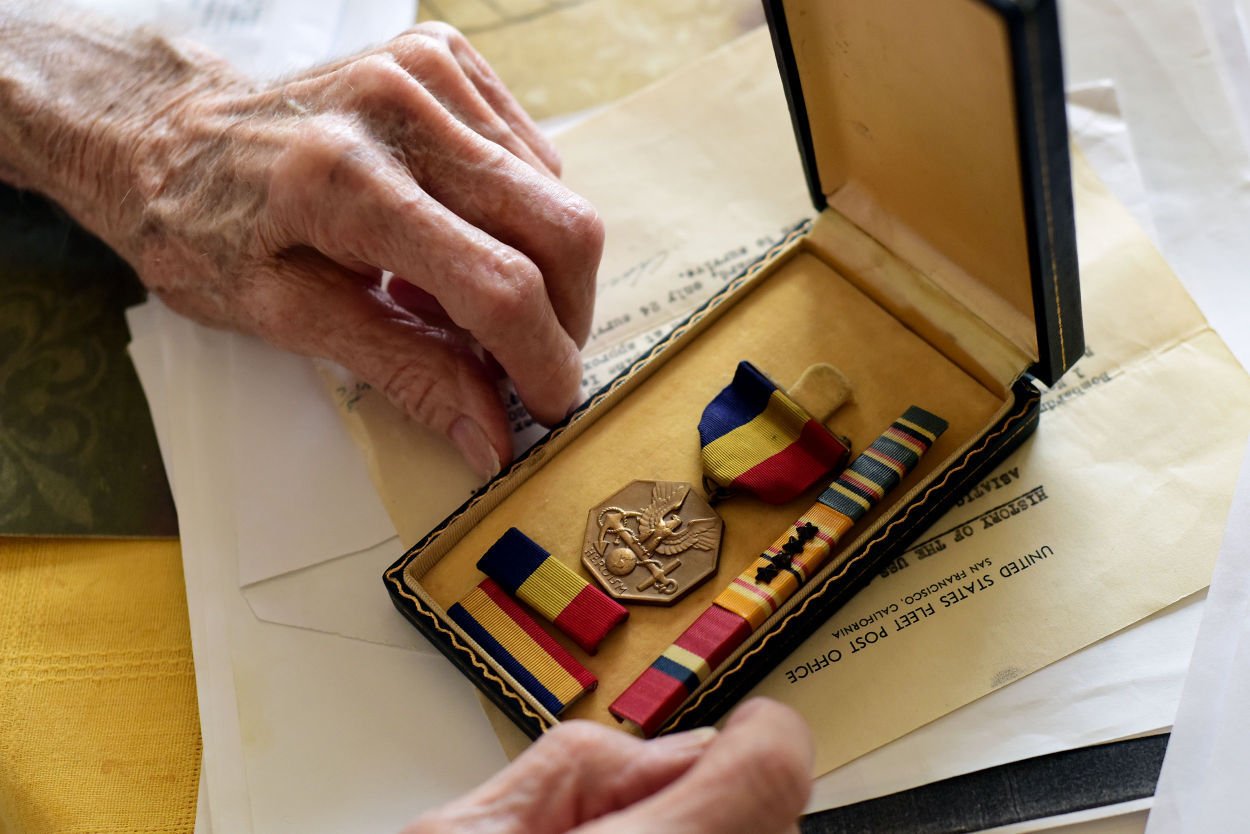
Charles Wohlleb woke up one morning in December 1944, and for some reason, he felt like he should put his life jacket on.
He was working in the engine room on the USS Spence, a Fletcher class destroyer, near the Philippines, which was occupied by the Japanese at the time. He was not on duty, and the seamen were not required to keep their life jackets on.
“Something told me to put it on,” he said.
And then the typhoon came.
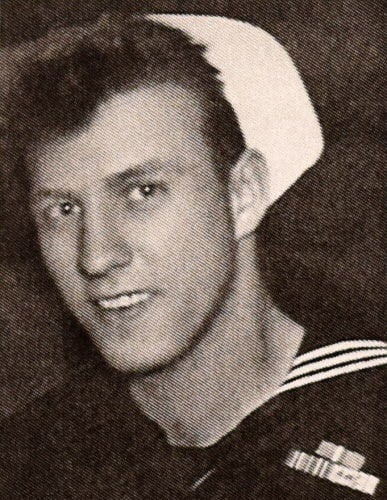 |
Wohlleb, now 91 years old and living on Tucson’s west side, is one of only 24 survivors from the ship, which capsized and sank; 315 others aboard died.
Typhoon Cobra, which he later found out was responsible for capsizing the Spence, sank two other ships, the USS Monaghan and the USS Hull.
The Spence was desperately low on fuel at the time, he said. It tried three different times to fuel up from bigger ships, but failed because of the high winds and waves.
“The ship was rolling something terrible,” he said.
 |
He and two other seamen went up to the deck as the storm was getting nastier. They were up there for about 15 minutes when they heard “Fire!” in the phones, which one of them remembered to bring. But the men didn’t know where the fire was.
“There’s a lot that I would like to know,” Wohlleb said.
Then the ship began tilting, he said. Stacks, which are chimneys on the ship, collapsed. And suddenly, he couldn’t see his friends anymore.
Wohlleb said he went about 20 feet underwater when he remembered he was wearing a life jacket.
“I squeezed it and went up like a rocket,” he said.
He saw the ship tilt until it turned upside down with everybody inside.
“That’s the part that gets me,” he said.
He spent the next four days in the ocean with other men who survived by clinging on to a net. He said when the ship first sank, there were about 35 men on the net.
By the time they were rescued by another ship, there were far fewer. The heavy storm and waves claimed the lives of those who couldn’t cling to the net any longer.
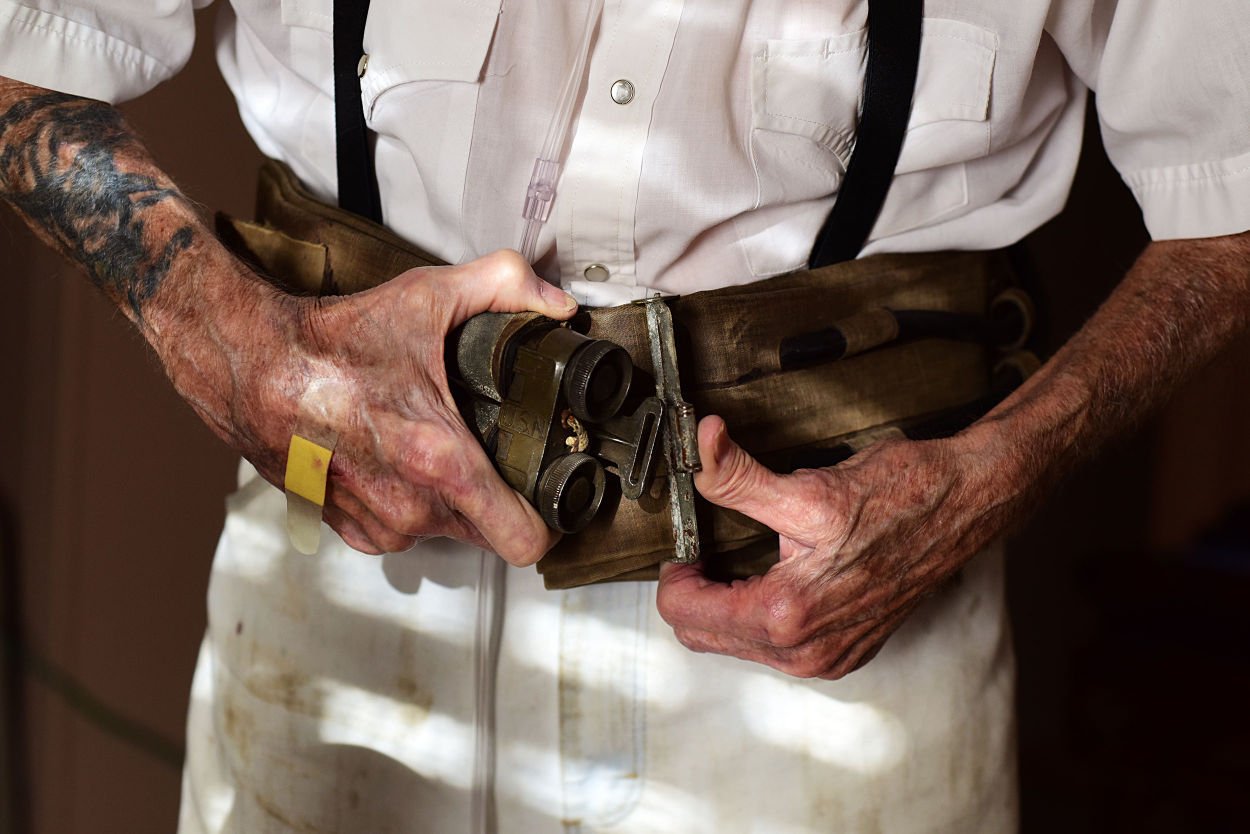 |
Wohlleb, being the only one with a life jacket, tried to help sailors who were slipping from the ropes of the net. He held one man, who seemed unconscious, against his chest to keep him warm.
But in the end, “I couldn’t help them,” he said.
When the surviving men saw an aircraft carrier passing by on the fourth day at sea, the sky was pitch black, he said.
“We yelled and we yelled and we screamed,” he said.
Many of them didn’t think they could be seen or heard, especially in the darkness, but someone in the back of the ship was alerted to their presence.
“The guy next to me started to cry,” he said.
Upon his return to the U.S., he was discharged and returned home to New Jersey. In 1948, he married May. He went on to open an automotive transmission shop before moving to Tucson in 2003.
 |
Wohlleb said it took more than 20 years to come to terms with what happened when the ship capsized.
Family and having a business helped him get through it. He joked that his kids, when they were growing up, gave him enough trouble that he couldn’t worry about anything else.
“You never forget it, though,” he said. “It’s with you all your life. I think about it every day.”
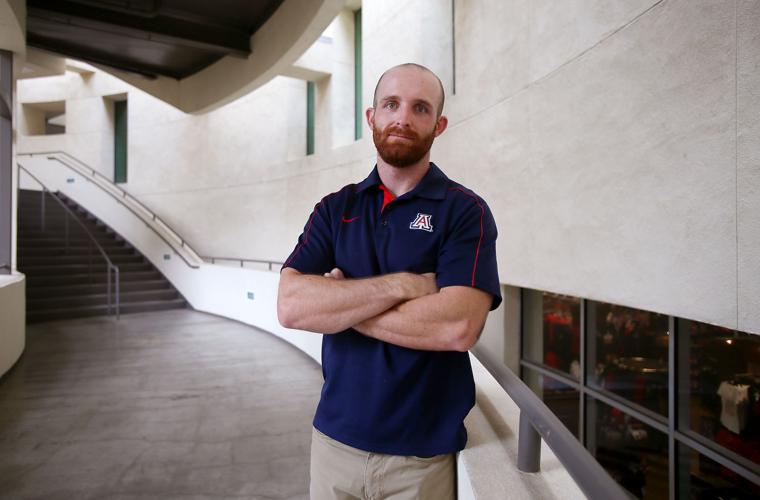
After completing a 12-mile march on an injured ankle as his final task in Army Ranger school, Charles Deibel knew there was nothing he couldn’t accomplish in life.
And now, as a University of Arizona senior, he says getting through college has been a walk in the park. He is preparing to apply to law schools on the East Coast.
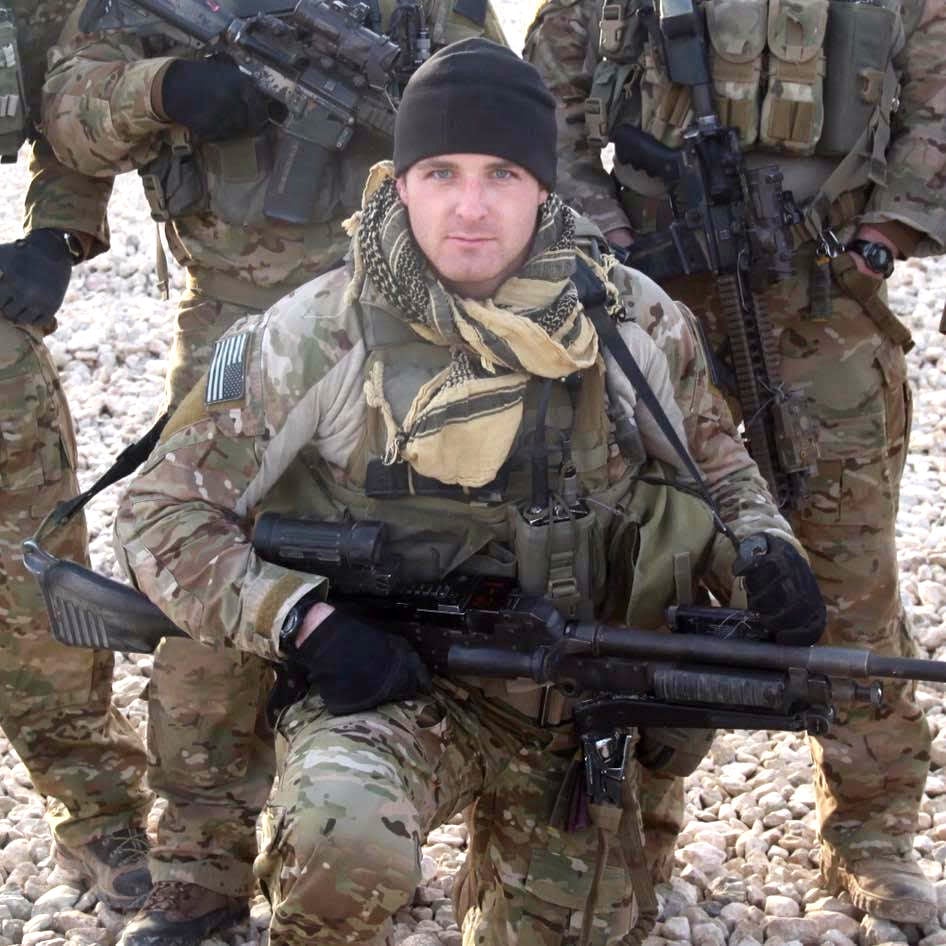
He enlisted in the Army in 2008 as a 19-year-old and served four tours of duty in his four-year stint, one in Iraq and three in Afghanistan, earning a Purple Heart along the way in a firefight he prefers not to talk about.
“I was going to join right after high school, but I needed to do a little growing up,” said Deibel, now 27.
By the end of 2007, he was in a rut. His father told him his options were military or school, so he decided to scratch the public service itch and join the Army.
 |
He says he didn’t join to gain respect or do something heroic, but that he didn’t like seeing people he didn’t know fighting for him and his family.
Deibel started in the infantry, but wanted to go further.
“I went to them and asked them who’s the best,” he said. “I told them I wanted to do that.”
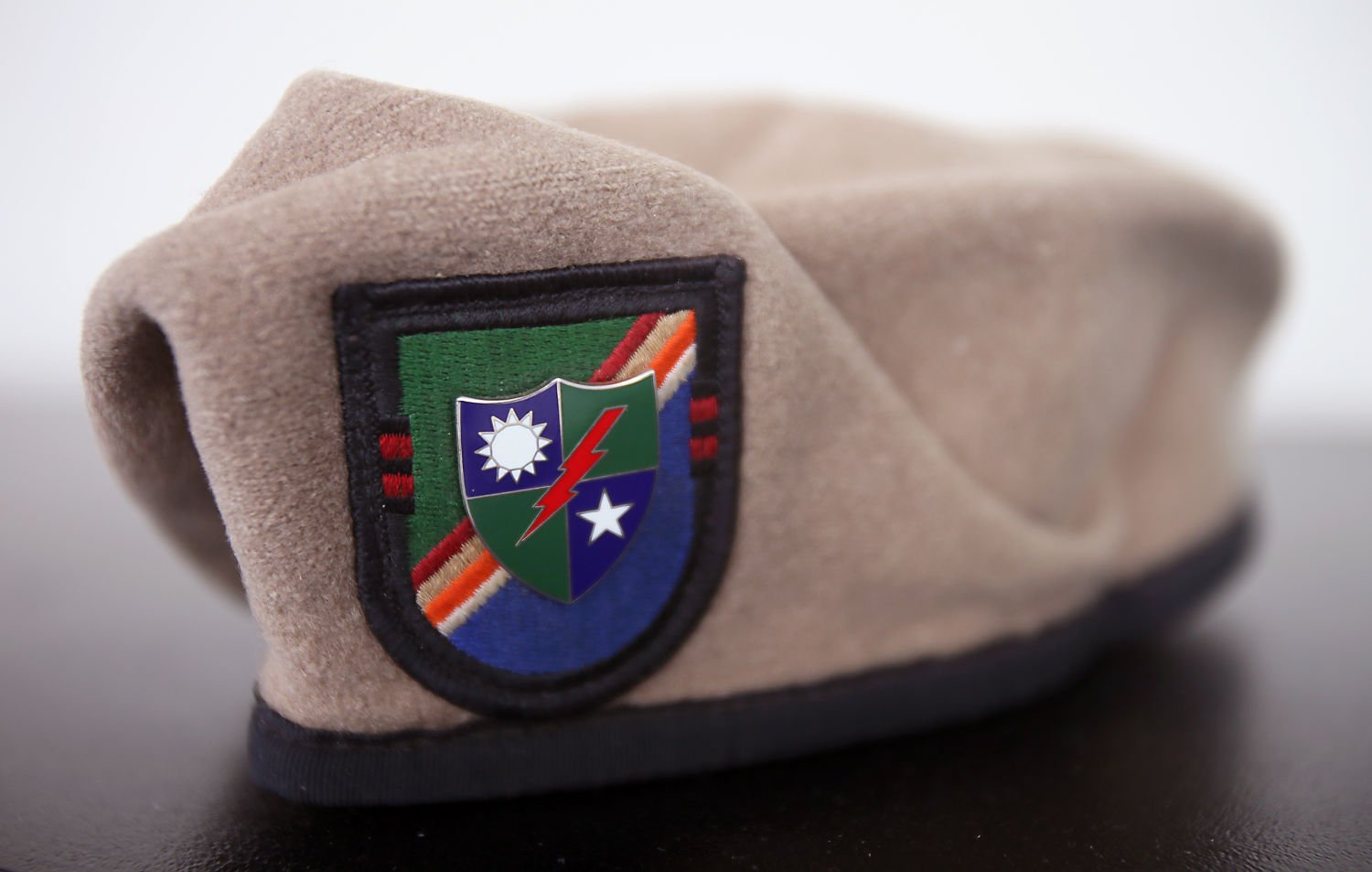
Ranger School consisted of nine weeks of training, but to join the 75th Ranger Regiment, he had to complete an additional three weeks of pre-Ranger training.
“Ranger training was a different kind of animal,” he said. “It taxes you mentally and physically to no other level.”
Deibel went through 12 weeks of physical training, tests, patrols, 22-hour days and peer evaluations. He was forced to repeat his third phase, which he said was a gut check to either quit or drive on.
The last activity in completing school was the march, but the day before, he’d fallen 45 feet during a rope training, severely injuring his ankle.
“The march was the turning point in my life as to how hard I was able to push myself,” he said. “The military never gets easier as you advance, but you earn more respect, and it just gets better.”
He left the Army in June 2012 and started school in the fall, knowing he needed a degree.
 |
“I liked government, so I wanted to stay in that line of work,” he said. “It’s another type of public service.”
Deibel is majoring in political science with a minor in Arabic, and is preparing to take the LSAT exam for entrance into law school in December.
He’s undecided between pursuing constitutional, criminal or civil law at this point, but he’s interested in all three, and has time to decide.
Deibel won’t rule out returning to the Army, saying the JAG Corps is an excellent arena in which to practice law.
“The itch is always there, but it’s different now that we’re not in as deep of a war anymore,” he said. “I’d like to take my drive and focus elsewhere to help people in a different capacity.”
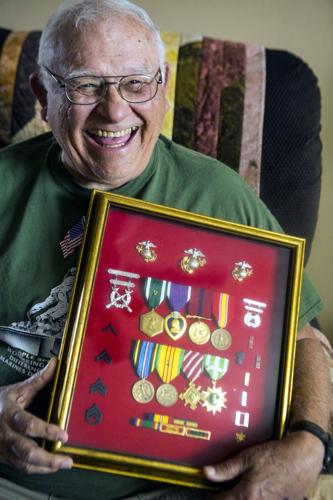
- By Patrick McNamara Arizona Daily Star
- Updated
It only took about a month of college for John Lloyd Rhodes to learn academic life wasn’t for him.
“I went to UA because I wanted to play football,” Rhodes, 79, said. “I found out you had to read and study, so I joined the Marine Corps.”
That started a nearly 20-year journey for the native Tucsonan, who went on to serve in Japan, Okinawa and Vietnam, among many stateside assignments.
Rhodes initially trained as a ham-radio operator. That assignment took him to Georgia, San Diego and Washington, D.C.
Then war broke out, and Rhodes was off to Vietnam as part of a military police battalion in charge of security at the Da Nang Air Base.
Despite the war raging throughout much of the county, Rhodes said times in Da Nang were relatively quiet. After all, it was the place where many American troops took their rest-and-recreation breaks from the war.
But there were a few close calls.
Like the day when Rhodes was making a cassette recording for his wife Theresa back home and North Vietnamese fighters launched an attack on the base.
“I made the mistake of leaving the tape recorder on while we were under attack,” he said with a laugh.
What’s more, he sent it to his wife.
“I didn’t care for that,” Theresa said.
Things got more dangerous for Rhodes in the second half of his first deployment when he was reassigned to the Second Battalion, 26th Marines, or the “Nomads,” as he said they were known then.
There he participated in 13 major operations over six months all across the country.
“They say your first couple weeks and your last are the most dangerous,” he said, and that proved to be true in his case.
Of the 1,000 men in the battalion, 324 were wounded and 33 killed in action.
Rhodes was one of those injured when a mortar round exploded near him, sending shrapnel into his leg.
He downplays the injury, saying he got stitched up and sent on his way. The Department of Defense thought differently, however, awarding him the Purple Heart for his service.
Rhodes left Vietnam shortly after the incident for an assignment in San Francisco.
It was quite a time to be in the City by the Bay — 1967 and the height of the counterculture and antiwar movements.
Rhodes said his time in San Francisco left him discouraged, as the base where he worked became the frequent target of domestic assaults. So common were the incidents of people shooting or hurling projectiles at the base that officials had to install bulletproof glass on the guard gate.
“I felt safer in Vietnam,” Rhodes joked.
He returned to the war-torn country for a second tour. After a safe return stateside, he took a job with the U.S. Marines Inspector General’s Office.
That job took him to Marine facilities all over the world.
In a fortuitous twist, Rhodes’ final assignment before his retirement from the Marines was back home in Tucson.
“The last thing I did was inspect the reserve unit I started out in,” he said.
Rhodes left the Marines in 1974. He earned a degree in agriculture from the University of Arizona, and later worked as a real estate appraiser until he retired in 2007.
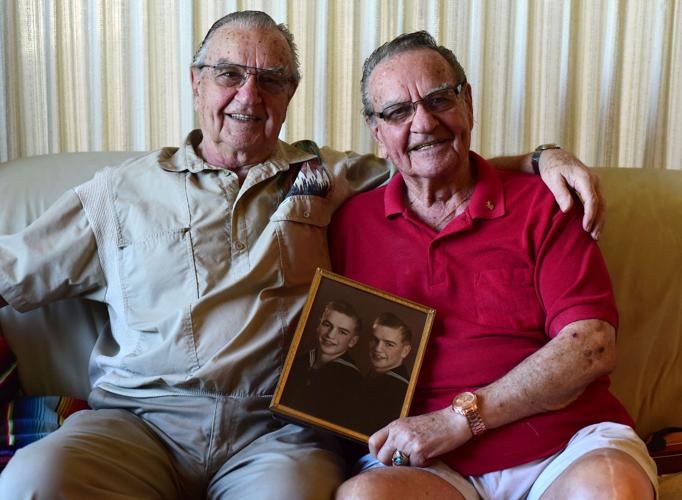
John and Leo Lochert fondly recall their two years in the Navy.
Their time in the Army? What comes to mind for John is “dirt and mud and cold and ugh.”
The 88-year-old twins, whose birthday is Dec. 7, served in World War II in the Navy and then in the Korean War in the Army.
 |
In 2013 they took an Honor Flight trip to Washington, D.C., to visit the “impressive” war memorials and monuments. They reflected on their military experience in a recent interview.
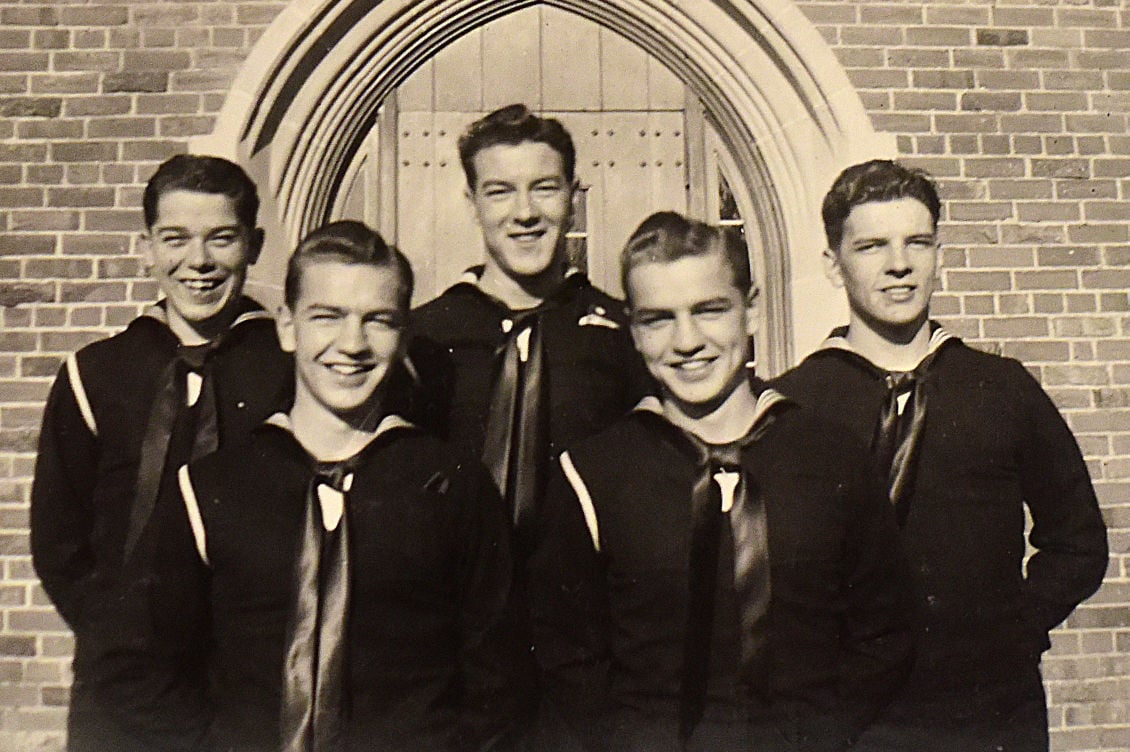
In 1944 in Dickinson, North Dakota, the twins were 17 and subject to the draft. They didn’t want to be in the Army, so they volunteered for the Navy.
“I thought Navy would be a better duty,” Leo sad.
“It was!” John said.
So two days after high school graduation, before the ceremony and the prom, the twins started their military careers.
They went to boot camp and then a 6-month course at the University of Idaho to learn to be radio operators to send and receive encoded messages. It was a fun time with a lot of invitations to sorority dances because “they needed boys” with most of the local young men gone during wartime.
 |
When they got their service assignments, they were shocked to learn they couldn’t stay together. They’d never been apart.
“It was terrible, really. It hurt,” John said.
Leo pleaded with his commanding officer to let the brothers stay together, but after the five Sullivan brothers were killed when the USS Juneau was sunk in the South Pacific in 1942, the Navy enforced its ban on siblings serving together. They were sent to their separate assignments in the South Pacific and served for two years in the Navy.
“Some old tin-can destroyer he got, and I got a carrier,” John said.
After the war, both ships were decommissioned and the twins went home. To help pay for college, they joined the Army National Guard as master sergeants to get financial help going to college. They were trained for a medical unit.
“This was when the Korean War was going on.
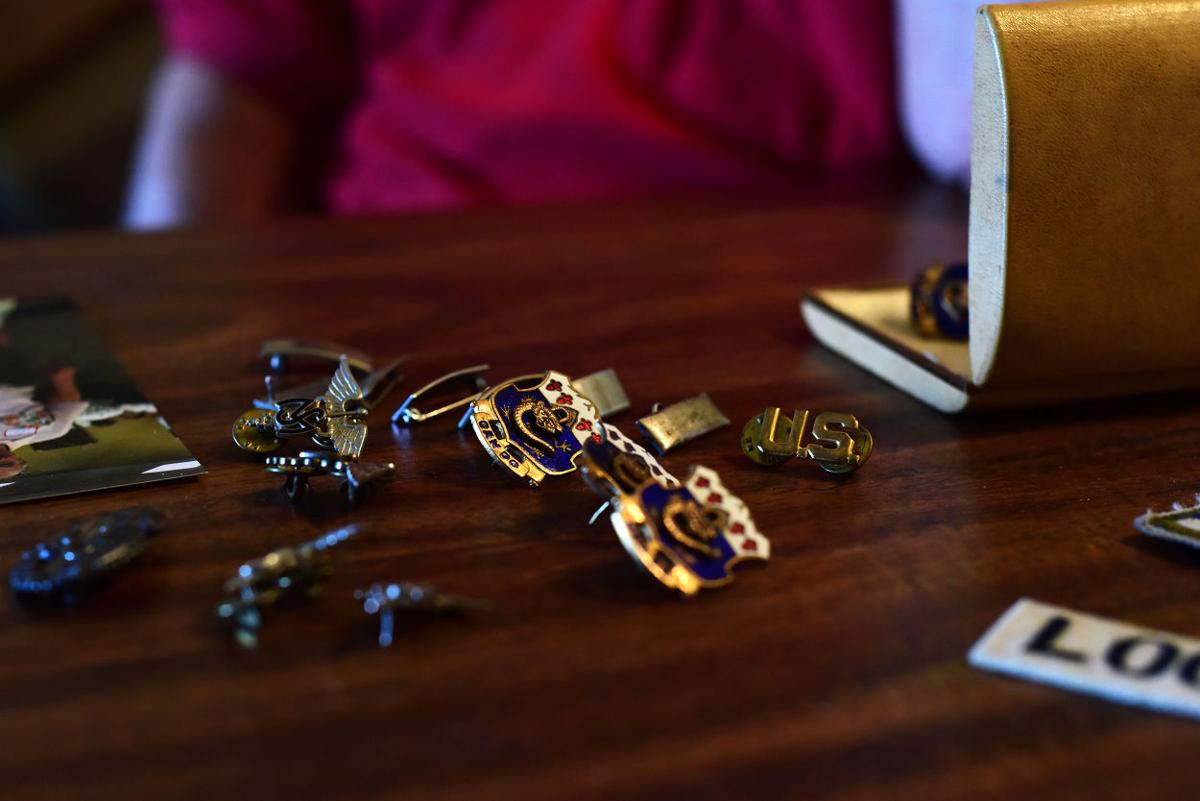 |
Our commanding officer said, ‘Don’t worry, folks, we’re not going to get called up,’” Leo said.
Two days later, they were.
“He got the .45; I got the M1 rifle,” Leo said.
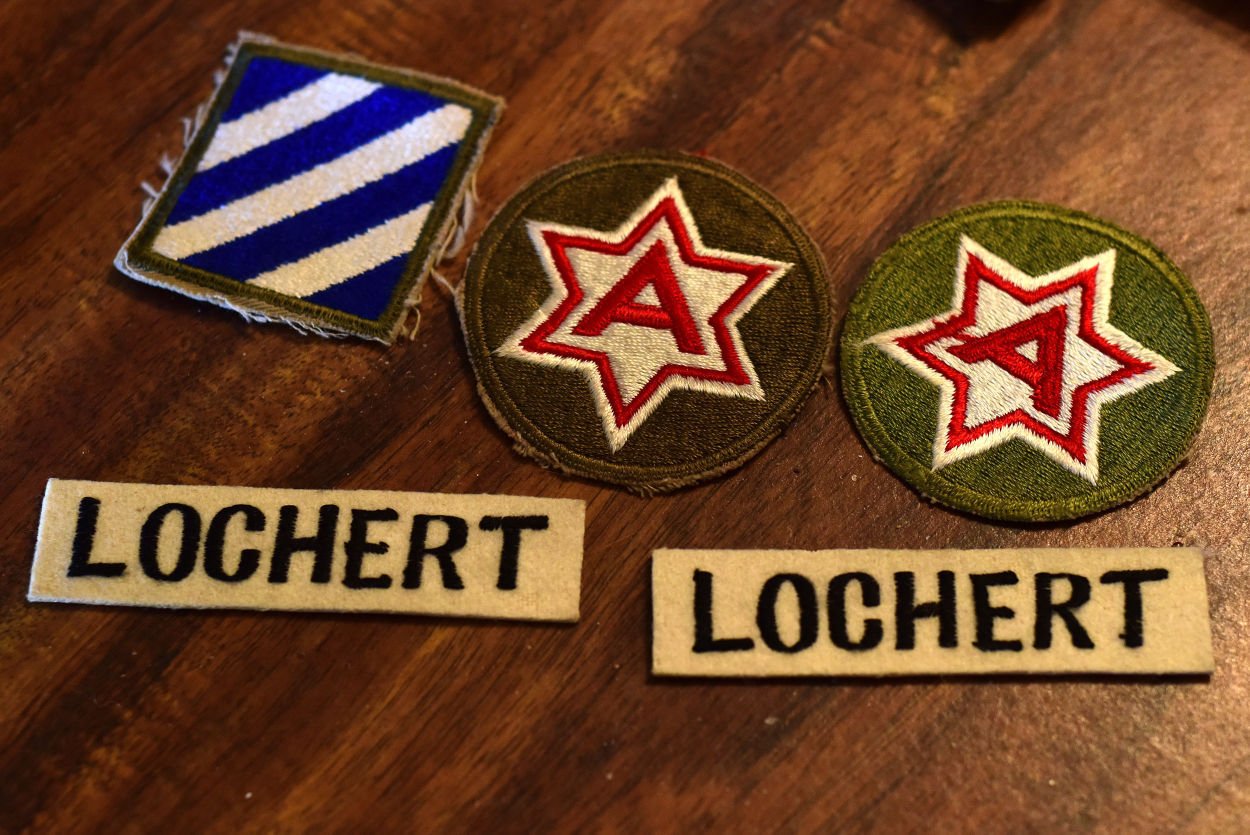
John accepted a battlefield commission and was sent overseas, followed by Leo. But this time the brothers were allowed to serve together, and Leo sometimes wore John’s uniform to sneak into officers’ clubs with him.
They worked at forward first aid stations where the wounded were brought, sometimes without legs or arms, sometimes in body bags. “It was terrible,” Leo said. “The worst I’ve seen.”
They served together two years in the Army for two years. John served a third year, and they both finished college.
John had a career in accounting, and Leo had a career in baking and restaurant work.
Leo had four sons and four daughters with Dorothy Jean Cox, and they moved to Tucson. After they divorced, Leo married Buffy De Trouville. John joined Leo in Tucson.
These days, you can hear the twins singing in the church choir at St. Thomas the Apostle Church.
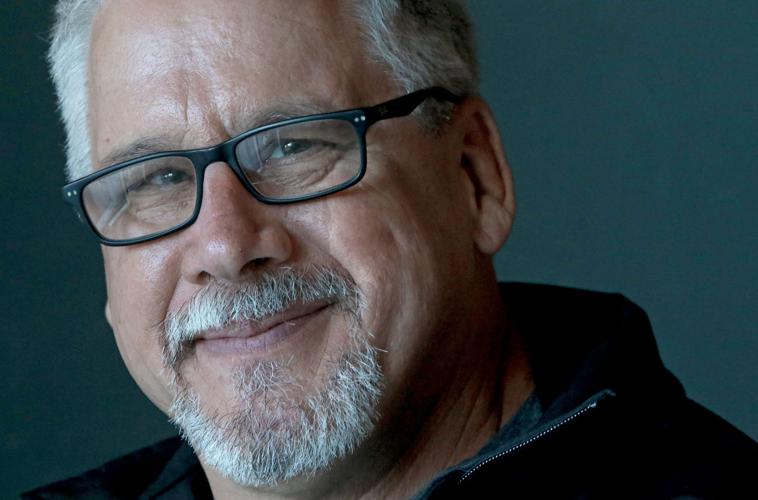
- By David J. Del Grande For the Arizona Daily Star
- Updated
Some people may be skeptical about the morale and good work being done throughout the country, but retired Marine Sam Brokenshire isn’t one of them.
Brokenshire is one of the many retired service members who now works for Team Rubicon, a volunteer disaster relief organization for veterans.
“There’s a feeling in America right now that we’re on the decline, but being on these deployments and seeing all these young veterans coming back, I think we’re just at the beginning of our greatness again,” Brokenshire said.
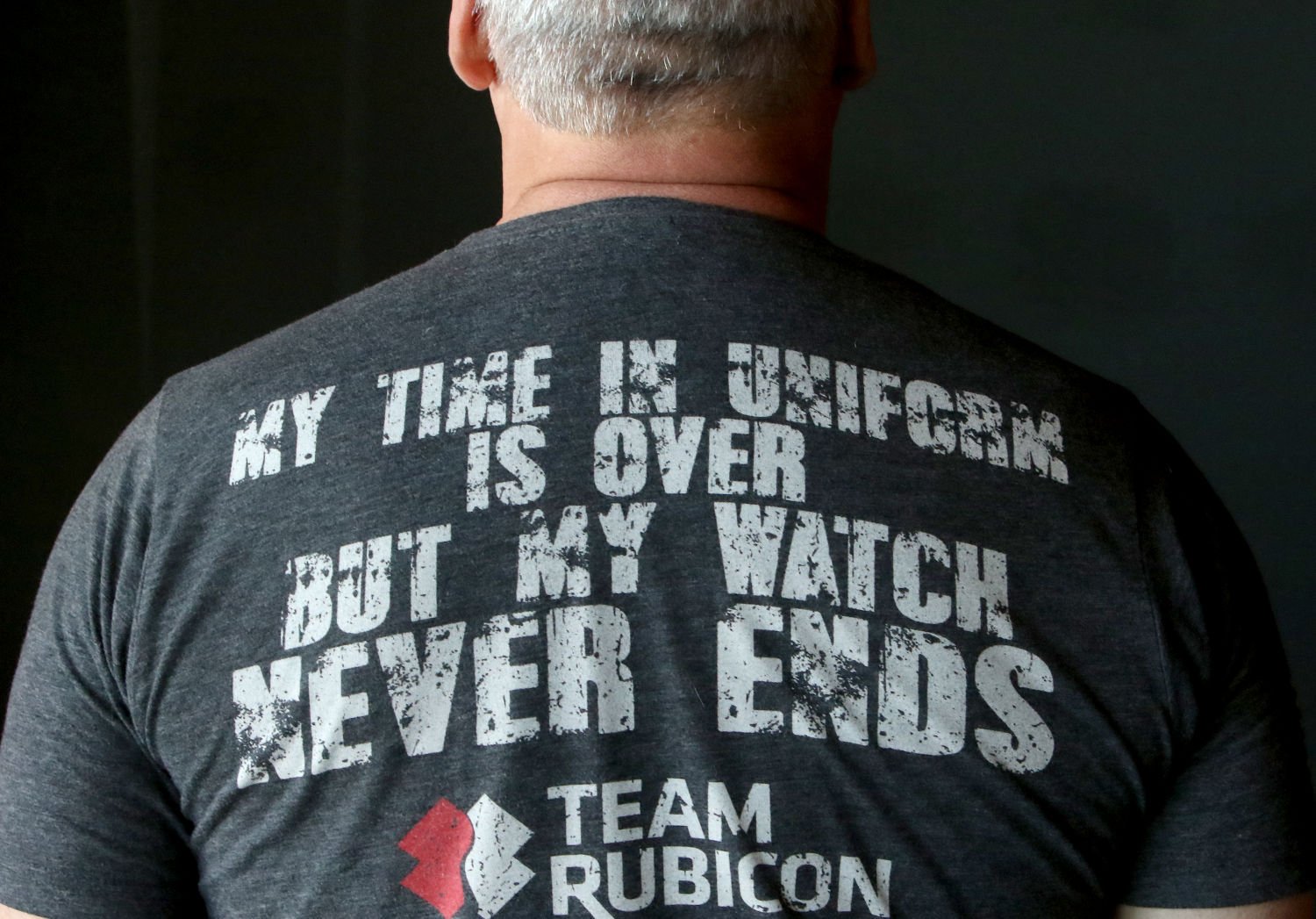 |
He registered with the group one year before retiring as a corrections officer, and now holds Team Rubicon’s regional field operations manager position which oversees Arizona, California Nevada and Hawaii.
And Brokenshire’s warm, reserved smile grows when talking about the unofficial Rubicon slogan adorning his T-shirt which touts, “My time in uniform is over, but my watch never ends.”
Becoming involved with the organization is a way for returning soldiers to reintegrate, and have a mission just as important as active duty, Brokenshire said.
“I think that is what’s therapeutic about Team Rubicon,” he said, “you can reacquaint yourself with what was important to you at one time that was lost.”
Brokenshire just returned home from the relief effort in South Carolina. And, not only did the group’s mission help other veterans, but its message relays a positive narrative many people are unaware of, he said.
“There is good being done out there,” he added.
The stout, soft-spoken retiree from Scranton, Pennsylvania, failed his first attempt at the Marines, in officer candidate school.
He had already earned his bachelor’s degree from Pennsylvania State University, so Brokenshire began teaching at Wallenpaupack Area High School.
But, Brokenshire said he felt dissatisfied with the teaching position and after two years decided to enlist. “It was always eating at me, that I had not succeeded,” he said.
Brokenshire went through basic training in Parris Island, South Carolina, and became a military police officer in San Diego.
After two years of exemplary service, Brokenshire earned an embassy duty position. Between 1984 and 1986 he served in both Paris and Mogadishu, Somalia.
He was on active duty until 1991, and settled in Tucson after returning stateside.
One year before retiring from his corrections officer position, Brokenshire joined Team Rubicon and began his new full-time mission.
Katie Whichard, a Team Rubicon regional deputy communications manager, also found a second home at the organization after retiring from the Marines last October.
Whichard said team members like Brokenshire embody Team Rubicon’s mission.
“He’s one of those standout people who have put his heart and soul into this,” Whichard said. “He’s the go-to-guy, and he seems to have all the answers.”
Whichard further said Brokenshire’s graceful leadership skills are invaluable whether he’s working side-by-side with a team or directing an effort remotely.
Brokenshire comes from a place of genuine concern and humility, Whichard said.
“He not only helps out the victims of these disasters but he helps out the volunteers with their lives,” she said.
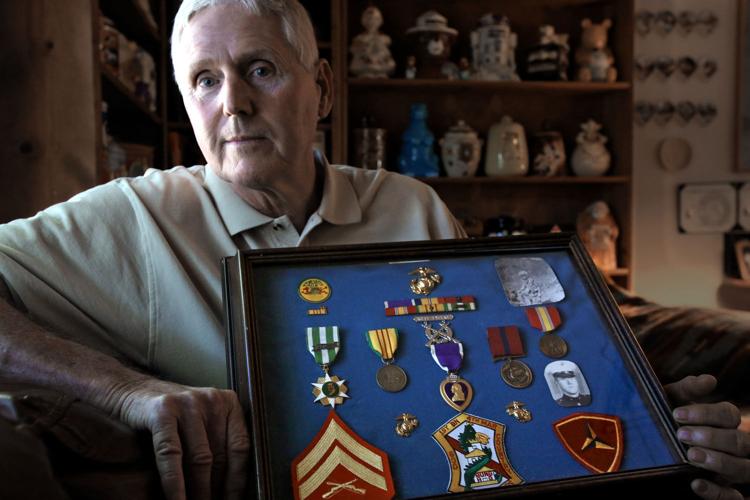
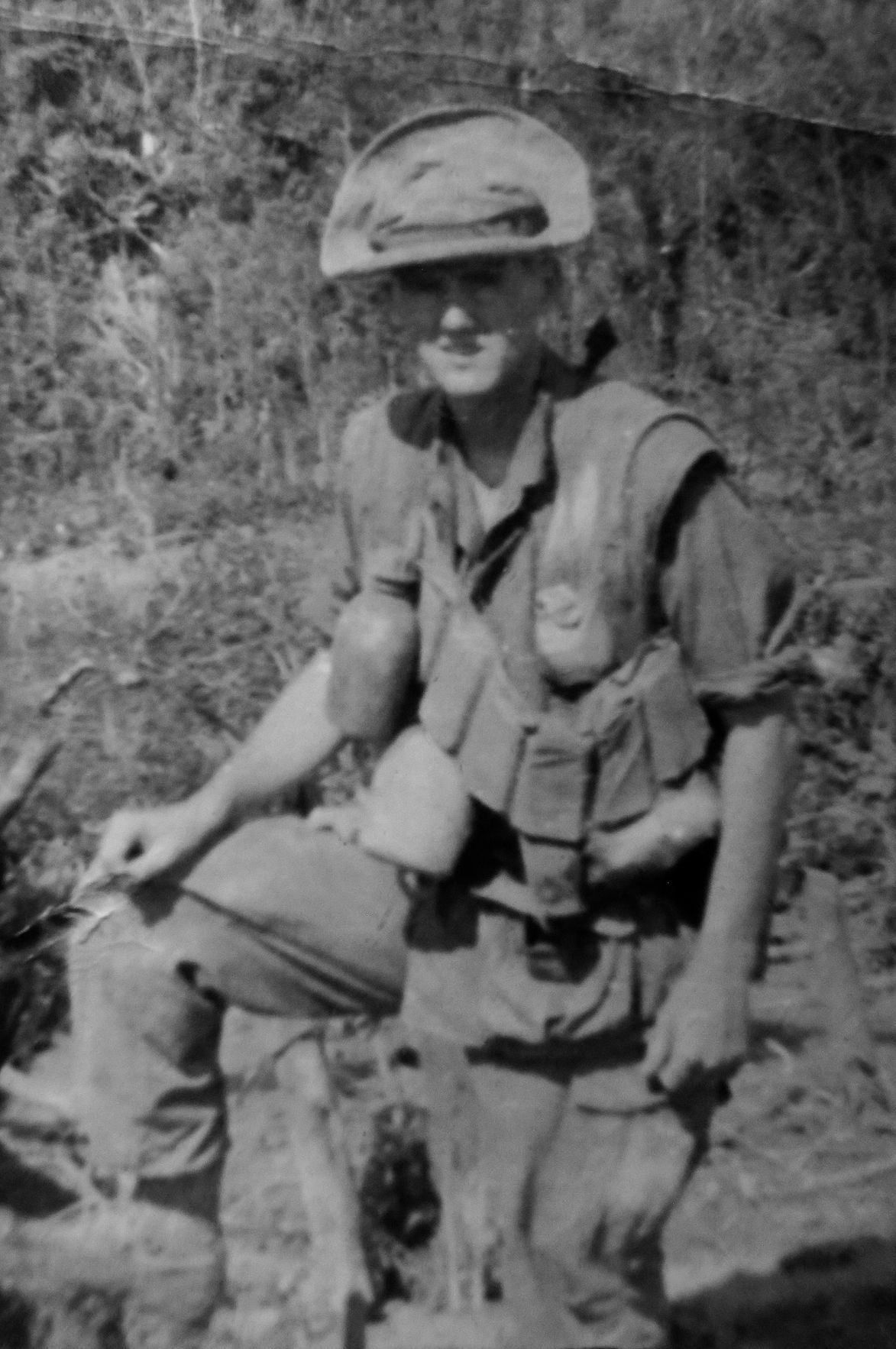
John Moore will forever remember Thanksgiving Day 1968. It has nothing to do with turkey and stuffing — but rather with a traumatic, life-threatening experience.
A Marine serving in Vietnam, Moore was on a patrol to knock out an enemy mortar position when he and his fellow soldiers came under a barrage of mortar fire. One of the mortars landed close — very close.
“The shrapnel hit me and threw me over on my side,” said Moore.
 |
“All 10 of us (in the patrol) were hit. I had shrapnel in my elbow and leg. I was terrified.”
Moore, who is now 67, was alive, but he was bleeding and in great pain as he and others were loaded onto helicopters for evacuation.
“I never stopped bleeding until I hit the operating room,” he said.
Moore, who also suffered hearing loss, lost part of his elbow and has shrapnel in his body to this day.
After his condition was stabilized, Moore was flown to a naval hospital in Japan for further treatment and then to a hospital in the United States, where he remained for three more months of care.
Later, after recovering sufficiently to work in a non-combat capacity, he remained in the Marines until receiving an early honorable discharge as a corporal in March 1970.
Moore’s path to the Marines and Vietnam began after his youthful years in Milton, Indiana, and a brief stint in junior college.
Unsatisfied with the college experience and looking for something new, Moore joined the Marines, completed training and arrived in Vietnam in August 1968.
He soon found himself in combat, often lugging eight grenades and seven canteens of water in addition to ammunition and other supplies.
“I learned there are so many ways to get killed,” he said, reflecting on his own close brush with death.
 |
Moore, who moved to Tucson in 1970, worked on ranches and in other jobs before starting work with Pima Animal Control in 1983.
He worked there for 27 years before retiring in 2010.
Moore and his wife, Susan, have two grown daughters. One of them, Katee Moore, calls her father the “most compassionate, smartest, hardworking individual I have ever had the pleasure of knowing.”
In nominating him for recognition in the Star’s series of stories about veterans, she said “I truly believe that a veteran, a man, a father as wonderful and strong as John Moore should be recognized for the sacrifices he made for his country and the impact he has made on all the lives he has touched.
“There is an old quote associated with the military that goes ‘All gave some, some gave all.’ My father gave some of his body and all of his heart. He served with honor.”
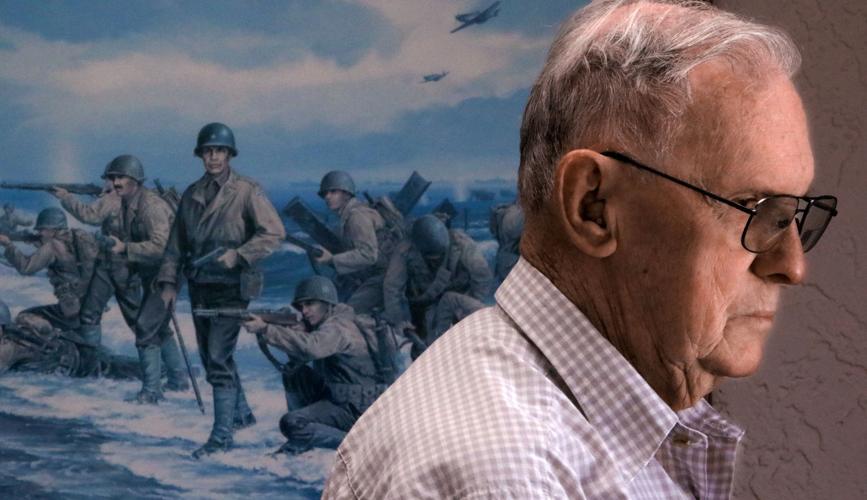
When Harper Coleman jumped into the water at Utah Beach, he faced a sight nearly as daunting as the German guns trained on him: Gen. Theodore Roosevelt Jr. waving his cane at the troops and yelling: “Go, go, go!”
“He was a rough talker,” Coleman, 93, said with a chuckle. “He wasn’t using any Sunday school language.”
Coleman, then 22, was among the first waves of troops to land at Normandy on June 6, 1944, also known as D-Day. More than seven decades later, a painting of the Normandy landing hangs on the wall of the Arizona room in his east-side home.
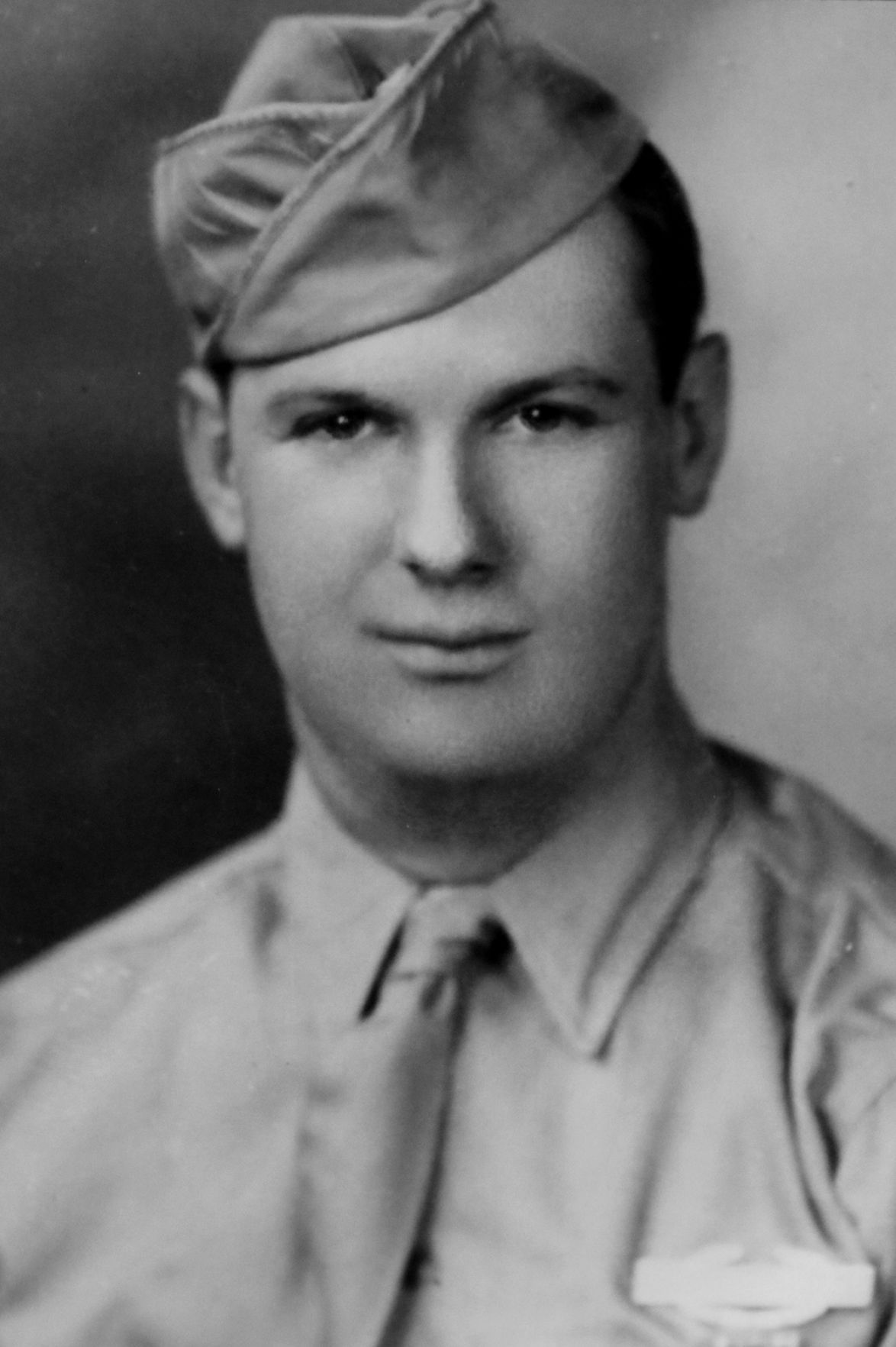
He stayed on the front lines as a private with the Army’s Fourth Infantry Division for the next seven months, fighting for the port city of Cherbourg, liberating Paris, and holding off the German offensive that came to be known as the Battle of the Bulge.
 |
The Allied forces turned the tide of World War II in late 1944, but the momentous nature of the effort wasn’t at the forefront of Coleman’s mind.
“I was a kid. I didn’t think much about it,” he said.
Coleman had more immediate concerns, such as fighting his way through the hedgerows of France, which meant dealing with German defenses set up near the ancient rows of dirt, brush, and trees that separated farms.
“It was hop and jump the whole way from the beach to Cherbourg,” he said.
Eventually the Fourth Division made it to Paris, four years after German troops first occupied the city. “It was a big party. It was wild,” he said.
Several months later, the euphoria had dimmed and Coleman found himself fighting in “terrible” conditions against the last major push by the German military into northern France.
“There was snow up to your waist and mud you just couldn’t believe and somebody shooting at you,” he said.
Near the end of the Battle of the Bulge, Coleman and about 700 other soldiers in his division were sent to hospitals in England. Days of wearing wet socks and shoes had taken their toll and the soldiers suffered from trench foot. “Your feet just froze,” he said.
 |
While in France, Coleman wrote letters back home to Kathryn McCleary in Shippensburg, Pennsylvania. The two were married not long after Coleman returned to the United States and have been together ever since. Two of their children served in the Air Force and another served in the Army.
Although he had every intention of staying away from the Army after he returned to Pennsylvania, jobs were scarce and Coleman started working at a nearby armory depot. He continued working for the Department of Defense and in 1967 he took an electronic supply job at Fort Huachuca, where he retired in 1977.
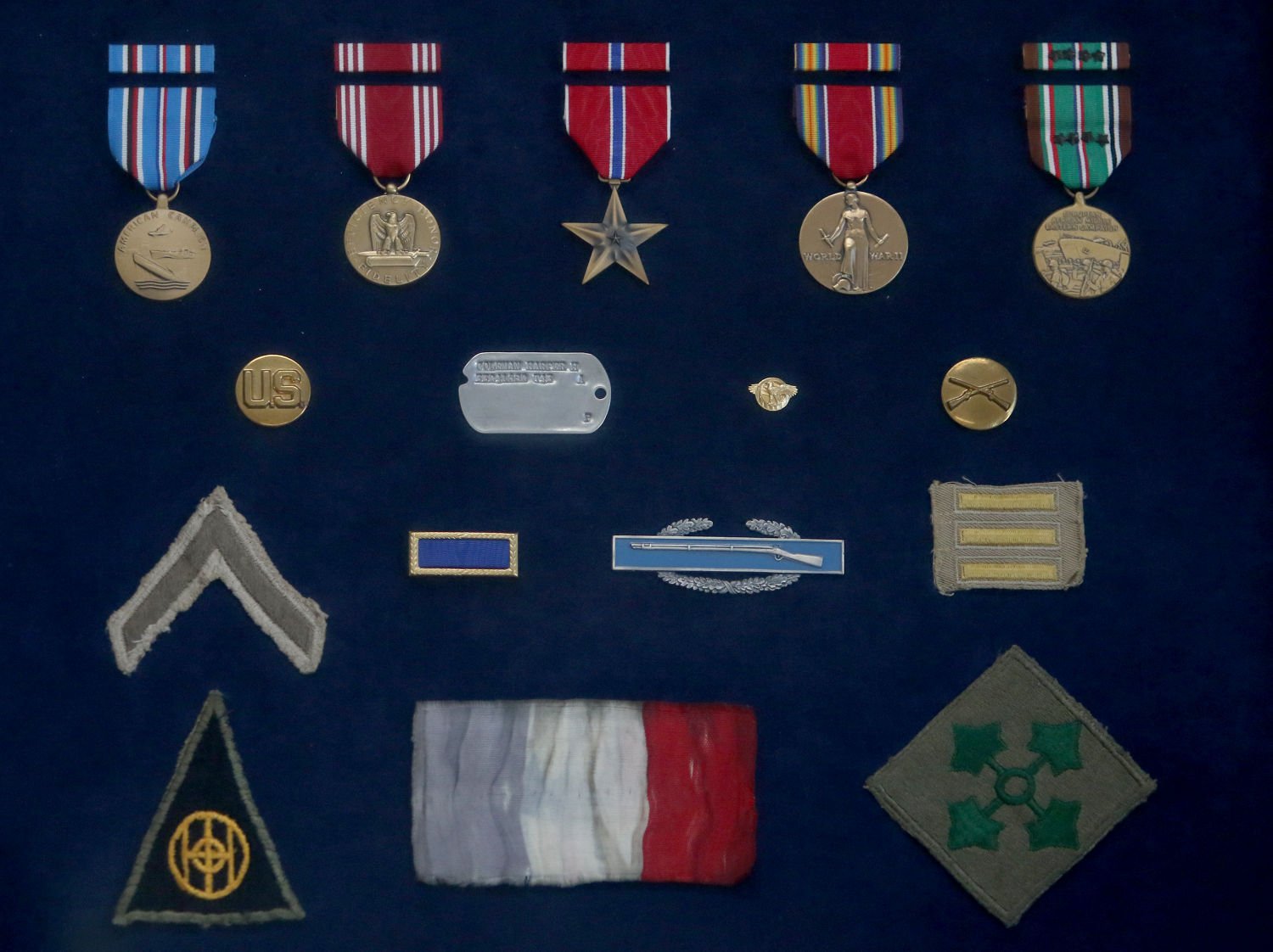
Coleman’s efforts on D-Day brought renewed recognition two years ago when the French Consulate in Phoenix awarded him the French Legion of Honor.
“It may not mean much here, but if you’re in France, I’m a ‘sir,’ ” he said with a grin.

For as long as she can remember, Lupecelia Leon has sought out adventure.
When she declared she wanted to learn how to fly at the age of 16, her parents thought she was crazy.
Using the money she earned at her after school job at Burger King, Leon began taking flying lessons at Ryan Airfield.
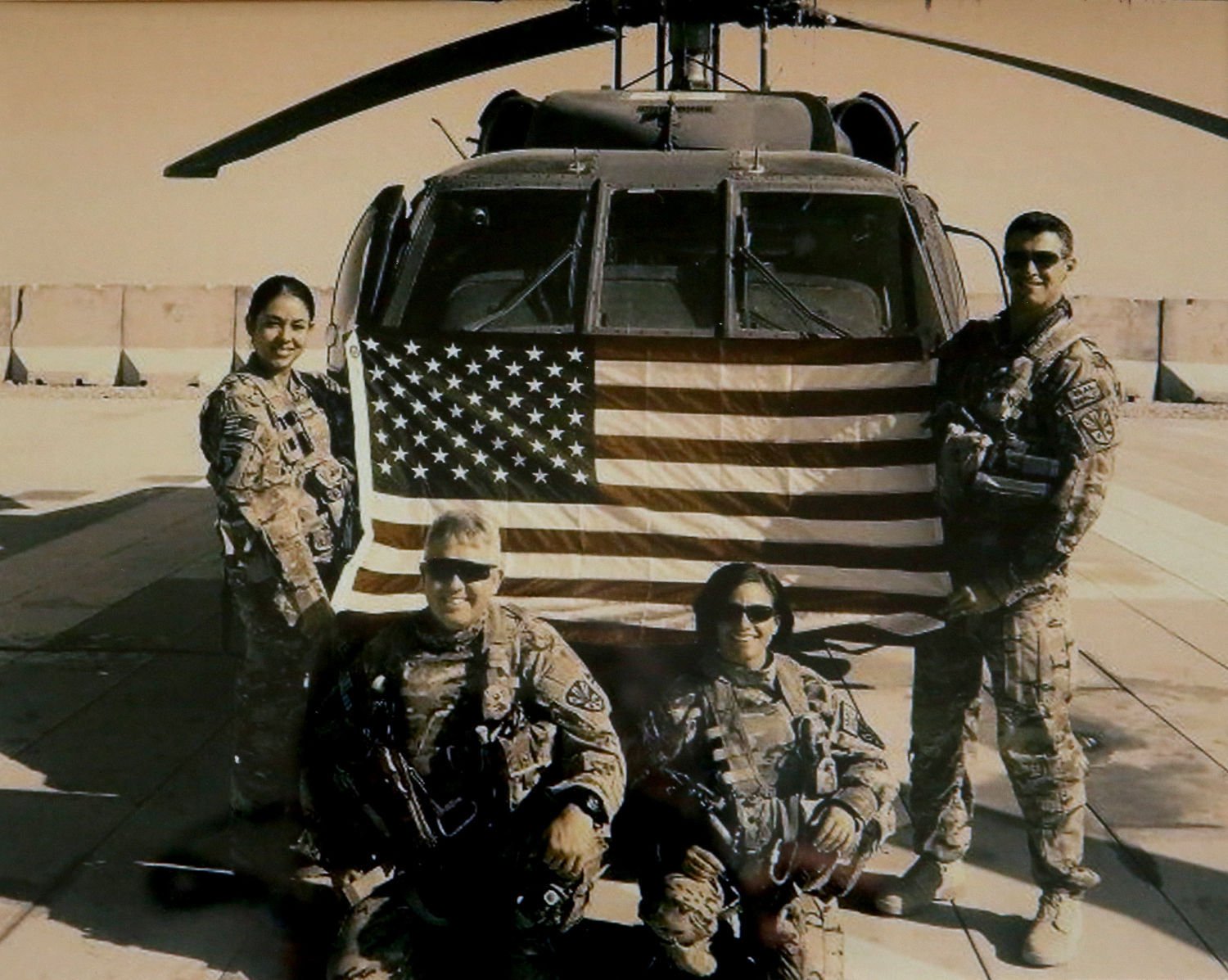
Today, as a member of the Arizona National Guard, Chief Warrant Officer 2 Leon flies Black Hawk helicopters.
Having been deployed overseas three times and preparing for a fourth in the coming weeks, the medevac pilot has been in enough combat situations that she is no longer chasing thrills. Instead, she treasures time with her family.
It’s likely her adventures and thrills will continue.
The 33-year-old serves not only the country in her military career, but Pima County as a sheriff’s deputy and member of the search and rescue team since 2013.
No longer bewildered by their youngest daughter’s choices, Leon’s parents are proud of the path she has taken — something Leon has asked them not to draw attention to.
 |
“To me, it’s nothing more than a job,” she said.
Her father, Pete, disagrees.
“Medevac pilots and their crew are unsung heroes who saved countless lives under enemy fire and extreme weather conditions,” he said.
Leon made the decision to enter into a life of service as a student at Sunnyside High School. She entered basic training for the Army in September 2000 — just four months after graduation.
She would remain in the Army through January 2005, when she enlisted in the Arizona National Guard.
Basic training was the first time Leon had been away from her family, and she admits she was nervous. But it was there where Leon says she learned the importance of teamwork. It’s a lesson that served her well during her last deployment to Afghanistan in 2011, where she flew her crew in to retrieve injured Marines and prisoners of war.
Knowing that her crew was capable of caring for the severely wounded on board, Leon was able to focus on her responsibilities — getting out of danger and delivering those in need to medical services.
Over the course of a year, Leon flew more than 100 missions, including eight within a 24-hour period.
Even though she had previously been deployed to Qatar and Afghanistan, serving in administrative roles, this was the first time she had been exposed on a daily basis to the cost of combat — picking up Marines who had lost legs, or arms, or both.
Leon and her crew were also tasked with transporting injured civilians, which came with a different type of risk.
“We received intel that the main goal was to get a helicopter with the red crosses, so they would do things to get us to go out so they could study us,” Leon said.
“There were different occasions where they would hurt their children. One time, a little girl, I think she was 9, she got shot in the stomach by her dad because they wanted to time us — the man always had to get in the helicopter with their child, but we knew right away because we would see the way they would look at their watches.”
The overall experience was challenging for Leon, not because of the gruesome scenes but because of the self-imposed pressure to save everyone.
“The reality is you can’t save everyone and you want to,” she said.
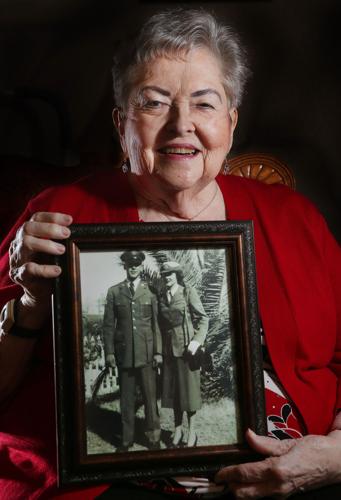
When the bells rang, Airman 2nd Class Daisy Gates knew encrypted messages had arrived. The messages quickly needed to be sent to locations such as Washington, D.C., or overseas.
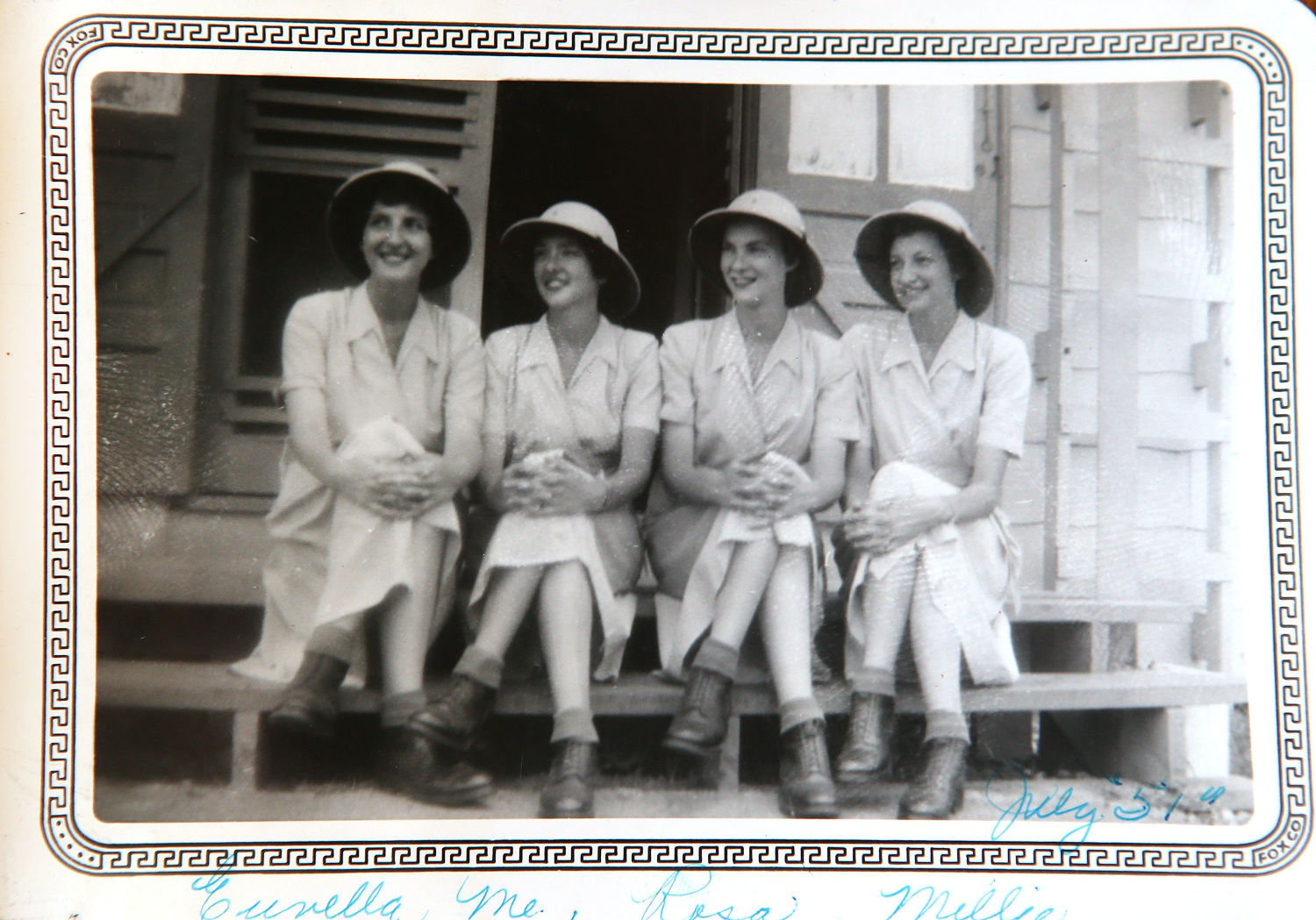
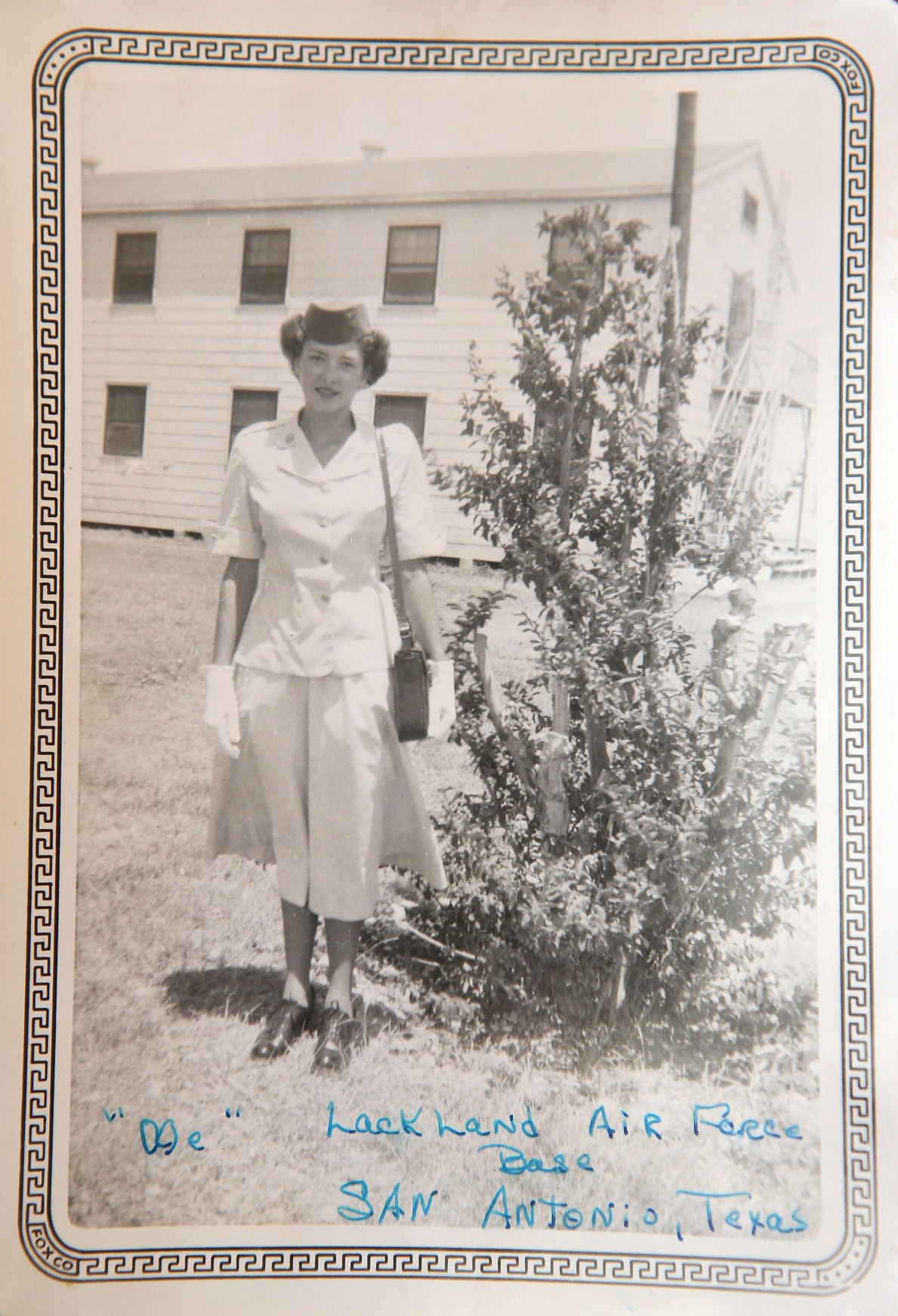
It was during the Korean War and she was a teletype operator in the 1063rd Communications Squadron at a relay center at Maxwell Air Force Base in Montgomery, Alabama.
The young woman, who in 1951 enlisted in the Women’s Air Force after graduation from Tucson High School, recalled her work at the center where she and the others received top secret clearance.
 |
“We sent messages all over — from Washington, D.C., to locations abroad,” recalled Gates, 82, from her kitchen table at her east-side assisted living complex.
What the messages said were unknown to Gates. The sender and the recipient were the only ones who knew.
But the operators knew war was underway. It was during that time that Gates became tight with the other women in her squadron.
“I believe some messages could have saved lives. Some could have dealt with the movement of troops and bombing locations,” said Gates, who received recognition honors and awards, including the Good Conduct Medal.
There were days when the bells would constantly ring in the large room, which was lined with teletype machines set in rows. The building they were in was cement block — not constructed out of lumber — like the others. It was under guard at all times.
“We could read the tape by touching the punch holes, and all we could read is where the messages were going. We would punch in the locations and make sure each one went to the right teletype center,” explained Gates.
The operators worked shifts around the clock, and the shifts would change weekly. “That was hard. It was difficult for our bodies to adjust,” she said.
 |
Her work at the teletype center was cut short in 1952 after Gates, who then was Daisy Steele, married her fiancé, Alden Gates. He, too, was in the Air Force.
She then applied for a compassionate transfer and was sent to March Air Force Base in Riverside, California, where Alden was stationed. She worked in the communications office at the base.
When Gates became pregnant, she was discharged. “That’s what they did back then,” she said of the military. Gates returned to Tucson and her daughter was born at St. Mary’s Hospital. Her husband was eventually stationed at Davis-Monthan Air Force Base.
Family photographs are displayed in Gates’ living room, including a black-and-white picture of her and her husband in uniform. Alden Gates served two tours in Germany and retired from the Air Force after 22 years. He then went to work for the postal service for 20 years. Alden, who suffered from Alzheimer’s, died in 2014.
The couple raised three children. Gates proudly points to photos displayed in her living room and mentions that she has 11 grandchildren and 15 great-grandchildren. It makes her happy, she said, to share stories with them about her military service.
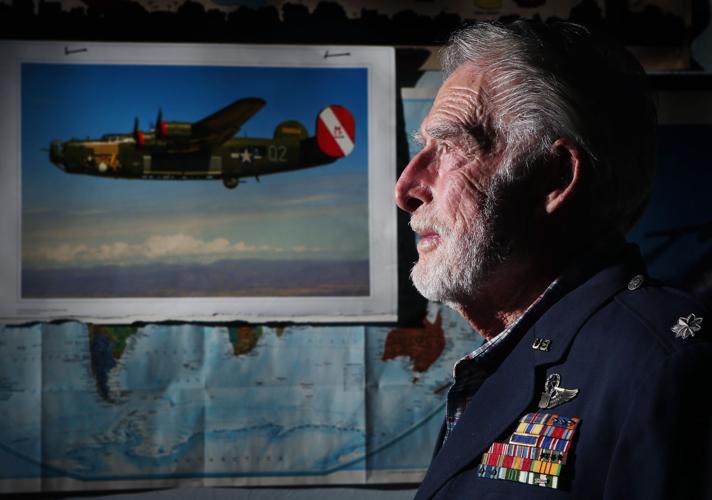
To this day, Thomas Rankin, 90, remembers his ninth bombing mission of World War II.
He was 19 years old and on a B-24 aircraft, a bomber, which flew missions over Europe out of England. He worked as a radio operator and a top turret gunner when the aircraft was struck by fire at over 20,000 feet.
“We thought we were going to go down,” he said.
Two crew members were seriously injured, he said. The pilot suggested the crew bail out from the airplane, but Rankin knew that would mean three of them would die, including himself, whose parachute was damaged.
Pieces of the aircraft were falling from the sky, he said.
The B-24 managed to land at an emergency airport in England, he said. Everyone survived.
 |
“The ninth mission stayed with me,” Rankin said. “I remember every second of it.”
Rankin also remembered when, as a young man before the war, he was driving down a highway in San Francisco near the airport and saw a Lockheed P-38 Lightning aircraft take off.
“It pulled up and disappeared,” he said. “And I thought, ‘Wow. That’s what I want to do.’”
He said he had originally intended to join the Navy. His father was an officer in the Navy and a teacher at the Naval Academy.
He ended up being drafted to the U.S. Army Air Corps instead.
After World War II, Rankin paused his military service to attend college, where he studied mechanical engineering and math. He returned to the military two years later.
During the Vietnam War, he said he was on a 21-day rotation of 12 hours on and 14 hours off, flying missions into Vietnam, hauling cargo.
One of the more memorable cargo he hauled during that time was a control tower, he said. The plane often carried much more than it could stand. “It was hanging out of the back about 15 feet,” he said.
And on some days, he would be sent on “vegetable runs,” he said. He and others would be sent to a base where they could collect boxes of locally grown vegetables and distribute them to the troops. He got to taste the “real good stuff,” he said.
 |
Rankin retired from the Air Force as a lieutenant colonel in 1969. He went on to receive a master’s degree in education and taught at Pueblo High School for 10 years. He held another job in the district working with computer programs for six years.
Last spring, Rankin was chosen to be one of 72 Arizona veterans to be on an honor flight to Washington, D.C., where the veterans visited war memorials.
He also spent 32 years as a volunteer at Davis-Monthan Air Force Base, helping people prepare for their tax returns.
Looking back on his military experience, Rankin said he was lucky to have survived.
“I just did what was needed to be done in those times,” he said, “Sometimes it was dangerous. Sometimes it wasn’t.”
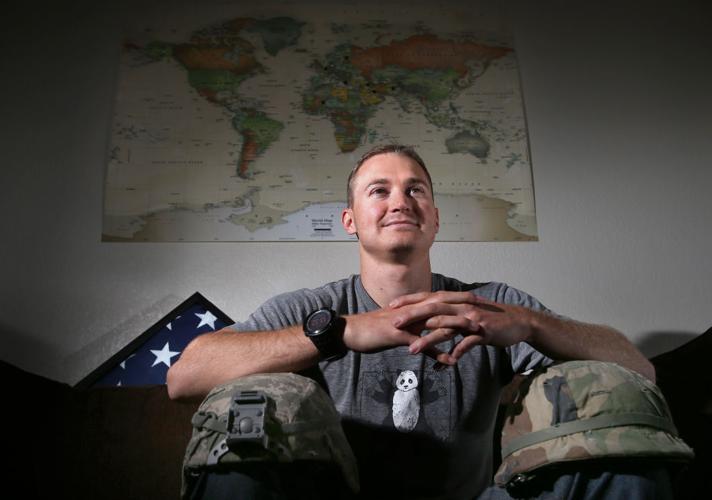
There’s no denying that Luke Burgan was born with military blood running through his veins.
By the time he came of age to enlist in 2010, the then 19-year-old Burgan was following in the footsteps of his grandfather, father and older brother.
“I knew my whole life I’d probably be in the Army,” he said.
 |
He knew before he signed up that he’d be in the infantry with boots on the ground like his father, Clarence “Sonny” Burgan, who served three tours in the infantry during the Vietnam War. Burgan, now 25, joined the Army in January 2010, less than a year after he graduated from high school. He took some time for himself in between, knowing what was ahead.
“I knew that there were two wars going on at the time, and I knew I’d be going to one or both of them,” he said.
He shipped out to Afghanistan in December 2011, serving in the 4th Airborne Combat Brigade, 25th Infantry Division.
When asked what the war was like, Burgan takes a long pause before answering.
“Exactly what I expected,” he said. “But I went in with the right mentality. I think I was bred for that, almost.”
He suffered four concussions during his service, three during combat operations, of which he participated in almost 250 during his 11 months in the war.
“I don’t care too much to mention the other stuff, but I want people to know that our soldiers do a lot of good work over there,” he said.
 |
He speaks proudly of his experience in the Paktia Province of Afghanistan, where Burgan’s unit provided humanitarian aid and helped to increase stability in the area, even helping the community to reopen a local school.
“We didn’t have control of why we were over there, but the things we could control, we made a difference,” he said.
Burgan returned stateside in October 2012 and worked on a base in Alaska for the remaining year and half of his service.
“My original motivation to get out was to be with my dad and we were planning on moving him up to Montana,” he said of his father, who was ill. “It was the same day that I was signing out of the Army that he died.”
Burgan returned to Tucson instead and joined the National Guard, with no break in his service.
“It was something I’m really familiar with and it helped to ease the transition back,” he said. “I had some difficulty when I was first separating and experienced some mild anxiety.”
But now he’s settled back in, has been taking college courses under the G.I. Bill and is helping his mother with her business, a nonprofit that provides GED training for adults.
There’s a picture of Burgan with his father on a shelf in his living room, displayed next to his funeral flag and Burgan’s combat helmet.
“There’s more than just me in this family, and that’s where my motivation my entire life has come from,” he said.
- By Patrick McNamara Arizona Daily Star
- Updated
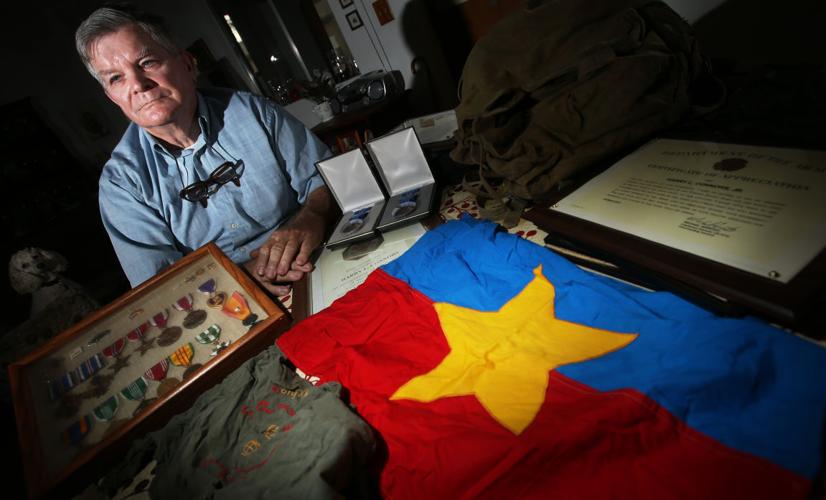
Like many veterans who served in war, looking back can sometimes be tough for Harry Connors.
“I dislike reading this because I see that of the 36 people I served with, only two of us made it out alive,” Connors said as he thumbed through a pocket-sized diary he kept during his time in Vietnam.
Connors twice served in Vietnam, first in 1967 and 1968 and later in 1972 and 1973. His Army career spanned 21 years.
He flew helicopters in Vietnam, running transport missions and recovering wounded and stranded servicemen from the field.
But he also flew even riskier missions, like piloting helicopters just above ridgelines and tree lines to scout enemy positions.
On one mission, flying his bird just feet above the ground into a clearing, he came face to face with a Viet Cong soldier holding a bowl of water in his hands with a machine gun strapped across his back.
“He threw his water bowl up and reached for the machine gun on his back,” Connors said. Out of options, Connors pushed on the stick and plowed the helicopter’s skid into the enemy fighter.
Another time, Connors said, four helicopters he piloted over the course of one day were struck with enemy fire. In one instance, he was forced to make a running landing on a foamed runway.
“Helicopters can take quite a beating, but they’re no match for a 37 millimeter (anti-aircraft gun),” Connors said.
Pilots used to fly 18 or 20 hour days back then, he said. Flying a few recovery missions, his helicopters took repeated fire. He was lucky to make it out alive.
His luck nearly ran out in a battle in 1968.
Connors and other Americans, along with a group of Vietnamese mercenaries, were on an intelligence-gathering mission in the mountains outside of Dien Bien Phu, in the northwestern reaches of North Vietnam when fighting with the North Vietnamese army broke out.
 |
Despite being shot in the leg and arm, Connors and the team fought on for a day and a half.
“The only thing I can think of is we fell asleep because we were exhausted,” Connors said.
Special operations forces came to their rescue, Connors said, noting he and all 12 members of the team were shot multiple times. He was taken to Japan to recover.
In 1972, he returned to help train South Vietnamese forces.
Later he worked in foreign service in Europe and other parts of the world.
Connors’ wife, Heide, originally from Germany, said the couple spent nearly eight years apart during his two-decade military career.
At the time of his retirement as a major, Connors was up for promotion — but his wife wasn’t having it. “I didn’t want to be a colonel’s wife,” she said, noting the travel and time away from home that would have been required.
Instead, Connors became a civilian government affairs adviser.
Over his career, Connors earned dozens of medals and distinctions, including the Purple Heart.
He and his wife retired to Tucson in 2013.
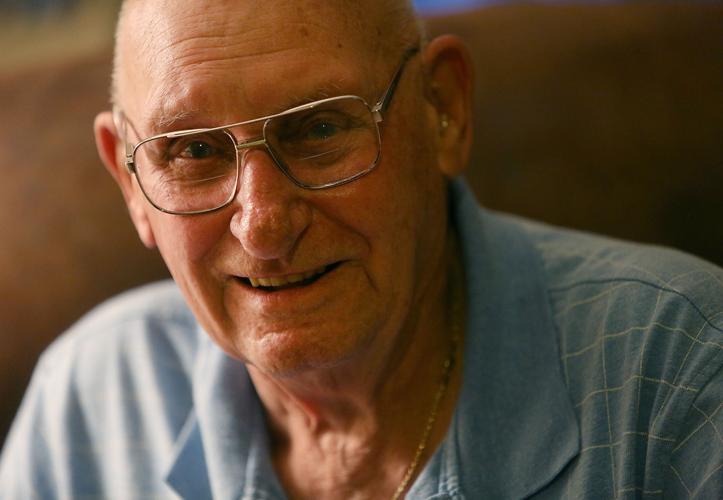
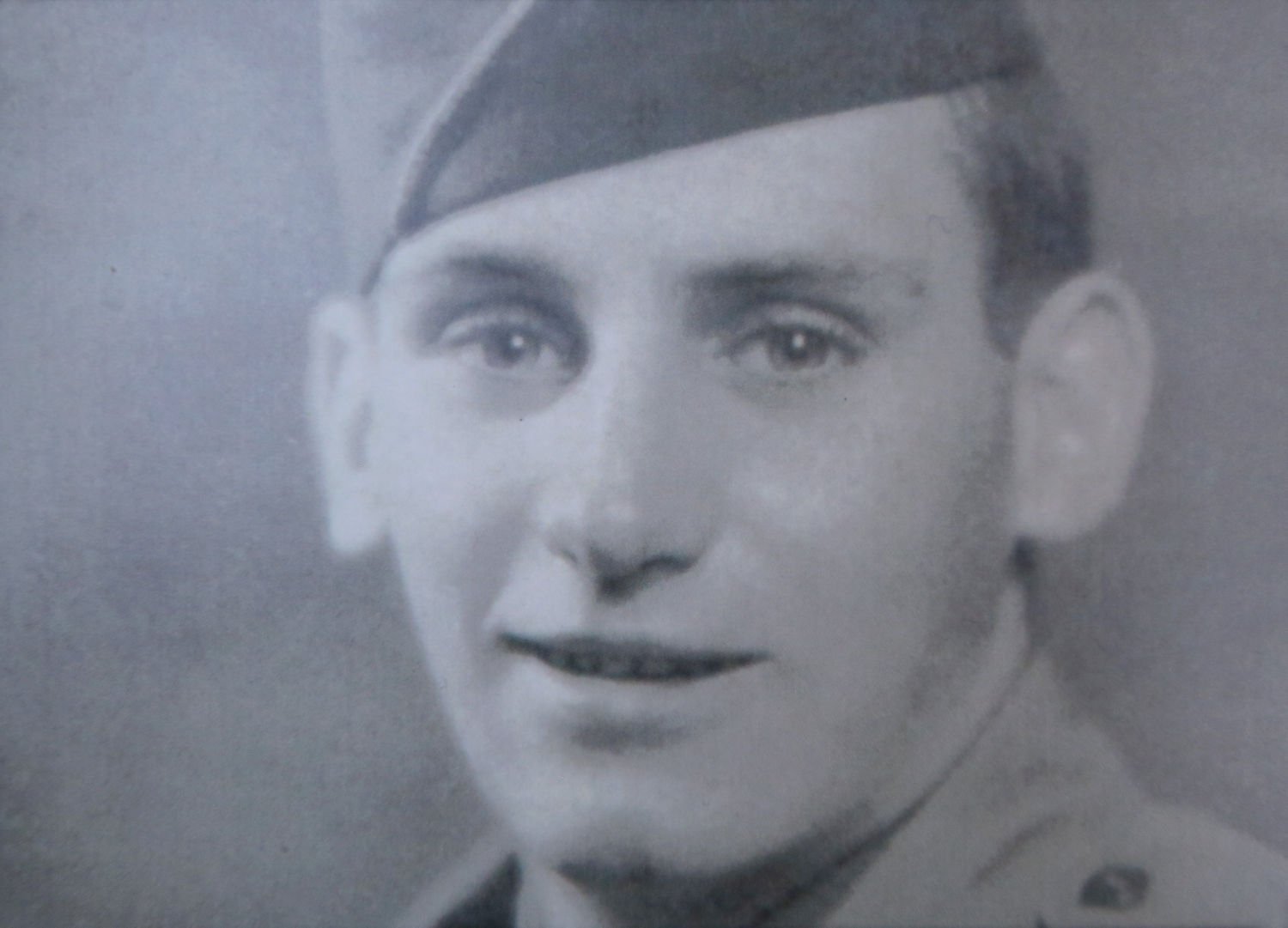
Bill LaBar spent his 90th birthday being treated as a celebrity. He had officials lining up to meet him and at one point, was surrounded by a group of teen girls.
It had been roughly 70 years since the decorated soldier served as a rifleman in Europe.
Most of the people he met on his birthday trip overseas were the children or the grandchildren of the people he fought to liberate.
 |
During an 11-day tour of Europe last month, strangers asked LaBar to pose for photos and for hugs. He signed autographs on books, a jacket and even a 48-star flag.
“Throughout Europe, in the countries that were occupied, the World War II veterans were treated like rock stars,” LaBar said.
He ended the trip celebrating his birthday in Eindhoven, Netherlands and took part in their big liberation ceremony as an honored guest.
LaBar is humble about his war service. But medals on the wall of his Tucson home offer hints at what an 18-year-old boy from Pennsylvania did overseas.
He was recently given the French Legion of Honor, the country’s highest decoration.
LaBar served with the 318th Infantry Regiment, 80th Infantry Division.
At one point he was attached to the 4th Armored Division, which broke through enemy lines to resupply the 101st Airborne Division.
“The 101st Airborne was surrounded at Bastogne. Completely. They were running low on food and ammunition — and everything — and our outfit was tasked to the 4th Armored Division temporarily,” he said.
His company liberated two prisoner of war camps and a forced labor camp. He also helped to liberate Buchenwald concentration camp.
Seven decades later, LaBar pauses, still troubled by the memories of the Nazi atrocities. “When we liberated that, the ovens were still warm,” he said.
He also has pleasant memories, including the day he celebrated the end of the war in Europe.
 |
Stationed in Austria, the men went to a local farmer to ask for some fresh eggs. The farmer obliged but also dug up a barrel of beer he buried when the war began.
With cold glasses and warm beer, the men celebrated until they could no longer stand up.
At 90 years old, LaBar’s memory is great but not perfect. He relies on his friend Suzanne Galen to help fill in some of the blanks.
Galen raised over $5,000 to take LaBar overseas, putting in her own money to help him retrace his steps in Europe. Last month, she served as a guide and helped to push his wheelchair through three countries.
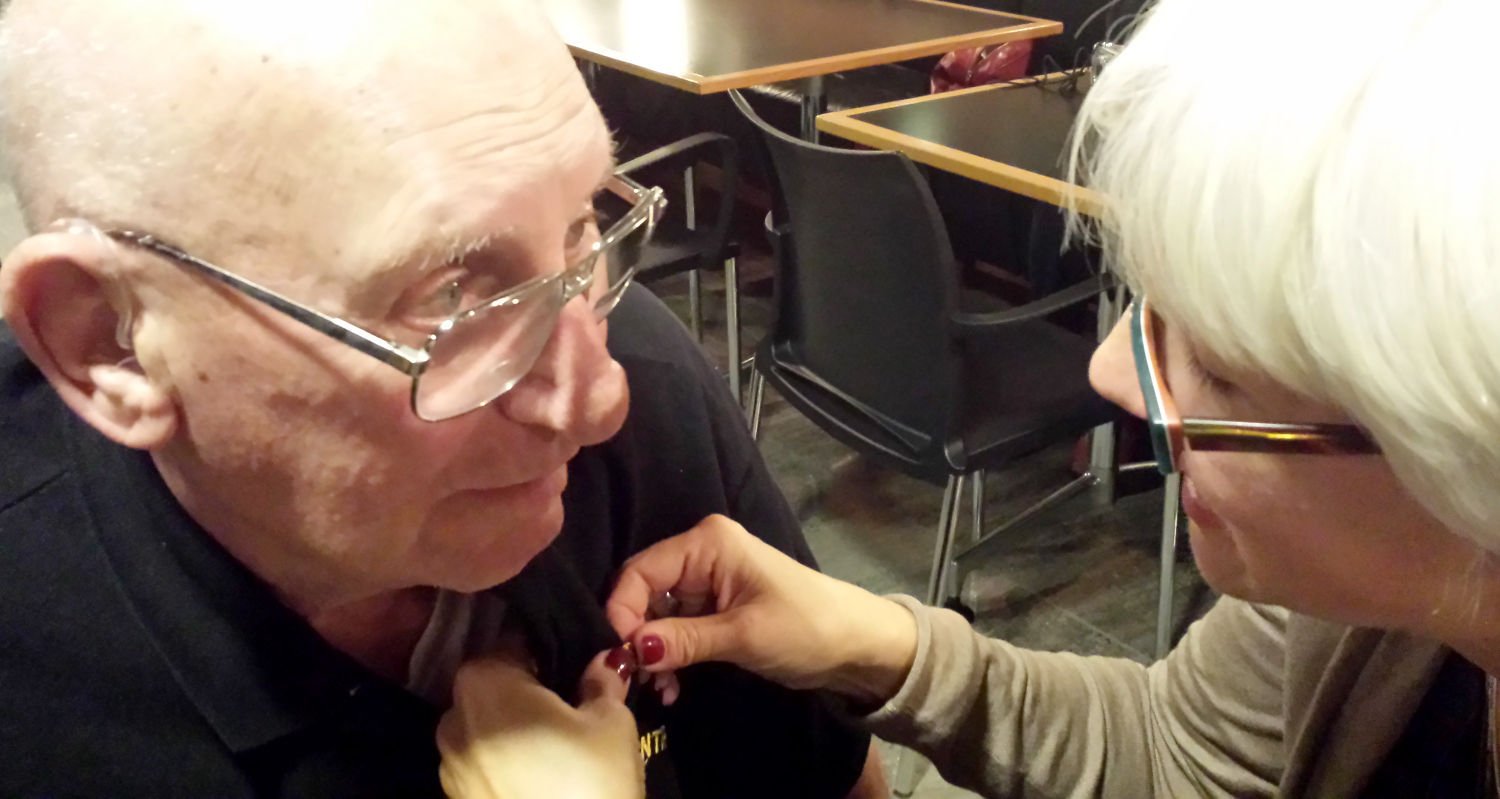
Besides the memories and photographs, LaBar also came back with a pin from the Patton Foundation.
He smiles, recounting how he met Helen Patton, granddaughter of Gen.George Patton, in Eindhoven.
It was there that Patton took off her pin and gave to LaBar after learning he had served under her grandfather.
- By Ethan McSweeney For the Arizona Daily Star
- Updated
Bill Deyoe figured he would be drafted into service for World War II when he turned 18.
So, the then-17-year-old decided to get ahead and enlist, but he would need one of his parents to sign for him. He knew his mother would never do it, so he asked his father.
“It was after the Battle of the Bulge and we were already starting to go into Germany so my dad said, ‘Ah, it’ll be OK,’” and signed for him to enlist, Deyoe, 88, recalled.
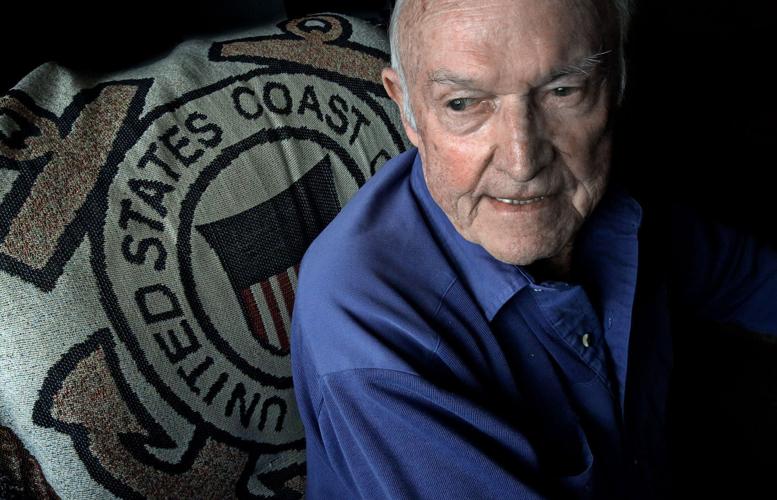
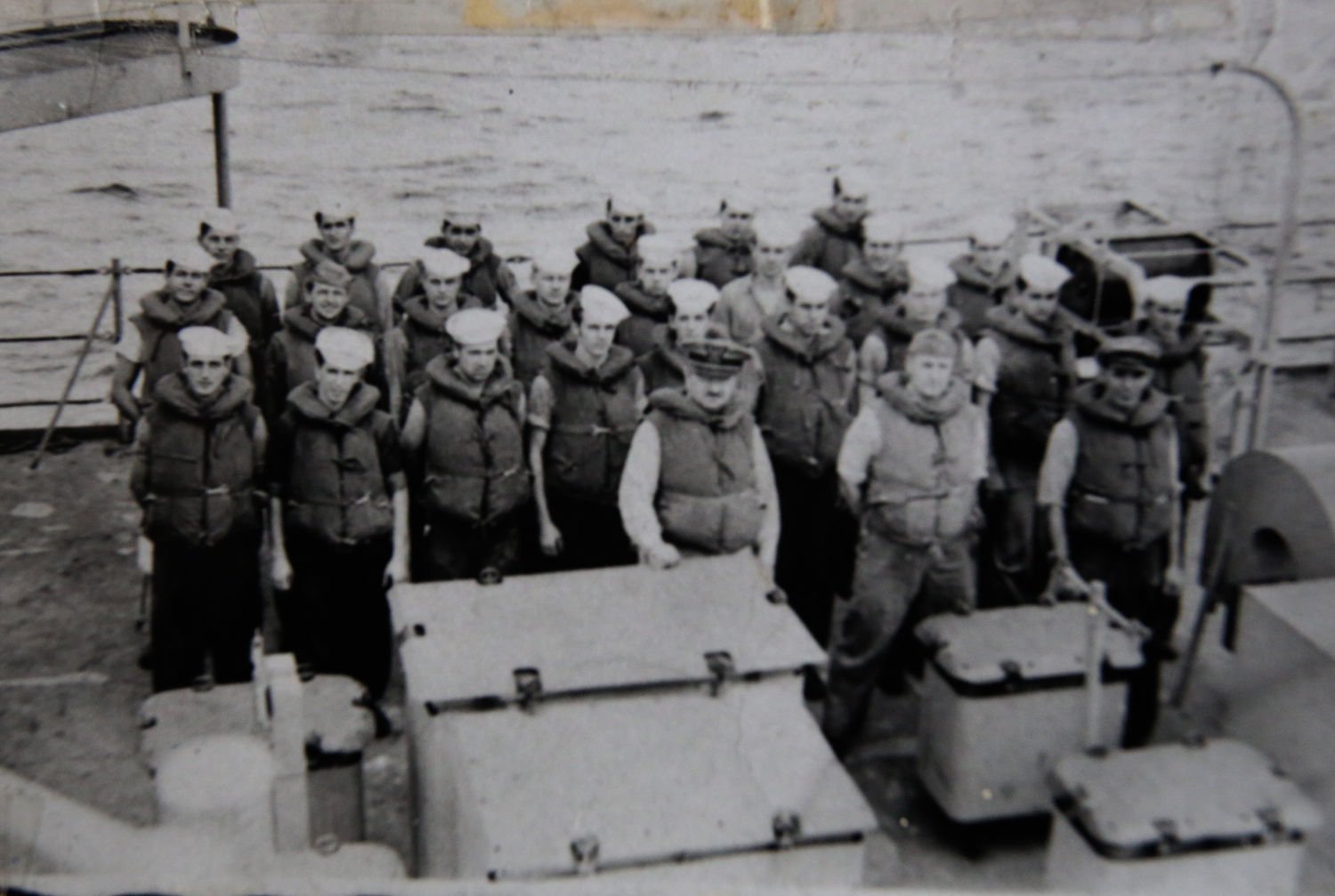
Deyoe went into the Coast Guard and, with war winding down in Europe, most Coast Guardsmen were sent to the Pacific.
 |
Deyoe, however, was placed on the USS Manitowoc, a frigate, out of the Boston Navy Yard. The ship’s mission was to conduct weather patrols in the Atlantic, which meant it would sail directly into storms to collect data.
“We didn’t have the kind of weather technology we have now,” Deyoe said.
These weather patrols took the Manitowoc across the Atlantic from the Azores to the Denmark Strait sailing with some intense storms. “That darn ship held up,” he said.
The data relayed back kept ships across the Atlantic informed of weather conditions so they could move safely. Many of those ships, Deyoe said, were sailing from Europe to go through the Panama Canal on their way for the impending invasion of Japan.
Deyoe worked down in the engine room on the Manitowoc keeping check on the fresh water aboard the ship.
He insists that he didn’t do much important work for the war and he didn’t save anyone’s life.
 |
Except for that time he saved his friend from a shark.
His friend went into the water off the Manitowoc so the Coast Guardsmen could practice water rescue. While his friend was in the water on one side of the ship, Deyoe, on the other side, looked down to see a fin cutting through the water about 50 or 75 feet away.
“I never saw a shark really before. I looked at it and said to my buddy, ‘Hey that looks like a shark fin,’ and he said, ‘Yeah, it does,’” Deyoe recalled.
Deyoe ran to the other side of the ship to alert his pal and his other shipmates.
“He swam like hell,” Deyoe said.
He left the Coast Guard in June of 1946 and met his wife, Mary Lou, in their native Schenectady, New York the same year. The two have been married for 68 years with three children.
They moved to Tucson in 1959 and Deyoe worked as a contractor for decades, doing demolition work across the city.
“I always say I tore half of Tucson down over the years,” Deyoe said.
 |
His two sons worked for him in the business. His son Bob Deyoe said his dad would never ask him to do anything he wouldn’t do himself.
“The work ethic of that generation is so different from every other generation I’ve worked with,” he said.
Deyoe would recall his time in the Coast Guard with fondness and color, Bob Deyoe said.
“People would ask him about his service and he would always joke that he won the war,” he said.
Deyoe has other stories from his time on the Manitowoc from his mess duty to particularly nasty storms.
He said what he’s carried with him from the Coast Guard through the year is the discipline that service taught him.
“I just did my job,” he said. “I just minded my own business and did what I was supposed to do.”
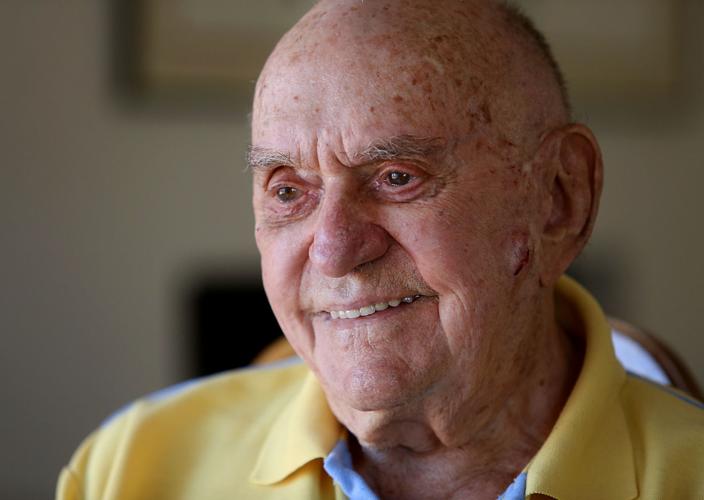
- Doug Kreutz Arizona Daily Star
- Updated
The year was 1943, and Mel Giller was 17 years old. He was walking along a street in his hometown of Boston and spotted a U.S. Marine Corps recruiting office. On an impulse, he decided to enlist.
“I was anxious to get in the war,” said Giller, 89, who now lives in Tucson.
After rigorous Marine combat training and special training in Hawaii for amphibious landings, Giller got into the war all right — taking part in one of the most important campaigns in the Pacific.
“We boarded troop ships. They said we were going to invade the Philippine Islands,” he said. “We hit the beach near the end of 1944.”
After taking the beach, Giller and his fellow Marines battled the Japanese in dense jungles.
“I got malaria in the jungle,” said Giller, who attained the rank of sergeant. “We fought, but I actually remember very little of the specifics of the fighting. That also happened to others. A doctor in Manila told me most of the guys in combat push that away. They don’t want to remember.”
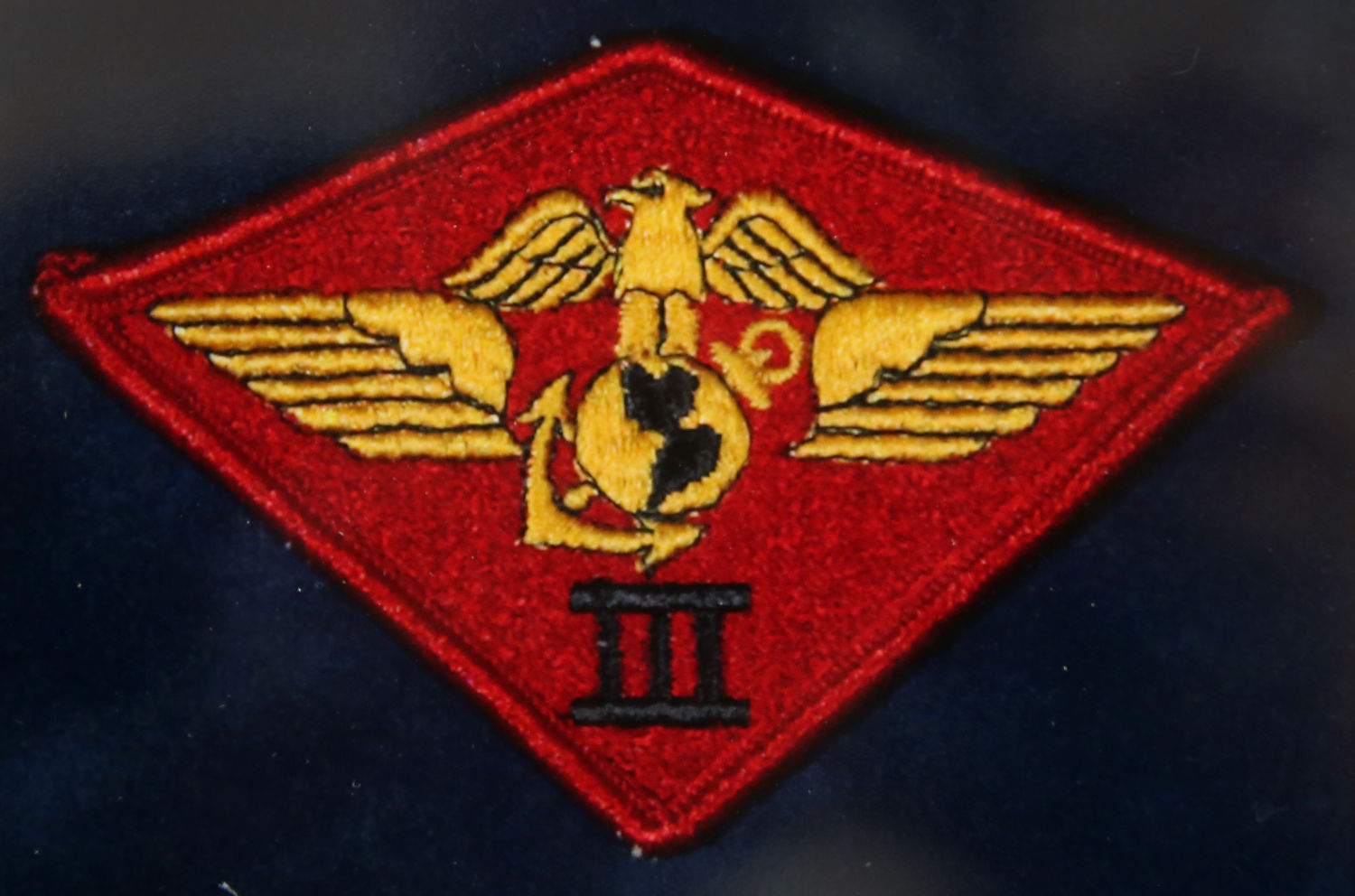 |
After fighting in the Philippines, “We were on a troop ship, going someplace to train for an invasion of Japan, when the war ended,” Giller said. “We heard some scuttlebutt about a bomb” — one of two atomic bombs that were dropped on Japan in 1945, leading to a Japanese surrender.
With the war over, Giller and fellow Marines traveled home, landing in San Francisco.
“There were thousands — thousands! — of Marines marching through San Francisco,” he said. “It was bedlam. I got to a phone and called my parents.”
Tim Harrington, Giller’s son-in-law, said, “Mel is 89 years old and the war was 70 years ago. He is still as proud today of being a Marine as he was when he was 17.”
If Giller’s service in World War II was a life high point, there were many more to come.
After gaining extensive experience in real estate as a builder, developer, marketer and Realtor, he devised a new approach to real estate auctions and launched a high-end auction company in 1975.
“I took the auction program and raised it to a level that had never been done before,” Giller said, selling more than 10,000 properties from Hawaii and Florida to the Spanish Riviera and Thailand. After conducting highly successful auctions in Thailand, he moved there and remained for 15 years — returning to the United States about three years ago and residing in Tucson.
“With the businesses, he swung for the fences every time,” Harrington said.
Giller said he shut down much of his business operation 19 years ago after his wife, Janet, suffered a stroke. She died in 2007.
Giller said he holds loving memories of her as well as enduring respect for his many Marine comrades. And he shares a philosophy that has guided him through a long and fascinating life: “You have to have an imagination that soars like an eagle.”
Contact reporter Doug Kreutz at dkreutz@tucson.com or at 573-4192. On Twitter: @DouglasKreutz
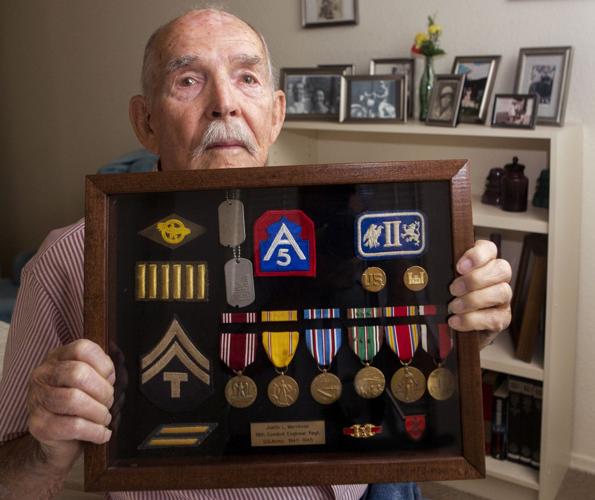
In the summer of 1940, Justin Merriman had just finished 10th grade at Marana High School when he talked his mother into lying about his age so he could join the military.
His mother’s main concern for her 16-year-old son: “Stay away from wild women.”
During the next five years and 22 days, Merriman trained as a combat engineer and fought the fascist forces that threatened to overrun Europe and North Africa during World War II.
In November 1942, Merriman disembarked in Oran, Algeria, as part of the Allied forces that invaded German-held territory in North Africa. Three months later, he fought against a major German offensive led by Gen. Erwin Rommel during the six-day Battle of Kasserine Pass.
 |
“We went there to stop him, which we did,” said Merriman, 91.
While in North Africa, Merriman served under Gen. George S. Patton, who he described as a “very good general.”
“He was rough,” Merriman said. “His orders were very explicit and you didn’t dare break a rule. No way.”
As a combat engineer, Merriman laid and picked up land mines, repaired bridges destroyed by the Germans, and fought at the front lines when needed. He fought in seven major battles in World War II, including five “from the bottom to the top” of Italy, he said.
His most dangerous moments came in the Battle of Monte Cassino. Cassino was a key city for Allied forces as they made their way from Sicily to Rome. Over the course of three nights, German troops situated high up on a hillside shelled and sank the boats Merriman and his fellow soldiers used to cross the Rapido River.
 |
“We lost a lot of infantry there and a lot of our men,” he said.
One bright side to the war was a friendship Merriman struck up with a fellow sergeant. The two spent most of the war fighting side by side, and stayed friends long after the war ended.
At one point, a land mine exploded under his friend’s foot and flung him into a river. Merriman dragged him out of the water and got him to safety, earning a Silver Star in the process.
The news of the end of the war in Europe reached Merriman in a little town in Austria near the Italian border where German leader Adolf Hitler and Italian leader Benito Mussolini used to meet. Soon after, he took a train to France and sailed to the United States on the USS West Point.
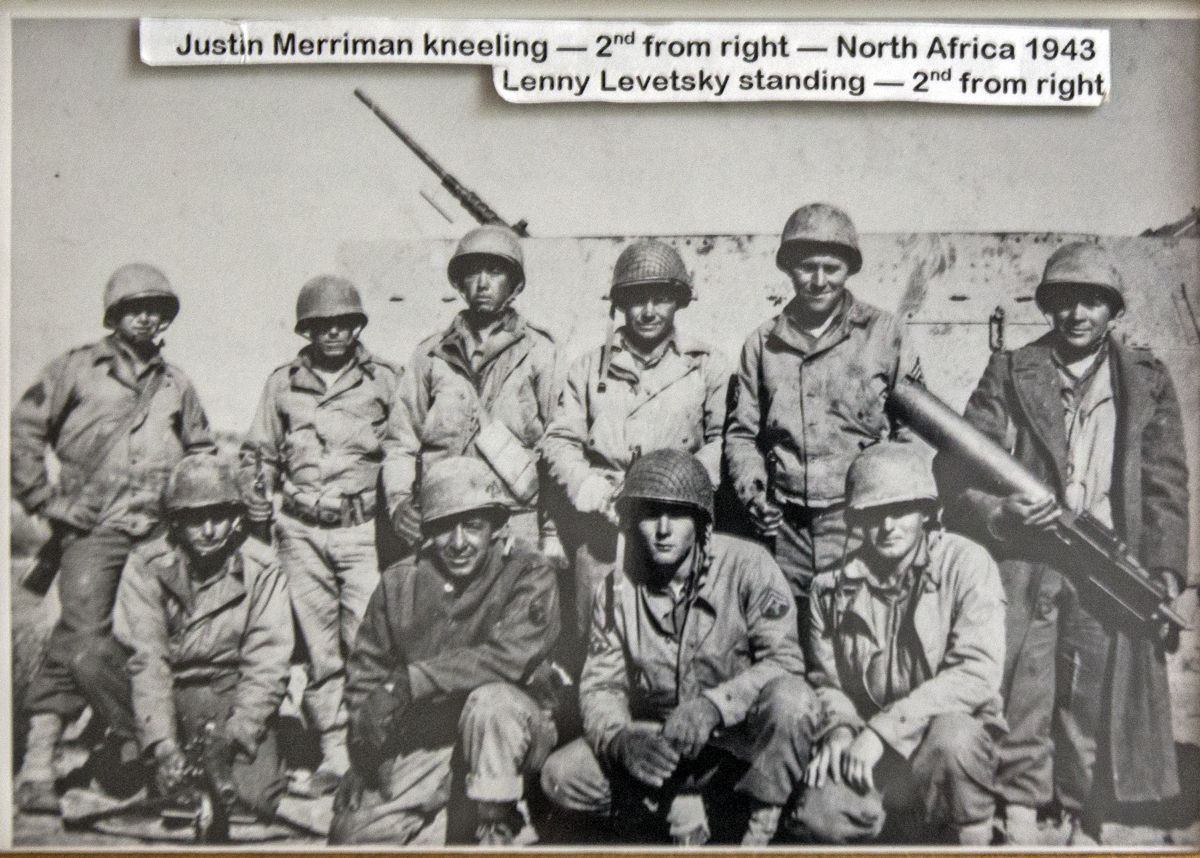 |
After his honorable discharge as a sergeant in El Paso, Merriman “took my barracks bag and just slung it to one side because I didn’t want any part of that anymore,” he said. “I just had my uniform. That’s all I had when I went home. I didn’t even have a hat.”
Riding a train from El Paso to see his family in Douglas, Merriman mused about all the rites of passage he had yet to go through, such as learning how to shoot pool, dance and finding a girlfriend.
Upon arrival in the Tucson area, Merriman took a test to get his high school diploma, got married, raised two children, and spent 35 years working for the Bell Systems telephone company.

On paper, Art Schaefer served as a navigator in World War II, responsible for getting his crew to their target and finding the safest, quickest path out after dropping bombs over Germany.
He stepped out of that role, however, on occasion — once while under attack in the air when he fired on German fighters who had shot down 25 percent of his squadron.
He also fondly recalls collecting candy and gum ahead of food-drop missions in Holland as a treat for children waiting below for cheeses, meats, canned food and other items.
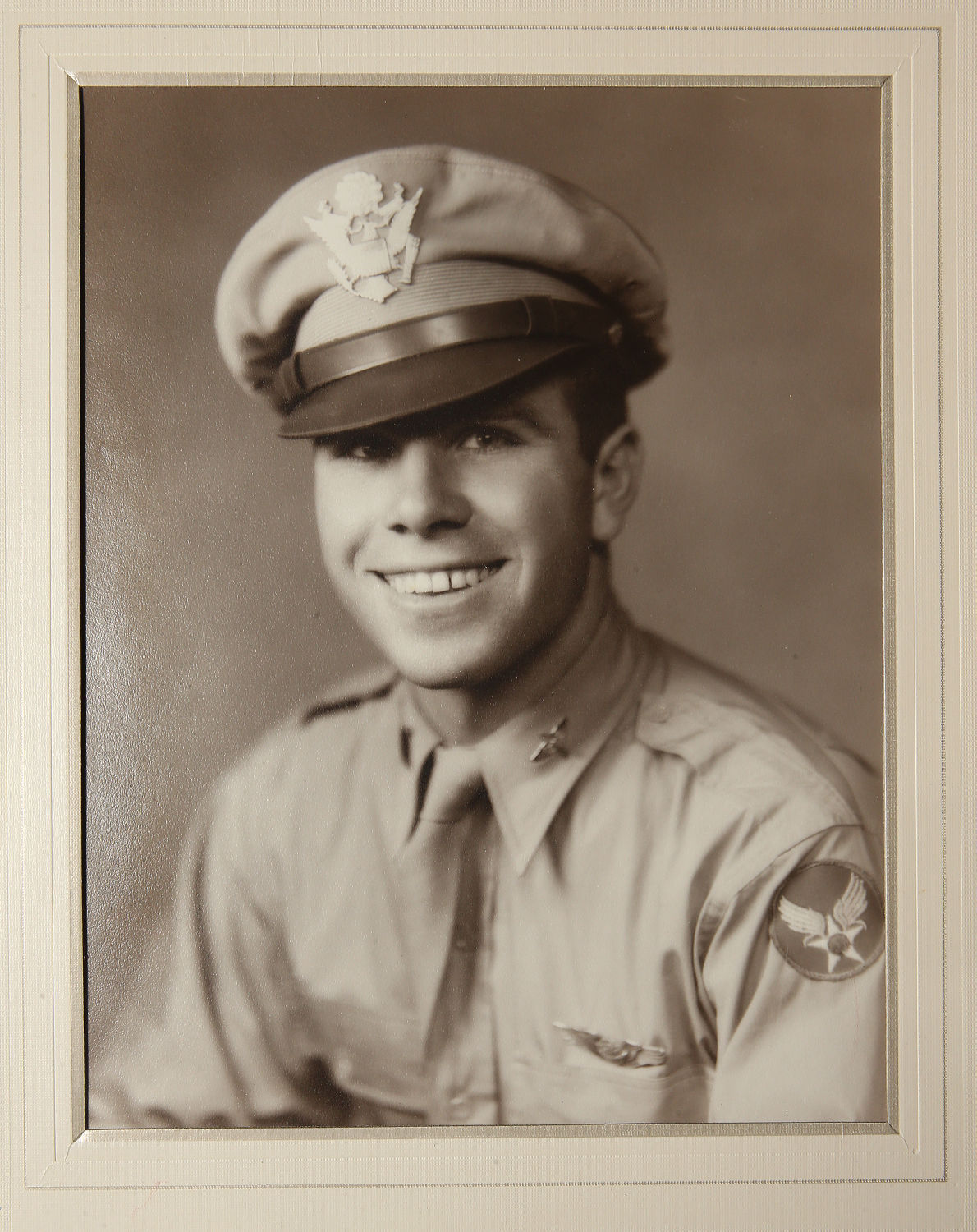 |
At 93, Schaefer looks back on his military experience as rewarding, but says that was never his plan.
Before entering preflight training, he had never been up in airplane except when he was 4 years old, though he has no recollection of the experience.
As a student at the University of Arizona, Schaefer was set on becoming a mining engineer.
At that time, every male was required to take basic training through the ROTC program for the first two years. But at the end of those two years, Schaefer decided to volunteer for advanced training.
It was 1945 when he made his way to England as part of the 385th Bomb Group Eighth Air Force to serve in the war.
He recalls experiencing tailwinds that enabled the crew and their B-17 to make it to their destination quickly, but having to fight against winds of up to 115 mph on the way back was no easy task.
 |
“We’d get to the target fast, and that was when you were working for the government,” he said. “By the time you turned around, you were working for yourself, getting your fanny out of there.”
Though Schaefer was never wounded, his closest call came on his seventh mission, over Dresden — one he wasn’t scheduled for but wound up on when another navigator was hospitalized.
Unable to identify their primary target due to cloud cover, the crew headed for Dresden, which was being bombed by the British.
Schaefer’s squadron came under attack, with three of its 12 planes being shot down, forcing him to man two guns — one on either side of the plane’s nose, which he used to shoot down one enemy plane and damage another.
It wasn’t until closer to the end of the war when Schaefer participated in what he calls mercy missions over Holland, where the Germans had flooded the fields to prevent food from being grown.
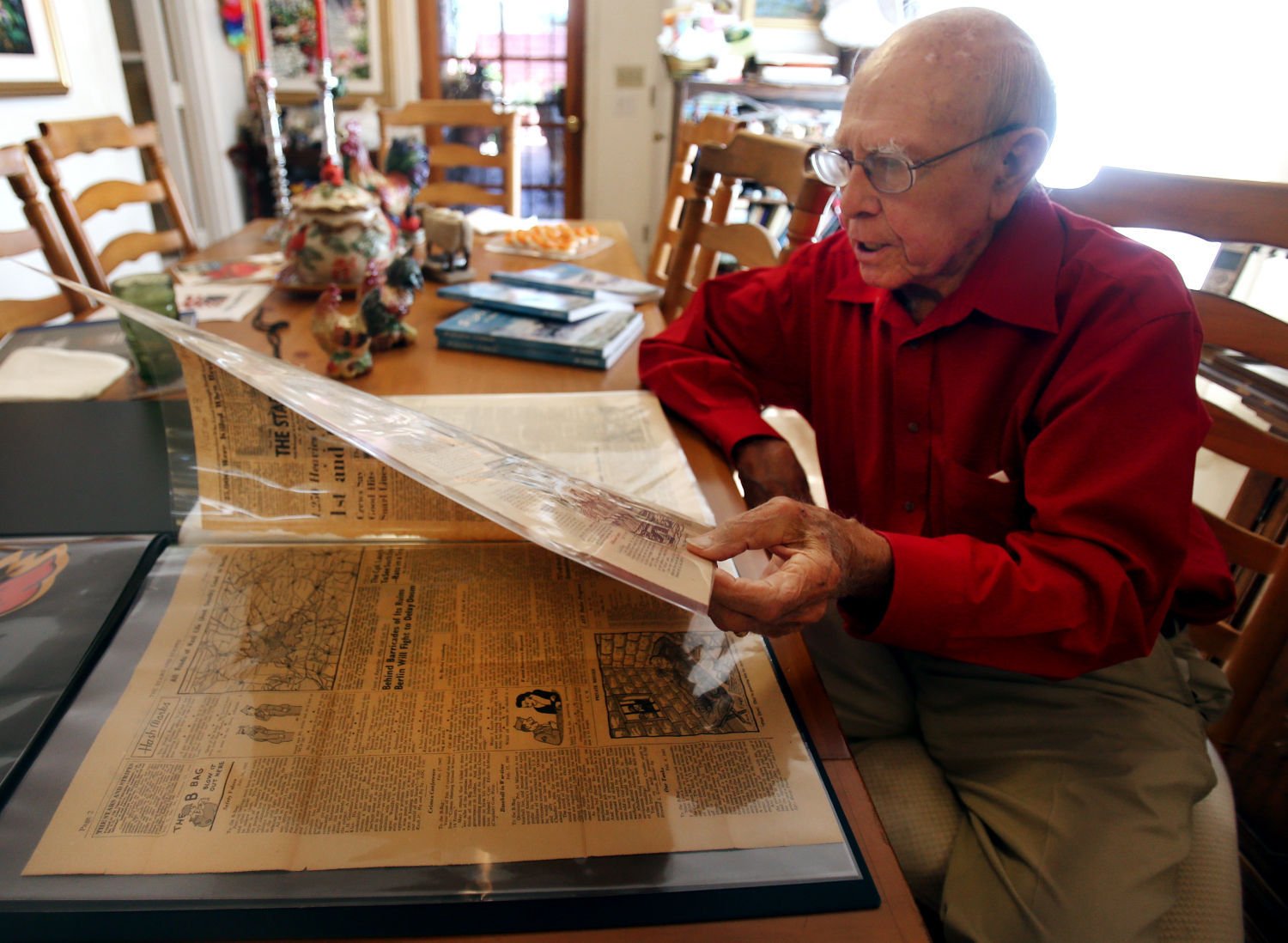 |
In response, Americans and the British dropped tons of food daily from 200 feet up at 100 mph. Schaefer’s crew was among those known as “candy bombers” for including sweets for children in those deliveries.
It was in the fields where he dropped food that Schaefer would see the words “Thank you” spelled out in rocks on V-E Day in May 1945.
Upon returning to the states, Schaefer made his way back to Tucson, transferring to Davis-Monthan Air Force Base where he served as a test navigator for B-29s, testing and calibrating equipment after repairs were made for several months before he was honorably discharged.
Picking up where he left off, Schaefer returned to the UA and earned his degree in mining engineering, enabling him to continue his travels around the world, inspecting mines, mills and smelters for Asarco. After retiring, Schaefer served as an adjunct mining professor at the UA.

Little did a young kid from the Old Pascua Yaqui Village imagine he would change the lives of Korean War veterans returning home. But David Arellano did.
It happened in 1951 when the 21-year-old veteran was seeking medical care at Tucson’s then-Veterans Hospital for a tumor on his neck. Administrators refused him the surgery he needed and sent him to the old Pima County Hospital for the poor, several blocks away.
It could not be done, said authorities, because under the law the Korean conflict was not classified as an “official” war, recalled Lorraine Arvizu, Arellano’s daughter, who sat next to her father in the living room of her spacious west-side home.
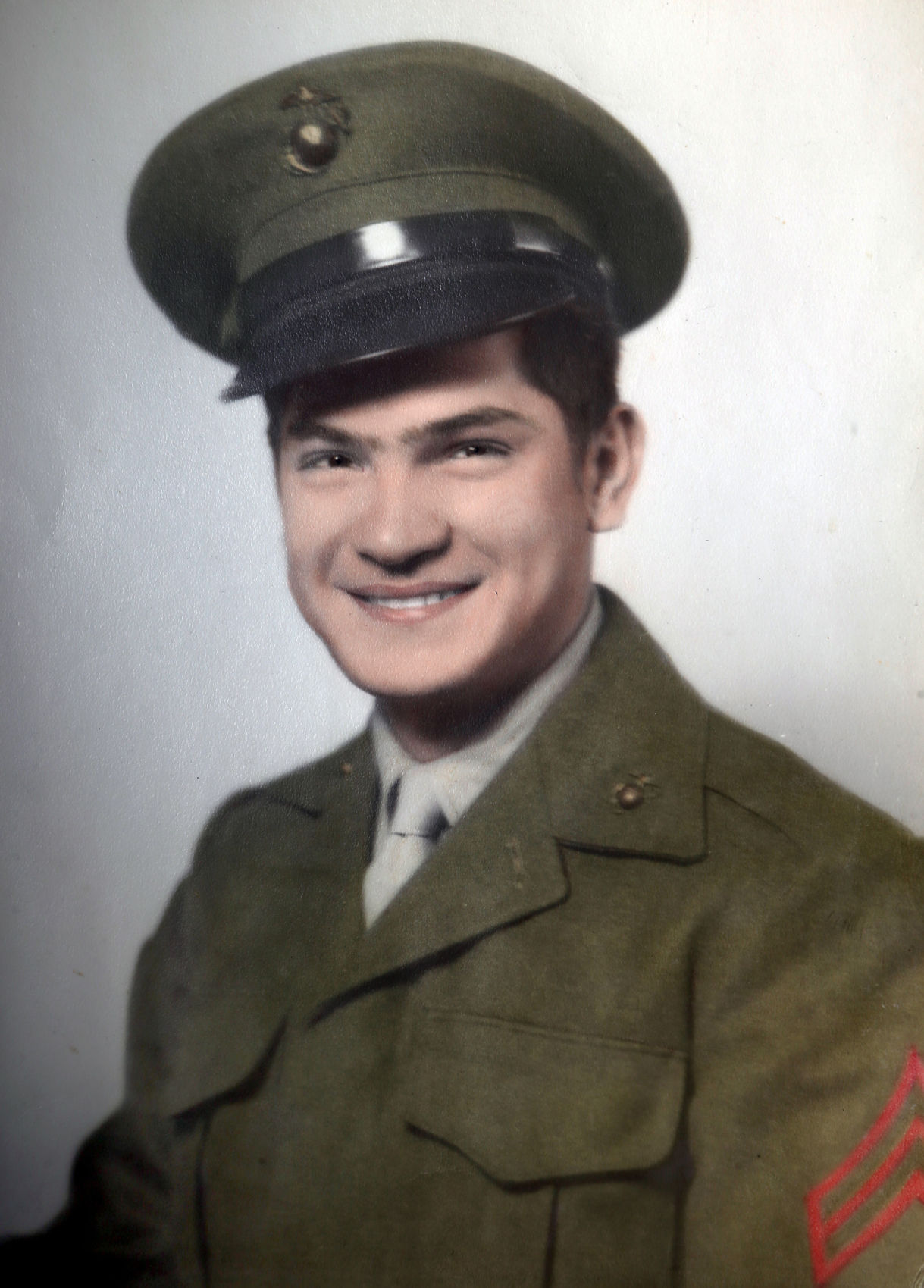 |
Arvizu pulled out a copy of a newspaper clipping telling his story that was among Arellano’s mementos, including his Purple Heart, his uniform and a train ticket after his discharge as a corporal from the Marines.
Lovingly, Arvizu pulled out a postcard her father wrote to her mother. “Remember dad. It is a love letter,” she said tenderly. Arellano, 86, who retired as an electric motor repairman, reached for the card, holding it.
The two then recalled the young Arellano’s medical journey and how he helped write history. Once he was turned down for surgery at the veterans hospital, he was sent to the county hospital, where it was performed. When the incident hit the newspapers — veterans, politicians and military families across the nation were outraged — backing Arellano’s plight to be treated as a military veteran.
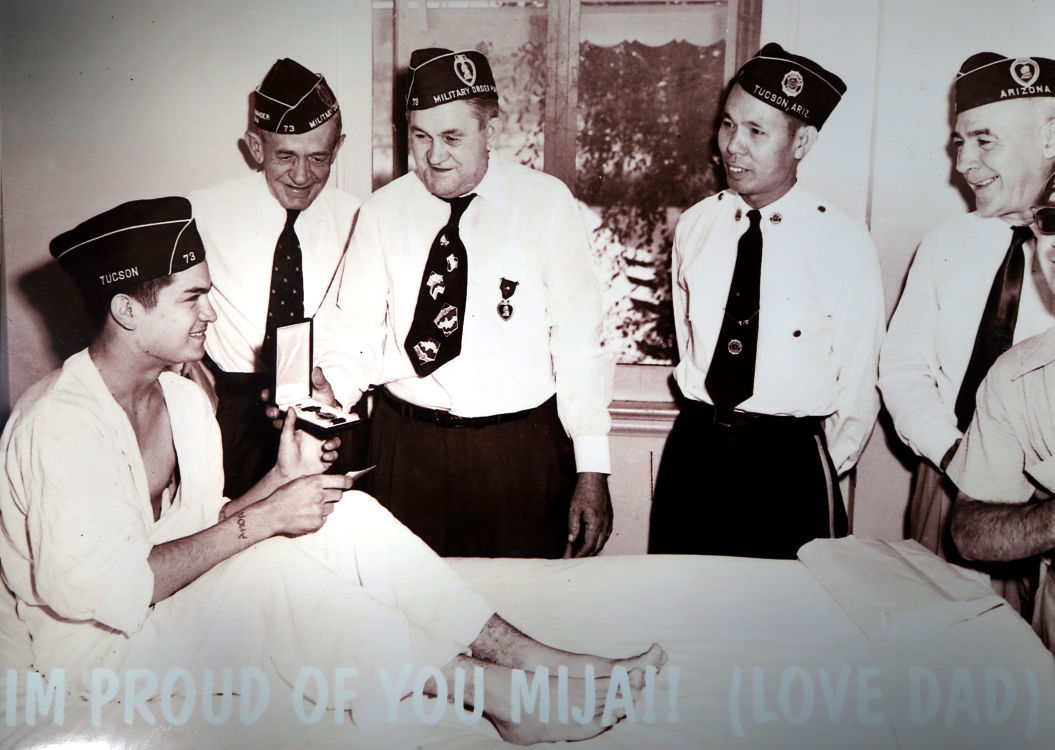 |
Even President Harry Truman backed Arellano, who, at age 20, was a Marine in E Company, 1st Marine Division, serving as a bazooka squad member. He survived numerous close calls on the battlefield — something still hard to talk about to this day.
“I saw a lot of men die, a lot of men hurt, a lot of men cry,” said Arellano of the combat.
He recalled a near-death incident where a captain came and told Arellano he wanted his foxhole. Once Arellano was settled in another foxhole, a bomb hit the foxhole the captain was occupying. “It wasn’t my time,” he said.
 |
Fighting at the front for almost five months, Arellano experienced another close call when he was in a truck taking supplies to the besieged 3rd Marine Battalion, according to a newspaper clipping. North Korean soldiers ambushed the truck on a hill, and when the driver maneuvered the truck off the narrow road it rolled. Arellano and 14 other Marines were trapped under the truck. Eventually Arellano was rescued and taken to the hospital ship where he recuperated.
Back home, President Truman and Congress agreed once they learned about Arellano being denied medical treatment that the law had to change to include benefits for Korean War veterans. Truman swiftly signed a bill into law that extended benefits to Korean War veterans.
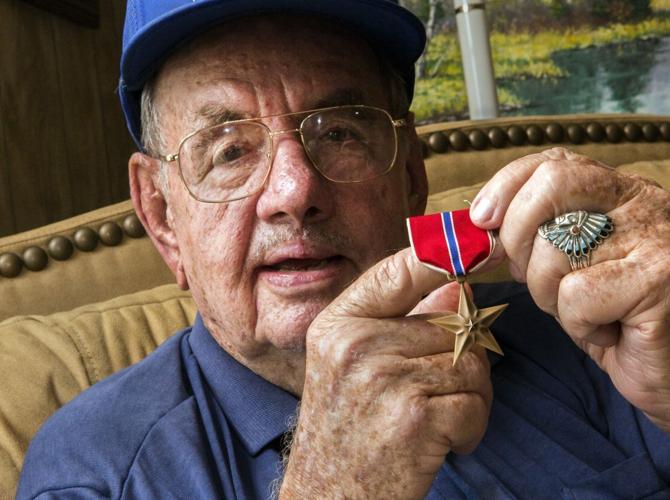
When James Glaze was 14 years old, he received an award from the local chapter of Sons of the American Revolution for demonstrating good citizenship.
The prize that came with the award was a free flight, he said.
That was the beginning of his 66-year flying career in the Air Force and in the private industry, during which he said he logged more than 11,000 hours of flight.
“There was a lot of adventure and excitement in those flights,” Glaze, now 85 and father of four sons, said.
He joined the military as a Navy reservist, inspired by his brothers who had served. He went on to spend 20 years in the Air Force, during which he served in the Korean and Vietnam wars, among other missions.
Korea was devastating, he said. He was stationed in Chuncheon, a city about 50 miles east of the South Korean capital of Seoul, in 1952.
 |
He completed 100 combat missions during that time, he said. He was a fighter pilot and an air controller on the ground, working with a South Korean artillery unit.
“Seoul and everywhere else was a mess,” he said. “It was bad. There were thousands of people getting shot.”
Glaze recalled once when he put his arm out of the window while taxiing on the runway as he was returning from a mission in Korea.
“I could put my thumb down in a bullet hole,” he said.
But his time in Korea also included a delightful memory — one of meeting Marilyn Monroe, who visited the troops in Chuncheon.
“She was very nice, pretty, young and engaging,” he said. “I was impressed with her.”
There was another woman who he was “impressed” with: Dolores, a young anesthesiologist and self-described farm girl from Texas who would become his wife after his return from Korea.
“It was love and that was it,” he said.
While in Korea, he said he wrote to her every day and hoped to marry her.
After they wed, the couple saw the world together as he was stationed in numerous places, including Madrid, Casablanca and Morocco.
“He’s been good all the time,” Dolores Glaze said. “He really has.”
In Vietnam, he flew a C-47, a transport aircraft. One time, he said he was transporting refugees into Saigon. He discovered that they had built a campfire on the floor of the aircraft to cook dinner.
“I thought, ‘This is not a good idea,’ ” he said.
He also transported military equipment, troops, ammunition and more.
“Occasionally, we would have the sad duty of flying people’s bodies back,” he said.
After his retirement from the Air Force in 1970, Glaze went on to get a master’s degree in social sciences and a doctorate in higher education.
He had a career as an expert witness and consultant in safety engineering and moved to Tucson when he got a job at the University of Arizona as a senior safety coordinator.
Glaze said he had a fulfilling civilian career, but his experience in the Air Force is his proudest achievement in life.
“I did my job. I flew the mission,” he said. “And I came home.”
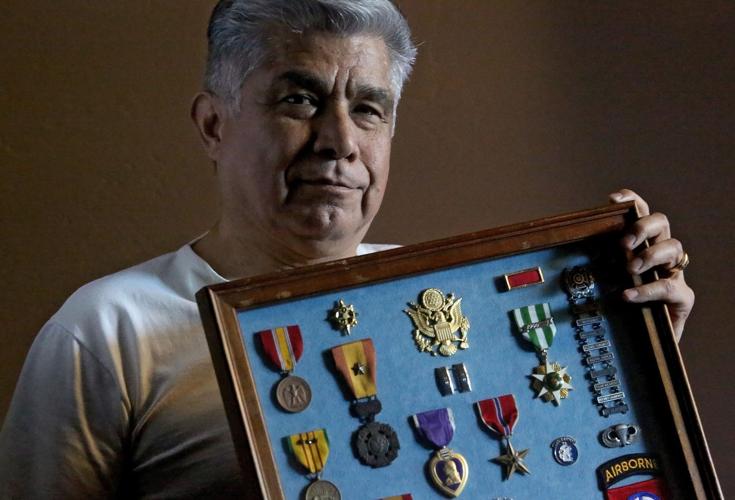
The first thing David Alegria mentions when he talks about his time in the Army is the training.
He waits to mention that he was an interrogation officer and intelligence adviser during the Vietnam War or that he received a Purple Heart or that he rose in the ranks to captain in less than five years.
First, he wants to talk about the training he received after he enlisted at 19 in 1968.
He was certified as a medic, a combat engineer in demolitions, attended jungle warfare school in Panama, became a paratrooper and went on to attend military intelligence school twice. The first time was to become a combat intelligence officer, and the second was to learn counterintelligence.
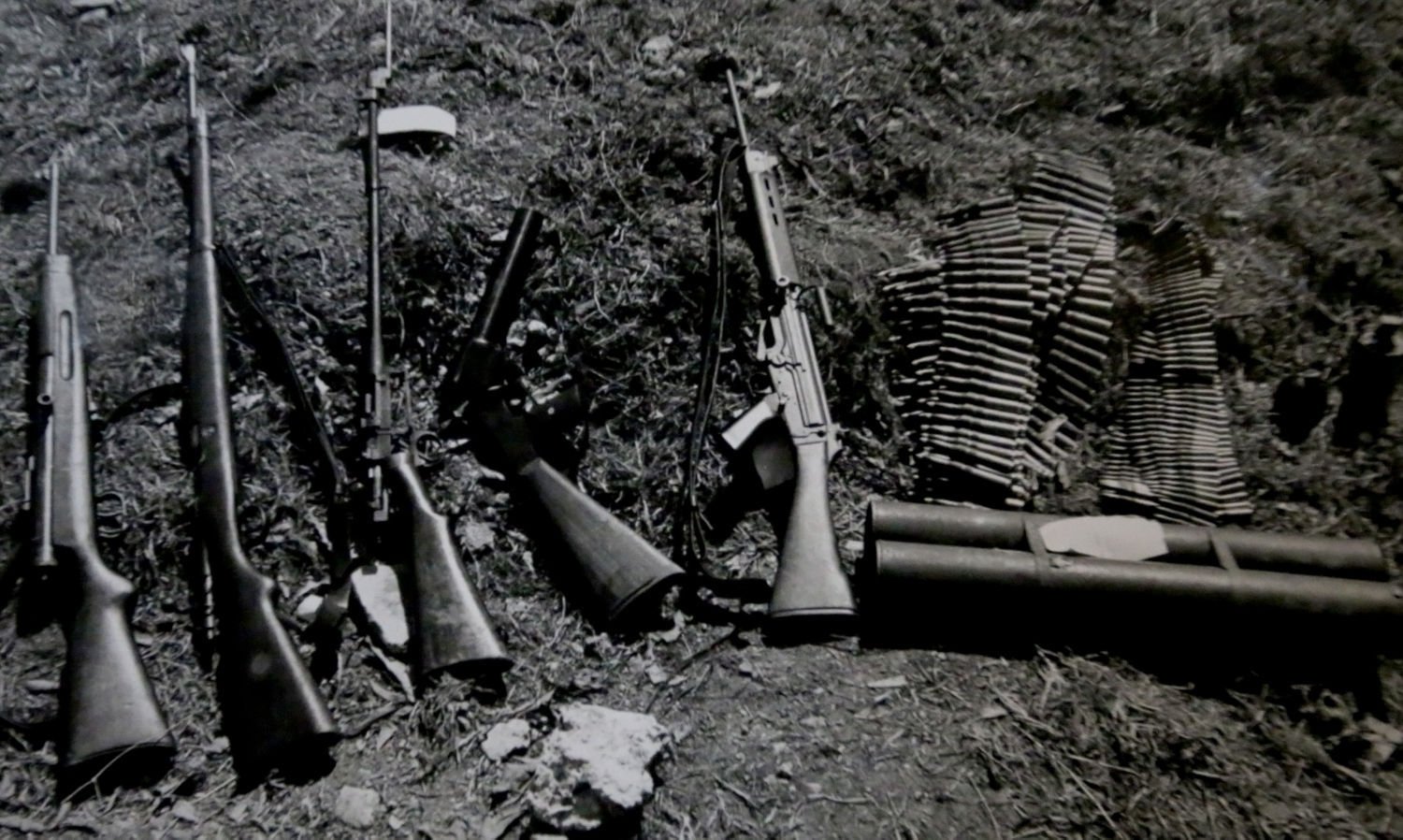 |
“I served with the 82nd Airborne stateside and was an interrogation officer with them when I got orders to Vietnam,” Alegria, 66, said.
Part of his job was to target the commanders of the Vietcong and North Vietnamese Army that were in his area. Many times it was necessary to go through an officer’s whole unit in order to capture him, which “more often than not” led to a firefight, Alegria said.
By setting up what he called “intelligence nets,” Alegria was able to draw in sources from the Vietcong and North Vietnamese Army who presented him with information. If the information checked out as reliable, a few days later the source would come back and Alegria would pay him.
In 1970, he was wounded during a mission, during one of the many firefights he took part in.
“I was in an operation with an agent who had doubled, but we didn’t know which agent had doubled so we took six out there. We got caught in an ambush and I got hit,” he said.
After spending a year in the hospital recovering from his wounds, he took a job as the Army’s Los Angeles field office commander before taking a medical retirement in 1972.
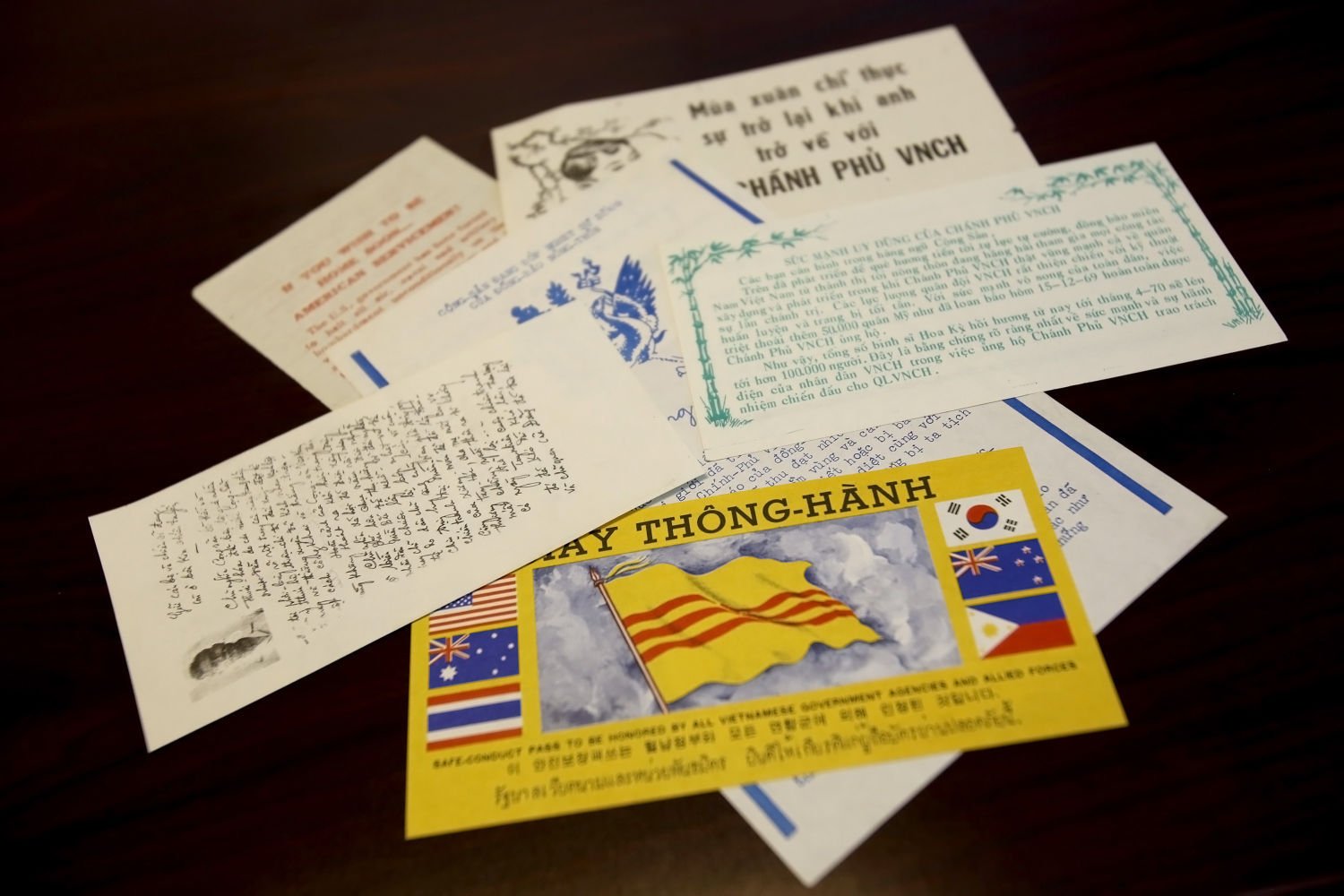 |
In his free time now, Alegria helps veterans file paperwork for benefits and compensation with the VA, as he knows from experience the process can be confusing. He also is a member of a number of military groups and works with organizations that help homeless vets and vets facing other challenges.
When asked about his most memorable experience in the war, Alegria smiles as recalls the occasion when he met with his Vietcong counterpart.
“He came into the compound looking for me and asked, ‘Do you know who I am?’ and I said I knew exactly who he was.”
The men talked for hours, comparing notes about operations and talking about how and why decisions were made on both ends. At the end of the meeting, the officer said that because of Alegria’s reputation, he’d known he would be safe walking on the base.
“Even with the enemy, people have to trust what you say. You have to be credible, and to me, my word was my bond.”
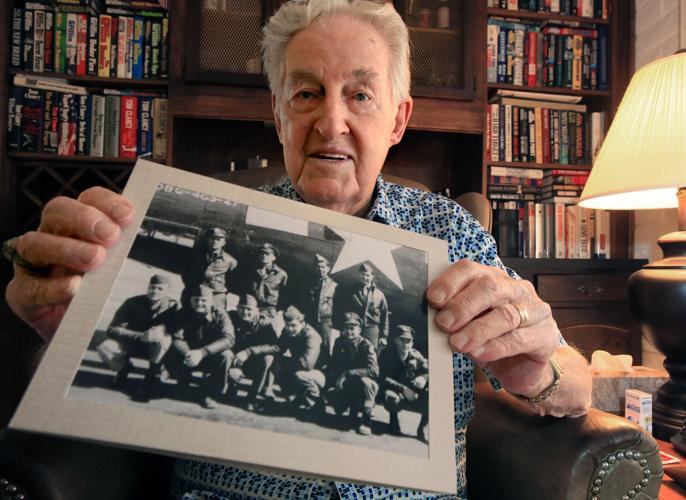
- By Patrick McNamara Arizona Daily Star
- Updated
Tucsonan William “Bill” Peel has witnessed critical events in history.
Born in Pittsburgh in 1926, Peel couldn’t wait to join the Army. He wanted to join so badly that he and his father falsified his birth certificate so he could enlist at 15 years old.
“I always wanted to wear the uniform,” Peel said. He did so, first the Army Air Corps and later the Air Force. He wore a uniform for 28 years through three wars.
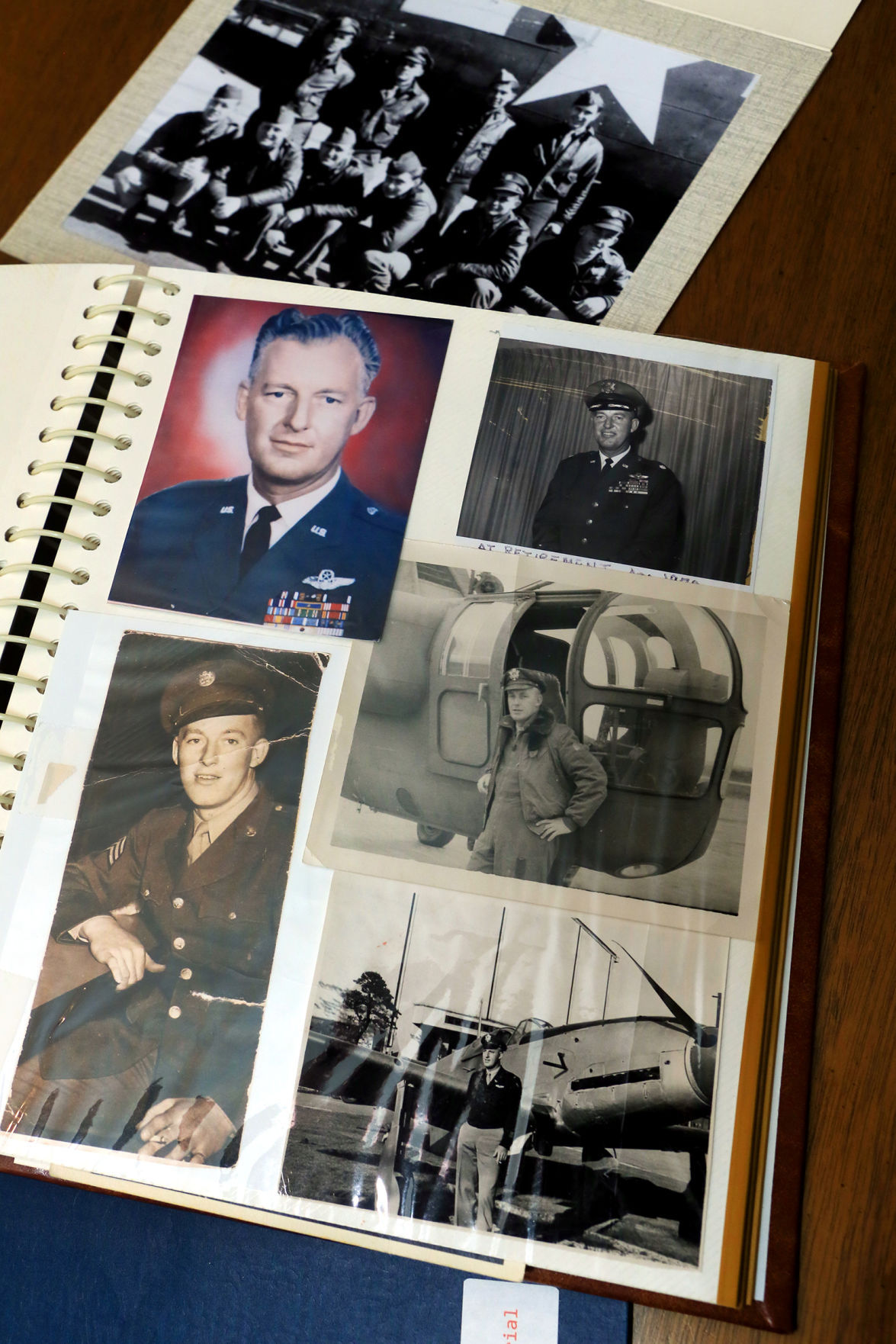 |
Peel’s first brush with history came in June of 1944, when the bomber the 17-year old Peel was working on was shot down over Austria.
“I flew 28 combat missions and was shot down on the 28th,” Peel said with casual confidence.
But what happened next was anything but casual.
“I was in a German POW camp until the end of the war,” Peel said.
He was one of more than 10,000 mostly American servicemen held captive in Stalag Luft IV, in what is today northwestern Poland.
Peel remembers the hard times he others had at the camp — eating black bread, the dough having been extended with sawdust as German supplies ran low. And the cramped quarters, with more than 20 men for each room, sleeping on straw-filled mattresses.
But he can also recall the innovative way the captives managed to stay informed of the outside world. “Someone built a radio,” he said.
Each night, before their German captors forced them back into their rooms for the night, some of the captives would listen to BBC broadcasts, take notes and distribute reports throughout the camp.
Later, as the Eastern Front began to close in on Nazi territory, the Germans forced Peel and thousands of other prisoners to march west, deep into Germany.
Recorded in history books as “The March” or “The Black March,” prisoners were forced to walk hundreds of miles, zig-zagging their way in retreat from Soviet forces.
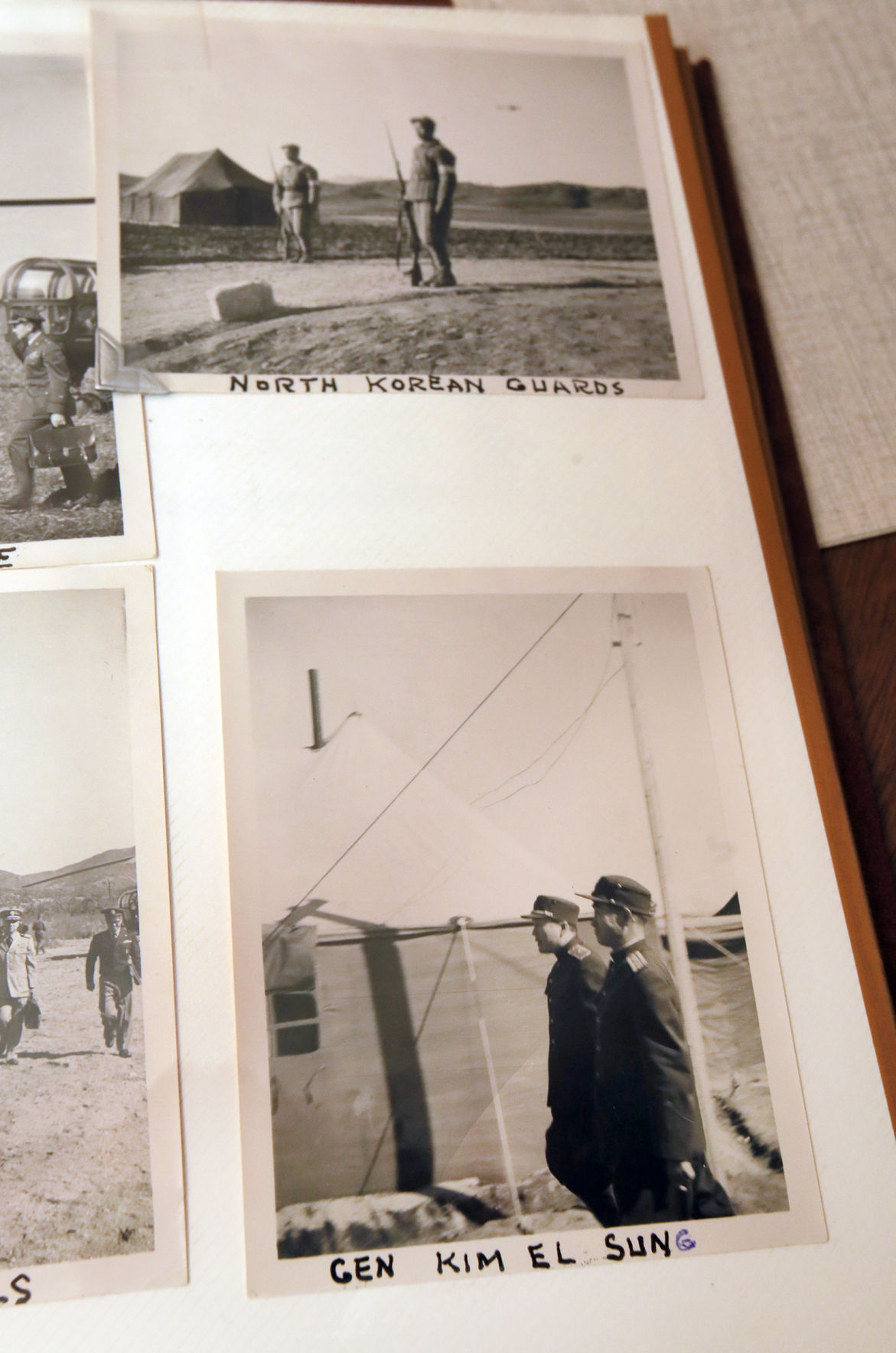 |
Peel said he and the others walked for 85 days, covering 600 miles through frozen European forests to Fallingbostel, near Hamburg in northern Germany.
“It was tough. I got frostbite on my feet and I had amoebic dysentery,” Peel said.
After the war, Peel decided to stay in the service. “I always wanted to be a pilot,” he said.
He learned to fly, first airplanes and then helicopters, which he would pilot during the Korean War.
In Korea, Peel was attached to one of the famed MASH units, Mobile Army Surgical Hospital.
Sitting at the dining room table of his east-side home with his son Mark, Bill Peel thumbs through a photo album. “And this guy we called Hawkeye,” he said, describing the surgeon he knew working at the MASH 8055 unit.
A novel titled “MASH: A Novel About Three Army Doctors” introduced the world to the fictionalized Hawkeye character from the film and TV series.
In other photos, Peel points to Vice Admiral Charles Turner Joy, who along with other dignitaries Peel piloted back and forth to armistice negotiations at the Demilitarized Zone.
Another snapshot shows North Korean leader Kim Il-sung among the negotiation team from the north.
Peel later served early in the Vietnam War. The things he saw there, however, he said he’s “still not supposed to talk about.”
Those are stories that will have to wait for another time, he said.
Peel retired from the Air Force in 1970.
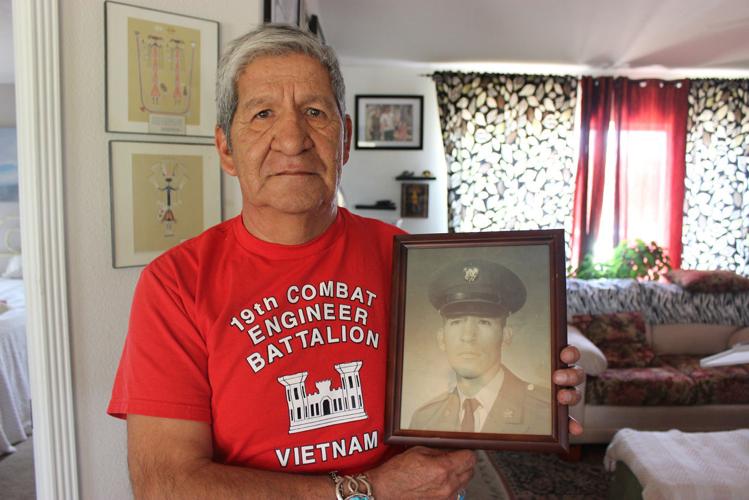
- By Ethan McSweeney For the Arizona Daily Star
- Updated
Valentino Cruz knew to be careful where he walked as he waited on a hilltop in Vietnam with a squad of Army Engineers.
Cruz’s squad leader walked a short distance in the morning hours to urinate after the soldiers spent the night on the hill in early July 1969. The sergeant stepped off the path and onto a booby trap.
Cruz, who was just feet away, remembers seeing a bright flash and then a “spray of red” before being knocked down.
“He had about 45 days until he was supposed to go home,” Cruz said.
Cruz, 66, points to the event as something that scarred him both physically — he suffered a traumatic brain injury — and psychologically.
Cruz, a Tucson native who moved to Douglas before high school, was drafted into military in 1968 when he was 18 years old.
He reported to the Bisbee courthouse where he and other draftees were bused to Phoenix. There, he was handed a dime and told to call his parents to tell them he was going to basic training.
Cruz was placed in the 19th Combat Engineer Battalion and shipped off to Vietnam for a tour of duty.
“It was a year of hell,” Cruz said.
In Vietnam, he witnessed a great deal of carnage as he fought in the central highlands of the country and worked to clear mines with other engineers.
Cruz was discharged in 1974 and — with the help of the G.I. Bill — he attended community college in Monterey, California where he studied horticulture and agronomy.
He took part in reforesting a golf course in the Pebble Beach area and worked on other preservation efforts in the Monterey area.
Cruz returned to Tucson in 1999 when his mother became ill and he stayed in the area.
Cruz says he has been suffering from multiple medical conditions in recent years including Hepatitis C and diabetes, which he attributes to his close contact with the chemical Agent Orange during the war.
The diabetes, which has put Cruz in diabetic comas, has had a particularly negative effect on his well-being, said his wife Susan Cruz. “It hinders him in whatever he tries to do,” she said.
Cruz also suffers from post-traumatic stress disorder and says he continues to have nightmares from the war. He meets with a group for PTSD veterans every week at the Southern Arizona Veterans Administration hospital.
Now, Cruz says he hopes to put one of his traumatic experiences from the war to rest.
Cruz is planning to go on a Freedom Flight to Washington, D.C. soon to visit the Vietnam Veterans Memorial. On the wall, he wants to find the name of the soldier who stepped on the booby trap that summer in the war: Sgt. John Lindberg.
Cruz, who is part Pima, plans to take an arrow and Apache Tears, small obsidian stones — 23 of them because Lindberg was 23 when he died — to lay at the memorial for him.
“I really think this is going to be beneficial to me,” he said. “I’m going to still have the nightmares, but I’m going to be able to recognize nightmares where it’s a memory and it’s no longer happening to me. This will lay it to rest.”
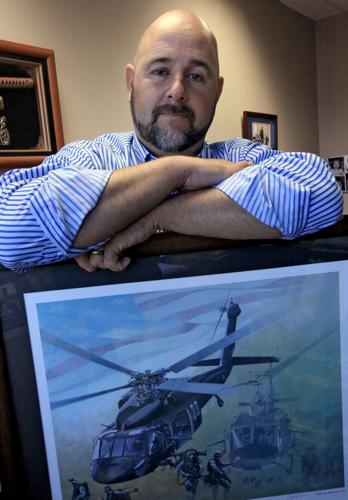
Brett Rustand served his country and now spends his free time serving his fellow veterans.
“I don’t know if it was before the military or if the military created it in me, but I know that lots of people — the vast majority of veterans coming out of the service — carry with them a desire to serve,” he said.
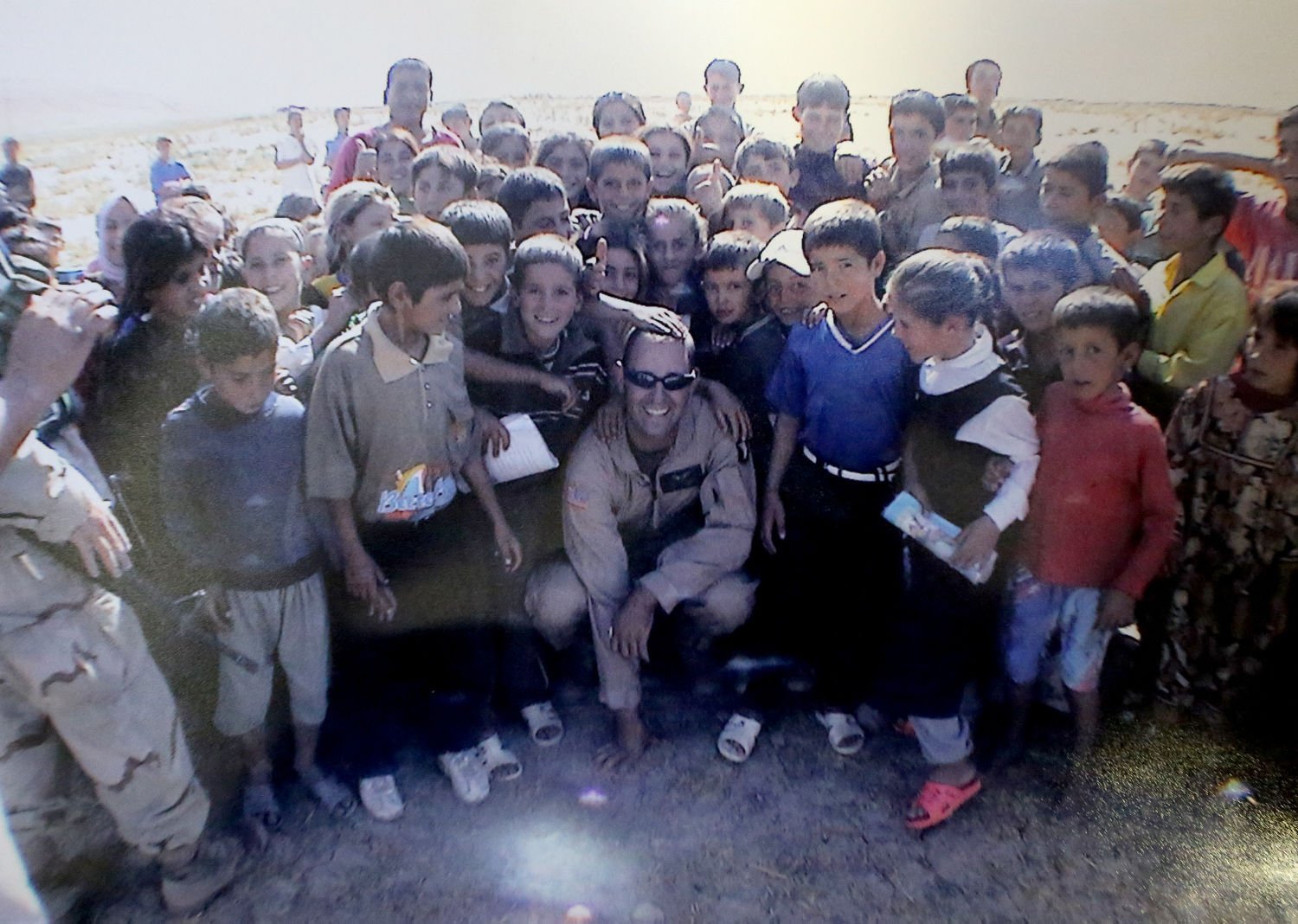 |
Rustand’s first military experience was competing in an ROTC Ranger Challenge competition with his good friend and college roommate, Ben Shaha.
“I realized it was something that I absolutely loved … and so I jumped right in,” Rustand said.
His plan had been to go to law school, but instead he commissioned in the aviation branch of the Army in 1999. He went to flight school at Fort Rucker in Alabama and became a Black Hawk helicopter pilot.
He was assigned to the 101st Airborne in Fort Campbell in Kentucky and served nine years in the Army, including tours in Operation Enduring Freedom and Operation Iraqi Freedom in Baghdad, Mosul and Tal Afar.
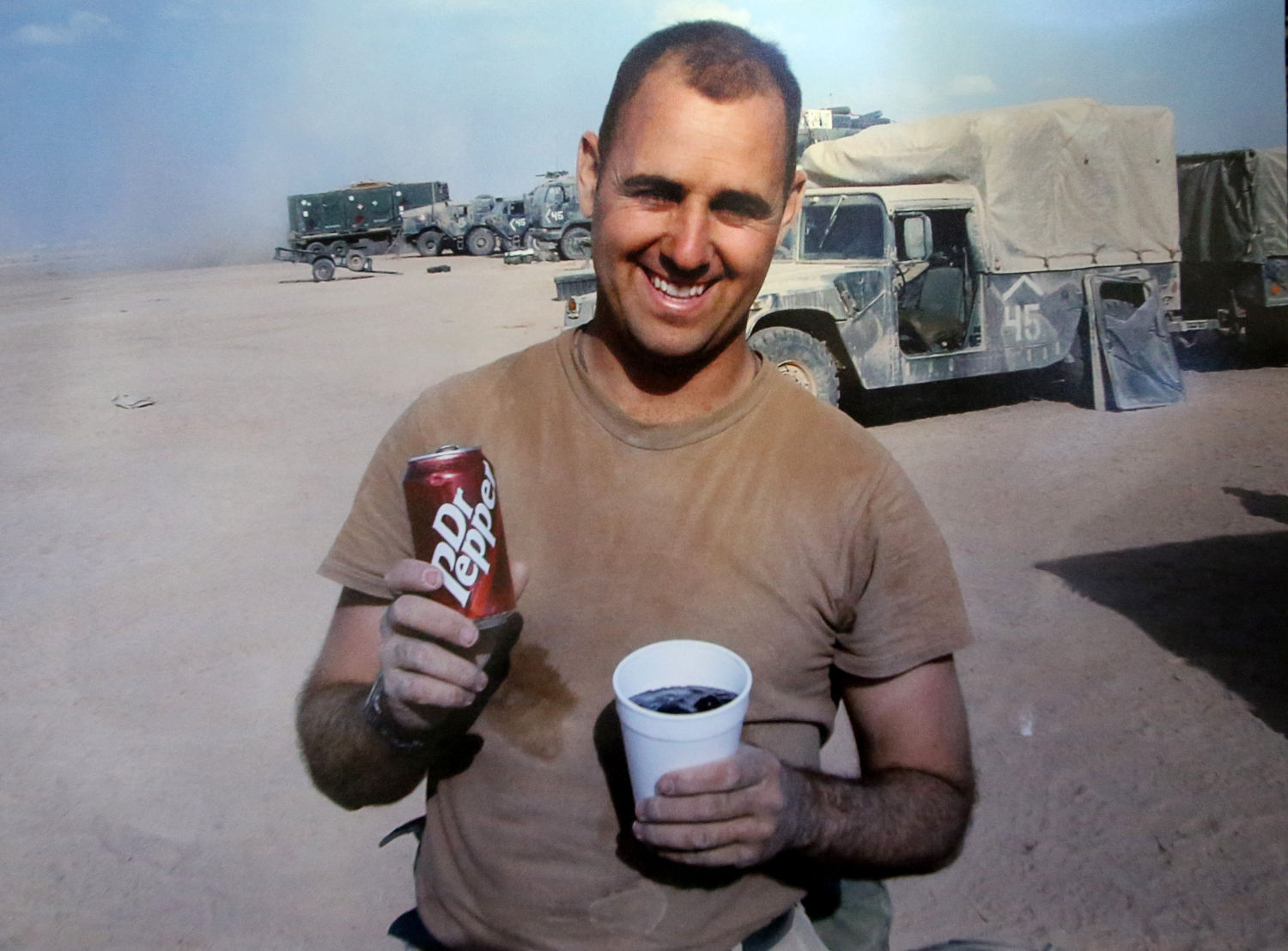 |
“I loved working with the people and I loved after the fact working on all the great things we were able to do after the initial combat role,” Rustand said. “We transitioned into helping build schools and roads and getting the trains back running, and that was really amazing.”
After two years commanding an aviation unit in Korea, he and his family decided to move home to Tucson, where Rustand grew up. He and wife, Amy, have four children, Mason, Mya, Porter and Piper.
Once back in Tucson, Rus-tand helped create Rally Point, a program that helped connect a younger generation of veterans with social services.
He also serves as a board member of the Community Partnership of Southern Arizona, a nonprofit behavioral-health services group; Fisher House, which is constructing a home for veterans’ families to stay in while a veteran receives treatment at the VA hospital; and the Boy Scouts Catalina Council.
 |
Rustand is chair of the advisory commission for the Arizona Department of Veterans Services, which advises the governor and the agency director on policy related to veterans, including transitions and jobs, housing and homelessness, long-term care homes and cemeteries.
“Changing the perspective is really what we’re about,” he said. “It’s about seeing veterans not as a problem but as the solution.”
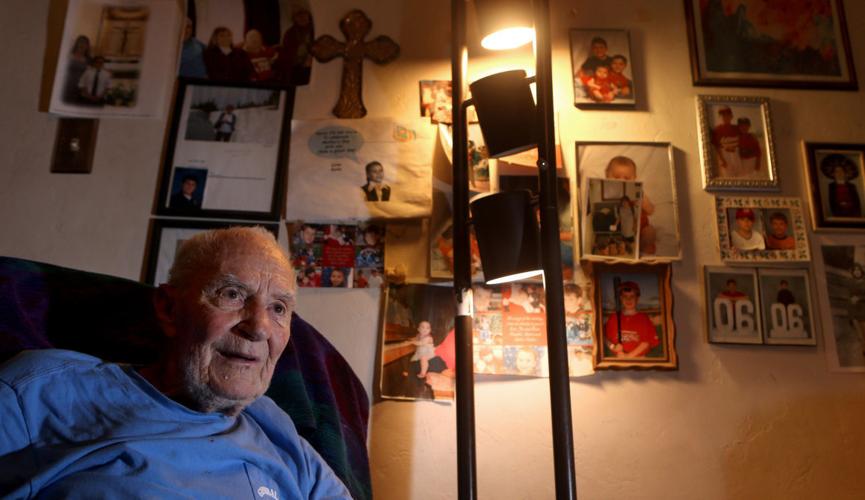
- By David J. Del Grande For the Arizona Daily Star
- Updated
Although Dale Hughes will turn 94 years old on Oct. 23, his legacy was born the morning Japanese pilots attacked Pearl Harbor.
“That was the day my life changed; it was time to enlist,” Hughes said.
Hughes’ heart was set on the U.S. Marines, but he failed the vision test. Hughes was eventually drafted into the Army, and began his 40-year military career on Aug. 20, 1942.
Becoming a soldier was his calling, Hughes said, and he’s remained a staunch proponent of the draft and military service because of its lifelong benefits.
“Everyone owes something to their country,” Hughes said.
Hughes was the first of five brothers to deploy. By the end of the war, each brother would serve. Their father, Perry Hughes, was inducted into the Army at 44 years old, eventually rising to the rank of staff sergeant.
 |
Hughes was trained as a tank driver at Camp Plauche, just outside of New Orleans, and served two tours in North Africa.
On his first deployment, in 1943, Hughes was his company’s sole survivor during a battle at Kasserine Pass in Tunisia.
Recalling that scene now conjures up feelings of guilt, but at the time, it reinforced his commitment, Hughes said.
After the war, Hughes wrote three books about his time as a soldier, and also published more than a dozen collections of short stories, poems and journals that he and fellow service members wrote.
“Reflections” was published in 1982, and serves as a memoir and history of the 8th Battalion, 40th Armor for the Army Reserve from 1959 to 1981.
Hughes was first introduced to the disciplines of military training at the age of 6, when he was sent to Indiana Soldiers’ and Sailors’ Children’s Home, located just outside Knightstown, Indiana. His mother had contracted tuberculosis while working as a nurse at a veterans hospital, and died a year later.
The orphanage focused on teaching its students a craft. Hughes learned to be a printmaker there. When he came back to the U.S. after the war, it was his profession. Upon settling in Tucson, he established the 8th Battalion, 40th Armor Army Reserve unit, based out of Fort Huachuca.
In looking back, Hughes said his greatest accomplishment in the service was meeting his wife, the late Artemisa Hughes. Hughes lit up when he recalled their first date, which initially proved fruitless.
Even though they were both stationed at Camp Huckstep in Cairo, after their first night out, they remained just friends. Then Hughes received a warm season’s greetings telegram from Artemisa on Christmas Day, 1945, and their lifetime together began, he said.
Michele Brubaker, Hughes’ oldest daughter, graduated from Salpointe Catholic High School, and spent most of her 30-year teaching career there. She currently works at the Tucson, faith-based senior assistance program Lend A Hand.
Brubaker said Hughes has always been a “people person,” and said she believes that’s an important part of his legacy. “He always finds a connection with people,” she said.
Brubaker said she learned many invaluable lessons from Hughes, but developing a strong work ethic and becoming selfless stand out the most.
All veterans deserve recognition, she said, and her father’s overall perseverance could inspire others to remain strong when facing adversity.
“Even if you’ve been raised in an orphanage, been through war and back again, raised a family or endured loss, you still get up in the morning and keep moving ahead,” Brubaker said.
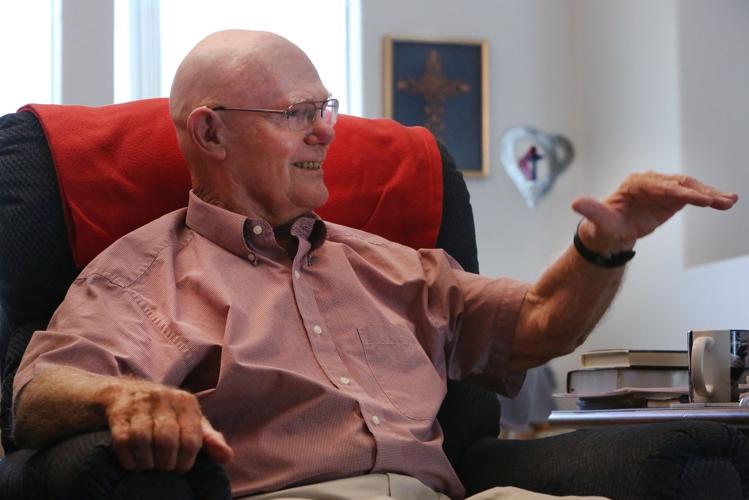
Roy Ludlow was in the seminary in New Jersey when he received a letter that spurred him to travel halfway around the world.
A young Marine recounted a horrific night in Vietnam when bullets started raining down on him as he crawled out of his pup tent.
The Marine came out of the attack unscathed, but the story was seared into Ludlow’s mind and left him pondering his own ministry in the United Methodist Church.
“That guy needs to have a chaplain somewhere around,” Ludlow said to himself after reading the letter. “He’s facing life and death.”
Ludlow inquired about enlisting, but was told he was too old, despite the fact that chaplain requirements fall under a different rubric than regular soldiers.
He went on to finish the seminary and serve a small congregation in Oregon, but the war in Vietnam reared its head again.
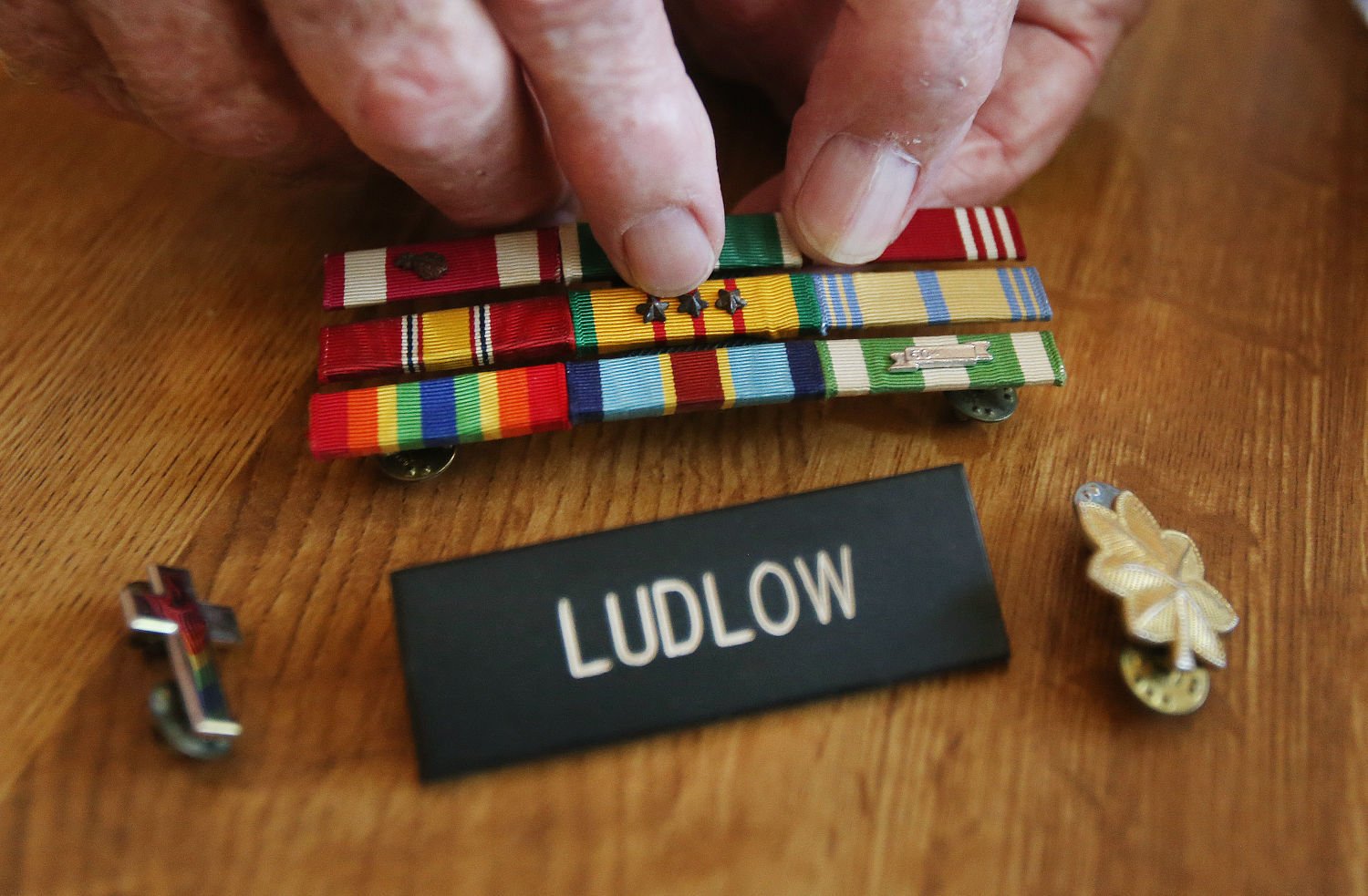 |
Nearly all the church’s congregation was female, and as the war grew, he started holding services for soldiers killed in action.
“I thought, ‘If I’m going to have a ministry with men, I need to be where the men are,’” he said.
He successfully signed up for the Army and served in Vietnam in fall 1971 and spring 1972. One of his main duties was to hold memorial services for soldiers.
“I didn’t have any enemy casualties at that point, but I had a lot of self-inflicted wounds and deaths from suicides and otherwise. Those were tough,” he said, adding that many of the self-inflicted wounds were the result of drug abuse.
Another of his duties was to hold services for soldiers as they protected bridges along a perilous stretch of road.
After a while, his commander said it wasn’t safe for Ludlow to be on the road anymore, and he was assigned to a facility in Da Nang, where he dealt with men who were “having emotional issues with their time in Vietnam.”
In one case, a Cobra helicopter pilot told Ludlow he couldn’t stop seeing the red lines created by the tracer bullets fired by the helicopter’s guns.
“He said, ‘You know, chaplain. I’m having trouble sleeping at night.
“I keep thinking of all those rounds I shot down there and wondering who was down there, who I took out who shouldn’t have been taken out,’” Ludlow said.
For Ludlow, those conversations confirmed that joining the Army as a chaplain was “a ministry I felt I was called to do.”
After being sent back to the United States, Ludlow worked with a battalion at Fort Lewis in Washington state, often bumping along rough tank trails in his Plymouth Valiant to get to remote training sites.
He went on to serve in Germany, Alaska and Fort Huachuca, where he retired from the Army in 1988 as a major.
His dedication to soldiers continued as he worked as an employment counselor for veterans.
Local veteran Thomas Owens said Ludlow has a long tenure promoting veteran causes in Tucson, in addition to attending every meeting of the Reserve Officers Association and the Military Officers Association of America.
Ludlow also continued his ministry after retiring from the Army by working as a prison chaplain in Tucson.
“To me, the two tied together,” he said. “It was a ministry to men.”
He now works as a contract provider of chaplain services at Tucson Medical Center and offers pastoral counseling at Desert Skies United Methodist Church.
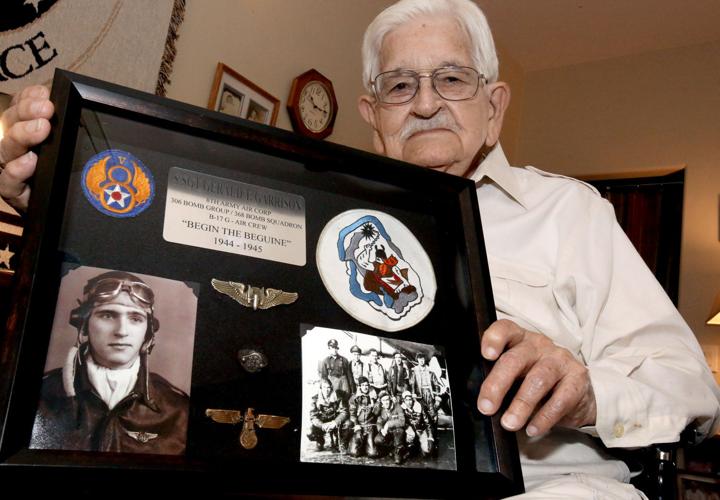
More than 40 years have passed since Gerald Thomas Garrison retired from the U.S. Air Force, but the former special agent still holds many secrets.
Recalling his 30 years of service, the former chief master sergeant speaks of bombing Dresden, Germany, in World War II as a togalier, his travels around the world and surviving a plane crash that killed most of his crew.
He knows the bombs he dropped from 21,000 feet in the air killed people, but he couldn’t tell you how many.
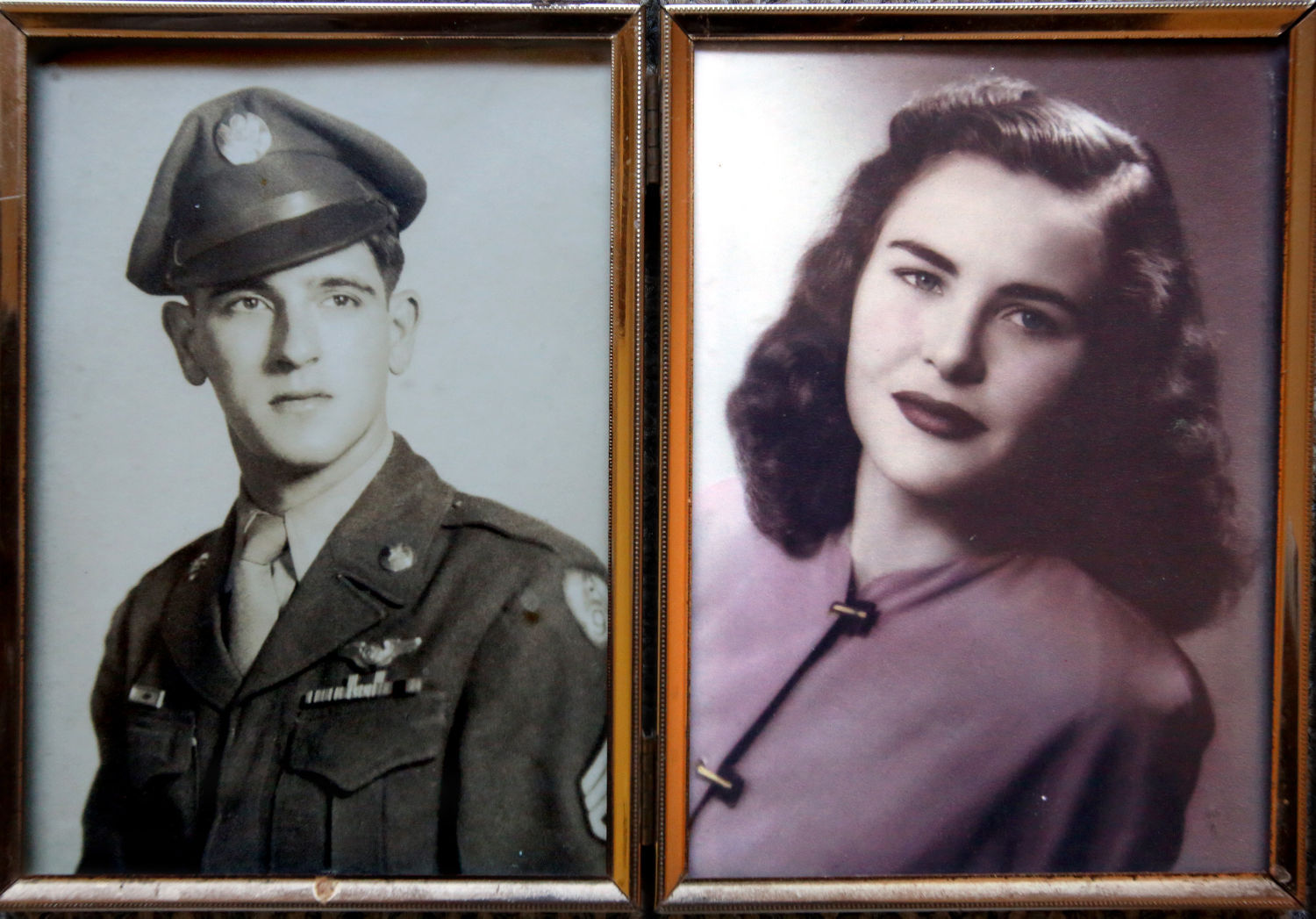 |
Just weeks away from his 90th birthday, Garrison maintains the sense of commitment to this country that he had as a 17-year-old enlisting in the U.S. Army Air Corps. He says it prevents him from getting into detail about his part in the Bay of Pigs invasion or his counterintelligence work in Latin America and London.
Coming from a one-room school house in Tennessee, Garrison admits he didn’t imagine his life would turn out as it did.
“It was wartime. Let’s face it — young men were not supposed to stay home; they were supposed to join the Army,” he said. “Everybody else was there.”
Garrison originally tried to become a pilot, but was foiled by his eyesight, and instead took on the role of togalier.
Before becoming a special agent, Garrison recalls flying long and dangerous missions, and also one incident in which he was reported dead.
His plane, carrying 10 people in all, was taxiing on a runway in Alaska when another plane “ground-looped,” crashing into them. The front end of the plane was cut off, killing seven people. Drenched in gasoline and with the plane on fire, Garrison and two others escaped.
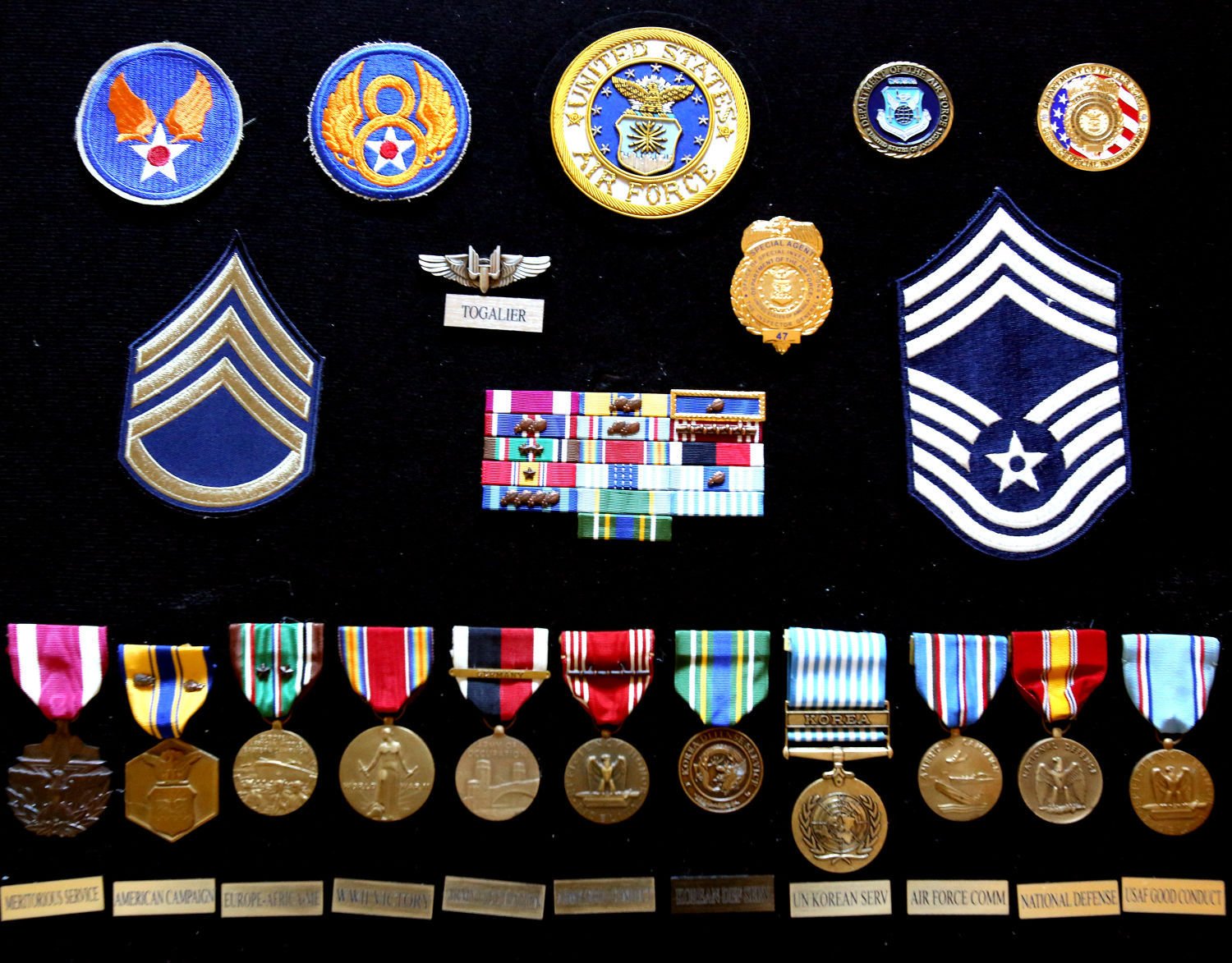 |
“It hit me when they had the memorial service and I walked in and everybody broke down,” he said. “Heretofore, they had reported me dead, but I got a telegram out to my wife and the only thing they let me send was, ‘Alive and well.’”
Calling himself one of the better interrogators — “I sent a lot of people away” — Garrison says it was not all work as he made time to throw parties at the embassy in London for his “spy friends.”
His military career also led to 60 years of marriage with his wife, Harriett, a Tucson girl he met while stationed at Davis Monthan Air Force Base. The pair met Christmas night at a dinner, were engaged on New Year’s, and married by Feb. 6, 1948. They had three children — Tom, Nancy and Barbara — all of who were oblivious to their father’s top-secret duties. It was only within the last few years that Garrison’s children began hearing about his exploits, Nancy said.
“He had many medals and commendations, but we didn’t know for so many years what he did,” she said. “He did it for his country and he says he would do it all over again, but there are things I certainly wouldn’t do.”

One morning in 1964, Fred Taylor, a seaman on the deck force, woke up and saw the sun rising in the wrong direction.
But that couldn’t be, so it must have meant that the USS Monticello, which was some 500 miles east of the Tokyo Bay at the time, had changed its course.
The seamen, who until then thought they were going back to the U.S., found out soon enough where they were headed, Taylor said. They were going to Vietnam.
“We were looking forward to going back and seeing our families,” he said. “But that’s what we were trained for.”
Taylor, the 70-year-old artist, didn’t have much of a choice in joining the military. His father was a former Marine and home life was often like boot camp, he said. “My father raised me to be in the military,” he said.
One day, when Taylor was still in high school, he came home to find his father waiting for him in the driveway. “Get in the car,” he said he was told. They headed for a recruiting office.
The first time he enlisted might not have been his choice, but when he came home to Tucson from his first two years, he said he got “fed up with civilian life.”
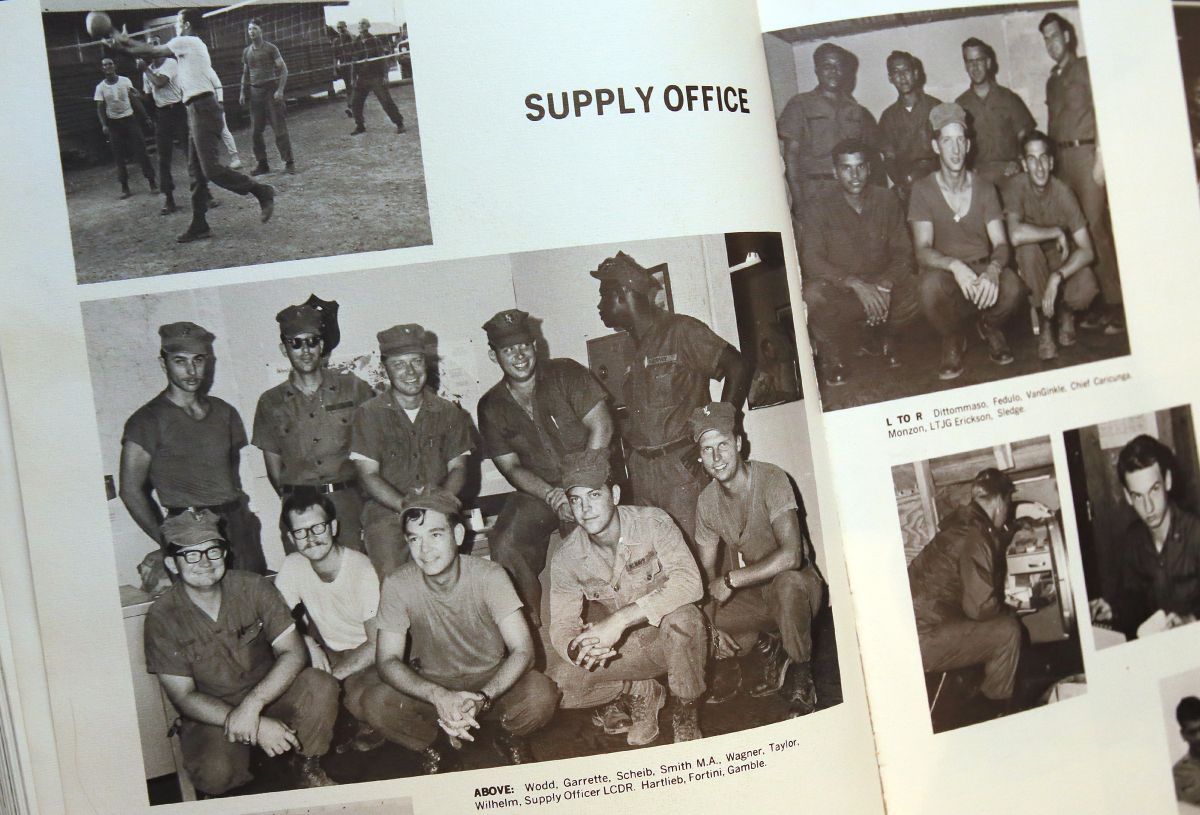 |
He went to Vietnam, again. This time, he was assigned to a mobile construction battalion, building and repairing roads, bridges and bunkers in Da Nang and Dong Ha.
Taylor said he quickly found that life on land was not the same as life on a Navy ship. “Nobody shoots at you in the middle of the night” on the ship, he said.
The attacks were frequent, especially in Dong Ha, the base camp of which was only about five miles south of the North Vietnamese boundary, he said. He remembered shots being fired as he got dressed to start the day. He and his hut mates jumped into holes they dug in the ground.
“I knew some friends of mine were dead,” he said.
In the aftermath, Taylor said the survivors were given some food, which included a biscuit, eggs made of egg powder and muddy water and a piece of spam.
He ate as he watched the bodies of his friends dragged from the hut, he said.
“I just stood there and watched,” he said. “I was numb, emotionally numb.”
War was not a good time to feel afraid, so he tucked the fear away to deal with later, he said. “VA says I got PTSD,” he said. “I call them demons.”
One of those demons was his 1997 diagnosis of Parkinson’s disease, which the Veterans Affairs department acknowledged as being linked to exposure to Agent Orange, herbicides used by U.S. military during the Vietnam War.
Since then, he has been keeping busy nurturing his artistic side by painting, sculpting and writing poems. Not one corner of his Saddlebrooke home is deprived of art. There are stacks of multicolor paintings of buildings, skies, animals, trees, leaves, flowers and binders full of poems.
“That’s been a challenge trying to figure out where to put it all,” his wife, Faye, joked.
Taylor is not sure if creating art is meant to be therapeutic for him, but he said they are expressions of his subconscious.
In a recent poem, he wrote, in part, “A beast runs free it is me. And now not. Yet still lives in the souls of others.”

- By Kristen Cook Arizona Daily Star
- Updated
The Iraq War left its mark on Chris Guerrero.
Two of them, actually.
The former Army ranger has a scar the size of a quarter under his right knee where a piece of shrapnel ripped through his leg. A jagged scar also cuts across his calf, marking the exit wound.
It goes without saying that he carries some emotional scars with him, too.
Guerrero was just 21 — and already on his second tour of duty in Iraq in 2005 — when the Humvee he, his best friend and six others were riding in was ambushed, hit by a remote-controlled IED.
“I remember a big boom and seeing a cloud,” says Guerrero, 32, who’s originally from Globe. “It was really dark. You could kind of see individual grains of sand and billowing dirt.”
With his ears still ringing, Guerrero hopped out of the truck, weapon in position, to survey the situation. Seeing no signs of the enemy, he jumped back into the Humvee to help his wounded comrades. His buddy, Daniel Torres, was laying on his side.
“He looked like nothing was wrong,” recalls Guerrero, who is married and has a 2-year-old son.
 |
But when he rolled him over, Guerrero saw the fatal head wound. Another soldier also died in the blast. All the survivors were injured.
Torres’ death hit Guerrero hard.
“The overwhelming sense of responsibility…” Guerrero says, his voice fading.
Always eager, Torres, 22, was the kind of guy who wanted to be the best for those around him.
Guerrero was more than Torres’ squad leader — the two were as close as brothers. Just two weeks earlier, Torres had learned that he was going to be a dad.
It was a lot for Guerrero to process. In fact, he really didn’t until after he’d finished his deployment, returned stateside and decided to talk to a counselor about losing five members of his unit. He talked about his desire to go to college, and the counselor suggested social work.
It clicked.
Guerrero became the first in his family to go to college, earning a master’s degree. He works for the Tucson Vet Center, a program through the U.S. Department of Veterans Affairs, and also created a program to stem the tide of domestic violence.
Guerrero says it might sound odd, but his job now is really a lot like what he did in the Army.
“This is the exact same thing I did in the military that I do right now — minus the guns. I help people where they are in life, manage the situations they’re in.
“I see this,” Guerrero says, “as a continuation of my service.”

- By Patrick McNamara Arizona Daily Star
- Updated
At 92 years old, Mary Hill‘s memory sometimes fails her. But she can recall like yesterday a newspaper headline from World War II.
“The headline was: ‘U.S.S. Jarvis Disappears,’ ” Hill said.
One of her eight brothers had served on the ship, which was docked in Pearl Harbor when Japanese bombers attacked on Dec. 7, 1941. But the Jarvis was lost in the Battle of Savo Island in August 1942 as part of the allies’ first Guadalcanal campaign in the Solomon Islands.
Hill’s brother died along with the entire crew of more than 200 men.
Hill would join the Women’s Army Corps in 1943. But getting in to the service wasn’t easy.
“I had really bad eyes when I was 3 years old and the doctor said I would be blind by the time I was 10,” she remembers.
Though Hill didn’t go blind, t trouble with her eyes did cause the Navy and Marines to reject her for service.
The Army too, nearly rejected her.
“She said, ‘If you keep squinting I’m going to disqualify you,’” Hill remembers the nurse saying as she conducted Hill’s physical. And Hill was accepted in the WAC.
Hill’s daughter, Jakki Hill, jokes that patriotism wasn’t the only motivation for her mother to leave her home in Minneapolis for the service.
“The No. 1 reason she wanted to go into the service was because that’s where the guys were,” Jakki said.
Eventually, Hill ended up at Dibble General Hospital in Palo Alto, California. She had trained as a medical technician, but once hospital officials learned she could type they placed her in an office job.
Hill later was stationed in El Paso, where she met her husband Henry Hill.
“They met and married in three weeks,” Jakki Hill said.
The couple set out for Japan shortly after the Japanese surrender, where Mary Hill said they were among the first American occupying forces.
While stationed at Nagoya Air Base, Henry Hill helped design and build what became the American Village and she worked at the post exchange.
“It was truly Japanese,” she recalls, noting the limited connection local residents had had with the outside world at that time. Hill said the introduction of American products into the local community caused a minor sensation.
Among the biggest hits, she recalls, were the American-style flip-flops sold at the base store.
But it wasn’t just the products the Americans sold that fascinated local residents. Japanese children, in particular, were fascinated by appearance of the Americans living among them, Hill said.
“I was young and had long blonde hair,” she said, remembering how strange she must have appeared to the Japanese children.
Despite the American presence as an occupying power, Hill said she made many good friends in Japan. One was the housekeeper she and her husband hired, with whom she later maintained a relationship through cards and letters for years after the Hills left the country.
“Her name was Michiko Yamaguchi, but my husband called her Helen,” Hill said.
After three years, the Hills left Japan. Henry Hill remained in the service, serving until 1969, when the family retired to Colorado Springs. Mary Hill now lives in Green Valley.
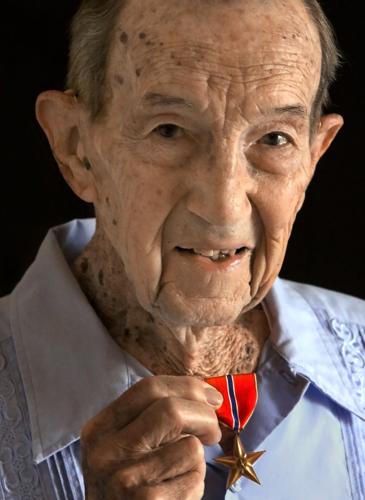
James Britt worked on a farm in Asheville, North Carolina, to help feed his family. He knew the importance of tending to crops, bringing in the harvest and the logistics of keeping things running smoothly. Then his world changed.
He was 20 and drafted into the Army, training at Fort Bragg in mule pack artillery. He learned to breakdown cannons and transport the pieces by mule into battle fields. He fit well into the 4th Field Artillery Battalion.
Much of his job had to do with order and logistics. By the time he was sent to the Pacific Theater in 1942, the Jeep was in use and his unit no longer needed to use pack mules for transportation. The commanders kept an eye on Britt’s talents, and eight months later he was moved from a South Pacific island to Fort Sill, Oklahoma, for officer training.
 |
By late 1944, he was off to move artillery units in the Central European Campaign. His troops also rounded up German prisoners of war — securing their arms — and moving hundreds to compounds in the vicinity of Regensburg after the war. “Our teams of counterintelligence had to interview prisoners to determine whether or not they would be prosecuted for participating in war crimes,” recalled Britt, 96, from his east-side home.
In 1949, Britt was shipped back to Fort Bragg and assigned to the 1st Field Artillery Observation Battalion and was sent to the Korean War to obtain ground intelligence for infantry and artillery use against the enemy. Microphones were buried in the ground to help confirm troop movement; soldiers were stationed to observation posts to pick up enemy gunfire; and radar was used to locate enemy shells coming toward U.S. soldiers, said Britt, who was promoted to captain and had more than 100 troops under his command.
From late 1950 to 1951, he and all except one of his men survived extremely cold temperatures, including sub-zero weather with only their uniform and a field jacket. “We wore two to three pairs of socks and kept moving our feet to try not to get frostbite,” said Britt, of his soldiers who lived in tents over frozen ground.
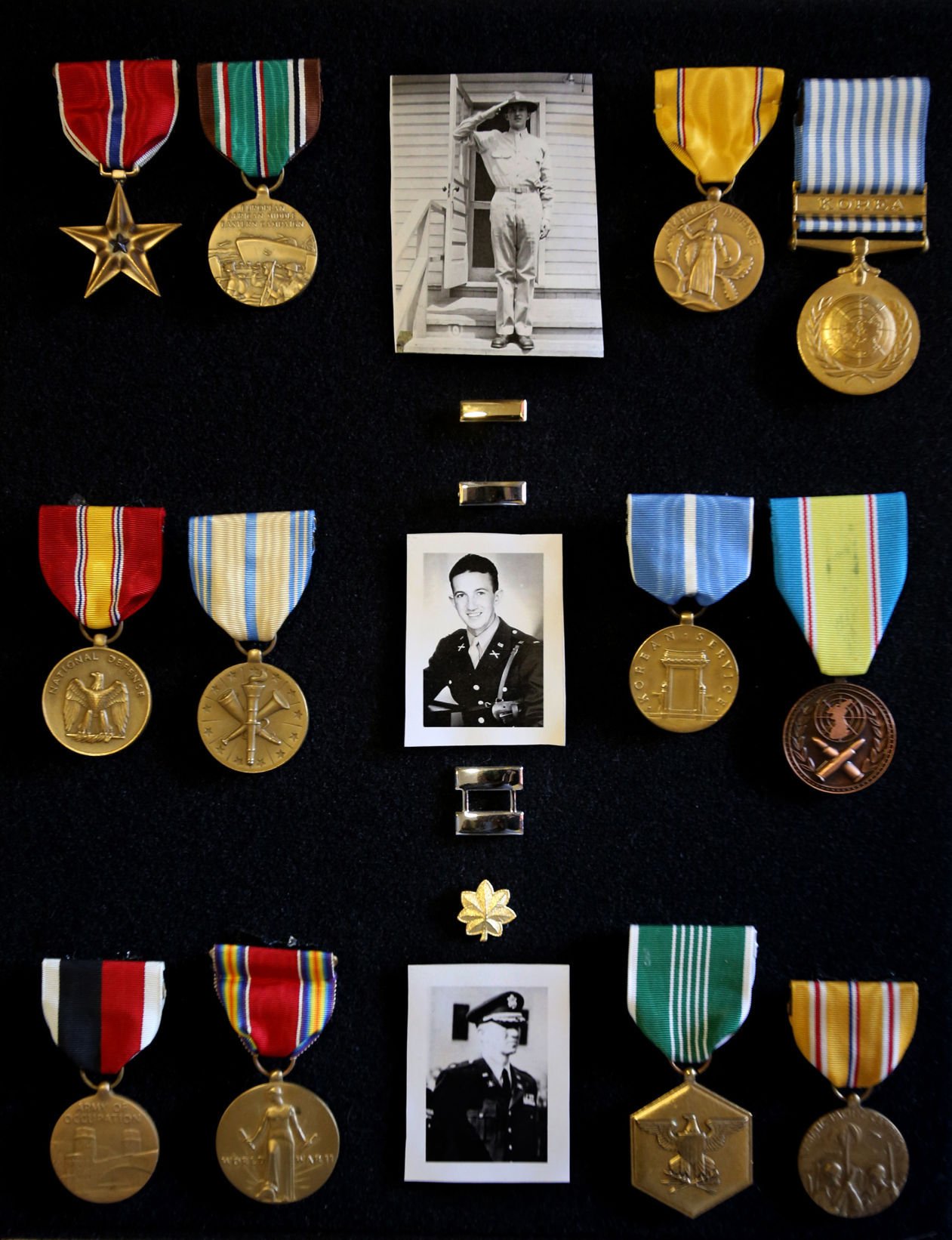 |
By 1952, Britt was shipped back to Germany, with the 539th Field Artillery Battalion and he and his men installed a relay of instruments to keep an eye on Russian troops during the Cold War. He returned to Fort Bragg in 1955 where he tested military equipment for artillery-use and for field communications, which led him to Fort Huachuca and to visit Tucson.
“I almost froze to death in Korea, and I told myself if I ever get out of this miserable place alive, I am moving to a warm climate,” said Britt, explaining his move to Tucson in 1961 after serving 20 years and earning military decorations, including the Bronze Star and Victory World War II medal. He retired a major.
Jeff Britt said he is proud of his father, a former Tucson Unified School District teacher, who has “always given back to the community.” He said that his father still runs into former students who thank him for helping them succeed.
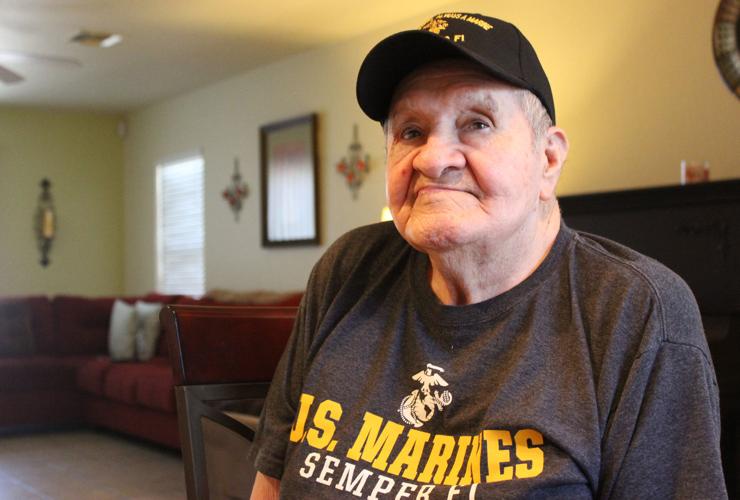
- By Ethan McSweeney For the Arizona Daily Star
- Updated
Juan H. Jaurigue was killed in action during the Battle of Saipan in the summer of 1944.
At least, that’s what the Tucson Citizen reported at the time. Jaurigue, now 90, smiles when this story is brought up in his south-side home.
The Marine veteran was erroneously reported as dead after being wounded in the summer of 1944. The newspaper eventually corrected the mistake.
Jaurigue joined the Marines in August of 1943 at age 18. The Bisbee-born Tucson resident didn’t meet the weight requirement the first time he tried to enlist — 2 pounds underweight, he said.
So, he ate several bananas just before going in a second time and was able to enlist.
Jaurigue, also called Johnny, manned a Browning automatic rifle as a Marine infantryman fighting the Pacific Theater.
In short, Jaurigue says, his job was to “kill people.”
He fought in some of the key battles of the Pacific campaign — Tarawa, Saipan, Tinian, Iwo Jima and Okinawa, he said. Jaurigue was wounded in the fighting on Saipan and Iwo Jima and received the Purple Heart and the Gold Star for his service.
“I’m fortunate to be alive,” he says.
Jaurigue said he can count about 15 of his friends in the Marines that were killed during the war.
“All these really young kids, man, cut in half. Sometimes right here,” he says as he points to his stomach. “You don’t live too long after that.”
After the war, Jaurigue returned to Tucson, where he’s been living ever since, working for Pacific Fruit Express and then Arizona Ice and Cold Storage.
Catherine Jaurigue, his daughter, said that growing up her father never told their family stories about the war. She said she didn’t find what he had done during the war until she was about 50.
“He just didn’t talk about it to any of us,” Catherine Jaurigue said. “He worked a Monday through Friday job, a Saturday through Sunday job.
“I think he figured that the more he worked, the less he had to think about what happened,” she said.
Jaurigue says he’s proud to be a Marine. He struggles to remember some details from the war, but he points out one he remembers.
On Okinawa, at the closing stages of the war, he planted a cypress tree on the island, Jaurigue says.
Has he gone back to see it?
“Not yet,” he said.
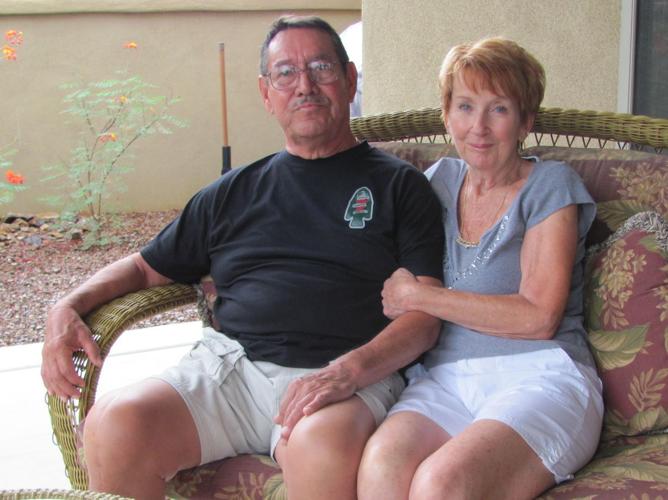
John Rodriguez enlisted in the Army at the age of 17, took aim at becoming the best soldier he could be, and never looked back.
He qualified as a paratrooper. He became an elite Special Forces warrior. He survived combat in Vietnam in 1967 and 1968. He took part in the risky, highly classified Son Tay Raid launched to rescue POWs in 1970.
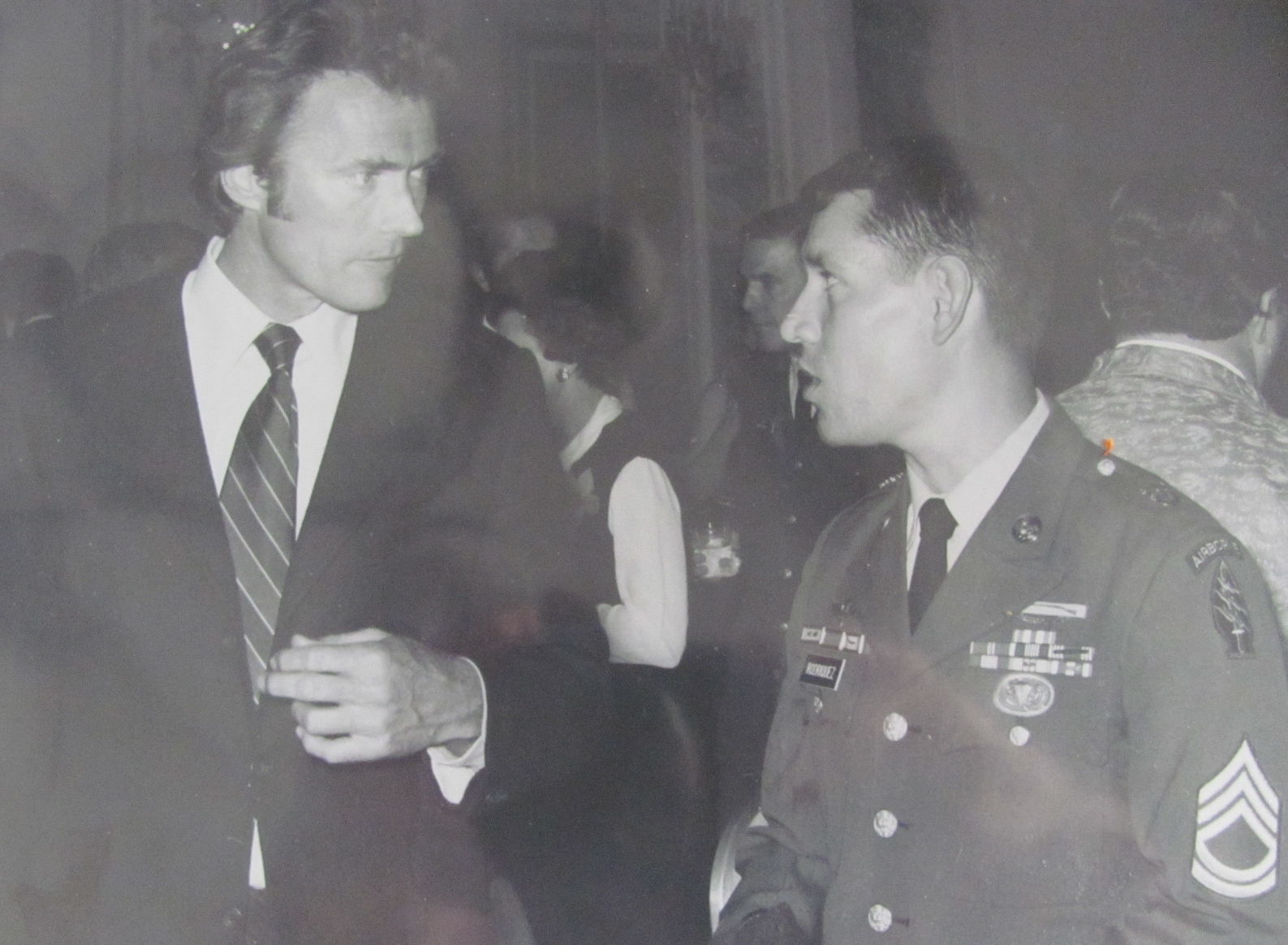 |
In the course of an illustrious military career spanning two decades from 1961 to 1981, he earned a Silver Star and other commendations.
His daughter, Reina Rodriguez, says family members call him A.H. — for American Hero.
“My salvation was the Army. The Army saved me — the Army and my wife, Letty,” Rodriguez, 71, said recently at their home in the hills west of Tucson.
“I was born and raised in Chandler,” he said. “I had picked cotton. I barely got out of high school. I was 17 and a smart-ass when I enlisted” in 1961.
After basic and advanced infantry training, Rodriguez served in a linguist unit and later went to jump school for parachute training at Fort Benning, Georgia.
 |
A detailed account of his subsequent assignments and achievements could fill a book. Some highlights:
- Gung ho from the start, he was selected for Special Forces training and eventually reached the rank of sergeant first class. Later in his career, as duties changed, he became a warrant officer 2.
- Rodriguez served in a combat zone in Vietnam in 1967 and 1968. “We were getting attacked by rockets and mortars,” he said. “Every time you are a little scared, it gets the adrenaline pumping.”
- In 1970, Rodriguez was selected to take part in a mission — later known as the Son Tay Raid — aimed at rescuing American prisoners held in North Vietnam. “We trained for about three months,” he said. “It was a highly classified mission and we didn’t learn (details) until the night before.” The 56-member force, transported by helicopter, reached the prison camp. “But when we got to the camp, it was empty,” Rodriguez said.
- More deployments followed, including one in Panama in 1972 in which Rodriguez suffered a broken leg. He later applied for warrant officer status and left the Army in 1981. He worked with the U.S. Postal Service from 1983 to 2004 before retiring.
 |
Rodriguez expresses enormous pride in his son, John Rodriguez Jr., who is a Navy SEAL.
Family members, including his wife and daughter, express that same pride in Rodriguez himself.
“He exemplifies what a soldier should be,” said Reina, a school teacher who nominated her father for recognition in this series. “We’re so proud of our dad. “He raised my brother and me to want to serve our country the way he did.”
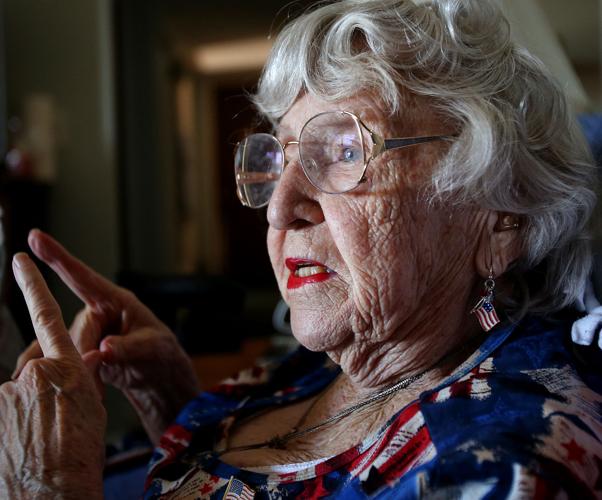
Helen Anderson Glass pushed aside a fat scrapbook brimming to the edges with yellowed newspapers, black-and-white photos and hundreds of poems she had written to honor military veterans.
The 92-year-old was filled with pride as she talked about the heroes in her life — her brother who was killed in action in 1943 while serving on the USS Savannah, and a woman she knew who spent 30 years keeping the secret that she helped to break codes used by German U-boat commanders.
“I am no hero,” Glass whispered, insisting she only followed orders.
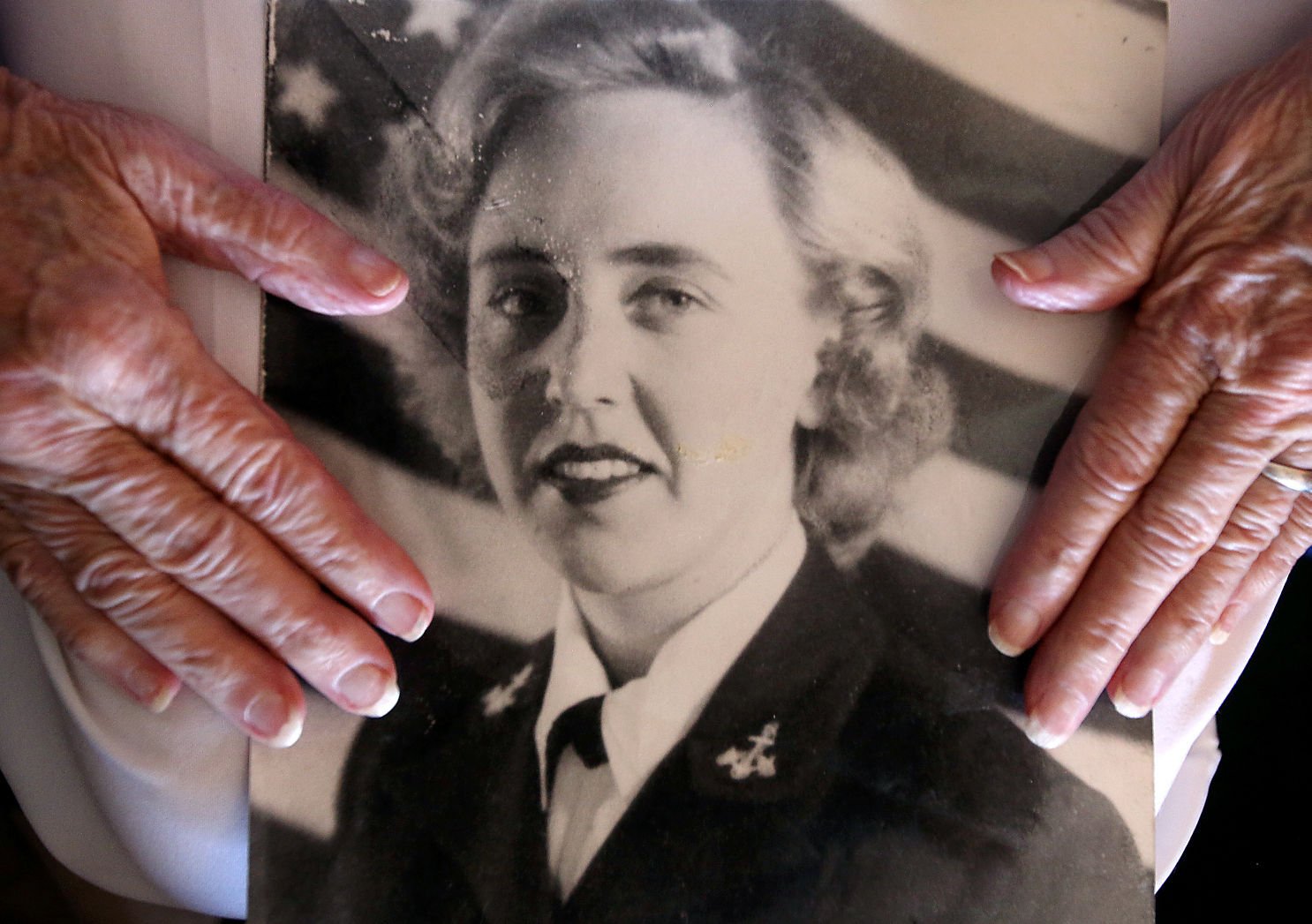 |
Out of a plastic bag, Glass retrieved several heavy gold medals, just a portion of the many accolades she earned over the years.
Her poems on patriotism and serving in the military have won several medals over the years. Glass says she hopes a collection of the poems can be published in a book to honor other military veterans.
Among her other accolades: being named Arizona’s Woman Veteran of the Year, the American Legion Volunteer of the Year, VFW Volunteer of the Year, VA Hospital Volunteer of the Year, Legionnaire of the Year and induction into the Veteran’s Hall of Fame in 2002.
The attack on Pearl Harbor inspired Glass to join the military.
Glass said she clearly remembers working as a switchboard operator on the December morning in 1941 when the flood of calls came in. Most in her office guessed there must have been a bad storm coming. They learned later from radio reports about the attack.
Her brother, Arthur, would join the Navy the following month. Only 18 years old, Glass had to wait 15 months before she could enlist. On her 20th birthday, she became part of the Women Accepted for Volunteer Emergency Service, known better as WAVES.
By the end of the year, Glass learned by telegram of her brother’s death.
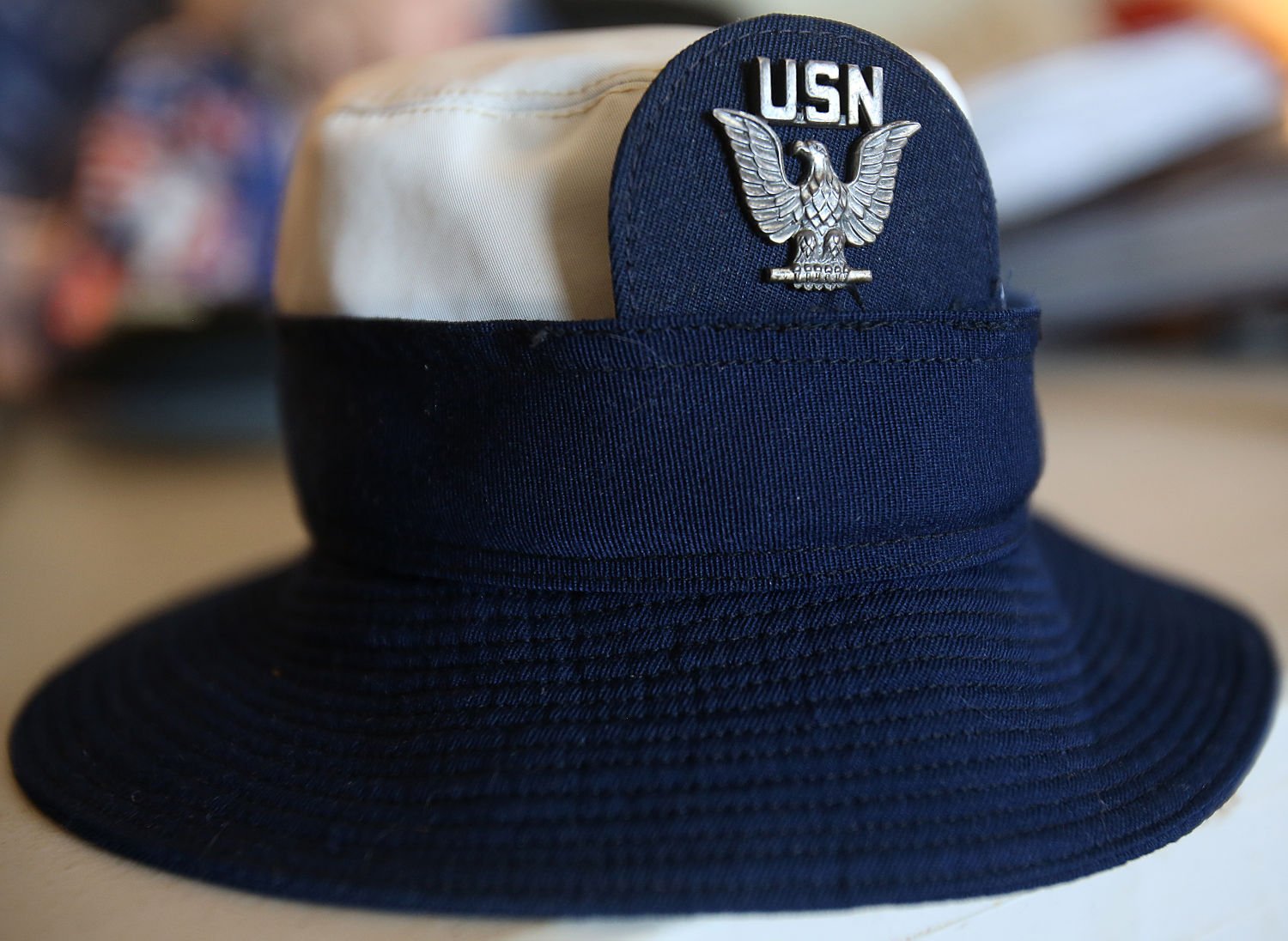 |
His body is buried off the coast of Malta.
Glass kept serving after her discharge and volunteered for decades for the Veterans Administration, helping other veterans.
Glass wrote poems when inspired and worked with crafts. Most recently, she handed out bags she stitched with pockets filled with items like flashlights and books. The bags can either be carried or fitted to a wheelchair or walker.
Her voice drops a little as she talks about continuing to volunteer at the local VA, conceding her body can no longer put in the work hours her heart desires.
Over the years, the number of days she’s volunteered has declined from several times a week to what Glass calls “special occasions.”
“I miss going. I used to go every week,” Glass said. “Doing this gives me life — I mean it — otherwise I wouldn’t have any of these honors. This keeps me going every day. It inspires me.”
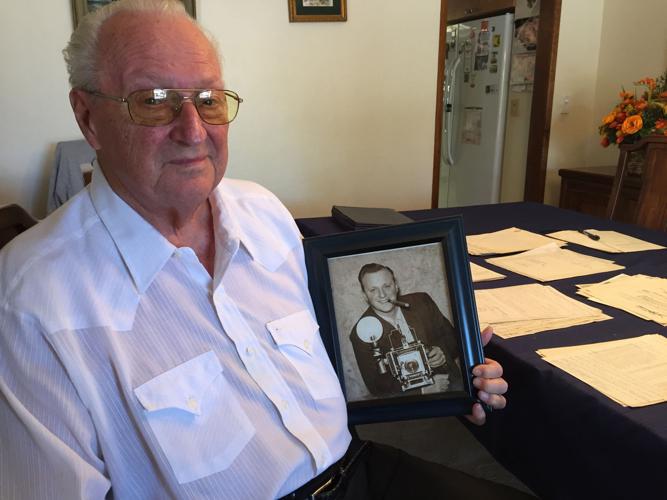
One year after the Cuban Missile Crisis, Wayne L. Petter headed to Southern Arizona to work in the nuclear missile silos in Green Valley and Tubac.
Luckily, Petter, an enlisted man in the Air Force, and the two officers with whom he spent shifts of “24 hours in the hole,” never got the call to launch the Titan II missiles at targets in the Soviet Union.
Despite the grueling shifts, Petter, 86, said he came to enjoy his time working in the silos and called the Green Valley site, which now houses a museum, “almost like home.”
“I thought it was a pretty nice little place down there,” he said while sitting next to his fiancee, Joyce Groshans, in his home in the Sabino Canyon area.
Petter got his start in the Air Force in 1948 when he and a friend enlisted after graduating high school in Columbus, Nebraska.
“I found it, liked it, and I stayed there for 22 years,” he said of the Air Force.
Prior to working in the missile silos, Petter developed photographs taken from long-range bombers as they made runs “as far as they could get to Russia without saying anything,” he said.
As soon as the aircraft returned to the base where Petter worked, he and his team rushed to turn the 400 photographs into composites more than six feet wide used to analyze the Soviet military.
After a stint working with B-52H Stratofortress aircraft that flew over the North Pole to the Soviet Union, often returning to Petter’s base in Michigan laden with ice, Petter said he grew tired of the frigid conditions and jumped at the chance to work in missile silos in Arizona.
He spent four years as a ballistic missile analyst technician before switching to work as an engineer aboard C-141 Starlifter flights between Vietnam and Tacoma, Washington, in the late 1960s.
“You might take equipment back that needed help, but most of the time, though, we had people going back who had been shot or at times I even caught one trip back where I had nothing but dead people,” he said.
That was his last job in the Air Force. He retired in 1970 as a master sergeant, but still did about four years of “weekend warrior” work going back and forth to Vietnam.
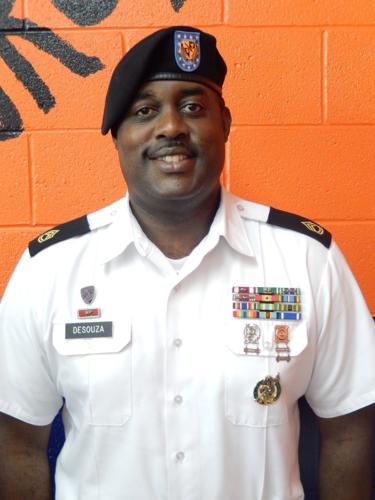
When Teddy DeSouza joined the military 25 years ago, he was seeking independence.
But enlisting in the Army got the 18-year-old more than a ticket out of his parents’ home in Brooklyn, New York.
A chance encounter with an Army recruiter took DeSouza around the country and across the globe, pushing him beyond his own expectations and exposing him to foreign ways of life that humbled him.
Though the 43-year-old DeSouza has retired, he continues to fight for future of this country — in the classroom alongside retired Army Major Steven Spiece.
Referred to as Sgt. D on the Cholla High Magnet School campus, DeSouza works to make his JROTC students better citizens and to build their confidence and leaderships skills. He also seeks to teach students in the program focused on college and career readiness about goal-setting, teamwork and financial management. Those are skills DeSouza says he learned from the Army.
DeSouza’s journey to the classroom started outside of a Wendy’s fast food restaurant where his childhood friend stood talking with a man in a uniform.
“Shorty,” as he was referred to in the neighborhood, told DeSouza he was getting out of New York and the man in the uniform — an Army recruiter — was his way out.
Promised a life of travel, an opportunity to have college paid for and to make his own money, DeSouza soon found himself in basic training in Oklahoma without “Shorty,” who backed out at the last minute.
Though DeSouza said he wasn’t ready to be out in the cold, running in formation for miles, he was prepared for one thing — drill sergeants.
“My mother did not play,” DeSouza said of Linda Bowen. “She was real strict and traditional. Her being that hard on me helped because when the drill sergeant would yell it didn’t bother me — my mother was on my butt for 18 years. I was like, ‘I’m cool, my mother’s been my drill sergeant.’”
DeSouza spent the next 20 years stationed in Washington, Colorado, Utah, Arizona and in Germany where he met his wife of 18 years, Nicole.
It also took him to Bosnia and Herzegovina in the mid-90s on a peacekeeping mission as part of Operation Joint Endeavor where he patrolled for intruders.
“The living conditions in some of those towns were sad and deplorable — children on the side of the road; lack of hot and cold running water, potable water and food,” DeSouza said. “Not one round was fired but it made me appreciate all the things we have in this country that we take for granted.”
In the end, the Army made good on the recruiter’s promises and before retiring in 2011, DeSouza served in that same capacity.
Asked whether working with high schooler students is harder than serving in the military, DeSouza chuckles.
“They both have their own unique challenges,” he says. “I love working with high school students. I love being part of their lives, helping them out, talking to them. It’s a blessing but it’s not for everybody.”
DeSouza’s technique is working, Major Spiece says: “He connects with the kids really well. The students are attracted to him because he’s passionate about the job.”
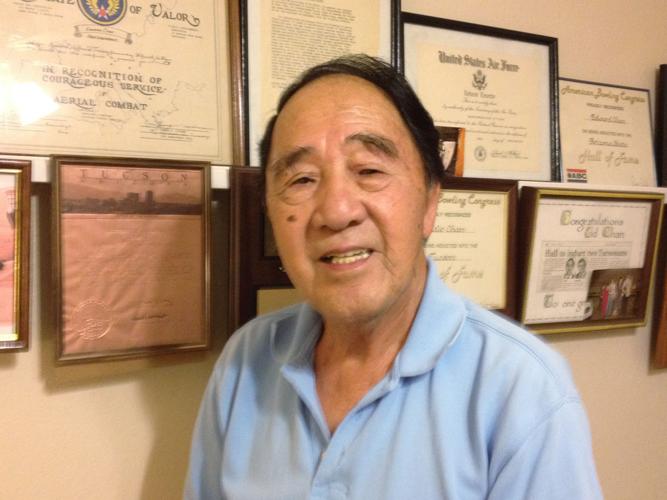
At age 20, Edward Chan was a bombardier on a B-24 Liberator dropping bombs over Europe during World War II.
He was among a crew of 10 in a bomber named “Hula Honey” that bore the brunt of enemy fire while assigned to the 460th Bombardment Group (Heavy) of the 15th Air Force U.S. Air Corps in Spinazzola, Italy.
The Tucson High School graduate, who was studying civil engineering at the University of Arizona, left his studies at 19 to enlist.
By 1944, he was conducting bombing missions and was surrounded by death.
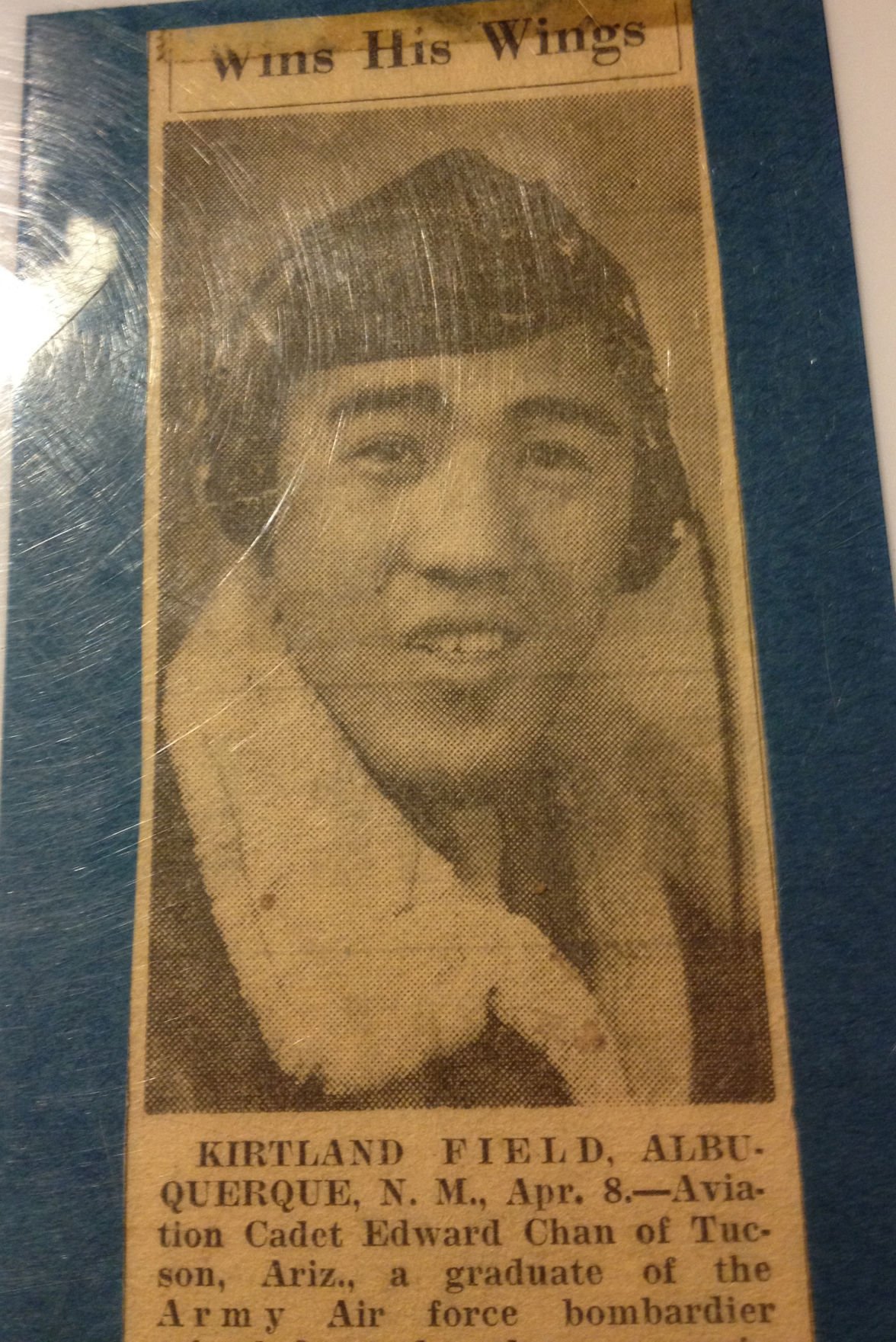 |
“We flew 35 sorties over enemy territory in the southern France campaign,” Chan, 92, said from his home on Tucson’s north side.
“All the missions were difficult,” he said, explaining he was the one to synchronize the sights that directed how the 500-pound bombs would fall from 20,000 feet. Targets were oil fields, ball-bearing factories, submarine pens and munitions factories. Their destruction hampered the enemy’s war efforts.
“It was rough because we were hit by German flak — artillery shot from the ground bursting all around us,” recalled Chan, while pulling out a book dedicated to those of the 460th Bombardment Group who died in Europe. The group’s insignia was the black panther, which was “symbolic of swift, iron-clawed revenge,” according to the history of the 460th.
Chan recalled how American P-51 fighters would escort his squadron to protect it from attacks by German ME-109 fighters. “I saw our planes with rudders shot off or being hit by ground artillery. My plane was hit several times during our 35 missions, but we never were shot down,” he said.
“I saw others who were shot down,” recalled Chan, the expression on his face turning solemn.
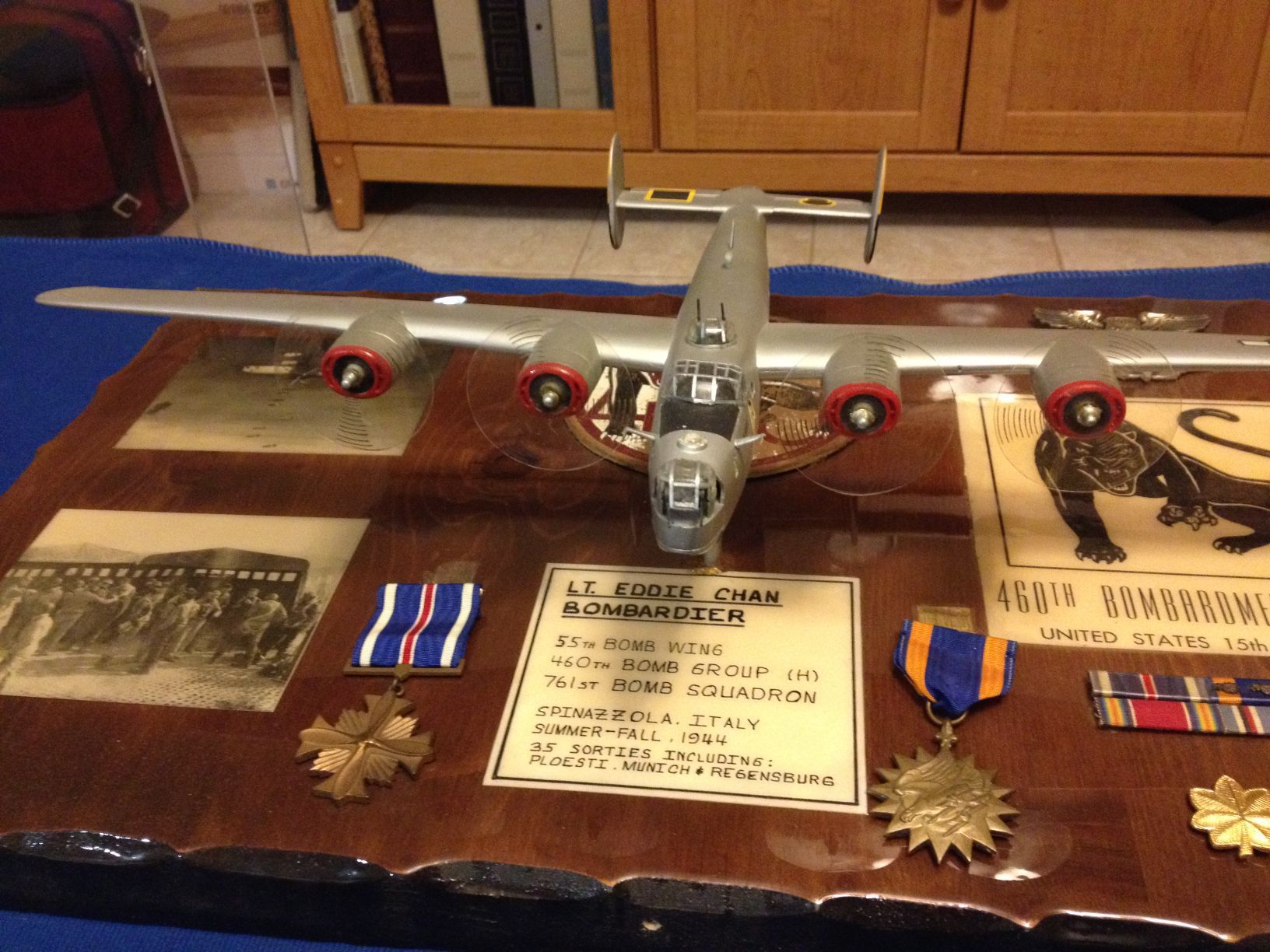 |
Chan’s son, Stewart, accompanied his father in April on an Honor Flight to Washington, D.C., so the elder Chan could see the National World War II Memorial and be recognized with other veterans for their service. Stewart Chan said his father does not talk about the war, but on that trip he learned about a brave act his father did on a mission.
“He told a story about the bomb-bay door being stuck, and it had to be secured so the plane could land. He went out on the catwalk and secured the door. It was very scary, but he did it,” his son recalled.
In addition to Germany and Italy, Chan’s missions took him over France, Romania, Austria, Yugoslavia, Hungary, Poland and Czechoslovakia. He enlisted as a cadet and was honorably discharged in 1946 as a 1st lieutenant with honors, including a Distinguished Flying Cross and an Air Medal with three oak leaf clusters.
Chan returned to Tucson after the service and married Bessie Don Chan in 1950. The couple has three children and four grandchildren. Chan also was in the Air Force Reserve with the 330 Maintenance Group and retired in 1967.
He worked as an electrical and mechanical inspector for the then-Hughes Aircraft Co. starting in 1951, retiring as superintendent of quality control at Raytheon Missile Systems in 1984.
“My life has been good. I have no complaints,” said Chan, while Bessie looked on with a smile.
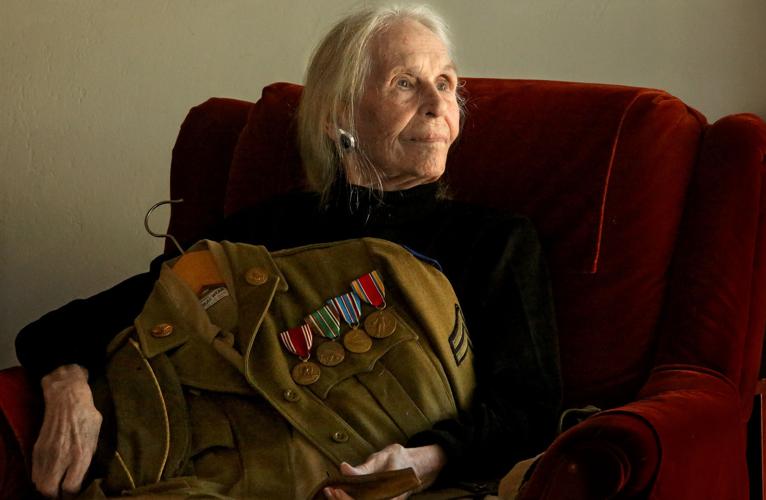
Young Mary Congdon wanted an adventure.
“I wanted to go overseas,” she said. And she got an adventure when she joined the Women’s Army Corps in 1944.
She had dropped out of the University of Michigan and was wondering about her future when she saw a recruiting poster for the Women’s Army Corps, which said, “Don’t envy them. Join them.”
So she did. In 1944, she was sent to Fort Des Moines in Iowa and later to England aboard the Queen Elizabeth, an ocean liner that acted as a troop transporter during World War II.
In England and later in France and Germany, she worked as a teletypist, operating electromechanical typewriters used to send messages through telephone or radio relay signals.
That young, adventurous woman soldier is now Mary Stirling, 92. She has carefully kept bits of memorabilia from her World War II days, including her uniform, which her son, Robert “Bruce” Stirling Jr., lovingly described as “moldy.”
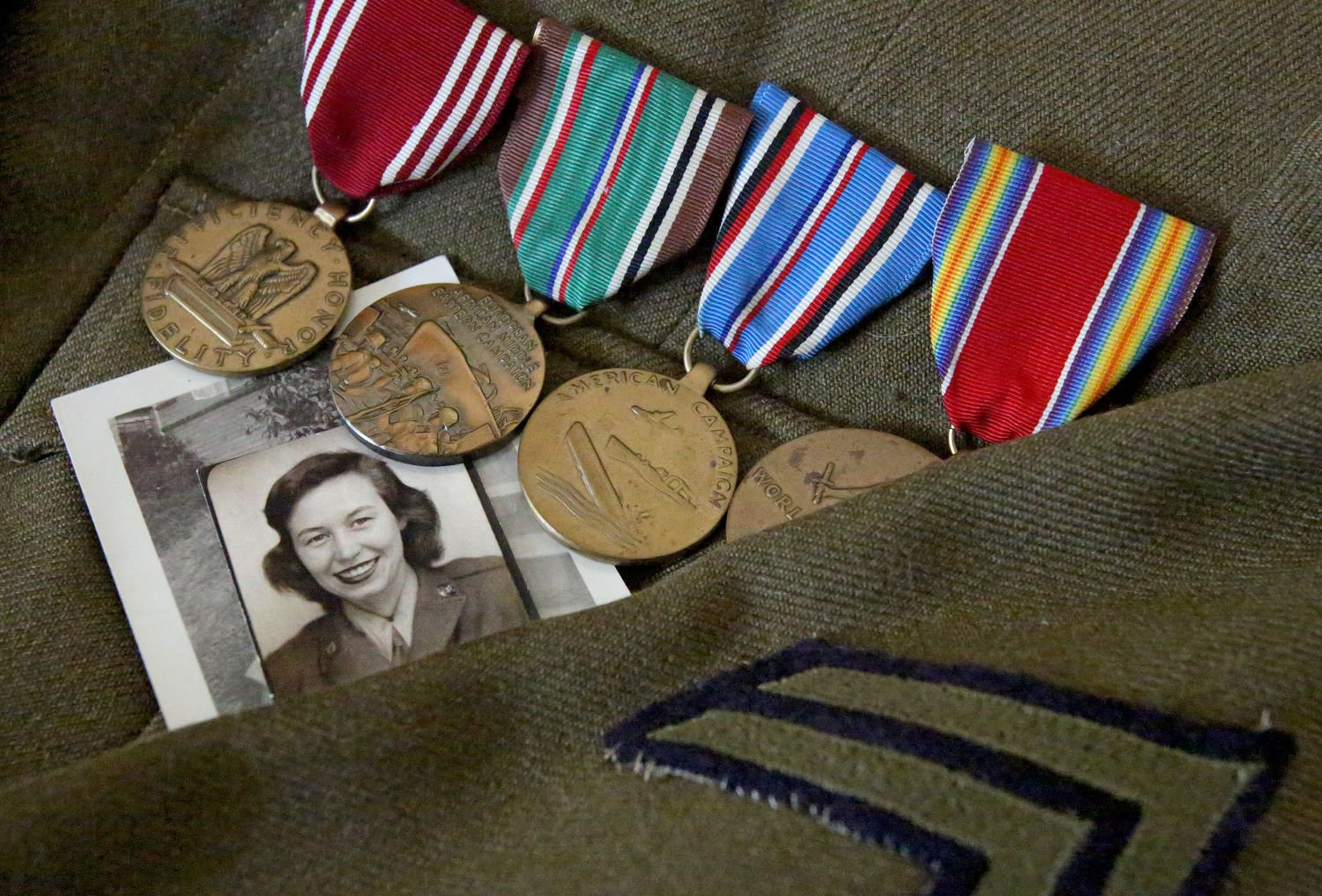 |
Though at 92, she sometimes struggles to find the word she’s looking for, she still remembers a lot, including bicycling through Bushy Park in Hampton, having drinks with “Andre,” a Frenchman who was her “special friend,” at the Long John’s Cafe in St. Germain, and visiting other countries.
But serving overseas during World War II wasn’t just about traveling and learning about foreign cultures.
During battles, soldiers were told that they would have to abandon their equipment and flee. She remembers being told she would have to burn papers and smash the teletypewriters if “push comes to shove.”
There were moments of breakdown, she said. She recalled sitting in the barracks at her post in England. An alarm had gone off about an incoming buzz bomb.
“All I could do was sit on my bed and ask, ‘What am I doing here?’ ” she said.
And one time, during the Battle of the Bulge, a German offensive campaign that happened between December 1944 and January 1945, there was a rumor circulating that there were Nazi soldiers out there dressed as nuns, she said.
Stirling and other WAC personnel were tasked with looking for them, equipped with billie clubs and flashlights. But if they ran into nuns, how could they tell that they were Nazis instead of real nuns?
Combat boots. If the nuns are wearing combat boots, they must not be real nuns. But unfortunately, or fortunately, “We didn’t find any,” she said.
Stirling said she and others coped with the dangers of war by keeping busy at their tasks and comforting. “It was too busy a time” to feel afraid, she said.
Then the war ended in September 1945. Stirling said she was in Paris when she first heard the announcement. Later, she received permission to travel to London, where she said she saw King George VI and his Queen consort celebrate on a balcony.
“Everybody was totally excited,” she said.
She made it home in 1946 and shortly after, married Robert Stirling Sr., a Navy pilot — dark haired and blue-eyed like she always dreamed. Together, they had six children.
“I’m sure my family gets tired of hearing about my war experience,” Stirling said.
But Bruce didn’t think so. “I never get tired of them,” he said.
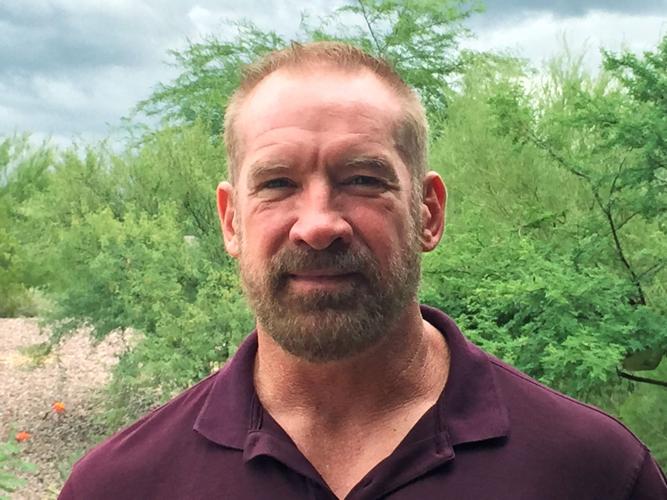
For veteran Craig Sawyer, it all started with high school football.
He said that it was just part of the culture growing up in southern Texas.
“I found that just by applying myself there I could make a difference on the team,” Sawyer, 51, said.
But when he started to learn about terrorists, he took that team mentality a step further and joined the Marines.
“I felt compelled to go and confront and fight those people and stop them,” he said.
He enlisted in 1983 intending to go into force reconnaissance and work with military intelligence, but he learned after he got in that budgetary and political constraints would limit his opportunities.
“I realized that wasn’t really going to lead to the type of action that I was after out of the military, and everyone started telling me about the SEAL teams,” Sawyer said.
He tried to get a lateral transfer to the Navy and retain his rank, but that didn’t happen.
So after spending three years as a Marine, Sawyer joined the Navy and started all the way at the bottom again and worked his way back up.
“Being a SEAL was a taxing lifestyle. I was gone about 300 days out of most years, but I was into it” he said. “When we went to Desert Storm, we captured the first prisoners of that war.”
During Desert Shield and Desert Storm, Sawyer spent time on a Kuwaiti ship working as a communication link between the U.S. Navy and Kuwaiti navy and clearing mines from the ocean floor. He was also lead driver of a Fast Attack Vehicle.
When he got home in 1991, he served as a SEAL sniper instructor before joining Naval Special Warfare Group Development, or DEVGRU, and moved up to what he referred to as the Jedi level.
“That was where all the really interesting stuff happened that I’m not welcome to talk about, but I will say that there are some really impressive patriots serving there,” he said. “It was an honor just to have been there, let alone stay there for seven years.”
After he left the Navy in 1999, he worked for five years as a federal air marshal, and was one of only 33 in place during the Sept. 11, 2001, terrorist attacks.
He owns a local business that supplies products to members of law enforcement and he is involved in the anti-poaching movement, having been invited to African countries to run counter-poaching efforts.
“In all my brilliant wisdom I’ve gone from one war zone to another war zone- protecting endangered animals from poachers,” he said. “It’s a very big effort.”
But he still hasn’t forgotten about high school football and what it meant to him, giving motivational speeches to his son’s team before games.
“I relate teamwork and how hard we work in the SEAL teams and how dedicated we are to each other. The principle is the same for football: You all work together for one goal.”
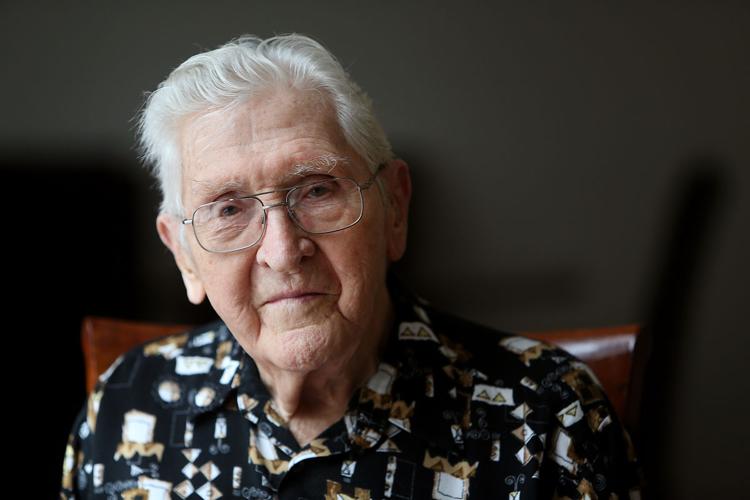
- By Kristen Cook Arizona Daily Star
- Updated
John “Jack” Dyke spent two years in the Navy.
Still, he never learned to swim.
Dyke, 94, remembers standing on a platform at the U.S. Naval Training Station in Sampson, New York, swaddled in a life vest, when he was told to jump into a pool.
He did. And, as he floundered in the water, his superior officers were surprised.
“They said, ‘You can’t swim!’” Dyke recalls. “I didn’t even think about it. I just jumped.”
Born and raised in Boston, Dyke was comfortable around water, just not in it.
The hard-working newlywed pulled 12-hour shifts seven days a week in the shipyards. When he was drafted for World War II, he wasn’t thrilled with his Army assignment. Luckily, when he went to report, a friend’s father, who was with the Navy, happened to there as well.
 |
“I don’t want the army,” Dyke recalls telling him.
“OK, you got the navy,” he said.
And that was that.
Dyke, a straight talker who loves his weekly poker games, shipped out for the Philippines in 1944, on a Liberty ship with a bunch of civilians. He manned the gun mounts on the 45-day journey that included one nighttime near miss with another boat and a mine that came way too close.
“It was an experience,” says Dyke, who’s undergoing treatment for lung cancer and lives in a federally subsidized apartment on the east side.
A shipfitter, Dyke worked on the small island of Manicani, where the Seabees had built a major naval repair facility. Dyke and his fellow crew members worked on dry docks anchored off the island.
“It was hot, hotter than hell,” Dyke says. “You couldn’t touch nothing. The heat would warp the damn rails.”
 |
Dyke spent his free time writing letters home to his bride, Mary. “I had writer’s cramp from writing back and forth so much,” he recalls.
Once he was honorably discharged from duty in 1946, Dyke went back to Boston and started a family. He left his shipyard days behind him and got into the shoe business instead.
“It didn’t do me any harm,” Dyke, a great grandfather, says of his time in the service. “I guess it did me more good than harm.”
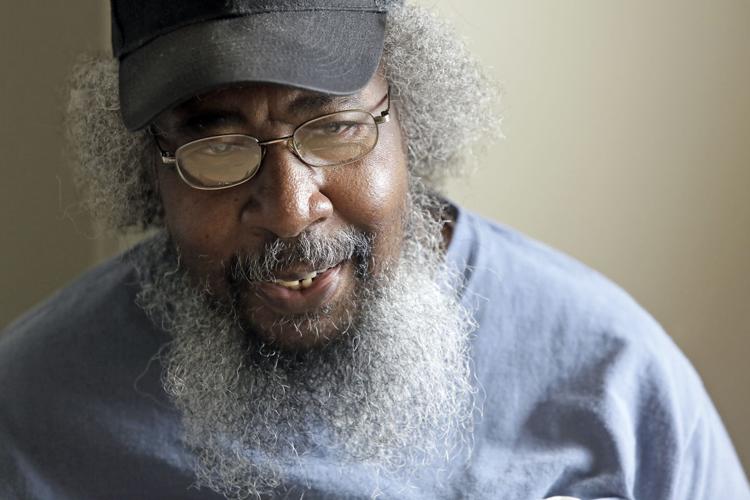
- By Kristen Cook Arizona Daily Star
- Updated
Thomas Coleman’s parents saw the draft notice first.
They knew exactly what one looked like. One son had already been drafted for the Korean War. Now a second was being sent to Vietnam.
“They expected me to go to college,” says Coleman, 71, the third of five children.
Coleman, who grew up in Thomasville, North Carolina, figured he’d study English and become a teacher. Instead he ended up at Lackland Air Force Base in Texas for boot camp.
“Oh, that was rough,” says the father of two sons. “That was six weeks of pure headache.”
He went to technical school, learning how to fix plane engines, and then served two tours of duty in Vietnam, a harrowing time with countless sleepless nights spent in a bunker made of empty ammo cans, his weapon at the ready. Coleman says the U.S. Army was camped 9 miles away, and he saw their helicopters get shot down on a regular basis. He remembers visiting wounded soldiers at the hospital down the road, trying to keep up their spirits.
“Some of them were in the process of losing their lives,” he says, softly.
Coleman — who after experiencing some health issues has lived at The Marshall Home for Men since 2001 — was lucky. The worst he ever suffered were cuts and bruises from working on planes.
And though he didn’t plan on joining, he ended up staying in the Air Force for 23 years, crisscrossing the country and even venturing to Spain, Colombia and the Panama Canal.
“Would I do it again? Yeah, I would,” Coleman says. “I enjoyed that uniform. I enjoyed the camaraderie.”
Coleman fondly remembers mail call, when all the guys would sit around, sharing news from home. Sometimes it was more than just the news.
“My aunt used to send me German chocolate cake,” Coleman recalls. “As soon as I got it, as soon as I put the box down, they’d tear it open and cut it up, and I’d get a little piece.
“I’d write her and thank her, and ask her when she’d send another one. I wore her out on German chocolate cake.”
Coleman chuckles at the memory, “Yes, indeed.”
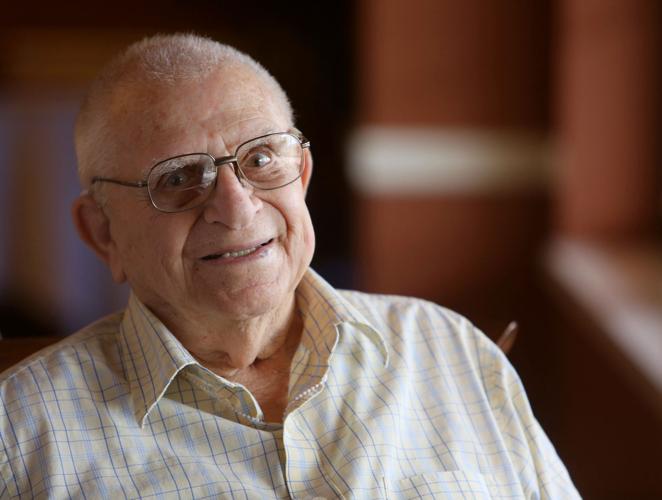
- By Kristen Cook Arizona Daily Star
- Updated
Sam Cohen remembers exactly where he was on Dec. 7, 1941.
Illinois’ Scott Field. And more specifically, stuck in the kitchen.
“I was working kitchen police,” the 95-year-old says with a chuckle.
“I had never heard of Pearl Harbor,” says Cohen. “We were all young and didn’t really know anything. We were looking for somebody to tell us what to do.”
Cohen had only just enlisted in the Army Air Forces, as a 21-year-old fascinated by planes and flying. He soon got his fill: Working as a radio operator, he figures he made about 100 round trips in a C-47 “flying the hump.”
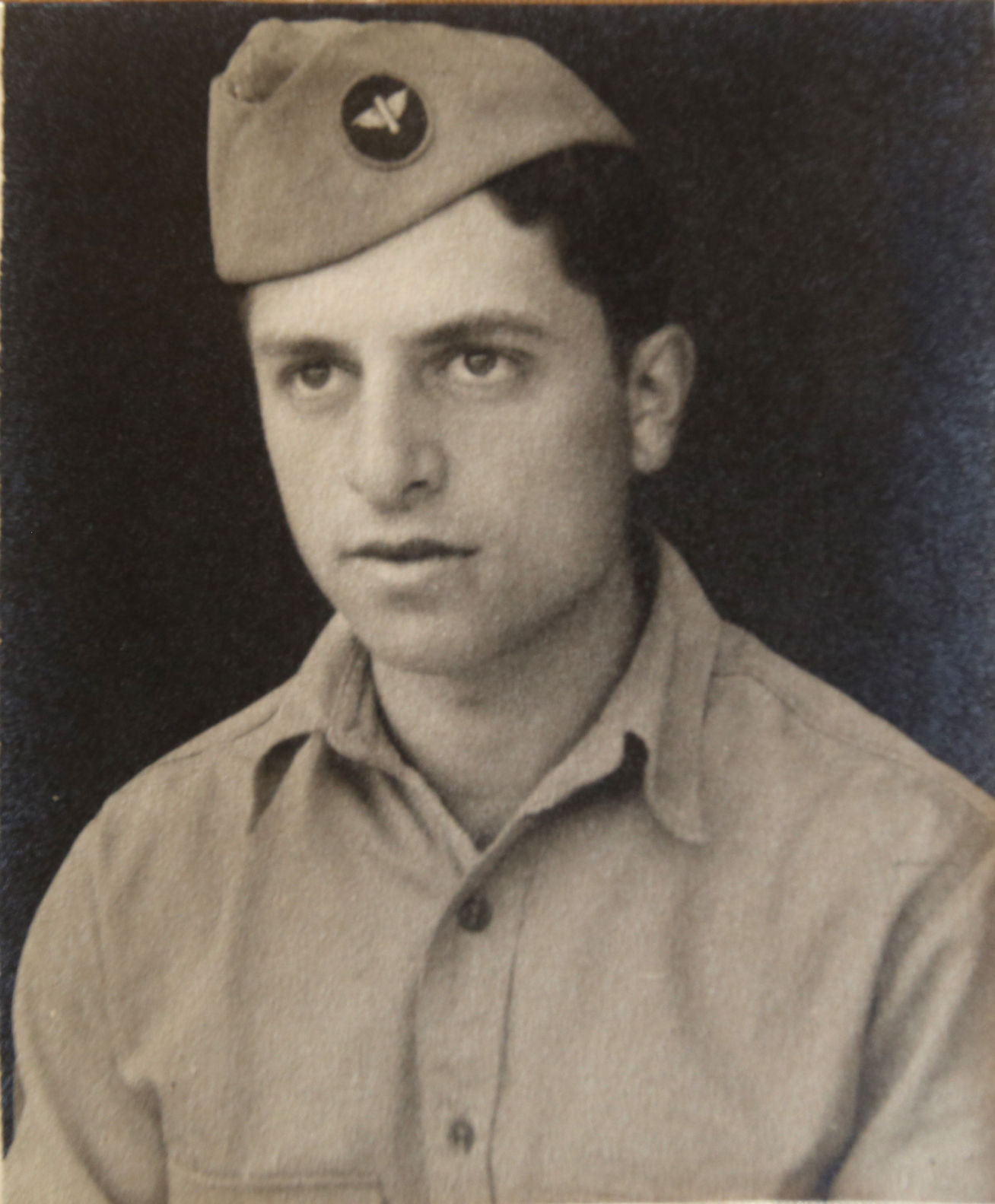 |
The hump was the eastern end of the Himalaya Mountains over which military aircraft trekked from India to China with supplies for the Chinese war effort and U.S. military forces there.
It was all pretty exotic to Cohen, who had spent his whole life in Chicago.
A first-generation American, Cohen’s parents came from Greece and Turkey. They weren’t exactly thrilled with their oldest son joining the military. His two younger brothers also joined up, one following Cohen’s footsteps and the other into the Navy.
But, that was just the thing you did back then as the U.S. teetered on the brink of war.
“It was not a good feeling,” says Cohen, a great-grandfather who lives in a Foothills-area assisted living facility. “But, it was the thing to do.”
Next month, Cohen — who served until he was discharged in 1945 — will fly to Washington, D.C., as part of Honor Flight to visit the National World War II Memorial. The local chapter of the nonprofit Twilight Wish Foundation is sponsoring Cohen’s trip, which he’ll take with his grandson Geoffrey Mackey.
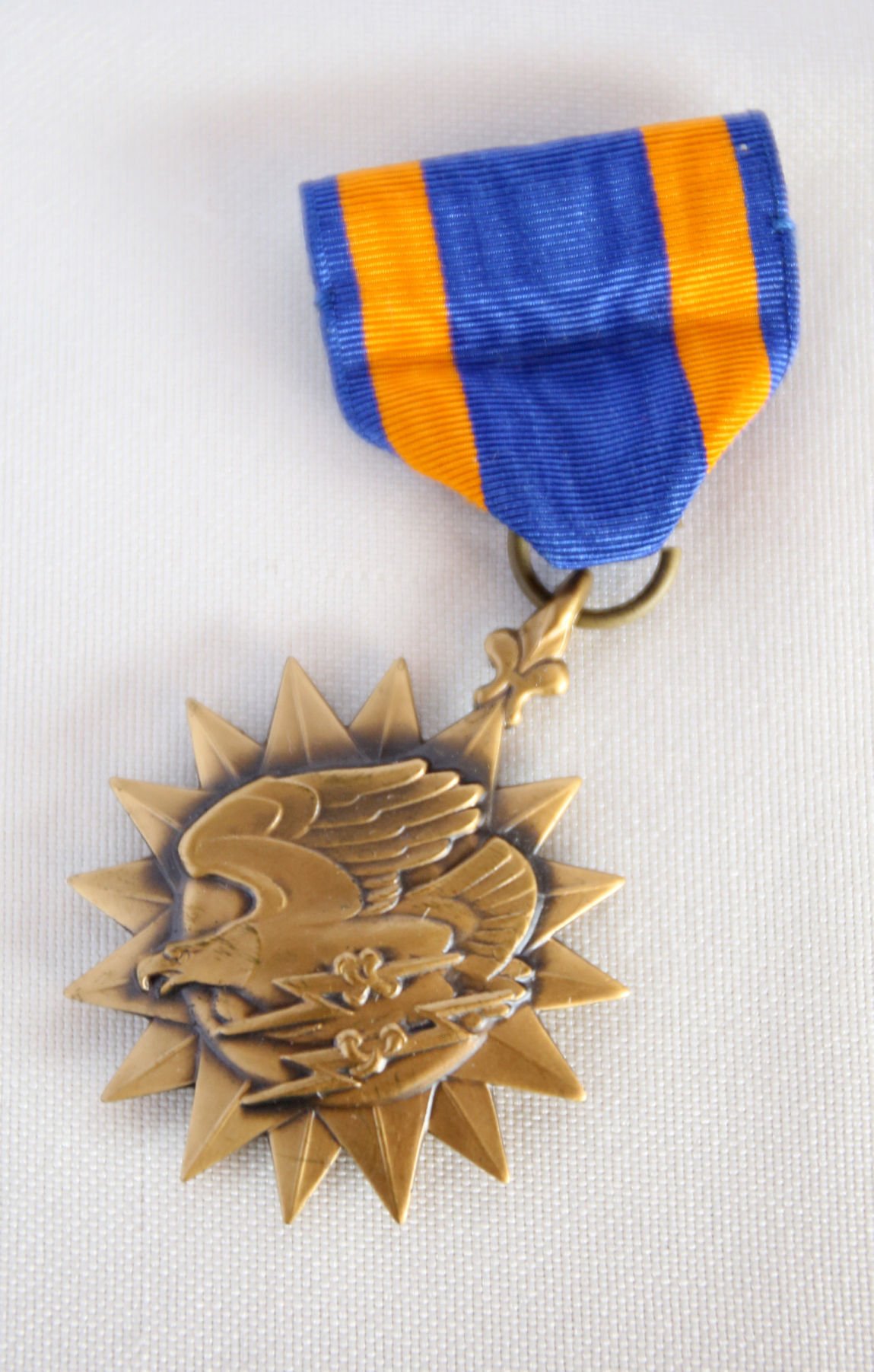 |
Looking back on it, Cohen’s glad he served. But, he says, “I wouldn’t give you 10 cents to do it again.”
He does have one fond memory, though. When he was 22, he flew with top brass to a meeting in which all the “big shot generals” gathered with President Franklin D. Roosevelt and British Prime Minister Winston Churchill in London.
While he was waiting around with the rest of the crew, he spotted a guy who looked familiar. Turned out to be Joe E. Brown, an actor and comedian who, before there was even a USO, traveled at his own expense to entertain American troops overseas. Cohen chatted him up.
“He hitched a ride to China,” Cohen recalls. “We flew him and his group to different bases to put on shows.”
The affable entertainer even signed dollar bills for the guys.
“I had a bill with his signature,” Cohen says. “I kept it for many years — until I had to spend it.”

- By Kristen Cook Arizona Daily Star
- Updated
Two red baseball caps reading “United States Marine Corps Retired” sit beside Stan Elbie’s door. He never goes out without wearing one.
They’re conversation starters for sure.
Sometimes, people ask Elbie about his service. But mostly, they thank him.
“I enjoy it,” the veteran says, breaking into a smile.
Elbie, who just turned 84 years old, still serves up a bone-crushing handshake. A lot of details over his nearly three decades in the corps, including during the Korean and Vietnam wars, have started to fade, but his pride most definitely has not. Says his younger son Sam, “He’s a true-blue Marine.”
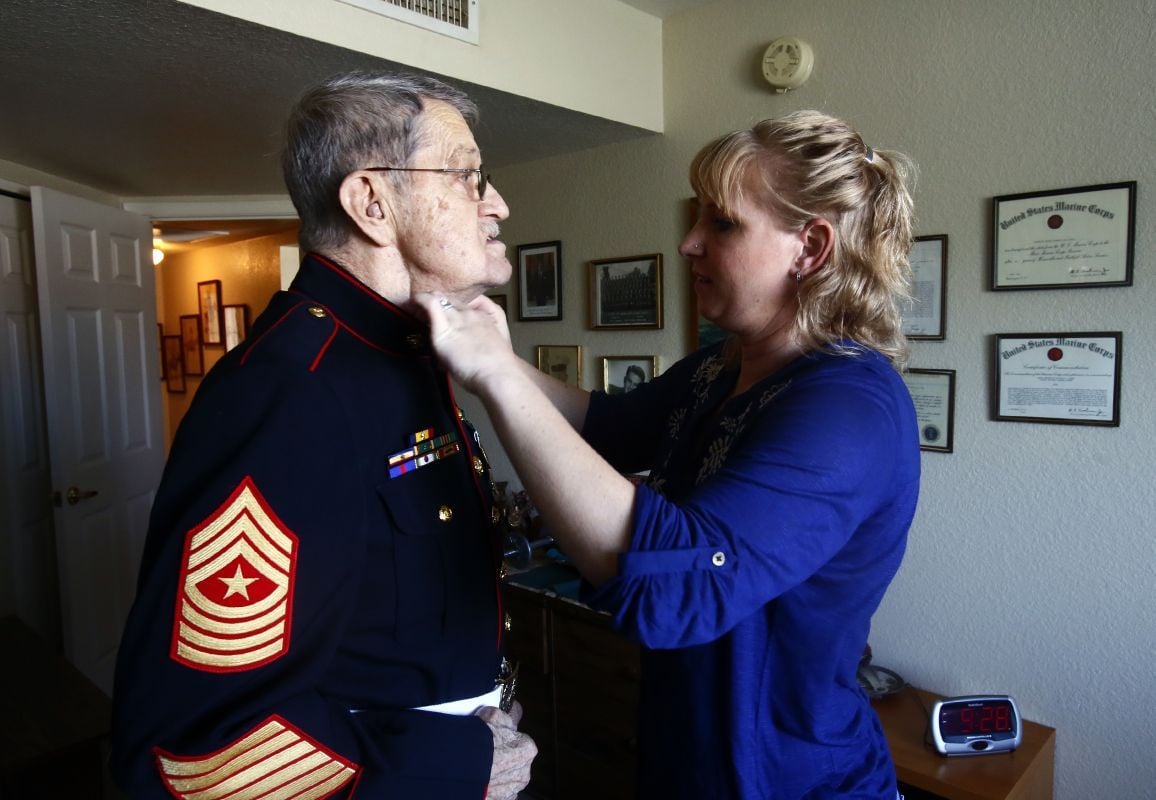 |
“He’s got red and blue running through his veins,” says Sam Elbie, 55, a subcontractor in Rio Rico who jokes that his childhood resembled boot camp.
Elbie’s southeast-side home screams “Oo-rah!”
In the living room, a USMC throw blanket drapes a chair; a clock he made using insignia in place of numbers hangs nearby. In his bedroom, framed pictures plaster the walls, including an autographed photo of Lewis Burwell “Chesty” Puller, a lieutenant general Elbie served with and one of the most decorated members of the Corps. He’s even got a toy hamster — in full regalia — that dances to the branch’s legendary hymn.
He, of course, has his uniform and can still fit into it. Elbie plans to donate it to a veterans museum in Chehalis, Washington, his home state.
Elbie was 17 and an orphan when he enlisted, inspired by classmates who had served.
“Older kids from school had come back from World War II,” he recalls. “I so admired them.”
He had only been in a few years and was serving on the USS Valley Forge when the Korean War erupted.
“We figured we were pretty safe,” he says matter-of-factly.
Elbie — recalls Sam, who has an older half-brother Jeff in Alaska — was pretty tight-lipped about combat. Once, though, he did talk about being stationed in Da Nang, Vietnam, during the war and shaving, using his helmet as a makeshift sink. As Elbie swished his razor around in the water, a sniper’s bullet pierced the helmet.
Elbie, who notes he made good on the Corps motto “by air, land and sea,” also served in the honor guard for Presidents Dwight D. Eisenhower and John F. Kennedy as well as foreign heads of state. He spent several years as a recruiter.
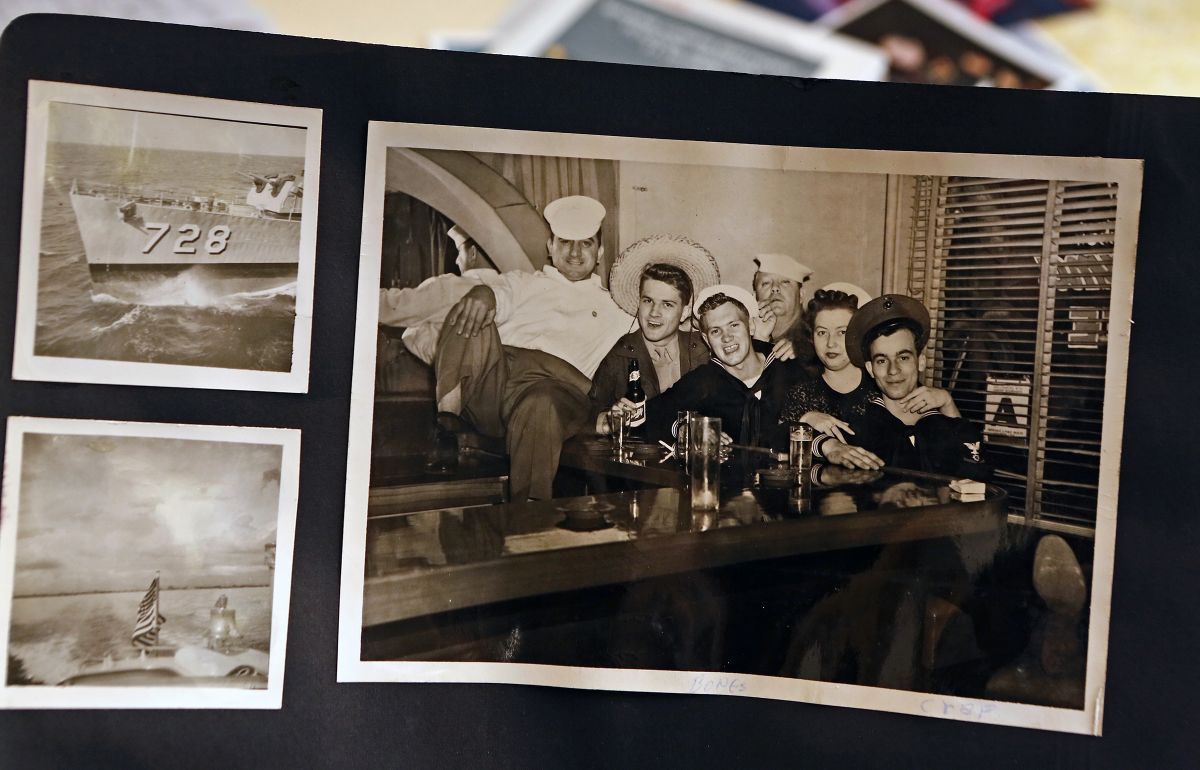 |
During his years of service, Elbie racked up, by his count, about 18 awards. He shrugs them off as “undistinguished.”
He’s proud his son Jeff and Sam’s oldest son both served as Marines.
Elbie has a pile of bound photo albums, many of the black and white pictures plucked from their paper corners and given away. But one incident still has all its photographic evidence locked in place — the day he crossed the equator. Ship shenanigans included “meeting” Davy Jones and King Neptune, getting sprayed with a hose while crawling through garbage and slurping some pretty foul stuff from a baby bottle. Sharp shooters were stationed to take out any sharks when the fresh crossers got tossed into the sea. Elbie has lines of ink on his left forearm, smeared now into illegibility, but once they distinctly read: “USS Springfield Crossed equator Aug. 12, 1949.”
Further up on his shoulder is more ink, which very clearly reads, in large letters, “USMC.”
- By Kristen Cook Arizona Daily Star
Editor’s Note: The Star received 265 nominations for local veterans through an online nomination form. Stories featured in the series include those veterans. Here are the names of the veterans featured in “They Served With Honor” as well as those nominated:
Stan Elbie
Sam Cohen
Thomas Coleman
John “Jack” Dyke
Mary Congdon (Mary Stirling)
Craig Sawyer
Edward Chan
Teddy DeSouza
Wayne L. Petter
Helen Anderson Glass
John Rodriguez
Juan Herraras Jaurigue
Mary Hill
Chris Guerrero
Fred Taylor
James Britt
Gerald Thomas Garrison
Roy Ludlow
Dale Hughes
Brett Rustand
Valentino Cruz
William “Bill” Peel
David Alegria
Bill Deyoe
Mel Giller
Justin Merriman
Art Schaefer
David Arellano
James Glaze
Bill LaBar
Harry Connors
Luke Burgan
Robert S. Putnam
Thomas Rankin
Daisy Gates
Lupecelia Leon
Harper Coleman
John Moore
Sam Brokenshire
John Lochert
Leo Lochert
John Lloyd Rhodes
Benjamin Arellano
Charles Wohlleb
Charles Deibel
Tom Parker
Loren Baber
Michael Matthews
Randolfo “Randy” V. Lopez
Rick Villegas
Frank Mendez
James Files
Ross Donaghay II
Jesus Zapata
Patricia Smith
Jeanne Rogers
Al “Harpo” Celaya
Cliff Wade
Rafael Samay
Melvin Giller
Mary Jane Hill
Nelda Barnes
Gopal Khalsa
Alan Lurie
Robert Barnett
Robert Spencer
Edward Kulik
Curtis Layton
Lyman Threet
Marion “Smitty” Smith
Melvin Morgan
Carl M. Shumway
Charles McClain
George McGee
Earl Liston
Samuel Duncan
Richard Love
Bruce Seymour
John W. Auvenshine
Elmer Nicholson
Max Warner
Myers B. Rosenbloom
Ebb Daughtery
Richard H Brown
John B. Janicek
Byron Burns
William Mesa
Robert B. Johnson
Gregory Gomez
Jeffrey Eighmy
Brendan Phibbs
Harold Koobs
John Fedor
David Morrison Hardy Jr.
Edward V. Lovio
Milton Dietz
Henry Burke
Eugene Metcalfe
Eugene Scott
Harry Laughman
Roy Meyer
Gerry Meyer
Aaron P. Raita
Mac Edward McQuillen
Glen Meunier
Michael Johnston
Steve Pockuba
Glen Hughes
Arthur R. Voss
Mary Smith
Leonard Kraft
George J. Popovich
John Chastain
Charlie Ruggles
Steve Martinez
Ken Laue
Raymond Stroehlein
Gwendolyn Clymer Niemi
Joe Ford
Herbert Mendoza
Onofre Tafoya
David Stone
George Romontio
Gilbert Romero
Donald Beery
Tom Ketchum
John D. Kaperka
Richard Bushong
David Bertagnoli
John W. “Johnny” Gibson
Joe Ladensack
Edward H. Nelson
Colonel Robert B. Beaumont
Samuel C. Pacheco
Paul Cartter
Debbie Seager
Robert Miller
Lawrence Casper
Thomas Duddleston Sr.
William Reede
John Wickham
Jesse DeVaney
Thomas Drew
Andy Anzanos
Jose E. Vega
Kenneth Eckle
Norman G. Benson
Gordon Thorstad
David G. Lucas
Larry Brimm
James Redmond
Joseph Nichols
Antonio “Tony” Valdez
Frank Soto
Robert Sexton, M.D.
Gene Forsyther
Robert De More
Glenn Perry
Al Stockellburg
Joseph Dogoli
Chris Christenson
Wynn Freedman
Thomas Storey
Ray Alfred Fischella
William J. Orscher
Edgar Harrell
Homer “Ed” Adams
Dan Gipple
Anthony K. Van Reusen
Charles Lagneaux
Michael Lazares
Dick Palmer
Donald Gibbons
Richard Pfaff
Clarence Burgan
Don Dingee
Carl Beck
Walter Ram
James R. Huerta
Sam Duncan
Charles Wohlleb
Henry A. Stewart
Don Childs
Clarke Duncan
Ralph A. Grant
Richard Edwards
David Crocker
Harry R. Erickson
Tracy Sparby
Sheldon Coudray
Diana Thacker
Fred W. Astroth
Ken Collins
Hjordis Sherry
Gary Blomstrom
Paul R. Gale
Lance Gillingham
Alexander R. Martinez
Doris E. Manning
Charles Gutekunst
Edward Chan
Harold Dees
Benjamin Ricardo
Solorzano Vivar
Nathan Shapiro
James McDowell
Jack P. Marshall
Ron Sable
Mike Rosenbloom
William Greenberg
Donald Fitzgerald
W.B. Punt
Earnest Parks
Augusto Cesar Gomez Sandino
Don Goldner
Jim Wagner
William Ersthaler
Patrick Franco
Louis Iannacone
Jayme Berg
William “Bill” Alviar
Frank Zunno
Virginia Baber
Roger Johnson
Bernard Reinhart
Donald W. Manke
Robert Ashby
Cloud Funaro
Estella Curry
Calvin D. Pigman
Henry G. Johnson
Jack U. Goodhart
Maurice Storch
Joe Bailey
Thomas Hunt
Leo Silverstein
Donald N. Olson
James Purdue
Ken Weihl
David Morales
Earnest Cotton
Donald Collins
Dennis G. Dierking
Donald Shepperd
Chuck Heathman
James W. Waln
Raymond Romero
Tim Clark
Rodolfo Bejarano
Javier Ledesma
Earl Scott
- By Kristen Cook Arizona Daily Star
Johnny Thompson considers himself lucky.
The 68-year-old suffers blackouts and his short-term memory is shot.
Double vision plagues him. Sometimes he struggles to speak. “I lose words real bad,” he says.
On a good day, he can walk with a slight limp. On a bad one, he can’t take a step without the safety and security of a walker.
He served three tours of duty in Vietnam and each earned him a Purple Heart. He still carries a steel bullet — an armor-piercing round — in a spot so precariously close to the left vertebral artery and his spine that a doctor warned him to never be more than 40 minutes from a hospital.
This guy? Lucky?
“I still feel like the most blessed person in the world,” says Thompson.
Because, of course, he came home.
The veteran counts, among his blessings, a strong faith in God, three children — who all live within 15 minutes of his Marana home — nine grandchildren and his wife of 47 years, Gay. He might pick up his cellphone and not remember whom he wanted to call, but he can describe the day he first laid eyes on her, wearing a polka-dot dress, at a Texas church gathering when they were teenagers.
|
You’d never know about Thompson’s problems just by looking at him. He’s friendly, gracious and has a mischievous sense of humor.
“He’s dedicated, he’s compassionate — he’s just a good man,” says Andrew Bowers, an Army veteran who met Thompson through their church. “His heart shines through. He’s got a smile on his face all the time. He’s positive, he’s optimistic. Those ailments don’t hold him back. He has his bad days guaranteed — he doesn’t let it stop him.”
He did. Once.
At the darkest time of his life, Thompson admits he was suicidal, so depressed he could only sit on the couch. His body was wracked with seizures, and his memory and speech kept failing him.
A mistaken Alzheimer’s diagnosis at age 41 had him living his life in one-to-two-year increments. Now doctors know traumatic brain injury, coupled with the side effects of medications, caused his problems.
Despite his injuries, Thompson spent nearly three decades in the Army, assigned to several different units including Special Forces, and rose to the rank of chief warrant officer 4. Even in retirement, he’s dedicated to the military — and more specifically, those who served in it.
People come to Thompson, asking him to find out about their dads or their uncles or their grandfathers who have died. They want him to fill in the blanks because veterans, back in the day, just didn’t talk about what happened during war.
That uncommunicativeness coupled with a 1973 fire at the U.S. National Personnel Records Center in a Missouri suburb that wiped out millions of official military personnel records, make it even harder for relatives to research backgrounds.
The Thompsons scour the Internet, uncovering what they can. When they discover a veteran earned a medal, Johnny will track down a replacement for the family. He types up histories while Gay has even re-created embroidered naval ship patches.
|
The two also curate traveling military history displays that have been displayed across the state at conventions and churches.
Some of Thompson’s Vietnam War mementos are on display now in Tempe (see box at upper right). Thompson got the idea when he took some keepsakes to the local veterans hospital about four years ago. He watched fellow patients’ eyes light up as he passed around a disarmed flechette warhead.
He’s managed to acquire so much stuff that three of the six bedrooms in Thompson’s house are devoted to military memorabilia. Even the one dedicated to the grandkids’ sleepovers is overrun with documents and uniforms.
Down the hall from the upstairs bedrooms, framed rubbings from the Vietnam Veterans Memorial Wall decorate a sitting room.
Thompson chokes up when he points out the names belonging to two soldiers in his unit.
“The one thing you can’t stand about war is the people you can’t save,” he says, softly. “It’s the ones you lose — they’re the strongest memories you have.”
Thompson’s own medals and ribbons fill a shadow box hanging on the wall, but he won’t talk about those.
“A lot of people don’t get anything when they should have,” he says.
The son of an Army Air Corps experimental test pilot who helped design helicopters, Thompson was just 16 when he enlisted. A doctor realized he was underage and blew the whistle on him. Undaunted, Thompson enlisted again the next year.
After he graduated from flight school, and even though he had a wife and young kids, Thompson volunteered to go to Vietnam.
“I could rescue people,” he says. “I knew I could help people.”
The master helicopter pilot ended up serving three tours of duty in Vietnam and though the United States’ role was controversial, Thompson had and still has no qualms.
|
“Free the oppressed. I believe that with all my heart.”
His third and final tour in Vietnam was the worst.
“We went over with 83, 84 guys,” he says. “Only 22 returned home.”
Thompson himself barely made it.
He remembers the mission he flew on May 19, 1971, Ho Chi Minh’s birthday and two days after his own. It was one he’d flown solo many times before, but on this occasion, it was in a new Huey helicopter — and with a co-pilot. Having Capt. Bob Jorgensen along with him that day saved his life.
“I was down low, looking for footprints,” Thompson recalls. He was hanging out the door of the chopper, scouting for signs of the enemy when more than 150 bullets peppered the helicopter while mines exploded from below.
“I was just shooting blood out of my neck,” Thompson says. “When I got hit, I lost control of the Huey. It was straight up in the air.”
Two bullets sliced through Thompson’s throat, hitting vocal cords and his larynx and almost completely splitting a vertebrae. Discs in his back were crushed from the explosions beneath the chopper.
Thompson passed through six or seven hospitals as he made his way back home. “Everywhere I went, everyone said, ‘How are you still alive?’”
Thompson does what he can to make every minute count, which is why he spends so much time and effort on researching fellow veterans’ military histories.
Even with Gay’s help, it’s painstaking work. “It takes us a month what other people could do in two days.”
Thompson might spend four or five hours researching and writing what he learns. But the next day, that knowledge is lost. Completely wiped from his memory. He has to read over everything and reacquaint himself with the previous day’s work.
It’s frustrating, yes, Thompson admits. But it doesn’t deter him one bit.
“I’m going to keep going until I don’t know I’m doing it any more.”
He was on the path to becoming a teacher, but the military draft in 1948 changed Loren Baber’s life.
But instead of returning to teaching 40 years after he got back from the Korean War, Baber, 85, took on a new endeavor when he and his wife joined the Coast Guard Auxiliary.
After graduating from high school in Nebraska in 1948, he enrolled in Wayne State Teachers’ College, hoping to be a coach.
As he was preparing to leave for school, his plans changed on July 20, when President Truman enacted a peacetime draft.
“I was a college boy, which made me Class 1-A. I was to be called up in 30 days,” he said. Baber explained that in those days, “farm boys” were classified as 4-F and were often the last to go, as they needed to stay home and tend to the family business.
As soon as he knew he was getting called up, he went to the recruiting office so he could chose his branch, as opposed to be assigned to one.
|
The Air Force quota was full, so he joined the Army at 18 years old.
He qualified for Officer Candidate School and headed to Kansas for his training.
“Because of the draft, they had more people than beds so I had to wait a little while to get in,” he said. He left candidate school after having completed the Infantry Advanced Leader Course.
In June 1950, the Korean War began and he received orders to go to California, which meant he was headed to Korea.
He arrived in November and spent Christmas Eve on a ship off the coast of Incheon, near Seoul getting ready to go ashore.
“The captain came over the loudspeaker and called our craft back,” Baber said. “Seoul had fallen.”
He was discharged in 1952 and set up shop in Iowa as a photographer.
In 1968, he married Virginia and purchased an insurance business before they started a family.
Fifteen years later, after everyone was grown they signed onto the Coast Guard Auxiliary using their own boat for over a decade for search-and-rescue work and to patrol.
“It became a career we really loved,” he said.
|
They spent about a year qualifying to use their own boat, and soon they were cruising the California Delta as an official government vessel.
“Once we signed on for our weekend patrols, the boat became the property of the Coast Guard and we were at their beck and call,” said Virginia.
They spent their weekends on their 32-foot boat with two crew members helping stranded boaters and assisting with search-and-rescue operations.
“I was brought up doing service for others,” Virginia, 73, said. “My mother always told me, ‘you have two hands; one is to help yourself, one is to help someone else.’”
They retired from the Coast Guard Auxiliary in 1995 and moved to Tucson, selling the boat before they left.
Although Loren speaks excitedly of his time in the Army and they both miss their days of patrolling the water, they’ve both taken on different types of volunteer work, continuing to help others as they’ve done their whole lives.
- By Patrick McNamara Arizona Daily Star
Vietnam is frequently on Tucson attorney Randolfo “Randy” Lopez’s mind.
How couldn’t it be? Having dropped out of high school, he spent some of his most formative years there as a Marine fighting for his country.
“I was just two weeks into my 18th birthday and I’m in Vietnam,” Lopez said.
Even now, certain sights, sounds, smells and weather conditions can spark those memories.
The humidity, in particular, makes Lopez think of Vietnam.
When he starts to talk about his experiences, you understand why.
“When you’re in battle, your adrenaline flows and you sweat,” Lopez said. “And the first thing you remember is how thirsty you are.”
That’s what happened to Lopez and his Marine compatriots in early 1969 a part of a major offensive called Operation Dewey Canyon.
U.S. forces were positioned near the DMV in an effort to keep the flow of troops and materiel from flooding into the south.
After more than 50 days of fighting, the operation was considered a tactical victory for the United States. But the costs were immense. More than 130 U.S. Marines were killed, and nearly 1,000 were injured.
“I still have memories of this,” Lopez said. “That was a battle scene of battle scenes.”
|
He remembers rushing down steep canyon walls with other Marines to aid another company that had been ambushed. Dead and wounded Marines and North Vietnamese forces lay across the canyon floor.
“What we had to do was get the the dead and injured out,” he said.
Lopez said he helped drag a dead Marine back up the steep slope, inch by inch, pulling the fallen man by the belt, grabbing onto tree branches and roots and anything he could find for leverage.
It took nearly 12 hours to reach to top of the mountain, fallen colleague in tow.
After two tours in the war, Lopez returned to Tucson and started working and going to school.
He earned a GED while still in the Marines and used his GI Bill benefits to help pay the costs of tuition at the University of Arizona. Even after graduating, Lopez said he wasn’t sure what he would do.
One day, while working as an auto mechanic, he met someone who would change his life.
|
“I met an attorney who came in the shop,” Lopez said. They talked, and the man suggested Lopez consider law school.
That man was Armand Salese, a Tucson lawyer who fought for civil rights and was known for taking on cases representing the underdog. He died in 2013.
Now 65, Lopez has been practicing law since 1985.
For his final law school project, Lopez chose a topic he knew well.
He wrote about post-traumatic stress disorder in Vietnam vets as a claim for insanity defenses.
“It was a labor of love for me, being a Vietnam veteran and seeing how PTSD had affected people,” Lopez said.
- By Ethan McSweeney For the Arizona Daily Star
Rick Villegas stood outside in the August heat on a base north of Baghdad when things began exploding around him.
Four mortar rounds fell near Villegas, destroying vehicles and blowing out windows. His heart racing, the Army National Guardsman ran for cover.
“You don’t think of it until after it happens, how scary it was,” Villegas, 65, said. “It just wasn’t my time to die.”
Attacks from insurgents weren’t uncommon on Villegas’ base in 2004 Iraq, he said, but it was a close call for him.
“We were getting hit with rockets and mortars constantly and people got killed,” he said. “Unfortunately, that’s what happens in combat.”
The Tucson native joined the Army National Guard in 1971 at the age of 20, following in the footsteps of his father, who served in the Guard and fought during World War II.
|
After serving in the National Guard for more than three decades without being deployed to a combat zone, Villegas learned over the phone in late 2003 that he was going to be sent to Iraq. An officer told him that he was needed for his background in the military police.
Fifty-three years old when he went to Iraq, Villegas was much older than most of the soldiers he served alongside. While he served in a logistical role in the war, the position wasn’t easy for him.
“Iraq was very hard at my age, but I felt good that I was a soldier on the ground like everybody else,” he said.
|
He was stationed at a base in the city of Balad, about 50 miles north of Baghdad, where he was in charge of tents and housing for Marines and soldiers stationed on the base, ensuring they all had a place to sleep.
Driving through Baghdad and being on a base that was frequently attacked, his commander told him to stay alert, “keeping his stinger out” like a scorpion, Villegas said.
Back home in Tucson, his wife, Gloria Villegas, worried about him. “It was stressful, because on the news they had all the reports of bombings over there,” she said.
Gloria Villegas said she would have to turn off the news when reports from Iraq came in. Villegas would send her emails and calls after attacks and other major events to assure her he was OK.
|
He came home from Iraq in late 2004 and retired from the National Guard in October 2006.
“Adjusting back to our world was hard for him and it was hard for me because I didn’t know what to do,” Gloria Villegas said.
Villegas battled health issues since returning, including surgery complications and cancer. He’s been going to back and forth from the VA hospital for appointments and treatments.
Villegas said, though, that he’s happy he got the chance to serve his country in Iraq and serve in the National Guard for more than 35 years.
“Looking at all these years of service I put in,” he said, “I was just proud to be an American soldier.”
- By David J. Del Grande For the Arizona Daily Star
Attending annual reunions has helped Army veteran Frank Mendez learn more about the POWs he helped rescue from a Japanese internment camp as well as cope with his memories.
During the daring rescue at the University of Santo Tomas, Mendez’s small detachment went behind enemy lines in order to save American prisoners facing execution, he said. And considering the odds, Mendez and many others believed they would not get out alive.
“I considered it to be a suicide mission because we were a small force,” Mendez said. “And I wasn’t the only one; several of the boys thought that, too.”
Like many soldiers, Mendez, 92, has no regrets and remains humble about his time in the service.
Although Mendez was frightened, that assignment was business as usual, he says now with a warm laugh. “It was just another mission.”
Mendez was born and raised in Tucson, and with the nation slowly recovering from the Great Depression, he enlisted in the Army on Aug. 5, 1940, for financial reasons.
“Times were pretty hard and I came from a big family,” he said.
So before the U.S. entered WWII, Mendez became a soldier and persuaded a neighborhood friend to enlist with him. The two men fought side by side throughout the war and were both wounded during a battle on the streets of Manila.
He served in the 1st Cavalry Division and went through basic training at Fort Bliss, in El Paso.
Upon deployment, Mendez’s trip took about 30 days because the single-gun ship had to zigzag its way through warring seas without an escort.
The first stop was Australia, then New Guinea and eventually many hard fought battles throughout multiple Philippine cities, Mendez said.
When he heard a rescue mission in Manila was next, Mendez knew his small troop was attacking about 20,000 Japanese troops head-on.
And if they were met with any type of a counterattack, both the cavalry and prisoners would have died, he said.
Even though the troops shared their rations with the POWs, Mendez didn’t consider himself worthy of praise. And Mendez explained to the young prisoners the longstanding sacrifice of their family members was the singular heroic act.
“We’re not the heroes, your parents were,” Mendez said, “They were doing without to keep you healthy.”
One of the POWs was Liz Irvine, who wrote about her experience in “Surviving the Rising Sun.” Mendez has remained in contact with Irvine since that evening, he said.
Laura Mendez, Frank’s wife of 68 years, learns a lot about his time in the service while attending the annual reunions, she said.
“He doesn’t talk much about when he was in action,” she said.
But the memory of seeing emaciated civilians scarred him, she said. Although Frank Mendez is always impressed by the praise he receives, recalling that time still hurts, she added.
The annual gatherings are pleasant, inviting experiences, Laura Mendez added, but time and again her husband insists the survivors themselves deserve all the credit.
“It’s very warm, very nice and the people are very grateful to him,” she said. “They call him a hero, but he’s not happy with that. He calls them the heroes.”
It was July 1968 and Jim Files — an airborne and scuba-qualified reconnaissance Marine — was assigned with fellow Marines to guard a bridge at Cam Lo, Vietnam.
“We would scuba under the bridge,” recalled Files, 69, of Tucson. “We called ourselves the Parafrog Devil Dogs.”
That name, and the pride behind it, reflects the strong, enduring esprit de corps of Files and his comrades in arms.
His path to the Marine Corps and Vietnam might be traced to his days at the University of Illinois, where he studied after his youth and high school years in Barnhill, Illinois.
“The Vietnam War was escalating, and there was a lot of debate about it” among students at the university, Files said. “I was usually the one saying that yes, we belong in Vietnam. We must stop the aggression of communism.”
|
Those beliefs eventually led to action.
“At the end of my second year at the university, I enlisted in the Marine Corps” in 1966, Files said.
He completed boot camp, infantry training and radio operators school.
“I went to jump school (for parachute training) at Fort Benning, and I also did amphibious recon training,” Files said.
He went to Vietnam at the end of March 1968.
“Our company was doing four-man patrols,” said Files, who served with the Third Force Recon Company. “We went into the bush for a week at a time — scouting for enemy troops and supply dumps.”
Later, after guarding the bridge at Cam Lo with his fellow Parafrog Devil Dogs, it became his role to “keep in communication with recon teams in the bush.”
It sometimes involved going into combat in support of a recon team and engaging in firefights with the enemy.
He survived those firefights, but other experiences left a mark. One of those involved a close friend.
|
“We had a plan to someday open a combination bookstore, bar and restaurant,” Files said. “Then he got killed.”
Files received an honorable discharge in 1969, returned to the United States, continued his education, and eventually settled into a long career in journalism that took him from Illinois to Colorado, Guam and Arizona.
He met his wife, Meg, in a writing class in 1970, and they were married in 1971.
Meg Files, who is the English and journalism department chair at Pima Community College, nominated her husband for recognition in this series, saying “his experience in Vietnam was influential in shaping his professional and personal life.”
“He had some unique experiences in Vietnam,” she noted. “He said, ‘If you’ve grown up reading certain books, watching certain movies, hearing certain stories, you need the opportunity to know you are brave.’ He is one of the bravest people I know.”
While serving in Vietnam in 1969, Michael Matthews never took his Navy-issued .45-calilber pistol out of its original packaging.
Instead, he checked the pistol into his civilian luggage and used the holster to carry a knife, fork, spoon, and a pair of sunglasses.
“I wanted to serve my country, but I didn’t want to kill anybody,” said Matthews, 67, a devout Catholic since his boyhood in Syracuse, New York.
His faith prohibited him from violence, so he volunteered to work as a medic.
He spent seven months in the jungle alongside Marines, all of whom were younger than 21-year-old Matthews, as they tried to cut supply lines to North Vietnamese forces.
The last six months of his tour were spent in an environment much more in line with his faith.
He worked as a scrub nurse in a hospital “like a MASH unit you’d see on TV,” he said. The hospital treated the wounded, regardless of whether they were “friend or foe.”
“Even if they were wounded prisoners, we took care of them. We didn’t ask ‘name, number, and insurance card, please,’” he said.
He and the other medical personnel came to refer to the unit as a “car wash.” Patients were stripped of their clothing, washed, covered in antibiotics, and readied for the operating room.
Working in the hospital wasn’t without its own risks. In one case, a Vietnamese farmer showed up with a small wound in his chest and the medics cleaned him up for surgery.
“We were just getting ready to cut him to fix the wound in his chest when the X-rays came in. There was a 40-millimeter unexploded mortar round in his chest,” he said.
He helped the doctor carefully remove the mortar with obstetrical forceps covered with rubber tubing. Always one for humor, Matthews joked that he needed a clean pair of underwear after the bomb disposal unit carried away the mortar round.
His aversion to carrying a gun incited some “snide remarks” at the gun range one day. Unbeknownst to his fellow soldiers, Matthews had earned an expert badge with the M-16 rifle. He accepted a $110 bet that he couldn’t hit the target once. He hit it five times.
“I knocked the head off the target, dropped the clip, gave the gun, gave the clip, said ‘thank you,’ and walked away $110 richer,” he said with a laugh.
He left active duty shortly after he returned from Vietnam but served as a scrub nurse in the New York Army National Guard and then the Army Reserve.
In 1990, he served in the Persian Gulf War at a 1,000-bed hospital in Oman designed to treat victims of biological or chemical weapons. The hospital remained empty throughout the war, making his time there rather uneventful.
“All I did was work on my volleyball serve and eat peanut butter and jelly sandwiches,” he said.
He moved to Florida after the war ended and worked as a scrub nurse at a Veterans Affairs hospital.
“I got good at my job and I actually liked going to work,” he said. “The pay wasn’t the best, but I thought I was doing some good.”
“Somebody would come in with a break or a problem and I was part of the solution to fix it and they went out the door cured or fixed or whole. That made me feel good,” he said.
He retired as a scrub nurse in 2008 and moved to Marana.
For the past six years, he has volunteered at the VA hospital in Tucson as a concierge, helping veterans make their way around the hospital. He also is a Eucharistic minister at Our Lady of the Desert Church.
More than four decades have passed since Tom Parker served in Vietnam, but he still feels the impact of his wartime experience.
The Air Force Buck Sergeant was sent to Vietnam in 1970, shortly after enlisting as a way to avoid the Army draft and, ironically enough, combat.
Serving in an intelligence role, Parker worked in forward air control, marking targets for fighters with smoke in the air, telling them where to drop bombs. On occasion, he went up in planes as an observer.
He also briefed pilots on what was happening in the area, advising them of where the enemy was and where they could safely land if needed.
“It was a rather pretty place and I always thought if it weren’t for the war it would be an interesting place to go as a tourist,” Parker, now 66, said of Vietnam.
But there was a war and with that came gruesome scenes that did a number on Parker, who to this day suffers from post-traumatic stress disorder.
“When I would go up in the planes, you see dead bodies and things like that, some of the destruction,” Parker recalled. “And because of my job I knew the impact we had — particularly the collateral damage.”
|
It took Parker 35 years to seek treatment for his symptoms, which included disturbing dreams, anger, anxiety and suicidal thoughts. He felt fortunate to have been pulled aside by two pilots in Vietnam who connected him with a Christian group called the Navigators.
“That’s what kept me out of a lot of the stuff that would have otherwise run my life into the ground,” he said.
Today, thanks to his faith and help from Veterans Affairs, Parker says his PTSD is manageable and he believes the events that occurred happened so he could serve others.
As part of the organization Operation Eternal Freedom, Parker works with current and former service members as well as civilians who suffer from PTSD, sharing coping mechanisms, resources and encouragement through the faith-based program.
“The thing I found is, this whole PTSD thing is more than mental, it wounds the soul. It cuts against the very core of who we are,” Parker said. “To me, we need to go to the one that made us in order to have that heal, and that’s Jesus Christ.”
The challenge, Parker says, is getting those affected to recognize it and seek help. But when they do, Parker is there.
“These guys fought to keep us safe and we need to fight to keep them alive with what they’ve done for us and the price they’ve paid both physically and mentally,” Parker said.
Parker still encourages others to serve their country.
“It gave me a chance to grow up,” he said. “If you don’t know what you want to do, it’s a viable option. It’s a secure environment, you’re fed, you’re clothed, you’re paid, you learn discipline, good work ethic,” he said, “which is something a lot of younger folks may be lacking, and they can learn a skill, too.”
Benjamin Arellano learned the importance of patience and precision in the Air Force as a parachute rigger.
The Tucson High School student left the Old Pascua Yaqui Village at age 17 and joined the Air Force in 1955, and at a young age became responsible for the lives of others piloting and jumping from aircraft.
|
It was his job to make sure the pilots’ parachutes were folded and packed correctly while flying their training missions from bases in the United States, and then taking care of his comrades abroad, including in the Vietnam War, and then later as a ground crew member of the SR-71 Blackbird spy plane.
In addition to pilots, Arellano’s hands also touched the lives of paratroopers.
While his family remained in the Phillipines, Arellano left Clark Air Base with the 450th Fighter Day Wing to join service men in Vietnam. He served at the Da Nang Air Base 90 days at a time in 1963 and 1964.
“I packed chutes for different outfits in battle,” recalled Arellano, 78, from the living room of his home in the New Pascua Yaqui Reservation, southwest of Tucson. His son, Benjamin Arellano Jr., and his son’s wife, Dolores, proudly sat nearby listening to Arellano share his stories.
|
“The chutes were for different outfits in battle. There were Army paratroopers and special forces. I packed chutes for up to 60 soldiers. They flew in C-119s — the Flying Boxcar,” said Arellano, recalling the military transport plane.
As a parachute rigger, Arellano learned his training and skill at several bases including Chanute in Rantoul, Illinois; Foster near Victoria, Texas; and Luke in Glendale, Arizona, where he was with the 4510th Combat Crew Training Wing.
In 1966, Arellano and his wife, Juanita, and his two sons left Clark Air Base and returned to the states. Arellano was stationed in Carswell Air Force Base in Fort Worth, Texas. Two years later, Arellano described his assignment to the ground crew for the SR-71 Blackbird as his “pride and joy.” He was sent to Beale Air Force Base near Marysville, California.
|
For the last 10 years of his military career, Arellano, who retired as a staff sergeant in 1975, packed chutes for the crew and the SR-71 Blackbird, a long-range Mach 3 plus supersonic speed reconnaissance aircraft. He was assigned to the 9th Strategic Reconnaissance Wing.
“I packed three chutes. One was a drag chute, the other was for the pilot’s seat and the navigator’s seat. The pilot’s chute alone took six hours to pack,” recalled Arellano, who received numerous honors for his service, including three Outstanding Unit Citations, Good Conduct medal, two Vietnam Service medals and a National Defense Service with a Bronze Star ribbon.
After his retirement in 1975, Arellano went to work for the Tucson Airport Authority and later for the Pascua Yaqui tribe at the casino.
Charles Wohlleb woke up one morning in December 1944, and for some reason, he felt like he should put his life jacket on.
He was working in the engine room on the USS Spence, a Fletcher class destroyer, near the Philippines, which was occupied by the Japanese at the time. He was not on duty, and the seamen were not required to keep their life jackets on.
“Something told me to put it on,” he said.
And then the typhoon came.
|
Wohlleb, now 91 years old and living on Tucson’s west side, is one of only 24 survivors from the ship, which capsized and sank; 315 others aboard died.
Typhoon Cobra, which he later found out was responsible for capsizing the Spence, sank two other ships, the USS Monaghan and the USS Hull.
The Spence was desperately low on fuel at the time, he said. It tried three different times to fuel up from bigger ships, but failed because of the high winds and waves.
“The ship was rolling something terrible,” he said.
|
He and two other seamen went up to the deck as the storm was getting nastier. They were up there for about 15 minutes when they heard “Fire!” in the phones, which one of them remembered to bring. But the men didn’t know where the fire was.
“There’s a lot that I would like to know,” Wohlleb said.
Then the ship began tilting, he said. Stacks, which are chimneys on the ship, collapsed. And suddenly, he couldn’t see his friends anymore.
Wohlleb said he went about 20 feet underwater when he remembered he was wearing a life jacket.
“I squeezed it and went up like a rocket,” he said.
He saw the ship tilt until it turned upside down with everybody inside.
“That’s the part that gets me,” he said.
He spent the next four days in the ocean with other men who survived by clinging on to a net. He said when the ship first sank, there were about 35 men on the net.
By the time they were rescued by another ship, there were far fewer. The heavy storm and waves claimed the lives of those who couldn’t cling to the net any longer.
|
Wohlleb, being the only one with a life jacket, tried to help sailors who were slipping from the ropes of the net. He held one man, who seemed unconscious, against his chest to keep him warm.
But in the end, “I couldn’t help them,” he said.
When the surviving men saw an aircraft carrier passing by on the fourth day at sea, the sky was pitch black, he said.
“We yelled and we yelled and we screamed,” he said.
Many of them didn’t think they could be seen or heard, especially in the darkness, but someone in the back of the ship was alerted to their presence.
“The guy next to me started to cry,” he said.
Upon his return to the U.S., he was discharged and returned home to New Jersey. In 1948, he married May. He went on to open an automotive transmission shop before moving to Tucson in 2003.
|
Wohlleb said it took more than 20 years to come to terms with what happened when the ship capsized.
Family and having a business helped him get through it. He joked that his kids, when they were growing up, gave him enough trouble that he couldn’t worry about anything else.
“You never forget it, though,” he said. “It’s with you all your life. I think about it every day.”
After completing a 12-mile march on an injured ankle as his final task in Army Ranger school, Charles Deibel knew there was nothing he couldn’t accomplish in life.
And now, as a University of Arizona senior, he says getting through college has been a walk in the park. He is preparing to apply to law schools on the East Coast.
He enlisted in the Army in 2008 as a 19-year-old and served four tours of duty in his four-year stint, one in Iraq and three in Afghanistan, earning a Purple Heart along the way in a firefight he prefers not to talk about.
“I was going to join right after high school, but I needed to do a little growing up,” said Deibel, now 27.
By the end of 2007, he was in a rut. His father told him his options were military or school, so he decided to scratch the public service itch and join the Army.
|
He says he didn’t join to gain respect or do something heroic, but that he didn’t like seeing people he didn’t know fighting for him and his family.
Deibel started in the infantry, but wanted to go further.
“I went to them and asked them who’s the best,” he said. “I told them I wanted to do that.”
Ranger School consisted of nine weeks of training, but to join the 75th Ranger Regiment, he had to complete an additional three weeks of pre-Ranger training.
“Ranger training was a different kind of animal,” he said. “It taxes you mentally and physically to no other level.”
Deibel went through 12 weeks of physical training, tests, patrols, 22-hour days and peer evaluations. He was forced to repeat his third phase, which he said was a gut check to either quit or drive on.
The last activity in completing school was the march, but the day before, he’d fallen 45 feet during a rope training, severely injuring his ankle.
“The march was the turning point in my life as to how hard I was able to push myself,” he said. “The military never gets easier as you advance, but you earn more respect, and it just gets better.”
He left the Army in June 2012 and started school in the fall, knowing he needed a degree.
|
“I liked government, so I wanted to stay in that line of work,” he said. “It’s another type of public service.”
Deibel is majoring in political science with a minor in Arabic, and is preparing to take the LSAT exam for entrance into law school in December.
He’s undecided between pursuing constitutional, criminal or civil law at this point, but he’s interested in all three, and has time to decide.
Deibel won’t rule out returning to the Army, saying the JAG Corps is an excellent arena in which to practice law.
“The itch is always there, but it’s different now that we’re not in as deep of a war anymore,” he said. “I’d like to take my drive and focus elsewhere to help people in a different capacity.”
- By Patrick McNamara Arizona Daily Star
It only took about a month of college for John Lloyd Rhodes to learn academic life wasn’t for him.
“I went to UA because I wanted to play football,” Rhodes, 79, said. “I found out you had to read and study, so I joined the Marine Corps.”
That started a nearly 20-year journey for the native Tucsonan, who went on to serve in Japan, Okinawa and Vietnam, among many stateside assignments.
Rhodes initially trained as a ham-radio operator. That assignment took him to Georgia, San Diego and Washington, D.C.
Then war broke out, and Rhodes was off to Vietnam as part of a military police battalion in charge of security at the Da Nang Air Base.
Despite the war raging throughout much of the county, Rhodes said times in Da Nang were relatively quiet. After all, it was the place where many American troops took their rest-and-recreation breaks from the war.
But there were a few close calls.
Like the day when Rhodes was making a cassette recording for his wife Theresa back home and North Vietnamese fighters launched an attack on the base.
“I made the mistake of leaving the tape recorder on while we were under attack,” he said with a laugh.
What’s more, he sent it to his wife.
“I didn’t care for that,” Theresa said.
Things got more dangerous for Rhodes in the second half of his first deployment when he was reassigned to the Second Battalion, 26th Marines, or the “Nomads,” as he said they were known then.
There he participated in 13 major operations over six months all across the country.
“They say your first couple weeks and your last are the most dangerous,” he said, and that proved to be true in his case.
Of the 1,000 men in the battalion, 324 were wounded and 33 killed in action.
Rhodes was one of those injured when a mortar round exploded near him, sending shrapnel into his leg.
He downplays the injury, saying he got stitched up and sent on his way. The Department of Defense thought differently, however, awarding him the Purple Heart for his service.
Rhodes left Vietnam shortly after the incident for an assignment in San Francisco.
It was quite a time to be in the City by the Bay — 1967 and the height of the counterculture and antiwar movements.
Rhodes said his time in San Francisco left him discouraged, as the base where he worked became the frequent target of domestic assaults. So common were the incidents of people shooting or hurling projectiles at the base that officials had to install bulletproof glass on the guard gate.
“I felt safer in Vietnam,” Rhodes joked.
He returned to the war-torn country for a second tour. After a safe return stateside, he took a job with the U.S. Marines Inspector General’s Office.
That job took him to Marine facilities all over the world.
In a fortuitous twist, Rhodes’ final assignment before his retirement from the Marines was back home in Tucson.
“The last thing I did was inspect the reserve unit I started out in,” he said.
Rhodes left the Marines in 1974. He earned a degree in agriculture from the University of Arizona, and later worked as a real estate appraiser until he retired in 2007.
John and Leo Lochert fondly recall their two years in the Navy.
Their time in the Army? What comes to mind for John is “dirt and mud and cold and ugh.”
The 88-year-old twins, whose birthday is Dec. 7, served in World War II in the Navy and then in the Korean War in the Army.
|
In 2013 they took an Honor Flight trip to Washington, D.C., to visit the “impressive” war memorials and monuments. They reflected on their military experience in a recent interview.
In 1944 in Dickinson, North Dakota, the twins were 17 and subject to the draft. They didn’t want to be in the Army, so they volunteered for the Navy.
“I thought Navy would be a better duty,” Leo sad.
“It was!” John said.
So two days after high school graduation, before the ceremony and the prom, the twins started their military careers.
They went to boot camp and then a 6-month course at the University of Idaho to learn to be radio operators to send and receive encoded messages. It was a fun time with a lot of invitations to sorority dances because “they needed boys” with most of the local young men gone during wartime.
|
When they got their service assignments, they were shocked to learn they couldn’t stay together. They’d never been apart.
“It was terrible, really. It hurt,” John said.
Leo pleaded with his commanding officer to let the brothers stay together, but after the five Sullivan brothers were killed when the USS Juneau was sunk in the South Pacific in 1942, the Navy enforced its ban on siblings serving together. They were sent to their separate assignments in the South Pacific and served for two years in the Navy.
“Some old tin-can destroyer he got, and I got a carrier,” John said.
After the war, both ships were decommissioned and the twins went home. To help pay for college, they joined the Army National Guard as master sergeants to get financial help going to college. They were trained for a medical unit.
“This was when the Korean War was going on.
|
Our commanding officer said, ‘Don’t worry, folks, we’re not going to get called up,’” Leo said.
Two days later, they were.
“He got the .45; I got the M1 rifle,” Leo said.
John accepted a battlefield commission and was sent overseas, followed by Leo. But this time the brothers were allowed to serve together, and Leo sometimes wore John’s uniform to sneak into officers’ clubs with him.
They worked at forward first aid stations where the wounded were brought, sometimes without legs or arms, sometimes in body bags. “It was terrible,” Leo said. “The worst I’ve seen.”
They served together two years in the Army for two years. John served a third year, and they both finished college.
John had a career in accounting, and Leo had a career in baking and restaurant work.
Leo had four sons and four daughters with Dorothy Jean Cox, and they moved to Tucson. After they divorced, Leo married Buffy De Trouville. John joined Leo in Tucson.
These days, you can hear the twins singing in the church choir at St. Thomas the Apostle Church.
- By David J. Del Grande For the Arizona Daily Star
Some people may be skeptical about the morale and good work being done throughout the country, but retired Marine Sam Brokenshire isn’t one of them.
Brokenshire is one of the many retired service members who now works for Team Rubicon, a volunteer disaster relief organization for veterans.
“There’s a feeling in America right now that we’re on the decline, but being on these deployments and seeing all these young veterans coming back, I think we’re just at the beginning of our greatness again,” Brokenshire said.
|
He registered with the group one year before retiring as a corrections officer, and now holds Team Rubicon’s regional field operations manager position which oversees Arizona, California Nevada and Hawaii.
And Brokenshire’s warm, reserved smile grows when talking about the unofficial Rubicon slogan adorning his T-shirt which touts, “My time in uniform is over, but my watch never ends.”
Becoming involved with the organization is a way for returning soldiers to reintegrate, and have a mission just as important as active duty, Brokenshire said.
“I think that is what’s therapeutic about Team Rubicon,” he said, “you can reacquaint yourself with what was important to you at one time that was lost.”
Brokenshire just returned home from the relief effort in South Carolina. And, not only did the group’s mission help other veterans, but its message relays a positive narrative many people are unaware of, he said.
“There is good being done out there,” he added.
The stout, soft-spoken retiree from Scranton, Pennsylvania, failed his first attempt at the Marines, in officer candidate school.
He had already earned his bachelor’s degree from Pennsylvania State University, so Brokenshire began teaching at Wallenpaupack Area High School.
But, Brokenshire said he felt dissatisfied with the teaching position and after two years decided to enlist. “It was always eating at me, that I had not succeeded,” he said.
Brokenshire went through basic training in Parris Island, South Carolina, and became a military police officer in San Diego.
After two years of exemplary service, Brokenshire earned an embassy duty position. Between 1984 and 1986 he served in both Paris and Mogadishu, Somalia.
He was on active duty until 1991, and settled in Tucson after returning stateside.
One year before retiring from his corrections officer position, Brokenshire joined Team Rubicon and began his new full-time mission.
Katie Whichard, a Team Rubicon regional deputy communications manager, also found a second home at the organization after retiring from the Marines last October.
Whichard said team members like Brokenshire embody Team Rubicon’s mission.
“He’s one of those standout people who have put his heart and soul into this,” Whichard said. “He’s the go-to-guy, and he seems to have all the answers.”
Whichard further said Brokenshire’s graceful leadership skills are invaluable whether he’s working side-by-side with a team or directing an effort remotely.
Brokenshire comes from a place of genuine concern and humility, Whichard said.
“He not only helps out the victims of these disasters but he helps out the volunteers with their lives,” she said.
John Moore will forever remember Thanksgiving Day 1968. It has nothing to do with turkey and stuffing — but rather with a traumatic, life-threatening experience.
A Marine serving in Vietnam, Moore was on a patrol to knock out an enemy mortar position when he and his fellow soldiers came under a barrage of mortar fire. One of the mortars landed close — very close.
“The shrapnel hit me and threw me over on my side,” said Moore.
|
“All 10 of us (in the patrol) were hit. I had shrapnel in my elbow and leg. I was terrified.”
Moore, who is now 67, was alive, but he was bleeding and in great pain as he and others were loaded onto helicopters for evacuation.
“I never stopped bleeding until I hit the operating room,” he said.
Moore, who also suffered hearing loss, lost part of his elbow and has shrapnel in his body to this day.
After his condition was stabilized, Moore was flown to a naval hospital in Japan for further treatment and then to a hospital in the United States, where he remained for three more months of care.
Later, after recovering sufficiently to work in a non-combat capacity, he remained in the Marines until receiving an early honorable discharge as a corporal in March 1970.
Moore’s path to the Marines and Vietnam began after his youthful years in Milton, Indiana, and a brief stint in junior college.
Unsatisfied with the college experience and looking for something new, Moore joined the Marines, completed training and arrived in Vietnam in August 1968.
He soon found himself in combat, often lugging eight grenades and seven canteens of water in addition to ammunition and other supplies.
“I learned there are so many ways to get killed,” he said, reflecting on his own close brush with death.
|
Moore, who moved to Tucson in 1970, worked on ranches and in other jobs before starting work with Pima Animal Control in 1983.
He worked there for 27 years before retiring in 2010.
Moore and his wife, Susan, have two grown daughters. One of them, Katee Moore, calls her father the “most compassionate, smartest, hardworking individual I have ever had the pleasure of knowing.”
In nominating him for recognition in the Star’s series of stories about veterans, she said “I truly believe that a veteran, a man, a father as wonderful and strong as John Moore should be recognized for the sacrifices he made for his country and the impact he has made on all the lives he has touched.
“There is an old quote associated with the military that goes ‘All gave some, some gave all.’ My father gave some of his body and all of his heart. He served with honor.”
When Harper Coleman jumped into the water at Utah Beach, he faced a sight nearly as daunting as the German guns trained on him: Gen. Theodore Roosevelt Jr. waving his cane at the troops and yelling: “Go, go, go!”
“He was a rough talker,” Coleman, 93, said with a chuckle. “He wasn’t using any Sunday school language.”
Coleman, then 22, was among the first waves of troops to land at Normandy on June 6, 1944, also known as D-Day. More than seven decades later, a painting of the Normandy landing hangs on the wall of the Arizona room in his east-side home.
He stayed on the front lines as a private with the Army’s Fourth Infantry Division for the next seven months, fighting for the port city of Cherbourg, liberating Paris, and holding off the German offensive that came to be known as the Battle of the Bulge.
|
The Allied forces turned the tide of World War II in late 1944, but the momentous nature of the effort wasn’t at the forefront of Coleman’s mind.
“I was a kid. I didn’t think much about it,” he said.
Coleman had more immediate concerns, such as fighting his way through the hedgerows of France, which meant dealing with German defenses set up near the ancient rows of dirt, brush, and trees that separated farms.
“It was hop and jump the whole way from the beach to Cherbourg,” he said.
Eventually the Fourth Division made it to Paris, four years after German troops first occupied the city. “It was a big party. It was wild,” he said.
Several months later, the euphoria had dimmed and Coleman found himself fighting in “terrible” conditions against the last major push by the German military into northern France.
“There was snow up to your waist and mud you just couldn’t believe and somebody shooting at you,” he said.
Near the end of the Battle of the Bulge, Coleman and about 700 other soldiers in his division were sent to hospitals in England. Days of wearing wet socks and shoes had taken their toll and the soldiers suffered from trench foot. “Your feet just froze,” he said.
|
While in France, Coleman wrote letters back home to Kathryn McCleary in Shippensburg, Pennsylvania. The two were married not long after Coleman returned to the United States and have been together ever since. Two of their children served in the Air Force and another served in the Army.
Although he had every intention of staying away from the Army after he returned to Pennsylvania, jobs were scarce and Coleman started working at a nearby armory depot. He continued working for the Department of Defense and in 1967 he took an electronic supply job at Fort Huachuca, where he retired in 1977.
Coleman’s efforts on D-Day brought renewed recognition two years ago when the French Consulate in Phoenix awarded him the French Legion of Honor.
“It may not mean much here, but if you’re in France, I’m a ‘sir,’ ” he said with a grin.
For as long as she can remember, Lupecelia Leon has sought out adventure.
When she declared she wanted to learn how to fly at the age of 16, her parents thought she was crazy.
Using the money she earned at her after school job at Burger King, Leon began taking flying lessons at Ryan Airfield.
Today, as a member of the Arizona National Guard, Chief Warrant Officer 2 Leon flies Black Hawk helicopters.
Having been deployed overseas three times and preparing for a fourth in the coming weeks, the medevac pilot has been in enough combat situations that she is no longer chasing thrills. Instead, she treasures time with her family.
It’s likely her adventures and thrills will continue.
The 33-year-old serves not only the country in her military career, but Pima County as a sheriff’s deputy and member of the search and rescue team since 2013.
No longer bewildered by their youngest daughter’s choices, Leon’s parents are proud of the path she has taken — something Leon has asked them not to draw attention to.
|
“To me, it’s nothing more than a job,” she said.
Her father, Pete, disagrees.
“Medevac pilots and their crew are unsung heroes who saved countless lives under enemy fire and extreme weather conditions,” he said.
Leon made the decision to enter into a life of service as a student at Sunnyside High School. She entered basic training for the Army in September 2000 — just four months after graduation.
She would remain in the Army through January 2005, when she enlisted in the Arizona National Guard.
Basic training was the first time Leon had been away from her family, and she admits she was nervous. But it was there where Leon says she learned the importance of teamwork. It’s a lesson that served her well during her last deployment to Afghanistan in 2011, where she flew her crew in to retrieve injured Marines and prisoners of war.
Knowing that her crew was capable of caring for the severely wounded on board, Leon was able to focus on her responsibilities — getting out of danger and delivering those in need to medical services.
Over the course of a year, Leon flew more than 100 missions, including eight within a 24-hour period.
Even though she had previously been deployed to Qatar and Afghanistan, serving in administrative roles, this was the first time she had been exposed on a daily basis to the cost of combat — picking up Marines who had lost legs, or arms, or both.
Leon and her crew were also tasked with transporting injured civilians, which came with a different type of risk.
“We received intel that the main goal was to get a helicopter with the red crosses, so they would do things to get us to go out so they could study us,” Leon said.
“There were different occasions where they would hurt their children. One time, a little girl, I think she was 9, she got shot in the stomach by her dad because they wanted to time us — the man always had to get in the helicopter with their child, but we knew right away because we would see the way they would look at their watches.”
The overall experience was challenging for Leon, not because of the gruesome scenes but because of the self-imposed pressure to save everyone.
“The reality is you can’t save everyone and you want to,” she said.
When the bells rang, Airman 2nd Class Daisy Gates knew encrypted messages had arrived. The messages quickly needed to be sent to locations such as Washington, D.C., or overseas.
It was during the Korean War and she was a teletype operator in the 1063rd Communications Squadron at a relay center at Maxwell Air Force Base in Montgomery, Alabama.
The young woman, who in 1951 enlisted in the Women’s Air Force after graduation from Tucson High School, recalled her work at the center where she and the others received top secret clearance.
|
“We sent messages all over — from Washington, D.C., to locations abroad,” recalled Gates, 82, from her kitchen table at her east-side assisted living complex.
What the messages said were unknown to Gates. The sender and the recipient were the only ones who knew.
But the operators knew war was underway. It was during that time that Gates became tight with the other women in her squadron.
“I believe some messages could have saved lives. Some could have dealt with the movement of troops and bombing locations,” said Gates, who received recognition honors and awards, including the Good Conduct Medal.
There were days when the bells would constantly ring in the large room, which was lined with teletype machines set in rows. The building they were in was cement block — not constructed out of lumber — like the others. It was under guard at all times.
“We could read the tape by touching the punch holes, and all we could read is where the messages were going. We would punch in the locations and make sure each one went to the right teletype center,” explained Gates.
The operators worked shifts around the clock, and the shifts would change weekly. “That was hard. It was difficult for our bodies to adjust,” she said.
|
Her work at the teletype center was cut short in 1952 after Gates, who then was Daisy Steele, married her fiancé, Alden Gates. He, too, was in the Air Force.
She then applied for a compassionate transfer and was sent to March Air Force Base in Riverside, California, where Alden was stationed. She worked in the communications office at the base.
When Gates became pregnant, she was discharged. “That’s what they did back then,” she said of the military. Gates returned to Tucson and her daughter was born at St. Mary’s Hospital. Her husband was eventually stationed at Davis-Monthan Air Force Base.
Family photographs are displayed in Gates’ living room, including a black-and-white picture of her and her husband in uniform. Alden Gates served two tours in Germany and retired from the Air Force after 22 years. He then went to work for the postal service for 20 years. Alden, who suffered from Alzheimer’s, died in 2014.
The couple raised three children. Gates proudly points to photos displayed in her living room and mentions that she has 11 grandchildren and 15 great-grandchildren. It makes her happy, she said, to share stories with them about her military service.
To this day, Thomas Rankin, 90, remembers his ninth bombing mission of World War II.
He was 19 years old and on a B-24 aircraft, a bomber, which flew missions over Europe out of England. He worked as a radio operator and a top turret gunner when the aircraft was struck by fire at over 20,000 feet.
“We thought we were going to go down,” he said.
Two crew members were seriously injured, he said. The pilot suggested the crew bail out from the airplane, but Rankin knew that would mean three of them would die, including himself, whose parachute was damaged.
Pieces of the aircraft were falling from the sky, he said.
The B-24 managed to land at an emergency airport in England, he said. Everyone survived.
|
“The ninth mission stayed with me,” Rankin said. “I remember every second of it.”
Rankin also remembered when, as a young man before the war, he was driving down a highway in San Francisco near the airport and saw a Lockheed P-38 Lightning aircraft take off.
“It pulled up and disappeared,” he said. “And I thought, ‘Wow. That’s what I want to do.’”
He said he had originally intended to join the Navy. His father was an officer in the Navy and a teacher at the Naval Academy.
He ended up being drafted to the U.S. Army Air Corps instead.
After World War II, Rankin paused his military service to attend college, where he studied mechanical engineering and math. He returned to the military two years later.
During the Vietnam War, he said he was on a 21-day rotation of 12 hours on and 14 hours off, flying missions into Vietnam, hauling cargo.
One of the more memorable cargo he hauled during that time was a control tower, he said. The plane often carried much more than it could stand. “It was hanging out of the back about 15 feet,” he said.
And on some days, he would be sent on “vegetable runs,” he said. He and others would be sent to a base where they could collect boxes of locally grown vegetables and distribute them to the troops. He got to taste the “real good stuff,” he said.
|
Rankin retired from the Air Force as a lieutenant colonel in 1969. He went on to receive a master’s degree in education and taught at Pueblo High School for 10 years. He held another job in the district working with computer programs for six years.
Last spring, Rankin was chosen to be one of 72 Arizona veterans to be on an honor flight to Washington, D.C., where the veterans visited war memorials.
He also spent 32 years as a volunteer at Davis-Monthan Air Force Base, helping people prepare for their tax returns.
Looking back on his military experience, Rankin said he was lucky to have survived.
“I just did what was needed to be done in those times,” he said, “Sometimes it was dangerous. Sometimes it wasn’t.”
There’s no denying that Luke Burgan was born with military blood running through his veins.
By the time he came of age to enlist in 2010, the then 19-year-old Burgan was following in the footsteps of his grandfather, father and older brother.
“I knew my whole life I’d probably be in the Army,” he said.
|
He knew before he signed up that he’d be in the infantry with boots on the ground like his father, Clarence “Sonny” Burgan, who served three tours in the infantry during the Vietnam War. Burgan, now 25, joined the Army in January 2010, less than a year after he graduated from high school. He took some time for himself in between, knowing what was ahead.
“I knew that there were two wars going on at the time, and I knew I’d be going to one or both of them,” he said.
He shipped out to Afghanistan in December 2011, serving in the 4th Airborne Combat Brigade, 25th Infantry Division.
When asked what the war was like, Burgan takes a long pause before answering.
“Exactly what I expected,” he said. “But I went in with the right mentality. I think I was bred for that, almost.”
He suffered four concussions during his service, three during combat operations, of which he participated in almost 250 during his 11 months in the war.
“I don’t care too much to mention the other stuff, but I want people to know that our soldiers do a lot of good work over there,” he said.
|
He speaks proudly of his experience in the Paktia Province of Afghanistan, where Burgan’s unit provided humanitarian aid and helped to increase stability in the area, even helping the community to reopen a local school.
“We didn’t have control of why we were over there, but the things we could control, we made a difference,” he said.
Burgan returned stateside in October 2012 and worked on a base in Alaska for the remaining year and half of his service.
“My original motivation to get out was to be with my dad and we were planning on moving him up to Montana,” he said of his father, who was ill. “It was the same day that I was signing out of the Army that he died.”
Burgan returned to Tucson instead and joined the National Guard, with no break in his service.
“It was something I’m really familiar with and it helped to ease the transition back,” he said. “I had some difficulty when I was first separating and experienced some mild anxiety.”
But now he’s settled back in, has been taking college courses under the G.I. Bill and is helping his mother with her business, a nonprofit that provides GED training for adults.
There’s a picture of Burgan with his father on a shelf in his living room, displayed next to his funeral flag and Burgan’s combat helmet.
“There’s more than just me in this family, and that’s where my motivation my entire life has come from,” he said.
- By Patrick McNamara Arizona Daily Star
Like many veterans who served in war, looking back can sometimes be tough for Harry Connors.
“I dislike reading this because I see that of the 36 people I served with, only two of us made it out alive,” Connors said as he thumbed through a pocket-sized diary he kept during his time in Vietnam.
Connors twice served in Vietnam, first in 1967 and 1968 and later in 1972 and 1973. His Army career spanned 21 years.
He flew helicopters in Vietnam, running transport missions and recovering wounded and stranded servicemen from the field.
But he also flew even riskier missions, like piloting helicopters just above ridgelines and tree lines to scout enemy positions.
On one mission, flying his bird just feet above the ground into a clearing, he came face to face with a Viet Cong soldier holding a bowl of water in his hands with a machine gun strapped across his back.
“He threw his water bowl up and reached for the machine gun on his back,” Connors said. Out of options, Connors pushed on the stick and plowed the helicopter’s skid into the enemy fighter.
Another time, Connors said, four helicopters he piloted over the course of one day were struck with enemy fire. In one instance, he was forced to make a running landing on a foamed runway.
“Helicopters can take quite a beating, but they’re no match for a 37 millimeter (anti-aircraft gun),” Connors said.
Pilots used to fly 18 or 20 hour days back then, he said. Flying a few recovery missions, his helicopters took repeated fire. He was lucky to make it out alive.
His luck nearly ran out in a battle in 1968.
Connors and other Americans, along with a group of Vietnamese mercenaries, were on an intelligence-gathering mission in the mountains outside of Dien Bien Phu, in the northwestern reaches of North Vietnam when fighting with the North Vietnamese army broke out.
|
Despite being shot in the leg and arm, Connors and the team fought on for a day and a half.
“The only thing I can think of is we fell asleep because we were exhausted,” Connors said.
Special operations forces came to their rescue, Connors said, noting he and all 12 members of the team were shot multiple times. He was taken to Japan to recover.
In 1972, he returned to help train South Vietnamese forces.
Later he worked in foreign service in Europe and other parts of the world.
Connors’ wife, Heide, originally from Germany, said the couple spent nearly eight years apart during his two-decade military career.
At the time of his retirement as a major, Connors was up for promotion — but his wife wasn’t having it. “I didn’t want to be a colonel’s wife,” she said, noting the travel and time away from home that would have been required.
Instead, Connors became a civilian government affairs adviser.
Over his career, Connors earned dozens of medals and distinctions, including the Purple Heart.
He and his wife retired to Tucson in 2013.
Bill LaBar spent his 90th birthday being treated as a celebrity. He had officials lining up to meet him and at one point, was surrounded by a group of teen girls.
It had been roughly 70 years since the decorated soldier served as a rifleman in Europe.
Most of the people he met on his birthday trip overseas were the children or the grandchildren of the people he fought to liberate.
|
During an 11-day tour of Europe last month, strangers asked LaBar to pose for photos and for hugs. He signed autographs on books, a jacket and even a 48-star flag.
“Throughout Europe, in the countries that were occupied, the World War II veterans were treated like rock stars,” LaBar said.
He ended the trip celebrating his birthday in Eindhoven, Netherlands and took part in their big liberation ceremony as an honored guest.
LaBar is humble about his war service. But medals on the wall of his Tucson home offer hints at what an 18-year-old boy from Pennsylvania did overseas.
He was recently given the French Legion of Honor, the country’s highest decoration.
LaBar served with the 318th Infantry Regiment, 80th Infantry Division.
At one point he was attached to the 4th Armored Division, which broke through enemy lines to resupply the 101st Airborne Division.
“The 101st Airborne was surrounded at Bastogne. Completely. They were running low on food and ammunition — and everything — and our outfit was tasked to the 4th Armored Division temporarily,” he said.
His company liberated two prisoner of war camps and a forced labor camp. He also helped to liberate Buchenwald concentration camp.
Seven decades later, LaBar pauses, still troubled by the memories of the Nazi atrocities. “When we liberated that, the ovens were still warm,” he said.
He also has pleasant memories, including the day he celebrated the end of the war in Europe.
|
Stationed in Austria, the men went to a local farmer to ask for some fresh eggs. The farmer obliged but also dug up a barrel of beer he buried when the war began.
With cold glasses and warm beer, the men celebrated until they could no longer stand up.
At 90 years old, LaBar’s memory is great but not perfect. He relies on his friend Suzanne Galen to help fill in some of the blanks.
Galen raised over $5,000 to take LaBar overseas, putting in her own money to help him retrace his steps in Europe. Last month, she served as a guide and helped to push his wheelchair through three countries.
Besides the memories and photographs, LaBar also came back with a pin from the Patton Foundation.
He smiles, recounting how he met Helen Patton, granddaughter of Gen.George Patton, in Eindhoven.
It was there that Patton took off her pin and gave to LaBar after learning he had served under her grandfather.
- By Ethan McSweeney For the Arizona Daily Star
Bill Deyoe figured he would be drafted into service for World War II when he turned 18.
So, the then-17-year-old decided to get ahead and enlist, but he would need one of his parents to sign for him. He knew his mother would never do it, so he asked his father.
“It was after the Battle of the Bulge and we were already starting to go into Germany so my dad said, ‘Ah, it’ll be OK,’” and signed for him to enlist, Deyoe, 88, recalled.
Deyoe went into the Coast Guard and, with war winding down in Europe, most Coast Guardsmen were sent to the Pacific.
|
Deyoe, however, was placed on the USS Manitowoc, a frigate, out of the Boston Navy Yard. The ship’s mission was to conduct weather patrols in the Atlantic, which meant it would sail directly into storms to collect data.
“We didn’t have the kind of weather technology we have now,” Deyoe said.
These weather patrols took the Manitowoc across the Atlantic from the Azores to the Denmark Strait sailing with some intense storms. “That darn ship held up,” he said.
The data relayed back kept ships across the Atlantic informed of weather conditions so they could move safely. Many of those ships, Deyoe said, were sailing from Europe to go through the Panama Canal on their way for the impending invasion of Japan.
Deyoe worked down in the engine room on the Manitowoc keeping check on the fresh water aboard the ship.
He insists that he didn’t do much important work for the war and he didn’t save anyone’s life.
|
Except for that time he saved his friend from a shark.
His friend went into the water off the Manitowoc so the Coast Guardsmen could practice water rescue. While his friend was in the water on one side of the ship, Deyoe, on the other side, looked down to see a fin cutting through the water about 50 or 75 feet away.
“I never saw a shark really before. I looked at it and said to my buddy, ‘Hey that looks like a shark fin,’ and he said, ‘Yeah, it does,’” Deyoe recalled.
Deyoe ran to the other side of the ship to alert his pal and his other shipmates.
“He swam like hell,” Deyoe said.
He left the Coast Guard in June of 1946 and met his wife, Mary Lou, in their native Schenectady, New York the same year. The two have been married for 68 years with three children.
They moved to Tucson in 1959 and Deyoe worked as a contractor for decades, doing demolition work across the city.
“I always say I tore half of Tucson down over the years,” Deyoe said.
|
His two sons worked for him in the business. His son Bob Deyoe said his dad would never ask him to do anything he wouldn’t do himself.
“The work ethic of that generation is so different from every other generation I’ve worked with,” he said.
Deyoe would recall his time in the Coast Guard with fondness and color, Bob Deyoe said.
“People would ask him about his service and he would always joke that he won the war,” he said.
Deyoe has other stories from his time on the Manitowoc from his mess duty to particularly nasty storms.
He said what he’s carried with him from the Coast Guard through the year is the discipline that service taught him.
“I just did my job,” he said. “I just minded my own business and did what I was supposed to do.”
The year was 1943, and Mel Giller was 17 years old. He was walking along a street in his hometown of Boston and spotted a U.S. Marine Corps recruiting office. On an impulse, he decided to enlist.
“I was anxious to get in the war,” said Giller, 89, who now lives in Tucson.
After rigorous Marine combat training and special training in Hawaii for amphibious landings, Giller got into the war all right — taking part in one of the most important campaigns in the Pacific.
“We boarded troop ships. They said we were going to invade the Philippine Islands,” he said. “We hit the beach near the end of 1944.”
After taking the beach, Giller and his fellow Marines battled the Japanese in dense jungles.
“I got malaria in the jungle,” said Giller, who attained the rank of sergeant. “We fought, but I actually remember very little of the specifics of the fighting. That also happened to others. A doctor in Manila told me most of the guys in combat push that away. They don’t want to remember.”
|
After fighting in the Philippines, “We were on a troop ship, going someplace to train for an invasion of Japan, when the war ended,” Giller said. “We heard some scuttlebutt about a bomb” — one of two atomic bombs that were dropped on Japan in 1945, leading to a Japanese surrender.
With the war over, Giller and fellow Marines traveled home, landing in San Francisco.
“There were thousands — thousands! — of Marines marching through San Francisco,” he said. “It was bedlam. I got to a phone and called my parents.”
Tim Harrington, Giller’s son-in-law, said, “Mel is 89 years old and the war was 70 years ago. He is still as proud today of being a Marine as he was when he was 17.”
If Giller’s service in World War II was a life high point, there were many more to come.
After gaining extensive experience in real estate as a builder, developer, marketer and Realtor, he devised a new approach to real estate auctions and launched a high-end auction company in 1975.
“I took the auction program and raised it to a level that had never been done before,” Giller said, selling more than 10,000 properties from Hawaii and Florida to the Spanish Riviera and Thailand. After conducting highly successful auctions in Thailand, he moved there and remained for 15 years — returning to the United States about three years ago and residing in Tucson.
“With the businesses, he swung for the fences every time,” Harrington said.
Giller said he shut down much of his business operation 19 years ago after his wife, Janet, suffered a stroke. She died in 2007.
Giller said he holds loving memories of her as well as enduring respect for his many Marine comrades. And he shares a philosophy that has guided him through a long and fascinating life: “You have to have an imagination that soars like an eagle.”
Contact reporter Doug Kreutz at dkreutz@tucson.com or at 573-4192. On Twitter: @DouglasKreutz
In the summer of 1940, Justin Merriman had just finished 10th grade at Marana High School when he talked his mother into lying about his age so he could join the military.
His mother’s main concern for her 16-year-old son: “Stay away from wild women.”
During the next five years and 22 days, Merriman trained as a combat engineer and fought the fascist forces that threatened to overrun Europe and North Africa during World War II.
In November 1942, Merriman disembarked in Oran, Algeria, as part of the Allied forces that invaded German-held territory in North Africa. Three months later, he fought against a major German offensive led by Gen. Erwin Rommel during the six-day Battle of Kasserine Pass.
|
“We went there to stop him, which we did,” said Merriman, 91.
While in North Africa, Merriman served under Gen. George S. Patton, who he described as a “very good general.”
“He was rough,” Merriman said. “His orders were very explicit and you didn’t dare break a rule. No way.”
As a combat engineer, Merriman laid and picked up land mines, repaired bridges destroyed by the Germans, and fought at the front lines when needed. He fought in seven major battles in World War II, including five “from the bottom to the top” of Italy, he said.
His most dangerous moments came in the Battle of Monte Cassino. Cassino was a key city for Allied forces as they made their way from Sicily to Rome. Over the course of three nights, German troops situated high up on a hillside shelled and sank the boats Merriman and his fellow soldiers used to cross the Rapido River.
|
“We lost a lot of infantry there and a lot of our men,” he said.
One bright side to the war was a friendship Merriman struck up with a fellow sergeant. The two spent most of the war fighting side by side, and stayed friends long after the war ended.
At one point, a land mine exploded under his friend’s foot and flung him into a river. Merriman dragged him out of the water and got him to safety, earning a Silver Star in the process.
The news of the end of the war in Europe reached Merriman in a little town in Austria near the Italian border where German leader Adolf Hitler and Italian leader Benito Mussolini used to meet. Soon after, he took a train to France and sailed to the United States on the USS West Point.
|
After his honorable discharge as a sergeant in El Paso, Merriman “took my barracks bag and just slung it to one side because I didn’t want any part of that anymore,” he said. “I just had my uniform. That’s all I had when I went home. I didn’t even have a hat.”
Riding a train from El Paso to see his family in Douglas, Merriman mused about all the rites of passage he had yet to go through, such as learning how to shoot pool, dance and finding a girlfriend.
Upon arrival in the Tucson area, Merriman took a test to get his high school diploma, got married, raised two children, and spent 35 years working for the Bell Systems telephone company.
On paper, Art Schaefer served as a navigator in World War II, responsible for getting his crew to their target and finding the safest, quickest path out after dropping bombs over Germany.
He stepped out of that role, however, on occasion — once while under attack in the air when he fired on German fighters who had shot down 25 percent of his squadron.
He also fondly recalls collecting candy and gum ahead of food-drop missions in Holland as a treat for children waiting below for cheeses, meats, canned food and other items.
|
At 93, Schaefer looks back on his military experience as rewarding, but says that was never his plan.
Before entering preflight training, he had never been up in airplane except when he was 4 years old, though he has no recollection of the experience.
As a student at the University of Arizona, Schaefer was set on becoming a mining engineer.
At that time, every male was required to take basic training through the ROTC program for the first two years. But at the end of those two years, Schaefer decided to volunteer for advanced training.
It was 1945 when he made his way to England as part of the 385th Bomb Group Eighth Air Force to serve in the war.
He recalls experiencing tailwinds that enabled the crew and their B-17 to make it to their destination quickly, but having to fight against winds of up to 115 mph on the way back was no easy task.
|
“We’d get to the target fast, and that was when you were working for the government,” he said. “By the time you turned around, you were working for yourself, getting your fanny out of there.”
Though Schaefer was never wounded, his closest call came on his seventh mission, over Dresden — one he wasn’t scheduled for but wound up on when another navigator was hospitalized.
Unable to identify their primary target due to cloud cover, the crew headed for Dresden, which was being bombed by the British.
Schaefer’s squadron came under attack, with three of its 12 planes being shot down, forcing him to man two guns — one on either side of the plane’s nose, which he used to shoot down one enemy plane and damage another.
It wasn’t until closer to the end of the war when Schaefer participated in what he calls mercy missions over Holland, where the Germans had flooded the fields to prevent food from being grown.
|
In response, Americans and the British dropped tons of food daily from 200 feet up at 100 mph. Schaefer’s crew was among those known as “candy bombers” for including sweets for children in those deliveries.
It was in the fields where he dropped food that Schaefer would see the words “Thank you” spelled out in rocks on V-E Day in May 1945.
Upon returning to the states, Schaefer made his way back to Tucson, transferring to Davis-Monthan Air Force Base where he served as a test navigator for B-29s, testing and calibrating equipment after repairs were made for several months before he was honorably discharged.
Picking up where he left off, Schaefer returned to the UA and earned his degree in mining engineering, enabling him to continue his travels around the world, inspecting mines, mills and smelters for Asarco. After retiring, Schaefer served as an adjunct mining professor at the UA.
Little did a young kid from the Old Pascua Yaqui Village imagine he would change the lives of Korean War veterans returning home. But David Arellano did.
It happened in 1951 when the 21-year-old veteran was seeking medical care at Tucson’s then-Veterans Hospital for a tumor on his neck. Administrators refused him the surgery he needed and sent him to the old Pima County Hospital for the poor, several blocks away.
It could not be done, said authorities, because under the law the Korean conflict was not classified as an “official” war, recalled Lorraine Arvizu, Arellano’s daughter, who sat next to her father in the living room of her spacious west-side home.
|
Arvizu pulled out a copy of a newspaper clipping telling his story that was among Arellano’s mementos, including his Purple Heart, his uniform and a train ticket after his discharge as a corporal from the Marines.
Lovingly, Arvizu pulled out a postcard her father wrote to her mother. “Remember dad. It is a love letter,” she said tenderly. Arellano, 86, who retired as an electric motor repairman, reached for the card, holding it.
The two then recalled the young Arellano’s medical journey and how he helped write history. Once he was turned down for surgery at the veterans hospital, he was sent to the county hospital, where it was performed. When the incident hit the newspapers — veterans, politicians and military families across the nation were outraged — backing Arellano’s plight to be treated as a military veteran.
|
Even President Harry Truman backed Arellano, who, at age 20, was a Marine in E Company, 1st Marine Division, serving as a bazooka squad member. He survived numerous close calls on the battlefield — something still hard to talk about to this day.
“I saw a lot of men die, a lot of men hurt, a lot of men cry,” said Arellano of the combat.
He recalled a near-death incident where a captain came and told Arellano he wanted his foxhole. Once Arellano was settled in another foxhole, a bomb hit the foxhole the captain was occupying. “It wasn’t my time,” he said.
|
Fighting at the front for almost five months, Arellano experienced another close call when he was in a truck taking supplies to the besieged 3rd Marine Battalion, according to a newspaper clipping. North Korean soldiers ambushed the truck on a hill, and when the driver maneuvered the truck off the narrow road it rolled. Arellano and 14 other Marines were trapped under the truck. Eventually Arellano was rescued and taken to the hospital ship where he recuperated.
Back home, President Truman and Congress agreed once they learned about Arellano being denied medical treatment that the law had to change to include benefits for Korean War veterans. Truman swiftly signed a bill into law that extended benefits to Korean War veterans.
When James Glaze was 14 years old, he received an award from the local chapter of Sons of the American Revolution for demonstrating good citizenship.
The prize that came with the award was a free flight, he said.
That was the beginning of his 66-year flying career in the Air Force and in the private industry, during which he said he logged more than 11,000 hours of flight.
“There was a lot of adventure and excitement in those flights,” Glaze, now 85 and father of four sons, said.
He joined the military as a Navy reservist, inspired by his brothers who had served. He went on to spend 20 years in the Air Force, during which he served in the Korean and Vietnam wars, among other missions.
Korea was devastating, he said. He was stationed in Chuncheon, a city about 50 miles east of the South Korean capital of Seoul, in 1952.
|
He completed 100 combat missions during that time, he said. He was a fighter pilot and an air controller on the ground, working with a South Korean artillery unit.
“Seoul and everywhere else was a mess,” he said. “It was bad. There were thousands of people getting shot.”
Glaze recalled once when he put his arm out of the window while taxiing on the runway as he was returning from a mission in Korea.
“I could put my thumb down in a bullet hole,” he said.
But his time in Korea also included a delightful memory — one of meeting Marilyn Monroe, who visited the troops in Chuncheon.
“She was very nice, pretty, young and engaging,” he said. “I was impressed with her.”
There was another woman who he was “impressed” with: Dolores, a young anesthesiologist and self-described farm girl from Texas who would become his wife after his return from Korea.
“It was love and that was it,” he said.
While in Korea, he said he wrote to her every day and hoped to marry her.
After they wed, the couple saw the world together as he was stationed in numerous places, including Madrid, Casablanca and Morocco.
“He’s been good all the time,” Dolores Glaze said. “He really has.”
In Vietnam, he flew a C-47, a transport aircraft. One time, he said he was transporting refugees into Saigon. He discovered that they had built a campfire on the floor of the aircraft to cook dinner.
“I thought, ‘This is not a good idea,’ ” he said.
He also transported military equipment, troops, ammunition and more.
“Occasionally, we would have the sad duty of flying people’s bodies back,” he said.
After his retirement from the Air Force in 1970, Glaze went on to get a master’s degree in social sciences and a doctorate in higher education.
He had a career as an expert witness and consultant in safety engineering and moved to Tucson when he got a job at the University of Arizona as a senior safety coordinator.
Glaze said he had a fulfilling civilian career, but his experience in the Air Force is his proudest achievement in life.
“I did my job. I flew the mission,” he said. “And I came home.”
The first thing David Alegria mentions when he talks about his time in the Army is the training.
He waits to mention that he was an interrogation officer and intelligence adviser during the Vietnam War or that he received a Purple Heart or that he rose in the ranks to captain in less than five years.
First, he wants to talk about the training he received after he enlisted at 19 in 1968.
He was certified as a medic, a combat engineer in demolitions, attended jungle warfare school in Panama, became a paratrooper and went on to attend military intelligence school twice. The first time was to become a combat intelligence officer, and the second was to learn counterintelligence.
|
“I served with the 82nd Airborne stateside and was an interrogation officer with them when I got orders to Vietnam,” Alegria, 66, said.
Part of his job was to target the commanders of the Vietcong and North Vietnamese Army that were in his area. Many times it was necessary to go through an officer’s whole unit in order to capture him, which “more often than not” led to a firefight, Alegria said.
By setting up what he called “intelligence nets,” Alegria was able to draw in sources from the Vietcong and North Vietnamese Army who presented him with information. If the information checked out as reliable, a few days later the source would come back and Alegria would pay him.
In 1970, he was wounded during a mission, during one of the many firefights he took part in.
“I was in an operation with an agent who had doubled, but we didn’t know which agent had doubled so we took six out there. We got caught in an ambush and I got hit,” he said.
After spending a year in the hospital recovering from his wounds, he took a job as the Army’s Los Angeles field office commander before taking a medical retirement in 1972.
|
In his free time now, Alegria helps veterans file paperwork for benefits and compensation with the VA, as he knows from experience the process can be confusing. He also is a member of a number of military groups and works with organizations that help homeless vets and vets facing other challenges.
When asked about his most memorable experience in the war, Alegria smiles as recalls the occasion when he met with his Vietcong counterpart.
“He came into the compound looking for me and asked, ‘Do you know who I am?’ and I said I knew exactly who he was.”
The men talked for hours, comparing notes about operations and talking about how and why decisions were made on both ends. At the end of the meeting, the officer said that because of Alegria’s reputation, he’d known he would be safe walking on the base.
“Even with the enemy, people have to trust what you say. You have to be credible, and to me, my word was my bond.”
- By Patrick McNamara Arizona Daily Star
Tucsonan William “Bill” Peel has witnessed critical events in history.
Born in Pittsburgh in 1926, Peel couldn’t wait to join the Army. He wanted to join so badly that he and his father falsified his birth certificate so he could enlist at 15 years old.
“I always wanted to wear the uniform,” Peel said. He did so, first the Army Air Corps and later the Air Force. He wore a uniform for 28 years through three wars.
|
Peel’s first brush with history came in June of 1944, when the bomber the 17-year old Peel was working on was shot down over Austria.
“I flew 28 combat missions and was shot down on the 28th,” Peel said with casual confidence.
But what happened next was anything but casual.
“I was in a German POW camp until the end of the war,” Peel said.
He was one of more than 10,000 mostly American servicemen held captive in Stalag Luft IV, in what is today northwestern Poland.
Peel remembers the hard times he others had at the camp — eating black bread, the dough having been extended with sawdust as German supplies ran low. And the cramped quarters, with more than 20 men for each room, sleeping on straw-filled mattresses.
But he can also recall the innovative way the captives managed to stay informed of the outside world. “Someone built a radio,” he said.
Each night, before their German captors forced them back into their rooms for the night, some of the captives would listen to BBC broadcasts, take notes and distribute reports throughout the camp.
Later, as the Eastern Front began to close in on Nazi territory, the Germans forced Peel and thousands of other prisoners to march west, deep into Germany.
Recorded in history books as “The March” or “The Black March,” prisoners were forced to walk hundreds of miles, zig-zagging their way in retreat from Soviet forces.
|
Peel said he and the others walked for 85 days, covering 600 miles through frozen European forests to Fallingbostel, near Hamburg in northern Germany.
“It was tough. I got frostbite on my feet and I had amoebic dysentery,” Peel said.
After the war, Peel decided to stay in the service. “I always wanted to be a pilot,” he said.
He learned to fly, first airplanes and then helicopters, which he would pilot during the Korean War.
In Korea, Peel was attached to one of the famed MASH units, Mobile Army Surgical Hospital.
Sitting at the dining room table of his east-side home with his son Mark, Bill Peel thumbs through a photo album. “And this guy we called Hawkeye,” he said, describing the surgeon he knew working at the MASH 8055 unit.
A novel titled “MASH: A Novel About Three Army Doctors” introduced the world to the fictionalized Hawkeye character from the film and TV series.
In other photos, Peel points to Vice Admiral Charles Turner Joy, who along with other dignitaries Peel piloted back and forth to armistice negotiations at the Demilitarized Zone.
Another snapshot shows North Korean leader Kim Il-sung among the negotiation team from the north.
Peel later served early in the Vietnam War. The things he saw there, however, he said he’s “still not supposed to talk about.”
Those are stories that will have to wait for another time, he said.
Peel retired from the Air Force in 1970.
- By Ethan McSweeney For the Arizona Daily Star
Valentino Cruz knew to be careful where he walked as he waited on a hilltop in Vietnam with a squad of Army Engineers.
Cruz’s squad leader walked a short distance in the morning hours to urinate after the soldiers spent the night on the hill in early July 1969. The sergeant stepped off the path and onto a booby trap.
Cruz, who was just feet away, remembers seeing a bright flash and then a “spray of red” before being knocked down.
“He had about 45 days until he was supposed to go home,” Cruz said.
Cruz, 66, points to the event as something that scarred him both physically — he suffered a traumatic brain injury — and psychologically.
Cruz, a Tucson native who moved to Douglas before high school, was drafted into military in 1968 when he was 18 years old.
He reported to the Bisbee courthouse where he and other draftees were bused to Phoenix. There, he was handed a dime and told to call his parents to tell them he was going to basic training.
Cruz was placed in the 19th Combat Engineer Battalion and shipped off to Vietnam for a tour of duty.
“It was a year of hell,” Cruz said.
In Vietnam, he witnessed a great deal of carnage as he fought in the central highlands of the country and worked to clear mines with other engineers.
Cruz was discharged in 1974 and — with the help of the G.I. Bill — he attended community college in Monterey, California where he studied horticulture and agronomy.
He took part in reforesting a golf course in the Pebble Beach area and worked on other preservation efforts in the Monterey area.
Cruz returned to Tucson in 1999 when his mother became ill and he stayed in the area.
Cruz says he has been suffering from multiple medical conditions in recent years including Hepatitis C and diabetes, which he attributes to his close contact with the chemical Agent Orange during the war.
The diabetes, which has put Cruz in diabetic comas, has had a particularly negative effect on his well-being, said his wife Susan Cruz. “It hinders him in whatever he tries to do,” she said.
Cruz also suffers from post-traumatic stress disorder and says he continues to have nightmares from the war. He meets with a group for PTSD veterans every week at the Southern Arizona Veterans Administration hospital.
Now, Cruz says he hopes to put one of his traumatic experiences from the war to rest.
Cruz is planning to go on a Freedom Flight to Washington, D.C. soon to visit the Vietnam Veterans Memorial. On the wall, he wants to find the name of the soldier who stepped on the booby trap that summer in the war: Sgt. John Lindberg.
Cruz, who is part Pima, plans to take an arrow and Apache Tears, small obsidian stones — 23 of them because Lindberg was 23 when he died — to lay at the memorial for him.
“I really think this is going to be beneficial to me,” he said. “I’m going to still have the nightmares, but I’m going to be able to recognize nightmares where it’s a memory and it’s no longer happening to me. This will lay it to rest.”
Brett Rustand served his country and now spends his free time serving his fellow veterans.
“I don’t know if it was before the military or if the military created it in me, but I know that lots of people — the vast majority of veterans coming out of the service — carry with them a desire to serve,” he said.
|
Rustand’s first military experience was competing in an ROTC Ranger Challenge competition with his good friend and college roommate, Ben Shaha.
“I realized it was something that I absolutely loved … and so I jumped right in,” Rustand said.
His plan had been to go to law school, but instead he commissioned in the aviation branch of the Army in 1999. He went to flight school at Fort Rucker in Alabama and became a Black Hawk helicopter pilot.
He was assigned to the 101st Airborne in Fort Campbell in Kentucky and served nine years in the Army, including tours in Operation Enduring Freedom and Operation Iraqi Freedom in Baghdad, Mosul and Tal Afar.
|
“I loved working with the people and I loved after the fact working on all the great things we were able to do after the initial combat role,” Rustand said. “We transitioned into helping build schools and roads and getting the trains back running, and that was really amazing.”
After two years commanding an aviation unit in Korea, he and his family decided to move home to Tucson, where Rustand grew up. He and wife, Amy, have four children, Mason, Mya, Porter and Piper.
Once back in Tucson, Rus-tand helped create Rally Point, a program that helped connect a younger generation of veterans with social services.
He also serves as a board member of the Community Partnership of Southern Arizona, a nonprofit behavioral-health services group; Fisher House, which is constructing a home for veterans’ families to stay in while a veteran receives treatment at the VA hospital; and the Boy Scouts Catalina Council.
|
Rustand is chair of the advisory commission for the Arizona Department of Veterans Services, which advises the governor and the agency director on policy related to veterans, including transitions and jobs, housing and homelessness, long-term care homes and cemeteries.
“Changing the perspective is really what we’re about,” he said. “It’s about seeing veterans not as a problem but as the solution.”
- By David J. Del Grande For the Arizona Daily Star
Although Dale Hughes will turn 94 years old on Oct. 23, his legacy was born the morning Japanese pilots attacked Pearl Harbor.
“That was the day my life changed; it was time to enlist,” Hughes said.
Hughes’ heart was set on the U.S. Marines, but he failed the vision test. Hughes was eventually drafted into the Army, and began his 40-year military career on Aug. 20, 1942.
Becoming a soldier was his calling, Hughes said, and he’s remained a staunch proponent of the draft and military service because of its lifelong benefits.
“Everyone owes something to their country,” Hughes said.
Hughes was the first of five brothers to deploy. By the end of the war, each brother would serve. Their father, Perry Hughes, was inducted into the Army at 44 years old, eventually rising to the rank of staff sergeant.
|
Hughes was trained as a tank driver at Camp Plauche, just outside of New Orleans, and served two tours in North Africa.
On his first deployment, in 1943, Hughes was his company’s sole survivor during a battle at Kasserine Pass in Tunisia.
Recalling that scene now conjures up feelings of guilt, but at the time, it reinforced his commitment, Hughes said.
After the war, Hughes wrote three books about his time as a soldier, and also published more than a dozen collections of short stories, poems and journals that he and fellow service members wrote.
“Reflections” was published in 1982, and serves as a memoir and history of the 8th Battalion, 40th Armor for the Army Reserve from 1959 to 1981.
Hughes was first introduced to the disciplines of military training at the age of 6, when he was sent to Indiana Soldiers’ and Sailors’ Children’s Home, located just outside Knightstown, Indiana. His mother had contracted tuberculosis while working as a nurse at a veterans hospital, and died a year later.
The orphanage focused on teaching its students a craft. Hughes learned to be a printmaker there. When he came back to the U.S. after the war, it was his profession. Upon settling in Tucson, he established the 8th Battalion, 40th Armor Army Reserve unit, based out of Fort Huachuca.
In looking back, Hughes said his greatest accomplishment in the service was meeting his wife, the late Artemisa Hughes. Hughes lit up when he recalled their first date, which initially proved fruitless.
Even though they were both stationed at Camp Huckstep in Cairo, after their first night out, they remained just friends. Then Hughes received a warm season’s greetings telegram from Artemisa on Christmas Day, 1945, and their lifetime together began, he said.
Michele Brubaker, Hughes’ oldest daughter, graduated from Salpointe Catholic High School, and spent most of her 30-year teaching career there. She currently works at the Tucson, faith-based senior assistance program Lend A Hand.
Brubaker said Hughes has always been a “people person,” and said she believes that’s an important part of his legacy. “He always finds a connection with people,” she said.
Brubaker said she learned many invaluable lessons from Hughes, but developing a strong work ethic and becoming selfless stand out the most.
All veterans deserve recognition, she said, and her father’s overall perseverance could inspire others to remain strong when facing adversity.
“Even if you’ve been raised in an orphanage, been through war and back again, raised a family or endured loss, you still get up in the morning and keep moving ahead,” Brubaker said.
Roy Ludlow was in the seminary in New Jersey when he received a letter that spurred him to travel halfway around the world.
A young Marine recounted a horrific night in Vietnam when bullets started raining down on him as he crawled out of his pup tent.
The Marine came out of the attack unscathed, but the story was seared into Ludlow’s mind and left him pondering his own ministry in the United Methodist Church.
“That guy needs to have a chaplain somewhere around,” Ludlow said to himself after reading the letter. “He’s facing life and death.”
Ludlow inquired about enlisting, but was told he was too old, despite the fact that chaplain requirements fall under a different rubric than regular soldiers.
He went on to finish the seminary and serve a small congregation in Oregon, but the war in Vietnam reared its head again.
|
Nearly all the church’s congregation was female, and as the war grew, he started holding services for soldiers killed in action.
“I thought, ‘If I’m going to have a ministry with men, I need to be where the men are,’” he said.
He successfully signed up for the Army and served in Vietnam in fall 1971 and spring 1972. One of his main duties was to hold memorial services for soldiers.
“I didn’t have any enemy casualties at that point, but I had a lot of self-inflicted wounds and deaths from suicides and otherwise. Those were tough,” he said, adding that many of the self-inflicted wounds were the result of drug abuse.
Another of his duties was to hold services for soldiers as they protected bridges along a perilous stretch of road.
After a while, his commander said it wasn’t safe for Ludlow to be on the road anymore, and he was assigned to a facility in Da Nang, where he dealt with men who were “having emotional issues with their time in Vietnam.”
In one case, a Cobra helicopter pilot told Ludlow he couldn’t stop seeing the red lines created by the tracer bullets fired by the helicopter’s guns.
“He said, ‘You know, chaplain. I’m having trouble sleeping at night.
“I keep thinking of all those rounds I shot down there and wondering who was down there, who I took out who shouldn’t have been taken out,’” Ludlow said.
For Ludlow, those conversations confirmed that joining the Army as a chaplain was “a ministry I felt I was called to do.”
After being sent back to the United States, Ludlow worked with a battalion at Fort Lewis in Washington state, often bumping along rough tank trails in his Plymouth Valiant to get to remote training sites.
He went on to serve in Germany, Alaska and Fort Huachuca, where he retired from the Army in 1988 as a major.
His dedication to soldiers continued as he worked as an employment counselor for veterans.
Local veteran Thomas Owens said Ludlow has a long tenure promoting veteran causes in Tucson, in addition to attending every meeting of the Reserve Officers Association and the Military Officers Association of America.
Ludlow also continued his ministry after retiring from the Army by working as a prison chaplain in Tucson.
“To me, the two tied together,” he said. “It was a ministry to men.”
He now works as a contract provider of chaplain services at Tucson Medical Center and offers pastoral counseling at Desert Skies United Methodist Church.
More than 40 years have passed since Gerald Thomas Garrison retired from the U.S. Air Force, but the former special agent still holds many secrets.
Recalling his 30 years of service, the former chief master sergeant speaks of bombing Dresden, Germany, in World War II as a togalier, his travels around the world and surviving a plane crash that killed most of his crew.
He knows the bombs he dropped from 21,000 feet in the air killed people, but he couldn’t tell you how many.
|
Just weeks away from his 90th birthday, Garrison maintains the sense of commitment to this country that he had as a 17-year-old enlisting in the U.S. Army Air Corps. He says it prevents him from getting into detail about his part in the Bay of Pigs invasion or his counterintelligence work in Latin America and London.
Coming from a one-room school house in Tennessee, Garrison admits he didn’t imagine his life would turn out as it did.
“It was wartime. Let’s face it — young men were not supposed to stay home; they were supposed to join the Army,” he said. “Everybody else was there.”
Garrison originally tried to become a pilot, but was foiled by his eyesight, and instead took on the role of togalier.
Before becoming a special agent, Garrison recalls flying long and dangerous missions, and also one incident in which he was reported dead.
His plane, carrying 10 people in all, was taxiing on a runway in Alaska when another plane “ground-looped,” crashing into them. The front end of the plane was cut off, killing seven people. Drenched in gasoline and with the plane on fire, Garrison and two others escaped.
|
“It hit me when they had the memorial service and I walked in and everybody broke down,” he said. “Heretofore, they had reported me dead, but I got a telegram out to my wife and the only thing they let me send was, ‘Alive and well.’”
Calling himself one of the better interrogators — “I sent a lot of people away” — Garrison says it was not all work as he made time to throw parties at the embassy in London for his “spy friends.”
His military career also led to 60 years of marriage with his wife, Harriett, a Tucson girl he met while stationed at Davis Monthan Air Force Base. The pair met Christmas night at a dinner, were engaged on New Year’s, and married by Feb. 6, 1948. They had three children — Tom, Nancy and Barbara — all of who were oblivious to their father’s top-secret duties. It was only within the last few years that Garrison’s children began hearing about his exploits, Nancy said.
“He had many medals and commendations, but we didn’t know for so many years what he did,” she said. “He did it for his country and he says he would do it all over again, but there are things I certainly wouldn’t do.”
One morning in 1964, Fred Taylor, a seaman on the deck force, woke up and saw the sun rising in the wrong direction.
But that couldn’t be, so it must have meant that the USS Monticello, which was some 500 miles east of the Tokyo Bay at the time, had changed its course.
The seamen, who until then thought they were going back to the U.S., found out soon enough where they were headed, Taylor said. They were going to Vietnam.
“We were looking forward to going back and seeing our families,” he said. “But that’s what we were trained for.”
Taylor, the 70-year-old artist, didn’t have much of a choice in joining the military. His father was a former Marine and home life was often like boot camp, he said. “My father raised me to be in the military,” he said.
One day, when Taylor was still in high school, he came home to find his father waiting for him in the driveway. “Get in the car,” he said he was told. They headed for a recruiting office.
The first time he enlisted might not have been his choice, but when he came home to Tucson from his first two years, he said he got “fed up with civilian life.”
|
He went to Vietnam, again. This time, he was assigned to a mobile construction battalion, building and repairing roads, bridges and bunkers in Da Nang and Dong Ha.
Taylor said he quickly found that life on land was not the same as life on a Navy ship. “Nobody shoots at you in the middle of the night” on the ship, he said.
The attacks were frequent, especially in Dong Ha, the base camp of which was only about five miles south of the North Vietnamese boundary, he said. He remembered shots being fired as he got dressed to start the day. He and his hut mates jumped into holes they dug in the ground.
“I knew some friends of mine were dead,” he said.
In the aftermath, Taylor said the survivors were given some food, which included a biscuit, eggs made of egg powder and muddy water and a piece of spam.
He ate as he watched the bodies of his friends dragged from the hut, he said.
“I just stood there and watched,” he said. “I was numb, emotionally numb.”
War was not a good time to feel afraid, so he tucked the fear away to deal with later, he said. “VA says I got PTSD,” he said. “I call them demons.”
One of those demons was his 1997 diagnosis of Parkinson’s disease, which the Veterans Affairs department acknowledged as being linked to exposure to Agent Orange, herbicides used by U.S. military during the Vietnam War.
Since then, he has been keeping busy nurturing his artistic side by painting, sculpting and writing poems. Not one corner of his Saddlebrooke home is deprived of art. There are stacks of multicolor paintings of buildings, skies, animals, trees, leaves, flowers and binders full of poems.
“That’s been a challenge trying to figure out where to put it all,” his wife, Faye, joked.
Taylor is not sure if creating art is meant to be therapeutic for him, but he said they are expressions of his subconscious.
In a recent poem, he wrote, in part, “A beast runs free it is me. And now not. Yet still lives in the souls of others.”
- By Kristen Cook Arizona Daily Star
The Iraq War left its mark on Chris Guerrero.
Two of them, actually.
The former Army ranger has a scar the size of a quarter under his right knee where a piece of shrapnel ripped through his leg. A jagged scar also cuts across his calf, marking the exit wound.
It goes without saying that he carries some emotional scars with him, too.
Guerrero was just 21 — and already on his second tour of duty in Iraq in 2005 — when the Humvee he, his best friend and six others were riding in was ambushed, hit by a remote-controlled IED.
“I remember a big boom and seeing a cloud,” says Guerrero, 32, who’s originally from Globe. “It was really dark. You could kind of see individual grains of sand and billowing dirt.”
With his ears still ringing, Guerrero hopped out of the truck, weapon in position, to survey the situation. Seeing no signs of the enemy, he jumped back into the Humvee to help his wounded comrades. His buddy, Daniel Torres, was laying on his side.
“He looked like nothing was wrong,” recalls Guerrero, who is married and has a 2-year-old son.
|
But when he rolled him over, Guerrero saw the fatal head wound. Another soldier also died in the blast. All the survivors were injured.
Torres’ death hit Guerrero hard.
“The overwhelming sense of responsibility…” Guerrero says, his voice fading.
Always eager, Torres, 22, was the kind of guy who wanted to be the best for those around him.
Guerrero was more than Torres’ squad leader — the two were as close as brothers. Just two weeks earlier, Torres had learned that he was going to be a dad.
It was a lot for Guerrero to process. In fact, he really didn’t until after he’d finished his deployment, returned stateside and decided to talk to a counselor about losing five members of his unit. He talked about his desire to go to college, and the counselor suggested social work.
It clicked.
Guerrero became the first in his family to go to college, earning a master’s degree. He works for the Tucson Vet Center, a program through the U.S. Department of Veterans Affairs, and also created a program to stem the tide of domestic violence.
Guerrero says it might sound odd, but his job now is really a lot like what he did in the Army.
“This is the exact same thing I did in the military that I do right now — minus the guns. I help people where they are in life, manage the situations they’re in.
“I see this,” Guerrero says, “as a continuation of my service.”
- By Patrick McNamara Arizona Daily Star
At 92 years old, Mary Hill‘s memory sometimes fails her. But she can recall like yesterday a newspaper headline from World War II.
“The headline was: ‘U.S.S. Jarvis Disappears,’ ” Hill said.
One of her eight brothers had served on the ship, which was docked in Pearl Harbor when Japanese bombers attacked on Dec. 7, 1941. But the Jarvis was lost in the Battle of Savo Island in August 1942 as part of the allies’ first Guadalcanal campaign in the Solomon Islands.
Hill’s brother died along with the entire crew of more than 200 men.
Hill would join the Women’s Army Corps in 1943. But getting in to the service wasn’t easy.
“I had really bad eyes when I was 3 years old and the doctor said I would be blind by the time I was 10,” she remembers.
Though Hill didn’t go blind, t trouble with her eyes did cause the Navy and Marines to reject her for service.
The Army too, nearly rejected her.
“She said, ‘If you keep squinting I’m going to disqualify you,’” Hill remembers the nurse saying as she conducted Hill’s physical. And Hill was accepted in the WAC.
Hill’s daughter, Jakki Hill, jokes that patriotism wasn’t the only motivation for her mother to leave her home in Minneapolis for the service.
“The No. 1 reason she wanted to go into the service was because that’s where the guys were,” Jakki said.
Eventually, Hill ended up at Dibble General Hospital in Palo Alto, California. She had trained as a medical technician, but once hospital officials learned she could type they placed her in an office job.
Hill later was stationed in El Paso, where she met her husband Henry Hill.
“They met and married in three weeks,” Jakki Hill said.
The couple set out for Japan shortly after the Japanese surrender, where Mary Hill said they were among the first American occupying forces.
While stationed at Nagoya Air Base, Henry Hill helped design and build what became the American Village and she worked at the post exchange.
“It was truly Japanese,” she recalls, noting the limited connection local residents had had with the outside world at that time. Hill said the introduction of American products into the local community caused a minor sensation.
Among the biggest hits, she recalls, were the American-style flip-flops sold at the base store.
But it wasn’t just the products the Americans sold that fascinated local residents. Japanese children, in particular, were fascinated by appearance of the Americans living among them, Hill said.
“I was young and had long blonde hair,” she said, remembering how strange she must have appeared to the Japanese children.
Despite the American presence as an occupying power, Hill said she made many good friends in Japan. One was the housekeeper she and her husband hired, with whom she later maintained a relationship through cards and letters for years after the Hills left the country.
“Her name was Michiko Yamaguchi, but my husband called her Helen,” Hill said.
After three years, the Hills left Japan. Henry Hill remained in the service, serving until 1969, when the family retired to Colorado Springs. Mary Hill now lives in Green Valley.
James Britt worked on a farm in Asheville, North Carolina, to help feed his family. He knew the importance of tending to crops, bringing in the harvest and the logistics of keeping things running smoothly. Then his world changed.
He was 20 and drafted into the Army, training at Fort Bragg in mule pack artillery. He learned to breakdown cannons and transport the pieces by mule into battle fields. He fit well into the 4th Field Artillery Battalion.
Much of his job had to do with order and logistics. By the time he was sent to the Pacific Theater in 1942, the Jeep was in use and his unit no longer needed to use pack mules for transportation. The commanders kept an eye on Britt’s talents, and eight months later he was moved from a South Pacific island to Fort Sill, Oklahoma, for officer training.
|
By late 1944, he was off to move artillery units in the Central European Campaign. His troops also rounded up German prisoners of war — securing their arms — and moving hundreds to compounds in the vicinity of Regensburg after the war. “Our teams of counterintelligence had to interview prisoners to determine whether or not they would be prosecuted for participating in war crimes,” recalled Britt, 96, from his east-side home.
In 1949, Britt was shipped back to Fort Bragg and assigned to the 1st Field Artillery Observation Battalion and was sent to the Korean War to obtain ground intelligence for infantry and artillery use against the enemy. Microphones were buried in the ground to help confirm troop movement; soldiers were stationed to observation posts to pick up enemy gunfire; and radar was used to locate enemy shells coming toward U.S. soldiers, said Britt, who was promoted to captain and had more than 100 troops under his command.
From late 1950 to 1951, he and all except one of his men survived extremely cold temperatures, including sub-zero weather with only their uniform and a field jacket. “We wore two to three pairs of socks and kept moving our feet to try not to get frostbite,” said Britt, of his soldiers who lived in tents over frozen ground.
|
By 1952, Britt was shipped back to Germany, with the 539th Field Artillery Battalion and he and his men installed a relay of instruments to keep an eye on Russian troops during the Cold War. He returned to Fort Bragg in 1955 where he tested military equipment for artillery-use and for field communications, which led him to Fort Huachuca and to visit Tucson.
“I almost froze to death in Korea, and I told myself if I ever get out of this miserable place alive, I am moving to a warm climate,” said Britt, explaining his move to Tucson in 1961 after serving 20 years and earning military decorations, including the Bronze Star and Victory World War II medal. He retired a major.
Jeff Britt said he is proud of his father, a former Tucson Unified School District teacher, who has “always given back to the community.” He said that his father still runs into former students who thank him for helping them succeed.
- By Ethan McSweeney For the Arizona Daily Star
Juan H. Jaurigue was killed in action during the Battle of Saipan in the summer of 1944.
At least, that’s what the Tucson Citizen reported at the time. Jaurigue, now 90, smiles when this story is brought up in his south-side home.
The Marine veteran was erroneously reported as dead after being wounded in the summer of 1944. The newspaper eventually corrected the mistake.
Jaurigue joined the Marines in August of 1943 at age 18. The Bisbee-born Tucson resident didn’t meet the weight requirement the first time he tried to enlist — 2 pounds underweight, he said.
So, he ate several bananas just before going in a second time and was able to enlist.
Jaurigue, also called Johnny, manned a Browning automatic rifle as a Marine infantryman fighting the Pacific Theater.
In short, Jaurigue says, his job was to “kill people.”
He fought in some of the key battles of the Pacific campaign — Tarawa, Saipan, Tinian, Iwo Jima and Okinawa, he said. Jaurigue was wounded in the fighting on Saipan and Iwo Jima and received the Purple Heart and the Gold Star for his service.
“I’m fortunate to be alive,” he says.
Jaurigue said he can count about 15 of his friends in the Marines that were killed during the war.
“All these really young kids, man, cut in half. Sometimes right here,” he says as he points to his stomach. “You don’t live too long after that.”
After the war, Jaurigue returned to Tucson, where he’s been living ever since, working for Pacific Fruit Express and then Arizona Ice and Cold Storage.
Catherine Jaurigue, his daughter, said that growing up her father never told their family stories about the war. She said she didn’t find what he had done during the war until she was about 50.
“He just didn’t talk about it to any of us,” Catherine Jaurigue said. “He worked a Monday through Friday job, a Saturday through Sunday job.
“I think he figured that the more he worked, the less he had to think about what happened,” she said.
Jaurigue says he’s proud to be a Marine. He struggles to remember some details from the war, but he points out one he remembers.
On Okinawa, at the closing stages of the war, he planted a cypress tree on the island, Jaurigue says.
Has he gone back to see it?
“Not yet,” he said.
John Rodriguez enlisted in the Army at the age of 17, took aim at becoming the best soldier he could be, and never looked back.
He qualified as a paratrooper. He became an elite Special Forces warrior. He survived combat in Vietnam in 1967 and 1968. He took part in the risky, highly classified Son Tay Raid launched to rescue POWs in 1970.
|
In the course of an illustrious military career spanning two decades from 1961 to 1981, he earned a Silver Star and other commendations.
His daughter, Reina Rodriguez, says family members call him A.H. — for American Hero.
“My salvation was the Army. The Army saved me — the Army and my wife, Letty,” Rodriguez, 71, said recently at their home in the hills west of Tucson.
“I was born and raised in Chandler,” he said. “I had picked cotton. I barely got out of high school. I was 17 and a smart-ass when I enlisted” in 1961.
After basic and advanced infantry training, Rodriguez served in a linguist unit and later went to jump school for parachute training at Fort Benning, Georgia.
|
A detailed account of his subsequent assignments and achievements could fill a book. Some highlights:
- Gung ho from the start, he was selected for Special Forces training and eventually reached the rank of sergeant first class. Later in his career, as duties changed, he became a warrant officer 2.
- Rodriguez served in a combat zone in Vietnam in 1967 and 1968. “We were getting attacked by rockets and mortars,” he said. “Every time you are a little scared, it gets the adrenaline pumping.”
- In 1970, Rodriguez was selected to take part in a mission — later known as the Son Tay Raid — aimed at rescuing American prisoners held in North Vietnam. “We trained for about three months,” he said. “It was a highly classified mission and we didn’t learn (details) until the night before.” The 56-member force, transported by helicopter, reached the prison camp. “But when we got to the camp, it was empty,” Rodriguez said.
- More deployments followed, including one in Panama in 1972 in which Rodriguez suffered a broken leg. He later applied for warrant officer status and left the Army in 1981. He worked with the U.S. Postal Service from 1983 to 2004 before retiring.
|
Rodriguez expresses enormous pride in his son, John Rodriguez Jr., who is a Navy SEAL.
Family members, including his wife and daughter, express that same pride in Rodriguez himself.
“He exemplifies what a soldier should be,” said Reina, a school teacher who nominated her father for recognition in this series. “We’re so proud of our dad. “He raised my brother and me to want to serve our country the way he did.”
Helen Anderson Glass pushed aside a fat scrapbook brimming to the edges with yellowed newspapers, black-and-white photos and hundreds of poems she had written to honor military veterans.
The 92-year-old was filled with pride as she talked about the heroes in her life — her brother who was killed in action in 1943 while serving on the USS Savannah, and a woman she knew who spent 30 years keeping the secret that she helped to break codes used by German U-boat commanders.
“I am no hero,” Glass whispered, insisting she only followed orders.
|
Out of a plastic bag, Glass retrieved several heavy gold medals, just a portion of the many accolades she earned over the years.
Her poems on patriotism and serving in the military have won several medals over the years. Glass says she hopes a collection of the poems can be published in a book to honor other military veterans.
Among her other accolades: being named Arizona’s Woman Veteran of the Year, the American Legion Volunteer of the Year, VFW Volunteer of the Year, VA Hospital Volunteer of the Year, Legionnaire of the Year and induction into the Veteran’s Hall of Fame in 2002.
The attack on Pearl Harbor inspired Glass to join the military.
Glass said she clearly remembers working as a switchboard operator on the December morning in 1941 when the flood of calls came in. Most in her office guessed there must have been a bad storm coming. They learned later from radio reports about the attack.
Her brother, Arthur, would join the Navy the following month. Only 18 years old, Glass had to wait 15 months before she could enlist. On her 20th birthday, she became part of the Women Accepted for Volunteer Emergency Service, known better as WAVES.
By the end of the year, Glass learned by telegram of her brother’s death.
|
His body is buried off the coast of Malta.
Glass kept serving after her discharge and volunteered for decades for the Veterans Administration, helping other veterans.
Glass wrote poems when inspired and worked with crafts. Most recently, she handed out bags she stitched with pockets filled with items like flashlights and books. The bags can either be carried or fitted to a wheelchair or walker.
Her voice drops a little as she talks about continuing to volunteer at the local VA, conceding her body can no longer put in the work hours her heart desires.
Over the years, the number of days she’s volunteered has declined from several times a week to what Glass calls “special occasions.”
“I miss going. I used to go every week,” Glass said. “Doing this gives me life — I mean it — otherwise I wouldn’t have any of these honors. This keeps me going every day. It inspires me.”
One year after the Cuban Missile Crisis, Wayne L. Petter headed to Southern Arizona to work in the nuclear missile silos in Green Valley and Tubac.
Luckily, Petter, an enlisted man in the Air Force, and the two officers with whom he spent shifts of “24 hours in the hole,” never got the call to launch the Titan II missiles at targets in the Soviet Union.
Despite the grueling shifts, Petter, 86, said he came to enjoy his time working in the silos and called the Green Valley site, which now houses a museum, “almost like home.”
“I thought it was a pretty nice little place down there,” he said while sitting next to his fiancee, Joyce Groshans, in his home in the Sabino Canyon area.
Petter got his start in the Air Force in 1948 when he and a friend enlisted after graduating high school in Columbus, Nebraska.
“I found it, liked it, and I stayed there for 22 years,” he said of the Air Force.
Prior to working in the missile silos, Petter developed photographs taken from long-range bombers as they made runs “as far as they could get to Russia without saying anything,” he said.
As soon as the aircraft returned to the base where Petter worked, he and his team rushed to turn the 400 photographs into composites more than six feet wide used to analyze the Soviet military.
After a stint working with B-52H Stratofortress aircraft that flew over the North Pole to the Soviet Union, often returning to Petter’s base in Michigan laden with ice, Petter said he grew tired of the frigid conditions and jumped at the chance to work in missile silos in Arizona.
He spent four years as a ballistic missile analyst technician before switching to work as an engineer aboard C-141 Starlifter flights between Vietnam and Tacoma, Washington, in the late 1960s.
“You might take equipment back that needed help, but most of the time, though, we had people going back who had been shot or at times I even caught one trip back where I had nothing but dead people,” he said.
That was his last job in the Air Force. He retired in 1970 as a master sergeant, but still did about four years of “weekend warrior” work going back and forth to Vietnam.
When Teddy DeSouza joined the military 25 years ago, he was seeking independence.
But enlisting in the Army got the 18-year-old more than a ticket out of his parents’ home in Brooklyn, New York.
A chance encounter with an Army recruiter took DeSouza around the country and across the globe, pushing him beyond his own expectations and exposing him to foreign ways of life that humbled him.
Though the 43-year-old DeSouza has retired, he continues to fight for future of this country — in the classroom alongside retired Army Major Steven Spiece.
Referred to as Sgt. D on the Cholla High Magnet School campus, DeSouza works to make his JROTC students better citizens and to build their confidence and leaderships skills. He also seeks to teach students in the program focused on college and career readiness about goal-setting, teamwork and financial management. Those are skills DeSouza says he learned from the Army.
DeSouza’s journey to the classroom started outside of a Wendy’s fast food restaurant where his childhood friend stood talking with a man in a uniform.
“Shorty,” as he was referred to in the neighborhood, told DeSouza he was getting out of New York and the man in the uniform — an Army recruiter — was his way out.
Promised a life of travel, an opportunity to have college paid for and to make his own money, DeSouza soon found himself in basic training in Oklahoma without “Shorty,” who backed out at the last minute.
Though DeSouza said he wasn’t ready to be out in the cold, running in formation for miles, he was prepared for one thing — drill sergeants.
“My mother did not play,” DeSouza said of Linda Bowen. “She was real strict and traditional. Her being that hard on me helped because when the drill sergeant would yell it didn’t bother me — my mother was on my butt for 18 years. I was like, ‘I’m cool, my mother’s been my drill sergeant.’”
DeSouza spent the next 20 years stationed in Washington, Colorado, Utah, Arizona and in Germany where he met his wife of 18 years, Nicole.
It also took him to Bosnia and Herzegovina in the mid-90s on a peacekeeping mission as part of Operation Joint Endeavor where he patrolled for intruders.
“The living conditions in some of those towns were sad and deplorable — children on the side of the road; lack of hot and cold running water, potable water and food,” DeSouza said. “Not one round was fired but it made me appreciate all the things we have in this country that we take for granted.”
In the end, the Army made good on the recruiter’s promises and before retiring in 2011, DeSouza served in that same capacity.
Asked whether working with high schooler students is harder than serving in the military, DeSouza chuckles.
“They both have their own unique challenges,” he says. “I love working with high school students. I love being part of their lives, helping them out, talking to them. It’s a blessing but it’s not for everybody.”
DeSouza’s technique is working, Major Spiece says: “He connects with the kids really well. The students are attracted to him because he’s passionate about the job.”
At age 20, Edward Chan was a bombardier on a B-24 Liberator dropping bombs over Europe during World War II.
He was among a crew of 10 in a bomber named “Hula Honey” that bore the brunt of enemy fire while assigned to the 460th Bombardment Group (Heavy) of the 15th Air Force U.S. Air Corps in Spinazzola, Italy.
The Tucson High School graduate, who was studying civil engineering at the University of Arizona, left his studies at 19 to enlist.
By 1944, he was conducting bombing missions and was surrounded by death.
|
“We flew 35 sorties over enemy territory in the southern France campaign,” Chan, 92, said from his home on Tucson’s north side.
“All the missions were difficult,” he said, explaining he was the one to synchronize the sights that directed how the 500-pound bombs would fall from 20,000 feet. Targets were oil fields, ball-bearing factories, submarine pens and munitions factories. Their destruction hampered the enemy’s war efforts.
“It was rough because we were hit by German flak — artillery shot from the ground bursting all around us,” recalled Chan, while pulling out a book dedicated to those of the 460th Bombardment Group who died in Europe. The group’s insignia was the black panther, which was “symbolic of swift, iron-clawed revenge,” according to the history of the 460th.
Chan recalled how American P-51 fighters would escort his squadron to protect it from attacks by German ME-109 fighters. “I saw our planes with rudders shot off or being hit by ground artillery. My plane was hit several times during our 35 missions, but we never were shot down,” he said.
“I saw others who were shot down,” recalled Chan, the expression on his face turning solemn.
|
Chan’s son, Stewart, accompanied his father in April on an Honor Flight to Washington, D.C., so the elder Chan could see the National World War II Memorial and be recognized with other veterans for their service. Stewart Chan said his father does not talk about the war, but on that trip he learned about a brave act his father did on a mission.
“He told a story about the bomb-bay door being stuck, and it had to be secured so the plane could land. He went out on the catwalk and secured the door. It was very scary, but he did it,” his son recalled.
In addition to Germany and Italy, Chan’s missions took him over France, Romania, Austria, Yugoslavia, Hungary, Poland and Czechoslovakia. He enlisted as a cadet and was honorably discharged in 1946 as a 1st lieutenant with honors, including a Distinguished Flying Cross and an Air Medal with three oak leaf clusters.
Chan returned to Tucson after the service and married Bessie Don Chan in 1950. The couple has three children and four grandchildren. Chan also was in the Air Force Reserve with the 330 Maintenance Group and retired in 1967.
He worked as an electrical and mechanical inspector for the then-Hughes Aircraft Co. starting in 1951, retiring as superintendent of quality control at Raytheon Missile Systems in 1984.
“My life has been good. I have no complaints,” said Chan, while Bessie looked on with a smile.
Young Mary Congdon wanted an adventure.
“I wanted to go overseas,” she said. And she got an adventure when she joined the Women’s Army Corps in 1944.
She had dropped out of the University of Michigan and was wondering about her future when she saw a recruiting poster for the Women’s Army Corps, which said, “Don’t envy them. Join them.”
So she did. In 1944, she was sent to Fort Des Moines in Iowa and later to England aboard the Queen Elizabeth, an ocean liner that acted as a troop transporter during World War II.
In England and later in France and Germany, she worked as a teletypist, operating electromechanical typewriters used to send messages through telephone or radio relay signals.
That young, adventurous woman soldier is now Mary Stirling, 92. She has carefully kept bits of memorabilia from her World War II days, including her uniform, which her son, Robert “Bruce” Stirling Jr., lovingly described as “moldy.”
|
Though at 92, she sometimes struggles to find the word she’s looking for, she still remembers a lot, including bicycling through Bushy Park in Hampton, having drinks with “Andre,” a Frenchman who was her “special friend,” at the Long John’s Cafe in St. Germain, and visiting other countries.
But serving overseas during World War II wasn’t just about traveling and learning about foreign cultures.
During battles, soldiers were told that they would have to abandon their equipment and flee. She remembers being told she would have to burn papers and smash the teletypewriters if “push comes to shove.”
There were moments of breakdown, she said. She recalled sitting in the barracks at her post in England. An alarm had gone off about an incoming buzz bomb.
“All I could do was sit on my bed and ask, ‘What am I doing here?’ ” she said.
And one time, during the Battle of the Bulge, a German offensive campaign that happened between December 1944 and January 1945, there was a rumor circulating that there were Nazi soldiers out there dressed as nuns, she said.
Stirling and other WAC personnel were tasked with looking for them, equipped with billie clubs and flashlights. But if they ran into nuns, how could they tell that they were Nazis instead of real nuns?
Combat boots. If the nuns are wearing combat boots, they must not be real nuns. But unfortunately, or fortunately, “We didn’t find any,” she said.
Stirling said she and others coped with the dangers of war by keeping busy at their tasks and comforting. “It was too busy a time” to feel afraid, she said.
Then the war ended in September 1945. Stirling said she was in Paris when she first heard the announcement. Later, she received permission to travel to London, where she said she saw King George VI and his Queen consort celebrate on a balcony.
“Everybody was totally excited,” she said.
She made it home in 1946 and shortly after, married Robert Stirling Sr., a Navy pilot — dark haired and blue-eyed like she always dreamed. Together, they had six children.
“I’m sure my family gets tired of hearing about my war experience,” Stirling said.
But Bruce didn’t think so. “I never get tired of them,” he said.
For veteran Craig Sawyer, it all started with high school football.
He said that it was just part of the culture growing up in southern Texas.
“I found that just by applying myself there I could make a difference on the team,” Sawyer, 51, said.
But when he started to learn about terrorists, he took that team mentality a step further and joined the Marines.
“I felt compelled to go and confront and fight those people and stop them,” he said.
He enlisted in 1983 intending to go into force reconnaissance and work with military intelligence, but he learned after he got in that budgetary and political constraints would limit his opportunities.
“I realized that wasn’t really going to lead to the type of action that I was after out of the military, and everyone started telling me about the SEAL teams,” Sawyer said.
He tried to get a lateral transfer to the Navy and retain his rank, but that didn’t happen.
So after spending three years as a Marine, Sawyer joined the Navy and started all the way at the bottom again and worked his way back up.
“Being a SEAL was a taxing lifestyle. I was gone about 300 days out of most years, but I was into it” he said. “When we went to Desert Storm, we captured the first prisoners of that war.”
During Desert Shield and Desert Storm, Sawyer spent time on a Kuwaiti ship working as a communication link between the U.S. Navy and Kuwaiti navy and clearing mines from the ocean floor. He was also lead driver of a Fast Attack Vehicle.
When he got home in 1991, he served as a SEAL sniper instructor before joining Naval Special Warfare Group Development, or DEVGRU, and moved up to what he referred to as the Jedi level.
“That was where all the really interesting stuff happened that I’m not welcome to talk about, but I will say that there are some really impressive patriots serving there,” he said. “It was an honor just to have been there, let alone stay there for seven years.”
After he left the Navy in 1999, he worked for five years as a federal air marshal, and was one of only 33 in place during the Sept. 11, 2001, terrorist attacks.
He owns a local business that supplies products to members of law enforcement and he is involved in the anti-poaching movement, having been invited to African countries to run counter-poaching efforts.
“In all my brilliant wisdom I’ve gone from one war zone to another war zone- protecting endangered animals from poachers,” he said. “It’s a very big effort.”
But he still hasn’t forgotten about high school football and what it meant to him, giving motivational speeches to his son’s team before games.
“I relate teamwork and how hard we work in the SEAL teams and how dedicated we are to each other. The principle is the same for football: You all work together for one goal.”
- By Kristen Cook Arizona Daily Star
John “Jack” Dyke spent two years in the Navy.
Still, he never learned to swim.
Dyke, 94, remembers standing on a platform at the U.S. Naval Training Station in Sampson, New York, swaddled in a life vest, when he was told to jump into a pool.
He did. And, as he floundered in the water, his superior officers were surprised.
“They said, ‘You can’t swim!’” Dyke recalls. “I didn’t even think about it. I just jumped.”
Born and raised in Boston, Dyke was comfortable around water, just not in it.
The hard-working newlywed pulled 12-hour shifts seven days a week in the shipyards. When he was drafted for World War II, he wasn’t thrilled with his Army assignment. Luckily, when he went to report, a friend’s father, who was with the Navy, happened to there as well.
|
“I don’t want the army,” Dyke recalls telling him.
“OK, you got the navy,” he said.
And that was that.
Dyke, a straight talker who loves his weekly poker games, shipped out for the Philippines in 1944, on a Liberty ship with a bunch of civilians. He manned the gun mounts on the 45-day journey that included one nighttime near miss with another boat and a mine that came way too close.
“It was an experience,” says Dyke, who’s undergoing treatment for lung cancer and lives in a federally subsidized apartment on the east side.
A shipfitter, Dyke worked on the small island of Manicani, where the Seabees had built a major naval repair facility. Dyke and his fellow crew members worked on dry docks anchored off the island.
“It was hot, hotter than hell,” Dyke says. “You couldn’t touch nothing. The heat would warp the damn rails.”
|
Dyke spent his free time writing letters home to his bride, Mary. “I had writer’s cramp from writing back and forth so much,” he recalls.
Once he was honorably discharged from duty in 1946, Dyke went back to Boston and started a family. He left his shipyard days behind him and got into the shoe business instead.
“It didn’t do me any harm,” Dyke, a great grandfather, says of his time in the service. “I guess it did me more good than harm.”
- By Kristen Cook Arizona Daily Star
Thomas Coleman’s parents saw the draft notice first.
They knew exactly what one looked like. One son had already been drafted for the Korean War. Now a second was being sent to Vietnam.
“They expected me to go to college,” says Coleman, 71, the third of five children.
Coleman, who grew up in Thomasville, North Carolina, figured he’d study English and become a teacher. Instead he ended up at Lackland Air Force Base in Texas for boot camp.
“Oh, that was rough,” says the father of two sons. “That was six weeks of pure headache.”
He went to technical school, learning how to fix plane engines, and then served two tours of duty in Vietnam, a harrowing time with countless sleepless nights spent in a bunker made of empty ammo cans, his weapon at the ready. Coleman says the U.S. Army was camped 9 miles away, and he saw their helicopters get shot down on a regular basis. He remembers visiting wounded soldiers at the hospital down the road, trying to keep up their spirits.
“Some of them were in the process of losing their lives,” he says, softly.
Coleman — who after experiencing some health issues has lived at The Marshall Home for Men since 2001 — was lucky. The worst he ever suffered were cuts and bruises from working on planes.
And though he didn’t plan on joining, he ended up staying in the Air Force for 23 years, crisscrossing the country and even venturing to Spain, Colombia and the Panama Canal.
“Would I do it again? Yeah, I would,” Coleman says. “I enjoyed that uniform. I enjoyed the camaraderie.”
Coleman fondly remembers mail call, when all the guys would sit around, sharing news from home. Sometimes it was more than just the news.
“My aunt used to send me German chocolate cake,” Coleman recalls. “As soon as I got it, as soon as I put the box down, they’d tear it open and cut it up, and I’d get a little piece.
“I’d write her and thank her, and ask her when she’d send another one. I wore her out on German chocolate cake.”
Coleman chuckles at the memory, “Yes, indeed.”
- By Kristen Cook Arizona Daily Star
Sam Cohen remembers exactly where he was on Dec. 7, 1941.
Illinois’ Scott Field. And more specifically, stuck in the kitchen.
“I was working kitchen police,” the 95-year-old says with a chuckle.
“I had never heard of Pearl Harbor,” says Cohen. “We were all young and didn’t really know anything. We were looking for somebody to tell us what to do.”
Cohen had only just enlisted in the Army Air Forces, as a 21-year-old fascinated by planes and flying. He soon got his fill: Working as a radio operator, he figures he made about 100 round trips in a C-47 “flying the hump.”
|
The hump was the eastern end of the Himalaya Mountains over which military aircraft trekked from India to China with supplies for the Chinese war effort and U.S. military forces there.
It was all pretty exotic to Cohen, who had spent his whole life in Chicago.
A first-generation American, Cohen’s parents came from Greece and Turkey. They weren’t exactly thrilled with their oldest son joining the military. His two younger brothers also joined up, one following Cohen’s footsteps and the other into the Navy.
But, that was just the thing you did back then as the U.S. teetered on the brink of war.
“It was not a good feeling,” says Cohen, a great-grandfather who lives in a Foothills-area assisted living facility. “But, it was the thing to do.”
Next month, Cohen — who served until he was discharged in 1945 — will fly to Washington, D.C., as part of Honor Flight to visit the National World War II Memorial. The local chapter of the nonprofit Twilight Wish Foundation is sponsoring Cohen’s trip, which he’ll take with his grandson Geoffrey Mackey.
|
Looking back on it, Cohen’s glad he served. But, he says, “I wouldn’t give you 10 cents to do it again.”
He does have one fond memory, though. When he was 22, he flew with top brass to a meeting in which all the “big shot generals” gathered with President Franklin D. Roosevelt and British Prime Minister Winston Churchill in London.
While he was waiting around with the rest of the crew, he spotted a guy who looked familiar. Turned out to be Joe E. Brown, an actor and comedian who, before there was even a USO, traveled at his own expense to entertain American troops overseas. Cohen chatted him up.
“He hitched a ride to China,” Cohen recalls. “We flew him and his group to different bases to put on shows.”
The affable entertainer even signed dollar bills for the guys.
“I had a bill with his signature,” Cohen says. “I kept it for many years — until I had to spend it.”
- By Kristen Cook Arizona Daily Star
Two red baseball caps reading “United States Marine Corps Retired” sit beside Stan Elbie’s door. He never goes out without wearing one.
They’re conversation starters for sure.
Sometimes, people ask Elbie about his service. But mostly, they thank him.
“I enjoy it,” the veteran says, breaking into a smile.
Elbie, who just turned 84 years old, still serves up a bone-crushing handshake. A lot of details over his nearly three decades in the corps, including during the Korean and Vietnam wars, have started to fade, but his pride most definitely has not. Says his younger son Sam, “He’s a true-blue Marine.”
|
“He’s got red and blue running through his veins,” says Sam Elbie, 55, a subcontractor in Rio Rico who jokes that his childhood resembled boot camp.
Elbie’s southeast-side home screams “Oo-rah!”
In the living room, a USMC throw blanket drapes a chair; a clock he made using insignia in place of numbers hangs nearby. In his bedroom, framed pictures plaster the walls, including an autographed photo of Lewis Burwell “Chesty” Puller, a lieutenant general Elbie served with and one of the most decorated members of the Corps. He’s even got a toy hamster — in full regalia — that dances to the branch’s legendary hymn.
He, of course, has his uniform and can still fit into it. Elbie plans to donate it to a veterans museum in Chehalis, Washington, his home state.
Elbie was 17 and an orphan when he enlisted, inspired by classmates who had served.
“Older kids from school had come back from World War II,” he recalls. “I so admired them.”
He had only been in a few years and was serving on the USS Valley Forge when the Korean War erupted.
“We figured we were pretty safe,” he says matter-of-factly.
Elbie — recalls Sam, who has an older half-brother Jeff in Alaska — was pretty tight-lipped about combat. Once, though, he did talk about being stationed in Da Nang, Vietnam, during the war and shaving, using his helmet as a makeshift sink. As Elbie swished his razor around in the water, a sniper’s bullet pierced the helmet.
Elbie, who notes he made good on the Corps motto “by air, land and sea,” also served in the honor guard for Presidents Dwight D. Eisenhower and John F. Kennedy as well as foreign heads of state. He spent several years as a recruiter.
|
During his years of service, Elbie racked up, by his count, about 18 awards. He shrugs them off as “undistinguished.”
He’s proud his son Jeff and Sam’s oldest son both served as Marines.
Elbie has a pile of bound photo albums, many of the black and white pictures plucked from their paper corners and given away. But one incident still has all its photographic evidence locked in place — the day he crossed the equator. Ship shenanigans included “meeting” Davy Jones and King Neptune, getting sprayed with a hose while crawling through garbage and slurping some pretty foul stuff from a baby bottle. Sharp shooters were stationed to take out any sharks when the fresh crossers got tossed into the sea. Elbie has lines of ink on his left forearm, smeared now into illegibility, but once they distinctly read: “USS Springfield Crossed equator Aug. 12, 1949.”
Further up on his shoulder is more ink, which very clearly reads, in large letters, “USMC.”
As featured on

Schools and businesses decorated and Tucson's mayor proclaimed D-M “Americas Asset and Tucson’s Treasure.”

Tucson's Veterans Memorial Overpass honors all who have served, including Eddie Araiza, who went from being a ranch and racetrack hand to patrolling European bases in a military police company during World War II.
More information
- Government services affected by Veterans Day holiday
- Remains of Korean War soldier to be buried at Tucson cemetery on Veterans Day
- Annual Veterans Day concert has been a Tucson tradition for 36 years
- U.S. veteran and wife receive keys to new mortgage-free home in Tucson
- Watch now: Tucson-area WWII vets take flight in restored biplane
- Tucson High honors 143 alumni who died in WWII


View this profile on Instagram#ThisIsTucson 🌵 (@this_is_tucson) • Instagram photos and videos
Most viewed stories
-
This Tucson chef has been named a semifinalist for prestigious James Beard Award 🎉
-
A saber tooth tiger fossil, gemstone paintings, and more: Here's the low-down on 4 Tucson gem shows! 💎
-
Check out these 23 exciting Tucson events, January 30 - February 1! ✨
-
Horchata lattes and breakfast burritos: Tucson's Barista del Barrio opens 2nd location
-
Sparkle City: Gem shows season has started — here's what to know
-
27 exciting events to check out this weekend, January 16-18 💎
-
Community determined to regroup after loss of Tucson Pride