


Ask almost any job-seeker in Tucson, and they’ll tell you about the dozens or even hundreds of applications they’ve filed, with little to no response.
They see lots of job openings in the online listings, but the positions are often phantoms, or scams, or their applications are quickly weeded out by artificial-intelligence systems scanning for keywords.
Tucson IT expert Brian Loughry lost his job in June when Mural Technologies closed a local office, he told me.
“I put in 422 applications over six to seven weeks,” he said. “Of that, I got one meeting invite, which was clearly some sort of a Ponzi scheme.”
Even for someone who is a “subject matter expert in Microsoft 365,” the Tucson job market is pretty much “barren,” Loughry said.
This bleak local job landscape should be front of mind in the post-Project-Blue period, as elected officials reconsider our economic-development approach and the public decides whether the rejection of the data-center complex was a win or a loss. I think it was a necessary choice, due to the project’s huge water and power demands, but poorly handled in a way that could threaten future efforts to improve the job market.
Still, I’ve been shocked to receive confirmation in several emails of a dismissive attitude toward the need for economic growth that I’ve heard of but not seen much evidence for until now.
“Seems to me Tucson is doing just fine,” one reader wrote, “We want a pleasant and quiet community, Tim, not one run by the whims of Big Business.”
And it worries me that Mayor Regina Romero is floating another re-think of the region’s economic development system, when the real lesson of the Project Blue debacle is to know what we won’t accept earlier in the process.
“Our economic development ecosystem in Southern Arizona is broken,” she said in an Aug. 11 guest opinion in the Star. “Right now, there are so many individual plans, pillars, strategies, agendas and priorities that no one person can explain clearly and easily what our collective vision is as a region.”
Twenty years ago, facing similar challenges, the city and county merged their economic development offices with the Greater Tucson Economic Council to form Tucson Regional Economic Opportunities. Later it was renamed Sun Corridor, and now it’s part of the Chamber of Southern Arizona.
The group still produces regional economic plans and pursues regional priorities, but since then the county and city backslid on the regional-only idea and re-established their own economic-development offices.

The people who have run economic-development in Tucson have four sectors for recruiting companies. They are: aerospace and defense; bioscience and diagnostics; transportation and logistics; and renewable and mining technologies, like Caterpillar.
Employment outlook: Bleak
The employment outlook is scary these days. Federal buyouts and layoffs are projected to put 300,000 people out of their government jobs this year nationwide. The tech sector is shedding jobs at a similar pace, with more than 132,000 layoffs so far in 2025, according to a tracker by tech-employment website Trueup.
The University of Arizona is in tough financial shape that could grow tougher as enrollment likely will drop this year. International tourism, which we rely on in the winter, is threatened by Canadian boycotts, proposed visa restrictions, and fear caused by heavy-handed treatment of travelers by American officials at airports.
There are the tariff worries, and then there’s the looming threat that artificial intelligence will sweep away thousands of jobs.
Tucson’s unemployment rate in July was a decent-sounding 4.7%, but that is deceptive, as any job-seeker will tell you, from the top of the pay scale to the bottom.
Esperanza Freitchen knew her job at the University of Arizona was in danger soon after President Trump took office in January, she said. Freitchen was director of multicultural student services at the university, overseeing the African-American Student Affairs, the Disability Cultural Center and other centers targeted by the Trump administration as Diversity, Equity and Inclusion programs on university campuses.
Freitchen started looking for work in February, she said, months before her job formally ended this summer when the UA closed and consolidated these centers in response to the president’s executive orders.
“It’s a lot of networking, and I don’t mind — I love the community, I love the contacts,” said Freitchen, who has a PhD in educational leadership. “But it’s been exhausting and demoralizing. I’m either way overqualified or ‘We want you to have this many years as a CEO already.’ “
“I have too many ties to this community to leave,” she said. “But lately it’s been looking like I need to find employment in a national or international organization and work remotely.”
Need for new money
When I joined the Star’s business desk more than two decades ago and started covering economic development, I learned something that people often miss when talking about jobs and the local economy. It’s important to bring new money into the economy, not just recirculate what’s already here, if we are to provide better opportunities.
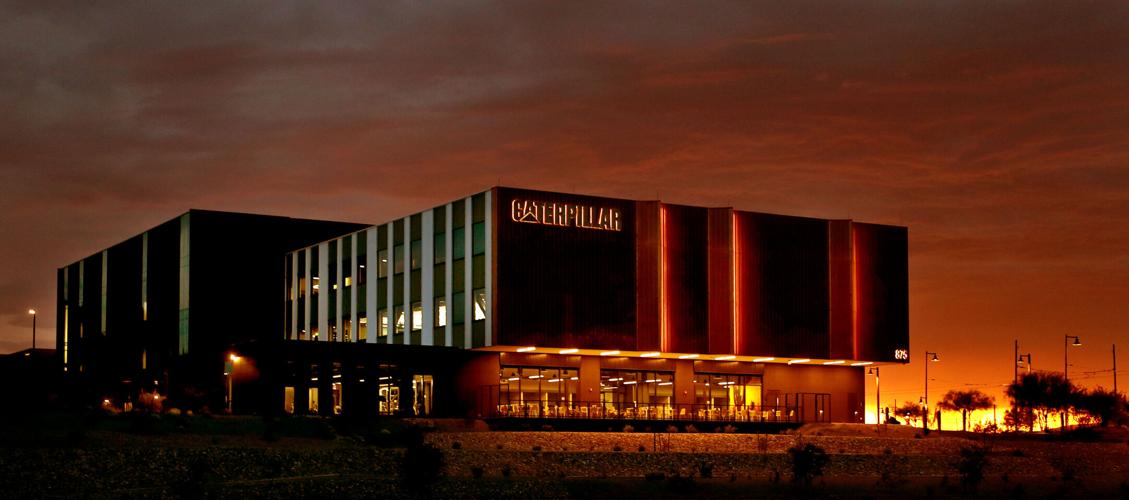
That may mean bringing in outside investments like, say, Caterpillar’s Tucson Mining Center, which opened near downtown in 2019; or selling local products outside the Tucson area, with the proceeds coming back into the Tucson area; or having outsiders travel to town and spend money here as they do for the annual gem and mineral shows.
A furniture company, say, opening a big new store here doesn’t really add much to the economy. The same money already here will be spent there instead of somewhere else in town. But a furniture company opening a factory here would add new money from sales around the country.
The people who have run economic-development in Tucson have not had a ton of successes recruiting outside companies to locate here, but they at least have a solid idea of what we’re going after. The four sectors they’ve identified as targets, based on our local advantages, are:
- Aerospace and defense, with Raytheon the top employer
- Bioscience and diagnostics, with Roche a key example
- Transportation and logistics, including trade with Mexico
- Renewable and mining technologies, including Caterpillar
While these are the sectors we’re after, Dan Sullivan, director of community and workforce development for Pima County, pointed to a few overlapping areas where the jobs are now: Logistics, construction and healthcare, as well as the trades.
“For the foreseeable future, AI can’t weld, AI can’t wire a building,” he said.
‘A solid 40 every week’
Yvette Mejia would like to do those things. I spoke with her Friday at Pima County One Stop, 2797 E Ajo Way, where she was looking for some way out of the couch-surfing she’s doing at relatives’ homes. She lost her job at emissions testing recently, she said, and would love to work more with her hands.
“I change my own tires, I build sheds,” she said. “I like to fidget with compressors and power tools.”
Her face brightening, she said, “I want to learn soldering and welding.”
The hope is to find some job that will not clash with her obsessive-compulsive disorder and will help her make the money to repair her travel trailer so she can live on her own again.
One Stop has a variety of training programs, including apprenticeships, to offer, as well as help with resumes and other job-seeking skills. It’s harder these days, because you have to fill out applications and design resumes to include key words and phrases that will get you through the AI filter, and avoid spamming your resume all over the internet.
Loughry, it turns out, got lucky after his hundreds of applications.
“A recruiting company reached out to me from somewhere in the middle of nowhere Midwest,” he said.
He ended up working for a subcontractor of a contractor at Roche in Oro Valley, he said. It takes him a couple of hours on the bus to get there, since he doesn’t own a car now and lives on the east side, but at least, he said, “It’s a solid 40 every week.”
That’s something no one in Tucson can take for granted, but that new investment and economic growth could make easier to find.

Arizona Daily Star columnist Tim Steller

