




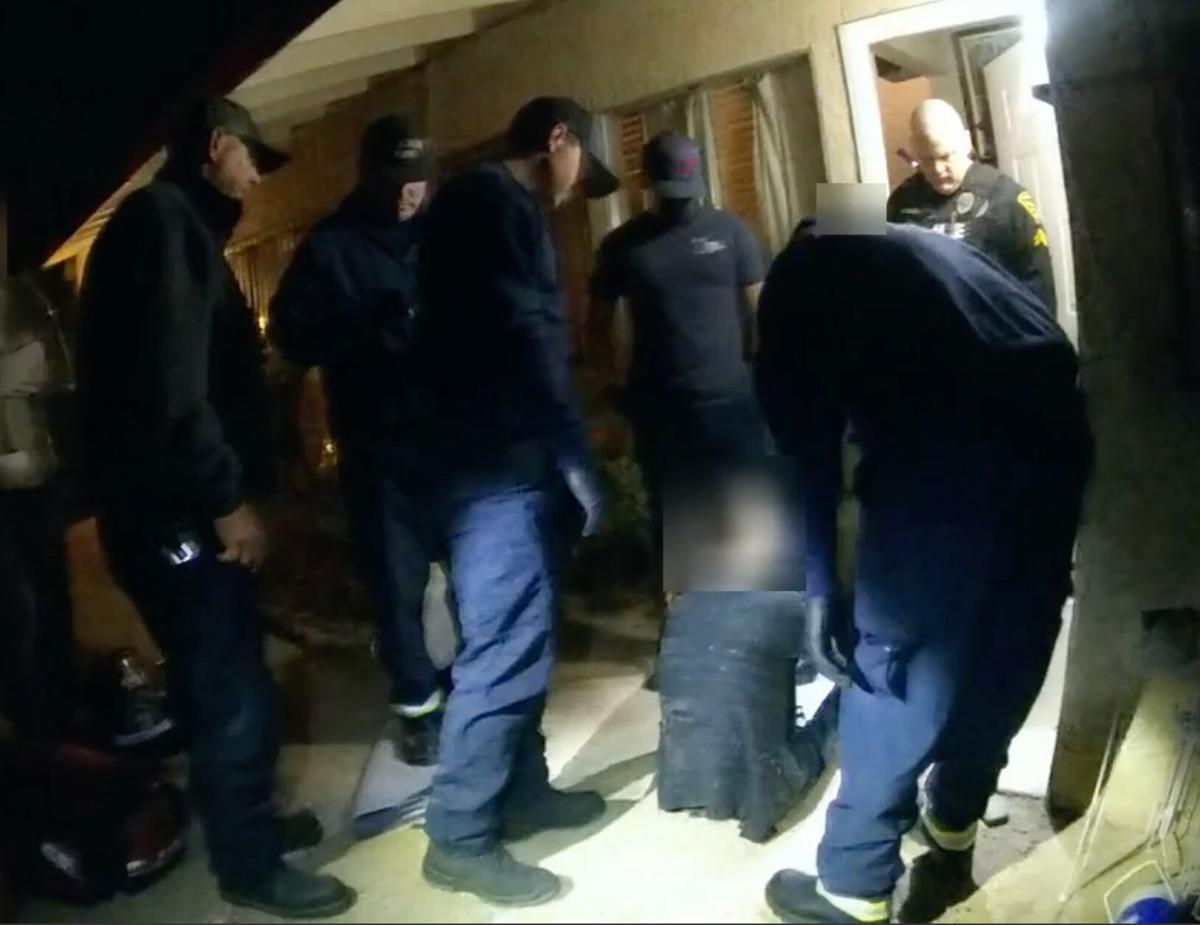
Tucson police officers helped save the life of a woman who had overdosed Thursday on fentanyl. The incident again demonstrates the increasing use of that drug here and the importance of getting opioid reversal medications out into the community, a police captain said.
A woman called 911 after hearing her neighbor yell for help and medical attention. Officers from the Tucson Police Department’s midtown division arrived shortly after 7 a.m. at the duplex, in the area of East Glenn Street and North Alvernon Way, and found a 40-year-old woman who appeared to have overdosed on fentanyl, police said in a news release.
The officers immediately gave her Narcan, an opioid reversal medication also referred to as naloxone, and moved her outside, giving her a second dose.
Paramedics with the Tucson Fire Department arrived and the woman regained consciousness but declined to be taken to a hospital. She was given information on resources for treatment, the news release said.
Tucson Police Department officers used naloxone nasal spray to treat a 40-year-old woman who appeared to have overdosed on fentanyl Thursday morning.
Tucson Fire Department crews were also called to the scene and helped the woman regain consciousness after she received two doses of the naloxone spray. Naloxone, commonly referred to by the brand name Narcan, is used in emergency situations to reverse the effects of opioid overdoses. Video courtesy of Tucson Police Department.
The situation highlights the daily issue the community has been facing due to increasing fentanyl use, Tucson Police Department officials said Friday.
“We’ve had over 150 saves by police officers since we gave our officers Narcan,” said TPD Capt. John Leavitt, commander of the Counter Narcotics Alliance. “What we’re seeing is the real effect of getting Narcan out in the community.”
Leavitt said through overdose investigations, officials are learning that Narcan is getting into the right hands, and that family members and friends are using the drug on their loved ones when they overdose on opioids.
“We know about cases when it doesn’t work, but when it does work we don’t necessarily get a call,” Leavitt said.
It’s not uncommon for overdose victims to decline treatment and refuse to talk to police, which underlines the importance of getting Narcan out to the community and making sure people understand what it’s for and how it works, Leavitt said.
“When we first began talking about putting Narcan in the hands of police, a lot of people said, that’s the Fire Department’s responsibility,” Leavitt said. “A lot of people thought only the Fire Department went to overdose calls, but more than 150 times, we’ve been there first.”
Since officers began using Narcan in January 2017, TPD has administered nearly 200 doses, according to Police Department data from late October.
TPD’s Substance Use Response Team had distributed 435 injectable naloxone kits to at-risk individuals and family members as of October, with the kits containing three separate vials of naloxone. When officers give someone the kit, they provide a short training discussion about how to use it, along with materials about other treatment and harm reduction options.
With the cost of fentanyl dropping dramatically in recent months, the drug is no more than the cost of a beer, making it popular with young people, Leavitt said.
“It’s becoming the drug of abuse of choice for people because of the plentiful nature of how it’s been distributed,” he said. “Economics drive their popularity more than anything else. Economics make it clear it’s very cheap to use these drugs, even cheaper than meth.”
Until 2020, methamphetamine was the leading cause of overdose deaths, but the last two years, Pima County saw fentanyl take over as the top drug responsible for fatal overdoses.
Pima County had recorded 377 overdose deaths as of Oct. 25, and was on track to exceed 2020’s record year of 446 fatal overdoses. More than 200 of the 2021 deaths were attributed to fentanyl, according to data provided by the Health Department.
“The pandemic is becoming endemic with fentanyl,” Leavitt said. “It’s now a matter of organizing law enforcement resources for the long haul and recognizing that fentanyl is everywhere and it’s replacing heroin in many cases. But heroin is like vinyl records; it’ll always be around.”
Ramping up public education about prevention and treatment is critical, as law enforcement struggles with overcoming misinformation surrounding the safety of drugs and the availability of treatment.
“We have people selling a false narrative that treatment is not available, it’s not affordable and it’s not effective,” Leavitt said. “A person can walk into Codac Health, Recovery and Wellness right now and get hooked up with drug treatment. It’s effective, much more than it’s ever been, and it’s affordable. They can make it work for everyone.”
There’s no short-term solution to the overdose situation, as it’s a problem that requires a long-term solution and all hands on deck, Leavitt said.
Leavitt said many people who are using illegal substances are suffering from untreated or undiagnosed mental illness, and that there is a proven connection between the two. “The first place prevention efforts need to start is there,” he said.
While TPD would like to increase staffing on its Substance Use Resource Team and Mental Health Support Team, that’s not likely to happen just yet, Leavitt said.
“In the long term, we need to increase the resources that go to (those teams), but we’re facing a critical staffing issue,” he said. “It’s a matter of leveraging our community resources effectively. There are definitely treatment beds and treatment options available for people that need them.”

