


CLOVIS, New Mexico — Cannon Air Force Base, about 10 miles of farmland west of Clovis, New Mexico, has almost doubled its personnel and is in the midst of a $1 billion construction boom.
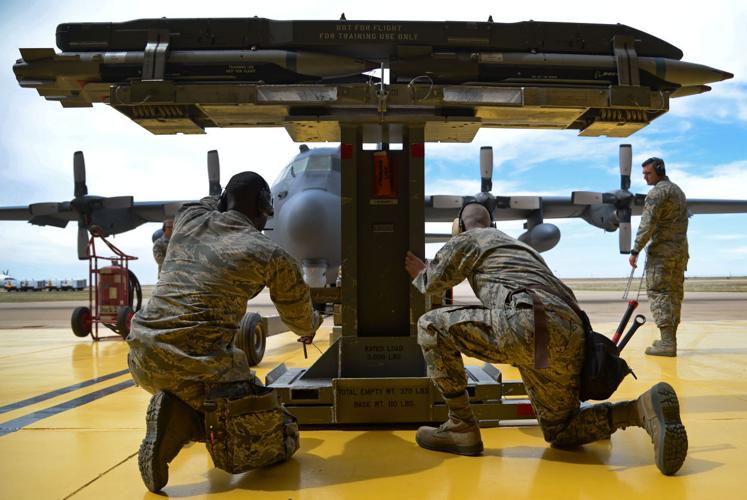
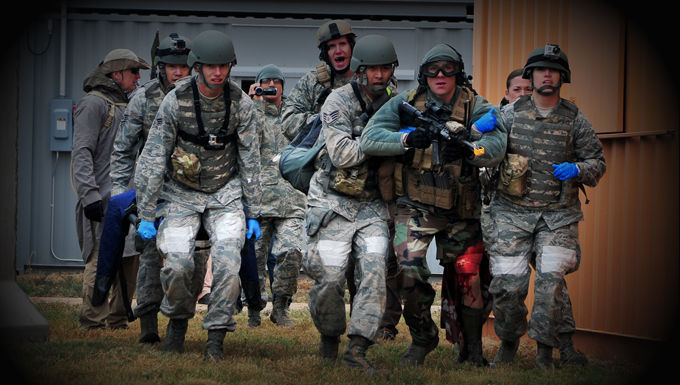
It is home to the 27th Special Operations Wing, commonly known as the Air Commandos.
And it could have been in Tucson.
A decade ago, the base — and, by extension, Clovis and nearby Portales — appeared doomed. The Air Force had recommended that Cannon be closed, a fate that’s nearly impossible to escape once put in motion.
Tucson had hoped the same Base Realignment and Closure process that threatened Clovis would bring significant growth to Davis-Monthan Air Force Base.
Neither happened.
Instead, D-M was spared but stayed roughly the same size. And within the next two years, Cannon shifted from a fighter base to an Air Force Special Operations base.
Its quiet competition for that mission? Davis-Monthan.
Cannon beat out D-M on nine of the selection criteria, including local community support and lack of encroachment. On the other two categories, the bases tied.
Cannon’s success took a combination of smart politicking, good timing, community organizing and effective strategy. But it all boiled down to this:
Know what your community has to offer the military, and work furiously to promote it.
UNCERTAIN FUTURE
The call to Clovis came on May 13, 2005.
The news was worse than bad: Cannon Air Force Base was on the Department of Defense BRAC closure list.
“It was a normal Friday morning. And then I got a call from media asking for my reaction to being on the BRAC list,” says City Manager Joe Thomas. “That’s how I found out.”
The call confirmed the worst fears of residents in the small towns on the Llano Estacado, or high plains, of eastern New Mexico. They rely on Cannon for about a third of their regional economy.
Close the base, and you close the community. Property values plummet, jobs dry up, there’s no one to buy shoes at the shoe store. Families pull up stakes and go.
“No one would be spared if Cannon were to close,” says Clovis Mayor David Lansford.
The folks of Clovis and Portales weren’t going to let that happen, even though the Department of Defense said the base had a 13 percent chance of escaping shutdown, says Chase Gentry of the Clovis Industrial Development Corporation.
Clovis and Portales, with their Curry and Roosevelt counties, put up about $1 million to fight the closure. They hired a consultant.
They never made a Plan B.
KEEP, NOT SAVE
Community leaders made a crucial decision early on that was key to their success.
Lobbying to “Save Cannon” would emphasize the base’s importance to Clovis and Portales. Instead, they chose the word “keep.”
“It’s about keeping it for the entire country,” Clovis Mayor Lansford says.
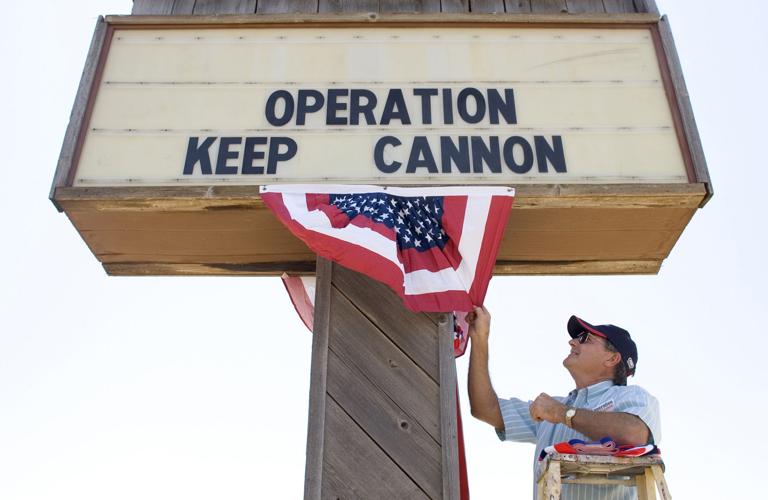
The Operation Keep Cannon logo was everywhere. Yellow T-shirts, billboards, yard signs, stickers. You can still see them, weathered on truck bumpers.
It would have been easy to focus only on how much Clovis needed the base because it’s easy to see what Clovis doesn’t have. There are few chain stores or restaurants. There isn’t a night life. Until last November the closest Starbucks was two hours away and in another state, although now there’s one on base.
The wind blows fiercely, up to 60 mph, but usually not in a way that hinders takeoff and landing. The base’s newcomer briefing includes a warning to know the wind direction before opening a door so you don’t smash your fingers. So many tumbleweeds blew in from the plains last summer that they stacked up against homes and trapped people inside.
The area is full of cattle ranches and dairy farms, and when the wind shifts, that fact is inescapable. It’s a common complaint.
But Clovis is a good place to raise a family. Businesses and neighbors support youth sports teams, scout troops and kids’ field trips. The schools are good and people care about the families at Cannon.
A woman at a recent newcomers’ orientation for spouses and families says she and her family have lived in Clovis for four years.
“Clovis is awesome. There’s a lot of things to do,” she says. She asked that I not use her name because her husband is in Special Operations and security is always a concern.
Clovis has a strong sense of community. People know each other. They’re friendly.
“When you come into a small town the neighbors are there on the doorstep to welcome you,” says Rick Masters, director of staff at Cannon.
The city is internationally known in music circles as the place where Buddy Holly and the Crickets recorded, at Norman Petty’s downtown studio. Today the Norman and Vi Petty Rock & Roll Museum is in the basement of the town’s economic development and chamber of commerce building. The Buddy Holly connection and “the Clovis Sound” sparked the annual Clovis Music Festival.
Considering the base’s importance to the local economy and identity, it’s no surprise that the military is a big deal here. Before Cannon landed on the BRAC list, community leaders thought they were doing all they could to protect the base. Elected officials and members of a civilian support group called the Committee of 50 visited New Mexico’s congressional delegation for years, making sure development didn’t encroach on the base or range. The Chamber of Commerce organized Cannon Appreciation Day cookouts and businesses gave military discounts.
The BRAC call came on the very morning of one of those cookouts, says chamber CEO Ernie Kos. Everyone at the chamber was stunned, but what choice was there but to go on?
“We put on a happy face and cooked 4,000 hamburgers,” she says.
“IT’S A JEWEL”
During the BRAC process, Clovis and Portales argued that the military’s procedure for analyzing bases “failed to properly evaluate Cannon’s military value for the next 20 years for current and future missions, condition of infrastructure, contingency, mobilization, future forces and the cost of operations,” the final BRAC report says.
In other words, the area trumpeted its assets — not only why the community needed the base, but why the Air Force needed to stay.
Cannon is about 10 miles from Clovis, and 17 miles from Portales out the back gate. It’s close, but not too close. There is no encroachment of development.
Most of the neighbors are bovine, and noise complaints, when they do come, are usually from ranchers asking that planes avoid flying overhead when cows are calving.
Cannon also has Melrose Training Range 25 miles to the west. It’s the only range that Special Operations and the Air Force solely control. No other entity or agency shares that airspace, so Cannon can fly there any time, unfettered by others’ schedules — a precious commodity in the Air Force.
“It’s a jewel,” says Steven Hill, deputy commander of the 27th Special Operations Civil Engineer Squadron.
The terrain of eastern New Mexico is similar to the locations around the world where the U.S. is engaged in operations, says Col. Benjamin Maitre, commander of the 27th Special Operations Wing. The weather is good for flying; the skies usually clear. And if it’s not optimum, wait five minutes and that will change.
Special Ops often trains at night, doing low-level flying to get personnel in and out of locations quickly and without detection. They prepare for multiple missions. Special operations from the Army, Navy and Marines train there, too.
“Why would they just kick all that aside and start over?” asks city manager Joe Thomas.
OPERATION KEEP CANNON
Operation Keep Cannon used the good relationships the town had built over the years on Capitol Hill to get the BRAC Commission to hold a hearing in Clovis.
The people who are going to decide our fate will be here, the committee told townspeople. They need to see us. Come out and support our Cannon. Wear your T-shirt, hold up your sign.
So on June 24, 2005, the roads were lined with people. Scouting organizations and motorcycle groups were part of the motorcade from the hotel to the junior high school auditorium.
“It was solid people,” Thomas says. A bus of supporters drove in from Amarillo, Texas.
The hearing was broadcast live on the local PBS station. People watched from an overflow room in a nearby church.
Nine speakers addressed the panel. Some talked about the economic impact closing Cannon would have on Clovis and Portales. Two members of the Keep Cannon group who were part of the Committee of 50 — a civil engineer and a banker — detailed Cannon’s geographic and military assets, explaining how they fit into the bigger picture.
“The political part, that muscle, got us looked at a second time,” Clovis Mayor Lansford says. “But in the end, it was the assets.”
Community support is important in a military decision, but it’s not the most important factor.
“The BRAC Commission realized the assets at Cannon would be hard to replace,” he says. “That doesn’t have anything to do with the friendliness of the community.”
NEW MISSION
In August 2005, the BRAC commission put Cannon in “enclave status” to see if the Air Force had a mission that might be a good fit.
As it turns out, Hurlburt Field — where Special Operations is based in Florida — was running out of ramp and hangar space. Training time was limited because the airspace was crowded and scheduling was difficult.
The Air Commandos needed to expand, and the Air Force Special Operations Command, or AFSOC, wanted to consider a base in the West. The choices: Expand Hurlburt, or move to Davis-Monthan or Cannon.
In the AFSOC evaluation, Cannon scored highest on 9 of 11 categories and tied in two, a 2008 GAO report says. Davis-Monthan rated “least desirable” of the three in encroachment and community support. Cannon rated “most desirable” on those two categories.
On June 20, 2006, the Pentagon announced that Cannon would be transferred to Air Force Special Operations Command.
The front page of the Clovis News Journal with the headline “Cannon lands Special Ops unit” is framed and hangs on the walls of the Burger King. The Operation Keep Cannon logo was changed to Operation KEPT Cannon and went up all over Clovis and Portales.
CASH INFUSION
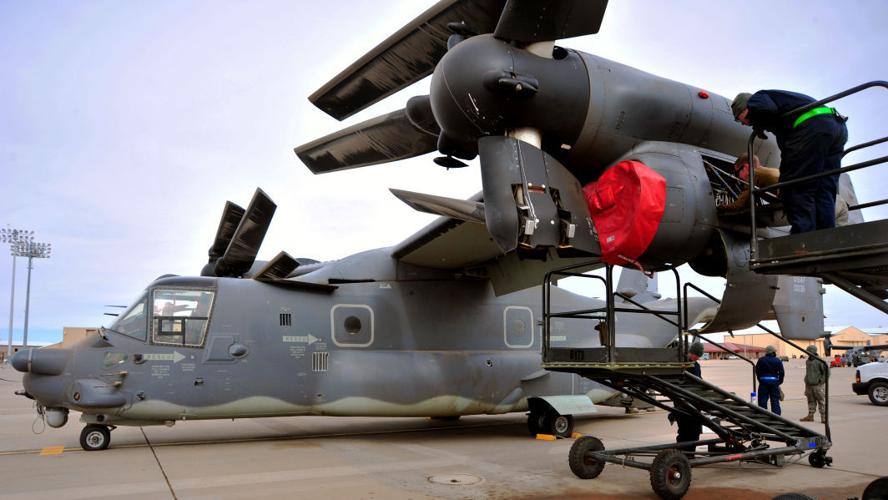
Today, Cannon is growing fast. Deputy Commander Hill, who used to live in Tucson, is on the transition team overseeing the realignment to a Special Ops base. Going up are new and updated base housing units for the influx of personnel, training buildings, and facilities for aircraft such as the Osprey helicopter and AC-130 gunships.
When the transition is complete in 2018, government spending will have hit an estimated $1.29 billion.
That infusion of public cash unleashed a private-spending windfall. Builders are putting up housing as fast as possible. Contractors are busy.
Clovis plumber Mark Carpenter has crews working on base and 35 full-time employees who also handle residential calls. One of his service vans is painted camouflage, and $10 from every call that van makes is donated to a military support group at Cannon. He raised about $6,000 last year. Customers often request the camo van when they schedule an appointment.
Life in Clovis and Portales is good again. The Committee of 50 still visits Washington to advocate for Cannon. The state has given land to expand the Melrose bombing range and Clovis has secured water rights as a backup in case Cannon needs them in the future.
They have joint agreements for emergency services, snow and tumbleweed removal. The communities host military appreciation days, and Cannon is planning its second open house this summer. The efforts continue and the relationships remain strong.
Keeping Cannon was a gargantuan challenge, one that would have failed had leaders in Clovis and Portales not made it their only priority, says Ronnie Birdsong at Eastern New Mexico University. And they’re prepared if their base is threatened again.
“It came out of the ashes,” Birdsong says. “We should learn the lesson, that if you have success with something important, you’re working together.”

