


With a click of a button, a virtual brick appeared.
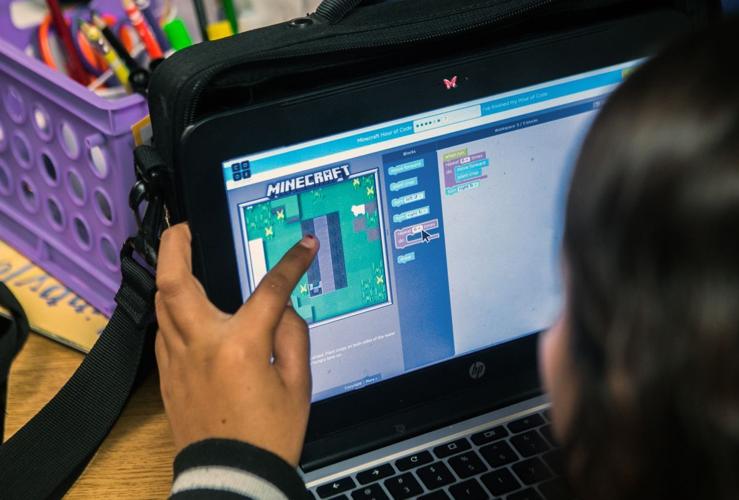
Brenda Tarazon, 10, was building a house using basic coding. The commands that made the brick appear are actually Javascript, a dynamic programming language.
“You could do lots of things on your computer,” said the fourth-grader at Summit View Elementary School.
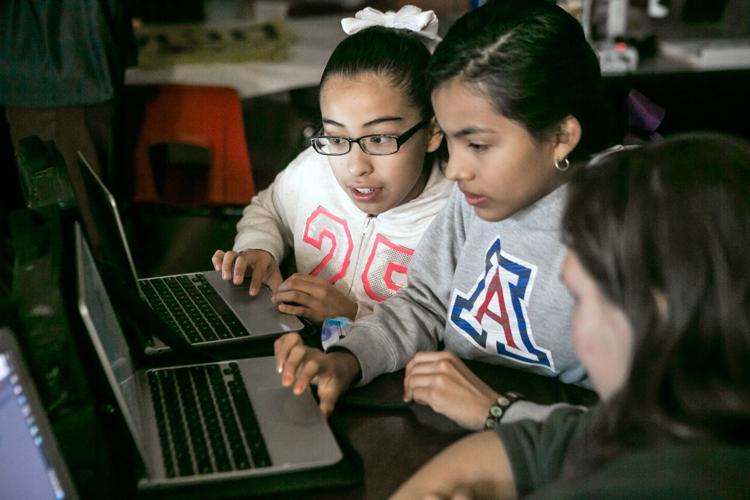
Tarazon was participating in the Hour of Code on Wednesday morning, during which students learned and used basic programming skills to build houses, draw pictures or make things move on an interactive web platform.
Hour of Code is a global initiative by Code.org, a nonprofit organization that seeks to expand access to computer science education for women and students of color. Code.org provides the platform on which students conducted their coding projects.
The Sunnyside Unified School District implemented the hour of code for all of its schools this year.
“We’re trying to provide all of our students an opportunity to participate and demystify the process of computer coding,” said Frank McCormick, Sunnyside’s coordinator for instructional technology.
Kids tend to be passive participants in technology, meaning that they are more likely to watch something or play with mobile apps than create something, he said. The hour of code event wants to give kids a “point of entry” to creating instead of just consuming.
“You’re not only showing them how coding works but also getting kids to look at the world and showing solutions to problems,” he said.
The Amphitheater School District is also implementing Hour of Code events at Prince Elementary School.
Using an interactive platform, students can shuffle around a number of programming commands to achieve their desired outcomes, whether that’s building a “Minecraft”-style house or having a robot move and grab scrap metals in a “Star Wars”-themed project.
They can also choose from other themes, such as Frozen or Angry Birds.
Last year, Hour of
Code was a hit with students, said Melanie Martinez, instructional technology coach at Summit View.
“It turned out to be very successful,” she said. So the district decided to bring it back and offer it again this year.
The projects are designed to be easy and fun, like video games, she said.
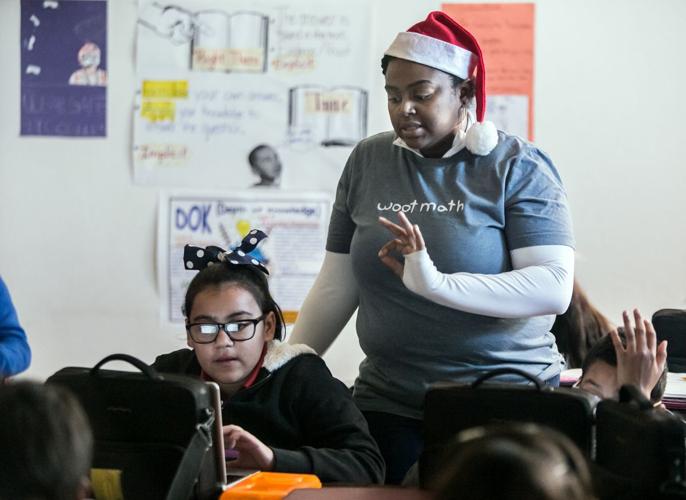
“It’s something all of them can do,” said Samantha Choffin, a third-grade classroom teacher. Some kids just aren’t good with computers or interested, but the projects in the Hour of Code engage those students too.
The district wants to use these events as a way to continue computer science education in its schools, McCormick said.
“We plan on continuing with it and using it as a framework to build a more lasting computer science curriculum across the district,” he said.

