

PHOENIX — Responding to concerns about intrusion, Gov. Doug Ducey signed legislation Wednesday to preclude students from being asked certain questions on assessments without prior parental consent.
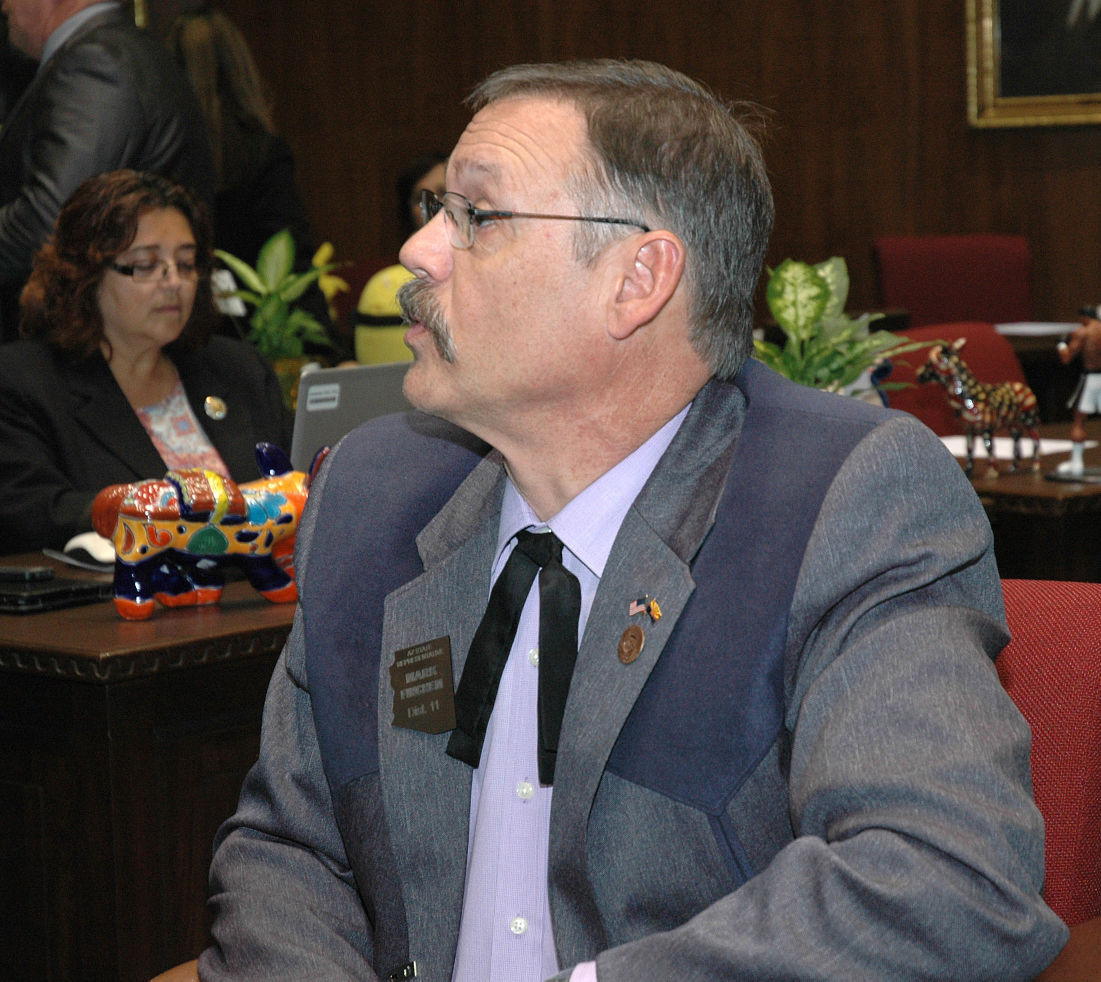
Rep. Mark Finchem, R-Oro Valley, said the new law is not aimed at intruding on legitimate back-and-forth questions between teachers and students. Even queries about personal habits are OK, he said, as long as they’re part of the teaching experience.
What’s not OK, he said, are the written surveys conducted by schools, sometimes on behalf of outside groups or the federal government, that seek personal information about the students and their families.
The law is an outgrowth of complaints by some parents about what they saw as intrusive questions.
Sophia Cogan told lawmakers about a test prepared by the Partnership for Assessment of Readiness for College and Careers that was administered to her son in 2014 at a Scottsdale school, as part of a national assessment.
“My son remembers being asked his religion and if he rode the bus to schools,” Cogan said. “I was furious,” she said. “Who knows what else they asked him?”
Aside from what Cogan said is unnecessary prying, she said PARCC has had problems with security, meaning the information her son and others provided isn’t necessarily kept confidential.
The new law has a litany of questions that may not be asked without prior written parental consent.
Issues range from political and religious beliefs to sexual behavior and whether anyone in the family owns a gun. Questions about whether a family has an emergency plan in case of disaster would also be off-limits without a parent’s OK.
The law has teeth. It allows any parent to complain to the attorney general or county attorney, who can sue the school to comply with the requirements. If a school doesn’t cure the problem it is subject to a penalty of up to $500 for each violation.
“We were acknowledging nature’s God and the fact that parents have been granted parental authority over their children, not the state,” Finchem said Wednesday.
Mark Barnes, lobbyist for the Arizona School Administrators Association, testified during hearings that he agreed some questions might not be appropriate.
But Barnes said he’s concerned that the measure could interfere with legitimate educational needs.
“What I’m worried about is some of the impediments this may create to the use of what I would commonly call a ‘survey’ to elicit responses from students that help a teacher teach and help the administration put together a school that best meets their needs,” he told lawmakers.
He pointed out that the legislation defines a “survey” to mean any “instrument that investigates the attitudes, behaviors, beliefs, experiences, opinions or thoughts of a pupil or group of pupils.”
Rep. Doug Coleman, R-Apache Junction, who teaches law, had another concern. “When I get to the Eighth Amendment, I might actually ask the kids, ‘Do you believe in the death penalty?’ ” he said. “We talk about that in relation to ‘cruel and unusual punishment.’ I’m just trying to get them to think.”
Finchem, however, said the final version that made it to Ducey’s desk differentiates between the kind of questions Coleman wants to ask, versus what Finchem sees as intrusions.
The final version says a survey must be an “instrument” to run afoul of the law. That means a physical item, whether written or electronic, he said, so a teacher simply asking a class question wouldn’t be in violation.
Finchem said he built in an exception for the regular Arizona Youth Assessment Survey conducted by the state’s Criminal Justice Commission, which does ask personal questions about use of marijuana and alcohol and sexual activity. He said it provides needed tools for law enforcement and the results are aggregated, with no individual information collected.

