


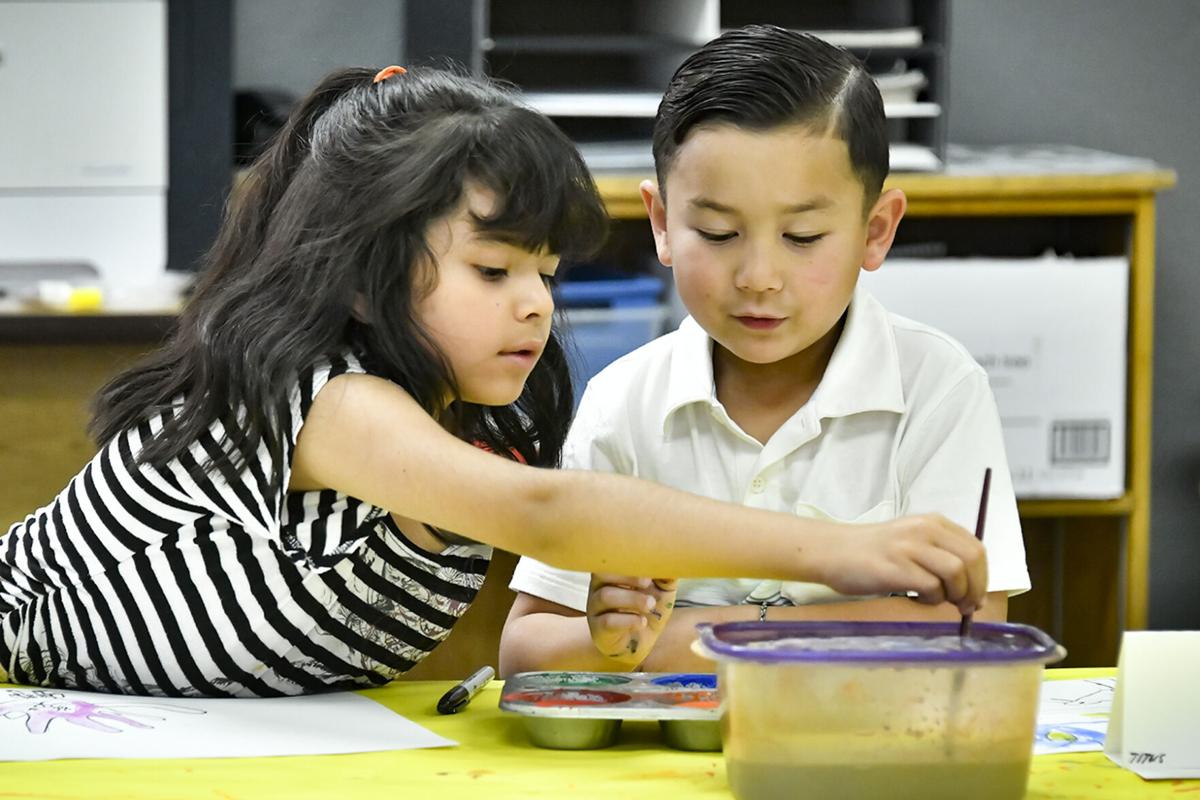
Tucson Unified School District saw one of its highest summer school enrollment numbers this year, with more than 11,000 students in grades K-12 taking classes during June.
That is about three times the average number the district typically saw in pre-pandemic years, including in summer 2019 when about 3,300 students enrolled, said TUSD’s senior director of curriculum and instruction, Heidi Aranda.
“I think parents have been concerned about students and their learning over the past couple of years, so it’s really an opportunity to continue that,” Aranda said. “During the summer, students forget some of the learning that they did during the school year … and so parents are wanting their children to continue that learning to avoid losing any skills.”
Still, this year’s numbers are slightly lower than the 13,000 students who enrolled last summer, when the district offered its expansive “Jump Start” program for those students who were entering a school they hadn’t previously stepped foot in due to distance learning during the pandemic.
While TUSD didn’t offer that program this year, Aranda said the enrollment numbers stayed relatively high considering the district was offering summer school programs at each of its campuses. In previous years, the summer programs had been housed at a few select schools.
“This idea of being able to attend your regular school for summer has been great because they’re familiar with the campus and the programs and the staff,” Aranda said.
Elementary grade levels saw the highest participation numbers with more than 4,000 students enrolled in grades K-5, according to information presented to the district's governing board.
At the high school level, the second-highest in enrollment, the district saw the most demand for students wanting to take credit recovery courses.
During a virtual media briefing, TUSD Superintendent Gabriel Trujillo noted that high school students, in particular, were trying to address credit deficiencies.
“Remote instruction wasn’t necessarily the biggest success, especially at the high school level,” Trujillo said. “We saw a lot of challenges with disengagement and attendance, which unfortunately related to a lot of D and F grades, so the need for high schoolers to get in and make up credits, I think, was a big driver in what we’re seeing here.”
Other high schoolers, Aranda said, took credit advancement courses that still addressed the academic struggles that students faced throughout the school year.
More staff
The district’s focus this summer was not only to help students academically, but to help them with their social-emotional skills, Aranda said.
As a result, TUSD incorporated social-emotional learning (SEL) activities in K-8 summer programs, and hired counselors to address SEL issues in high schools.
“This is the first year we did that. We don’t usually hire counselors to provide services in the summer,” she said.
In addition to bringing on high school counselors, TUSD found that more teachers were also willing to work the summer school hours this year, in part thanks to flexibility that still allowed teachers to enjoy some time off.
That flexibility included setting a later start date for summer classes, so teachers could take a breather after the school year ended. And, teachers were allowed to choose between teaching throughout the whole month of June, or only taking on one two-week session.
“Last year, we had a really hard time recruiting staff. They were just tired from the past two years — one full year of teaching online and another year of teaching online, then coming back in person,” Aranda said.
But Trujillo noted that the district’s flexibility may not be the only force pushing more teachers to work over the summer.
“I think it’s the motivation of working with students and addressing learning loss … coupled with the need to earn a little bit of extra money this summer due to inflation, the rising costs of gas and groceries and expenses,” he said.
Other local summer programs
While dealing with a smaller volume of students, other districts in Pima County also saw slight increases in students enrolled in some summer programs compared to pre-pandemic years.
According to information provided by Marana Unified School District, for example, the number of high schoolers enrolled in credit recovery courses grew from 110 in summer 2019 to 255 students this year.
For credit advancement, however, the enrollment dropped from 355 students in 2019 to 323 students this year.
MUSD spokeswoman Alli Benjamin said the district did not formally track the K-8 summer school enrollment numbers previously, but this year’s elementary and middle school enrollment was approximately 1,300 students.
At Sahuarita Unified School District, the overall summer school enrollment for K-12 also grew, from a total of 351 students in 2019 to nearly 500 students this year.

