

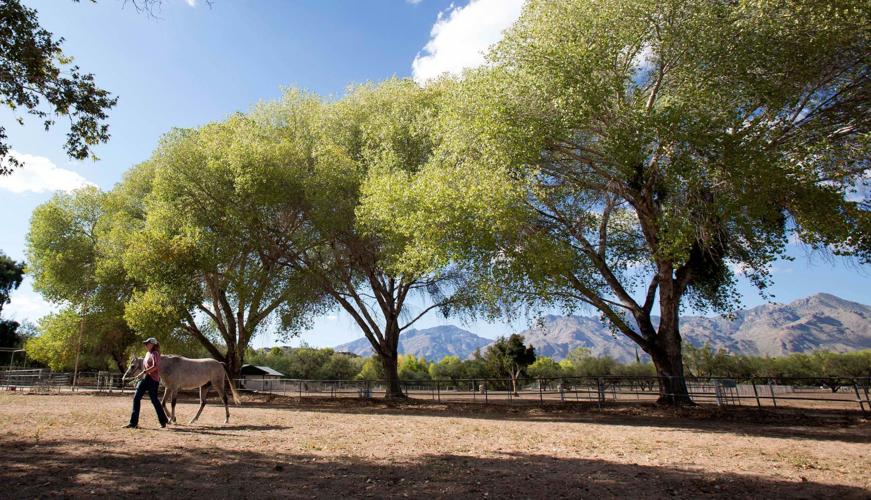

The University of Arizona plans to sell the 80-acre Al-Marah ranch along Sabino Creek on the Tucson area’s northeast side that famed Arabian horse breeder Ruth “Bazy” Tankersley left to the university to be used as an equine center when she died in 2013.
The gifting agreement between Tankersley and the UA prohibited sale of the land for 10 years after the property was conveyed to the university, said an attorney for the family, Johnny Helenbolt.
Nestled in the Tanque Verde Valley, the property is known for its stands of cottonwoods and mesquites. It is an important riparian corridor, said environmentalist Christina McVie, who is affiliated with Tucson Bird Alliance and the Coalition for Sonoran Desert Protection. The area is very much sought after and has immense benefits for wildlife, particularly birds, she said.
In fact, because it’s in the floodplain of Sabino Creek and tributaries, the Pima County Flood Control District is interested in acquiring a portion of the Al-Marah property, said Eric Shepp, the district’s commissioner coordinator.
The Tanque Verde Valley Association offers full support for the flood district’s interest in the property, which reflects its strategy of open space preservation, restoration and mitigation of flood risks, said the association’s president, Jim Trego.
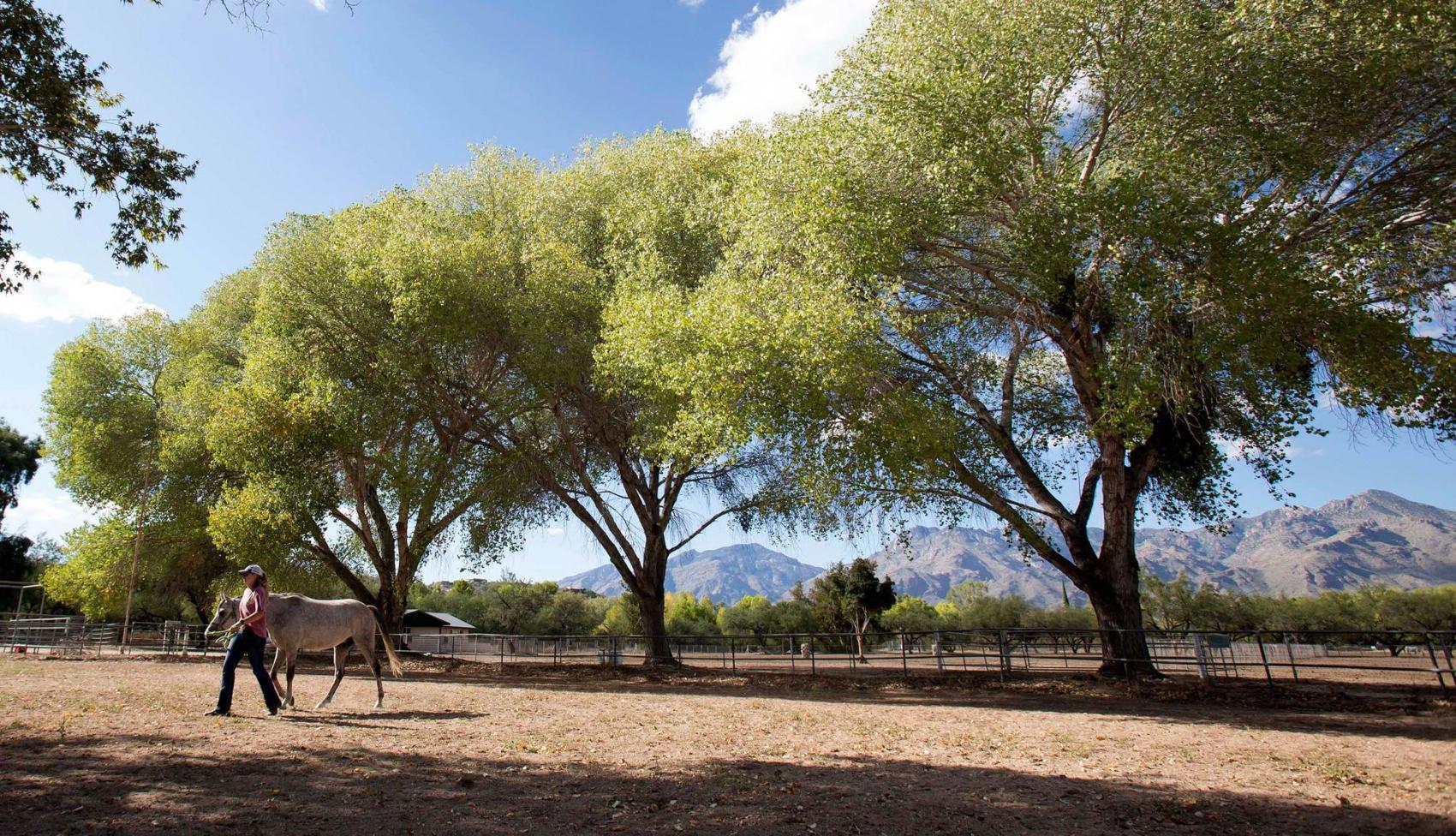
The University of Arizona’s Al-Marah Equine Center on an 80-acre ranch donated to the UA by late philanthropist and Arabian horse breeder Bazy Tankersley. The UA now plans to sell the land, in the Tanque Verde Valley on the Tucson area's northeast side.
Trego said the association has heard concerns from people in the community that the land will be developed. “They really do want to see it continue in some way, shape or form, in the kind of use that it’s seeing of open land, equine use,” he said.
A Jan. 15 communication from the UA that TVVA received said the university intends to sell the property this summer and has no stipulations or prohibitions on any specific kinds of buyers.
UA spokesperson Mitch Zak didn’t respond to questions from the Star, including what the appraised value of the land is and what kinds of buyers the university expects to attract. The Star has filed a public records request with the UA for the appraised value.
The funds from the sale — which is being coordinated by the College of Agriculture, Life and Environmental Sciences in partnership with the UA Foundation — will be placed in “a dedicated fund honoring Mrs. Tankersley’s commitment to equine education,” a UA news release said.
The ranch along North Bear Canyon Road has been used by the college, known as CALES, for the university’s equine program and Race Track Industry Program.
Now, however, CALES will move its equine programs back to the Campus Agricultural Center at North Campbell Avenue at East Roger Road, where they were housed before moving to Al-Marah in 2019.
The UA will create a “central hub for a unified One Herd model that coordinates resources, staff and animals,” the news release said, adding: “This move provides expanded opportunities for integrated instruction, collaborative research and enhanced student experiences.” The Campbell Avenue site is 8 miles closer to the main campus than is Al-Marah.
‘Disappointed, but not surprised’
Wendy Davis, a former director of UA’s equine program who retired from the university in 2021, said she realizes how expensive the Al-Marah farm is to run, but hopes the university did its due diligence when it accepted the gift in order to know it would be able to sustain it.
“There were two prongs to that — the farm was donated by Mrs. T. and that was done 20, maybe 25 years ago, that initial planning. But there was another piece to it,” Davis said. “There were also some horses, some Arabian horses, that were able to be used at no cost. So it was financially sustainable as far as the horses were concerned. But that’s totally different from the land itself.”
It would be disappointing if the UA accepted the gift only to keep it for the required hold time of 10 years with the intent of selling it, Davis told the Star on Friday.
She said the Al-Marah facility, as developed by Tankersley, was “a top-class breeding and training facility that had produced many, many, many national champions and was designed to be a horse facility.”

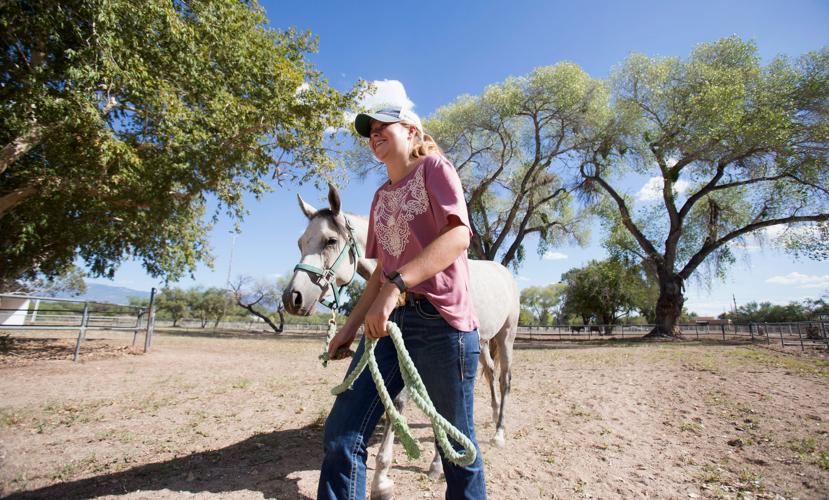
An equine student takes a walk with a horse named Gus in 2019 at the University of Arizona's Al-Marah facility.
“What the program came from at the CAC (Campus Agricultural Center) was a converted dairy barn that was never intended to house horses, so it was retrofitted and there was little space and none of the facilities were designed for horses,” she said. “The only thing that was designed for livestock were the pastures … So, when the program moved to Al-Marah, although it was farther, there were arenas and all of the facilities to be able to expand the equine programming because there was more room and more appropriate facilities.”
Davis said the property was very valuable and could be used to demonstrate to students how to run a commercial horse business, which is also part of the programming.
“Certainly, it’s a step back, no doubt,” Davis said of the change in UA’s plans, saying she was “disappointed, but not surprised” by the plans to sell.
But she said she can’t call sale of the property controversial since the university buys and sells assets all the time and is within its legal rights to do so.
She believes Tankersley also would have understood these realities as a businesswoman, Davis said.
But there’s no doubt the property was Tankersley’s dream, she said.
“‘Al-Marah’ means oasis, sort of dream oasis,” said Davis. “And she loved Arizona, she loved this property. So it was definitely built exactly the way she wanted it to be, and she ran a very, very successful program for Al-Marah’s history.”
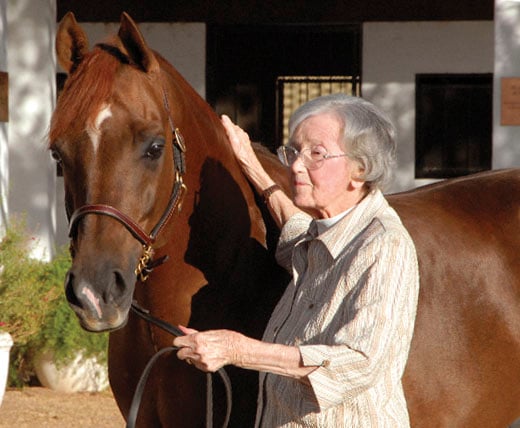
Ruth “Bazy” Tankersley, who died in 2013, bequeathed her Al-Marah ranch, where she raised famed Arabian horses, to the University of Arizona for an equine center.
Stephen Golden, a retired Tucson attorney, agreed. “Bazy loved the property, she thought it was wonderful. It gave her great pleasure to walk people around it and show it off, and all of the baby horses had pet goats and she loved showing it off.”
Tankersley, an heiress whose parents were U.S. Sen. Joseph Medill McCormick and U.S. Rep. Ruth Hanna McCormick of Illinois, had been publisher of the former Washington Times-Herald. She bought her first purebred Arabian horse when she was 19 and she opened Al-Marah Arabians in her early 20s when she and her husband moved to Tucson in 1941.
Tankersley also helped found horse breeder organizations, created a program to train young horse lovers and was a supporter of Therapeutic Riding of Tucson, known as TROT, a program that helps children with disabilities ride horses.
“You see, I come from that old-fashioned background of noblesse oblige: If you’re born with money, you have an obligation to do good works for others,” Tankersley said in a biography. “Only in recent years did I come to feel that through Arabian horses I might do more for my fellows than in any other way.”
Community interest in property
Environmentalist McVie told the Star on Friday that she is concerned about the planned sale of the property because as far as she knows, the UA hasn’t approached people who would want to try to conserve it.
“A number of issues come to my mind — number one, this is one of the very few shallow groundwater areas in Pima County; I can count on one hand, you know, the ones around the urban area. So, it’s significant,” said McVie.
“Number two, it’s an important riparian corridor. And when I say important riparian area, I’m specifically referring to a conservation land system designation in the Sonoran Desert Conservation Plan. ... Number three, it seems to me that if this property were to be developed in any density, it would increase the risk of flooding in the region between Bear Canyon and Sabino Creek, both creeks.”
Shepp, of the Pima County Flood Control District, said, “We’d be interested in about 30 or 40 of the acres of the highest flood hazard area.”
“If U of A wants to keep the property intact and try to market the property for another equine use, that would make sense,” he said. “If there is a slightly smaller facility and there’s an opportunity to partner with somebody to reduce the footprint of the (impacts from) equine (use), allow some restoration in the high hazard area of Sabino Creek, that would be okay with the flood control district.”
“If we acquire that, we would likely remove the improvements in the floodplain,” Shepp told the Star Friday. “There’s pastures, corral fencing, maybe some shade structures — all of that would be removed by the flood control district and we would develop a plan for restoration, for riparian habitat, and retire that area from the development pressure and leave that area for the floodplain and for the natural beneficial functions of a natural habitat.”

