



The University of Arizona is launching an institute for national security that aims to translate research into solutions to “safeguard U.S. national security interests and armed services personnel amid an increasingly complex geopolitical landscape.”
This is UA’s second announcement related to national security in the span of a few days, coming Friday after its Wednesday news that it is partnering with defense contractor Precise Systems, Inc. to compete for a share of up to $151 billion in contracts under President Donald Trump’s Golden Dome missile defense program.
The Kyl Institute for National Security, announced Friday, will replace and expand on UA’s Applied Research Corp. (UA-ARC), a nonprofit affiliated with the university since 2018, with the goal of facilitating strategic partnerships between the government, industry and academia on national security and defense research.
It will be named after UA alumnus and Republican former U.S. Sen. Jon Kyl, who represented Arizona in Congress for 26 years.
Retired U.S. Air Force Gen. Robin Rand will be president and CEO of the institute. Rand had a 40-year military career, including six overseas assignments and eight command tours.
He will replace Austin Yamada, founding president and CEO of UA-ARC, who retired at the end of 2025 after a career that included 25 years as a senior civilian employee in the U.S. Defense Department.
Rand said that while national security is a very broad issue, the UA has shown strengths in that arena for decades, specifically in space operations, hypersonics and directive energy. There’s already a fair amount of research going on, he told the Star in an interview Friday.
“The Kyl Institute for National Security doesn’t have these researchers; (it) is a facilitator,” Rand said. “It’s an organization affiliated with the university,” and its job is to connect UA researchers, faculty and students with external partners involved in national security who work in federal agencies or private industry.

Retired Gen. Robin Rand
The institute is home to a “really diverse group of people,” including military veterans and others who “speak the language of federal government agencies and industry partners,” he said. Their roles will include developing and writing proposals and drawing up contracts, while the researchers can concentrate on studies.
“The Kyl Institute for National Security provides the focused capacity for the University of Arizona to advance technologies and bring forward talent that elevate capability and create advantages for our federal and defense partners, as well as those in uniform,” UA President Suresh Garimella said in a news release Friday. " ... We are committed to following Senator Kyl’s example of what it means to lead with clarity and principle as we advance our nation’s defense readiness.”
Kyl said in the news release, “It’s especially meaningful to see the university applying its research strengths in partnership with government and the private sector to address real-world national security challenges.”
The announcement comes amid rapid geopolitical changes that are transforming national security, said Tomás Díaz de la Rubia, UA’s senior vice president for research and partnerships, who will also be board chair of the Kyl institute.
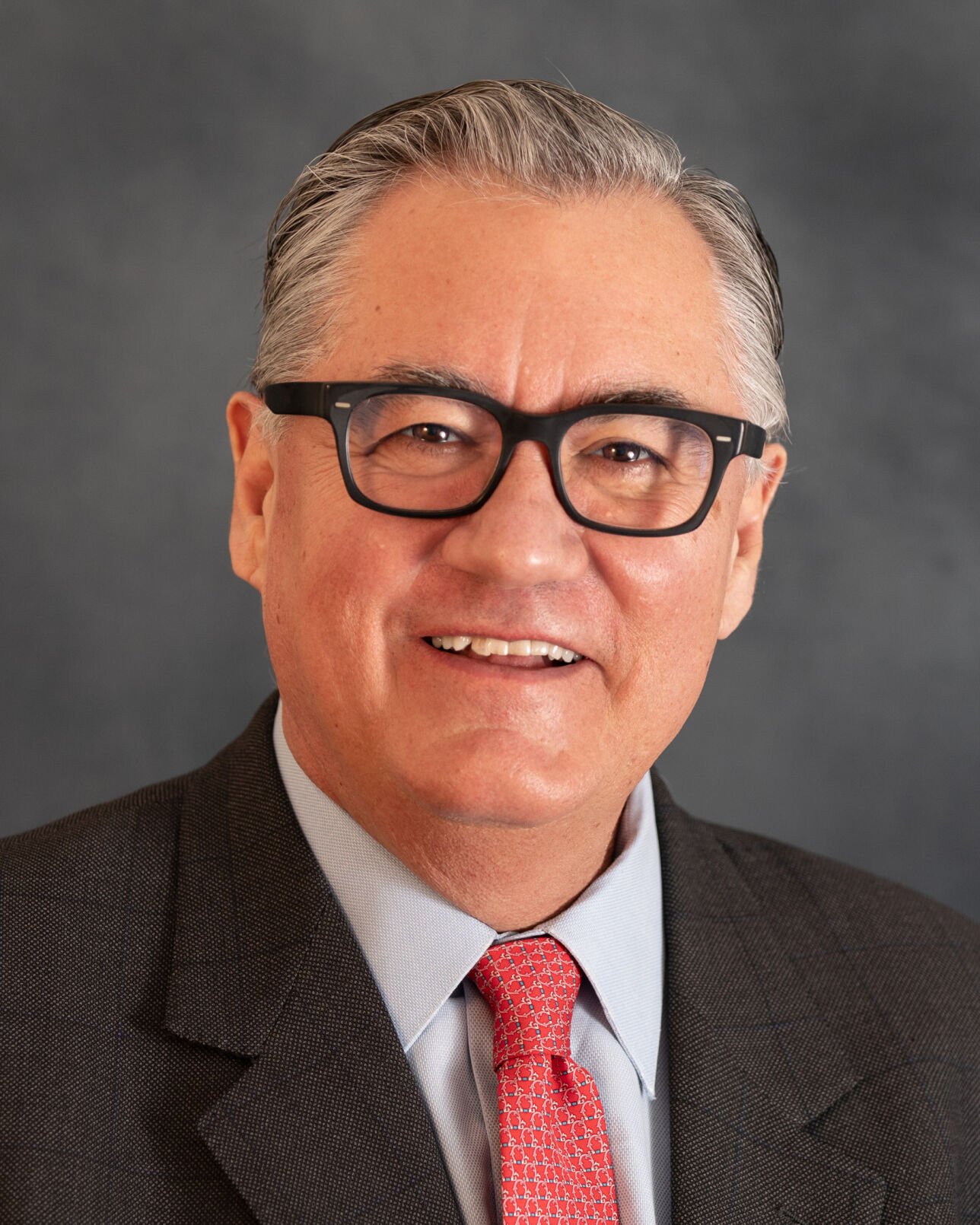
UA official Tomás Díaz de la Rubia
The institute “will apply the full weight of our research in space science, optical sciences and imaging, directed energy, hypersonics, materials science, space domain awareness and space systems engineering to develop solutions that advance our nation’s security advantage,” he said in the news release.
The Arizona Board of Regents funded the institute in part by providing seed funding for a UA strategic research initiative, set in 2025, that focuses on national security and space issues.
“Emerging threats increasingly target critical infrastructure, particularly space systems that underpin communications, navigation, timing services and other technologies essential to the modern economy and military readiness,” the UA news release said, without naming specific threats.
Rand said anyone who turns on the news and watches cannot “fail to appreciate what a dangerous world we live in.” He pointed to what’s happening in the Middle East, Europe and North Korea.
“I think Dr. Díaz de la Rubia appreciates that there’s a lot of potential adversaries, and we prefer they not be adversaries, but don’t have our best interests in them developing technology solutions that could cause us harm,” Rand told the Star. “We can’t just sit ignorantly by and assume that no one wants to do us harm. Anyone who thinks that way has a very selective memory. September 11 (2001) sticks out in my mind still pretty clearly. There are places in this world that do not have our best interests.”
“I’ve seen what these bad actors can do and are willing to do,” Rand said, saying he's served in the Pacific, the Republic of Korea, the Middle East, including Iraq, Europe, Central and South America.
UA aims for Golden Dome contracts
Along similar lines, the UA is promoting its new partnership with a team led by Precise Systems, Inc. to compete for Golden Dome contracts as a way to strengthen the defense industry in Southern Arizona, which includes Raytheon Technologies, Sargent Aerospace and Defense, Paragon Space Development, Davis-Monthan Air Force Base and the Army’s Fort Huachuca.
In all, 2,100 competitors, including Precise Systems, have been deemed eligible by the U.S. Missile Defense Agency to compete for a total of up to $151 billion in Golden Dome contracts.
Raytheon, which teams with Rafael Advanced Defense Systems on the Iron Dome Weapon System in Israel, is among the defense contractors competing for Golden Dome work.
UA spokesperson Mitch Zak confirmed that Raytheon, Tucson’s largest private employer, is not part of the Precise team, but said that doesn’t “preclude the university from partnering with them for Golden Dome opportunities.”
Trump has said he expects the Golden Dome system to have the capability of intercepting missiles “even if they are launched from space.”
It is inspired by Israel’s much smaller-scale Iron Dome air defense system, which “detects incoming short-range rockets, artillery and mortars, calculates their trajectory, and launches interceptor missiles to destroy those predicted to hit populated areas or strategic assets,” as described by Reuters.
In an interview Thursday with the Star, Díaz de la Rubia said the UA will conduct research as part of its effort to receive Golden Dome contracts, and will also build technologies and components that can be used in the missile defense program.
The work is just getting off the ground because the federal program hasn’t released any task orders yet, he said.
The UA has “capabilities in quantum networks, advanced photonics, hypersonics that will be very relevant in space technologies to some of the task orders that will come out of Golden Dome,” he said. “So, we will be responding to opportunities, bidding on proposals together with other members of the consortium to bring our technology, technical capabilities in these areas.”
Díaz de la Rubia said UA’s interest stems from its focus on space sciences as a research priority.
When asked if the UA is intentionally focusing on strategic research areas promoted by the Trump administration, Díaz de la Rubia said he and Garimella were discussing the university's initiatives in space and national security, fusion energy, artificial intelligence and health, and critical minerals mining before the president was inaugurated a year ago.
He said they were anticipating these national imperatives and future technologies, and that these were areas in which the UA’s strengths lay historically.
“I would characterize this from the perspective that we anticipate as a university — our job is to be on the frontier, to be on the leading edge, anticipating what it is that we can do as a research and educational enterprise to help society be ready for the future,” Díaz de la Rubia d. “So, we started all these initiatives before the current (federal) administration launched their own.”
UA tops $1B in annual research spending
It was also announced in the past week that the UA exceeded $1 billion in total research activity in fiscal year 2024.
The newly released data is from a National Science Foundation Higher Education Research and Development survey, in which UA continues to hold its rank in the top 20 public research institutions in the U.S. for the seventh consecutive year.
UA’s research expenditures grew by $45 million between fiscal year 2023 and 2024, with its rank being 19th among public research institutions and 35th among all U.S. institutions, UA said in a news release about the survey rankings. Federally funded research expenditures also increased by 8.4% year over year, it said.
“I think it’s a signature of the fact that this university has an incredible DNA of research that goes back decades,” Díaz de la Rubia told the Star.
“We have been among the strongest universities in the nation, in the world, when it comes to advancing knowledge and creating new technologies to impact and benefit society for many, many decades,” he said. “Reaching a billion is a mark, it’s a signature. There’s only 32 universities in the nation that do a billion or more in research.
“But, to me, the more important thing ... (is) the impact of the work that we do. It’s our ability as a university to anticipate and contribute to solving society’s biggest issues.”

