


Things are about to get weird in the mailroom at the University of Arizona’s Department of Entomology.
Researchers there have issued an unusual request to residents across Arizona: Send us your ticks.
As part of something called the Great Arizona Tick Check, scientists are hoping to collect enough of the little bloodsuckers to build a first-of-its-kind distribution map of ticks and the diseases they carry around the state.
“This is what we call community-based participatory surveillance,” said epidemiologist Kacey Ernst, a partner in the research project from the UA’s Zuckerman College of Public Health. “Because going and sampling all across the state is impossible, this allows us to get ticks from a much broader area and engage people in science.”

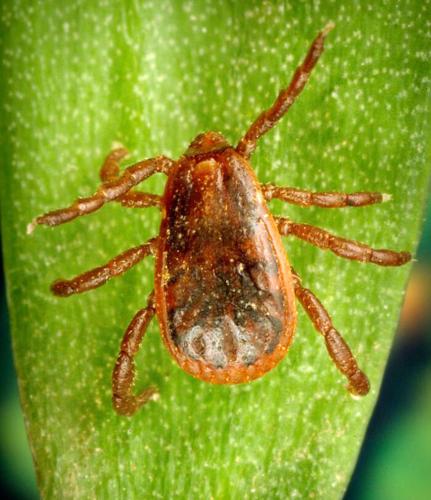
Rhipicephalus sanguineus, or brown dog tick
Of particular concern to researchers is Rocky Mountain spotted fever, the deadliest, tick-borne disease in the world. Cases are rare but on the rise across the Southwest.
The bacterial disease is spread through the bite of an infected tick — usually the common brown dog tick in Arizona — and often results in fever, rash or other nonspecific symptoms such as headache, nausea or muscle pain. It’s treatable with antibiotics, but it is more likely to result in death than Lyme disease, the other illness most commonly associated with ticks.
Between 4,000 and 6,000 cases of spotted fever, including the Rocky Mountain variety, are reported nationwide each year, according to the Centers for Disease Control and Prevention. From 2003 to 2019, almost 470 cases of Rocky Mountain spotted fever were reported in Arizona, with a fatality rate of about 5%.
“We know that we have the brown dog tick, and we know that it carries Rocky Mountain spotted fever in Arizona,” said insect researcher Kathleen Walker with the UA’s Department of Entomology. “But what we don’t know is the extent of this problem.”
Walker will lead the pathology and genetic testing of the ticks the team receives from the public, as part of her role as an extension specialist with the university’s College of Agriculture and Life Sciences’ Department.
The tick-tracking project is a collaboration among the UA Cooperative Extension, the College of Public Health and the Arizona Department of Health Services. The work is being supported by almost $1 million in grant funding from the CDC.
Once the program is up and running, the team hopes to gather enough information to be able to notify specific counties and rural areas around the state if Rocky Mountain spotted fever is detected or suspected there.
“The more people that participate, the more likely we will be able to provide good data and information back to the public,” Ernst said. “Our hope is to understand the distribution of the tick species and what pathogens they may harbor.”
They’re not just looking for signs of spotted fever, either.
“We do know that the vector for Lyme disease and the pathogen was found in northwestern Arizona 30 years ago, but no one’s gone back since,” Walker said. “Has it moved? Has it spread? Is it gone? We don’t know. If there are new disease risks that weren’t there before, or if there are old disease risks that people forgot about — that’s kind of what we want to map out in the end.”
Ultimately, the project is designed to spread knowledge, not fear.
As the researchers put it: A tick bite is an icky problem, not an emergency.
Doctors say they’ve seen more Lyme patients over the years due to ticks thriving in warmer, humid weather.
“If you find a tick that has bitten into you or a member of your family, don’t panic. Simply remove it, clean the site, put the tick on a piece of tape or in a small container, and send it to me,” Walker said.
But don’t wait to hear back from the lab or for the Great Arizona Tick Check to diagnose you.
“If you develop a rash or fever within 30 days, seek medical attention and remember to tell your doctor about a recent bite, because that’s useful information that can really help a physician narrow down causes or include a test for tick-borne pathogens,” Walker said.
Detailed information on how to safely remove a tick and how to send it to the researcher team can be found on the project’s website at: extension.arizona.edu/great-arizona-tick-check.
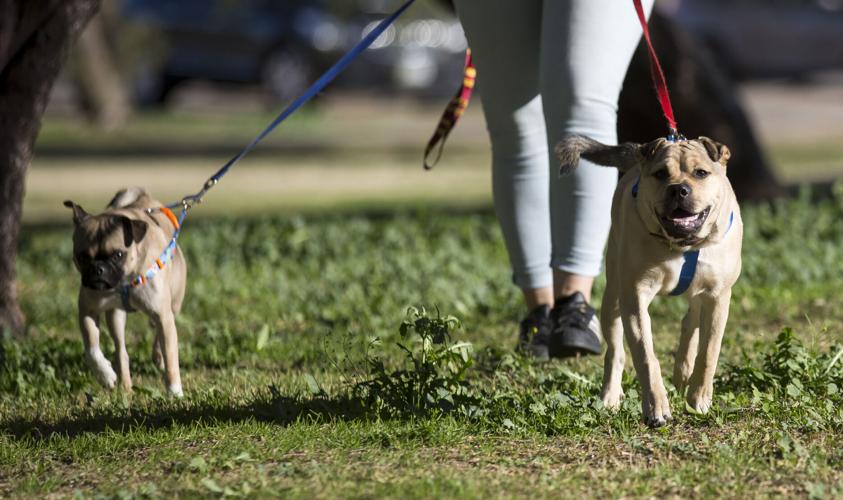
So the next time you find some yucky arachnid clinging to you or your dog after a hike, don’t just get ticked off. Put that sucker in the mail.
These were the top names for dogs in 2022
No. 10: Ruby and Leo
Updated
Girls: Ruby
Boys: Leo
No. 9: Rosie and Rocky
Updated
Girls: Rosie
Boys: Rocky
No. 8: Maggie and Bear
Updated
Girls: Maggie
Boys: Bear
No. 7: Sadie and Buddy
Updated
Girls: Sadie
Boys: Buddy
No. 6: Penny and Tucker
Updated
Girls: Penny
Boys: Tucker
No. 5: Willow and Teddy
Updated
Girls: Willow
Boys: Teddy
No. 4: Lucy and Charlie
Updated
Girls: Lucy
Boys: Charlie
No. 3: Daisy and Cooper
Updated
Girls: Daisy
Boys: Cooper
No. 2: Bella and Milo
Updated
Girls: Bella
Boys: Milo
No. 1: Luna and Max
Updated
Girls: Luna
Boys: Max

