




The University of Arizona’s faculty chair is urging UA President Suresh Garimella not to agree to “dirty compromises that partisan politics demand,” after the White House asked the university to commit to President Donald Trump’s political priorities in exchange for more favorable access to federal money.
Chair of the Faculty Leila Hudson wrote to Garimella Thursday in an email, “I remind you of what you know well — that our institutional mission transcends all partisan politics and the dirty compromises that partisan politics demands. Our mission does not work without a bedrock commitment on the part of our leadership to everyone’s freedoms — constitutional, academic and otherwise.”
She was reacting to letters the White House sent Wednesday night to the University of Arizona and eight other universities, asking the schools’ leaders to agree to ban the use of race or sex in hiring and admissions, freeze tuition for five years, and cap international undergrad enrollment at 15%, among other steps. The Wall Street Journal was first to report the proposed compact.
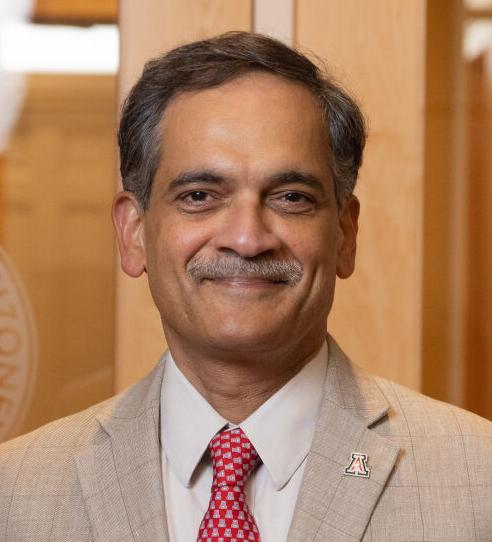
University of Arizona President Suresh Garimella
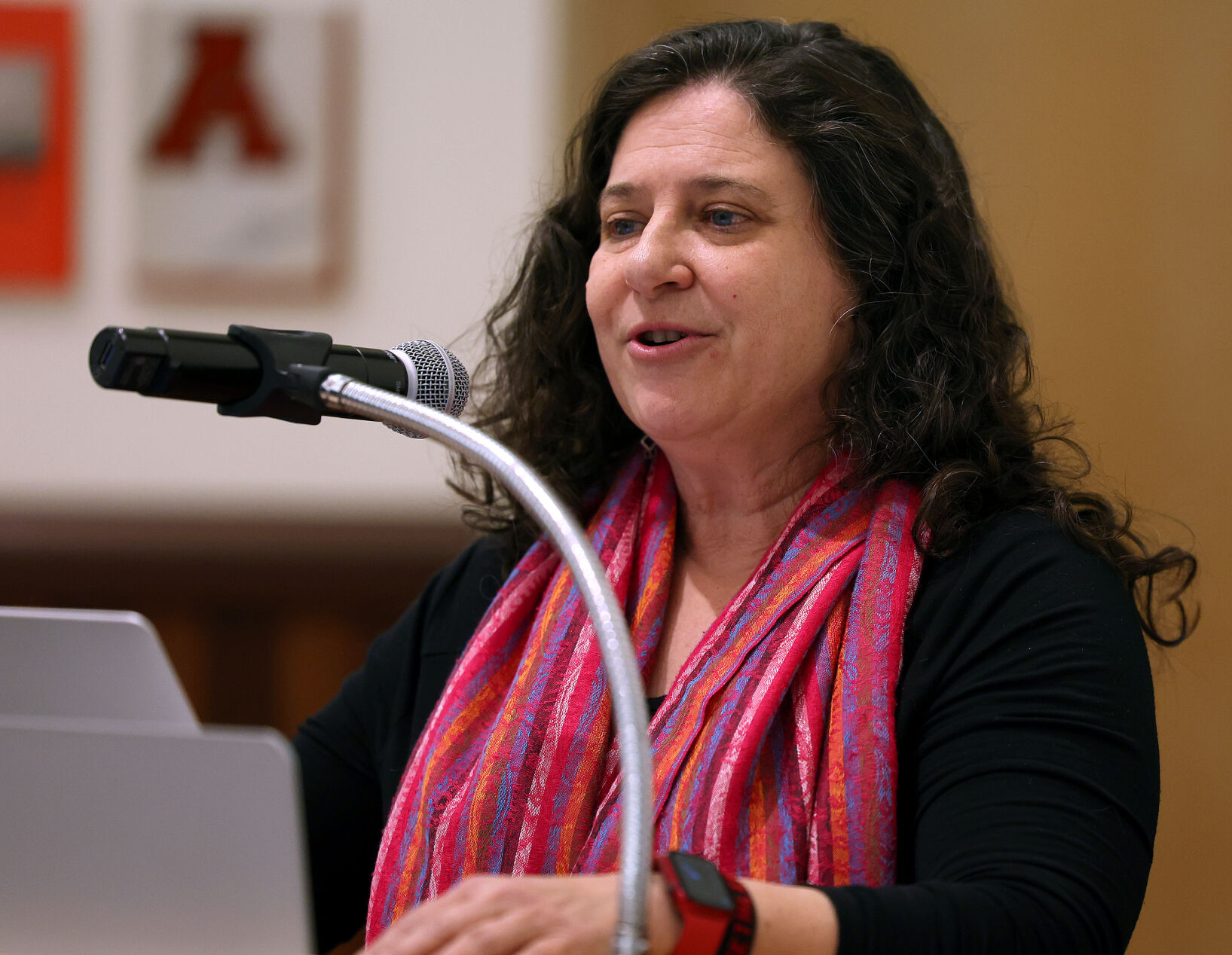
UA Chair of the Faculty Leila Hudson.
The universities also would have to commit to strict definitions of gender, the New York Times reported. The Associated Press elaborated: “The ‘Compact for Academic Excellence in Higher Education’ asks universities to accept the government’s definition of gender and apply it to campus bathrooms, locker rooms and women’s sports teams.”
The document also “seeks to create a more welcoming environment for conservatives, asking colleges to make governance changes and abolish departments that ‘purposefully punish, belittle, and even spark violence against conservative ideas,” the Journal reported. The schools would have to evaluate views among students and faculty to ensure every department reflects a diverse mix of ideological views.
It would bar all university employees from "actions or speech relating to societal and political events except in cases in which external events have a direct impact upon the university."
Universities and colleges that sign the agreement would receive “multiple positive benefits,” including priority access to federal funds and looser restraints on overhead costs of federal grants.
“The university first learned of the compact when we received it on Oct. 1. We are reviewing it carefully,” UA spokesperson Mitch Zak said late Thursday afternoon, offering no additional comment and not responding to specific questions from the Arizona Daily Star.
In addition to the UA, the universities are Brown University, Dartmouth College, Massachusetts Institute of Technology, the University of Pennsylvania, the University of Southern California, the University of Texas, Vanderbilt University and the University of Virginia.
Schools chosen as ‘good actors’
“The White House chose the schools because it believed they are, or could be, ‘good actors,’” the Wall Street Journal reported, quoting Mary Mailman, the White House’s senior advisor for special projects.
“They have a president who is a reformer or a board that has really indicated they are committed to a higher quality education,” Mailman told the Journal.
University of Arizona President Suresh Garimella
Garimella acted quickly earlier this year to comply with Trump administration orders to end DEI programs at universities under threat of losing federal funding. Garimella listed steps he was taking to comply in a follow-up letter to the Arizona Senate’s Republican president: Removing diversity, equity, inclusion and accessibility statements from job postings; eliminating related programs, services and committees; and adding a new non-discrimination statement to all UA websites, among others.
Nearly 1,000 University of Arizona faculty responded in May by anonymously voting by a 91% margin to urge Garimella and the Arizona Board of Regents to legally contest and refuse compliance with “unlawful” demands by the federal administration it said threaten academic freedom, university governance and the constitutional rights of students, faculty and staff. Zak responded then: “We value engagement of University of Arizona faculty, staff, students and community members as we chart a path forward.”
Garimella had written a letter in April to professors, saying the UA not only relied on more than $470 million in federal research grants and over $70 million in federal Pell Grants supporting 22% of its student body. “We also have a responsibility to comply with the laws and guidelines that apply to our public university,” he wrote.
More recently, the UA moved quickly to close its micro-campuses in China after criticism from Republicans on a U.S. House committee.
The regents, who oversee the UA and the state’s other two public universities, issued a brief statement late Thursday: "The Arizona Board of Regents is engaged with university leadership and evaluating the letter."
A spokesman for Democratic Gov. Katie Hobbs, who holds a seat on the Board of Regents as governor, said she would have no comment.
UA faculty blast the requests
Reaction from UA faculty members was swift and strong.
Nolan Cabrera, a UA professor of educational policy studies and practice, said the proposed compact will be a test of whether UA leaders decide to side with “authoritarianism or freedom.”
He said they need to remember that compliance to “unjust demands” only invites more of them in the future.
“This is an assault on the core of higher education: the pursuit of truth and academic freedom,” Cabrera said. “It’s meant to stifle expression that is against Trump and amplify expression that supports him which is right out of the authoritarian playbook.”
Cabrera said there has been frustration among faculty at what he called the UA central administration’s lack of courage and principle displayed in the current political climate.
Danny Clifford, a UA professor in the English department, said, “UA administration will once again cave to whatever ridiculous, careless, hate-filled, discriminatory, and reprehensible demands the U.S. government issues.”
“Our administrators have proven spineless in the face of this tyranny and our students, teachers, and staff live in fear and outrage at the administration’s impotence as our jobs and classrooms are vacated,” Clifford said. As of July this year, the UA has lost 67 federal research grants under the current Trump administration, totaling to roughly $60 million in lost unspent federal funds. This has caused job losses and stopped some research done by faculty and students.
Mark Stegeman, a UA associate professor of economics and a faculty senator, said Garimella “should make it immediately clear that the individual free speech of students and staff, within the expansive bounds of the First Amendment, is non-negotiable and that no specific viewpoints are entitled to enhanced protection.”
“After that, he should gather opinion from internal stakeholders and then confer with the regents to determine whether negotiations should occur on other points and what should be the bounds on any negotiations,” Stegeman said.
Miranda Pasquarella, a global professor at the university, said, “If the UA decides to give in to these new demands, there will be even more students, teachers and staff that will feel disappointed and betrayed by the administration.”
“How can any educational institution be okay with that? These are supposed to be safe, welcoming spaces that celebrate diversity and free thinking,” she said. “If the University of Arizona is so easily able to abandon its students, its promises, its sense of responsibility, then this is an institution I can easily part ways with and have no regrets.”
Thomas Volgy, a UA professor emeritus of political science, said a lot of the asks are things the university is already doing. For instance, he said, the UA already doesn’t hire or discriminate based on gender or race.
“They seem to be hunting for ghosts that don’t seem to exist at my university and probably not at most other universities,” said Volgy. “We have not had a single case where a prospective faculty member was asked what their political ideology was or who they voted for or what they personally believe in.”
There is no right-wing or left-wing way of teaching math or physics, Volgy said. When teaching international politics, faculty will talk about how the system works and not their own personal preferences, he added.
“I don’t see us being any better ‘actor’ or worse ‘actor’ than Arizona State, Northern Arizona, or 100 other universities around the country who are ‘good actors.’”
Trump administration pressure
The Trump administration’s letters to the universities were signed by Mailman, Education Secretary Linda McMahon, and Vince Haley, director of the White House Domestic Policy Council.
They come amid the Trump administration’s pressure campaign on universities this year to meet various ideological demands, combined with its pulling of federal research funds. Institutions including the University of Pennsylvania and Brown University — two of the schools to receive the new letters — have made varying concessions. President Trump said this week that Harvard University — which sued the administration — is also close to making a deal, the Times said.
The compact proposed Wednesday “requires policies meant to counter the kind of protests that roiled U.S. campuses last year amid the Israel-Hamas war. It asks for a commitment to prevent any disruption to classes or campus libraries and to ensure demonstrators don’t heckle other students,” the Associated Press reports.
UA student Max Thomas, who has been outspoken in favor of Palestinian rights during the Israel-Gaza war, said Thursday: “While tuition freezes are a reasonable gesture, the rest of this compact is designed at gutting higher education. The Trump admin has clearly and consistently signaled that it is anti-science, anti-education, and anti-student, and this is just another campaign to that effect. The fact that the UA is playing ball with Trump is incredibly disconcerting.”
The terms of the deal would be enforced by the U.S. Department of Justice. The nine universities could become “initial signatories” and are asked for a decision by Nov. 21.
The proposal is troubling, Ted Mitchell, president of the American Council on Education, which represents more than 1,500 presidents of colleges and universities, told the Wall Street Journal.
“Who decides if the intellectual environment is vigorous and open-ended? This is not something the federal government should be involved in and adjudicating,” he said. “The implications for free speech are horrifying.”
Leaders of the Texas system, though, were “honored” that the Austin campus was chosen to be a part of the compact and its “potential funding advantages,” according to a statement from Kevin Eltife, chair of the Board of Regents. “Today we welcome the new opportunity presented to us and we look forward to working with the Trump Administration on it,” Eltife was quoted by the Associated Press.
California Gov. Gavin Newsom said if any universities in his state sign the compact, they will lose access to state funding, including Cal Grants, a $2.8 billion student financial aid program, the AP reported. In an all-capital statement, Newsom, a Democrat, said California “will not bankroll schools that sell out their students, professors, researchers, and surrender academic freedom.”


