


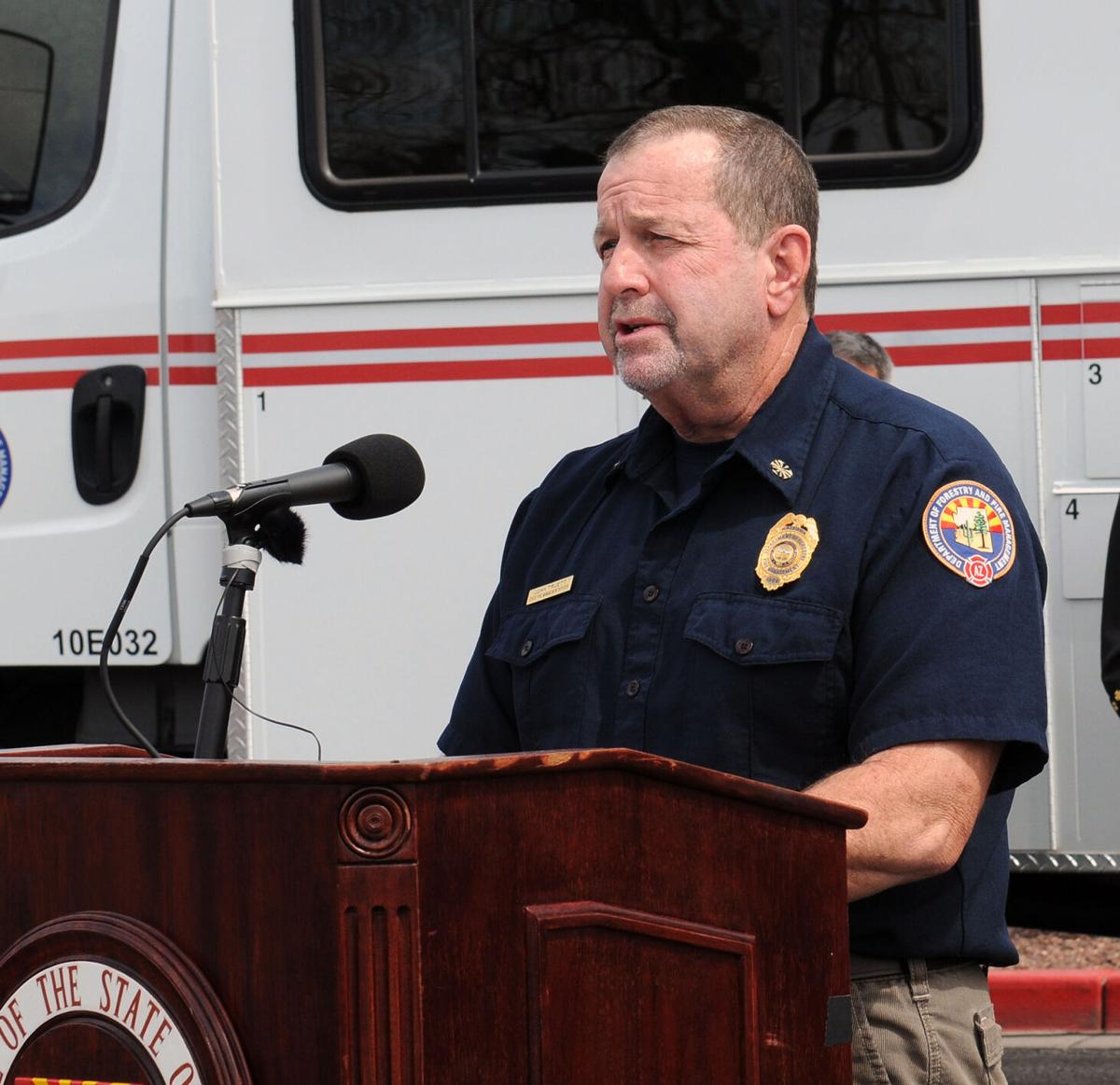
The very wet and extended winter is going to cause fire havoc in much of Arizona’s grasslands, the state’s chief fire management officer said Monday.
“This year we’re talking about a heavy vegetation growth and a fire potential of being higher than normal across parts of Arizona,’’ said John Truett.
That specifically means not so much the forests of northern Arizona but areas south of the Mogollon Rim, he said. The area considered most at risk extends from the Tonto National Forest and “across the Sonoran landscape, down into the Catalinas and into Cochise County.’’
All that is due to the grasses and brush that have sprouted in abundance because of the winter rains.
“The potential exists for quick ignitions and rapid-moving wildland fires within these areas of heavy fuels, where wind and terrain can influence explosive fire behavior, making it challenging for firefighters to contain,’’ Truett explained.
But he said that doesn’t mean the northern Arizona high country is necessarily safe this year. “Fire behavior may be delayed just due to the existing snowpack and the later moisture that we are receiving this spring,’’ Truett said.
The different conditions and fire dangers in each area will require residents to take specific actions, said Aaron Kasem, the state’s fire prevention officer.
“Start with your home and property,’’ he said. “Look for those vulnerable areas where seasonal maintenance can come into play as far as creating defensible space,’’ which he defines as 100 feet from property.
Maintenance can be as simple as making sure the lawn is irrigated and mowed, and that bushes and trees are trimmed.
But that’s not all. Kasem said homeowners should look for other combustible items within that zone.
“That can be excess building materials,’’ he said. “That could be liquids from doing vehicle maintenance, all of those things what we call receptive fuel beds where embers can land and ignite a home. Start with the home and work your way out from there.’’
That kind of effort is the “low-hanging fruit’’ of what is the easiest for people to do.
But Kasem said residents also need to be aware that fires do happen and they need to be ready to go.
Preparing a “go bag,’’ he said, that has everything from personal medications to charging cables for phones and batteries, “little things that we often forget that we need, that in time of crisis, we don’t want to be scrambling for.’’
Then there are important documents.
Finally, Kasem said, plan ahead for more immediate needs like sufficient food and water for up to 72 hours.
“We want to make sure you’re prepared for the long haul,’’ he said.
None of this should be delayed until the last minute, Kasem said.
“Do not wait to the day that you see smoke in the air to gather those things and prepare, because it’s not going to be the easiest transition for you to leave,’’ he said.
Kasem said families also should have “a rallying point’’ away from the area, where family members know they can meet.
Gov. Katie Hobbs issued a reminder that target shooting and fireworks, both potential causes of wildland fires, are not allowed on state trust lands.
Get your morning recap of today's local news and read the full stories here: tucne.ws/morning

