


A Tucson environmental group and a Patagonia community group filed suit Tuesday to try to force the EPA to take a stand on an air quality permit for a major mine proposed for the Patagonia area.
Filed in U.S. District Court, the lawsuit accuses the U.S. Environmental Protection Agency of missing a federal deadline set by the Clean Air Act to either grant or deny a petition from mine opponents asking EPA to object to a state air quality permit granted to the mine last August.
The Tucson-based Center for Biological Diversity and the Patagonia Area Resource Alliance said EPA should have responded within 60 days from when the groups filed their petition on Sept. 14. EPA hasn’t yet responded, the groups said in their lawsuit.
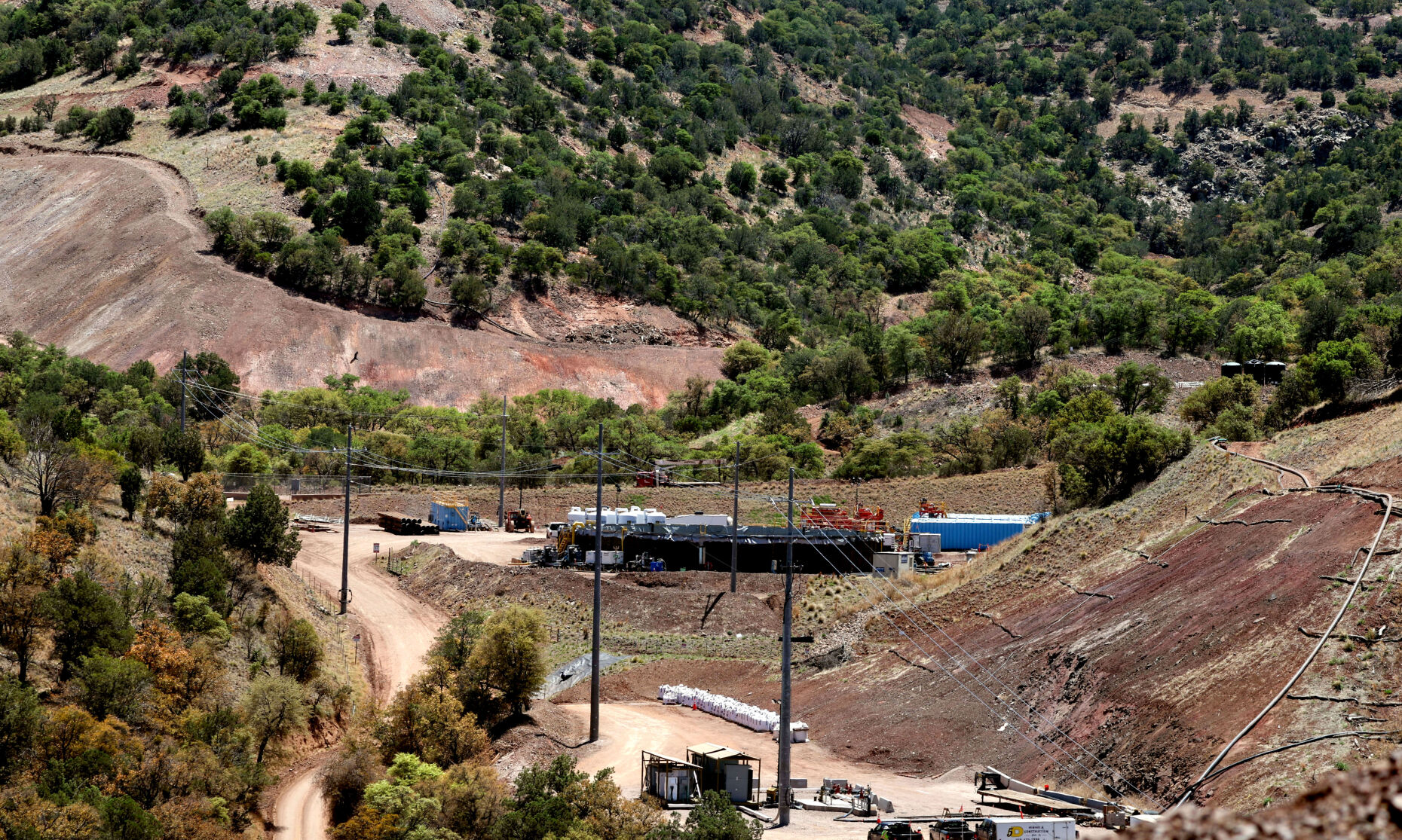
The South32 Hermosa project site in the Patagonia Mountains of Southern Arizona.
At issue is a permit for the South32 Hermosa Project. It’s a combined underground zinc, manganese and lead mine planned for private and federal land lying about 75 miles southeast of Tucson. The mining company South32 and other backers of the project have hailed it as a major boon for the production of electric vehicles and other green energy projects.
Opponents, however, say the air quality permit issued in August 2024 opens the door for release of hundreds of tons of toxic air pollution every year, putting clean air, biodiversity and the health of nearby communities at risk.
The pollutants that could be released from the mine under the permit include particulate matter, nitrogen oxides, carbon monoxide, volatile organic compounds, and a combination of hazardous air pollutants, including heavy metals such as lead, manganese and arsenic, the lawsuit said.
EPA declined to comment on the lawsuit. Typically, federal agencies don’t comment on lawsuits filed against them but wait until they file formal responses through the courts. The lawsuit was filed in District Court in Washington, D.C.
Both zinc and manganese are designated as critical minerals by the U.S. Geological Survey, and former President Joe Biden invoked the Defense Production Act to increase mining and processing of manganese in the U.S.
“Clean air delayed is clean air denied,” said Jeremy Nichols, a senior advocate at the Center for Biological Diversity. “The EPA needs to stop dragging its feet and hold South32 and the Arizona Department of Environmental Quality accountable for protecting people and communities.”
The Arizona Department of Environmental Quality air quality permit for the Hermosa is one of several major state permits for the project. With that permit in place,the company says it can finish building its mine on private land, before it can finish construction and operate the project on both private and federal land.
After ADEQ issued the air quality permit, the Australian-based South32 company said in a news release that Hermosa’s proposed operations must meet all state and federal air quality standards.
“Based on third-party, agency-accepted modeling, air emissions from proposed operations at the Hermosa project site are expected to be within the applicable limits established by the U.S. Environmental Protection Agency for the protection of public health,” the company said.
“Because we have the opportunity to build Hermosa from the ground up, we are using advanced technology, world- class engineering and industry best-practices to enhance safety for the surrounding community when it comes to air quality. This air permit represents a significant step in securing the required approvals to fully develop the site while continuing our proactive approach to protecting the health and well-being of everyone working on our sites and living in our surrounding communities,” said Pat Risner, president of South32 Hermosa, in the news release.
As ADEQ was considering the air quality permit, EPA chose at that time not to object to it. Afterwards, the environmental and community groups petitioned EPA to take a stand on the permit, which EPA hasn’t done, according to the new lawsuit.
ADEQ has also issued an aquifer protection permit for the Hermosa Mine, but opponents have appealed that permit decision. That case is now pending before the Arizona Court of Appeals.
Since May, the mine has also been undergoing a federal review under the National Environmental Quality Act. Federal aproval is needed for Suth32 to use the federal land for purposes such as mine tailings disposal, although the company says it can also bury tailings on some of its private land while while the federal approval is pending.
Australia-based minerals giant South32 has already begun construction of the underground mine on private land it owns in the historic Harshaw mining district, about 9 miles from Patagonia.
That review will focus on South32’s plans to mine beneath Coronado National Forest and build support facilities on public land surrounding its private tract.

