


The long-awaited 22nd Street bridge construction project is set to begin this week.
Tucson Mayor Regina Romero and Councilwoman Selina Barajas, as well as members of the city's transportation department and the Regional Transportation Authority, will be hosting a groundbreaking event Wednesday to "commemorate the start of the upcoming revitalization project" on the bridge between Tucson Boulevard and Kino Parkway, the city said in a news release.
The bridge project is intended to increase traffic capacity and improve freight access.
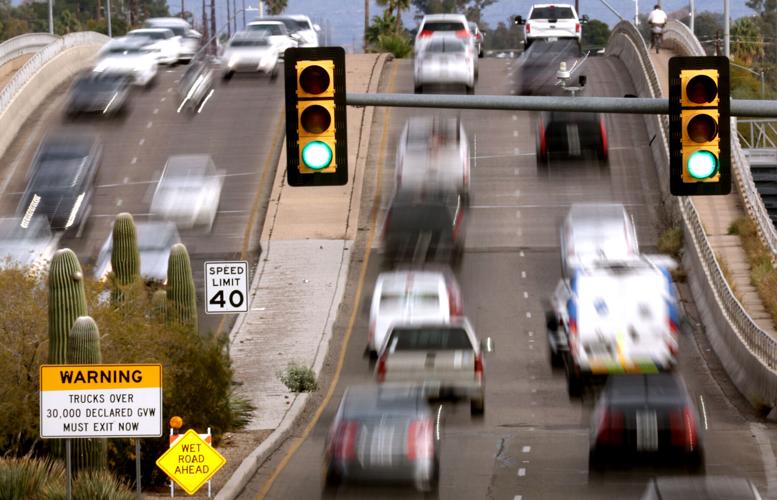
The bridge was originally built in the 1960s, and due to its 15-ton weight restriction, it currently is unable to be used by large vehicles, which have to use alternate routes. The bridge will also be widened to allow for three lanes of traffic heading in each direction. Bicycle and pedestrian access will be included on both sides of the bridge.

The three-year project to build a new 22nd Street bridge is set to begin by the end of February. Full closure of the bridge is expected to begin March 3.
Construction is set to begin by the end of February, with the full closure of the bridge to begin on March 3. Work is expected to last about three years, said Erica Frazelle, a spokeswoman for the city's transportation department.
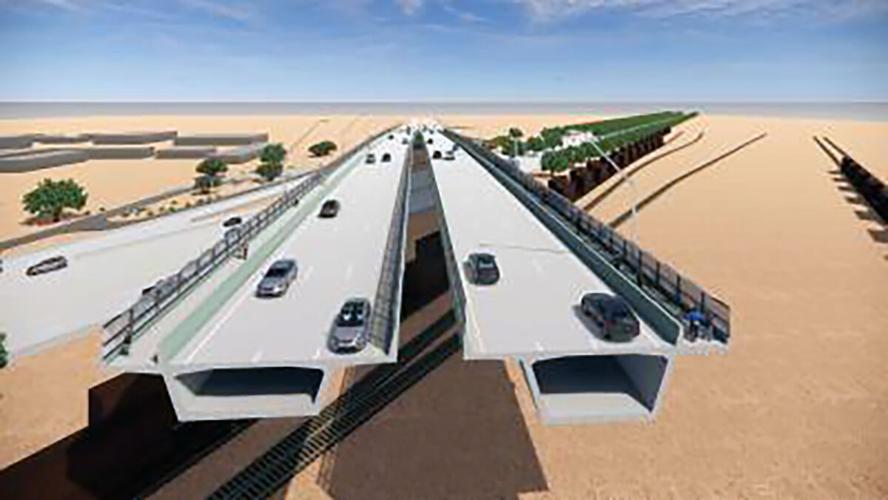
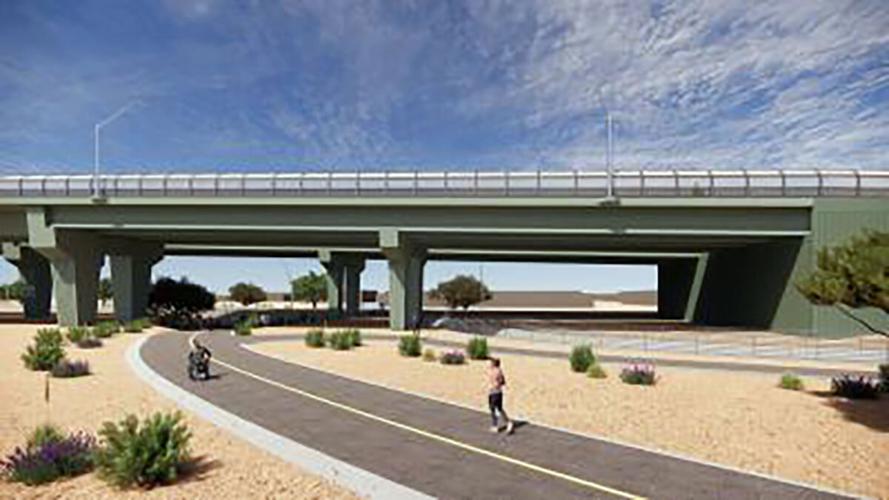
Once complete, the bridge will be widened to allow for three lanes of traffic traveling in each direction, with eight-foot-wide pedestrian and bicycle facilities on either side. Concrete barriers will separate traffic from the pedestrian and bicycle areas, and tall fencing will be placed on either side of the bridge overlooking the railroad tracks.
After the bridge is closed on March 3, crews will begin demolition, Frazelle said. The entire bridge, including pillars, will eventually be demolished, she said.
The new construction will be a segmental bridge, Frazelle said, meaning it will be built in short sections one at a time. Crews will start constructing the bridge from the center and work their way out, meaning no traffic will be permitted, even in a limited sense, until the entire bridge is constructed, she said.
The 22nd Street Widening and Bridge Replacement project is no. 19 of 51 projects outlined in the Regional Transportation Authority Plan, the 20-year, $2.1 billion regional transportation plan which was approved by Pima County voters in 2006 and since been funded by a half-cent sales tax. It expires this year, and regional leaders are hoping voters pass RTA Next on March 10, the next 20-year iteration of the plan.

The finished 22nd Street bridge will be widened to three lanes of traffic in each direction, with eight-foot-wide pedestrian and bicycle lanes on either side. Concrete barriers will separate traffic from the pedestrian and bicycle areas, and tall fencing will be placed on either side of the bridge overlooking the railroad tracks.
The bridge project follows years of delays, in which the primary concern for residents since its inception has been the design of the new bridge itself.
Groundbreaking was originally set for the spring of 2023, however the project was put on pause that summer, said Frazelle, following concerns relating to designs that community members previously said would have posed risks to pedestrians and cyclists.

Bicycle and pedestrian access will be included on both sides of the rebuilt 22nd Street bridge.
Designs from 2009 had included a separated bike and pedestrian path on a suspended bridge below the roadway, which supporters said would have allowed for a safer, better-connected route to Aviation Bikeway. But project plans changed in 2021, however, due to inflation in construction prices amidst the pandemic.
In 2022, the city was awarded a $25 million RAISE grant, short for Rebuilding American Infrastructure with Sustainability and Equity, a federal program from the U.S. Department of Transportation, which spawned out of the federal Bipartisan Infrastructure Law.
The changed plans from 2021 had included a protected lane for pedestrians and cyclists going down the middle of the bridge separated from traffic with a 42-inch concrete partition instead of the suspended bridge originally designed, but pushback from the community, leading up to a planned construction date in 2023, pushed city officials to delay construction.

