


It won't be "business as usual" following the passage of RTA Next, the massive transportation package voters approved Tuesday, local officials say.
Increasing public accountability and transparency, and a focus on meeting voters' expectations will be top of mind — along with finishing leftover projects from the soon-to-be-expired RTA plan of 2006.
On Tuesday night, Pima County voters approved the 20-year transportation plan known as RTA Next, and the sales tax to fund it, which will last just as long, by wide margins: About 61% voted for the plan, while nearly 59% voted for the tax to pay for it.
Over the next two decades, if projections hold, about $1.42 billion in roadway projects, nearly $178 million in arterial rehabilitation for major roads in poor condition, about $254 million in safety and ADA projects and $726 million for regional transit operations will come to the region's jurisdictions.
The next date to be aware of is April 1. That's when the RTA plan and the half-cent sales tax, which has been in place, expires, and when the new sales tax rate goes into place for RTA Next, said RTA/PAG Executive Director Michael Ortega.
At the top of the RTA Next list, literally, is the seven unfinished roadway projects that were transferred from the original RTA plan. Those projects are:
• Silverbell Road, from Camino del Cerro to Ina Road;
• First Avenue, from Orange Grove Road to Ina Road;

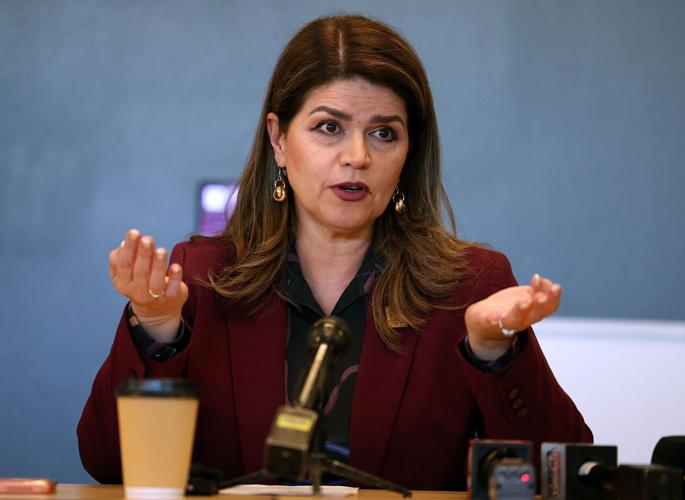
Tucson Mayor Regina Romero answers questions about the RTA Next election results Wednesday at City Hall.
• First Avenue, from Grant Road to River Road;
• 22nd Street, from Interstate 10 to Kino Parkway;
• Houghton Road, from Broadway to Tanque Verde Road;
• Tangerine Road, from Marana Tech Park Drive to Dove Mountain Boulevard;
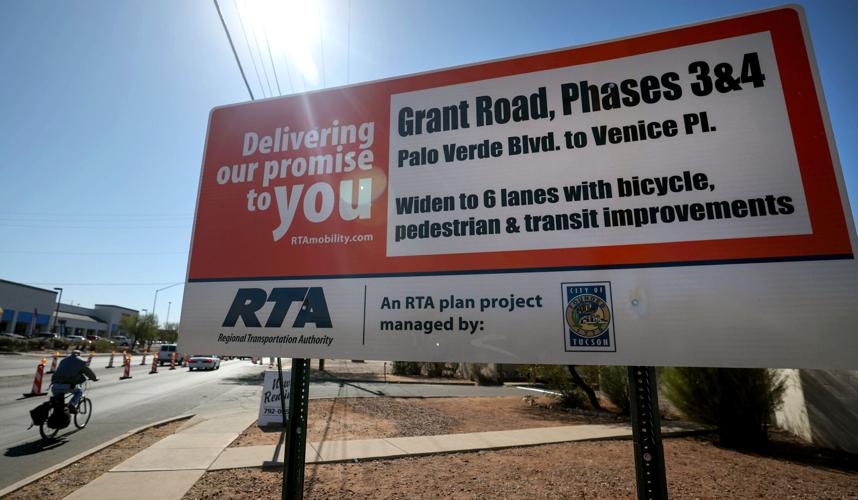
• and the final phase of the Grant Road widening project, from Fremont Avenue to Sparkman Boulevard.
RTA Next is split into four construction periods, with the first period beginning in fiscal year 2026-2027 and running through fiscal year 2030-2031. Fiscal years here starts on July 1, meaning work starting on the unfinished projects is just around the corner.
Ten additional roadway projects are also set to begin work in the first period of RTA Next.

Finishing seven carry-over projects and improving public communication are top priorities following passage of RTA Next, the massive regional transportation plan, local officials say.
Tucson Mayor Regina Romero said Wednesday that her priority is to first make sure uncompleted projects are delivered. She also touted Ortega's leadership, saying he "has an attitude of bringing consensus to the table and moving expeditiously to get things done."
"It's not a relationship of animosity, as we had before. And so there's new members of the RTA board that are also are willing to look at moving ahead, creating consensus at the table and moving equitably forward," she said. "And for me, (Tucson's transportation department) has to move expeditiously. I've already told the city manager and our (transportation department director) we're going to need to make sure we're hiring the appropriate people, to engineers and project managers, to move those projects quickly."
Ortega — who came into the RTA role in June 2025, shortly after former Executive Director Farhad Moghimi was fired — said work on the unfinished projects has already begun. Moghimi has filed a lawsuit over his termination.
If jurisdictions need help from the RTA, the authority will be able to provide support for some of the administrative functions, including project management, Ortega said.
One big aspect of Tucson's transportation system was guaranteed with the passage of RTA Next: the continuation of Tucson's free fare policy, at least for now.
"I think that if Proposition 418 and 419 didn't pass, we absolutely knew that fare-free transit would come to an end," Romero said. "I believe that with being able to keep the funds and continue adding through the RTA funds for our transit system, it at least keeps the conversation alive."
Romero said she briefly celebrated the election win Wednesday morning, but then began thinking about what comes next. "What are the conversations that as mayor, as a city, we need to have with the community, because obviously 40% of the voters voted against it. And so what is it that that 40% can come along with us on, to be next," she said.
"I've heard that voters want to move in the direction of infill, and infill investment, and they want to move in the direction of climate work and sustainability and mobility."
Whatever the next steps are, they will be informed by Tucson residents, as the city isn't "going to stay static for the next 20 years," Romero said.
The RTA board is looking to increase the public's accessibility to project information, Ortega said. It will update its website so the public can access metrics and data that the board receives during its updates and will utilize the RTA's Citizen's Oversight Committee "to be the conduit for public feedback and public comment."
Ortega previously said the RTA would be establishing "advanced corridor teams" for the RTA Next projects to give the authority "a roadmap for how to get those projects done," Ortega said. Those teams will identify challenges such as utility relocation, railroad crossings, property that needs to be acquired, so that the RTA isn't waiting until projects begin to do so. The authority will be soliciting bids from consultants and professionals in the next month to begin establishing those teams, Ortega said.
The RTA will also be looking to expand its social media presence in an attempt to inform the public with "regular, periodic updates," Ortega said.

