



PHOENIX — A federal appeals court on Tuesday slapped down an effort by two civil rights groups to sue to overturn an Arizona law outlawing abortions based on race and gender.
In a brief order, the three-judge panel acknowledged that being stigmatized by laws that appear to be racially discriminatory can be the grounds to sue. But in the unsigned opinion, they said that remedy is available only to those “who are personally denied equal treatment.”
More to the point, the judges said challengers to the 2011 law presented no such evidence when they made their case earlier this month. In fact, the attorney for the NAACP and the National Asian-Pacific American Women’s Forum admitted no woman had been denied an abortion because of the statute.
What that left, the appellate judges said, was simply the claim that black and Asian women had been the “targets of discriminatory intent.” And that, they said, is insufficient to provide them a right to sue.
Dan Pochoda, attorney for the American Civil Liberties Union that represented both groups, said no decision has been made whether to seek Supreme Court review.
But he indicated that the unanimous decision by the appellate panel made prospects for overturning the ruling dim.
Pochoda said, though, the ACLU and its clients are looking for other ways to challenge the law — ways that even one of the appellate judges suggested during the hearing earlier this month in San Francisco might be on firmer legal ground.
The statute makes it a felony, punishable by up to seven years in prison, for a doctor to terminate a pregnancy “knowing that the abortion is sought based on the sex or race of the child or the race of the parent of that child.”
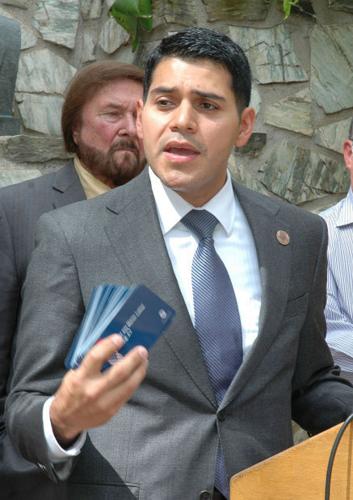
It was crafted by Rep. Steve Montenegro, R-Litchfield Park. He acknowledged that federal courts have generally barred states from prohibiting women from exercising their right to terminate a pregnancy.
But he argued during debate that lawmakers are entitled to protect unborn children from being aborted solely because of their race or gender.
Montenegro said the civil rights of these fetuses trumps the rights of women to end their pregnancies.
This lawsuit, however, never challenged that contention.
That’s because there is no record of any doctor being charged with violating the law. In fact, there is no evidence any woman has been denied an abortion because of the statute.
All that, the appellate judges concluded, left challengers with no basis to try to void the law.
During the debate, proponents cited studies that showed that Asian women were more likely to abort a fetus if it was a girl than a boy. And Montenegro said that abortionists were “the people behind genocides,” trying to reduce the number of minorities.
But the appellate judges, in hearing the arguments, said there was no evidence that the law was crafted in a way that targets only certain groups. Instead, they noted, it applies to any woman who wants to have an abortion.
Pochoda conceded the point.
“They’re not stupid enough to write a law that says only black and Asian women have this process,” he said. “That, on its face, would be thrown out, and very quickly.”
But Pochoda said the ACLU cited cases to the court which said the discriminatory intent of the legislators is enough to void an otherwise neutral-appearing statute.
There may be another path to challenging the law, even without any doctor being prosecuted or a woman denied an abortion.
During the appellate court arguments, one of the judges said a doctor, forced to ask a woman why she wants to terminate a pregnancy, might be able to claim that the law interferes with the physician-patient relationship.
Pochoda said that could be the basis for a future challenge.

