


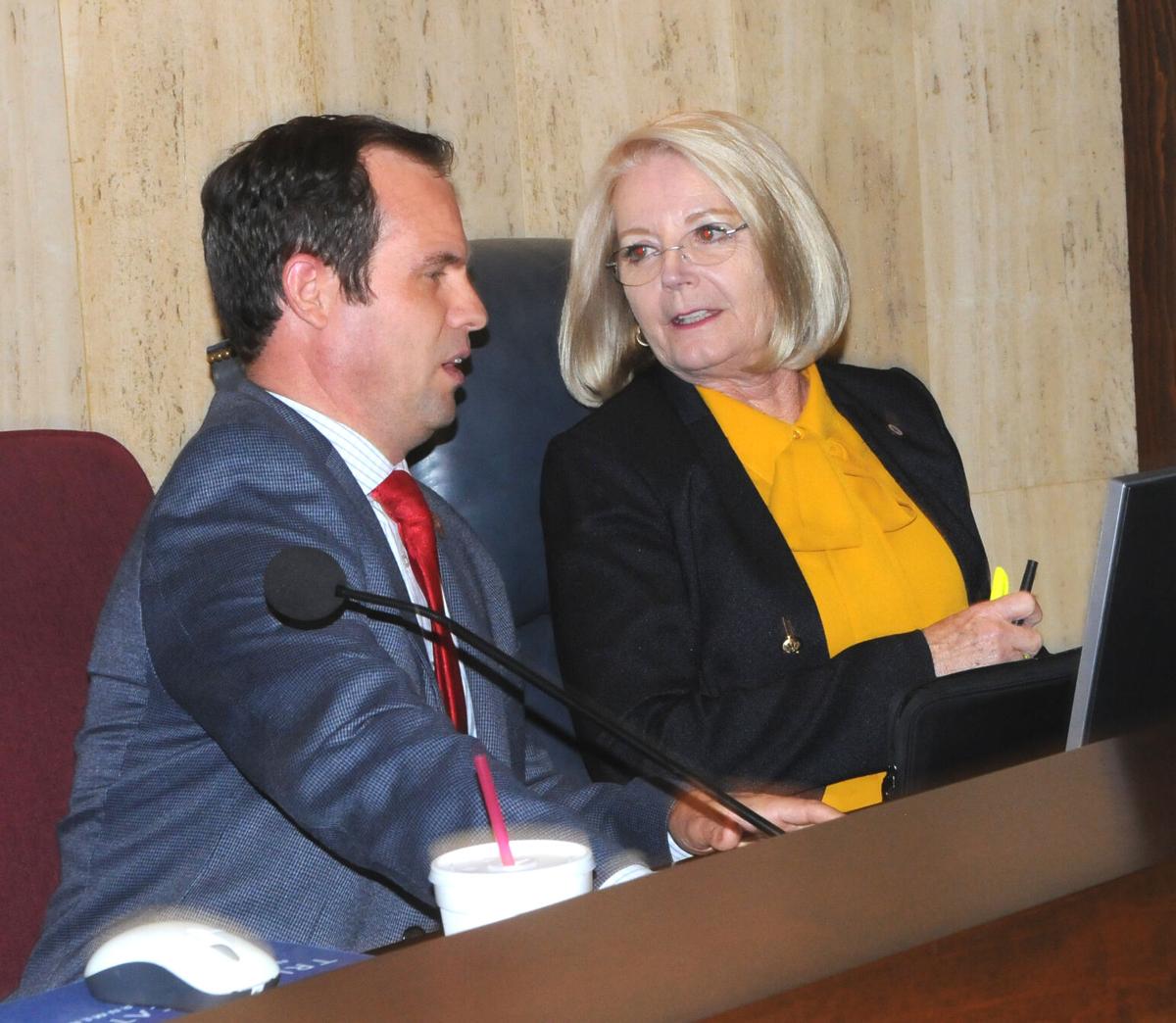
PHOENIX — The Arizona Court of Appeals slapped down the state Senate’s efforts to withhold about 1,100 records related to the audit of the 2020 election.
In a 14-page ruling Friday, the three-judge panel turned away arguments that the documents are protected by “legislative privilege.” They said there is no evidence the audit, ordered by Senate President Karen Fann, was in any way related to the official business of state lawmakers.
The judges also rejected the Senate’s concern that releasing the documents would open up lawmakers’ discussions about the audit to public scrutiny. An attorney for the Senate, Kory Langhofer, had argued disclosure would undermine what he said is a constitutional recognition that legislators are entitled to have private conversations and communications because that is part of their job.
In Friday’s order, the court ordered the Senate to “immediately disclose” all the records it sought to shield.
But appellate Judge Michael Brown, writing for the unanimous three-judge panel, did offer an option.
He said to the extent senators believe release of certain documents would directly threaten the legislative process, they can instead give them to Maricopa County Superior Court Judge Michael Kemp. It would be up to Kemp, after reviewing the records, to decided whether they must be disclosed.
There was no immediate response from Fann, a Prescott Republican.
Hanging in the balance are emails, texts and other documents possessed by the Senate and others held by Cyber Ninjas, the private firm Fann hired to conduct the review of the 2020 presidential election in Maricopa County.
That review came after official results — certified by state officials, including Republican Gov. Doug Ducey — showed that Democrat Joe Biden outpolled incumbent Republican Donald Trump by 10,457 votes statewide. Biden’s win was fueled in large part by beating Trump in Maricopa County by 45,109 votes.
There were charges of irregularities, all unproven. Fann said at the time she ordered the audit to respond to those concerns.
As it turned out, Cyber Ninjas reported that its own hand count of Maricopa County’s ballots confirmed Biden’s win — and by a slightly larger margin than the official count.
American Oversight, a nonpartisan watchdog group, sued for public release of documents related to the audit.
The Senate surrendered some. But it claimed a right to withhold various documents, including all communications involving Fann, Senate Judiciary Committee chairman Warren Petersen, the liaisons Fann chose to interact with Cyber Ninjas, and communications with that company and its subcontractors.
When a trial judge rebuffed the claim of privilege, the Senate appealed.
Brown said Arizona law requires public officers to maintain all records to reflect their official activities and those supported with public funds. The items sought clearly fit within the definition of “public records,” he said.
The judge acknowledged there is a right of “legislative privilege.” But Brown said it is more limited than the Senate contends.
“We reject the Senate’s apparent contention that the privilege blocks the disclosure under the public records law of any record that bears any connection to a legislative function,” he wrote. Brown said there is a “strong presumption” of disclosure in the public records law.
Langhofer argued that legislative privilege is automatic in every investigation the Senate conducts.
He said legislators issued subpoenas related to the audit “with an eye to introducing possible reform proposals” in election laws.
Brown said that argument held no water.
“Nothing in the record shows that the prime purpose of the audit was to identify changes required to Arizona’s voting laws,” he said. The Legislature wasn’t in session during the process, he noted.
“The audit’s primary objective was to verify that election procedures were sufficiently observed,” the judge said. He noted that the “statement of work” outlining Cyber Ninjas’ role was to “validate every area of the voting process to ensure the integrity of the vote.”
The judge suggested the audit looks more like an administrative action than anything related to crafting state laws.
“The audit’s stated purpose reflects no promise to propose legislation in the future,” Brown said. “And while the audit might have revealed areas in Arizona’s election process that could be the subject of new legislation, the connection between the audit and any future legislation is too tenuous to conclude that the audit could reasonably qualify as a legitimate legislative act.”
Brown said that is backed up by the September public hearing in which the results of the audit report were released.
“No sworn or questioned witnesses were at the hearing, nor did any debate or deliberating occur,” he said. “In fact, the only legislators that were present were Sens. Fann and Petersen.”
Nor were the appellate judges swayed by arguments that the audit was a “fact-finding investigation in furtherance of potential future lawmakers projects.”
Brown said lawmakers do have the power to conduct investigations aimed at determining if changes are needed in state law. “But the mere fact that the legislature conducted an investigation does not mean it is necessarily protected by the legislative privilege,” he wrote.

