




PHOENIX — Legislation designed to protect student journalists from censorship hit a roadblock Thursday amid criticism from some lawmakers that they’re not entitled to such protection.
House Majority Leader John Allen, R-Scottsdale, yanked SB 1384 from consideration after more than an hour of debate over its merits. Allen said he was unsure whether there were sufficient votes on the floor for approval.
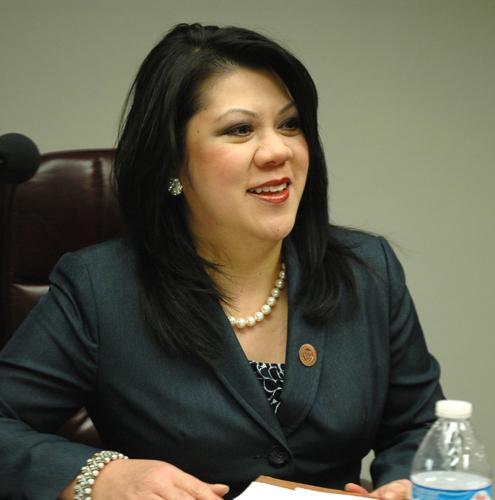
He said the measure still could be resurrected. But Sen. Kimberly Yee, R-Phoenix, who crafted the legislation and got it approved unanimously in the Senate, will have to convince some House foes to drop their opposition, he said.
SB 1384 would declare that student editors — and not administrators — “are responsible for determining the content of school-sponsored media.” The legislation would prevent administrators of traditional public and charter schools from censoring publications and preventing publication except under narrow circumstances.
It also would spell out that university and community college administrators have no right to block distribution of a publication. The only times that would be allowed for public schools is if the material is libelous, an unwarranted invasion of privacy, violates state or federal law, or “creates the imminent danger of inciting students to violate the law or district regulations or materially and substantially disrupt the orderly operation of the public school.”
And even then, the school would have the “burden of providing lawful justification without undue delay.”
Yee got the Senate to approve her bill in February after detailing her own experience in 1992 when she was a 17-year-old senior student at Greenway High School. Yee, a reporter and cartoonist for the Demon Dispatch, said there were “numerous times” when administrators refused to let items remain in the paper before it went to print, apparently because they believed they “shed a bad light on the school.”
Some House members, however, did not share her views that such protections are appropriate.
“We don’t even need the bill,” argued Rep. Eddie Farnsworth, R-Gilbert.
“The First Amendment already exists,” he continued. “If schools are violating the First Amendment, then it’s an actionable offense.”
Whether that right to sue exists for student journalists, however, is not clear.
During testimony in the Senate, Peggy Gregory of Greenway High school, who has taught journalism and advised students’ papers for 36 years, said student press freedom was the law of the land following a 1969 U.S. Supreme Court ruling declaring that it was protected by the First Amendment. But nearly 20 years later, she said, the same court partly reversed itself, declaring that student newspapers do not have the same constitutional rights as other publications.
“The result was censorship,” Gregory said.
The bigger problem for Yee is convincing colleagues that students, particularly in high school, should get the same rights and privileges as professionals.
Sen. Rusty Bowers, R-Mesa, told colleagues that he teaches skills like welding. “But I tell them, ‘You become a welder when you’ve got the certificate in your hand, when you are hired, somebody’s indemnifying your work,’” he said. “But you’re not a welder until then.”
Bowers, a self-employed artist, said the idea of students learning journalism being considered real journalists is akin to people who conclude that their ability to use finger paints makes them an artist.
“I have, in fact, seen work done by elephants and kangaroos in the National Gallery, where they put paint and have them walk around on large canvasses,” he said. “And I suppose they would be artists.”
“I would oppose the freedoms allotted by this bill,” said Rep. Jay Lawrence, R-Scottsdale. “I would say there has to be some sort of discipline that might not be exerted depending on the political bent of the teacher in the school.”
But Rep. Anthony Kern, R-Glendale, told members of the Republican-dominated House they should see the legislation as a protection against liberal viewpoints. He said some students testified in the Senate that quotes in political stories that appeared to favor Donald Trump were excised from stories.
At the other extreme, Rep. Mitzi Epstein, D-Tempe, said the measure does not go far enough. She proposed expanding its scope to require any school that accepts students who receive “empowerment scholarship accounts” — the formal name for vouchers — to adopt written policies on student-run media that are “consistent with and not more restrictive” than what SB 1384 would require for public schools.
“It is, after all, an ‘empowerment account,’” Epstein said. “So why would we empower them on one hand and take away this right?”
Farnsworth said Epstein’s proposal makes no sense. He said the First Amendment is designed to protect people from government actions, not from the actions and censorship of private individuals — or privately run schools.
“You don’t have freedom of speech in somebody else’s house,” he said.
And Rep. Noel Campbell, R-Prescott, argued that trying to extend the rights of student journalists to parochial schools, like those he attended, just can’t work.
“You would allow a student to go into a parochial school and say anything he wanted against the religious aspects of that institution, which just can’t happen.” he said.
Epstein said she doesn’t share that view. “Questioning and having serious debate, even a little bit of argument, is a very important part of Jewish tradition,” she said. She said she doubts extending such freedom to students in all religious schools would create havoc.
“If, in fact, the educators in parochial schools are doing a wonderful job of sharing the joy and beauty of the religion that they are teaching, then I don’t really see that becoming a huge problem,” she said.
This isn’t the first time Yee has tried to get such a proposal through the Legislature. After her high school experience, she persuaded Sen. Stan Furman, D-Phoenix, to sponsor a similar measure, and got it through the Senate. But it died when it did not get a hearing in the House Judiciary Committee.

